
Reviewed · OLD TOWN TOURS
Warsaw: 2-Hour Old Town Walking Tour
Warsaw’s Old Town is one of Europe’s most remarkable acts of recovery. Almost nothing here survived World War II, yet the streets, squares, and façades were rebuilt in their prewar form well enough to earn UNESCO recognition. The city you see is both historic and newly made, which gives this two-hour walk an unusual edge.
I like the focus on the Royal Route and Castle Square, where royal power, Polish independence, and the country’s constitutional story meet. I also like the attention given to Canaletto’s paintings, which helped guide the rebuilding work. The main limitation is time: two hours moves quickly, and you will see the exteriors of major sights rather than tour their interiors.
Key points to know before you go
- Warsaw’s Old Town was rebuilt after total wartime destruction, not simply preserved through the conflict.
- Canaletto’s paintings helped restore the city’s prewar appearance, giving planners a visual record of lost streets and buildings.
- The walk connects the Royal Route, Castle Square, Old Town, Barbican, and New Town in one compact outing.
- Guides such as Marzena and Mary are praised for clear storytelling, strong language skills, and practical food suggestions.
- This is a private two-hour walking tour, with English, German, and Polish available.
- The $69 price includes a certified guide, map materials, and group headsets, but not food, admissions, or gratuity.
Why Warsaw’s rebuilt Old Town deserves a closer look
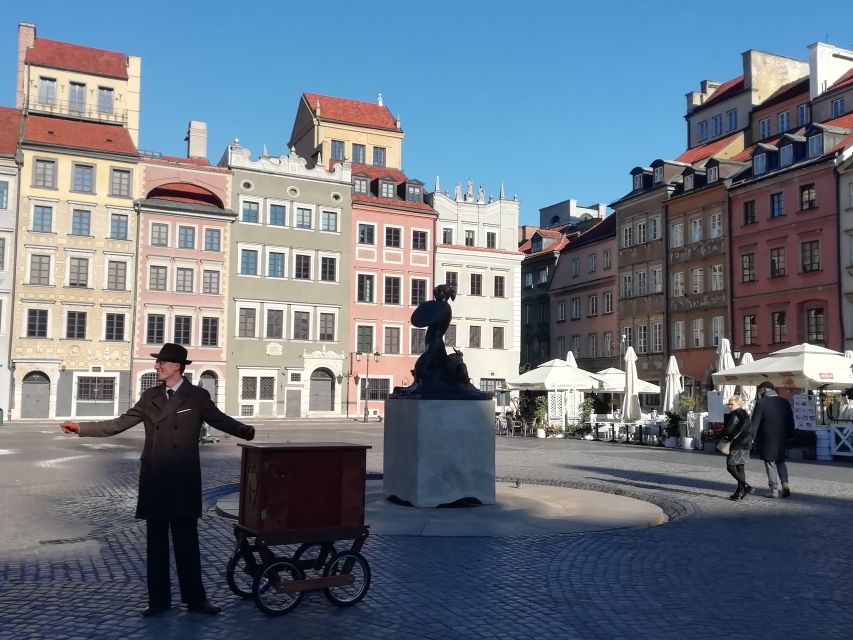
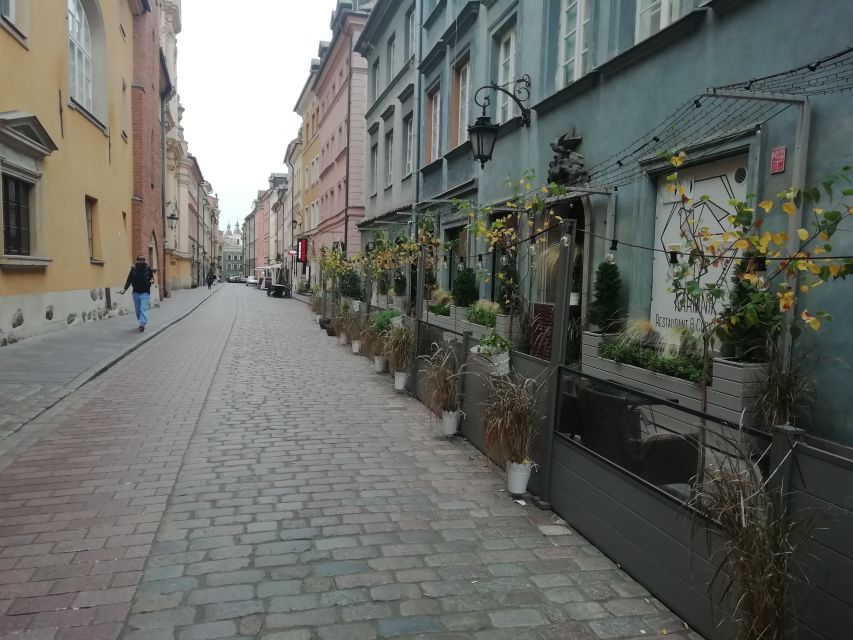
At first glance, Warsaw’s Old Town looks like a classic European center. You see warm-colored façades, narrow lanes, a market square, churches, and a defensive Barbican. The striking fact is that much of this scene was reconstructed after the city was destroyed during World War II.
That fact changes how you read every building. You are not simply admiring old walls. You are looking at a careful attempt to restore a lost city, based on photographs, plans, surviving fragments, and paintings.
The tour presents Warsaw as the youngest old town in the world, a memorable phrase for a place that feels centuries old but was rebuilt in the postwar period. Your guide can explain why the reconstruction aimed to follow the prewar form instead of creating a new modern center.
This background is the key reason to take a guided walk rather than simply wander with a map. On your own, you might admire the colors and stonework. With a guide, you can connect those façades to wartime destruction, postwar decisions, royal power, Polish culture, and the city’s long struggle to recover.
More Old Town Tours in Warsaw
- Warsaw: Chopin Concert in the Old Town
★ 4.8 · 2,287 reviews - Warsaw: Old Town Highlights Walking Tour in English
★ 4.7 · 1,516 reviews - Warsaw: Old Town Guided Walking Tour
★ 4.9 · 599 reviews
Meeting the guide on the Royal Route
The tour begins in front of the Nicolaus Copernicus Monument and Staszic Palace, at ul. Nowy Świat 72. The listed address is also given as Krakowskie Przedmiescie, 00-333 Warsaw. Look for a guide holding a sign marked PolinTours, Private Guide.
This starting point places you on or near the Royal Route, one of Warsaw’s principal ceremonial and historic streets. It is a useful beginning because the walk can move from the city’s grand public spaces toward its more intimate Old Town lanes.
I would allow a little extra time to find the monument and guide, especially if you are arriving from another part of Warsaw. The meeting instructions use both Nowy Świat 72 and Krakowskie Przedmiescie, so keep the supplied map link and address available on your phone.
The tour is offered in English, German, or Polish. A private group format gives you a better chance to ask questions and adjust the pace than a large public walk. Headsets are supplied for groups of up to 10 people, which should help when the guide is speaking beside busy streets or in open squares.
Following the Royal Route toward Castle Square
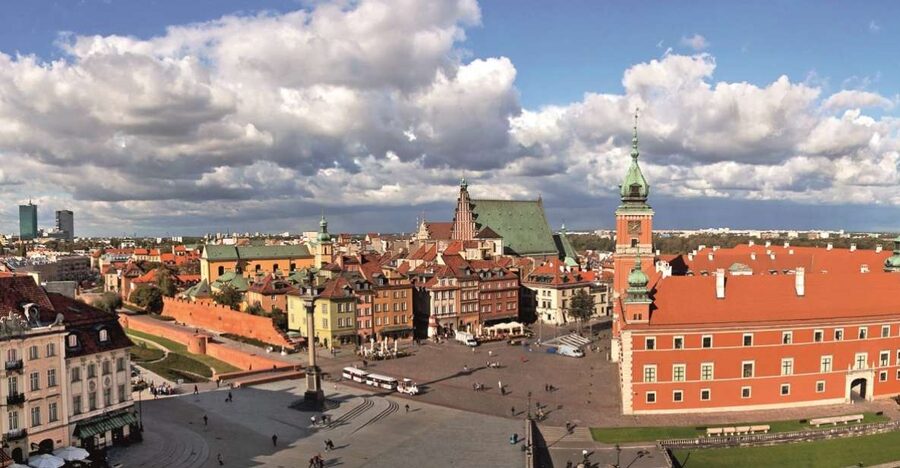
The Royal Route gives the walk a strong sense of direction. You are not being taken from one unrelated monument to another. Instead, the route connects royal residences, palaces, churches, public monuments, and places tied to Poland’s political story.
Your guide points out architectural details and locations linked with famous Warsaw figures, including Frédéric Chopin, Pope John Paul II, and Marie Curie. The value is not just in seeing names on plaques. It is in understanding how these people connect to the city’s culture, science, religion, and national identity.
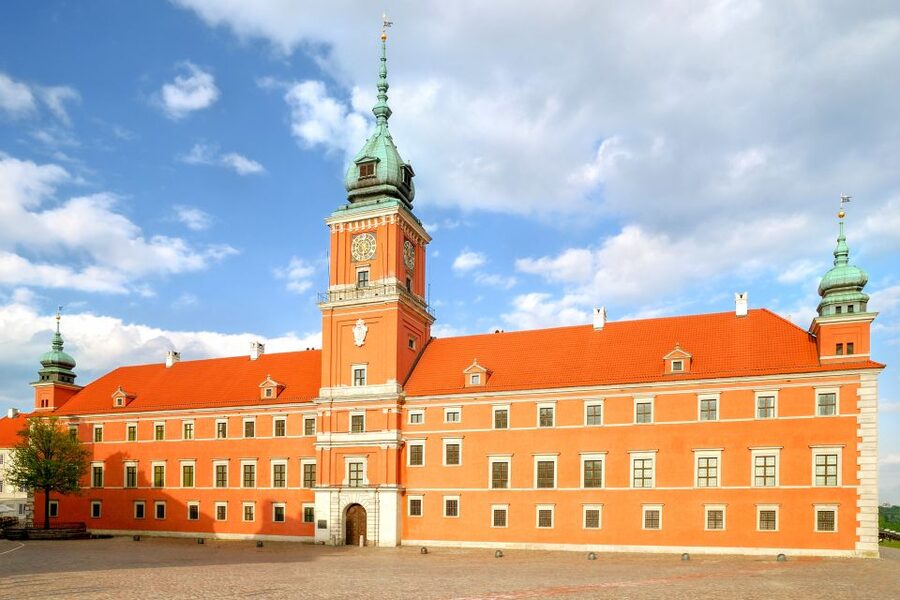
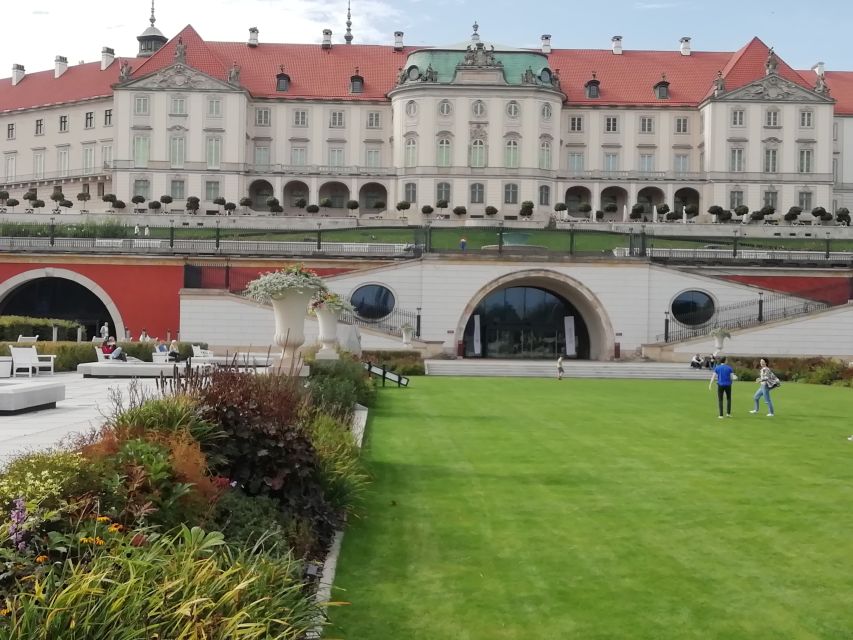
Castle Square is one of the tour’s main focal points. Here, you can see the Royal Castle and King Sigismund’s Column, two of the city’s best-known landmarks. The square also helps explain Warsaw’s former role as a royal capital.
The Royal Castle is tied to the adoption of the Constitution of May 3, described on the tour as the second oldest constitution in the world. The walk does not include entry, so you should expect an exterior visit and an explanation from the guide rather than a palace tour.
That arrangement suits a short introduction. You get the political context without spending much of your two hours indoors. If the castle is a major priority for you, plan a separate visit and purchase admission independently.
St. John’s Cathedral and the wartime story
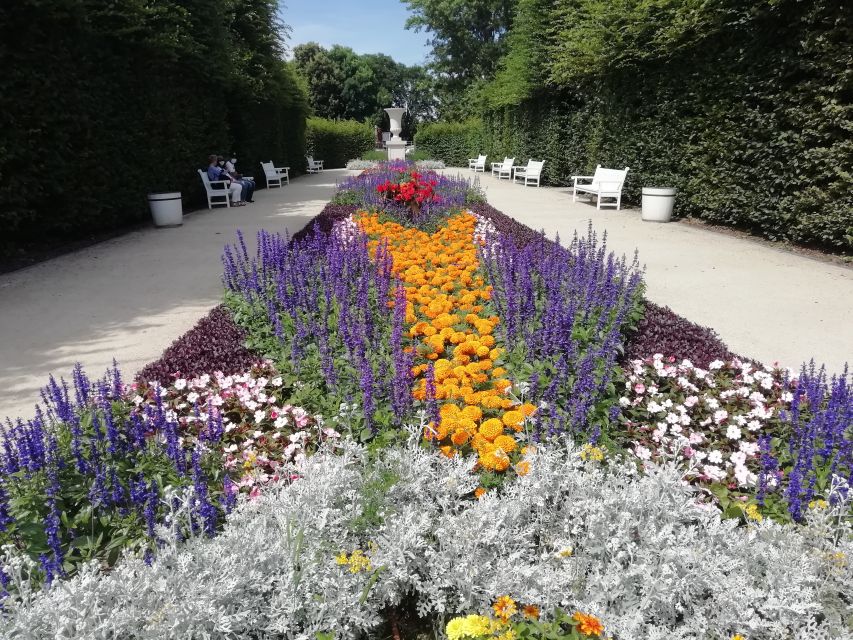
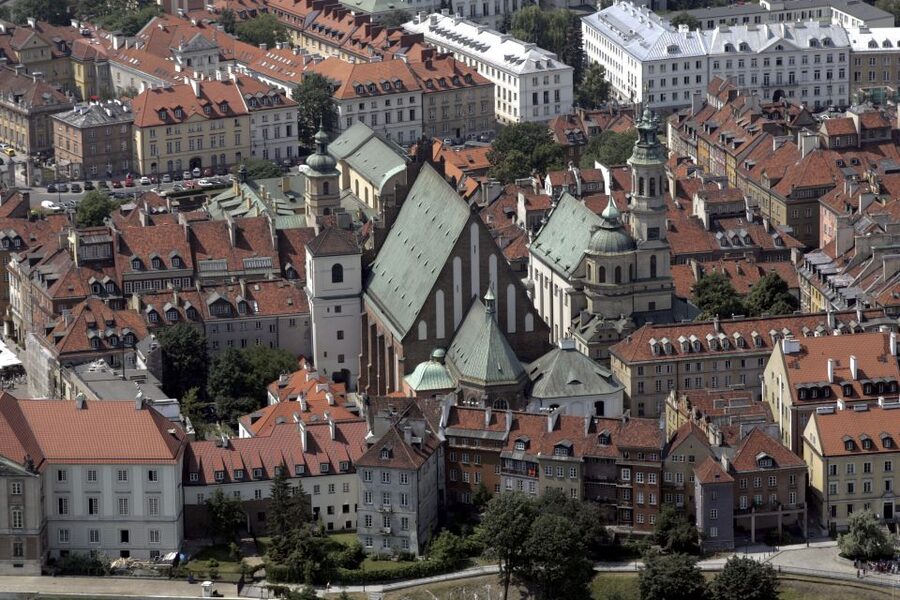
St. John’s Cathedral brings the tour into one of the Old Town’s most important religious spaces. The cathedral is part of the story of Warsaw’s destruction and recovery, and its position near Castle Square makes it a natural stop as you move deeper into the old center.
One of the advertised highlights is a church described as the only church in the world to have served as a war front. This is an unusual and powerful detail, and your guide explains the connection between religious buildings and the fighting that reached Warsaw.
The walk uses locations to show how war affected ordinary city life. Streets, churches, public squares, and residences were not distant backdrops. They became places of combat, shelter, loss, and later rebuilding.
I would pay close attention during this part of the tour. The wartime material is not an optional side note. It is the thread that makes the rebuilt Old Town meaningful.
More Walking Tours in Warsaw
- Half-Day Polish Food Walking Tour with Guide and Dinner
★ 4.5 · 381 reviews - Warsaw: Warsaw Ghetto Private Walking Tour with Hotel Pickup
★ 4.9 · 369 reviews - Old Town Warsaw Walking Tour
★ 4.5 · 333 reviews - Warsaw: Jewish History Guided Walking Tour in English
★ 4.7 · 324 reviews
The Market Square, Barbican, and New Town
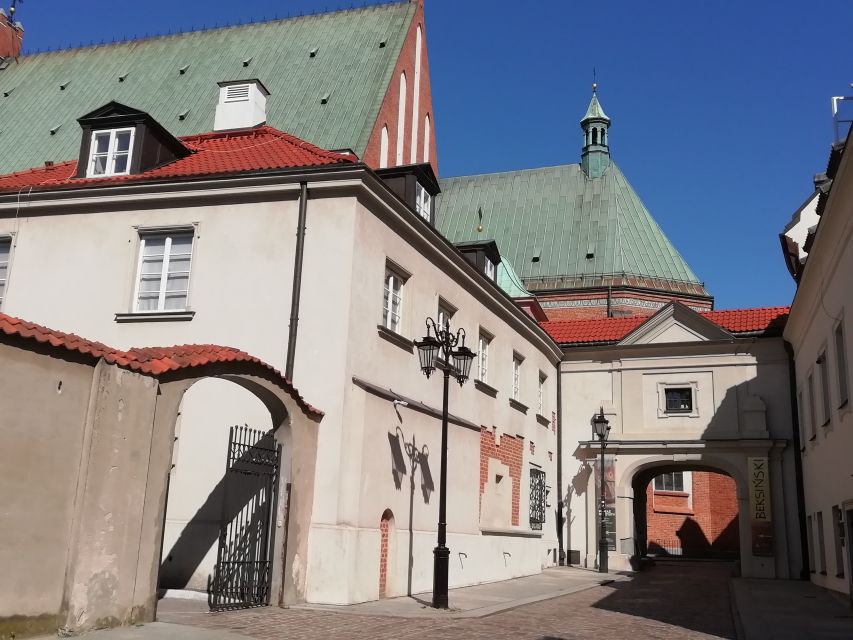
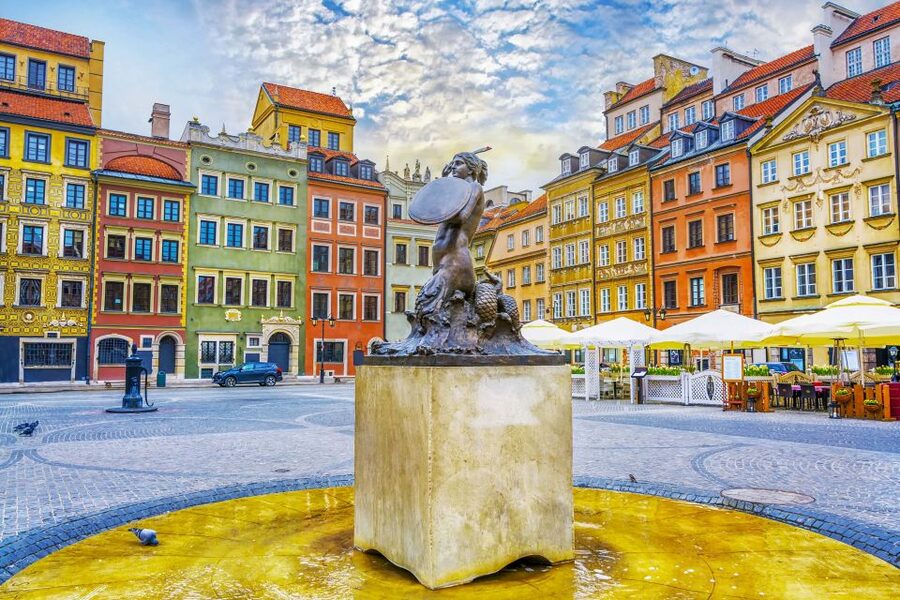
The Market Square is the visual heart of the Old Town. Its compact shape and colorful buildings make it one of the easiest places to photograph, but the guide gives you more than a pleasant view. You hear legends and local stories connected with the streets, buildings, and people around it.
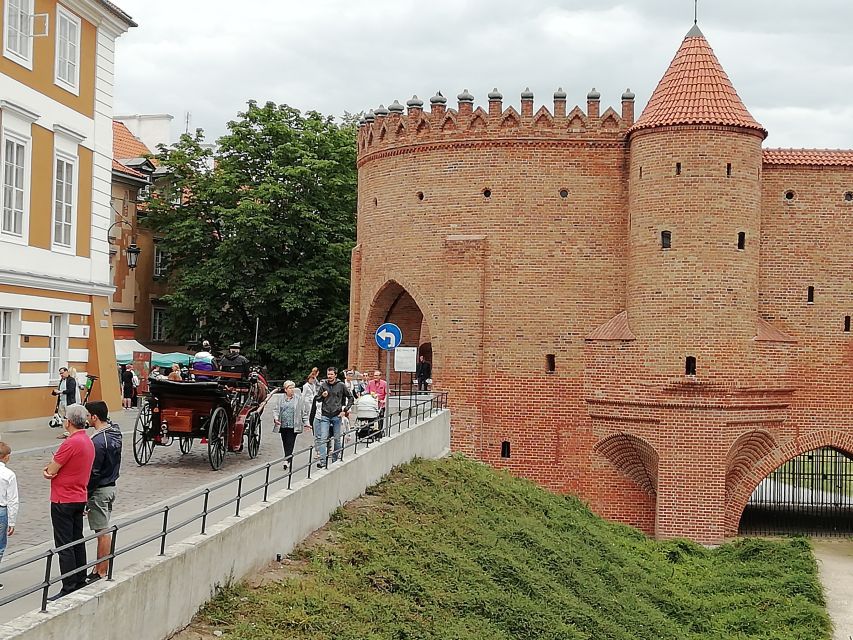
The tour then reaches the Barbican, the brick defensive structure that marks the old fortification line. This is a good point to see how Warsaw’s medieval identity was represented in the rebuilt center.
The route continues toward New Town. Despite its name, New Town is also an old district, and visiting it helps you see that Warsaw’s historic center is larger than the postcard area around the Market Square.
The Old Town and New Town sections are especially useful for first-time visitors because they give you a mental map. After the walk, you can return to the streets you liked best instead of trying to understand the entire center at once.
The route is still only two hours, so expect a survey rather than a slow architectural study. You will see many sites, but the guide will need to keep the group moving.
Canaletto’s paintings and the work of rebuilding
The Canaletto story may be the most distinctive part of this experience. The Venetian painter created detailed views of Warsaw before the war, and those paintings later played an important role in restoring the Old Town.
That gives you a practical way to understand the reconstruction. Instead of hearing only that the city was rebuilt in the old style, you learn that visual records helped show what streets, façades, and public spaces had looked like.
I like this subject because it turns art into historical evidence. Canaletto’s paintings were not merely decorative images. They became useful references when much of the physical city had been destroyed.
The idea also explains why Warsaw can feel so coherent despite the scale of the postwar work. The reconstruction was not a collection of random replicas. It followed a plan based on the city’s earlier appearance.
What makes the local guides useful
A walking tour succeeds or fails with its guide, and the strongest feedback here centers on Marzena and Mary. Marzena is praised for leading tours in clear German and for answering questions in detail. She also gives food suggestions, including practical places to try later that same day.
A separate tour with Mary is described as a small family outing in which she brought the city’s wartime story and rebuilding process to life. That kind of setting is one advantage of a private group. You can ask about a building, a person, or a detail that catches your eye without waiting for a large crowd to move along.
The most useful guide style for Warsaw is not a list of dates. You want someone who can explain why a reconstructed street looks old, how the Royal Route fits into the city, and why a particular church or square mattered during the war.
The feedback also points to tours lasting a little more than the stated two hours in some cases. You should not count on extra time, but it suggests that the pace can be flexible when questions and discussion take over.
Is $69 a fair price for two hours?
At $69 per person, this is not the cheapest way to walk around Warsaw. The price makes more sense if you value a private group, a certified local guide, and a focused introduction that ties the monuments together.
You receive the guide, a city map, information booklets, and headsets for groups of up to 10. You do not receive lunch, attraction admissions, or gratuities. Since the walk is outdoors and admission is excluded, much of the value rests on the guide’s storytelling and your ability to ask questions.
For a solo visitor or couple, the cost may feel high compared with a free self-guided walk. For a family or small private group, the price can be easier to justify because the guide can respond to your interests and explain the city at your pace.
The tour is also useful early in a Warsaw stay. A good orientation can save you time later, especially when you want to return to the Royal Castle, cathedral, Market Square, or New Town with a better sense of what you are seeing.
Practical comfort, timing, and access
The walk lasts two hours, with starting times based on availability. Wear comfortable shoes, and bring sunglasses, a sun hat, sunscreen, and cash. Warsaw’s historic center is best handled on foot, and the tour does not provide a meal.
There is a café where you can buy food, but you should eat before or after the walk if you need a full meal. Gratuity is not included, and a tip of 15 to 20 percent is recommended at the end.
The activity is listed as wheelchair accessible. It is also a private group experience, which may make it easier to discuss pace or access needs in advance, though you should still confirm any specific requirements when booking.
Pets, oversize luggage, large bags, alcohol, and drugs are not allowed. Pack light. A small day bag is more suitable than luggage for a walking tour through the old center.
Cancellation is free up to 24 hours before the start time, and you can reserve now and pay later. Those terms are useful if your Warsaw plans are still shifting.
Who should choose this Warsaw walking tour?
I would choose this tour if you are visiting Warsaw for the first time and want the city’s major historic areas explained in one sitting. It is particularly well suited to people who care about World War II, reconstruction, Polish culture, royal history, or the connection between art and urban planning.
Families may also like the mix of legends, famous personalities, dramatic wartime events, and visible monuments. A private group can make it easier to keep younger visitors involved, though the tour remains a history-focused walk rather than a special children’s program.
German-speaking visitors have a strong reason to consider it because Marzena has been praised for fluent German and clear answers. English and Polish are also available.
I would hesitate if you want extensive interior visits. The Royal Castle and other major landmarks are treated as stops along a walking route, not as full museum visits. I would also think twice if $69 per person feels steep for an outdoor orientation that lasts two hours.
Should you book it?
Book this tour if you want to understand why Warsaw’s Old Town looks historic, how it rose from wartime ruins, and how the Royal Route links the city’s major landmarks. The Canaletto story, the reconstruction focus, and the chance to ask a private guide direct questions give it more substance than a simple monument checklist.
Skip it if you prefer to explore alone, plan to tour the Royal Castle interiors, or want a longer walk with more time at each stop. For most first visits, though, this is a practical way to get your bearings and see Warsaw through the city’s remarkable story of destruction and rebuilding.
FAQ
How long does the Warsaw Old Town walking tour last?
The tour lasts two hours. Starting times depend on availability.
What languages are available?
The tour is available in English, German, and Polish.
Where is the meeting point?
Meet in front of the Nicolaus Copernicus Monument and Staszic Palace at ul. Nowy Świat 72. The meeting address is also listed as Krakowskie Przedmiescie, 00-333 Warsaw.
How will I recognize the guide?
Look for a guide holding a sign that says PolinTours, Private Guide.
Is this a private tour?
Yes. The activity is organized as a private group experience.
Is the tour wheelchair accessible?
Yes, the activity is listed as wheelchair accessible.
Are attraction entrance fees included?
No. Entrance fees are not included in the tour price.
Is food included?
No food is served during the tour. A café is available where you can purchase food.
How much should I tip the guide?
Gratuities are not included. A tip of 15 to 20 percent is recommended at the end of the tour.
Can I cancel the booking?
Yes. You can cancel up to 24 hours in advance for a full refund. You can also reserve now and pay later.
More two hour outings in Warsaw
- Warsaw: 2-Hour Guided Segway Tour
★ 4.8 · 34 reviews - Warsaw: 2-Hour Tour of Daily Life in the Ghetto Warsaw
★ 4.9 · 26 reviews - Warsaw: 2-Hour Chopin’s Life Walking Tour
★ 5.0 · 19 reviews - Warsaw: 2-Hour Praga Walking Tour
★ 4.5 · 18 reviews
Recently added in Warsaw
- Warsaw Wolf’s Lair with St. Lipka and Mamerki Private Guided★ 4.2 · 3 reviews
- Taste of Poland, food tour and guided walk with 12 tasting★ 5.0 · 3 reviews
- Discover Warsaw’s most Photogenic Spots with a Local★ 5.0 · 3 reviews
- Lodz Small Group Tour from Warsaw with Lunch★ 4.0 · 3 reviews
- Jewish heritage in Warsaw★ 4.5 · 3 reviews
- Warsaw Outdoor Paintball with Transfers (all year round)★ 5.0 · 3 reviews
- Electric Scooter Tour: Full Tour – 3-Hours of Magic!★ 5.0 · 3 reviews
- Skip-the-Line Polin Museum Warsaw Jewish History Tour★ 5.0 · 3 reviews
Old Town Tours, compared.




Bike Tour of Old Town, Jewish Quarter and the Ghetto
Read our review →

Sightseeing EcoCruise around the Old Town of Gdansk
Read our review →
Where else this one turns up