
Reviewed · MUSEUMS
Skip-the-Line Polin Museum Warsaw Jewish History Tour
The most moving part of this experience is the way it links POLIN Museum’s thousand-year story with the streets, wall fragments, cemeteries, and memorials of the former Warsaw Ghetto. You do not just look at exhibits in isolation. You see how the museum’s history connects to real places across Warsaw.
I like the private format, since your guide can adjust the pace and explain difficult subjects in language your group understands. I also like the choice between a focused two-hour museum visit and a fuller four-hour route that adds the Jewish Ghetto. The main consideration is price: at $167.97 per person, it makes the most sense for visitors who want personal guidance rather than a quick museum visit on their own.
Key points to know before booking
- POLIN Museum entry is included: Skip-the-line access covers the ticket office, the main exhibition, the ongoing temporary exhibition, and the Heritage Gallery.
- The four-hour tour adds the former Ghetto: The two-hour option does not include the outdoor walking route.
- Private guiding keeps the subject personal: Only your group participates, with a licensed guide fluent in the language selected at booking.
- The museum needs careful editing: You could spend a full day reading and listening to everything, but the guide helps you focus on the main ideas in two hours.
- Several outdoor stops are free: Memorials, the Ghetto wall fragment, Prozna Street, and Grzybowski Square add context without extra admission charges.
- Nozyk Synagogue may require permission to enter: Admission is not included, and entry is possible on request.
Why the POLIN Museum works best with a guide
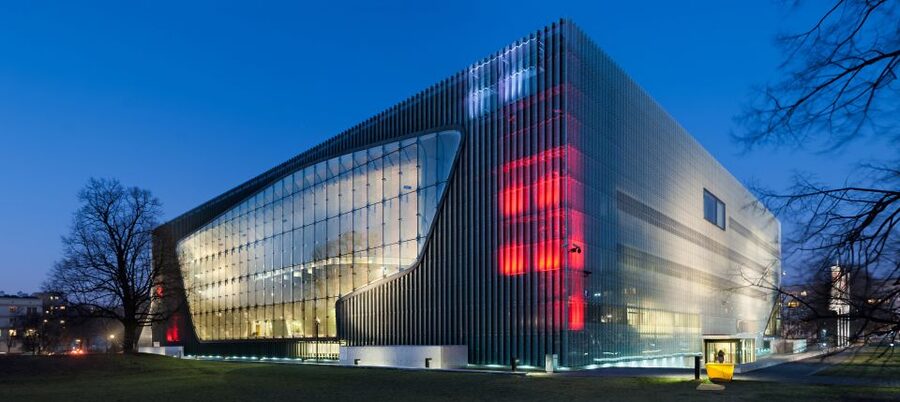
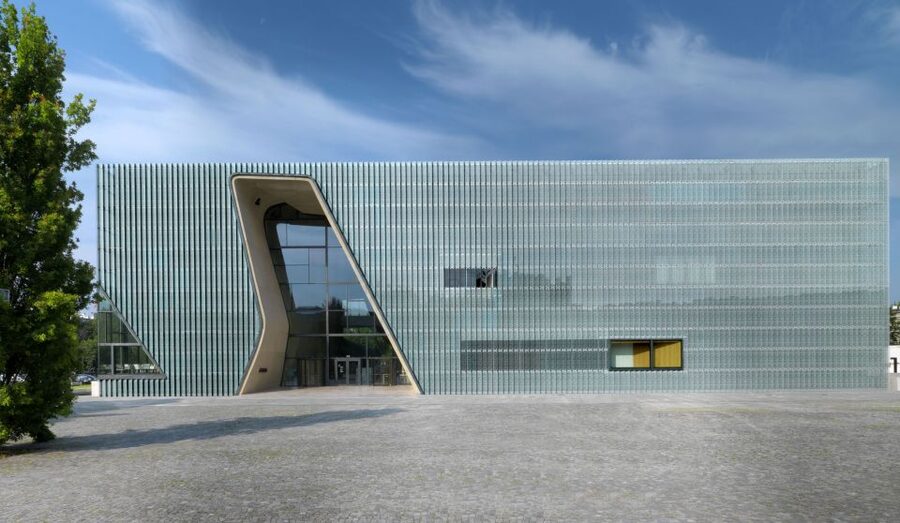
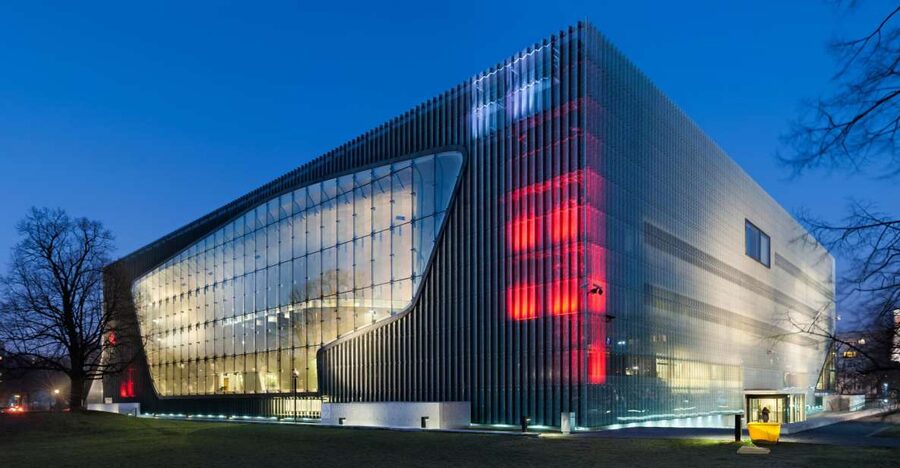
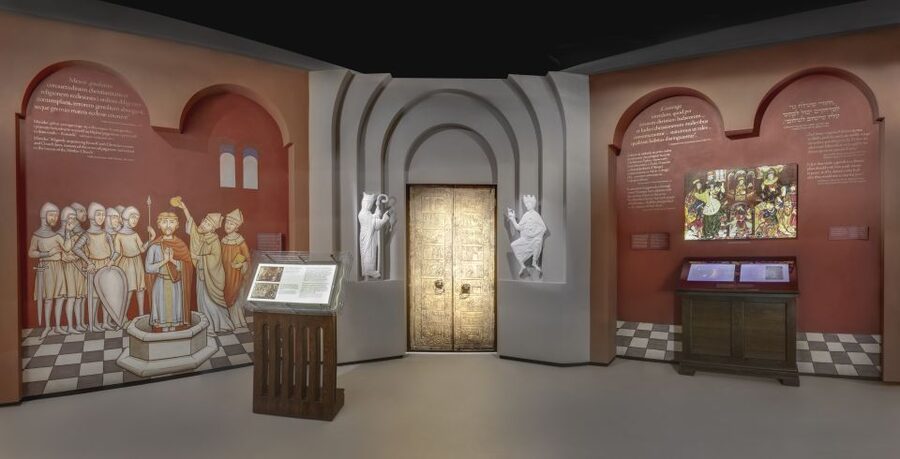
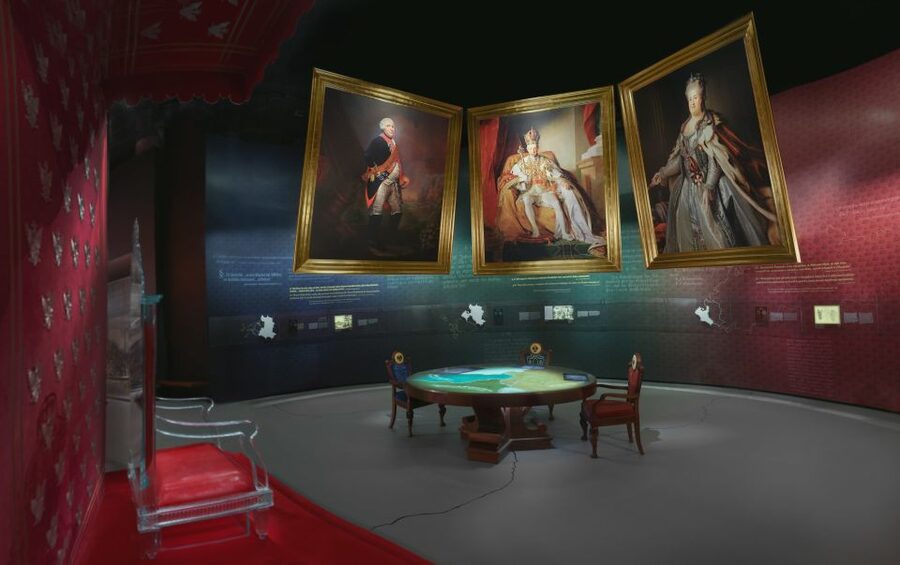
POLIN Museum is not a small memorial room. It presents the story of Jewish life in Poland across roughly a millennium, from early settlement and community life through persecution, the Holocaust, and the postwar period.
That broad time span matters. If you visit only sites linked to World War II, it is easy to see Polish Jewish history only through destruction. POLIN places the Holocaust within a much longer story of work, worship, family life, learning, politics, and culture.
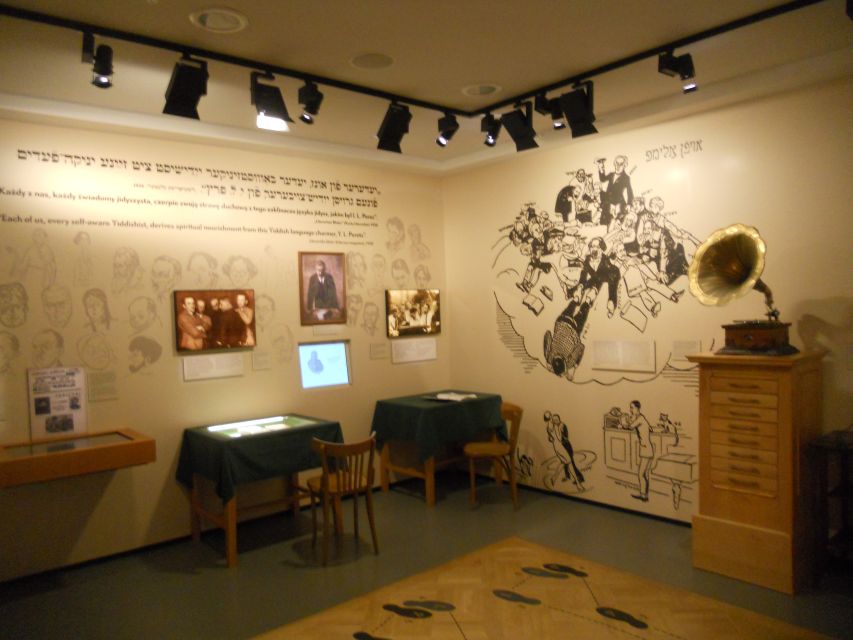
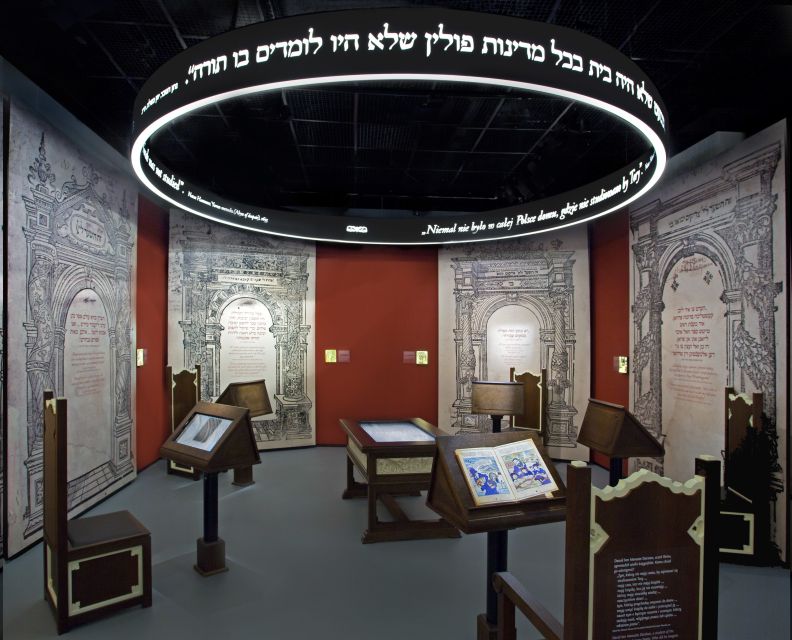
The museum uses objects, photographs, documents, films, interactive screens, and drawers that you can open. It is designed for active looking rather than a simple line of glass cases. Some displays invite you to pause and listen, while others give you a visual sense of how Jewish communities developed over time.
Two hours is a useful introduction, but it is not enough to absorb every room. A guide helps by selecting the main points and keeping the visit moving. Yulia, one of the guides associated with this experience, was especially effective at summarizing the museum’s key ideas during a two-hour visit. That kind of editing is valuable here. Without it, you could spend most of your day reading every panel and still leave unsure how the pieces fit together.
The museum is included in both tour options, and skip-the-line access lets you bypass the ticket office. It does not let you skip the entrance or security checks, so allow time for those procedures.
More History Tours in Warsaw
- Warsaw: POLIN Museum of the History of Polish Jews Ticket
★ 4.7 · 1,142 reviews - Warsaw: Chopin Concert at Historical Venue in Old Town
★ 4.7 · 445 reviews - Small-Group Historical Guided Tour of Warsaw with pick up/drop off. Public Tour.
★ 4.5 · 343 reviews
The four-hour route gives the story a physical setting
If you have the time, I would choose the four-hour version. It combines the museum with a walk through places connected to the former Jewish Ghetto and the wider Jewish life of Warsaw.
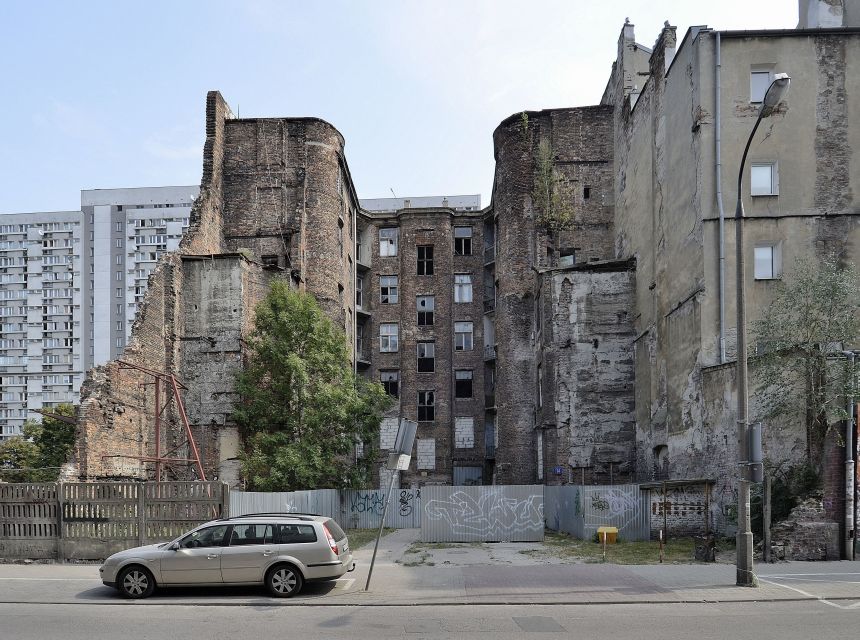
The outdoor portion is not a preserved historic quarter. Much of wartime Warsaw was destroyed, rebuilt, or altered. That can make the route feel less visually obvious than a typical old-town walking tour. A guide is useful because the meaning often lies in what used to be there, where boundaries ran, and how the surviving fragments relate to the city around them.
You begin at Ludwika Zamenhofa 11 in Warsaw, with the activity ending at a different location. The route includes several stops, and the exact number of attractions depends on the option selected. Public transportation is nearby, but this is fundamentally a walking experience.
Palace of Culture and Science: a bold Warsaw landmark
The Palace of Culture and Science is described as Poland’s highest building and remains one of Warsaw’s most recognizable landmarks. The stop focuses on its exterior architecture, so you should not expect an interior visit as part of this tour.
This is a useful opening point because the building is a symbol of modern Warsaw and its complicated 20th-century story. It also gives you a sense of the city’s scale before the route turns toward Jewish memory and wartime history.
The admission cost is free. Treat this as a brief orientation stop rather than a major sightseeing visit.
The Ghetto Heroes Monument and the weight of memory
At the Monument to the Ghetto Heroes, you pause for about 15 minutes. The monument honors Polish Jews and recalls persecution under German occupation during World War II.
This is one of the most important memorials on the route. Its power comes from its directness. You are not simply hearing dates and statistics. You are standing at a place designed to remember resistance, suffering, and the people caught in the Nazi destruction of Warsaw’s Jewish community.
A guide can help you read the monument in its historical setting, rather than treating it as a quick photo stop. Give yourself a quiet moment here. The subject calls for attention, not speed.
More Museum Tours in Warsaw
- Warsaw: Polish Vodka Museum Tour with Tasting
★ 4.6 · 788 reviews - Warsaw: Ghetto, Jewish Cemetery & POLIN Museum Private Tour
★ 4.8 · 132 reviews - Warsaw: Cold War Museum Entry Ticket
★ 4.6 · 55 reviews - World of Illusion Museum Skip-the-Line Ticket
★ 4.0 · 55 reviews
The Jewish Cemetery and the story in its stones
The Jewish Cemetery, founded between 1799 and 1806, receives about an hour of the tour. It is one of the longer outdoor stops, and that is appropriate. The cemetery contains marble and sandstone tombstones, known as masebas, with carved symbols and ornaments.
The stones provide a visual record of Jewish life in Warsaw. Names, dates, family links, and decorative details make the past more personal than a general account of the Ghetto can. The setting is described as scenic and nostalgic, but the mood can also be solemn, especially when you connect the cemetery’s long history to the devastation of the war.
The route also includes a symbolic grave for Janusz Korczak, the writer and teacher who died at Auschwitz. His presence gives the stop another human focus. The cemetery ticket is included, so there is no separate admission cost to plan for.
Because you spend about an hour here, wear comfortable shoes and expect a reflective part of the tour rather than a fast checklist stop.
The surviving Ghetto wall fragment
The wall fragment offers a direct physical connection to the Ghetto. You can see its height and construction, and the experience description emphasizes the contrast between the enclosed area and ordinary life continuing on the other side.
Only a fragment survives, so it does not give you a complete picture of the Ghetto’s original boundaries. That is precisely why the guide matters. The remaining section needs explanation to show how a small piece relates to a much larger system of forced confinement.
The stop lasts about 15 minutes and is free. It is brief, but touching the masonry and hearing about the world beyond the wall can make the division feel more real than a map alone.
Walking through the former Warsaw Ghetto
The former Ghetto was established in October and November 1940. It occupied only about 2.4 percent of Warsaw’s land area, yet more than 450,000 Jews were forced into its crowded confines by the German authorities.
Those figures are hard to picture without a guide. The outdoor walk helps translate them into streets, distances, and ordinary city spaces. You are walking through a district that is not preserved as a complete historical set, so the experience depends on careful explanation.
The four-hour route allows about two hours for the walking portion, in addition to two hours at POLIN. That is enough time to stop, ask questions, and connect separate locations. It is also long enough that you should plan for sustained walking rather than a museum visit with a short stroll afterward.
The two-hour option does not include the Warsaw Ghetto walk. This is the most important difference between the choices. If the wall, cemetery, synagogue, and memorials are central to your visit, do not book the shorter version by accident.
Nozyk Synagogue and the survival of Jewish worship
Nozyk Synagogue is described as the only surviving synagogue of the roughly 400 that existed in Warsaw before the war. It remains a functioning synagogue and is considered an important stop for visitors interested in Jewish Warsaw.
You may be able to enter, but entry is possible on request and admission is not included. Do not assume that the interior visit is guaranteed. Even seeing the building from outside adds an important layer to the route because it represents continued religious life rather than only loss.
The planned stop is about 30 minutes. Ask your guide early about the possibility of entry so you understand what to expect on the day.
Jewish Historical Institute, Prozna Street, and Grzybowski Square
The Jewish Historical Institute holds records, photographs, videos, and artifacts connected with the Warsaw Ghetto during the Nazi occupation. The tour information identifies it as related to this subject, and it adds another place where documents and personal evidence support the outdoor route.
The itinerary also passes along Prozna Street for about 20 minutes. This street is tied to the history of the former Jewish district and the Nazi occupation. Its value is not only architectural. The guide can help you see how one street fits into the larger wartime story.
Grzybowski Square receives about 15 minutes. The area was part of the Ghetto during World War II, while today it sits in the middle of Warsaw. A Jewish theater, a memorial garden, and a fountain are located around the square.
These stops show why the four-hour tour is more than a museum extension. You move between surviving buildings, memorial spaces, ordinary streets, and places whose meaning comes from what happened there. The city does not always announce its history. You need someone to point out the layers.
How much value do you get for $167.97?
At $167.97 per person, this is not a budget museum ticket. The price reflects a private tour, a licensed guide, museum admission, and, on the four-hour option, a substantial walking route.
The value is strongest for couples, families, or small groups who want to ask questions and set their own pace. A private guide can spend more time on subjects that matter to you, or simplify the explanation for younger members of the group. One family experience with Yulia included a six-year-old who stayed interested and asked many questions, which suggests that a good guide can make the material accessible without watering it down.
Group discounts may be available, so check the price for your party rather than assuming the per-person figure tells the whole story. If you are traveling alone and mainly want to see the museum, the cost may feel high. If you are sharing the tour with several people and want the outdoor history explained, the personal format becomes easier to justify.
The included museum admission and free outdoor sites keep extra costs low. Nozyk Synagogue admission is not included, and the possibility of entry depends on request. The two-hour and four-hour versions should be compared carefully, since the shorter option leaves out the Ghetto walk.
Timing, pace, and practical details
The experience lasts about two to four hours, depending on the option. The four-hour tour is the more complete choice, with roughly two hours in the museum and two hours walking through the former Ghetto.
The meeting point is Ludwika Zamenhofa 11, 00-153 Warszawa, Poland. The tour ends elsewhere, so do not plan to return automatically to the starting point. Confirmation is provided at booking, and you should check your email the day before for important tour information.
The tour is offered in English, with a guide fluent in the language selected at booking. It is a private activity, so only your group participates. Most people can take part, and the meeting point is near public transportation.
The outdoor route includes a cemetery and several city streets. Comfortable shoes are sensible, and you should keep the pace in mind if anyone in your group dislikes extended walking. The museum itself is easier physically, but the four-hour experience asks for attention as well as time.
Free cancellation is available up to 24 hours before the start time for a full refund. Changes or cancellations inside that 24-hour window are not accepted for a refund.
Who should choose this Warsaw Jewish history tour?
I would recommend the four-hour tour to first-time visitors who want a clear introduction to Jewish Warsaw and the Holocaust in Poland. It gives you both the museum’s long timeline and the physical locations connected with the Ghetto.
It also suits families if the guide is comfortable adjusting explanations for children. The museum’s interactive displays and the chance to ask questions can work better for younger visitors than a silent visit filled with long labels.
History-minded visitors will appreciate the combination of primary materials in the museum and actual city locations outside. The experience is less suited to someone who wants only light sightseeing, because the subject is serious and the route requires sustained attention.
The two-hour option fits a tight schedule or a visitor who wants POLIN as the main event. Just remember that it does not include the outdoor Ghetto walk. If you want the wall fragment, cemetery, Nozyk Synagogue, Prozna Street, and Grzybowski Square, choose four hours.
Should you book the POLIN Museum and Ghetto tour?
Book it if you want the history explained as one connected story, from Jewish life in Poland over many centuries to the destruction of Warsaw’s Jewish community and the traces left behind. The private format, skip-the-line ticket-office access, and licensed English-speaking guide make the experience easier to follow than tackling the museum and scattered sites alone.
Choose four hours if this subject is a major reason for your time in Warsaw. Choose two hours if you mainly want a guided POLIN visit and need to conserve time or energy.
The price is the main hurdle. You are paying for personal guidance, not just entry. For a small group that wants thoughtful explanation and room for questions, that can be good value. For an independent museum visitor on a tight budget, buying admission separately may be more practical.
FAQ
Where does the tour start?
The meeting point is Ludwika Zamenhofa 11, 00-153 Warszawa, Poland.
Where does the tour end?
The activity ends at a different location from the starting point. The exact end details are provided with the booking information.
Is the tour private?
Yes. Only your group participates in the activity.
Is the tour offered in English?
Yes. The experience is offered in English, and the guide is fluent in the language selected when booking.
How long does the experience last?
The tour lasts approximately two to four hours, depending on the option you choose.
Does the two-hour tour include the Warsaw Ghetto walk?
No. The Warsaw Ghetto walking tour is included only with the four-hour option.
What does skip-the-line access cover?
It lets you skip the ticket-office line at POLIN Museum. You still need to pass through the museum entrance and security checks.
What museum areas are included?
Admission covers the main exhibition, the ongoing temporary exhibition, and the Heritage Gallery.
Is entry to Nozyk Synagogue included?
No. Admission is not included. Entry may be possible on request.
Can I cancel for a full refund?
Yes. You can cancel at least 24 hours before the experience start time for a full refund. Cancellations or changes made less than 24 hours before the start time are not refunded.
More skip the line tickets in Warsaw
- Warsaw: Skip-the-Line Royal Castle Guided Tour
★ 4.9 · 79 reviews - Warsaw: Lunch or dinner at Hard Rock Cafe with Skip-the-Line
★ 4.4 · 70 reviews - Skip-the-Line Polin Museum Warsaw Jewish History Tour
★ 5.0 · 14 reviews - Chopin Tour in Warsaw with Skip-the-line Museum & Concert
★ 4.9 · 13 reviews
Recently added in Warsaw
- Warsaw Wolf’s Lair with St. Lipka and Mamerki Private Guided★ 4.2 · 3 reviews
- Taste of Poland, food tour and guided walk with 12 tasting★ 5.0 · 3 reviews
- Discover Warsaw’s most Photogenic Spots with a Local★ 5.0 · 3 reviews
- Lodz Small Group Tour from Warsaw with Lunch★ 4.0 · 3 reviews
- Jewish heritage in Warsaw★ 4.5 · 3 reviews
- Warsaw Outdoor Paintball with Transfers (all year round)★ 5.0 · 3 reviews
- Electric Scooter Tour: Full Tour – 3-Hours of Magic!★ 5.0 · 3 reviews
- Warsaw: Wolf’s Lair & Swieta Lipka Small-Group Tour + Lunch★ 5.0 · 3 reviews
Museums, compared.

Auschwitz-Birkenau Museum and Memorial Guided Tour from Krakow
Read our review →POLIN Museum of the History of Polish Jews Ticket
Read our review →



Krakow Schindler’s Factory Museum Guided Tour in English
Read our review →
Auschwitz Birkenau Museum Guided Tour with Pickup
Read our review →
Where else this one turns up