
Reviewed · OLD TOWN TOURS
Warsaw: Old Town Highlights Walking Tour in English
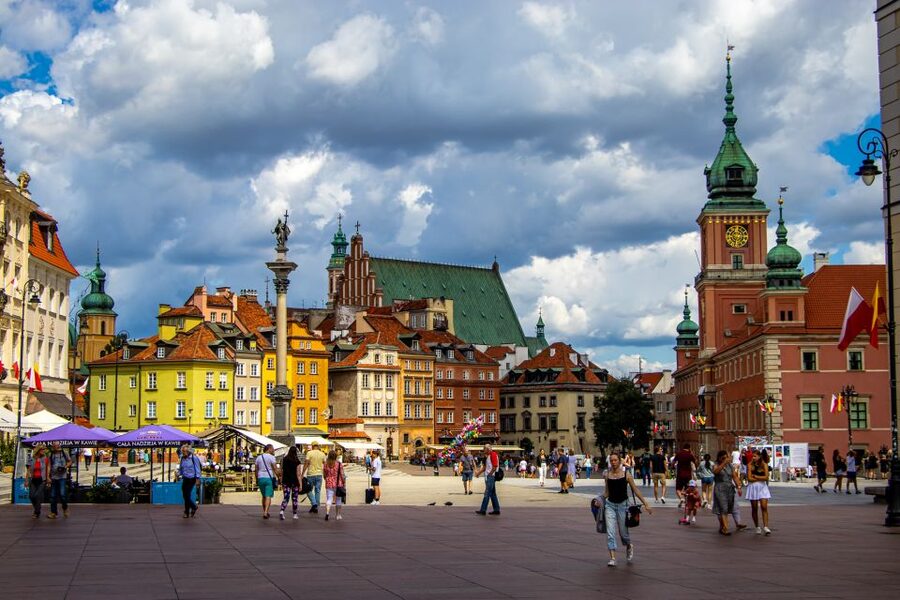
Warsaw’s Old Town looks old, but much of it rose from near-total destruction after World War II. This tour makes that remarkable story the heart of a walk past the Copernicus Monument, Royal Route, and rebuilt Royal Castle. I like the clear route and the way guides such as Andrzej, Michal, Ana, and Lucas mix serious history with humor. The main drawback is simple: you spend nearly all of 150 minutes outdoors, so poor weather can shape the experience.
I also like that the tour gives you more than pretty squares. You learn about Chopin, Marie Curie, the Presidential Palace, Warsaw University, and the two major uprisings that helped set the city on fire. The English-speaking guides are repeatedly praised for their energy, storytelling, good pace, and ability to explain Poland’s past without turning the walk into a dry lecture.
Key points at a glance
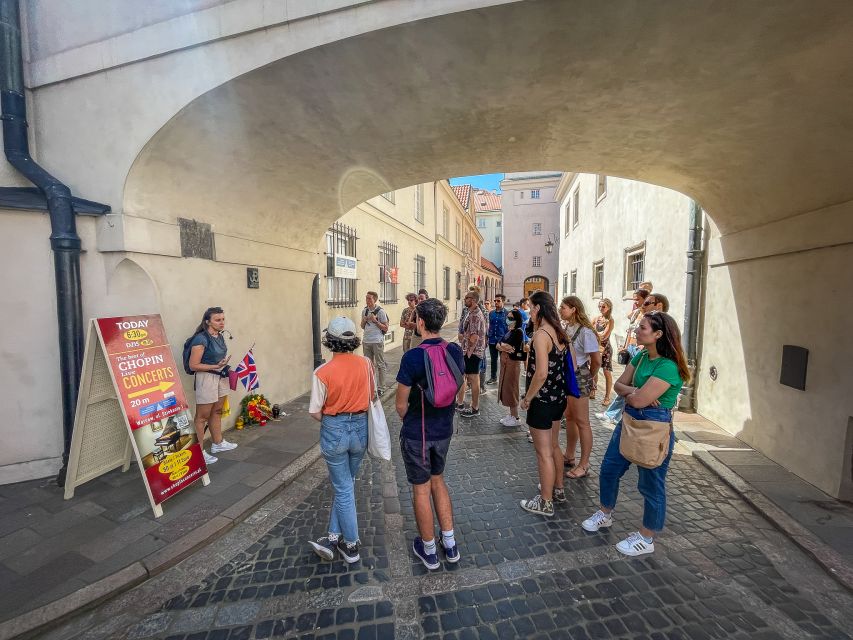
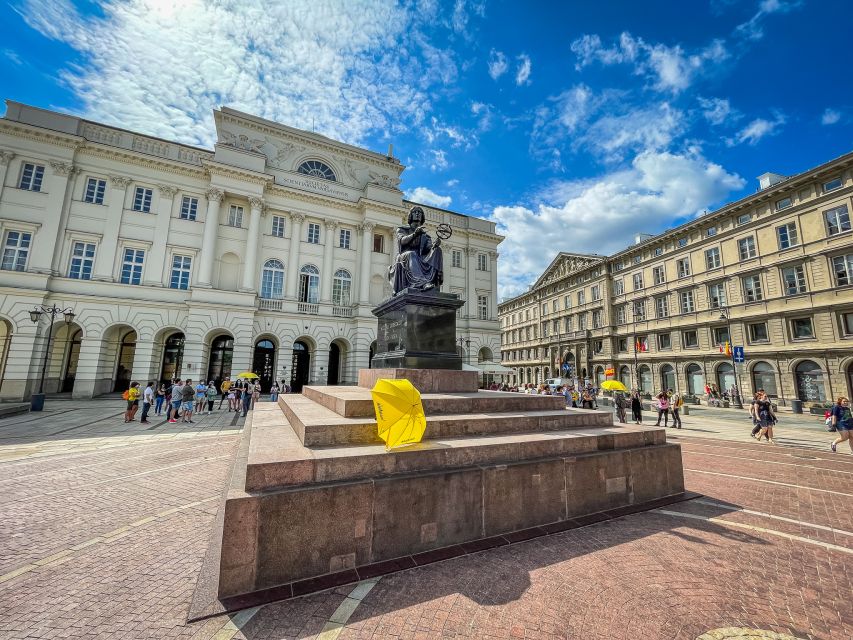
- Start by the Copernicus Monument: Meet beside Nicolaus Copernicus on Krakowskie Przedmieście Street 2 and look for the yellow umbrella.
- Follow Warsaw’s Royal Route: Walk past the Presidential Palace, Warsaw University buildings, Chopin references, and colourful Krakowskie Przedmieście.
- See a rebuilt capital: The Old Town and Royal Castle offer a clear lesson in how Warsaw was reconstructed after wartime destruction.
- Expect history with humor: Guides including Michael, Andrzej, Anna, Jacek, Lucas, and Michal are praised for lively delivery and strong English.
- Plan for outdoor walking: Comfortable shoes and weather-ready clothing matter, especially in rain, cold, or summer heat.
- A useful first look at Warsaw: The 150-minute route suits you best if you want historical context before exploring on your own.
Why Warsaw’s rebuilt Old Town changes the whole walk
Many city walks lead you from one attractive sight to another. This one has a stronger thread. It asks you to look at Warsaw as a city that was badly damaged, politically controlled, and then rebuilt with extraordinary determination.
That context changes how you see the colourful Old Town. The façades, streets, walls, and squares may look comfortably historic, but the story behind them is modern and painful. Your guide explains how Warsaw rose from the ashes after World War II, with particular attention to the two largest uprisings against Nazi rule.
The tour is not only about wartime events. It also covers the wider story of Poland, the city’s political role, and its place today as a centre of trade, tourism, education, and government. I value that wider frame because it helps you understand why Warsaw feels different from a purely medieval European city.
The guide-led format is important here. A plaque can tell you when a building was made. A good guide can explain why it matters, what happened around it, and how Polish memory shapes the way the city presents itself.
More Old Town Tours in Warsaw
- Warsaw: Chopin Concert in the Old Town
★ 4.8 · 2,287 reviews - Warsaw: Old Town Guided Walking Tour
★ 4.9 · 599 reviews - Warsaw: Chopin Concert at Historical Venue in Old Town
★ 4.7 · 445 reviews
Meeting Copernicus on Krakowskie Przedmieście
The meeting point is beside the Nicolaus Copernicus Monument at Krakowskie Przedmieście Street 2. Look for the guide carrying a yellow umbrella, a useful marker on a busy central street.
Beginning with Copernicus sets the tone. He is one of the famous figures connected with Poland and represents the country’s contribution to science and European thought. The statue also places you on the Royal Route, the historic spine of this part of Warsaw.
You should arrive ready to walk, not wait for transport. Hotel pickup and drop-off are not included, and the experience is entirely guided on foot. Since the meeting point is given clearly, the practical task is to allow enough time to reach it and watch for the yellow umbrella.
If you have trouble finding the guide, contact the operator immediately. That matters more than usual on a walking tour, since the group will leave the meeting point together.
Along the Royal Route and colourful Krakowskie Przedmieście
The Royal Route gives the tour an easy flow. You move through a sequence of major sights rather than spending the whole time in one square. The route includes the Presidential Palace and Warsaw University buildings, with stories about people and events linked to the city.
Krakowskie Przedmieście is one of the most visually appealing parts of the walk. Its colourful buildings and broad ceremonial feel make it a pleasant place to begin learning about Warsaw. Still, the guide keeps bringing you back to the fact that the city’s appearance does not tell the full story.
The Chopin element adds a more personal side to the route. You see the place where Chopin’s heart is buried, a detail that connects the grand Royal Route to one of Poland’s best-known artists. You also meet the story of Marie Curie, another famous inhabitant of the city.
These references work well because they break up the political and military history. One moment you are hearing about Poland’s rulers and national struggles. The next, you are considering music, science, and the people who carried Warsaw’s name far beyond Poland.
Guides often use humor to keep the pace light. The strongest comments about the tour describe an entertaining style, clear English, and a good balance between jokes and serious material. That balance matters during a two-and-a-half-hour walk, especially when the subject turns dark.
The Presidential Palace and Warsaw’s public life
The Presidential Palace is one of the route’s key stops. You do not come for an interior visit, since this is an outdoor walking tour, but the building gives your guide a natural place to discuss Poland’s government and political past.
The same is true of the Warsaw University buildings. They help show that this is not simply a preserved historic district. Warsaw’s centre remains tied to education, public life, and national politics.
I like this part of the itinerary because it gives the Old Town some present-day purpose. You are not only looking backward. You are seeing the part of the capital where Poland’s public identity is still expressed through institutions, monuments, and ceremonial streets.
The guide’s role is especially useful here. Buildings linked to government or education can seem formal and distant when viewed alone. With context, they become part of a story about how Poland has changed and how Warsaw functions now.
More Walking Tours in Warsaw
- Half-Day Polish Food Walking Tour with Guide and Dinner
★ 4.5 · 381 reviews - Warsaw: Warsaw Ghetto Private Walking Tour with Hotel Pickup
★ 4.9 · 369 reviews - Old Town Warsaw Walking Tour
★ 4.5 · 333 reviews - Warsaw: Jewish History Guided Walking Tour in English
★ 4.7 · 324 reviews
Chopin, Marie Curie, and the personal side of the city
Warsaw’s history can easily become a list of invasions, partitions, occupations, and uprisings. The references to Chopin and Marie Curie give the walk a human scale.
Chopin’s heart is buried in Warsaw, while his life and work connect the city with the wider world of European music. That detail is memorable because it is both intimate and symbolic. It shows how a person can belong to a city even when much of life is spent elsewhere.
Marie Curie brings a similar connection through science. Her link to Warsaw helps place the city within a wider story of learning and achievement. These figures also give you useful names to look for as you continue exploring independently.
The guide may spend more or less time on each person depending on the group and the day. Do not expect a full Chopin or Curie tour. Instead, think of these stories as well-chosen windows into Warsaw’s cultural life.
The Old Town walls and the rebuilt Royal Castle
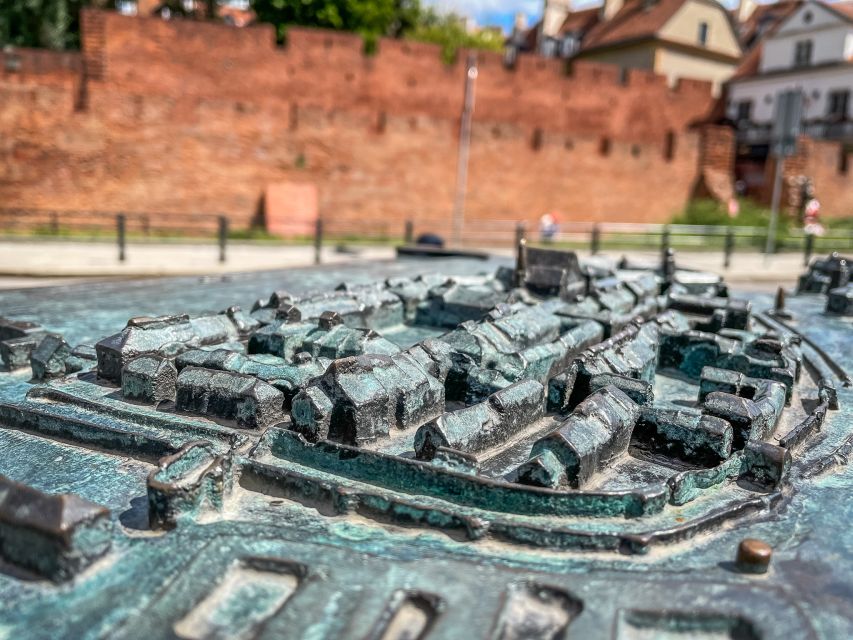
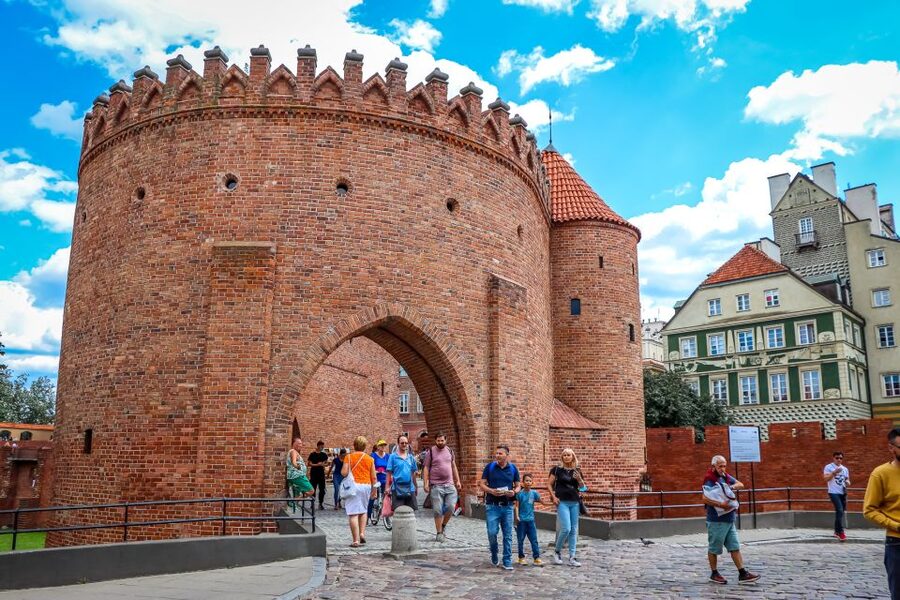
As the walk reaches the Old Town, the visual mood shifts. The area is encased by city walls, with colourful buildings and historic-looking streets that are easy to photograph.
The Royal Castle is the major visual prize. The tour lets you admire the reconstructed building from outside and explains its place in Warsaw’s story. Its rebuilt form is not a minor repair job. It is part of the larger effort to restore a city that had been devastated.
This is where the tour’s central idea becomes clearest. The Old Town is beautiful, but its value is not only in its appearance. The reconstruction tells you how strongly Warsaw wanted to recover its identity after wartime destruction.
You should also understand the limit of the visit. The tour does not include a Royal Castle interior visit, food, drinks, or a separate museum program. If you want rooms, collections, or a longer look at the castle, plan that for another part of your day.
Understanding the two Warsaw uprisings
The most serious part of the walk concerns the two major uprisings against Nazi rule. Your guide explains how these events affected Warsaw and how the fighting helped leave the city in ruins.
This subject needs care. The tour is designed to explain complexity, not offer a quick heroic slogan. You hear about the city’s suffering, the choices made during occupation, and the scale of destruction that followed.
A good guide can make this material understandable without flattening it. Several of the strongest guide comments describe passionate storytelling, historical perspective, and an ability to explain what the people of Poland endured and rebuilt.
Expect the tone to shift during this section. Humor may return between stops, but the subject itself is heavy. I would not choose this tour if you want only light sightseeing and photographs. I would choose it if you want the buildings to make more sense.
The guides make the difference
Walkative Tours supplies an English-speaking live guide, but the individual guide shapes the experience. Names praised for clear delivery, humor, and strong storytelling include Michal, Michael, Andrzej, Ana, Anna, Lucas, Jacek, Jack, Olivia, Andrew, and Jędrzej.
That list also suggests that you may meet a different guide from the one mentioned in someone else’s booking. The consistent pattern is more useful than any single name: guides are described as passionate, articulate, funny, easy to understand, and able to answer questions.
Several comments highlight pronunciation and pace. One guide was described as speaking almost perfect English, while others were praised for keeping a fast but manageable rhythm. That is useful if English is not your first language.
The group format can also affect the feel of the walk. The supplied information describes this as a general pay-as-you-wish tour, with the booking price covering the reservation fee and guide’s payment. A smaller private tour can be arranged by contacting the operator, but that is a separate option.
At $26 per person, the value is strongest if you want an organized introduction with a real guide rather than a self-guided route. You get 150 minutes of interpretation across several major sights, which is a fair price for a first look at central Warsaw. It is less useful if you already know the city well and want entry tickets or a museum visit.
Pace, weather, and what to bring
The tour takes place rain or shine. If conditions turn cold or wet, the guide looks for cover, but you should still expect to be outside for most of the two-and-a-half hours.
Wear comfortable shoes. That is the one essential item, since the route connects several areas on foot. In cooler months, add warm layers and rain protection. In summer, bring protection from sun and heat. One particularly useful tip from the tour experience is to dress for the weather because the walk remains outdoors even when conditions are not ideal.
The pace is generally described as good, with some people calling it fast. That can be an advantage because you cover a lot of central Warsaw in one session. It also means you should be ready to keep moving and listen while standing.
The activity is listed as wheelchair accessible. If access needs are important for you, confirm the details with the operator before booking, since the supplied information does not describe the exact street surfaces or route conditions.
Who should book this Warsaw walk
I would put this tour near the start of a first visit to Warsaw. It gives you a map in your head, introduces the main sights, and explains why the city cannot be understood through its attractive Old Town alone.
It suits you particularly well if:
- You have limited time in Warsaw.
- You want history explained in plain English.
- You enjoy guides who use humor and personal energy.
- You want to see the Royal Route, Old Town, Copernicus Monument, Presidential Palace, and Royal Castle in one outing.
- You plan to visit museums or explore further afterward and need background first.
It may not suit you if you dislike group walks, need frequent indoor stops, or want a tour focused on food, nightlife, or castle interiors. It also is not a substitute for a full museum visit on the Warsaw Uprising or Polish history.
Practical booking details
The price is $26 per person. Reserve-now, pay-later booking is available, and you can cancel up to 24 hours before the start for a full refund.
The tour lasts 150 minutes and is offered in English. Food, drinks, and hotel transportation are not included.
Meet next to the Nicolaus Copernicus Monument on Krakowskie Przedmieście Street 2. The yellow umbrella is the key sign. Bring comfortable shoes and dress for the forecast.
Should you book the Old Town Highlights Walking Tour?
Book it if you want Warsaw’s major central sights tied together by a clear story. The best part is not simply seeing the Royal Castle or colourful Krakowskie Przedmieście. It is learning why a city that looks historic had to rebuild so much of itself.
The $26 price is reasonable for 150 minutes with a live English guide, especially if you are new to Warsaw. I would book early in a short city break, then use the guide’s suggestions and historical context to choose what deserves a longer visit.
Skip it only if you want indoor attractions, a private experience, or a narrow subject. For a lively first orientation with serious history, good humor, and a practical route through the capital, this is a strong choice.
FAQ
How long does the Warsaw Old Town walking tour last?
The tour lasts 150 minutes, or two and a half hours.
What language is the tour offered in?
The tour is conducted in English by a live guide.
Where is the meeting point?
Meet next to the Nicolaus Copernicus Monument on Krakowskie Przedmieście Street 2. Look for the guide with a yellow umbrella.
What sights are included on the route?
The walk includes the Copernicus Monument, the Royal Route, Krakowskie Przedmieście, the Presidential Palace, Warsaw University buildings, the Old Town, city walls, and the reconstructed Royal Castle. It also covers the place where Chopin’s heart is buried.
Is hotel pickup included?
No. Hotel pickup and drop-off are not included. You must make your own way to the meeting point.
What should I bring?
Bring comfortable shoes and dress for the weather. The tour runs rain or shine, although the guide seeks cover if it rains or becomes cold.
Is the tour wheelchair accessible?
The activity is listed as wheelchair accessible. The supplied information does not give further details about street surfaces or specific access arrangements, so contact the operator if you need precise assistance.
Recently added in Warsaw
- Warsaw Wolf’s Lair with St. Lipka and Mamerki Private Guided★ 4.2 · 3 reviews
- Taste of Poland, food tour and guided walk with 12 tasting★ 5.0 · 3 reviews
- Discover Warsaw’s most Photogenic Spots with a Local★ 5.0 · 3 reviews
- Lodz Small Group Tour from Warsaw with Lunch★ 4.0 · 3 reviews
- Jewish heritage in Warsaw★ 4.5 · 3 reviews
- Warsaw Outdoor Paintball with Transfers (all year round)★ 5.0 · 3 reviews
- Electric Scooter Tour: Full Tour – 3-Hours of Magic!★ 5.0 · 3 reviews
- Skip-the-Line Polin Museum Warsaw Jewish History Tour★ 5.0 · 3 reviews
Old Town Tours, compared.
Bike Tour of Old Town, Jewish Quarter and the Ghetto
Read our review →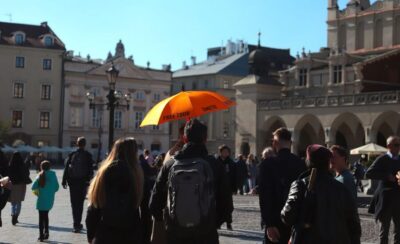

Sightseeing EcoCruise around the Old Town of Gdansk
Read our review →
Where else this one turns up