
Reviewed · WALKING TOURS
Warsaw: 2-Hour Praga Walking Tour
Praga gives you a side of Warsaw that the polished Old Town cannot. On the right bank of the Vistula, you’ll walk past bullet-marked tenements, communist apartment blocks, old trading streets, and former industrial buildings now used by artists, designers, and restaurants. The route also reaches places connected with The Pianist and the Warsaw Zoo rescue story.
I like the focus on real neighborhood history, not just grand monuments. I also like that the private format gives you room to ask questions, something especially useful with a guide such as Marzena, who has earned repeated praise for clear, engaging explanations. The main consideration is the price: at $69 per person for two hours, this is best value for a private group that wants context, not for someone seeking a cheap orientation walk.
Key points to know before you book
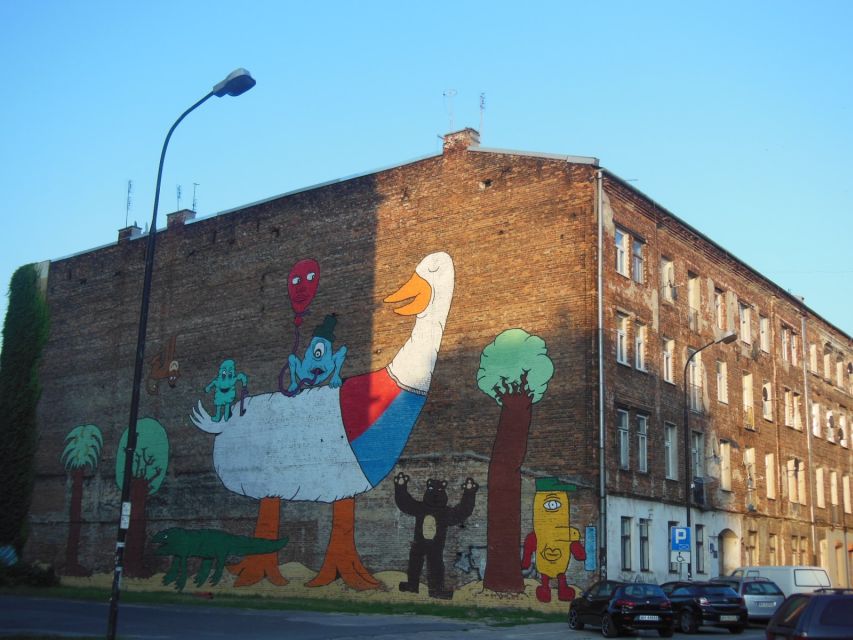
- Praga shows pre-war Warsaw in surviving fragments, including old tenement houses with bullet holes.
- The two-hour route mixes several eras, from Jewish, Christian, and Orthodox life to communist housing and post-industrial renewal.
- Koneser vodka factory offers a look at Praga’s industrial past and its newer cultural life.
- The Warsaw Zoo story adds a powerful wartime chapter, centered on the zoo director and his wife, who helped save hundreds of Jews.
- Marzena is the guide most often named in the feedback, praised for patient answers and lively historical explanations.
- The meeting point is easy to reach by Metro M2, at the exit in front of the Metropolitan Cathedral of Maria and Magdalena.
Why Praga is worth two hours of your Warsaw time

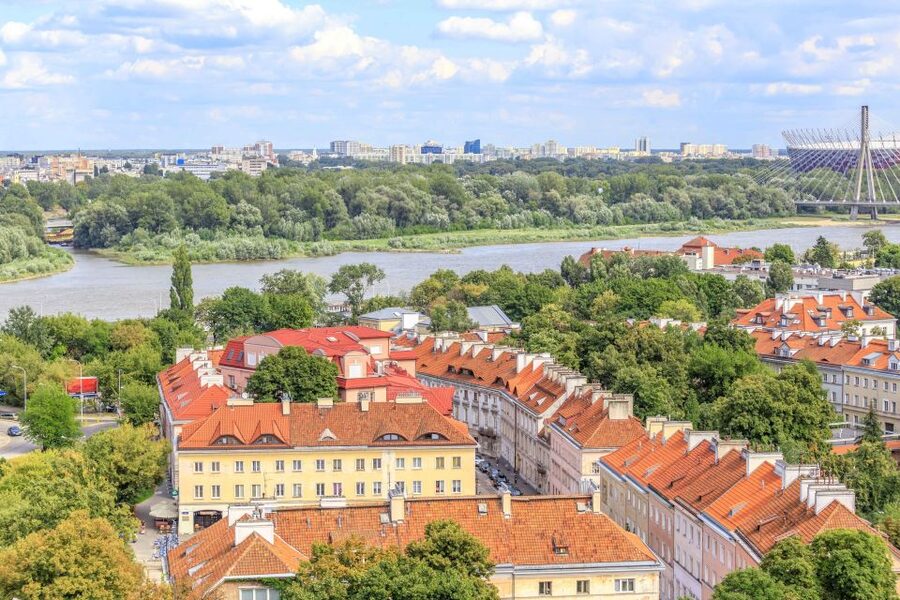
Warsaw is often introduced through the Old Town, the Royal Route, and the rebuilt center on the west bank of the Vistula. Those places matter, but they can leave you with an incomplete picture. Praga feels less polished and more layered. Its streets reveal trade, industry, religious variety, war damage, communist planning, and a newer creative scene all in a compact area.
That contrast is the point of this walk. You are not being taken from one grand attraction to another. Instead, you read the district through its buildings and street plan. A worn facade may point to pre-war commerce. A concrete housing block may explain postwar life. A factory complex may show how an industrial site found a second purpose.
Praga also helps explain Warsaw’s old divide. The district sits on the eastern side of the river and developed differently from the center. Christians, Jews, and Orthodox residents lived alongside one another, while merchants and industrial workers helped turn the area into a major trading hub before the war.
This is a good tour for you if you want a Warsaw walk with social and architectural context. It is less suited to you if your main goal is entering museums, seeing royal interiors, or covering a large number of famous sights in a short time.
More Walking Tours in Warsaw
- Warsaw: Old Town Highlights Walking Tour in English
★ 4.7 · 1,516 reviews - Warsaw: Old Town Guided Walking Tour
★ 4.9 · 599 reviews - Half-Day Polish Food Walking Tour with Guide and Dinner
★ 4.5 · 381 reviews
Meeting Marzena at the cathedral and Metro M2
The walk begins in front of the Metropolitan Cathedral of Maria and Magdalena at aleja Solidarności 52. Your guide waits at the cathedral exit from the M2 subway with a PolinTours sign. That detail matters in a city where a busy street, a large church, and several transport exits can otherwise make a meeting point confusing.
The cathedral is more than a practical landmark. It places you immediately in Praga’s religious setting and gives the guide a natural starting point for explaining how the district’s Christian and Orthodox communities shaped its identity.
The tour is private, with live guiding in English, German, or Polish. A private group can make a major difference on a history walk. You can stop to ask why a building matters, request more detail about wartime events, or spend less time on a subject that does not interest you.
Marzena is the guide most often singled out by name in the available feedback. Her strengths are clear explanations, patience with questions, and an ability to connect architecture with social history. One German-speaking participant also noted receiving many details about the district and its social life, which suggests the tour reaches beyond dates and building names.
Wear comfortable shoes. The tour lasts two hours and takes place on foot, so sun protection is sensible in warm weather. Sunglasses, a hat, and sunscreen are specifically recommended. Large bags, oversize luggage, pets, smoking, alcohol, and drugs are not allowed.
Reading Praga through old tenements and bullet holes
One of the most memorable parts of the walk is the look at pre-war streets and tenement houses. These are not simply old facades for photographs. They are physical clues to how Praga worked before the Second World War, when trade and industry brought many different people into the district.
Bullet holes give the buildings a direct connection to the city’s wartime violence. They also make an important point about Warsaw: not every part of the city was erased and rebuilt in the same way. Some details survived as scars, fragments, or altered structures.
You may find this part of the tour more affecting than a standard architectural walk because the guide links the surfaces to people and events. The value comes from learning what you are looking at. Without explanation, a damaged wall is just a damaged wall. With context, it becomes evidence of the district’s past.
The experience is not presented as a spotless postcard version of Warsaw. Praga’s older buildings can look worn, and that is part of the appeal, though some visitors may prefer the restored streets of the Old Town. Bring realistic expectations. This walk is about character and layers, not uniform beauty.
From communist apartment blocks to new creative spaces
The route also covers grey apartment blocks from the communist period and post-industrial areas. At first glance, these buildings may seem less appealing than historic churches or market streets. They are useful, however, because they show how the district changed after the war and under communist rule.
You will hear how Praga later became a symbol of free trade. That shift gives the walk a useful economic thread. The district was once shaped by pre-war entrepreneurs and commercial activity, then altered by communist systems, and later reused by newer businesses and cultural projects.
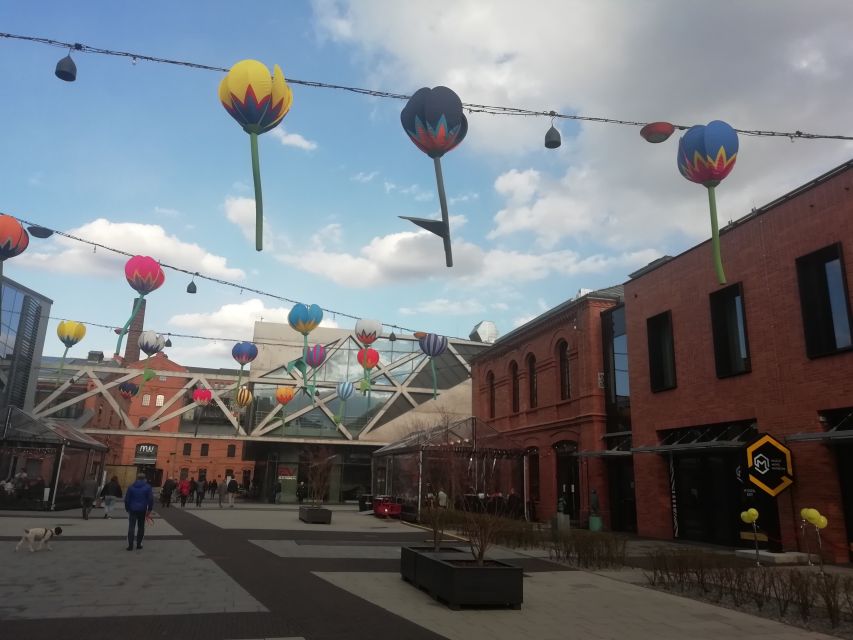
Former industrial buildings now house art galleries, boutique designers, and restaurants. This does not mean every old factory has been transformed into a fashionable attraction. It means the district carries its working past into its current life. You get to see how the same buildings can serve different purposes across generations.
I like this part because it keeps the tour from becoming only a war story. Praga’s past includes hardship, but it also includes business, invention, and adaptation. The guide’s task is to make those connections clear in a limited two-hour window.
A different kind of day in Warsaw:
- Warsaw: Chopin Concert in the Old Town
★ 4.8 · 2,287 reviews - Warsaw: Traditional Galar Cruise on The Vistula River
★ 4.6 · 1,640 reviews - Warsaw Concert: Chopin – Painted by Candlelights with Wine
★ 4.8 · 1,442 reviews - Warsaw: City Sightseeing Hop-On Hop-Off Bus Tour
★ 3.6 · 1,415 reviews
St. Florian Cathedral and the district’s religious mix
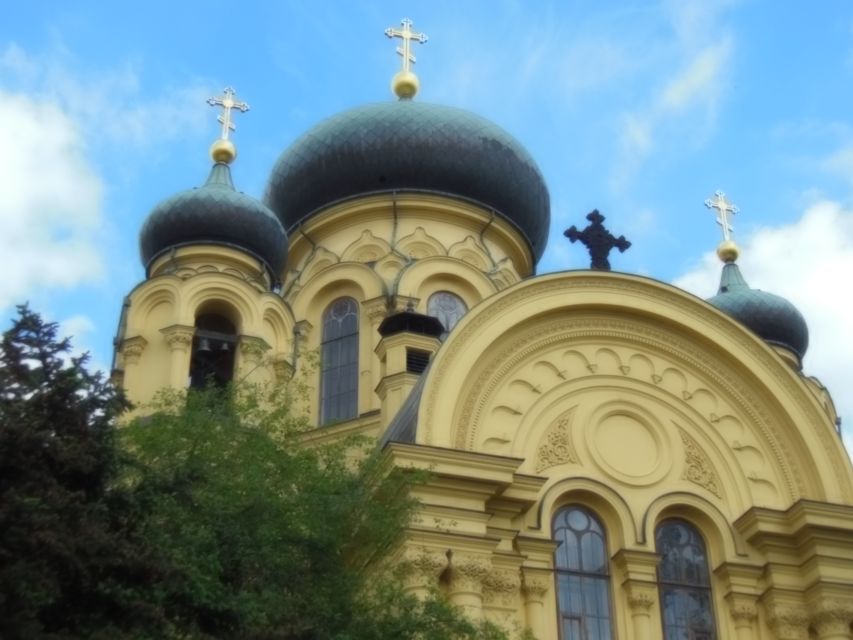
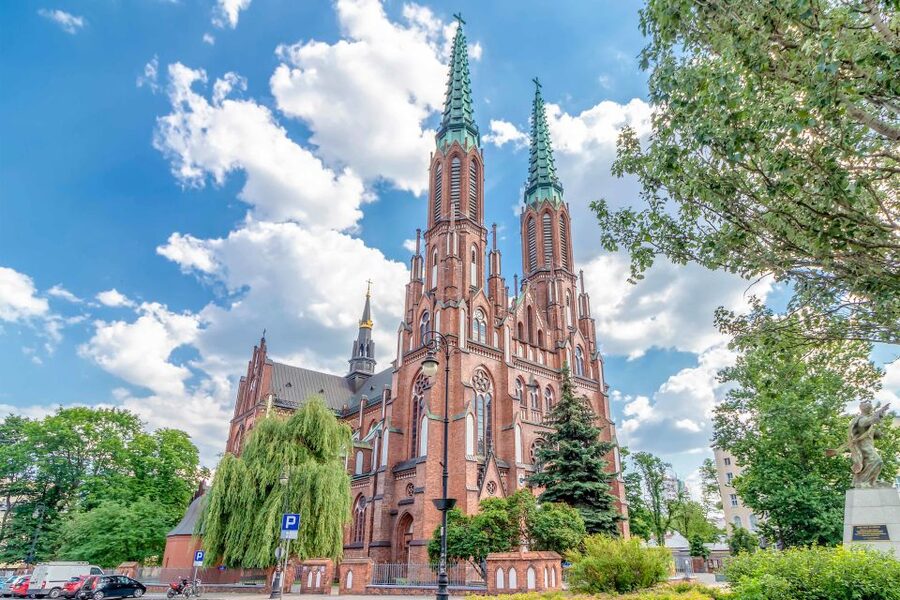
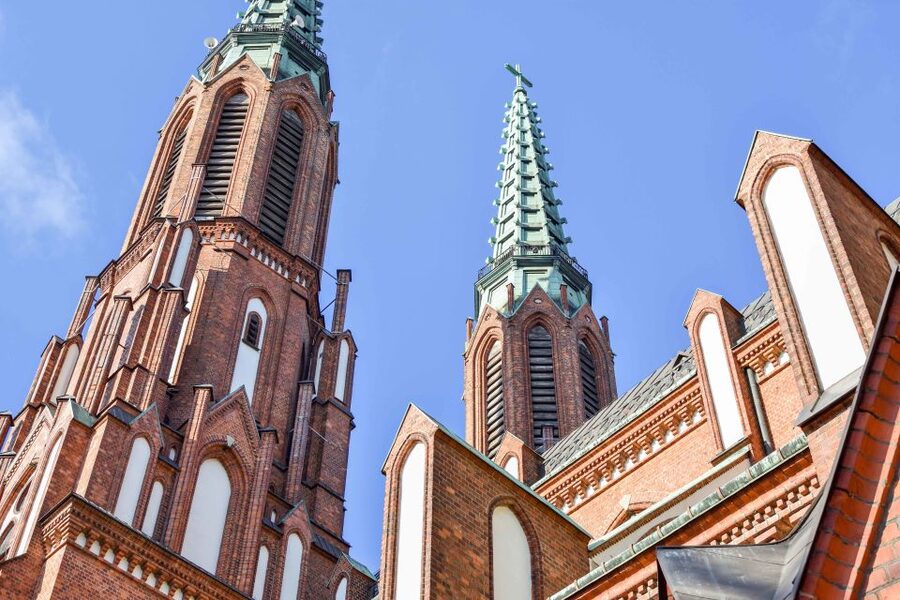
St. Florian Cathedral is one of the key sights on the route. It helps anchor the Christian side of Praga’s religious past and gives you a large, recognizable point of reference within the neighborhood.
The tour also visits an Orthodox church connected with the site of a former synagogue and ritual bath. That single location points to the district’s changing population and the traces left by communities that no longer occupy the same spaces.
This is where a local guide adds value. A quick look at a church tells you very little by itself. The important information is how the site fits into Praga’s broader story, and how religious buildings reflect changes in population, power, and memory.
The experience does not promise interior visits to every religious building, so you should think of these stops primarily as part of an outdoor walking route. If entering churches is especially important to you, confirm the details when booking.
Różycki Bazaar and the sound of street life
Różycki Bazaar is another important stop. Its value is not only as a market but as a symbol of Praga’s commercial character. The area helps explain why the district became a major trading center before the war and why it later gained a reputation for free trade during communist times.
Markets are often the best places to understand how a neighborhood functions. Grand buildings tell you about institutions. A bazaar tells you about buying, selling, bargaining, and daily routines. Here, the guide can connect local commerce with the entrepreneurs who helped shape Praga.
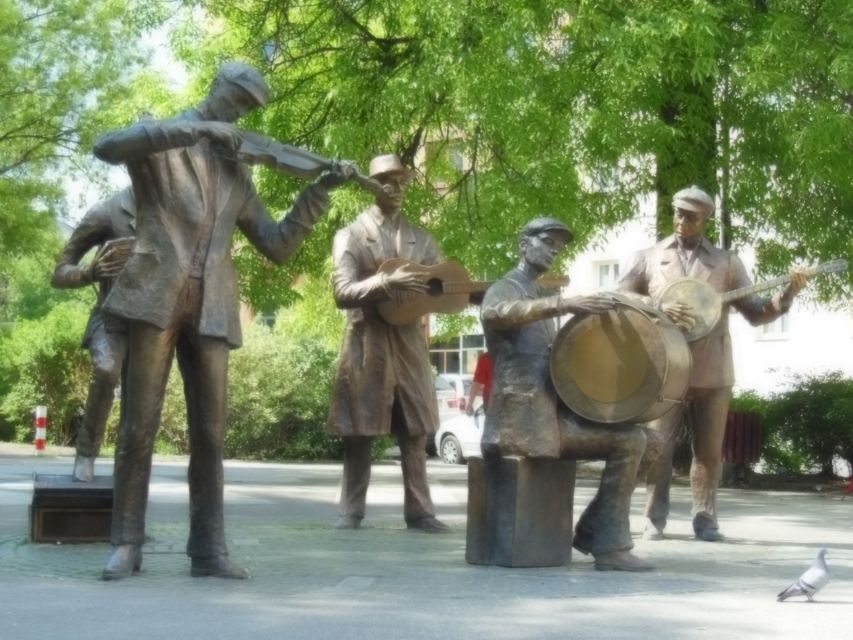
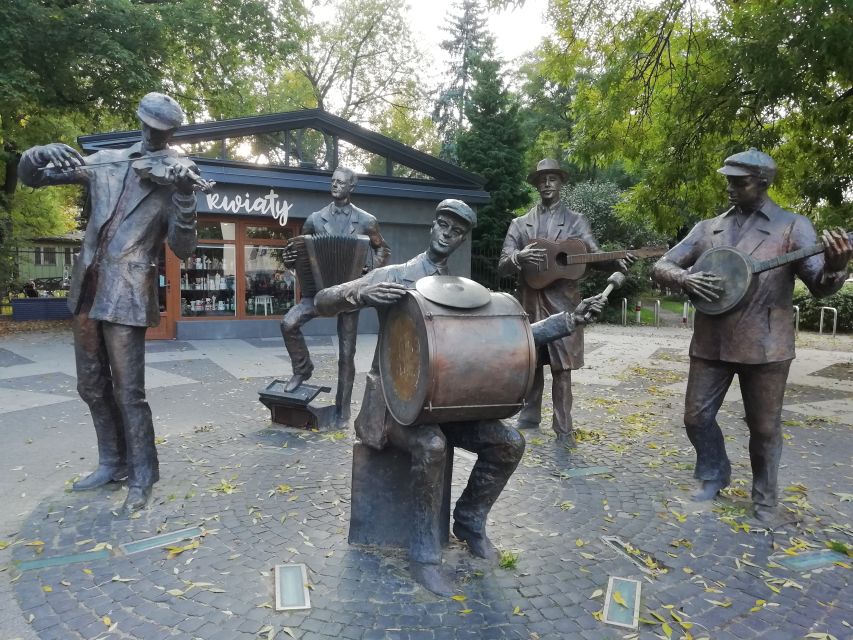
The route also includes the monument to the Praga Street Band. This adds a lighter, more local note to a walk that includes war, religious change, and industrial decline. It reminds you that Praga’s identity is not only preserved in buildings. It also lives in music, public memory, and neighborhood culture.
Allow yourself to look around rather than rushing from one stop to the next. The official duration is only two hours, and the district contains more stories than any short walk can cover. A private tour lets you ask about the places that catch your eye.
Koneser vodka factory and the post-industrial Praga
The Koneser vodka factory complex is one of the tour’s most distinctive stops. It represents Praga’s industrial past and its newer cultural and commercial use. Former factory buildings can show you how a working site becomes part of a changing neighborhood without losing all connection to its original purpose.
You should not treat Koneser as just another photo stop. Its importance lies in the contrast between production and reinvention. The complex helps you see why Praga has attracted galleries, designers, and restaurants while still carrying an industrial look.
This is also one of the places where the tour’s mix of history and present-day life works well. You get a sense of what Praga was built to do, then how the area is being used now. That makes the walk more useful than a simple list of old addresses.
The tour does not include food or drinks, so plan separately if you want a meal or a taste of local products. Koneser may be worth revisiting after the walk if you want more time in its restaurants or cultural spaces, but the supplied tour details do not promise any included tasting or admission.
The Warsaw Zoo story and its wartime weight
The story of the Warsaw Zoo director and his wife is one of the most meaningful parts of the route. During the war, they helped save hundreds of Jews from the Warsaw Ghetto. The tour connects their personal actions with the wider history of occupation, danger, and rescue in Warsaw.
This story gives the walk a human scale. Instead of hearing only about armies, borders, and destruction, you learn about decisions made by two people who used their position to help others. The zoo setting also broadens your understanding of wartime Warsaw beyond the best-known monuments and museums.
Because the tour is short, the guide cannot provide every detail of this history. Still, this stop adds real purpose to the route. It is one reason I would choose this experience after already seeing the Old Town. You get a different view of Warsaw’s wartime experience, tied to a neighborhood rather than presented only through a formal memorial.
The material can be emotionally serious. If you want a light, purely scenic walk, this may not be the right choice. If you want to understand how ordinary places became connected with extraordinary acts, it is a strong reason to book.
Seeing Praga through The Pianist
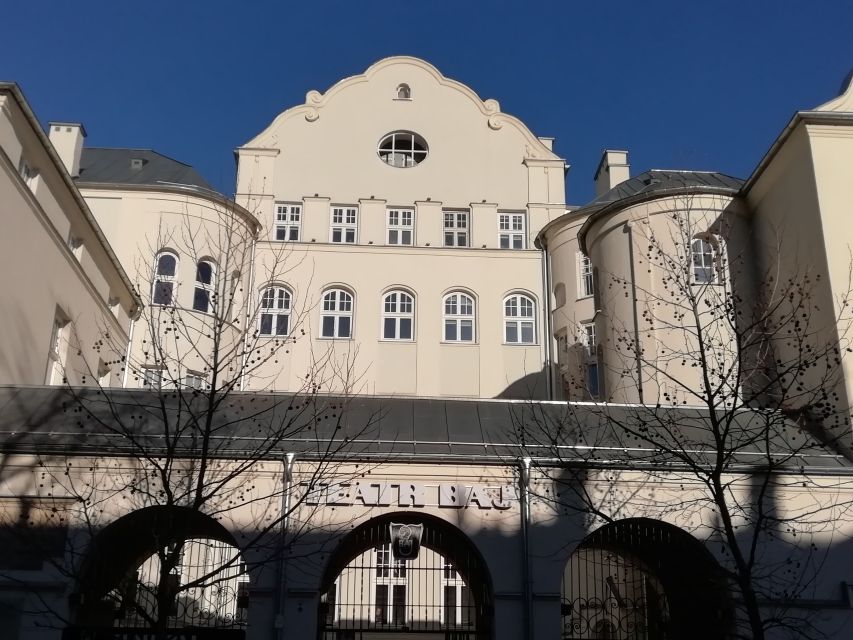
The walk includes streets used for filming Roman Polanski’s Oscar-winning movie The Pianist. Film locations can sometimes feel like a thin excuse for a tour, but here they fit the district’s appearance and wartime associations.
Praga’s older streets and surviving tenements help explain why filmmakers have used the area to represent earlier Warsaw. You can compare the real streets with their role on screen and see how the district’s worn surfaces create a sense of time that a newly rebuilt part of the city may not provide.
The guide can also help separate cinematic effect from documented history. A film uses streets to tell a story, while a walking tour can explain what those streets actually meant to residents. That makes the film connection more worthwhile than simply pointing at a facade and naming the movie.
If you have seen The Pianist, this part will likely land more strongly. If you have not, it still works as an introduction to the district’s visual character, but the film reference may matter less to you.
Is $69 a fair price for two hours?
At $69 per person, this is not the cheapest way to see Praga. You are paying for a certified guide, a private group, and a focused route with historical interpretation. The price makes more sense when several people share the private booking or when you care about asking questions and shaping the pace.
The value is less about the number of sights and more about the links between them. In two hours, you can see religious buildings, a bazaar, tenements, communist blocks, industrial property, a street-band monument, and film locations. Without a guide, you might pass many of these places without understanding how they connect.
The tour does not include lunch, food, drinks, hotel pickup, or hotel drop-off. You need to reach the cathedral yourself, though the M2 subway exit makes the starting point practical. There are no stated admissions or tastings included, so budget separately for anything you choose to do after the walk.
Free cancellation is available up to 24 hours before the start, and you can reserve now while paying later. One warning is worth taking seriously: a past booking was changed from 10 a.m. to 2 p.m. at the last minute, and the customer could not attend. That appears to be an isolated complaint among otherwise very positive feedback, but you should still watch for schedule updates.
Who will get the most from this Praga walk?
I would choose this tour if you have already seen central Warsaw and want a district with more visible texture and social history. It also suits first-time visitors who prefer a guide to explain what they are seeing instead of simply walking past buildings.
It is particularly useful for:
- History-minded visitors who want wartime stories beyond the main memorials.
- Architecture fans interested in pre-war tenements, communist housing, and factory reuse.
- Film fans curious about locations from The Pianist.
- Private groups that want time for questions and a more personal pace.
- English, German, or Polish speakers who want a live guide in one of those languages.
I would think twice if you dislike uneven or worn urban scenery, need a fully indoor activity, or want a food-focused experience. The walk includes no meal, no drinks, and no promise of indoor access at every stop.
Should you book the Warsaw Praga walking tour?
Book it if you want Warsaw to feel like a lived-in city rather than a collection of restored monuments. The best parts are the links between Praga’s old trade, mixed religious life, wartime damage, communist housing, industrial buildings, and newer creative uses.
The guide is the key to the experience. Marzena has been praised for clear history, patience, and an engaging style, and those qualities matter on a route where many of the most important details are not obvious. At $69, I see this as a worthwhile private walk for people who value explanation and local context.
Skip it if you want a low-cost stroll or a tightly packed tour of famous interiors. For everyone else, especially those curious about the less polished face of Warsaw, two hours in Praga can add a strong new chapter to your visit.
FAQ
How long is the Warsaw Praga walking tour?
The tour lasts two hours.
What is the tour price?
The price is $69 per person.
Is this a private tour?
Yes. The tour is offered for a private group.
Where does the tour meet?
You meet in front of the Metropolitan Cathedral of Maria and Magdalena at aleja Solidarności 52, Warsaw.
How do I find the guide?
The guide waits at the exit from the M2 subway in front of the cathedral and carries a PolinTours sign.
Which languages are available?
Live guiding is available in English, German, and Polish.
Is food included?
No. Lunch, food, and drinks are not included.
What should I bring?
Bring comfortable shoes, sunglasses, a sun hat, and sunscreen.
Can I cancel the booking?
Yes. You can cancel up to 24 hours in advance for a full refund. You can also reserve now and pay later.
More two hour outings in Warsaw
- Warsaw: 2-Hour Guided Segway Tour
★ 4.8 · 34 reviews - Warsaw: 2-Hour Tour of Daily Life in the Ghetto Warsaw
★ 4.9 · 26 reviews - Warsaw: 2-Hour Chopin’s Life Walking Tour
★ 5.0 · 19 reviews - Warsaw: 2-Hour Old Town Walking Tour
★ 5.0 · 17 reviews
Recently added in Warsaw
- Warsaw Wolf’s Lair with St. Lipka and Mamerki Private Guided★ 4.2 · 3 reviews
- Taste of Poland, food tour and guided walk with 12 tasting★ 5.0 · 3 reviews
- Discover Warsaw’s most Photogenic Spots with a Local★ 5.0 · 3 reviews
- Lodz Small Group Tour from Warsaw with Lunch★ 4.0 · 3 reviews
- Jewish heritage in Warsaw★ 4.5 · 3 reviews
- Warsaw Outdoor Paintball with Transfers (all year round)★ 5.0 · 3 reviews
- Electric Scooter Tour: Full Tour – 3-Hours of Magic!★ 5.0 · 3 reviews
- Skip-the-Line Polin Museum Warsaw Jewish History Tour★ 5.0 · 3 reviews
Walking Tours, compared.




Gdańsk City Sights & History Guided Walking Tour in English
Read our review →


Where else this one turns up