

Reviewed · JEWISH QUARTER & KAZIMIERZ TOURS
Warsaw : Jewish Quarter Private Walking Tour
Warsaw’s Jewish Quarter is not a single preserved old neighborhood. Much of it was destroyed, rebuilt, or marked only by a wall fragment and a memorial. This private walk helps you read those traces, from the Ghetto Heroes Monument to Umschlagplatz, where deportations began.
I like the private format, since your guide can adjust the route and explain difficult subjects at a pace that suits you. I also like the mix of major memorials with less obvious places, including the Footbridge of Memory and the Jewish Cemetery. The main drawback is time: two hours is enough for a strong introduction, but the route covers a lot of ground and ends about a 30-minute walk from Warsaw’s Old Town.
Key points to know before booking

- A serious Warsaw history walk: The route focuses on the Jewish Ghetto, Nazi persecution, resistance, deportation, and remembrance.
- Private and customizable: You get your own guide, with no other people added to your group.
- Several memorials in one compact tour: The Ghetto Heroes Monument, Umschlagplatz, the Footbridge of Memory, and the Memorial Route of the Martyrdom and Struggle of Jews all feature in the visit.
- A real cemetery visit: Okopowa Street leads to the Jewish Cemetery, where you can see graves linked with figures such as Ludwik Zamenhof, Ischok Leib Perec, and Janusz Korczak.
- English or Spanish guidance: Guides named Paulina, Karol, and Maria have received especially strong praise for clear and personal explanations.
- Good value for a small group: At $58 per person, the price makes the most sense for couples, families, or friends who want a dedicated guide rather than a large public tour.
Starting near Warsaw’s Old Town
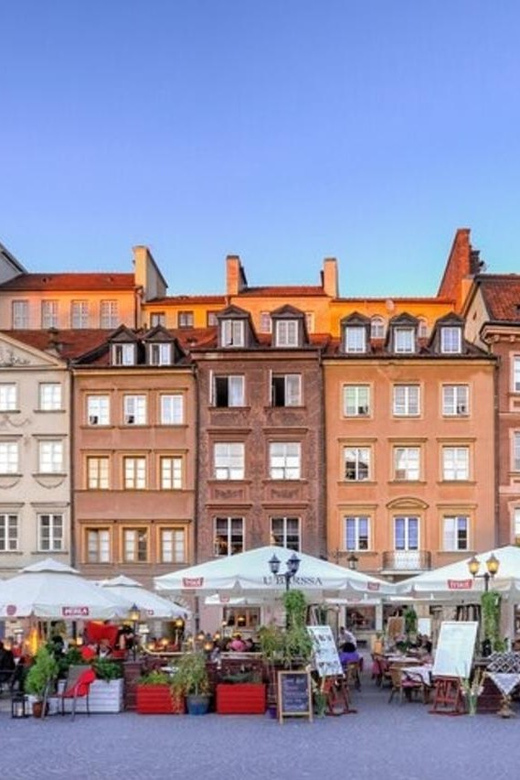
Meet at Miodowa 21B, 00-246 Warsaw, close to the historic Old Town. This is a handy starting point if you are already visiting the Royal Castle, Warsaw Barbican, or Old Town Market Square.
The address matters because the tour does not begin in the former Ghetto itself. You start near the Old Town, then use walking and public transport as needed. That gives the guide some flexibility, but you should not expect a simple loop that returns to the starting point.
The route takes about two hours. Several stops are planned at roughly 20 minutes each, so the schedule is brisk. You will cover a lot of ground, and the tour finishes around a 30-minute walk from the Old Town. Wear comfortable shoes, and keep the end point in mind when planning lunch or your next museum visit.
More Walking Tours in Warsaw
- Warsaw: Old Town Highlights Walking Tour in English
★ 4.7 · 1,516 reviews - Warsaw: Old Town Guided Walking Tour
★ 4.9 · 599 reviews - Half-Day Polish Food Walking Tour with Guide and Dinner
★ 4.5 · 381 reviews
Nożyk Synagogue and the Jewish community before the war
Nożyk Synagogue is one of the first important stops. It offers a way to think about Warsaw’s Jewish community before the Holocaust, rather than beginning only with destruction and death.
The synagogue is a useful counterpoint to the memorials that follow. Jewish Warsaw was a living community with religious institutions, writers, educators, families, and political groups. A guide can help connect the buildings and names you see with that larger story.
The visit includes a photo stop, sightseeing, and guided explanation. Since the tour is private, you can ask for more detail about the synagogue, wartime Warsaw, or present-day Jewish life if those subjects interest you.
One practical point: the activity information promises help booking tickets for desired visits, but it does not state that synagogue admission is included in the $58 price. Ask your guide or the provider about any entry arrangements before the tour.
The Footbridge of Memory and a divided city
The Footbridge of Memory is one of the route’s most striking locations. During the Ghetto’s existence, a footbridge crossed over a street, linking parts of the sealed area while keeping traffic below moving. It has become a powerful image of the physical division imposed on Warsaw’s Jewish population.
Today, a multimedia installation recalls the bridge and its place in the Ghetto. This is not just a photo stop. It shows how modern Warsaw uses technology and public art to mark something that has disappeared from the street itself.
I find stops like this valuable because they make the geography easier to understand. A memorial can tell you what happened, but a bridge explains how the city was physically controlled. You can better picture the barriers, restricted movement, and separation that shaped daily life.
The drawback is that modern surroundings can make the original setting hard to read. A guide’s old photographs and clear explanation are especially useful here. One guide on this route used photographs to support the talk, which can make the missing buildings and altered streets easier to picture.
Okopowa Street and the Jewish Cemetery
The Jewish Cemetery on Okopowa Street brings a different mood to the tour. Instead of visiting only monuments created after the Holocaust, you walk among a place where generations of Warsaw’s Jewish residents were buried.
The cemetery holds the graves and memorials of important cultural figures, including Ludwik Zamenhof and Ischok Leib Perec. You also pay tribute to Janusz Korczak at his symbolic grave. Korczak, a doctor, educator, and writer, is one of the best-known figures connected with the wartime Jewish orphanage in Warsaw.
The cemetery is important for another reason: it restores individual names and lives to a story that can otherwise feel too large to grasp. Writers, teachers, religious leaders, and ordinary families belonged to the community long before the Ghetto was created.
Expect a reflective stop rather than a fast attraction. The ground may be uneven, and the visit asks for respectful behavior. The tour information confirms wheelchair accessibility for the activity, but it does not describe the surface conditions or accessibility of every part of the cemetery. If that matters to you, raise it when booking.
Other Jewish Quarter and Kazimierz walks:
- Private Tour: Warsaw’s Jewish Heritage by Retro Fiat
★ 5.0 · 208 reviews - Warsaw: Jewish Heritage & Holocaust Walking Tour
★ 4.7 · 119 reviews - Warsaw: Jewish Heritage 4-Hour Private Tour
★ 4.9 · 26 reviews - Warsaw Jewish Heritage Private Tour in Retro Fiat
★ 4.9 · 22 reviews
The Mausoleum of Struggle and Martyrdom
Mauzoleum Walki i Męczeństwa, or the Mausoleum of Struggle and Martyrdom, adds another layer to the story of Nazi occupation and imprisonment. It is included as a guided sightseeing stop on the route.
This part of Warsaw’s memory work can be difficult. The tour is not designed as a light city stroll, and the subject matter includes oppression, resistance, deportation, and mass murder. You should expect a sober tone and allow yourself time after the walk if you want to process what you have seen.
The advantage of having a private guide here is the chance to ask direct questions. You can request more context about the occupation, the Jewish Ghetto, or the Memorial Route of the Martyrdom and Struggle of Jews without worrying about holding up a large group.
Umschlagplatz, the departure point
The Umschlagplatz Monument is among the most important stops. This is the memorial at the place where Warsaw’s Jewish residents were gathered before deportation to extermination camps.
Its meaning is stark. The site represents the forced removal of countless people from the Ghetto, many of whom were murdered after deportation. A guide can help explain how the location fitted into the wider system of German occupation, segregation, deportation, and extermination.
This is also where the route’s focus shifts from community life and resistance to the scale of loss. You may find the stop emotionally heavy, but it is central to understanding Warsaw’s wartime story.
A short tour cannot explain every name, transport, and historical detail connected with Umschlagplatz. The benefit is that it places the site within a wider sequence of stops, rather than treating it as an isolated monument.
The Ghetto Heroes Monument and the uprising
The Ghetto Heroes Monument is the natural center of the walk. It honors the people who resisted Nazi oppression during the Warsaw Ghetto Uprising and serves as a memorial to those murdered in the Holocaust.
The monument is located along the Memorial Route of the Martyrdom and Struggle of Jews. Here, the guide can connect the places you have already visited: the divided city, the cemetery, the deportation point, and the surviving traces of the Ghetto.
The uprising is often reduced to a few dates in a history book. At this monument, the subject becomes tied to actual streets and a population trapped in an area created by force. That makes the explanation more meaningful than a quick museum caption.
You will also see the remains of the Ghetto wall and iron slabs marking its former boundaries. These fragments are easy to miss without a guide. They show that the Ghetto was not merely an idea or an administrative zone. It was a walled area that cut through the city and controlled where people could go.
What the two-hour format does well
Two hours is a useful length if you want an introduction before visiting a larger museum or returning for a longer walk. You see the main memorials and several sites that are not obvious to someone exploring Warsaw alone.
The compact timing also keeps the experience focused. You do not spend half a day standing in one place while the guide gives a long lecture. Instead, the route moves from synagogue to bridge, cemetery, mausoleum, deportation memorial, and uprising monument.
Still, the pace has limits. The planned stops add up to a busy schedule, and travel between them takes time. If you want extended cemetery visits, long discussions at every monument, or plenty of time for photographs, two hours may feel short.
One visitor who took the smaller Ghetto route found it so informative that they wished for another two hours, especially with poor weather cutting the time outdoors. That is a useful clue: the short tour works as a concentrated introduction, while history-minded visitors may want to ask about a longer option.
What you get for $58 per person
At $58 per person, this is not the cheapest way to see Warsaw’s Jewish memorials. The value comes from the private setting, customization, and local guidance.
For one person, the price is harder to justify than for a couple or small family. For two or more people, you are paying for a dedicated guide who can answer questions, adjust the emphasis, and help you connect sites that are spread across the city.
Public transport is included unless you select an option that changes the transport arrangement. Food and drinks are not included, and there is no promise of a café stop. Plan to eat before or after the walk.
The strongest reason to pay for this tour is not simply seeing monuments. You can find several of them on a map. The value lies in understanding what each place means, how the sites fit together, and where the remaining wall fragments sit in relation to the former Ghetto.
Guides, language, and the private format
The tour is offered in English or Spanish. Paulina received especially warm praise for excellent English and for covering a great deal in two hours. Karol was also praised for explaining both Warsaw and the Jewish population, while Maria was described as an excellent guide.
Those names do not guarantee which guide you will receive, so treat them as examples rather than a promise. The broader point is that the guide is central to the experience. This is a subject where clear explanation and a respectful tone matter as much as route planning.
Because the group is private, you can ask for a stronger focus on the uprising, cemetery figures, synagogue life, or the geography of the Ghetto. The activity is also wheelchair accessible, although you should confirm the practical details of each stop if you have specific mobility needs.
Free cancellation is available up to 24 hours before the start, and you can reserve now and pay later. Those policies are useful if your Warsaw schedule is still shifting.
Who should choose this walk
I would choose this tour if you want a focused introduction to Jewish Warsaw and prefer conversation over a large group format. It suits first-time visitors who want to understand the memorials before visiting other museums or exploring the city alone.
It also suits families with older children, couples, and history-minded visitors who appreciate being able to ask questions. The private format is especially useful when members of your group have different levels of background knowledge.
You may want something else if you prefer a relaxed city walk with cafés, markets, and light sightseeing. This is a serious Holocaust and wartime history tour. It includes substantial walking, public transport, a cemetery, and several memorials, with little time for casual wandering.
Should you book the Warsaw Jewish Quarter tour?
Book it if you want the key Jewish Ghetto sites explained in one private, well-organized outing. The combination of Nożyk Synagogue, the Footbridge of Memory, Okopowa Cemetery, Umschlagplatz, the wall fragments, and the Ghetto Heroes Monument gives you a strong sense of both the community that existed and the destruction that followed.
The main question is time. Two hours gives you a clear framework, not a complete study. If you want more time at each memorial, ask about a longer or larger Ghetto option. If your schedule is tight and you value a personal guide, $58 per person is a reasonable price for a concentrated and thoughtfully serious walk.
FAQ
Where does the tour begin?
The meeting point is Miodowa 21B, 00-246 Warsaw, near Warsaw’s historic Old Town.
How long does the tour last?
The walking tour lasts two hours.
Is this a private tour?
Yes. The group is private, and no other people are added to your booking.
Which languages are available?
The tour is offered in English and Spanish.
Which main sites are included?
The route includes Nożyk Synagogue, the Footbridge of Memory, Jewish Cemetery Warsaw on Okopowa Street, the Mausoleum of Struggle and Martyrdom, Umschlagplatz Monument, and the Monument to the Ghetto Heroes.
Is public transport included?
Walking and public transport are included, except if you select an option that states otherwise.
Is food or drink included?
No. Food and drinks are not included.
Is the tour wheelchair accessible?
Yes, the activity is listed as wheelchair accessible. For specific conditions at individual sites, confirm details when booking.
Can I cancel or pay later?
You can cancel up to 24 hours in advance for a full refund. You can also reserve now and pay later.
Recently added in Warsaw
- Warsaw Wolf’s Lair with St. Lipka and Mamerki Private Guided★ 4.2 · 3 reviews
- Taste of Poland, food tour and guided walk with 12 tasting★ 5.0 · 3 reviews
- Discover Warsaw’s most Photogenic Spots with a Local★ 5.0 · 3 reviews
- Lodz Small Group Tour from Warsaw with Lunch★ 4.0 · 3 reviews
- Jewish heritage in Warsaw★ 4.5 · 3 reviews
- Warsaw Outdoor Paintball with Transfers (all year round)★ 5.0 · 3 reviews
- Electric Scooter Tour: Full Tour – 3-Hours of Magic!★ 5.0 · 3 reviews
- Skip-the-Line Polin Museum Warsaw Jewish History Tour★ 5.0 · 3 reviews
Jewish Quarter & Kazimierz Tours, compared.

Bike Tour of Old Town, Jewish Quarter and the Ghetto
Read our review →
Kazimierz, Schindler’s Factory & Ghetto Guided Tour
Read our review →
Bike Tour of the Old Town, Kazimierz, and the Ghetto
Read our review →

Jewish Quarter and Ghetto Electric Golf Cart Tour
Read our review →
Where else this one turns up