
Reviewed · JEWISH QUARTER & KAZIMIERZ TOURS
Krakow: Jewish Quarter and Former Ghetto Tour
Krakow’s Jewish Quarter is easy to admire as a maze of old streets, cafés, and handsome synagogues. The hard part is understanding what happened here. This 2.5-hour walking tour connects Jewish life before World War II with the destruction of the Holocaust and the memorials left behind.
I like the way the tour combines major sights with details you could easily miss alone, and I like that guides such as Bart, Magda, Matt, Emily, and Slavek bring different voices to the subject. The main drawback is the pace: there is a lot to absorb while walking, and you should wear good shoes and dress warmly in cold weather.
Key points to know before you book
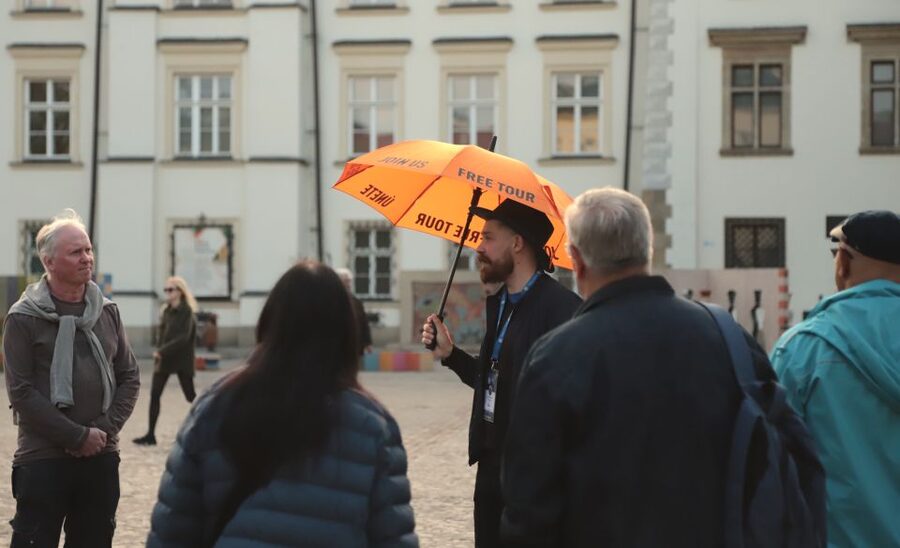
- The Old Synagogue is the starting point: Meet at ul. Szeroka 24 and look for the orange umbrella.
- Kazimierz is more than a film set: You learn about Jewish life, traditions, and major figures before the war.
- The former ghetto adds a sobering second half: Ghetto Heroes Square and Holocaust memorials give the history a human focus.
- Schindler’s List locations are part of the walk: The film sites help connect Krakow’s streets with a widely known story.
- The guides are the main strength: Bart, Magda, Matt, Emily, and Slavek are repeatedly praised for clear storytelling and thoughtful answers.
- Plan for steady walking: The tour lasts 150 minutes, has several stops, and does not include food or drinks.
Starting at the Old Synagogue on Szeroka Street
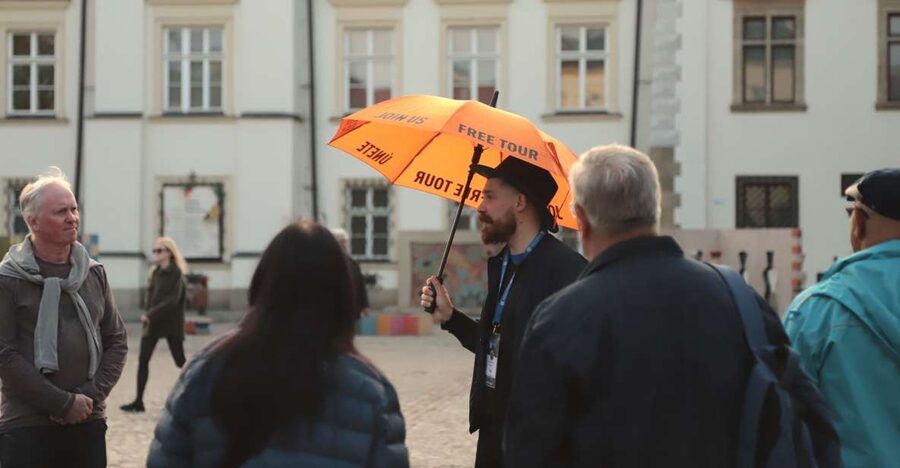
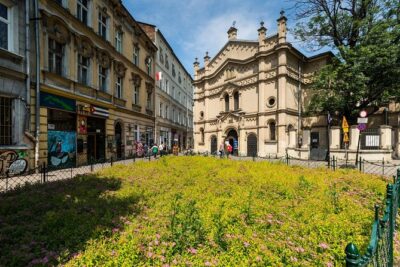
The tour begins in front of the Old Synagogue at ul. Szeroka 24. This is a useful meeting point because Szeroka Street gives you an immediate sense of Kazimierz’s former role as a Jewish center. Look for the guides with an orange umbrella, since the square can be busy with other walking groups.
The Old Synagogue is presented as Poland’s oldest synagogue and one of Europe’s oldest, with the activity highlights describing it as the second oldest synagogue in Europe. The building gives the tour a strong opening because the subject begins with Jewish religious and civic life, not only wartime tragedy.
That distinction matters. Kazimierz was established as a separate city on an island near Krakow, partly as a rival to its larger neighbor. Jewish communities who had faced persecution in parts of Western Europe settled here during the Middle Ages, and Kazimierz became a place where Jewish life could grow.
You will hear how the district developed its own customs, institutions, and social world. The narrow streets are not just pretty backdrops. They are the setting for a community that lived, worked, worshiped, and raised families here for centuries.
Other Jewish Quarter and Kazimierz walks:
- Krakow: Bike Tour of Old Town, Jewish Quarter and the Ghetto
★ 4.9 · 1,155 reviews - Krakow: Kazimierz Jewish Quarter Walking Tour
★ 4.8 · 571 reviews - Krakow: Kazimierz, Schindler’s Factory & Ghetto Guided Tour
★ 4.8 · 460 reviews
Kazimierz before World War II
A strong feature of this walk is its attention to the period before the Holocaust. It is easy to visit Krakow, see a synagogue, and immediately think only of wartime loss. This tour gives you more context by explaining what Jewish life looked like before the catastrophe.
Your guide introduces terms such as Ashkenazim and Sephardim, helping you understand that Jewish communities were not one single, uniform group. You also hear about people connected with Krakow and Jewish life in Poland, including Helena Rubinstein, Roman Polanski, Ludwik Zamenhof, and Maximilian Faktorowicz.
These names widen the story. They show links to cosmetics, film, language, and popular culture, rather than reducing Jewish history to dates and suffering. I value that approach because it restores some sense of the people and ambitions that existed before the war.
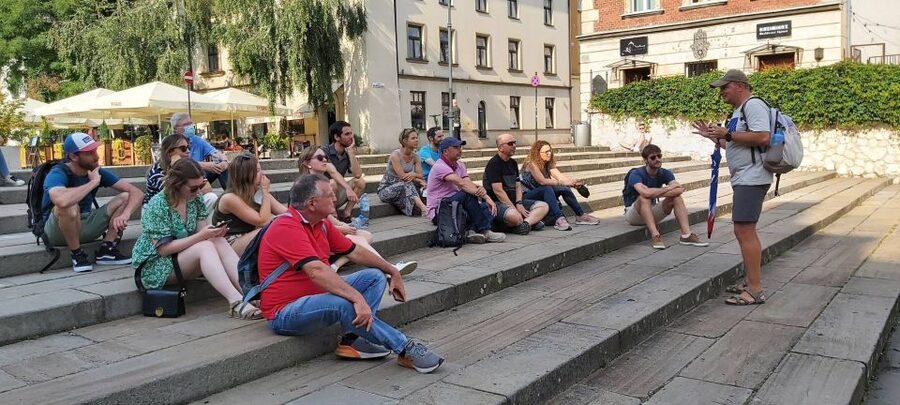
The streets of Kazimierz are compact, so you can expect frequent stops rather than one long lecture. Guides pause to point out buildings and corners that you might walk past without noticing. Several guides are praised for using everyday details to make the district easier to understand.
This part is also where the guide’s personality matters most. Bart is described as having a strong voice, dry humor, and a background in history and archaeology. Magda is praised for her warm manner and for stopping to invite questions. Matt is repeatedly described as energetic and clear, while Emily is noted for storytelling and for keeping the group engaged.
The exact guide depends on the day, but the repeated pattern is useful: expect an English-language walk led by someone comfortable explaining both the visible buildings and the less obvious history behind them.
Synagogues, streets, and the Jewish cemetery
The synagogue stops help show how Jewish religious life shaped Kazimierz. You will not simply count old buildings. The guide explains their place in the community and the changes they went through over time.
The Jewish cemetery is another important stop. It changes the mood of the walk. Here, the focus turns from neighborhood life to remembrance, identity, and the physical traces left by generations of residents.
A guide-led visit is especially useful in places like this because inscriptions, symbols, and names can be difficult to interpret on your own. You can ask questions as they arise, and the guide can place the cemetery within the wider story of Kazimierz.
Do not expect a quiet, private visit. This is a public walking tour, and the group moves together. The route is designed to cover several locations within a limited time, so you may want to return later if you want to spend longer at the cemetery or inside any site open to independent visitors.
The tour is described as wheelchair accessible, but the supplied details do not specify the condition of every surface or the exact route between stops. If you need precise accessibility information, confirm the route before booking.
Crossing into the former ghetto
The tour then links Kazimierz with Krakow’s former ghetto. This shift is one of the most valuable parts of the experience because it makes clear that the Jewish Quarter and the ghetto were not the same place.
Kazimierz represents centuries of Jewish life in Krakow. The ghetto represents the Nazi persecution and forced confinement of Jewish residents during World War II. Walking between these areas helps you understand the city’s geography as well as its timeline.
At Ghetto Heroes Square, the memorial carries much of the emotional weight. The square is associated with the people who were forced into the ghetto and with the destruction of the community. The Holocaust memorial stops are handled in a serious, reflective way, according to the tone described by the guides.
You should be prepared for difficult material. This is not a light sightseeing walk, even though guides may use gentle humor or engaging stories earlier in the tour. Several guides are praised for finding the right tone when discussing traumatic events, giving clear facts without turning the subject into a spectacle.
I would avoid scheduling this tour when you are in a rush to catch a train or flight. The walk is listed as 150 minutes, but one session ran close to three hours. That may be welcome if you want extra detail, but it can affect your plans.
A few more Krakow half days to consider
- From Krakow: Auschwitz-Birkenau Guided Tour & Hotel Pickup
★ 4.5 · 33,358 reviews - From Krakow: Auschwitz-Birkenau Guided Tour & Hotel Pickup
★ 4.5 · 29,340 reviews - Krakow: Auschwitz Guided Tour with Optional Hotel Pickup
★ 4.5 · 15,280 reviews - Krakow–Zakopane: Cable Car, Chocholow Baths, Cheese & Vodka
★ 5.0 · 10,720 reviews
Schindler’s List filming locations
The Schindler’s List stops give the route a familiar reference point. The film brought Krakow’s Jewish Quarter and wartime story to a worldwide audience, and seeing some of the locations can help you connect the movie with the real streets.
The useful point is that the tour does not treat the film as the whole story. Instead, the filming locations sit within a larger discussion of Jewish life, the ghetto, and the people affected by the war.
That balance is important. A movie can help you imagine a past, but it can also simplify it. The guide provides the wider setting, explains what the locations mean, and points out places you may want to revisit later.
There is one practical issue here: keep track of the group. One participant became separated while taking photographs near Schindler-related sites and followed the wrong group afterward. The advice is simple: tell the guide if you need extra time, stay near the orange umbrella, and confirm the guide’s appearance before the walk begins.
The tour does not include entry to a museum, food, or drinks. It is an outdoor walking experience focused on streets, memorials, synagogues, cemetery areas, and film locations. If you want a longer visit inside a museum connected with the wartime story, plan that separately.
How the guides shape the experience
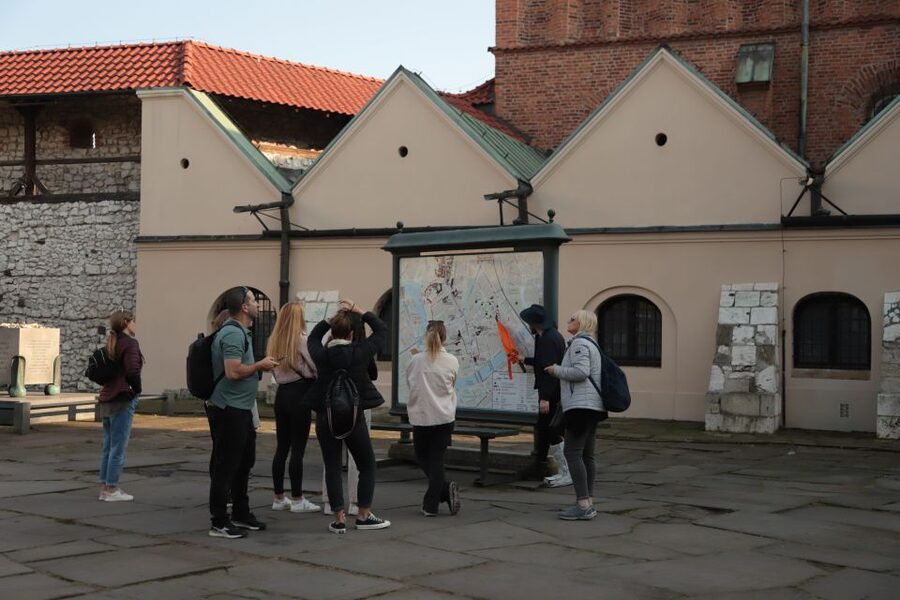
The strongest feature here is the guide. A good guide is essential for this subject because the meaning is not always visible in the architecture.
Bart receives especially strong praise for his voice, pacing, passion, and broad knowledge of Krakow. His use of dry humor is mentioned as a way of keeping the walk human without making light of the subject. Matt is praised for bringing the story to life and answering questions. Magda is described as approachable, welcoming, and careful to stop for questions.
Emily is noted for her storytelling and ability to keep the group focused. Slavek is repeatedly described as friendly, clear, and well informed. Chris is praised for a personal and thought-provoking style, while other guides are described as confident and respectful.
These comments point to something practical: the content is consistent, but the experience may feel different depending on who leads it. You should expect a live guide rather than an audio script, with room for questions and a personal way of presenting the history.
Group communication also matters. One guide had a voice loud enough for the full group to hear, an important advantage on city streets. Still, stay close at crossings and busy locations. Several stops involve photographs, and the group may begin moving before you are ready.
Walking conditions, timing, and comfort
The route lasts 2.5 hours and involves a fair amount of walking. There are stops along the way, so it is not a nonstop march, but you should still wear comfortable shoes.
Cold weather deserves special attention. A January and February visit can feel long outdoors, and one participant specifically advised wrapping up warm because the tour lasts more than two hours. You will be better prepared with a proper coat, gloves, and footwear suited to city streets.
Food and drinks are not included. Have water with you, particularly if you tend to need regular breaks. Because the tour moves through neighborhoods rather than staying in one attraction, do not assume you will have a scheduled café stop.
The tour is offered in English and is wheelchair accessible according to the activity information. Party groups and the use of alcohol or drugs are not allowed. That rule fits the tone of the walk, which deals with memorials and mass suffering rather than nightlife.
Is $19 a fair price?
At $19 per person, this is a modest cost for a 150-minute guided walk. The value comes from interpretation, not from paid admission. You are paying for someone to connect the synagogues, streets, cemetery, ghetto memorials, and film locations into one understandable story.
You could walk through Kazimierz alone for less. You could also miss the importance of buildings, fail to distinguish the former Jewish district from the ghetto, or leave with only a vague impression of what happened.
The tour is especially good value if Krakow is new to you or if you have limited time. It provides a useful framework for later visits to museums or individual sites. If you already have a strong background in Krakow’s Jewish history, you may prefer a museum visit or a slower private tour.
There is also a donation issue to consider. The paid booking is one way to support the tour, while some people may encounter a cheaper free-tour arrangement and then donate at the end. Since the exact payment setup can vary, check the terms shown when you book. The $19 price is reasonable if you want a reserved place and a planned route.
The activity allows free cancellation up to 24 hours before the start for a full refund, and you can reserve now and pay later. Those policies are useful if your Krakow plans are still shifting.
Who should book this walk?
I would choose this tour if you want to understand Krakow rather than simply photograph it. It suits first-time visitors, anyone interested in Jewish culture and Polish history, and people who want a thoughtful introduction before visiting other museums or memorial sites.
It is also a good fit if you prefer learning through stories and questions. The guides explain names, traditions, buildings, and wartime events in person, which can be much clearer than reading small plaques as you walk.
You may want to skip it if you dislike group walking, need long periods at each stop, or find emotionally heavy history difficult. The tour covers a lot in a short time, and one participant found the information rushed and hard to absorb while constantly moving.
Families with older children and teens may find the subject worthwhile, but the material is serious. Use your judgment based on age and interest. The rule against party groups also signals that this is meant as a respectful cultural and historical experience.
Should you book the Jewish Quarter and Former Ghetto Tour?
Yes, if you want context, not just landmarks. At $19, the tour offers a practical introduction to Kazimierz, Jewish life in Krakow, the former ghetto, Holocaust memorials, and Schindler’s List locations.
Book it early in your stay if possible. The walk can give meaning to places you later pass on your own, and the guide may point out sites worth returning to. Allow at least 2.5 hours, wear comfortable shoes, dress for the weather, and stay close to the orange umbrella.
If you want a slower, more private experience, this group walk may feel brisk. For most visitors, though, the combination of route, subject, and strong local guides makes it one of the better-value ways to begin understanding Krakow’s Jewish heritage.
FAQ
How long does the tour last?
The advertised duration is 150 minutes, or 2.5 hours. One reported tour lasted close to three hours, so allow some extra time if your schedule is tight.
Where does the tour begin?
It starts in front of the Old Synagogue at ul. Szeroka 24 in Krakow’s Jewish Quarter.
How do I find the guide?
Look for the guides with an orange umbrella.
What language is the tour conducted in?
The tour is conducted in English with a live English-speaking guide.
What places are included?
The walk includes the Old Synagogue, other Jewish heritage sites, the Jewish cemetery, Holocaust memorials, Ghetto Heroes Square, and Schindler’s List filming locations.
Is the tour wheelchair accessible?
The activity is listed as wheelchair accessible.
Is food or drink included?
No. Food and drinks are not included.
What does the tour cost?
The listed price is $19 per person.
Can I cancel for a refund?
Yes. You can cancel up to 24 hours in advance for a full refund.
Can I reserve without paying immediately?
Yes. The reserve-now-and-pay-later option lets you hold a place without paying at the time of booking.
Recently added in Krakow
- Auschwitz-Birkenau and Krakow Private Car Trip from Katowice★ 4.3 · 3 reviews
- Wawel Castle, Old Town with St. Mary’s Church Guided Tour★ 5.0 · 3 reviews
- From Krakow: Chocholow Thermal Hot Springs (hotel pick up)★ 5.0 · 3 reviews
- Private tour to Zakopane and Thermal Baths from Krakow★ 5.0 · 3 reviews
- Wawel Castle, Cathedral, Rynek Underground Tour with Lunch★ 5.0 · 3 reviews
- Legends of Cracow ROBOTIC SHOW★ 4.0 · 3 reviews
- From Krakow: Zakopane and Thermal Pools Guided Trip★ 5.0 · 3 reviews
- Guided Beer Tour in Krakow★ 4.5 · 3 reviews
Jewish Quarter & Kazimierz Tours, compared.
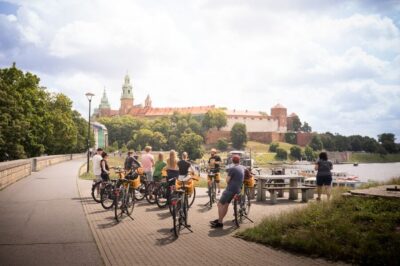
Bike Tour of Old Town, Jewish Quarter and the Ghetto
Read our review →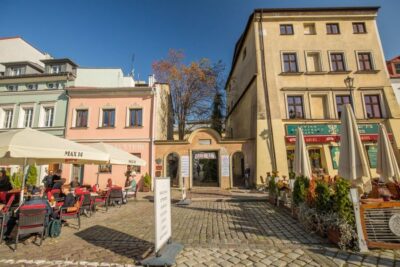
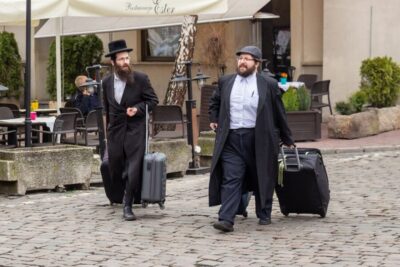
Kazimierz, Schindler’s Factory & Ghetto Guided Tour
Read our review →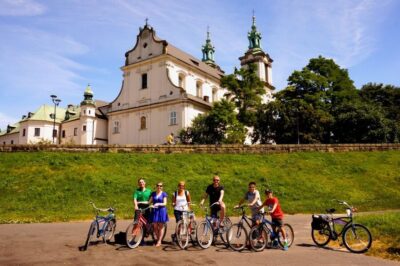
Bike Tour of the Old Town, Kazimierz, and the Ghetto
Read our review →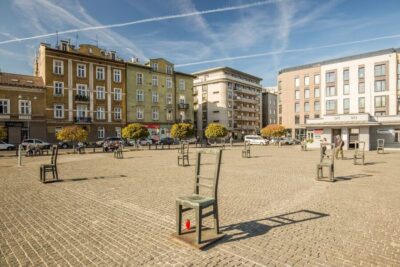
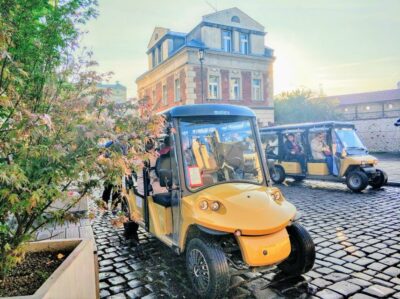
Jewish Quarter and Ghetto Electric Golf Cart Tour
Read our review →
Where else this one turns up