
Reviewed · HISTORICAL TOURS
Warsaw History and Reality Walking Tour
Warsaw’s story is one of destruction, stubborn survival, and careful rebuilding. This walk brings that story to life as you move from the Mermaid statue on the Vistula through the Old Town and along Krakowskie Przedmiescie, ending near Pilsudski Square.
I like the rooftop view from the University of Warsaw Library, and I like the way the route links famous sights with less obvious details, such as the workers’ district rebuilt after the war. Mona also leaves room for questions and local suggestions, including places to eat and stop for coffee. The main drawback is pace: two and a half hours covers a lot, so some stops receive only a short explanation.
Key points to know before booking
- Warsaw’s wartime rebuilding is the main theme: You will see how a ruined city was reconstructed and why that work still matters.
- The University Library rooftop is a highlight: The garden is open from April through October and offers views toward the Vistula and the city.
- Mona guides the walk in English: Her style is personal, flexible, and built around stories rather than a list of dates.
- The route mixes major sights and overlooked corners: You’ll see the Old Town, Royal Castle Square, the Presidential Palace, Saxon Garden, and the Unknown Soldier Memorial.
- The group is capped at 10 people: That is a useful size for asking questions and staying close to the guide.
- You need to allow about 2 hours and 30 minutes: Wear comfortable shoes and expect steady walking over cobblestones.
Warsaw’s Mermaid and the city’s wartime memory
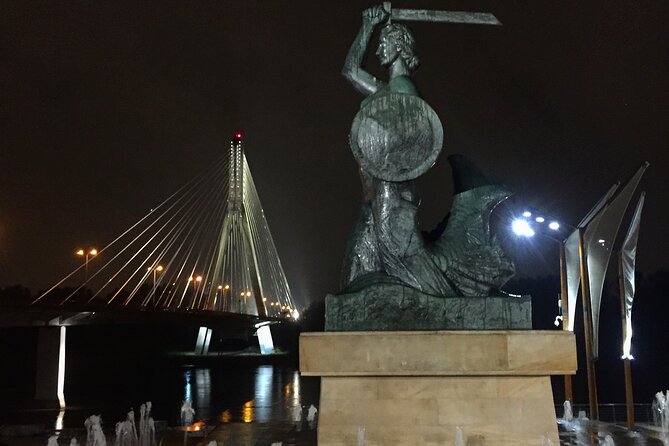
The tour begins at the Mermaid’s Statue on General George Smith Patton Street, near the Vistula. The Mermaid, or Syrenka, appears on Warsaw’s coat of arms and is one of the city’s best-known symbols. Here, Mona explains why this figure became tied to Warsaw and who served as the model for the sculptor.
The stop lasts about 10 minutes, but it sets the tone for the walk. This is not simply a photo stop. The Mermaid also carries a connection to the Second World War, giving you an early reminder that Warsaw’s symbols often have more than one layer.
I like starting here because the statue gives you an easy way into the city’s identity. You begin with a local emblem, then move quickly toward the physical evidence of how Warsaw was damaged and rebuilt. If you arrive early, use the time to get oriented along the river. The meeting point is outdoors, and the tour depends on suitable weather.
More History Tours in Warsaw
- Warsaw: POLIN Museum of the History of Polish Jews Ticket
★ 4.7 · 1,142 reviews - Warsaw: Chopin Concert at Historical Venue in Old Town
★ 4.7 · 445 reviews - Small-Group Historical Guided Tour of Warsaw with pick up/drop off. Public Tour.
★ 4.5 · 343 reviews
The University of Warsaw Library rooftop garden
The University of Warsaw Library is one of the route’s most unusual stops. Its rooftop garden, open from April through October, combines a working library with a large green space. The design follows the shape of the Vistula embankment, so the building feels connected to the river rather than isolated from it.
The garden is included as part of the viewing terrace access. From above, you can look toward the Vistula and across the city. This view matters because Warsaw can be hard to understand from street level. The river, rebuilt center, and modern parts of the city begin to fit together when you see them from a higher point.
Allow about 40 minutes here, making it one of the longer stops. That gives Mona time to discuss the building and the city’s changing shape, while you get a break from the pavement.
There is one clear seasonal limit. If you visit from November through March, the rooftop garden is not open according to the published schedule. The tour still has plenty to offer, but you should not book it expecting the full rooftop experience in winter.
The workers’ district rebuilt after the war
Between the library and the Old Town, the walk includes Warsaw’s first district rebuilt after the Second World War. It was designed to house workers involved in reconstructing the Old Town.
This is the kind of stop that makes the walk more useful than a quick route between postcard sights. You see that rebuilding was not just about restoring churches and grand squares. People needed homes, streets, and a functioning city while the work continued.
The details provided for this stop are brief, so the depth will depend on Mona’s explanation and your questions. That can be a strength for visitors who prefer conversation to a fixed script. It also means the walk is not best for someone who wants a long architectural study of every building.
St. Anne’s Church and Royal Castle Square
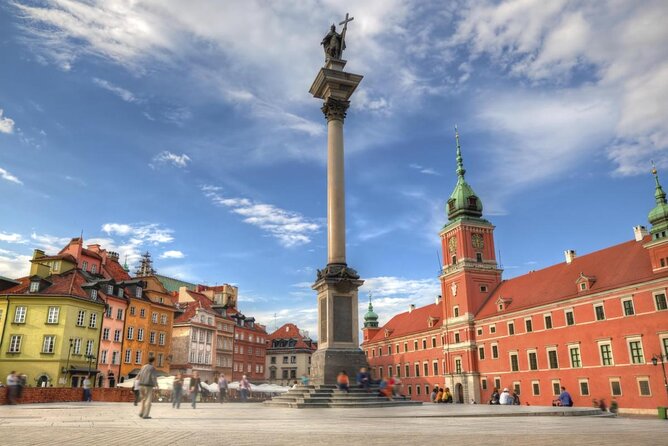
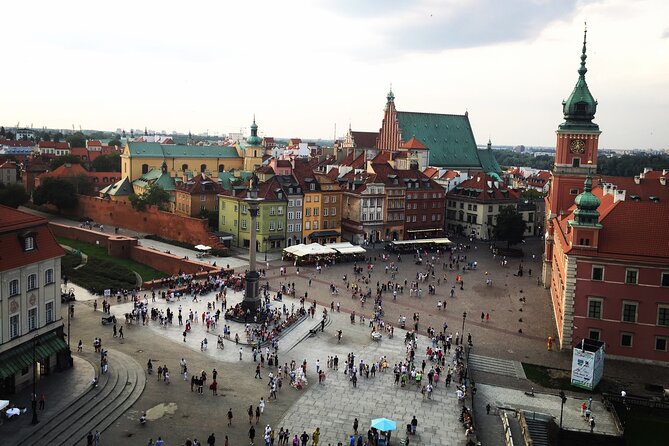
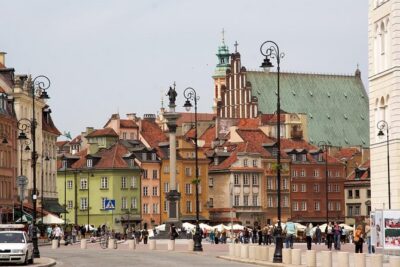
St. Anne’s Church, or Kosciol Swietej Anny, is described as one of Warsaw’s finest Baroque churches. The stop also gives you a look at Royal Castle Square and the reconstructed townhouses around the Old Town.
The church is free to visit as part of the outdoor itinerary, although the amount of interior access can depend on what is happening there. The planned time is about 15 minutes, so expect a focused explanation rather than a long visit inside.
Royal Castle Square is especially useful for understanding the Old Town’s presentation. The colorful facades and historic forms look old, but much of what you see was rebuilt after wartime destruction. That contrast is central to Warsaw. The city is not pretending nothing happened. It is showing how much effort went into bringing familiar streets and buildings back.
Look closely at the facades rather than rushing straight to photographs. The route is built around those details, and Mona’s local stories help explain why certain places matter.
More Walking Tours in Warsaw
- Warsaw: Old Town Highlights Walking Tour in English
★ 4.7 · 1,516 reviews - Warsaw: Old Town Guided Walking Tour
★ 4.9 · 599 reviews - Half-Day Polish Food Walking Tour with Guide and Dinner
★ 4.5 · 381 reviews - Warsaw: Warsaw Ghetto Private Walking Tour with Hotel Pickup
★ 4.9 · 369 reviews
Cobblestones and reconstructed Old Town lanes
The Old Town receives about 30 minutes. You’ll walk through cobblestone lanes, Gothic-looking streets, churches, and tiered burghers’ houses. The area was reconstructed to reflect the character of the earlier city, and the result is one of Warsaw’s most attractive walking districts.
This is the most picturesque part of the route, but it also deserves a little skepticism. The Old Town feels historic, yet much of it is a postwar reconstruction. That does not make it less meaningful. In fact, the rebuilding itself is the story.
Mona points out facade details and a favorite place for couples. The supplied route does not identify that exact spot, so you should expect her to reveal it during the walk rather than plan around a named landmark.
The short time here means you will get an introduction, not every church, alley, and square. If you want a slow photographic stroll, return on your own later. The advantage of seeing it with a guide first is that you learn what you are looking at before wandering back.
Cobblestones can be uneven, and the route includes several historic streets. Most people can take part, but comfortable shoes are a sensible choice.
Krakowskie Przedmiescie and the Presidential Palace
From the Old Town, the walk continues along Krakowskie Przedmiescie, part of Warsaw’s Royal Route. The full route runs about 2.5 miles and includes important buildings and monuments, though this experience covers only a section of it.
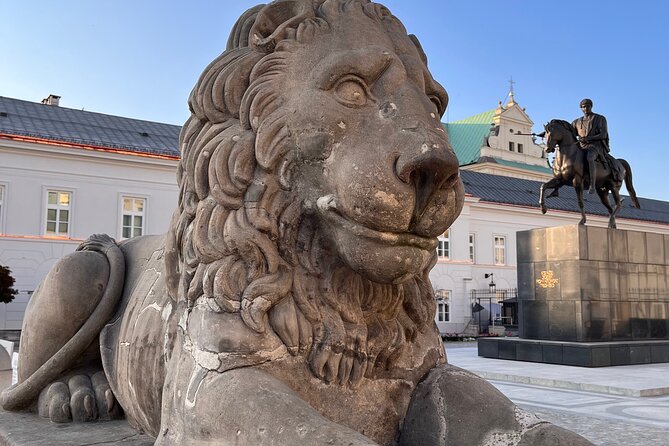
The Presidential Palace is one of the key sights. This Neoclassical building is the residence of Poland’s president and is guarded by four lions sculpted more than 200 years ago by Camillo Laudini. The palace also has a musical connection: eight-year-old Frederic Chopin played there publicly for the first time.
The planned stop lasts about 10 minutes. That is enough for the outside, the story of the lions, and the Chopin connection. It is not enough for an interior visit, and no palace admission is included.
I like this stretch because it changes the mood of the tour. After the tight lanes of the Old Town, Krakowskie Przedmiescie opens into a grand ceremonial avenue. You get a sense of how Warsaw’s political, royal, and cultural life developed along one route.
The road also helps put Chopin into the city rather than treating him as a name on a souvenir. His early performance here connects Warsaw’s public buildings with the musicians and artists who shaped Polish culture.
Pilsudski Square and the Unknown Soldier
The final major stop is Marshal Józef Piłsudski Square, a broad parade ground with the Tomb of the Unknown Soldier. The square remains important for public gatherings, concerts, and ceremonies. Behind the memorial is Saxon Garden, one of the city’s notable green spaces.
This is a fitting end because it returns the tour to public memory. The Mermaid represents Warsaw as a city symbol. The rebuilt Old Town represents physical recovery. The Unknown Soldier Memorial speaks to national loss and remembrance.
The stop lasts about 10 minutes, so you will not have a long garden visit. Still, the square gives Mona a chance to explain why this place matters to Varsovians. I would pay attention to the contrast between the open parade ground and the garden behind it. They serve different purposes, yet sit side by side.
The tour ends at the Roman Catholic Church of the Visitants on Krakowskie Przedmiescie 34, at the Cardinal Stefan Wyszynski Statue. That is useful for continuing along the Royal Route or finding a place to rest after the walk.
What Mona adds to the experience
Mona is the named guide for this experience, and the strongest feature of her approach is personal storytelling. She explains Warsaw through the lives of people connected with the city, not only through dates and building names.
Her tours are also described as flexible. She has adapted routes for different groups, added extra stops when appropriate, and answered detailed questions from teenagers and adults alike. That does not mean every booking will become a custom private tour. The published format remains a small-group walk with a maximum of 10 people. It does mean you can reasonably expect a conversation rather than a rigid speech.
Her local advice is another practical benefit. At the end of one walk, she offered restaurant recommendations and suggestions for continuing the afternoon. If you are new to Warsaw, ask about food and nearby places while you still have the map in your head.
Some experiences associated with Mona focus on less familiar subjects, including Warsaw cemeteries, architecture, and the lives of people who helped shape the city. That background helps explain why this walk may include more personal detail than a standard Old Town circuit.
Is $114.39 a fair price?
At $114.39 per person, this is not a cheap orientation walk. The value depends on how much you want from the guide.
You are paying for a 2.5-hour English-language experience, a group limited to 10 people, Mona’s local interpretation, and access to the University Library viewing terrace. All listed stops have free admission, so the price is not driven by expensive entry tickets.
For a solo visitor or a couple who want context quickly, the price can make sense. You see several major parts of Warsaw without arranging separate visits, and you gain a framework for returning to the Old Town, Royal Route, or river area later.
For a family or larger group, the total cost rises quickly. You may prefer a self-guided walk with a guidebook and reserve the money for museums or meals. The paid value here is the human connection, the ability to ask questions, and the stories that are easy to miss when you simply follow a map.
The maximum group size of 10 is important. A small group usually makes it easier to hear on city streets and to ask Mona about a building or story that catches your eye.
Timing, weather, and practical details
The walk is offered in English and uses a mobile ticket. It begins at the Mermaid’s Statue and ends near the Visitants’ Church, so you should not expect to finish where you started.
The route is near public transportation, which helps with the one-way format. The experience is intended for most people, and service animals are allowed. The information does not provide a detailed accessibility assessment, so contact the provider if you need specific guidance about cobblestones, steps, or the rooftop terrace.
Plan for changing weather. The experience requires good weather, and a cancellation for poor conditions results in a choice of another date or a full refund. You can also cancel free of charge up to 24 hours before the starting time. Changes or cancellations inside that window are not accepted for a refund.
Coffee and tea are not included. That is a small point, but it matters because the tour is long enough that you may want a drink afterward. The route finishes in a central area where you can make your own plans, but no refreshment stop is promised.
Confirmation is sent within 48 hours, subject to availability. The experience may also require a minimum number of participants. If that minimum is not met, you receive the option of another date or experience, or a full refund.
Who should book this Warsaw walk?
I would choose this tour for a first visit to Warsaw when you want the city’s main story before exploring on your own. It is especially useful if you care about wartime rebuilding, local personalities, architecture, and the meaning behind public monuments.
It also suits repeat visitors who have seen the Royal Castle or Old Town but want more context. The workers’ district and personal stories can add a different layer to familiar streets.
Families may like the flexible storytelling, particularly because Mona has experience engaging mixed-age groups. Keep in mind that children need to manage a 2.5-hour walk, cobblestones, and regular stops without a long meal break.
I would think twice if your priority is museum interiors, a slow church visit, or a highly specialized architecture tour. This route focuses mostly on outdoor sights and broad connections. The brief stops are good for orientation, but they cannot replace dedicated visits to Warsaw’s museums and historic buildings.
Should you book the Warsaw History and Reality Walking Tour?
Book it if you want a compact, personal introduction to Warsaw that explains how the city rebuilt itself after the Second World War. The rooftop view, reconstructed Old Town, Royal Route, and Unknown Soldier Memorial give you a strong range of sights in one outing.
The best reason to choose it is Mona’s style. You get a guide who can connect buildings with people, answer questions, adjust the conversation, and offer practical local advice. The strongest caution is the price, especially since the stops themselves are free and the tour moves at a steady pace.
For a first day in Warsaw, good weather, and a small group, this is a worthwhile way to get your bearings and learn what to revisit later. If you are visiting between April and October, the University Library rooftop garden adds an extra reason to book.
FAQ
How long does the Warsaw History and Reality Walking Tour last?
The tour lasts approximately 2 hours and 30 minutes.
What language is the tour offered in?
The tour is offered in English.
How much does the tour cost?
The listed price is $114.39 per person.
Where does the tour begin?
The meeting point is the Mermaid’s Statue on General George Smith Patton Street in Warsaw.
Where does the tour end?
The tour ends at the Roman Catholic Church of the Visitants, Krakowskie Przedmiescie 34, at the Cardinal Stefan Wyszynski Statue.
Is admission to the stops included?
The listed stops have free admission, and entrance to a viewing terrace is included. No paid museum or church admission is listed.
When is the University of Warsaw Library rooftop garden open?
The rooftop garden is open from April through October.
How large is the tour group?
The experience has a maximum of 10 participants.
Are coffee and tea included?
No. Coffee and tea are not included.
Can I cancel for a full refund?
Yes. You can cancel at least 24 hours before the start time for a full refund. Cancellations or changes made less than 24 hours before the experience are not accepted for a refund.
Recently added in Warsaw
- Warsaw Wolf’s Lair with St. Lipka and Mamerki Private Guided★ 4.2 · 3 reviews
- Taste of Poland, food tour and guided walk with 12 tasting★ 5.0 · 3 reviews
- Discover Warsaw’s most Photogenic Spots with a Local★ 5.0 · 3 reviews
- Lodz Small Group Tour from Warsaw with Lunch★ 4.0 · 3 reviews
- Jewish heritage in Warsaw★ 4.5 · 3 reviews
- Warsaw Outdoor Paintball with Transfers (all year round)★ 5.0 · 3 reviews
- Electric Scooter Tour: Full Tour – 3-Hours of Magic!★ 5.0 · 3 reviews
- Skip-the-Line Polin Museum Warsaw Jewish History Tour★ 5.0 · 3 reviews
Historical Tours, compared.

POLIN Museum of the History of Polish Jews Ticket
Read our review →

Gdańsk City Sights & History Guided Walking Tour in English
Read our review →
Small-Group Historical Guided Tour of Warsaw with pick up/drop off. Public Tour.
Read our review →Where else this one turns up