
Reviewed · HISTORICAL TOURS
Historic City Center Tour Gdansk in German
Gdansk’s old town packs a remarkable amount into a walkable area, from the grand Golden Gate to the huge brick bulk of St. Mary’s Church and the wooden Crane beside the river. This 150-minute German-language tour gives you a clear route through the city’s major sights without asking you to solve the old town’s history on your own.
I like the strong mix of landmarks and local stories, especially the Polish Post Office in the former Free City of Danzig and the tale of the Crane’s human-powered lifting system. I also like the practical advice built into the experience: guide Sandra has been praised for lively explanations and useful café and restaurant suggestions. The main caution is that the tour joins a general walking group, and some visitors may find the amount of historical detail, particularly church history, more than they can absorb at once.
Key points to know before you book
- German storytelling with real historical range: The tour covers Gdansk’s long past, including the Free City of Danzig and local ideas created by the city’s people.
- A strong first-time route: You see the High Gate, Golden Gate, St. Mary’s Church, Right City Town Hall, Arthur’s Court, the Crane, and the Polish Post Office.
- Sandra has made a strong impression: Her clear, engaging delivery helped keep a winter tour interesting despite the cold.
- The Crane is more than a photo stop: This medieval landmark once relied on human muscle power to move heavy loads.
- Good value at $26: The fee covers the walking tour, guide, reservation, and guide payment, but not hotel transfers.
- Plan for the weather: The tour runs rain or shine, and winter visitors should dress warmly.
Starting beneath Gdansk’s Golden Gate
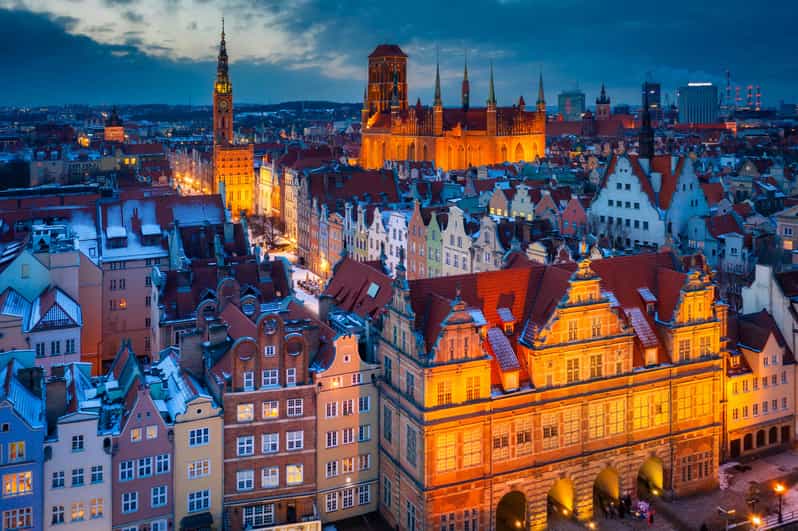
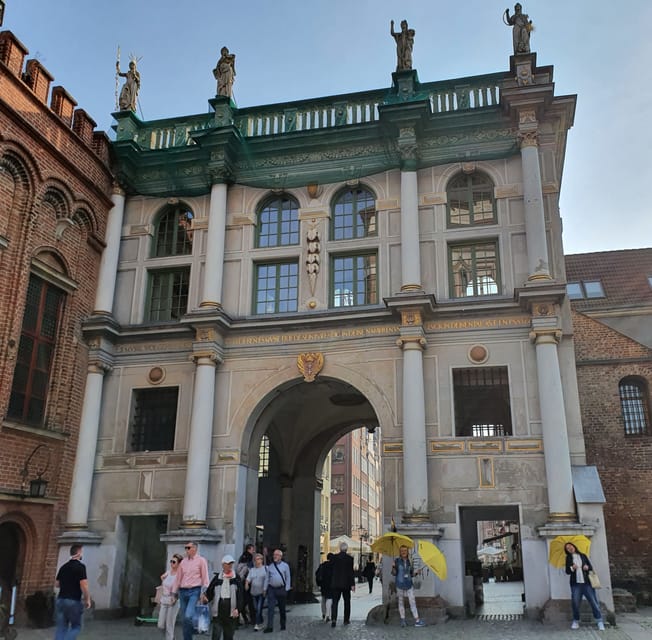
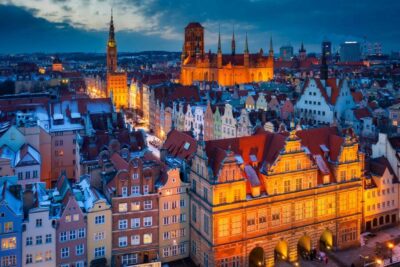
The meeting point is the Golden Gate, or Złota Brama, where you should look for the yellow umbrellas. This is a sensible place to begin. The gate introduces you to Gdansk’s polished historic center, with its tall, narrow buildings and decorated facades, while also putting you close to the main pedestrian streets.
From here, the route moves through the old town’s cobbled streets and elegant terraces. You get the visual pleasure quickly: slender townhouses, formal gates, and long views down streets designed to make the city feel grand. The setting is attractive, but the guide is what gives it shape. Without context, Gdansk can look like a handsome row of facades. With a German-speaking guide, you can connect the buildings to the political and commercial changes that shaped the city.
The walk also begins near the High Gate, another important entrance to the historic center. These early stops help explain how Gdansk presented itself to merchants, officials, and visitors. I find this kind of opening useful because it gives you a framework for the rest of the route rather than beginning with disconnected dates.
More History Tours in Gdansk
- Gdansk: City Cruise on Historical Polish Boat
★ 4.8 · 2,913 reviews - Gdańsk: Sunset Cruise on a Historic Polish Boat
★ 4.9 · 977 reviews - Gdańsk City Sights & History Guided Walking Tour in English
★ 4.8 · 876 reviews
St. Mary’s Church and the weight of the past
St. Mary’s Church is one of the major moments of the tour. It is described as the largest brick church in the world, and its scale is difficult to miss. Even if you are more interested in streets and city life than religious buildings, this church helps explain Gdansk’s former wealth and ambition.
Expect the guide to spend time on its religious and historical background. That can be a strength if you want detail, but it may feel long if you prefer a quicker look. One point worth considering is that the tour’s church discussion has been described as extending further than some people expected. If you enjoy architecture, faith, and chronology, you will likely appreciate the attention. If not, you may need to pace yourself mentally.
The tour is conducted in German, so your comfort with spoken German matters more here than on a simple photo walk. The guide may cover many dates and events in a short period. One recent German-language tour was praised for being interesting and absorbing, while another assessment found that there were sometimes too many historical facts to remember. That is a fair warning. You do not need to retain every date to get value from the walk.
I suggest focusing on the larger story: how Gdansk changed over time, how its people and institutions shaped the city, and why the buildings look as they do today. You can always return later for a slower visit to the church.
The Right City Town Hall and Arthur’s Court
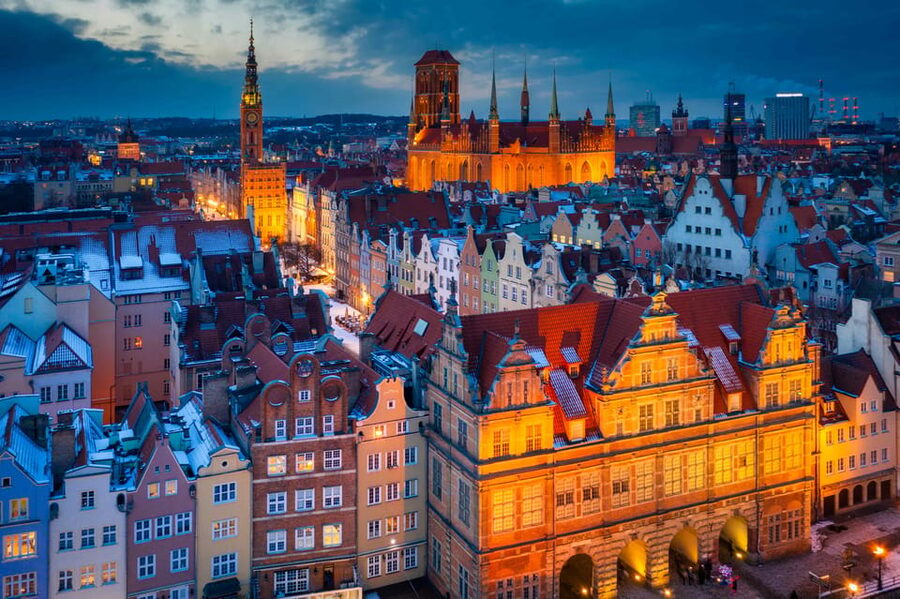
The Right City Town Hall, also described as the Right-town Town Hall, is another central stop. The name can sound confusing in English, but it refers to a key civic building in the old center. Here, the tour shifts from religious power to municipal life, public authority, and the business of governing a prosperous city.
Arthur’s Court adds another layer. Its name hints at the world of merchants, civic ceremony, and social status that once surrounded Gdansk’s commercial life. The value of seeing these sites with a guide is that you learn to read the city’s architecture as more than decoration. Grand civic buildings tell you who held influence and how the city wanted to be seen.
This section should suit you if you like connecting public spaces to everyday life. It is not simply a parade of pretty buildings. The guide’s job is to explain what happened inside them and why they mattered. Sandra has been singled out for clear explanations, well-chosen topics, and useful recommendations for cafés and restaurants when asked. That kind of exchange can make the walk more useful than a fixed script.
Still, the group format limits how much time you can spend on any one question. This is a general walking tour, not a private architectural consultation. If you want a slower pace or a more focused theme, the operator can help arrange a smaller private tour after booking.
The medieval Crane beside the water
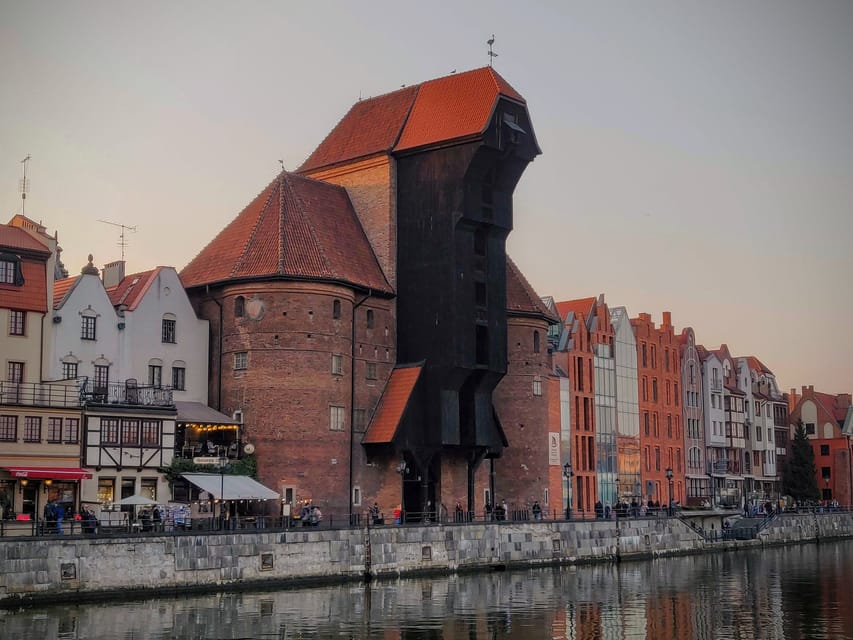
The Crane is one of Gdansk’s most memorable sights and a natural high point of the route. It was once Europe’s largest medieval crane and was operated by human muscle power. That detail turns a striking waterfront building into a practical lesson in medieval trade and engineering.
You can picture the basic problem it solved: moving heavy cargo in a busy port before modern machines. The human-powered mechanism gives the landmark a direct connection to the workers who made the city’s trade possible. I like this stop because it joins a memorable image with a simple question: how did people actually move goods here?
The Crane is also the sort of sight that benefits from explanation. On its own, you see an unusual structure by the water. With the story, you understand why it was important and why it became a city landmark. The tour does not treat Gdansk as a collection of monuments cut off from one another. It links the port, merchants, civic buildings, and religious institutions into one story.
The stop should also give you a good sense of the old center’s relationship with the waterfront. The route is still a walking experience, so comfortable shoes matter. Cobblestones can slow the pace and make unsuitable footwear annoying, especially over two and a half hours.
A different kind of day in Gdansk:
- Gdansk: Firearm Shooting Experience with Instructor
★ 4.8 · 866 reviews - Gdansk: Guided Round-Trip Cruise to Westerplatte
★ 4.3 · 865 reviews - Gdańsk: Sightseeing EcoCruise around the Old Town of Gdansk
★ 4.6 · 719 reviews - Main Town Gdańsk Walking Tour
★ 5.0 · 644 reviews
The Polish Post Office and the Free City of Danzig
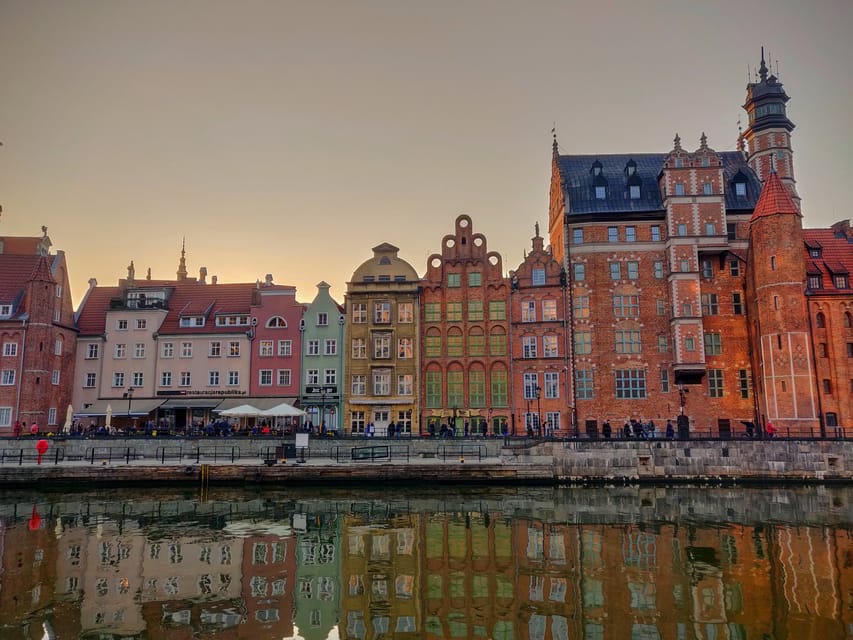
The Polish Post Office in the Free City of Danzig brings the tour into more recent and politically complex history. It is an especially worthwhile inclusion because it moves beyond medieval architecture and shows that Gdansk’s past did not end with the old merchant buildings.
The phrase Free City of Danzig refers to a distinct political period, and the post office provides a concrete place through which to discuss it. You are not only looking at elegant facades. You are dealing with questions of identity, administration, and the competing historical stories attached to Gdansk.
This is where a German-language tour can be particularly useful for German-speaking visitors. The subject carries layers of terminology and history that are easier to follow when explained clearly in your own language. The guide can place the building within the wider story rather than leaving you with a name and a date.
The tour’s wider aim is to share stories of important ideas created by the indigenous people of Gdansk. That approach gives the walk a local focus. You are learning about the city through its people and institutions, not only through rulers or famous outsiders.
What $26 buys you
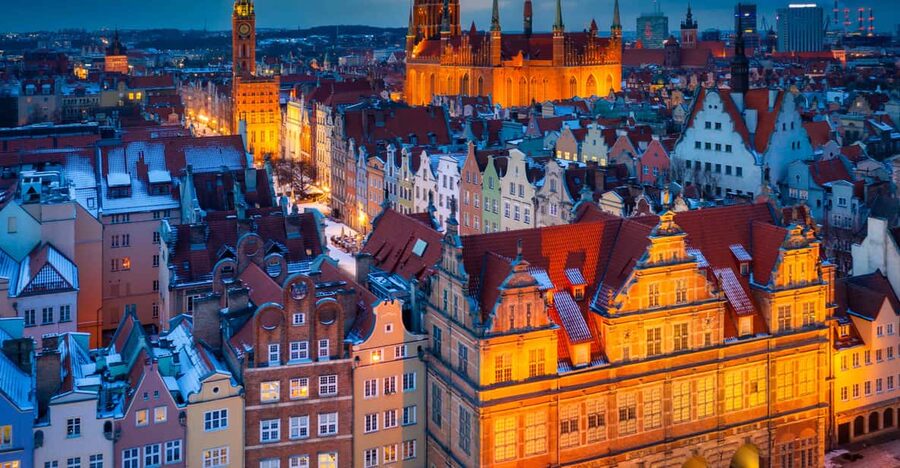
At $26 per person, the price is reasonable for a 150-minute guided walk through the historic center. You are paying for the guide, the organized route, the reservation, and the guide’s payment. There is no hotel pickup or drop-off, so you need to make your own way to the Golden Gate.
The value depends on what you want from a city tour. If you only need a quick orientation and a few photographs, a shorter self-guided walk costs less. If you want a German-speaking guide to connect Gdansk’s churches, civic buildings, port machinery, and twentieth-century history, two and a half hours gives you a useful foundation.
It is also worth understanding the group arrangement. The tour joins the general walking tour, so the amount paid does not buy a private guide or a small group by default. That keeps the price accessible, but it can mean less time for individual questions and a pace designed for the whole group.
If you prefer a private experience, you can contact the supplier after booking to arrange a smaller tour. That may be a better choice for families, groups with a strong specialist interest, or anyone who wants to spend extra time inside St. Mary’s Church or on the city’s political history.
Weather, pace, and accessibility
The tour runs rain or shine. Bring weather protection rather than hoping for a last-minute change. In winter, warm clothing is essential. A January tour remained engaging despite cold conditions, but the practical lesson is simple: dress for standing outdoors and walking on stone streets.
The activity is listed as wheelchair accessible. Because the route takes place in the historic center and includes cobbled streets, you may still want to confirm any personal mobility concerns with the supplier before booking. The provided information confirms accessibility, but it does not give a detailed route assessment.
The duration is 150 minutes, or two and a half hours. That is long enough for a proper introduction, but not so long that it takes over your day. Plan to arrive ready to walk, listen, and remain with the group. The route includes many stops, and the historical material may come quickly.
The strongest guide feedback centers on explanation and presentation. Sandra, in particular, has been praised for making the material interesting and absorbing, even in cold weather. The one repeated concern is information density. You may hear more dates and background than you can recall, so take a few notes afterward if a particular period interests you.
Who should book this Gdansk walk?
I would choose this tour if you want a German-speaking introduction to Gdansk and prefer a guide to explain the city as you move through it. First-time visitors will get a useful map of the historic center and a list of places worth revisiting.
It suits people who enjoy history, architecture, church interiors, civic buildings, port technology, and the political story of the Free City of Danzig. It also works well if you want restaurant and café suggestions from a guide who knows how to respond to questions rather than simply recite a route.
You may want a different option if you dislike group walks, want a very short orientation, or find long historical explanations tiring. The general-tour format and fact-heavy sections are the main limits. A private tour is available as an alternative, but you need to arrange it with the supplier after booking.
Walkative Tours offers free cancellation up to 24 hours before the start and lets you reserve now and pay later. Those terms are useful if your Gdansk plans are still shifting.
Should you book the Historic City Center Tour Gdansk in German?
Book it if you want the old center’s major sights explained in German rather than simply photographed. The Golden Gate, St. Mary’s Church, Arthur’s Court, the Right City Town Hall, the Crane, and the Polish Post Office form a strong route, and the price is fair for 150 minutes with a live guide.
Go in prepared for a general group and a steady stream of history. Wear warm, weatherproof clothing, comfortable shoes, and bring patience for the church section. If that sounds like your kind of city introduction, this is a practical and well-priced way to begin exploring Gdansk.
FAQ
Where does the tour meet?
The tour meets at the Golden Gate, known locally as Złota Brama. Look for the yellow umbrellas.
How long does the tour last?
The walking tour lasts 150 minutes, or two and a half hours.
What language is the tour conducted in?
The live guide conducts the tour in German.
What sights are included?
The route includes the High Gate, Golden Gate, St. Mary’s Church, Right City Town Hall, Arthur’s Court, the medieval Crane, the Polish Post Office in the Free City of Danzig, and additional old-center sights.
Is hotel pickup included?
No. Hotel pickup and drop-off are not included. You need to reach the Golden Gate meeting point yourself.
Is the tour wheelchair accessible?
Yes, the activity is listed as wheelchair accessible.
Does the tour run in bad weather?
Yes. The tour takes place rain or shine.
Is this a private tour?
No. It joins the general walking tour. A smaller private tour may be arranged by contacting the supplier after booking.
Can I cancel or pay later?
You can cancel up to 24 hours in advance for a full refund. You can also reserve your place and pay later.
Recently added in Gdansk
- Szymbark: Kashubian Switzerland 5-Hour Private Tour★ 3.7 · 3 reviews
- Segway Tour Gdańsk: Shipyard Tour – 1,5-Hour of Magic!★ 5.0 · 3 reviews
- Stutthof Concentration Camp and Museum of WWII: Private Tour★ 4.7 · 3 reviews
- Sopot Sunset Cruise with Welcome Drink★ 3.5 · 3 reviews
- Gdansk: Basic Bike Tour★ 4.3 · 3 reviews
- Gdansk: Bubble Football with Hotel Transfers★ 5.0 · 3 reviews
- Artus Court and Gdansk Old Town Private Tour with Tickets★ 4.7 · 3 reviews
- Gdansk: Oliwa Zoo with Tickets and Roundtrip Transportation★ 5.0 · 3 reviews
Historical Tours, compared.
POLIN Museum of the History of Polish Jews Ticket
Read our review →
Gdańsk City Sights & History Guided Walking Tour in English
Read our review →
Small-Group Historical Guided Tour of Warsaw with pick up/drop off. Public Tour.
Read our review →
Where else this one turns up