
Reviewed · JEWISH QUARTER & KAZIMIERZ TOURS
Private tour: Jewish heritage in Warsaw
Warsaw’s Jewish story is written into ordinary streets, courtyards, memorials, and surviving buildings. This private walk through Muranów, built over the ruins of the Warsaw Ghetto, connects those pieces in a way that a quick visit to one monument cannot.
I like the access to small, easily missed sites, especially the two wall fragments hidden in a backyard. I also like the private format, which gives you room to ask questions and lets guide Anna explain the wartime period alongside Poland’s later communist era. The main consideration is the serious subject matter and the brisk 2-hour-30-minute schedule, which leaves limited time at each stop.
Key points to know before you book
- The tour begins in Muranów, a district built over the former Warsaw Ghetto.
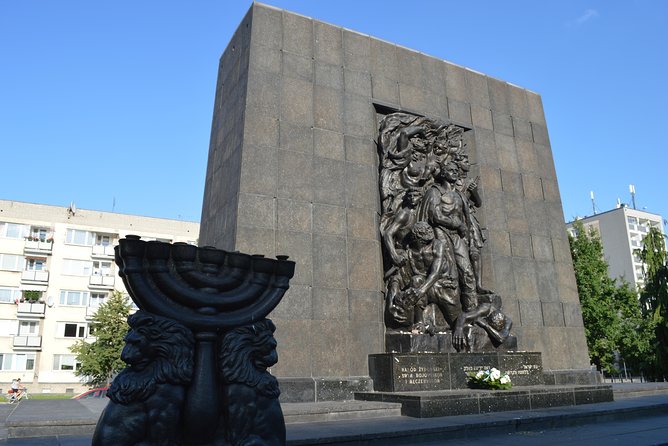
- The Ghetto Heroes Monument marks the place where the uprising began, with discussion of the 1942 deportations and the 1943 revolt.
- Street art adds a modern layer, commemorating people who once lived in the neighborhood, many of them Polish Jews.
- Umschlagplatz and the ghetto wall fragments are quiet memorial sites, not grand museum displays.
- Nozyk Synagogue is Warsaw’s only synagogue to survive World War II, and admission is not included.
- The private group can include up to 10 people, at a total price of $161.95, with free cancellation up to 24 hours before the start.
Why Muranów is the right place to begin
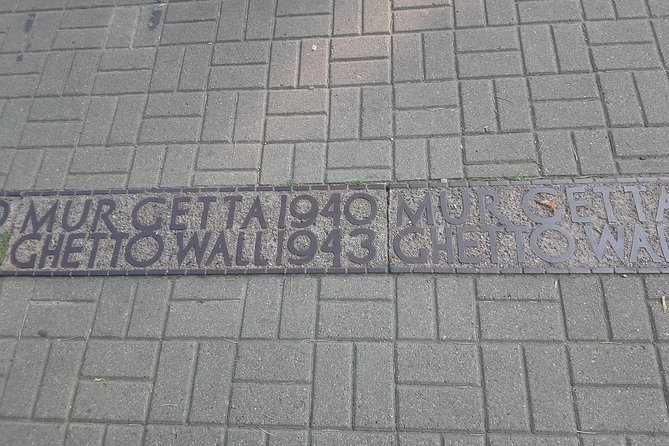
The tour starts at Kino Muranów on General Władysław Andersa Street. From here, you enter a neighborhood whose present-day streets sit over the remains of the former ghetto. That physical fact gives the walk its force: you are not looking at history from a distance, but moving through a functioning part of Warsaw shaped by what happened there.
The opening portion lasts about 40 minutes. It is not simply a march from one memorial to another. You look at the district itself and at street art devoted to the people who once lived here, most of them Polish Jews. These details help connect the large events of wartime Warsaw with individual lives and a real neighborhood.
I especially like this start because it gives you useful context before the more formal memorials. A guide can point out how the rebuilt district relates to the vanished prewar community, while the street art brings a current artistic response into the conversation. You get both the physical traces and the way modern Warsaw remembers them.
This first section also requires the right mindset. Street art and ordinary buildings can be easy to miss if you expect a traditional museum experience. Keep your attention on walls, side streets, and less obvious corners. The tour’s value depends partly on having a guide who can explain why a modest-looking detail matters.
More History Tours in Warsaw
- Warsaw: POLIN Museum of the History of Polish Jews Ticket
★ 4.7 · 1,142 reviews - Warsaw: Chopin Concert at Historical Venue in Old Town
★ 4.7 · 445 reviews - Small-Group Historical Guided Tour of Warsaw with pick up/drop off. Public Tour.
★ 4.5 · 343 reviews
The Ghetto Heroes Monument and the beginning of the uprising
The next stop is the Monument to the Ghetto Heroes, known in Polish as Pomnik Bohaterów Getta. You spend about 20 minutes here, at the place associated with the beginning of the Warsaw Ghetto Uprising.
Anna explains the events of 1942 and 1943, including the deportations to the Treblinka death camp and the armed resistance of Jewish insurgents against the Nazis. This is a compact stop, but it carries a great deal of historical weight. The monument is not just a photo opportunity. It is the point where the walk’s earlier discussion of the district becomes a direct account of persecution, deportation, and resistance.
A private setting is useful here. You can ask Anna to clarify dates, terms, or the difference between the deportations and the uprising. The descriptions of her guiding style emphasize clear explanations, wide historical awareness, and thoughtful treatment of Poland’s wartime and communist-era past. That matters at a site where a few minutes of vague commentary would leave you with only a name and a photograph.
Allow yourself time to look quietly. This is a memorial site, and the experience is intentionally reflective rather than light entertainment. Families with children can participate, since most visitors can take part, but adults should decide how much historical detail is suitable for younger members of the group.
Umschlagplatz and the road to Treblinka
The walk continues to Umschlagplatz, the site from which thousands of people were deported to Treblinka in 1942. Today, a memorial marks the location. The stop lasts about 20 minutes.
This is one of the places where the scale of the destruction can feel difficult to grasp. The memorial gives you a fixed point from which to consider the forced removal of Warsaw’s Jewish population. Anna’s role is important because the site itself cannot explain its meaning. Without context, you might see a memorial and move on. With a guide, you can place it within the sequence of ghetto life, deportation, and the later uprising.
I appreciate that this stop follows the Ghetto Heroes Monument. The order helps you understand that the uprising did not happen in isolation. First came the destruction of the community and the deportations, then the desperate decision to resist. The walk’s route creates a basic historical progression without requiring you to absorb a long lecture all at once.
The emotional tone remains serious. There is no attempt to turn a place of mass deportation into a cheerful sightseeing stop, and that is appropriate. If you prefer to take photographs, do so discreetly and give yourself a moment away from the camera.
Two wall fragments behind a courtyard
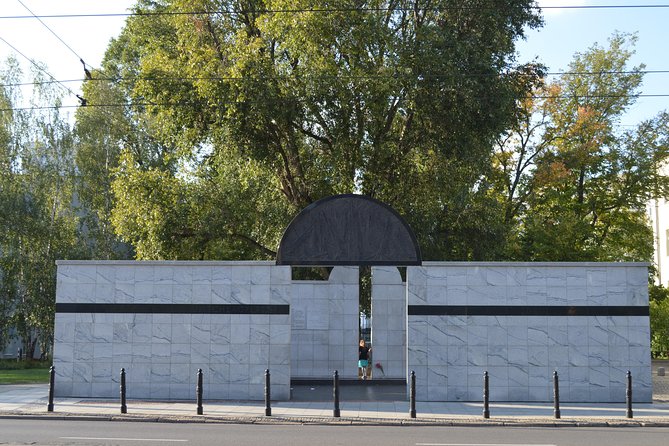
One of the more unusual stops is a pair of surviving fragments of the ghetto wall, located in a backyard. You spend roughly 15 minutes here.
These are not the sort of monumental remains that dominate a city square. Their modest setting is part of what makes them important. You see how a trace of the former boundary can survive behind an ordinary building, easy to pass without a guide who knows where to look.
I like this stop for practical reasons as well as historical ones. It reminds you that Warsaw’s wartime past is not confined to official memorials. Some evidence remains in tucked-away places, and a private guide can take you to them without the pressure of a large group waiting for the next scheduled point.
Do not expect a large exhibit or a long visit. The supplied timing is short, and the wall fragments are best understood as a physical reminder rather than a full museum presentation. You will get the most from them if you have already heard the basic story of the ghetto and can ask Anna to explain what the fragments represent.
Other Jewish Quarter and Kazimierz walks:
- Private Tour: Warsaw’s Jewish Heritage by Retro Fiat
★ 5.0 · 208 reviews - Warsaw: Jewish Heritage & Holocaust Walking Tour
★ 4.7 · 119 reviews - Warsaw: Jewish Heritage 4-Hour Private Tour
★ 4.9 · 26 reviews - Warsaw Jewish Heritage Private Tour in Retro Fiat
★ 4.9 · 22 reviews
Nozyk Synagogue and the tour’s final shift
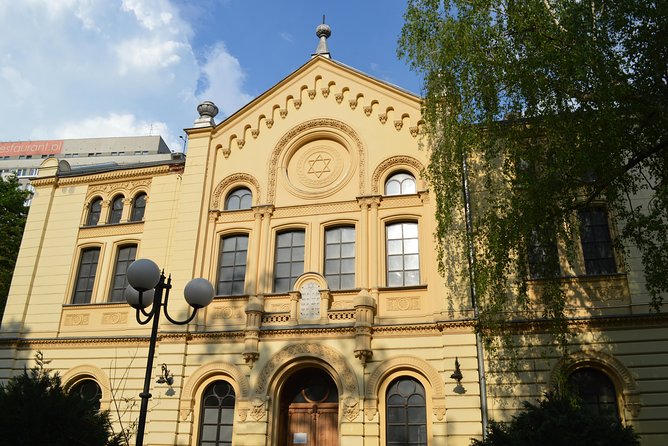
The final listed stop is Nozyk Synagogue, reached near the end of the walk at Plac Grzybowski. The visit lasts about 15 minutes, and admission is not included in the tour price.
Nozyk Synagogue is notable as the only synagogue in Warsaw to survive World War II. Its presence gives the tour a different ending from the memorial sites. You move from places marked by destruction and deportation to a surviving religious building connected with Jewish life in Warsaw today.
The stop is brief, so treat it as an introduction rather than a full synagogue visit. The tour does not include admission, and the supplied details do not specify an entrance fee or internal access arrangements. If entering the synagogue is important to you, confirm the current admission details and opening conditions before booking.
Ending at Plac Grzybowski is practical. The tour begins at Kino Muranów and finishes at the square, giving you a clear endpoint rather than returning you to the starting point. Since the walk covers several sites, wear comfortable shoes and allow your group enough time to move between them. Exact walking distances are not provided, so you should not plan a tight appointment immediately afterward.
A private guide changes the pace
This is a private activity for your group only, with a maximum group size of 10. That makes the $161.95 price easier to judge than a simple per-person comparison.
For 10 people, the cost works out to about $16.20 each. For two people, it is about $80.98 per person. For a larger family or group of friends, the private arrangement offers good value, especially if you want to ask questions or keep the walk focused on particular parts of Jewish and Polish history.
For one or two people, the price is less of a bargain in purely financial terms. You are paying for a dedicated guide, not just admission to attractions. The value depends on how much you want interpretation and conversation. Since the key sites are mostly free, the guide is the central part of what you are buying.
The private format also gives you some flexibility. One person described Anna as easygoing and willing to stop for a cool drink during warm weather. That does not mean the route can be changed without limit, but it suggests that basic comfort and questions can be handled more easily than on a rigid group excursion.
Anna receives particularly strong praise for clear explanations, broad historical understanding, and thoughtful treatment of difficult subjects. One account also notes that she connected the ghetto story with other periods of Polish history, including the communist era. That wider frame can help you understand Warsaw as a city shaped by several major upheavals, not only by World War II.
What the two-and-a-half-hour schedule means
The total duration is about 2 hours and 30 minutes. The five listed stops account for approximately 110 minutes, leaving around 40 minutes for walking, transitions, and the natural rhythm of a private discussion.
That is a sensible length for a focused introduction. You cover the district, the main uprising memorial, the deportation site, surviving wall fragments, and the synagogue without giving up half a day. At the same time, you should not expect long periods inside buildings or a full museum visit.
The schedule works best if you arrive ready to walk and listen. The subject calls for concentration, and the route includes several stops where you may want to pause. A warm day may make the walking harder, though the private format gives you a better chance to request a short break.
The tour uses a mobile ticket, and confirmation is provided when you book. It begins near public transportation, and service animals are allowed. Most people can participate, but the available details do not describe the exact surface, step-free route, or total walking distance, so contact the provider if you have specific mobility needs.
Who will get the most from this walk
I would choose this tour if you want a focused introduction to Warsaw’s Jewish heritage and prefer a guide-led conversation over visiting memorials on your own. It is especially useful early in a Warsaw stay, since the route can inform how you understand the city afterward.
It suits adults and older children who can engage with difficult wartime history. It also works well for families, couples, and small groups who want to ask their own questions rather than follow a large crowd.
You may want something else if your main goal is a long indoor museum visit, a synagogue service, or an extensive architectural tour. The route is centered on outdoor memorials, street art, a wall remnant, and a short synagogue visit. The experience is about place and explanation, not a collection of display cases.
The tour also rewards people who care about the difference between seeing a famous monument and understanding its setting. The Ghetto Heroes Monument and Umschlagplatz are essential sites, but the street art and backyard wall fragments give the walk a more local scale.
Booking details worth keeping in mind
The meeting point is Kino Muranów, General W. Andersa 5, 00-147 Warszawa. The tour ends at Plac Grzybowski, so you should plan your next activity from that location rather than from the cinema.
The price is $161.95 for a group of up to 10. No admission ticket is charged for the first four listed stops. Admission to Nozyk Synagogue is not included.
You can cancel for a full refund up to 24 hours before the start time. Changes or cancellations made within 24 hours are not accepted for a refund, and the cut-off follows Warsaw local time. This is useful if you are setting up a larger group, but do not wait until the last day if your plans are uncertain.
Should you book the Jewish heritage tour in Warsaw?
Book it if you want a serious, personal walk through Muranów and value a guide who can answer questions rather than recite a short script. The route combines major memorials with street art and less obvious wall fragments, while Nozyk Synagogue provides a link to Jewish life beyond the wartime story.
The strongest reason to choose it is Anna’s reported ability to explain clearly and place the ghetto within Poland’s wider twentieth-century past. The main limitation is the short time at each stop and the lack of a full museum component.
For a group of several people, the fixed price is appealing. For a solo visitor, couple, or small family, decide if private attention is worth the higher per-person cost. If the answer is yes, this is a focused and respectful way to begin understanding Warsaw’s Jewish heritage.
FAQ
Where does the tour begin?
It begins at Kino Muranów, General W. Andersa 5, 00-147 Warszawa, Poland.
Where does the tour end?
The tour ends at Plac Grzybowski in Warsaw.
How long does the tour last?
The experience lasts approximately 2 hours and 30 minutes.
Is this a private tour?
Yes. Only your group participates, and the group can include up to 10 people.
What is the price?
The price is $161.95 per group of up to 10 people.
Which Jewish heritage sites are included?
The route includes Muranów, the Monument to the Ghetto Heroes, Umschlagplatz, two fragments of the ghetto wall, and Nozyk Synagogue.
Does the tour visit the place where the Warsaw Ghetto Uprising began?
Yes. The Monument to the Ghetto Heroes stop is described as the place where the uprising began.
Is admission to Nozyk Synagogue included?
No. Admission to Nozyk Synagogue is not included in the tour price.
Is the tour available with a mobile ticket?
Yes. The experience includes a mobile ticket, and confirmation is provided at the time of booking.
Can I cancel for a refund?
Yes. You can cancel at least 24 hours before the start time for a full refund. Cancellations or changes made less than 24 hours before the start time are not refunded.
Recently added in Warsaw
- Warsaw Wolf’s Lair with St. Lipka and Mamerki Private Guided★ 4.2 · 3 reviews
- Taste of Poland, food tour and guided walk with 12 tasting★ 5.0 · 3 reviews
- Discover Warsaw’s most Photogenic Spots with a Local★ 5.0 · 3 reviews
- Lodz Small Group Tour from Warsaw with Lunch★ 4.0 · 3 reviews
- Jewish heritage in Warsaw★ 4.5 · 3 reviews
- Warsaw Outdoor Paintball with Transfers (all year round)★ 5.0 · 3 reviews
- Electric Scooter Tour: Full Tour – 3-Hours of Magic!★ 5.0 · 3 reviews
- Skip-the-Line Polin Museum Warsaw Jewish History Tour★ 5.0 · 3 reviews
Jewish Quarter & Kazimierz Tours, compared.

Bike Tour of Old Town, Jewish Quarter and the Ghetto
Read our review →
Kazimierz, Schindler’s Factory & Ghetto Guided Tour
Read our review →
Bike Tour of the Old Town, Kazimierz, and the Ghetto
Read our review →

Jewish Quarter and Ghetto Electric Golf Cart Tour
Read our review →
Where else this one turns up