
Reviewed · JEWISH QUARTER & KAZIMIERZ TOURS
Past Meets Present in Warsaw’s Jewish Ghetto
Warsaw’s former Jewish Ghetto is not a single preserved quarter. It is a city of fragments, memorials, street corners, and empty spaces. This 2.5-hour walk helps you connect those pieces, from the archive at the Jewish Historical Institute to the mound at Mila 18 and the departure point at Umschlagplatz. Mona brings a calm, personal voice to a difficult subject.
I like two things here: the small maximum of 10 people, which gives you room to ask questions, and the route’s balance of documented history and human feeling. You see major memorials, but also streets and public spaces that help explain how Jewish life once fit into Warsaw. The main drawback is the amount of walking, with little shelter from weather and no included coffee stop.
Key points at a glance
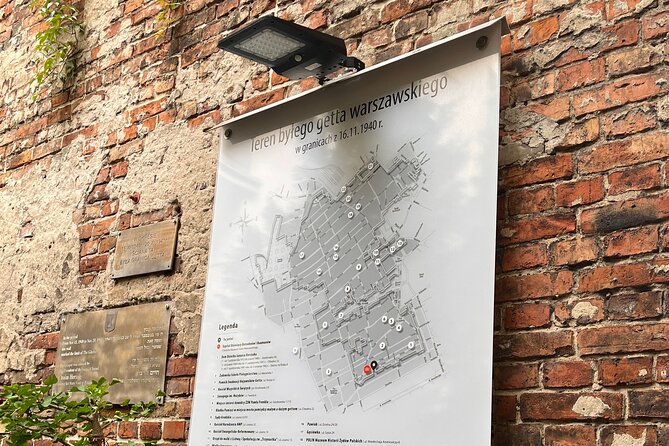
- Mila 18 gives the uprising a human center: The mound marks the place connected with Mordechaj Anielewicz and other leaders of the Warsaw Ghetto Uprising.
- The route links Jewish life with wartime destruction: Długa and Nalewki once held shops, workshops, and stalls before the war changed everything.
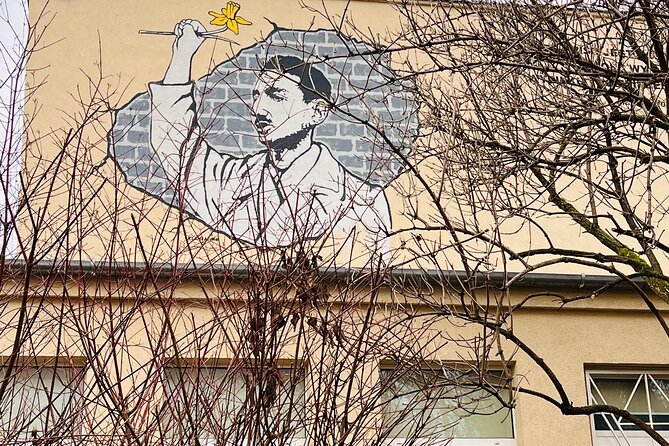
- The Ghetto Heroes Monument is a major memorial site: At the POLIN Museum square, daffodils are placed each year to remember the uprising.
- Umschlagplatz explains the scale of the deportations: This memorial marks the point from which Jews were sent to Treblinka.
- Guide Mona is central to the experience: Her approach is gentle, direct, and suited to questions about both Jewish life and the uprising.
- The tour ends with practical neighborhood advice: You finish at Willy Brandt Square, with suggestions for finding coffee nearby.
Why this Warsaw walk matters
Many city tours rush through wartime Warsaw as a list of dates and destroyed buildings. This route takes a different approach. It asks you to notice what remains, what was rebuilt, and how memory has been placed into the modern city.
The former ghetto cannot be understood only through monuments. Before World War II, Jewish Warsaw had its own streets, shops, factories, religious life, social groups, and daily routines. The stops at the Jewish Historical Institute, Długa, and Nalewki help establish that ordinary world before the route turns toward persecution and revolt.
That order matters. You first get a sense of a community, then you confront what happened to it. I find this more useful than starting immediately with the most famous memorial. It gives names and places a human setting.
The experience is led in English by Mona, the guide associated with Mona_be_your_guide. The published feedback describes her as gentle, personable, and deeply informed about the uprising. Expect a guide who encourages questions and treats the subject with care, rather than a fast-moving speech delivered at every stop.
Other Jewish Quarter and Kazimierz walks:
- Private Tour: Warsaw’s Jewish Heritage by Retro Fiat
★ 5.0 · 208 reviews - Warsaw: Jewish Heritage & Holocaust Walking Tour
★ 4.7 · 119 reviews - Warsaw: Jewish Heritage 4-Hour Private Tour
★ 4.9 · 26 reviews
Starting at Bankowy Square
The meeting point is the Monument of Słowacki at Bankowy Square, written in the booking details as Monument of Slowackiplac Bankowy. This is a central Warsaw location, near public transportation, so it should be reasonably straightforward to reach.
The tour then moves through the northern part of the former Jewish quarter. The city around you is modern, but the walk keeps drawing your attention to what the streets once meant. That contrast is part of the experience. You are not entering a preserved old quarter with intact buildings. You are reading history through markers, memorials, surviving institutions, and the layout of the city.
Because the group is limited to 10 people, the guide can usually keep the walk more personal than a large coach excursion. The small size also matters when you want to ask about family life, resistance, deportation, or the way Warsaw remembers its Jewish residents.
Jewish Historical Institute and the lost social world
The first stop is the Jewish Historical Institute, known in Polish as Żydowski Instytut Historyczny. During the war, this building was one of the centers of Jewish social life in the ghetto. Today, it holds an important archive of Jewish documents.
The stop lasts about 15 minutes, and admission is free. You should not expect a long museum visit here. Instead, the building serves as an early anchor for the story, linking the physical place with surviving records.
I like beginning here because documents change the scale of the subject. Memorials can make history feel distant or symbolic. An archive points to individual lives, organizations, and decisions recorded on paper. Ask Mona about the role of Jewish institutions during the war if that subject interests you.
Since the time is limited, this stop works best as an introduction rather than a full research visit. If you want to see the institute in greater detail, you may need to return separately.
Długa and Nalewki, where daily life once filled the streets
The walk continues to Długa, at the crossing with Nalewki Street. Before the war, Nalewki was one of the liveliest streets in the northern Jewish quarter, lined with shops, manufactories, and stalls.
You spend about 10 minutes here, also without an admission charge. It is a short stop, but its purpose is clear: to picture the district as a place of work, shopping, trade, and movement. The former ghetto was not only a site of suffering. It had been a home and a commercial center.
This is one of the places where the lack of preserved streets can feel especially sharp. You are asked to imagine a busy Jewish neighborhood while standing in a city that has changed greatly. That may be less visually immediate than walking through a surviving historic district, but it also makes the guide’s explanation more important.
I would pay close attention to the street names and locations here. They help you understand that the ghetto was part of a real urban neighborhood, not an isolated wartime backdrop.
A few more Warsaw half days to consider
- Warsaw: Chopin Concert in the Old Town
★ 4.8 · 2,287 reviews - Warsaw: Traditional Galar Cruise on The Vistula River
★ 4.6 · 1,640 reviews - Warsaw: Old Town Highlights Walking Tour in English
★ 4.7 · 1,516 reviews - Warsaw Concert: Chopin – Painted by Candlelights with Wine
★ 4.8 · 1,442 reviews
Krasinski Garden, a green space outside the ghetto
Ogrod Krasinskich, or Krasinski Garden, provides a pause in the route. You spend about 20 minutes in this public garden, described as an oasis of calm for Warsaw residents. During World War II, it was excluded from the ghetto.
That detail gives the stop its weight. A garden may seem like a break from the main subject, but its position outside the ghetto helps explain the boundaries imposed on Jewish residents. The same city could contain a public place of rest and, nearby, a sealed district marked by hunger, fear, and forced movement.
This is also a sensible point for you to catch your breath. The walk is not long by sightseeing standards, but the subject is demanding, and the route continues to several major memorials. The garden offers a change of pace before the tour reaches the Ghetto Heroes Monument.
Do not expect the garden itself to be presented as a major attraction. Its value is historical and spatial. Mona uses the place to help you think about who could enter, who could not, and how ordinary urban space was divided.
The Ghetto Heroes Monument at POLIN Museum
The tour’s central memorial stop is the square at the POLIN Museum, home to the Monument to the Ghetto Heroes. You spend about 30 minutes here, giving Mona time to explain the monument and the Warsaw Ghetto Uprising.
This is one of the most important places in Warsaw for remembering the murdered Jews of the city. Each year, Varsovians place daffodils here on the anniversary of the uprising. The flowers add a simple, living act of remembrance to a site built from stone and bronze.
The monument is not just a place for photographs. Give yourself time to look at its figures and setting. The surrounding square helps frame the memorial as part of present-day Warsaw, while its subject reaches back to the final resistance of Jews trapped in the ghetto.
I especially value the way this stop follows the earlier discussion of Jewish life. You are not meeting the uprising as an abstract military event. You have already been introduced to streets, institutions, and neighborhoods. That makes the monument’s meaning more personal.
The POLIN Museum is nearby, but entry to the museum is not part of this walk. If you want a fuller museum visit, plan it for another time and allow several hours rather than trying to squeeze it into the tour.
Mila 18 and the mound of Anielewicz
At Mordechaja Anielewicza Street, the route reaches the mound at Mila 18. This site commemorates the deaths of the leaders of the Warsaw Ghetto Uprising, including Mordechaj Anielewicz.
The stop lasts about 30 minutes. It is one of the tour’s most important moments because the memorial is tied to a specific place, a specific leader, and the final days of the uprising.
The mound is not a grand building or a large formal museum. Its power comes from what it marks. Here, the story narrows from the broad destruction of the ghetto to the people who led the armed resistance and died with others in the ruins.
Mona’s style is especially important at a place like this. The subject calls for accuracy, but also restraint. The available feedback describes the experience as heartbreaking and enlightening, with attention to human survival as well as military resistance. That balance is worth seeking. The uprising should not be reduced to a heroic legend that hides the suffering around it.
You may find this stop emotionally heavier than the earlier ones. Give yourself permission to listen quietly. There is no need to rush toward the next photo or question.
Umschlagplatz and the road to Treblinka
The next stop is Umschlagplatz, marked by a memorial at the departure point for Jews transported to Treblinka Extermination Camp. The stop lasts about 15 minutes.
The scale described here is immense: around 300,000 Jewish people died at Treblinka. Yet a departure point is also a place of individual fear and uncertainty. A memorial cannot reproduce that experience, but it can mark the location where people were gathered and sent away.
This stop adds a different kind of understanding to the tour. Mila 18 centers on resistance. Umschlagplatz centers on deportation and mass murder. Together, the two places show the limited choices forced on people in the ghetto, from organized revolt to attempts to survive under impossible conditions.
I recommend listening for the connection between this memorial and the earlier stops. The route is not simply moving from one monument to another. It is showing you how a neighborhood was transformed from a living community into a place of confinement, resistance, and forced departure.
The 15-minute timing is enough for an explanation and quiet reflection, but not for a long visit. If you need more time at memorials, tell Mona at the beginning so you understand how the pace will work.
Willy Brandt Square and the final reflection
The walk ends at Skwer Willy’ego Brandta, or Willy Brandt Square. The memorial recalls Willy Brandt’s tribute to the murdered Jews of Warsaw and to all victims of World War II.
This final stop shifts the focus from the ghetto and the uprising to the act of remembrance by later generations. It gives the tour a closing point outside the main sequence of wartime sites, while keeping the subject of memory in view.
The end is practical as well as symbolic. You receive recommendations for where to go for coffee in the neighborhood. Coffee and tea are not included, so this advice is useful after a serious and fairly demanding walk.
The tour does not return to the starting point. That is worth noting when you plan the rest of your day. You finish in the Willy Brandt Square area, not at Bankowy Square.
Walking pace, group size, and comfort
The tour lasts approximately two hours and 30 minutes. All listed stops are free to enter, and the experience includes a certified guide. The value comes from the route, interpretation, and chance to ask questions, not from admission tickets.
A group limit of 10 is a strong feature. You should be able to hear the guide more easily, ask about details that matter to you, and avoid the impersonal feel of a large group. It also means the experience may feel more like a guided conversation than a standard city lecture.
The main caution is physical. The tour is not recommended for people with walking or mobility problems, and most of the experience takes place outdoors. If you have trouble walking or standing for extended periods, this may not be a comfortable choice.
Wear sensible shoes and check the weather before you go. The supplied details do not promise indoor shelter or refreshments along the way. Service animals are allowed, and the route is near public transportation.
What the $112.43 price means
At $112.43 per person, this is not a budget walk. Since every listed stop has free admission, you are paying mainly for the certified guide and the small-group format.
That price can make sense if you want a focused introduction to Jewish Warsaw, the ghetto, and the uprising without arranging the route yourself. Mona’s personal style, the maximum group size of 10, and the chance to ask questions add value that a self-guided walk cannot easily match.
The price is harder to justify if you only want to see the monuments quickly or plan to visit the POLIN Museum in depth on your own. A self-guided route would cost less, but it would also require careful reading and route planning. This experience is aimed at people who want context, not just locations.
Group discounts may be available, which could help if you are booking with family or friends. Confirmation is sent within 48 hours, subject to availability, so do not assume an instant booking confirmation.
Who should book this experience
I would choose this tour if you want to understand Warsaw through its Jewish past and prefer a guide who can connect public memorials with personal stories. It suits adults, older children who can handle a serious subject, history-minded visitors, and anyone who wants to ask questions in a small group.
It is also a good choice early in your Warsaw stay. The walk gives you a framework for later visits to the POLIN Museum and other memorial sites. You will recognize names and locations instead of meeting them without context.
I would skip it if you want a light sightseeing outing, a museum-heavy experience, or a route with little walking. The subject is painful, and the tone is appropriately serious. This is not an entertainment-focused tour.
Cancellation and planning notes
Free cancellation is available when you cancel at least 24 hours before the experience begins. Cancellations made less than 24 hours in advance are not refunded, and changes within that period are not accepted.
The cut-off follows local Warsaw time. Since confirmation is subject to availability and may arrive within 48 hours, book with enough lead time if the tour is important to your schedule.
Should you book Past Meets Present in Warsaw’s Jewish Ghetto?
Book it if you want a thoughtful, small-group walk that connects Jewish daily life, the Warsaw Ghetto Uprising, deportation, and remembrance. The strongest parts are the clear route, the major memorial sites, and Mona’s gentle but direct approach.
Think twice if walking is difficult or if you need a low-cost tour built around admission-ticket attractions. At $112.43, the value depends on how much you want a guide’s explanation and personal attention.
For the right reader, this is a serious and useful way to meet an essential part of Warsaw. Plan time afterward for coffee, a quiet meal, or a visit to the POLIN Museum. You may want a little space to process what you have seen.
FAQ
Where does the tour begin?
The tour begins at the Monument of Słowacki at Bankowy Square, 00-142 Warszawa, Poland.
Where does the tour end?
It ends at Willy Brandt Square near Mordechaja Anielewicza Street, 01-999 Warszawa, Poland.
How long does the experience last?
The walk lasts approximately two hours and 30 minutes.
What language is the tour offered in?
The tour is offered in English.
Is a guide included?
Yes. The experience includes a certified guide, with Mona serving as the guide associated with the tour provider.
How many people can join the tour?
The tour has a maximum group size of 10 people. Group discounts are available.
Are admission tickets included?
All listed stops have free admission. The POLIN Museum is nearby, but museum admission is not listed as part of the experience.
Is coffee or tea included?
No. Coffee and tea are not included, though the tour ends with recommendations for nearby coffee.
Can I cancel for a full refund?
Yes, if you cancel at least 24 hours before the experience begins. Cancellations made less than 24 hours before the start time are not refunded.
Recently added in Warsaw
- Warsaw Wolf’s Lair with St. Lipka and Mamerki Private Guided★ 4.2 · 3 reviews
- Taste of Poland, food tour and guided walk with 12 tasting★ 5.0 · 3 reviews
- Discover Warsaw’s most Photogenic Spots with a Local★ 5.0 · 3 reviews
- Lodz Small Group Tour from Warsaw with Lunch★ 4.0 · 3 reviews
- Jewish heritage in Warsaw★ 4.5 · 3 reviews
- Warsaw Outdoor Paintball with Transfers (all year round)★ 5.0 · 3 reviews
- Electric Scooter Tour: Full Tour – 3-Hours of Magic!★ 5.0 · 3 reviews
- Skip-the-Line Polin Museum Warsaw Jewish History Tour★ 5.0 · 3 reviews
Jewish Quarter & Kazimierz Tours, compared.

Bike Tour of Old Town, Jewish Quarter and the Ghetto
Read our review →
Kazimierz, Schindler’s Factory & Ghetto Guided Tour
Read our review →
Bike Tour of the Old Town, Kazimierz, and the Ghetto
Read our review →

Jewish Quarter and Ghetto Electric Golf Cart Tour
Read our review →
Where else this one turns up