
Reviewed · POLISH FOOD & VODKA TASTINGS
Warsaw: Praga District Tour with Vodka Museum and Tasting
Praga gives you a side of Warsaw that the rebuilt city centre cannot. Across the Vistula, you’ll find prewar tenements, courtyard shrines, Orthodox and Catholic churches, old market stalls, communist-era blocks, and a post-industrial arts district. The tour ends at the Polish Vodka Museum with three tastings.
I like the private format, since your guide can match the pace to your group and explain details that are easy to miss. I also like the mix of street life, wartime stories, local food, and Polish vodka culture. The main consideration is that four hours covers a lot, so the market and Żabiński Villa receive a brief stop rather than a long visit.
Key points at a glance
- Praga’s old courtyards: Look for small religious shrines tucked into spaces between streets and tenement buildings.
- Two very different churches: See Catholic St. Florian’s Cathedral and the Orthodox Cathedral of St. Mary Magdalene.
- Bazaar Różyckiego: Visit Warsaw’s oldest market and taste local dishes such as pyzy and flaki.
- Warsaw’s changing east side: Compare communist-era housing blocks with the converted industrial setting of Soho.
- Żabiński Villa: Stop at the place connected with hiding Jewish people during the Warsaw ghetto period.
- Polish vodka tasting: Finish at Koneser with an interactive museum visit and three Polish vodka samples.
Why Praga feels different from central Warsaw
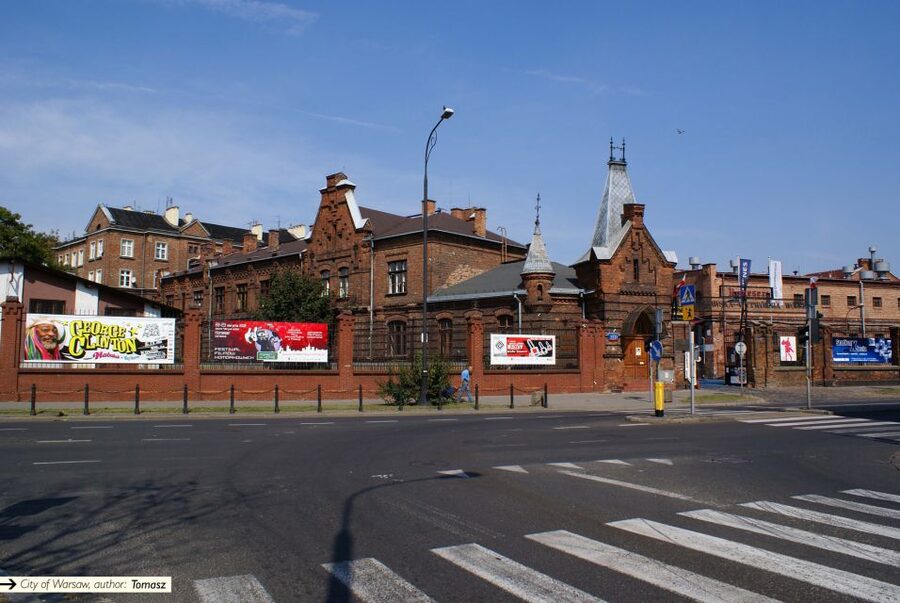
Warsaw’s central districts were rebuilt after the Second World War, often with broad streets, restored historic façades, and modern construction filling the gaps. Praga, on the east bank of the Vistula, escaped much of that destruction. Its older streets and tenement houses therefore give you a more direct sense of prewar Warsaw.
That does not mean Praga is a preserved museum piece. It is a working district with layers from several periods. You’ll move from religious buildings and worn courtyards to communist housing blocks, then on to the Koneser centre, a former industrial site given a new life.
I find that contrast more useful than a tour devoted only to polished monuments. Your guide can show how Warsaw changed through war, communism, and the modern redevelopment of the city. The streets may look rougher than the centre, but that is part of the point. Praga reveals the city in an untidy, human way.
Your guide meets you at your hotel, which removes the need to work out public transportation to the east side. Transportation is included throughout the private tour. This is especially useful if you have only a short stay in Warsaw and want to cover several scattered stops without losing time.
More Food Tours in Warsaw
- Warsaw: Polish Vodka Museum Tour with Tasting
★ 4.6 · 788 reviews - Warsaw’s No 1 cooking class-Polish dumplings with liqueur tasting
★ 5.0 · 576 reviews - Half-Day Polish Food Walking Tour with Guide and Dinner
★ 4.5 · 381 reviews
St. Florian’s Cathedral and St. Mary Magdalene
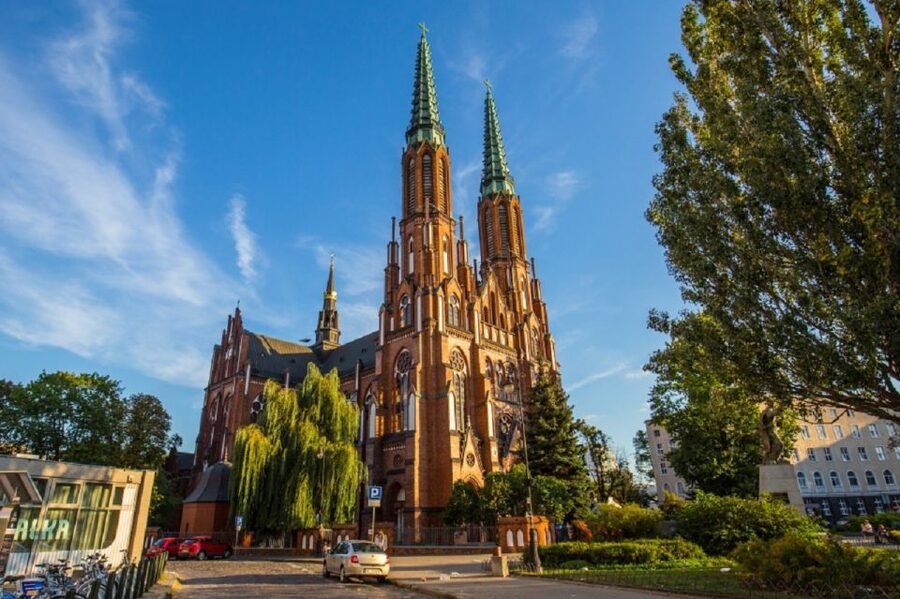
The first major sights include two churches that reflect Praga’s long Catholic and Orthodox traditions. St. Florian’s Cathedral is the Catholic landmark, while the Cathedral of St. Mary Magdalene represents the Orthodox community.
Seeing both in one outing gives you a better sense of Praga’s religious and cultural mix. The district was home to different ethnic and religious groups for centuries, and these churches are a clear reminder that Warsaw was never only one kind of city.
Do not expect an extended architectural study. The tour has several stops, so your guide will likely focus on the main features, the place each church holds in Praga, and the wider story of the district. That suits most visitors, but anyone wanting long interior visits should ask the guide how much time is available.
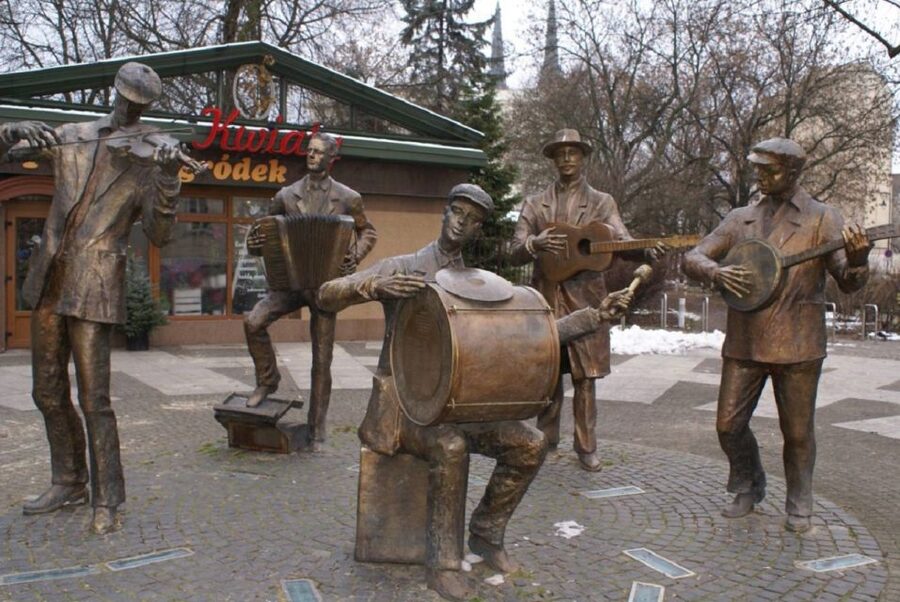
The Monument to the Prague Backyard Band adds a more informal note. It points toward the local character of Praga, where music, courtyards, and neighborhood life have long mattered. This is the kind of stop that works best with a guide who can explain why an ordinary-looking corner has meaning.
Courtyards, shrines, and Ząbkowska Street
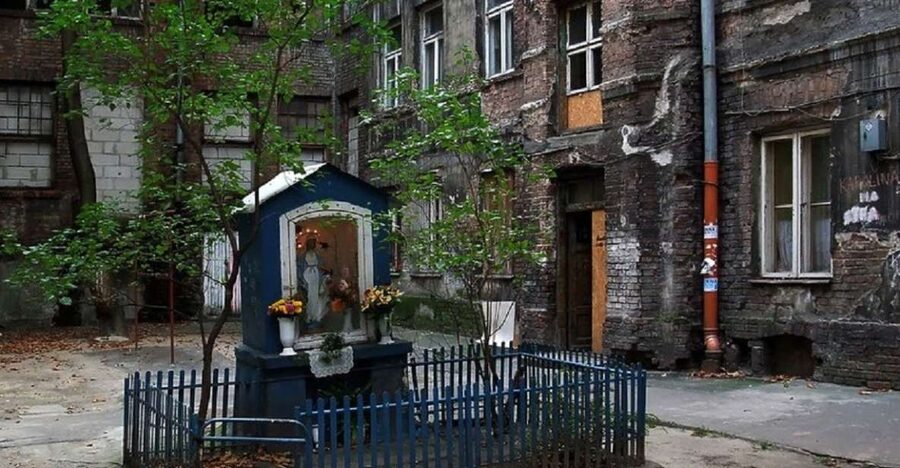
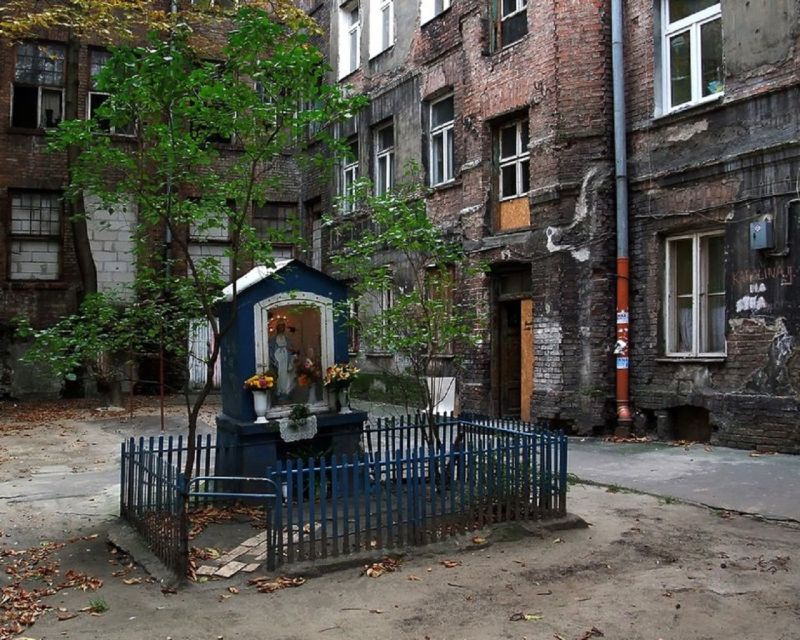
Praga’s small shrines are one of the tour’s most distinctive details. They appear in courtyards and along the main streets, often attached to walls or tucked into places you could easily pass without noticing.
These shrines are not grand attractions. Their value comes from what they show about daily life, faith, and survival in a district shaped by war and political change. I would keep your eyes open between formal stops, because the smaller details may be the most memorable part of this walk.
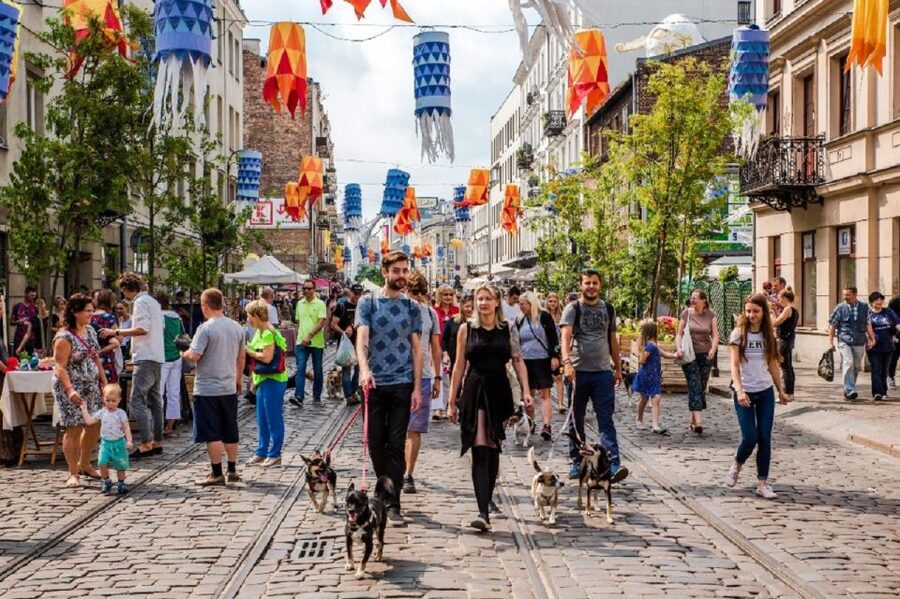
Ząbkowska Street is among the main streets included in the route. Here you’ll see cobbled roads and old prewar tenement houses. The setting can feel like a step back several decades, though you should keep your expectations realistic. Praga is not a fully restored old town, and some façades show wear.
That is also why the private guide matters. A local guide can point out original murals, explain the purpose of courtyard shrines, and separate genuine older details from newer additions. The tour is strongest when you slow down for those small clues rather than treating the street as a quick photo stop.
Several language options are available: English, Spanish, German, Russian, Polish, French, Italian, and Portuguese. The guide assigned to you will depend on your booking, but Paul and Margarita have both led this experience. Margarita received particularly warm praise for guiding in Spanish, sharing personal connections to Warsaw, taking photos, and helping with a traditional restaurant suggestion at the end of the outing.
Bazaar Różyckiego and the taste of old Praga
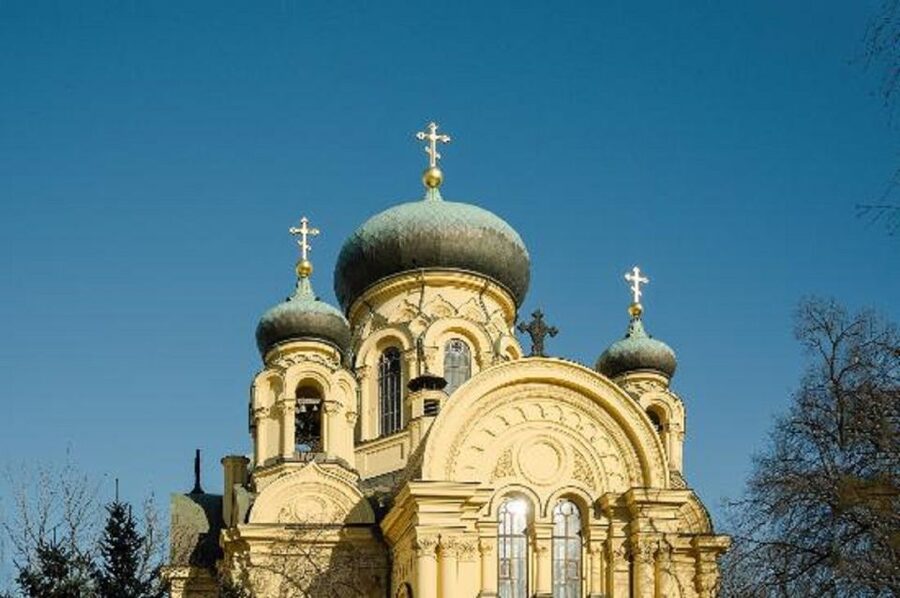
Bazaar Różyckiego is described as Warsaw’s oldest market, and it gives the tour a welcome food break. Instead of seeing Praga only through monuments, you get a look at its market culture and the dishes associated with the district.
The planned tastes include pyzy and flaki. Pyzy are potato dumplings, while flaki is a traditional tripe soup. These are not neutral, familiar snacks for every palate, so I would treat the tasting as a chance to try something local rather than a guaranteed crowd-pleaser.
The market stop is a useful part of the experience because food explains a place in a way a date on a plaque cannot. Ask your guide about the dishes, how they are served, and how the market fits into Praga’s past and present. The available information does not specify the exact serving size or whether every dish is included in the tour price, so confirm those details if food is a major reason for booking.
Time is the main limitation here. Since the entire outing lasts four hours and also includes churches, street walks, the villa, and the Vodka Museum, you should not expect a long market visit. Still, even a short stop can help you understand why Praga feels more local and less staged than the central tourist areas.
More Museum Tours in Warsaw
- Warsaw: POLIN Museum of the History of Polish Jews Ticket
★ 4.7 · 1,142 reviews - Warsaw: Ghetto, Jewish Cemetery & POLIN Museum Private Tour
★ 4.8 · 132 reviews - Warsaw: Cold War Museum Entry Ticket
★ 4.6 · 55 reviews - World of Illusion Museum Skip-the-Line Ticket
★ 4.0 · 55 reviews
Communist blocks and the Soho post-industrial zone
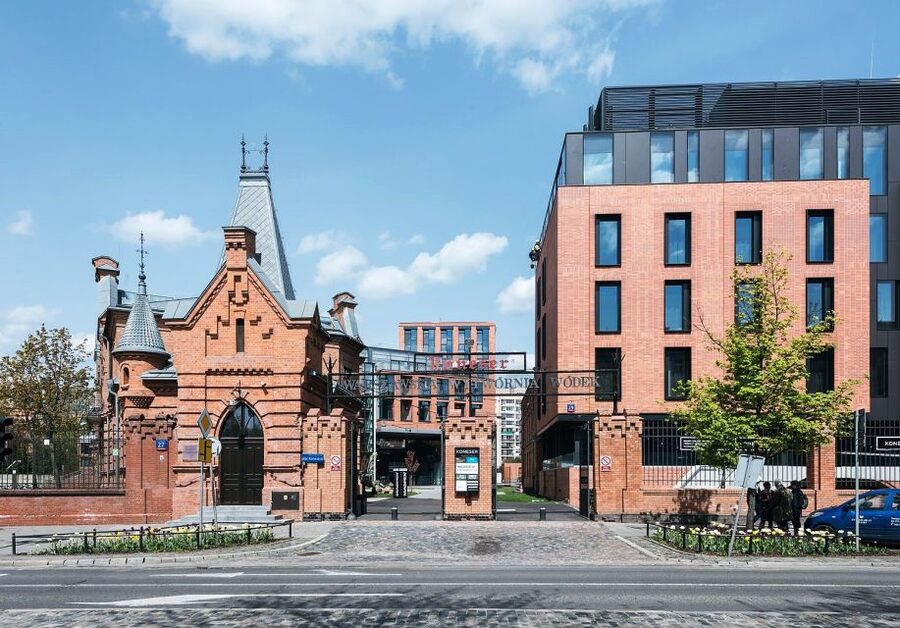
The tour also shows two very different sides of modern Praga. Communist-era blocks illustrate the period when Warsaw’s housing and public spaces were shaped by the state. They are not usually the first sights people seek in Poland, but they help explain the city’s twentieth-century development.
Then comes Soho, a post-industrial zone with a different mood. The contrast between older tenements, large housing blocks, and converted industrial buildings shows how quickly parts of Warsaw have changed. You are not simply looking at old Praga. You are seeing old, communist, and contemporary Warsaw in one compact district.
This part of the tour will suit you if you like cities as living places rather than collections of famous monuments. It may be less appealing if you want a day of palaces, grand squares, and polished historic interiors. Praga rewards curiosity, not a checklist approach.
The Żabiński Villa and a difficult wartime story
The stop at Żabiński Villa connects Praga to one of Warsaw’s most painful chapters. The villa is associated with hiding Jewish people from the Warsaw ghetto during the Second World War.
The tour does not promise a long museum visit or an extensive interior program, so the amount you see may be limited. Its importance is the story attached to the place. A guide can provide context that a brief look at the building alone cannot.
This is also a reminder that Praga’s survival of wartime destruction does not make it untouched by the war. The district’s streets, buildings, and personal stories all sit within the wider story of occupied Warsaw. I appreciate that the tour includes this serious stop alongside food, architecture, and vodka. The result is a fuller picture of the city, not a sanitized sightseeing route.
Inside the Polish Vodka Museum at Koneser
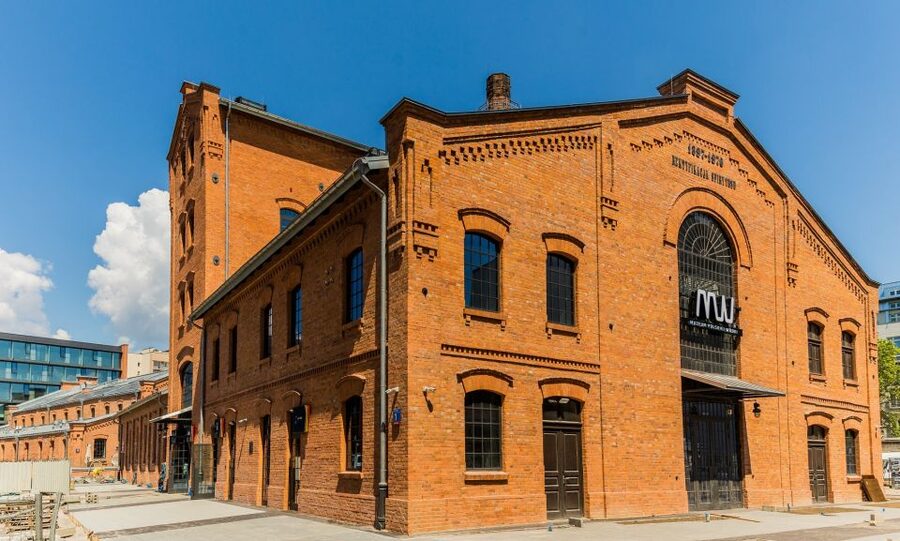
The final major stop is the Polish Vodka Museum in the renovated Koneser centre. This is a practical finish to the tour because it brings together Polish tradition, industry, branding, and social customs in one place.
The museum uses an interactive exhibition and covers more than 500 years of Polish vodka history and tradition. You’ll learn how vodka became linked with Poland and why the drink is known around the world. The setting at Koneser also continues the tour’s theme of old spaces finding new uses.
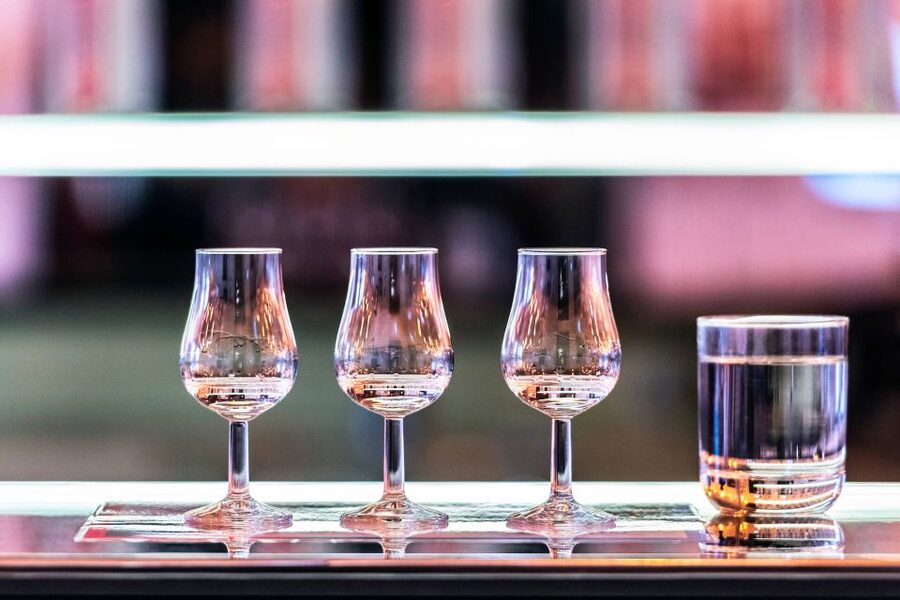
The tasting includes three shots of Polish vodka. You’ll be shown the basics of alcohol tasting before sampling the drinks, so this is not simply a quick drink at the end. Pay attention to the tasting guidance, since comparing three samples in a structured way is more useful than knocking them back without thought.
The tasting is included in the $81 price, along with museum admission, transportation, hotel pickup and drop-off, and a private guide. The three samples are small, but the museum visit gives the final stop more substance than a standard bar tasting.
You should also plan your energy carefully. Three vodka samples after a four-hour sightseeing outing can affect people differently. Eat beforehand or make sensible use of the food stop, and tell your guide if you prefer a slower pace. The tour is about Polish culture as much as alcohol, so you do not need to treat the tasting as a drinking contest.
What the private format is worth at $81
At $81 per person, this is not the cheapest way to see Praga. It is also not a basic walking tour. The price includes a private group, hotel pickup and return, transportation, a live guide, museum admission, and three vodka tastings.
For two or more people, the value comes mainly from time and flexibility. You do not need to get across the river on your own, and your guide can adjust explanations to your interests. Private touring also helps if your group wants a particular language. The available choices are unusually broad.
The strongest value is for first-time visitors who want Praga explained rather than simply photographed. You are paying for connections between the stops: why the churches matter, what the shrines suggest, how the district survived, and how an old industrial site became Koneser.
The price may feel high if you already know Praga well, plan to use public transportation, or only want to visit the Vodka Museum. In that case, separate visits could cost less, though they would not include the private guide or the joined-up story of the district.
The tour has received five-star scores from five bookings, including high praise for Paul’s lively approach and Margarita’s Spanish guiding. One German-speaking group of five found that the private format allowed the guide to adapt well to them. Those details suggest that guide quality is a major part of the value, but the exact person you receive is not guaranteed.
Timing, comfort, and who should book
Four hours is a good length for a first look at Praga. You’ll see the main themes without giving up an entire day, but the schedule will be active. Expect a blend of vehicle travel, walking on cobbled roads, short sightseeing stops, market browsing, and time inside the museum.
Comfortable shoes are sensible. The route includes old streets and courtyards, and the district is best understood at street level. Wheelchair access is available, though you should still discuss your needs with the provider because old tenement areas and cobbled surfaces can present practical challenges.
Hotel pickup and drop-off make the outing easy to fit into a Warsaw stay. The guide waits in the hotel lobby with your name, and you should be ready at the agreed time. Starting times vary, so check availability when choosing your date.
I would recommend this tour to:
- First-time visitors who want a side of Warsaw beyond the rebuilt centre
- Couples and families who prefer a private guide
- People interested in architecture, wartime stories, local food, and urban change
- Visitors who want a museum tasting rather than a pub crawl
- Groups needing Spanish, German, French, or another listed language
I would think twice if you dislike alcohol, want a long food-focused market tour, or prefer to explore at your own pace. The route covers many subjects, and no single stop receives an entire afternoon.
Should you book this Praga tour?
Book it if you want Warsaw explained through its streets, courtyards, religious buildings, food, wartime places, and changing industrial spaces. The combination is unusual, and the private vehicle and hotel pickup make it efficient.
The best reason to choose it is the balance. You get more than a quick drink at a museum, but you also avoid a dry lecture about architecture. Praga’s old shrines and rough-edged streets give the tour character, while the Koneser tasting provides a clear finish.
Skip it if your main goal is only the Polish Vodka Museum, or if you want a leisurely market meal with no fixed schedule. For most visitors with four free hours and an interest in the less polished side of Warsaw, this is a worthwhile use of time.
FAQ
How long does the Praga District tour last?
The tour lasts four hours.
What is included in the price?
The price includes hotel pickup and drop-off, transportation, a guide, admission to the Polish Vodka Museum, and a tasting of three Polish vodkas.
Is the tour private?
Yes. It is offered as a private group experience.
Where does the tour begin?
Your guide meets you in your hotel lobby with your name.
Which languages are available?
Guiding is available in English, Spanish, German, Russian, Polish, French, Italian, and Portuguese.
Does the tour include vodka tasting?
Yes. The Polish Vodka Museum visit includes three shots of Polish vodka and an introduction to alcohol tasting.
Is the tour wheelchair accessible?
Yes, the activity is listed as wheelchair accessible.
Can I cancel the booking?
You can cancel up to 24 hours in advance for a full refund. You can also reserve now and pay later.
More Polish food and vodka tastings in Warsaw
- Warsaw: Polish Food Tour
★ 4.1 · 216 reviews - Pierogi Class and Liquor Tasting with View on Warsaw
★ 5.0 · 71 reviews - Warsaw: 4-Hour Polish Food Tour
★ 4.9 · 43 reviews - Warsaw Vodka Night Private Tour by Retro Fiat
★ 5.0 · 27 reviews
Recently added in Warsaw
- Warsaw Wolf’s Lair with St. Lipka and Mamerki Private Guided★ 4.2 · 3 reviews
- Taste of Poland, food tour and guided walk with 12 tasting★ 5.0 · 3 reviews
- Discover Warsaw’s most Photogenic Spots with a Local★ 5.0 · 3 reviews
- Lodz Small Group Tour from Warsaw with Lunch★ 4.0 · 3 reviews
- Jewish heritage in Warsaw★ 4.5 · 3 reviews
- Warsaw Outdoor Paintball with Transfers (all year round)★ 5.0 · 3 reviews
- Electric Scooter Tour: Full Tour – 3-Hours of Magic!★ 5.0 · 3 reviews
- Skip-the-Line Polin Museum Warsaw Jewish History Tour★ 5.0 · 3 reviews
Polish Food & Vodka Tastings, compared.
Zakopane: Cable Car, Chocholow Baths, Cheese & Vodka
Read our review →
Zakopane Cable Car, Vodka, Cheese & Hot Springs Tour
Read our review →

Half-Day Polish Food Walking Tour with Guide and Dinner
Read our review →
Pierogi Cooking Class with Market Shopping and Local Snacks
Read our review →
Krakow Pierogi Cooking Class with Market Visit & Home-Cooked Meal
Read our review →Where else this one turns up