
Reviewed · JEWISH QUARTER & KAZIMIERZ TOURS
Warsaw Jewish Heritage Private Tour in Retro Fiat
Warsaw’s Jewish story is best understood on the streets where it happened, and this private tour gives you four hours to do that in a remarkably memorable way: from the back seat of a 1980s Fiat 125p. You move between fragments of the former ghetto, then stop and walk where the car cannot take you.
I like the personal scale of the tour, with a private guide who can adjust the route to your interests. I also like the mix of major sites and small, concrete reminders, especially the surviving ghetto wall fragments and the still-operating Nożyk Synagogue.
The main consideration is the subject itself. This is a serious Holocaust history tour, not a light sightseeing ride, and the moderate walking can feel demanding in cold or wet weather. Saturday is also a poor day to book if entering the synagogue or cemetery matters to you, since both are closed then.
Key points to know before booking
- Ride in a genuine Fiat 125p: The vintage car is part of the experience, not just a way to get from one stop to the next.
- See the last synagogue to survive wartime Warsaw: Nożyk Synagogue remains an active place of worship and is the only Warsaw synagogue to survive World War II.
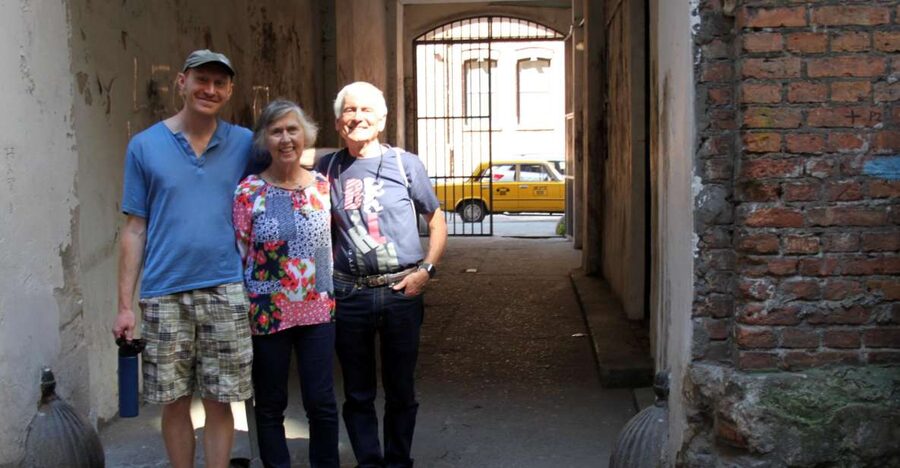
- Walk beside the original ghetto wall: Only fragments remain, making this one of the tour’s most direct physical links to the sealed Jewish district.
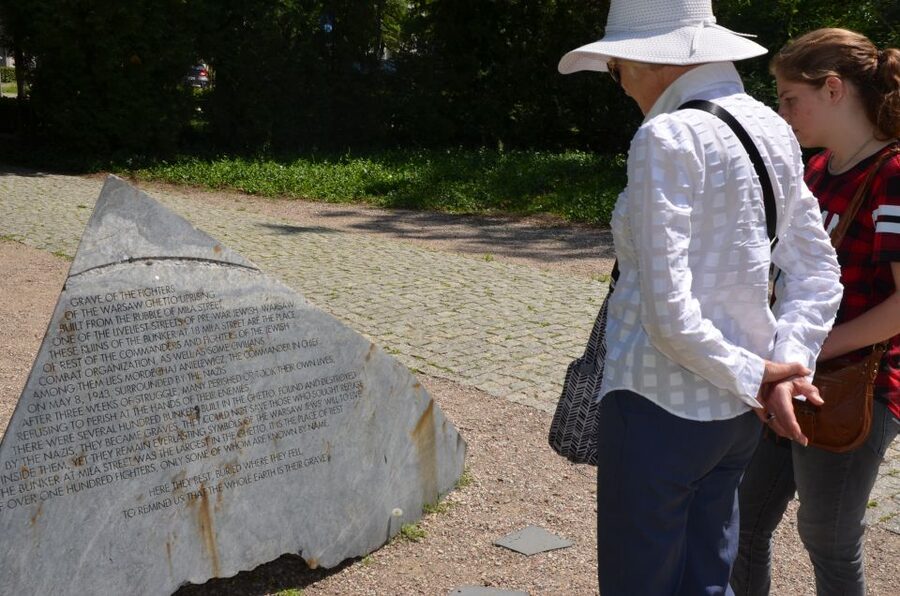
- Visit Muranów and the Ghetto Heroes Monument: The district was rebuilt on the rubble of the former ghetto and now includes modern buildings and street art.
- Choose your level of museum time: The POLIN Museum of the History of Polish Jews is nearby, but admission is not included.
- Ask for The Pianist locations: The route can include film locations in Praga-North, if that interests you.
Why the Fiat 125p makes a difference
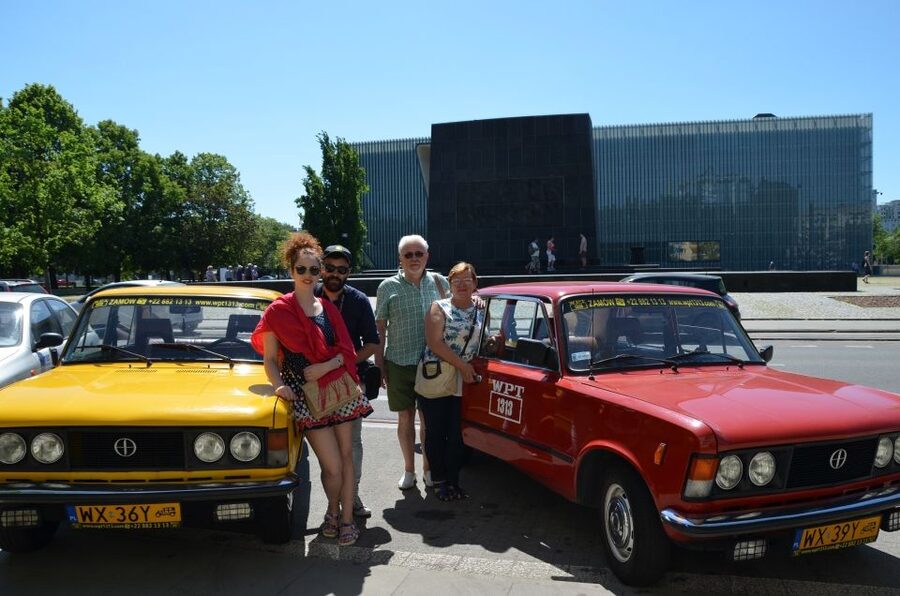
A standard minibus could cover this route. The Fiat 125p gives it a different feel.
This boxy Polish car was an icon of everyday life in the 1980s. It puts the city close to you, with a low, personal view of Warsaw’s streets rather than the broad, anonymous feel of a tour coach. The car also adds a useful thread of modern Polish history to a tour focused mainly on the wartime past.
You will be picked up at your centrally located hotel, or another central meeting point, and the guide will meet you in the lobby. The tour is private, so you do not need to follow the interests or pace of a large group. Ask for extra time at a particular site, or request a detour connected with your family history or interest in wartime Warsaw.
The small car is part of the charm, but it also has practical limits. Groups of more than four people use a blue vintage minivan instead. That keeps the tour together, though it changes the intimate feel of the Fiat. If the old car is a major reason for booking, confirm the group size before you pay.
Snacks are provided in the car, including Polish sweets and a doughnut, and a vodka shot is included. You also receive a souvenir photo with the vehicle, sent by email after the tour. These are modest extras, but they make the ride feel like a complete experience rather than a basic transfer between monuments.
More History Tours in Warsaw
- Warsaw: POLIN Museum of the History of Polish Jews Ticket
★ 4.7 · 1,142 reviews - Warsaw: Chopin Concert at Historical Venue in Old Town
★ 4.7 · 445 reviews - Small-Group Historical Guided Tour of Warsaw with pick up/drop off. Public Tour.
★ 4.5 · 343 reviews
Starting in the former ghetto
The tour begins around the former Jewish Ghetto, where your guide explains how Nazi authorities sealed more than 400,000 Jews into an area of Warsaw in 1940. The point of this section is not simply to see a few surviving objects. It is to understand the scale of the district and how thoroughly the wartime city was altered.
Much of the original ghetto disappeared during and after the war. Streets were destroyed, rebuilt, or renamed, and the Muranów district now looks like a modern part of Warsaw. That contrast can be disorienting. Your guide helps connect today’s streets with wartime photographs and accounts, so you can picture the walls, checkpoints, crowded buildings, and forced isolation that are no longer visible at street level.
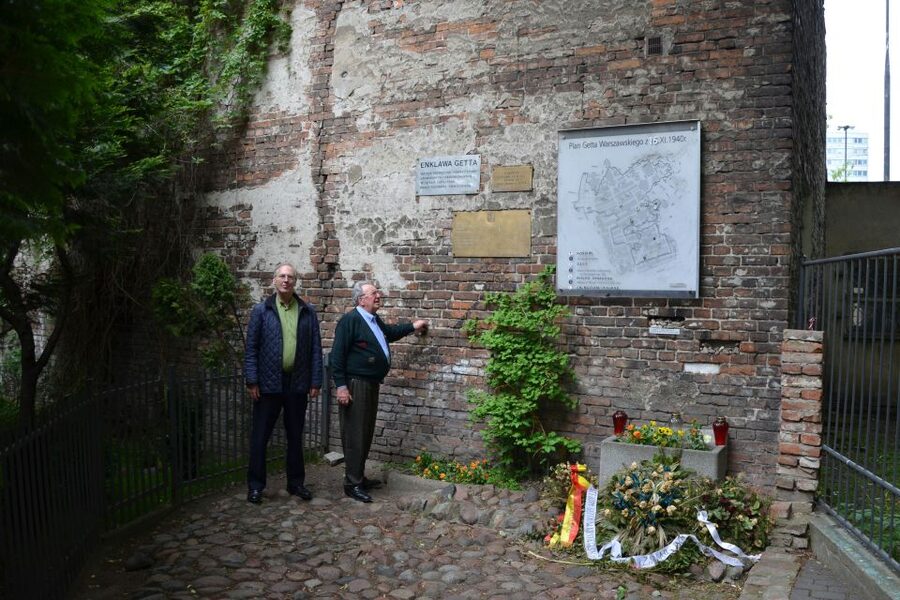
You will stop at the remaining fragments of the ghetto wall. The wall was built of red brick and cut the Jewish population off from the rest of Warsaw. Only small sections survive, but their size is not the point. A fragment of brickwork gives you a physical marker that photographs alone cannot provide.
I find this stop especially useful early in the tour. It establishes the boundary before you move on to religious sites and memorials. Wear comfortable shoes, since the experience is half driving and half walking, and the exact amount of walking can be adapted to your needs.
Grzybowski Square and Nożyk Synagogue
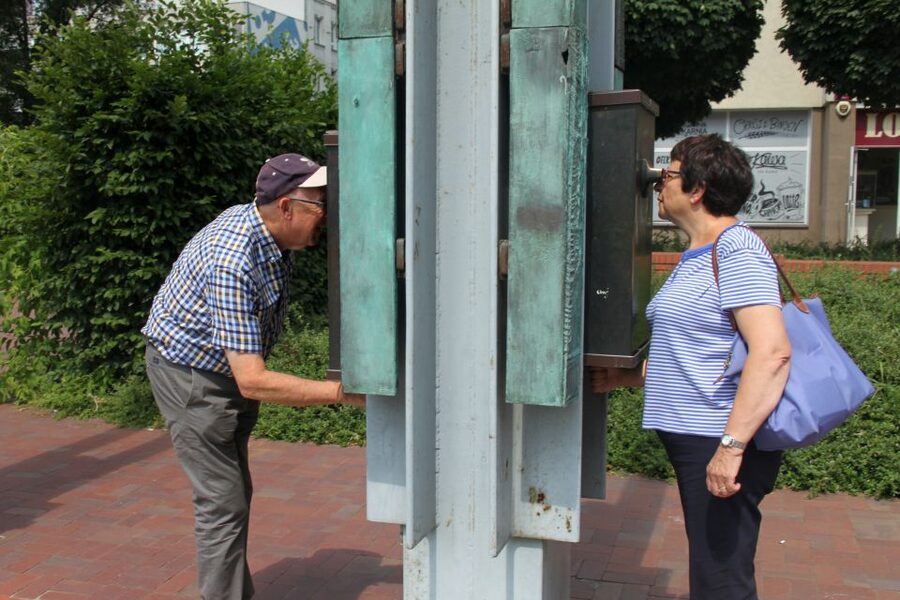
The Fiat then takes you past Grzybowski Square, or Plac Grzybowski, an area that was once part of the ghetto. The square helps show how the former district was not an isolated spot at the edge of town. It occupied a substantial section of central Warsaw and included streets that still function as part of the city.
The next important stop is Nożyk Synagogue. It is the only synagogue in Warsaw to survive World War II and remains operational today. That distinction gives the building a special role. You are not looking only at a memorial or museum piece. You are seeing a living religious site that continued after the destruction of most of Warsaw’s Jewish institutions.
Access can be less predictable than at a normal sightseeing attraction. One traveler specifically praised a guide for working hard to get inside, so I would treat admission as something your guide will try to arrange, not something to take for granted. The synagogue and cemetery are closed on Saturdays, so schedule this tour on another day if those visits are central to your plans.
Your guide can explain the building’s place in Warsaw’s Jewish story and help you look beyond the simple fact of survival. The stop is comparatively quiet and focused, a useful change after the heavy scale of the ghetto story.
Muranów, the Jewish Cemetery, and what remains
The route continues into Muranów, the area associated with the former Large Ghetto. Modern Muranów was built on the rubble of the destroyed district, so its streets carry two layers at once: the present-day neighborhood and the city buried beneath it.
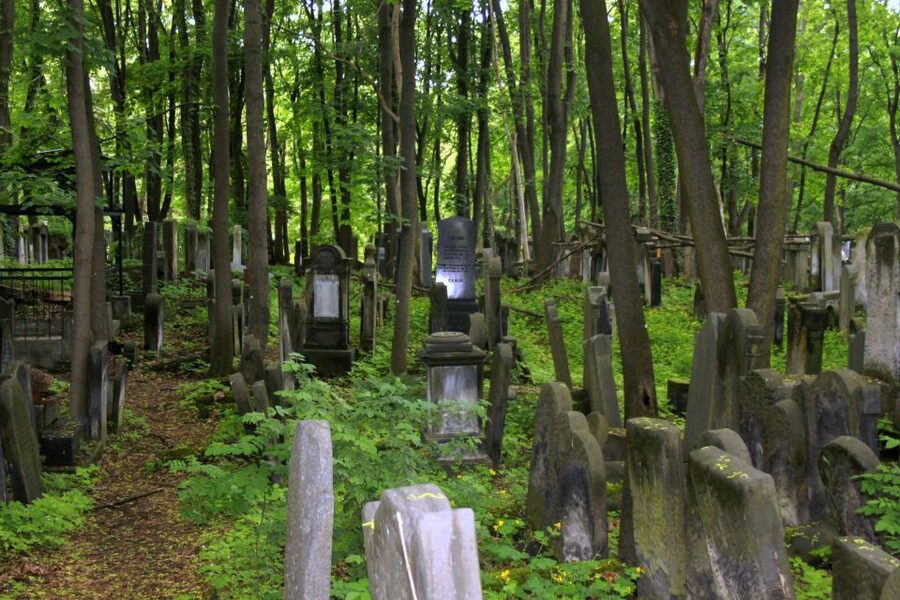
You will leave the Fiat and walk around the Jewish Cemetery, which contains thousands of graves. The cemetery is a place to slow down. Tombstones, inscriptions, and the sheer number of burial sites help make the prewar Jewish community feel less like an abstract chapter and more like a network of real families and individuals.
The cemetery can also be emotionally difficult. This is not a quick photo stop, and you should allow yourself a quiet pace. The amount of walking is moderate, but uneven ground or cold weather may make comfortable shoes important. The tour can be adapted, so tell your guide if you need a shorter walk or more time in the car.
Muranów’s modern buildings and street art may seem at odds with the cemetery and memorial sites. I think that contrast is part of the value. Warsaw did not preserve the former ghetto as a single historic quarter. Instead, you see a functioning neighborhood built over the remains, with memorials and fragments interrupting ordinary city life.
Other Jewish Quarter and Kazimierz walks:
- Private Tour: Warsaw’s Jewish Heritage by Retro Fiat
★ 5.0 · 208 reviews - Warsaw: Jewish Heritage & Holocaust Walking Tour
★ 4.7 · 119 reviews - Warsaw: Jewish Heritage 4-Hour Private Tour
★ 4.9 · 26 reviews - Warsaw : Jewish Quarter Private Walking Tour
★ 4.8 · 11 reviews
The Ghetto Heroes Monument and POLIN Museum
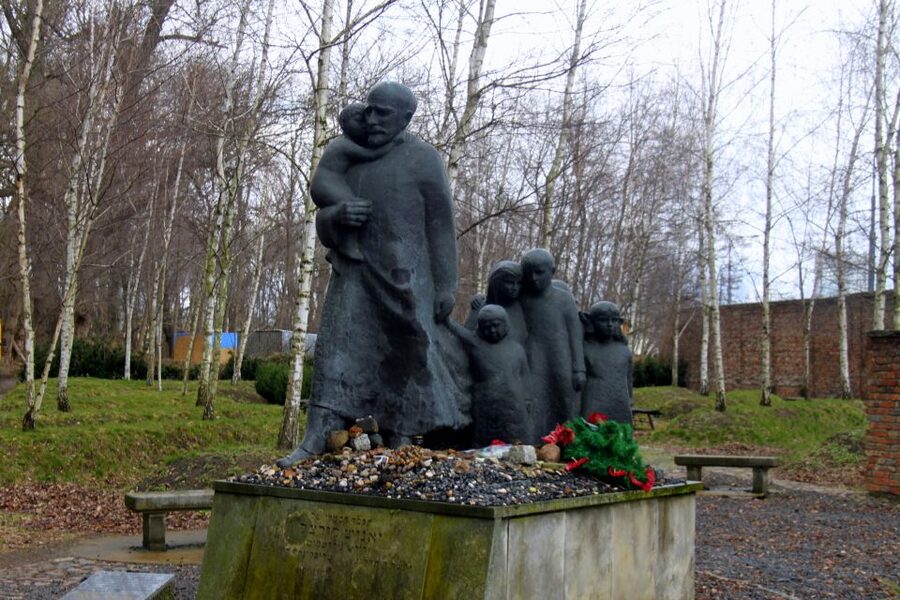
The emotional center of the route is the Ghetto Heroes Monument. Its powerful form commemorates the Jewish resistance fighters who rose against the Nazis during the Warsaw Ghetto Uprising. Your guide will provide the background, then give you space to look carefully at the monument.
The memorial is located near the POLIN Museum of the History of Polish Jews. The museum opened in 2013 and traces 1,000 years of Jewish life in Poland through objects, images, and exhibits. Admission is not included, so you will need to purchase a ticket separately if you want to go inside.
The tour gives you the choice to visit the museum, which is helpful because a full museum visit can take far longer than the remaining time in a four-hour driving tour. If you already plan to visit POLIN separately, use this stop for the monument and exterior orientation. If your schedule is tight, ask your guide how much museum time is realistic before entering.
I would not try to rush through the museum simply to say you went inside. Its subject is broad, and the material deserves attention. This tour works well as an introduction, followed by a separate museum visit, or as a street-level complement to museum exhibits you have already seen.
Optional The Pianist locations in Praga-North
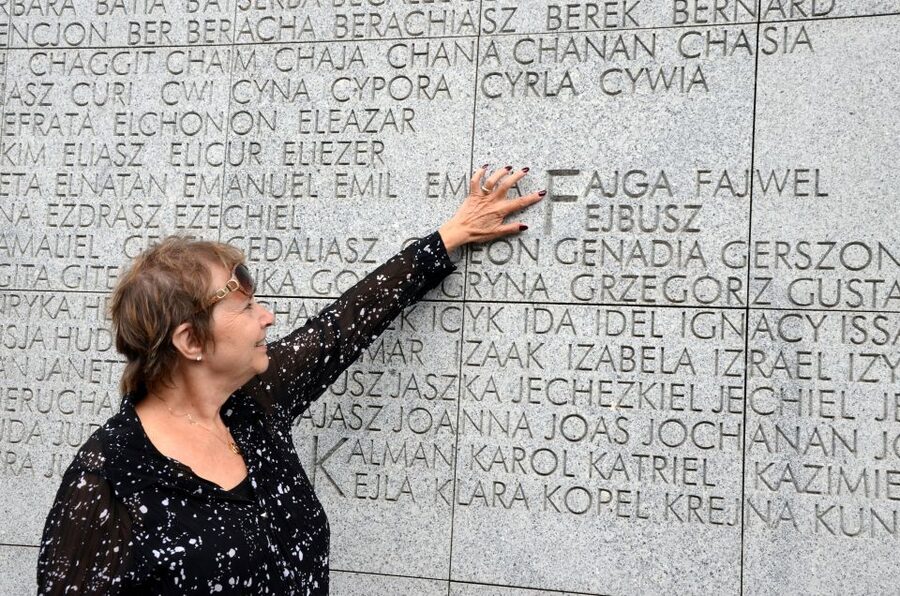
If you know Roman Polanski’s film The Pianist, ask the guide about locations in Praga-North, also called Praga-Północ. The film is set in Holocaust-era Warsaw, and seeing some of its settings adds a visual link between cinema and the city’s wartime story.
This is an optional part of the route, not the central focus. I would choose it if you have a strong interest in the film or want to see a different Warsaw district. If the ghetto wall, synagogue, cemetery, and memorial matter more to you, keep the main route as the priority.
The flexibility is useful here. A private tour gives you a chance to say what you want more of, instead of receiving a fixed film-location detour that may not suit your interests. Traffic can also change the route slightly, so the order and exact timing of stops may vary.
How the guide affects the experience
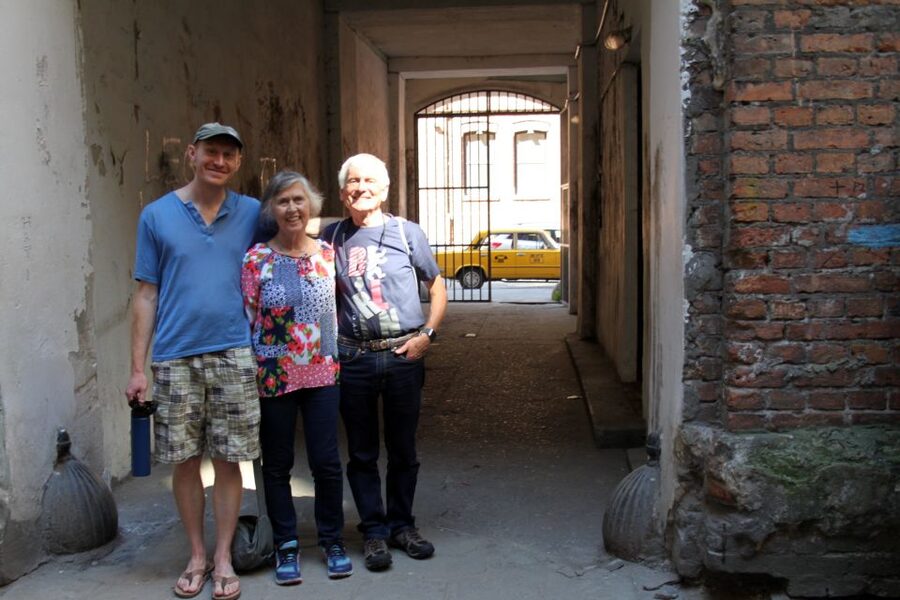
The driver-guide is the key to this tour. You are not simply being driven to monuments. The guide explains what happened, connects the sites, and manages the practical challenges of a vintage vehicle and busy Warsaw streets.
Martin, Maks, and Konrad are among the named guides associated with this experience. They have been praised for clear explanations, friendly conversation, persistence with synagogue access, and skillful driving in tight spaces. One guide was also singled out for keeping the tour informative despite very cold weather, which matters if you visit in winter.
The strongest reason to choose a private format is the ability to ask questions as they occur to you. You can ask about Jewish life before the war, the ghetto’s boundaries, the uprising, the rebuilding of Muranów, or a family connection. The tour is conducted in English.
I would still keep your expectations realistic. A four-hour tour cannot provide the full depth of the POLIN Museum, a complete study of wartime Warsaw, and a long visit at every outdoor site. Its strength is the connection between places. You see several key points in one half-day and hear how they fit together.
Price, timing, and practical value
At $105 per person, the cost is easiest to justify when you are traveling with two to four people. You are paying for a private four-hour tour, hotel pickup and drop-off in central Warsaw, transport, a local English-speaking guide, snacks, a drink, and a souvenir photo. The price also includes the convenience of having the route adjusted to your interests.
Admission fees are not included, particularly for the POLIN Museum. That is fair for a private sightseeing tour because you can choose to visit the museum on this day or return later for a longer session. Gratuity is optional.
The tour lasts four hours, but do not expect four hours of constant driving. It is roughly half driving and half walking, with time to stop at the wall, synagogue, cemetery, and memorial. The walking can be adapted, which makes the tour workable for different comfort levels, though it is not a no-walking car tour.
Book with the weather in mind. Cold conditions did not prevent a good experience for one January visitor, but outdoor memorials and cemetery paths are more demanding in winter. Comfortable shoes are essential in any season.
You can cancel up to 24 hours in advance for a full refund, and the reserve-now, pay-later option keeps your schedule flexible. Pets are not allowed.
Who should book this private Warsaw tour
I recommend this experience to you if you want a clear introduction to Jewish Warsaw without spending a full day on foot. It suits first-time visitors, people with a particular interest in World War II, and anyone who prefers asking questions in a private setting.
It is also a good choice for families or small groups who want to keep the pace manageable. The guide can adjust the amount of walking, and the vintage car gives younger members of a group an immediate point of interest before the more serious history begins.
I would choose another format if you want a long, detailed museum visit, extensive time at every cemetery section, or a tour conducted entirely on foot. I would also avoid Saturday if Nożyk Synagogue and the Jewish Cemetery are must-see stops.
For the best fit, tell the guide in advance if you want to focus on family history, religious sites, The Pianist, the ghetto uprising, or the POLIN Museum. The route has enough flexibility to make that request worthwhile.
Should you book it?
Book this tour if you want Warsaw’s Jewish heritage presented through real locations, with the comfort of a private car and the character of a vintage Polish Fiat. The ghetto wall, Nożyk Synagogue, Jewish Cemetery, and Ghetto Heroes Monument create a strong four-hour route, while the guide adds the context that the surviving fragments cannot provide on their own.
The main limits are the serious subject, moderate walking, possible synagogue access restrictions, and separate museum admission. Plan for those points, avoid Saturday if needed, and remember that larger groups use a vintage minivan rather than the Fiat 125p.
For a compact, personal introduction to one of Warsaw’s most important chapters, this is a thoughtful use of half a day.
FAQ
How long is the Warsaw Jewish Heritage Private Tour in Retro Fiat?
The tour lasts four hours.
What vehicle is used for the tour?
Groups of up to four people are driven in a historical 1980s Fiat 125p. Groups larger than four use a blue vintage minivan.
Is hotel pickup included?
Yes. Pickup and drop-off are included from centrally located Warsaw hotels or another centrally located point. The guide meets you in the hotel lobby.
Is the tour private?
Yes. This is a private group tour with a live English-speaking guide.
Are Nożyk Synagogue and the Jewish Cemetery open every day?
No. Both the synagogue and cemetery are closed on Saturdays.
Is admission to the POLIN Museum included?
No. Entrance fees are not included, so you pay separately if you choose to visit the Museum of the History of Polish Jews.
What should I bring, and how much walking is involved?
Bring comfortable shoes. The tour is approximately half walking and half driving, requires a moderate amount of walking, and can be adapted to suit your needs.
Recently added in Warsaw
- Warsaw Wolf’s Lair with St. Lipka and Mamerki Private Guided★ 4.2 · 3 reviews
- Taste of Poland, food tour and guided walk with 12 tasting★ 5.0 · 3 reviews
- Discover Warsaw’s most Photogenic Spots with a Local★ 5.0 · 3 reviews
- Lodz Small Group Tour from Warsaw with Lunch★ 4.0 · 3 reviews
- Jewish heritage in Warsaw★ 4.5 · 3 reviews
- Warsaw Outdoor Paintball with Transfers (all year round)★ 5.0 · 3 reviews
- Electric Scooter Tour: Full Tour – 3-Hours of Magic!★ 5.0 · 3 reviews
- Skip-the-Line Polin Museum Warsaw Jewish History Tour★ 5.0 · 3 reviews
Jewish Quarter & Kazimierz Tours, compared.

Bike Tour of Old Town, Jewish Quarter and the Ghetto
Read our review →
Kazimierz, Schindler’s Factory & Ghetto Guided Tour
Read our review →
Bike Tour of the Old Town, Kazimierz, and the Ghetto
Read our review →

Jewish Quarter and Ghetto Electric Golf Cart Tour
Read our review →
Where else this one turns up