
Reviewed · JEWISH QUARTER & KAZIMIERZ TOURS
Warsaw Daily Jewish Ghetto Guided Tour with Jewish Cemetery
Warsaw’s former Jewish Ghetto is not a museum behind glass. It is part of the city, threaded through modern streets and apartment blocks, with fragments of the old wall and memorial sites marking one of World War II’s darkest chapters. This three-hour walking tour gives that difficult history a clear human voice.
I like the small group limit of 15 and the chance to visit the Jewish Cemetery, where names and lives come into focus beyond the dates and statistics. I also like that guides such as Anna and Ewa have been praised for making the subject personal and understandable, not simply reciting facts.
The main consideration is emotional weight. You will hear about hunger, disease, deportation, mass murder, and the Warsaw Ghetto Uprising, so this is not a light sightseeing walk. Also, the cemetery is closed on Saturdays, when the itinerary changes to All Saints Church.
Key points to know before you book
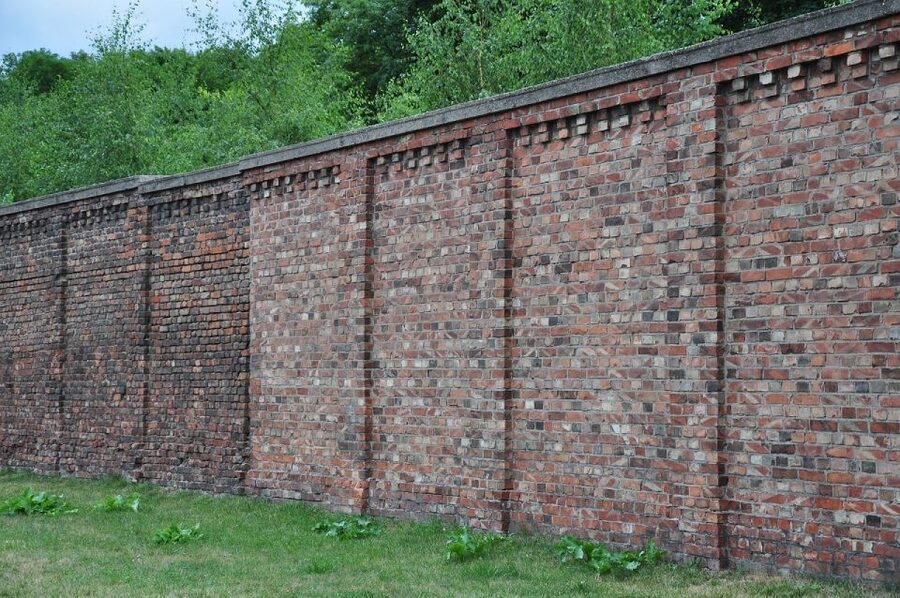
- Four square kilometers of forced confinement: Learn how more than 400,000 Jews were held inside the Warsaw Ghetto.
- Authentic wall remains: See surviving sections of the ghetto boundary and old buildings connected with that period.
- Nozyk Synagogue: Visit Warsaw’s only surviving prewar synagogue.
- Jewish Cemetery included: Your admission ticket is covered, with stories of religious leaders, activists, artists, and unnamed victims.
- Personal guide attention: The group is limited to 15 people, smaller than many 30-person alternatives.
- Saturday change: The cemetery is closed that day, so the tour visits All Saints Church instead.
Starting at the InterContinental Hotel
The meeting point is in front of the InterContinental Hotel at Emilii Plater 49, 00-125 Warsaw. You do not go inside the hotel. Find your guide outside, and arrive on time because a late arrival may mean missing the group.
This is a practical starting point in central Warsaw, but the meeting instruction is worth reading carefully. A large hotel can be easy to spot, yet the tour does not begin at its reception desk. Check your email the day before for the final instructions and any important updates.
The experience is offered in English with a live licensed guide. The listed duration is three hours, giving you enough time to see several important places without turning the walk into an all-day commitment.
Other Jewish Quarter and Kazimierz walks:
- Private Tour: Warsaw’s Jewish Heritage by Retro Fiat
★ 5.0 · 208 reviews - Warsaw: Jewish Heritage & Holocaust Walking Tour
★ 4.7 · 119 reviews - Warsaw: Jewish Heritage 4-Hour Private Tour
★ 4.9 · 26 reviews
Muranow and the city built over the ghetto
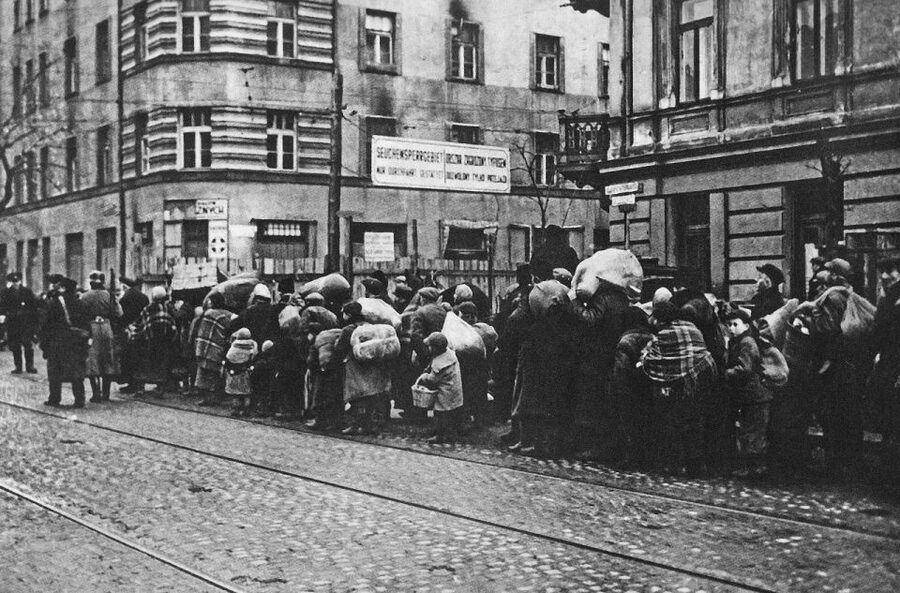
The first major section takes you into Muranow, the Warsaw district that held the largest Jewish ghetto in Europe during World War II. Before the war, Warsaw had a large and active Polish-Jewish community. During the German occupation, that community was forced into a closed area measuring about four square kilometers.
More than 400,000 Jews were confined there. The guide explains how overcrowding, hunger, exhaustion, and disease killed about 100,000 people inside the ghetto, while more than 300,000 were later murdered at nearby Treblinka.
Those numbers are hard to grasp on their own. The value of walking through Muranow is that the story is connected to actual streets and surviving fragments. You are not only hearing about a place that disappeared. You are seeing where it existed, and how modern Warsaw now surrounds its remains.
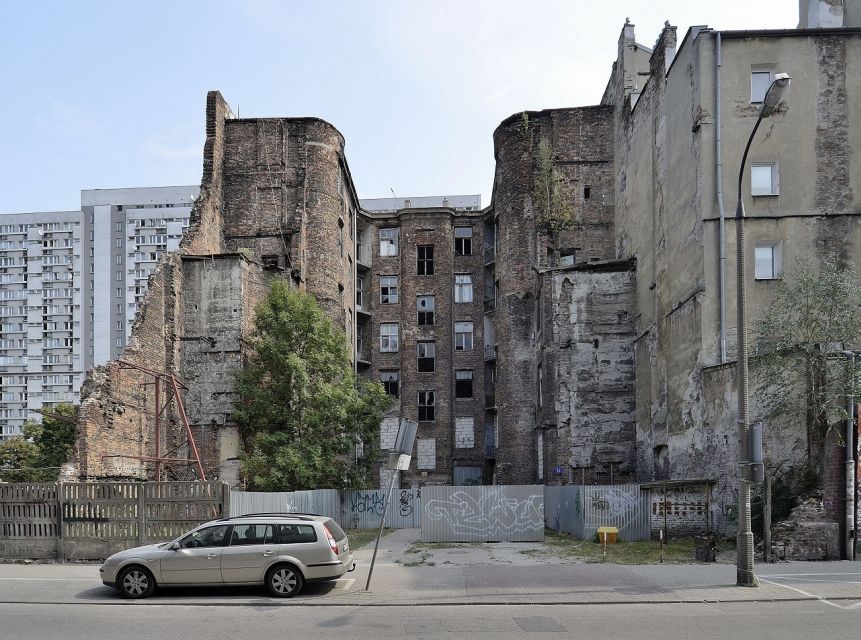
The area does not offer a single preserved district that looks exactly as it did before the war. Much of Warsaw was destroyed, rebuilt, or altered. That can make the tour feel less visually dramatic than a visit to a preserved historic quarter, but it also makes a guide especially useful. The interpretation connects scattered evidence into a story you can follow.
Seeing the surviving ghetto wall
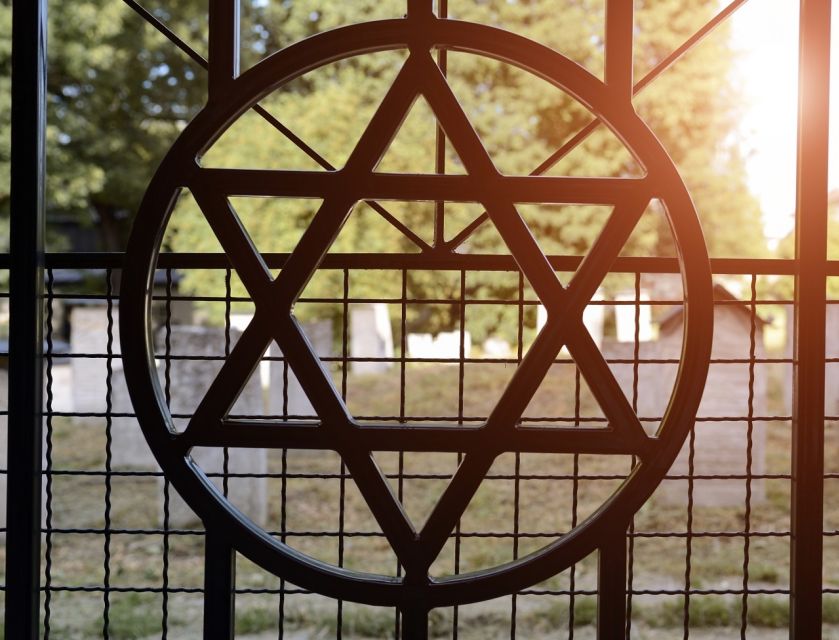
The remains of the ghetto wall are among the most important physical traces on the route. They help explain the practical reality of confinement: this was a sealed area, not simply a neighborhood under tighter military control.
Your guide places the wall within the wider German occupation and explains the policies that created the ghetto. You will learn about the Nazi plan known as the Final Solution, the persecution of Jews in occupied Poland, and the stages that led from forced relocation to deportation and murder.
I find this kind of stop most useful when you take a moment to look closely rather than hurry on for the next address. A small surviving section can seem modest, but its meaning is enormous because it marks the boundary that trapped hundreds of thousands of people.
Expect the setting to be sober rather than theatrical. The wall remains are not a full ruin with rooms to explore. Their power comes from the facts attached to them and from the contrast between the small fragment and the scale of the suffering it represents.
Nozyk Synagogue and Warsaw’s Jewish heritage
The tour also takes you to Nozyk Synagogue, the only surviving prewar synagogue in Warsaw. This is an important stop because it links the wartime story with the much longer life of Jewish culture in the city.
The synagogue represents worship, community, and continuity. It also reminds you that Warsaw’s Jewish population was not defined only by persecution. People built families, businesses, religious institutions, political movements, and cultural lives here long before the war.
The information provided for the tour describes the synagogue as one of the oldest in Warsaw. The key point for your visit is that it is the only prewar synagogue still surviving in the city, making it a particularly important place to see during a short visit.
Access and the exact amount of time spent at each stop can depend on the guide and the day. The tour is primarily an outdoor history walk, so you should not book it expecting a long interior visit at every location. The guide’s explanation is central to what you receive.
A few more Warsaw half days to consider
- Warsaw: Chopin Concert in the Old Town
★ 4.8 · 2,287 reviews - Warsaw: Traditional Galar Cruise on The Vistula River
★ 4.6 · 1,640 reviews - Warsaw: Old Town Highlights Walking Tour in English
★ 4.7 · 1,516 reviews - Warsaw Concert: Chopin – Painted by Candlelights with Wine
★ 4.8 · 1,442 reviews
The Warsaw Ghetto Uprising
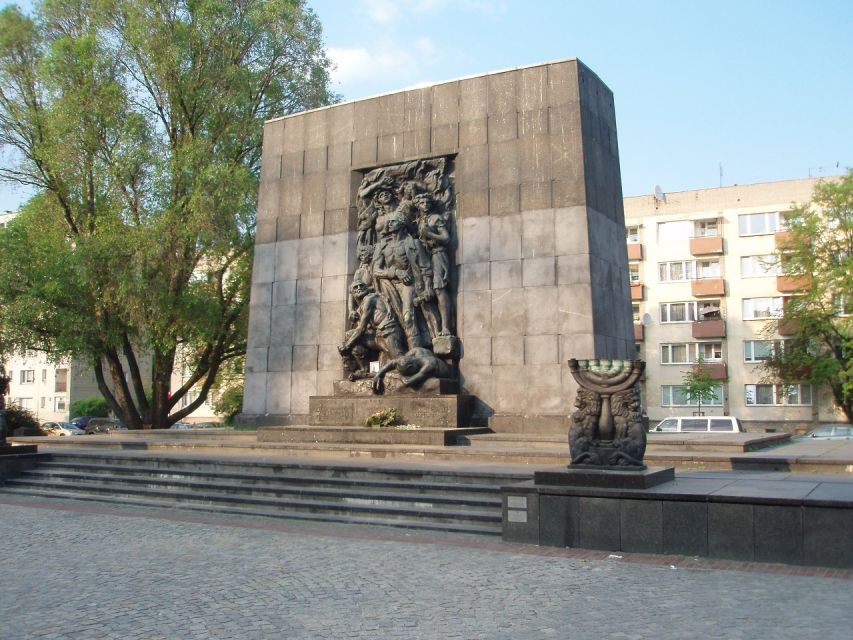
A major part of the walk focuses on the Warsaw Ghetto Uprising of 1943. Your guide explains the people who resisted, the circumstances that led to the uprising, and the terrible imbalance between lightly armed Jewish fighters and the German forces attacking the ghetto.
This section gives the tour a necessary change in focus. The story is not only one of victims and destruction. It is also about courage, planning, resistance, and the decision to fight under almost impossible conditions.
You will hear about heroes of the uprising while walking through the district where these events unfolded. The connection between place and story matters here. Instead of treating the uprising as an isolated date in a textbook, the route places it within the streets and boundaries of the former ghetto.
The subject remains difficult, and the guide’s tone matters. Anna has been praised for combining detailed information with personal stories and a warm, personable manner. Ewa has also been described as informative and personable. Guides can differ, but these examples suggest that the experience is designed to be more than a list of military events.
Entering the Jewish Cemetery
The Jewish Cemetery is the final scheduled stop, and for many people it will be the most affecting. Your entrance ticket is included, so you do not need to arrange separate admission.
Inside, the guide discusses Polish-Jewish spiritual leaders, political activists, important creators of Jewish culture, and thousands of unnamed victims of the ghetto. That range is important. The cemetery is not only a place of mourning. It is also a record of Jewish life, achievement, belief, and public service.
The cemetery can bring a different pace to the tour. Streets and wall fragments help explain the machinery of confinement, while graves give the past individual names and identities. You may find that the final stop makes the earlier statistics easier to understand on a personal level.
Plan around the Saturday closure. On Saturdays, you will visit All Saints Church instead. The church is closely tied to Jewish history in Warsaw, and the guide uses it to tell related stories while pointing out its architecture. If entering the cemetery is your main reason for booking, choose a non-Saturday departure.
Why the guide matters on this particular walk
A guide is useful on any historic walking tour, but especially here. The surviving evidence is incomplete, and the most important facts are often invisible: who was forced into the ghetto, how it was administered, how hunger and illness spread, and how deportations connected to Treblinka.
A licensed 5-star history expert guide explains the sequence and answers questions in real time. The small group limit helps. With no more than 15 participants, you have a better chance of hearing the guide clearly and asking about details that catch your attention.
The strongest guide experiences can also add personal stories to the larger events. Anna’s approach has been described as combining facts with stories and a personal touch. One booking even had only two participants, creating a relaxed atmosphere. That very small group is not guaranteed, but the capped size gives the tour a more intimate feel than a 30-person walk.
Keep your expectations realistic. This is a group experience, so the guide cannot tailor every minute to one person. Still, the size is modest enough to make questions and conversation possible.
How the $131 price measures up
At $131 per person, this is not the cheapest way to walk around the former ghetto. The value depends on how much structure and explanation you want.
The fee includes the three-hour group tour, an English-speaking licensed guide, a group of up to 15, and entrance to the Jewish Cemetery. You are paying for interpretation as much as for access. Many of the sites are in the city streets, but understanding their meaning requires context that you would otherwise need to assemble yourself.
The cemetery ticket adds practical value, and the smaller group improves the experience compared with a crowded 30-person outing. If your priority is a quick look at wall remains with little explanation, the price may feel high. If you want a focused history lesson with several important locations and a guide who can connect them, the cost is easier to justify.
A three-hour length also works well for a day in Warsaw. You get a serious introduction without giving up an entire day of sightseeing. I would pair it with other Jewish heritage sites or museums only if you still have the energy, since the subject matter can be demanding.
Practical details that affect your day
The tour is listed as wheelchair accessible, though the route includes outdoor streets and historic sites. If you need precise information about surfaces or access at each location, confirm those details before booking.
You can reserve now and pay later, which helps if your Warsaw schedule is still changing. Free cancellation is available up to 24 hours before the tour for a full refund. Starting times vary, so check availability for your chosen date.
Wear comfortable shoes and allow the full three hours. The walk deals with serious material, so give yourself some quiet time afterward rather than scheduling an immediately rushed activity.
The tour is offered in English. If you need another language, this particular experience may not suit you, since English is the listed language and the live guide leads the group in English.
Who should book this Warsaw tour?
I would recommend it to anyone who wants a focused introduction to Warsaw’s Jewish heritage, the Holocaust, and the 1943 uprising. It suits first-time visitors who want a clear route through Muranow and people who prefer historical sites explained by a local licensed guide.
It is also a good choice if you value a smaller group and want the Jewish Cemetery included. The cemetery changes the experience from a general wartime walk into a broader look at Polish-Jewish life.
I would think twice if you want a cheerful sightseeing outing or prefer to explore at your own pace. The content is painful, and three hours of concentrated history may feel intense. Saturday departures also require flexibility because the cemetery will be replaced by All Saints Church.
Should you book the Daily Jewish Ghetto Tour?
Book it if you want Warsaw’s former Jewish Ghetto explained with care, not simply marked on a map. The combination of ghetto wall remains, Nozyk Synagogue, Muranow, the uprising, and the Jewish Cemetery gives you a strong three-hour introduction.
The best reasons to choose it are the 15-person limit, included cemetery admission, and the chance to learn from guides who can make the events personal as well as factual. Choose a day other than Saturday if the cemetery is essential, arrive early at the InterContinental meeting point, and be ready for a serious walk through painful history.
FAQ
How long is the Warsaw Jewish Ghetto tour?
The tour lasts three hours.
Where is the meeting point?
Meet your guide in front of the InterContinental Hotel at Emilii Plater 49, 00-125 Warsaw. Do not enter the hotel, as it is only the meeting point.
What language is the tour offered in?
The tour is offered in English with a live licensed guide.
How large is the group?
The group is limited to 15 participants.
Is entrance to the Jewish Cemetery included?
Yes. Entrance to the Jewish Cemetery is included in the tour price.
What happens if I take the tour on Saturday?
The Jewish Cemetery is closed on Saturdays. The tour visits All Saints Church instead, where the guide explains its connection to Jewish history and discusses its architecture.
What places will I see during the tour?
You will explore Muranow and the former Warsaw Ghetto, see remains of the ghetto walls, visit Nozyk Synagogue, and visit the Jewish Cemetery when it is open.
Can I cancel the booking?
Yes. You can cancel up to 24 hours in advance for a full refund. You can also reserve now and pay later.
Recently added in Warsaw
- Warsaw Wolf’s Lair with St. Lipka and Mamerki Private Guided★ 4.2 · 3 reviews
- Taste of Poland, food tour and guided walk with 12 tasting★ 5.0 · 3 reviews
- Discover Warsaw’s most Photogenic Spots with a Local★ 5.0 · 3 reviews
- Lodz Small Group Tour from Warsaw with Lunch★ 4.0 · 3 reviews
- Jewish heritage in Warsaw★ 4.5 · 3 reviews
- Warsaw Outdoor Paintball with Transfers (all year round)★ 5.0 · 3 reviews
- Electric Scooter Tour: Full Tour – 3-Hours of Magic!★ 5.0 · 3 reviews
- Skip-the-Line Polin Museum Warsaw Jewish History Tour★ 5.0 · 3 reviews
Jewish Quarter & Kazimierz Tours, compared.

Bike Tour of Old Town, Jewish Quarter and the Ghetto
Read our review →
Kazimierz, Schindler’s Factory & Ghetto Guided Tour
Read our review →
Bike Tour of the Old Town, Kazimierz, and the Ghetto
Read our review →

Jewish Quarter and Ghetto Electric Golf Cart Tour
Read our review →
Where else this one turns up