
Reviewed · OLD TOWN TOURS
Multi-ethnic Warsaw – guided walk through the old town
Warsaw’s Old Town is more than a pretty square rebuilt after wartime destruction. This walk uses its streets, churches, gardens, university buildings, and café culture to explain how German-speaking immigrants and Polish families helped shape the city. You’ll follow that story from Rynek Starego Miasta to an Emil Wedel chocolate café.
I like the small private format, since your group can ask questions and set the pace within the two-hour limit. I also like the unusual focus on entrepreneurs, publishers, architects, artists, scientists, and poets, rather than another tour that stops at monuments and recites dates. The main consideration is the price: at $70.01 per person, it offers good value for a private walk, but less so if you want only a quick visual introduction to Warsaw.
Key points at a glance
- German-born families in Warsaw: Learn why people from German-speaking regions settled in the city and made it their home.
- Seven central stops: The route links the Old Town, Royal Castle area, Krakowskie Przedmieście, Saxon Gardens, Lutheran Church, University of Warsaw, and Wedel café.
- A guide-led history of city building: The Saxon period, urban growth, architecture, and business development receive special attention.
- Private experience: Only your own group takes part, with a licensed guide.
- Guide Marzena: Her clear explanations, warmth, and ability to answer detailed questions are repeatedly praised.
- Chocolate-house finale: The walk ends at Pijalnia Czekolady E.Wedel on Szpitalna Street, though purchases are not listed as included.
Why this Warsaw walk takes a different route through the past
Many Old Town walks focus on royal power, war, and rebuilt façades. This one follows the people behind the city’s growth. You’ll hear how immigrants from German-speaking countries became part of Warsaw’s social and economic life, then connect that story with Polish industrialists, architects, artists, publishers, academics, and poets.
That gives the walk a useful human scale. Instead of treating Warsaw as a set of grand buildings, you look at the people who designed, financed, printed, taught, wrote, and traded in them. You’ll also hear about brands founded in earlier periods that remain part of Warsaw’s cityscape today.
The tour is conducted in about two hours, so it is best viewed as a focused introduction, not a complete history of Warsaw. The route covers a lot of ground in a short time. That is a strength if you have limited time, but you should expect the guide to keep moving and select the most important points rather than linger at every stop.
The guide named most often in the supplied material is Marzena. She is described as warm, well prepared, lively, and able to answer questions in detail. One particularly useful sign is that a group taking several tours with her found that she explained subjects clearly and made the outings enjoyable. For a historical walk, that matters. The quality of the experience depends less on the number of stops than on how well the guide connects them.
More Old Town Tours in Warsaw
- Warsaw: Chopin Concert in the Old Town
★ 4.8 · 2,287 reviews - Warsaw: Old Town Highlights Walking Tour in English
★ 4.7 · 1,516 reviews - Warsaw: Old Town Guided Walking Tour
★ 4.9 · 599 reviews
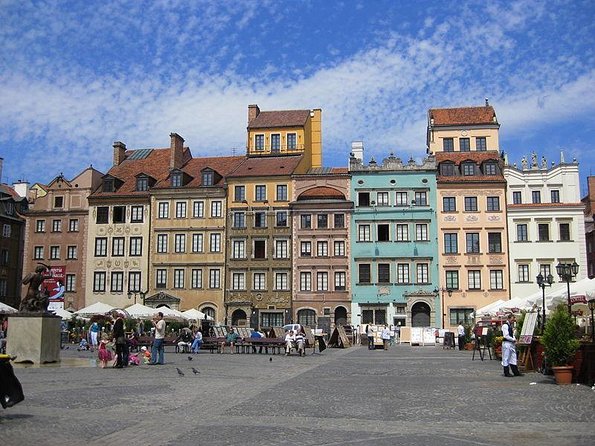
Rynek Starego Miasta: beginning with migration
The walk starts at Rynek Starego Miasta, Warsaw’s Old Town Market Square. This is a natural meeting point, but the subject gives the opening a less familiar angle. You’ll learn about the best-known German-born families connected with Warsaw and why so many people from German-speaking lands settled here over the centuries.
The useful idea is not simply that immigrants arrived. You’ll consider how they made Warsaw their home and became part of the city’s working, cultural, and civic life. That helps you see the Old Town as a place shaped by movement and exchange, not as an isolated Polish postcard scene.
The scheduled time here is about 15 minutes. That is enough for an introduction and orientation, but not enough for a detailed reading of every building around the square. Bring questions if this theme interests you, because the private format gives you a better chance to ask about particular names and families.
Royal Castle area: architecture shaped by the Saxon period
From the market square, the route continues toward the Royal Castle in Warsaw. You will see representative buildings, churches, and gardens that helped form the architectural character of the city. The emphasis is on construction and urban development during the Saxon period.
This section should appeal to you if you like understanding why a city looks the way it does. Warsaw’s streets and buildings are not just a collection of styles. They reflect periods of investment, political influence, planning, and changing urban needs. The guide’s task here is to connect those visible forms with the forces that produced them.
The stop is listed at roughly 15 minutes, so expect an exterior-focused explanation rather than a full museum visit. The Royal Castle itself is identified as a museum, but admission to the museum is not part of the tour. No attraction tickets are included, and the tour description does not promise an interior visit.
That distinction is worth noting before you book. If you want to tour the Royal Castle’s rooms and collections, you’ll need to arrange that separately. This walk is about the surrounding city and its development.
Krakowskie Przedmieście: the people behind Warsaw’s progress
Krakowskie Przedmieście is likely the longest and most idea-packed section of the route, with about 30 minutes allotted. Here the story expands beyond German-born families to include entrepreneurs, industrialists, architects, publishers, artists, scientists, and poets.
I like this part because it broadens your view of what makes a city successful. Warsaw’s identity was shaped not only by rulers and military events, but also by people who built businesses, printed ideas, taught subjects, designed structures, and created art. The guide also points out that some familiar brands founded in earlier eras still appear in the modern cityscape.
You’ll want to listen for names and places you can revisit later. The route is short, and you may not remember every person mentioned. A quick note on your phone could help if you want to follow up after the walk.
The private setting is especially useful here. A standard group tour can make a long list of names feel rushed. With your own group, you can ask the guide to explain why a certain figure mattered or how a street name connects with the city’s past.
More Walking Tours in Warsaw
- Half-Day Polish Food Walking Tour with Guide and Dinner
★ 4.5 · 381 reviews - Warsaw: Warsaw Ghetto Private Walking Tour with Hotel Pickup
★ 4.9 · 369 reviews - Old Town Warsaw Walking Tour
★ 4.5 · 333 reviews - Warsaw: Jewish History Guided Walking Tour in English
★ 4.7 · 324 reviews
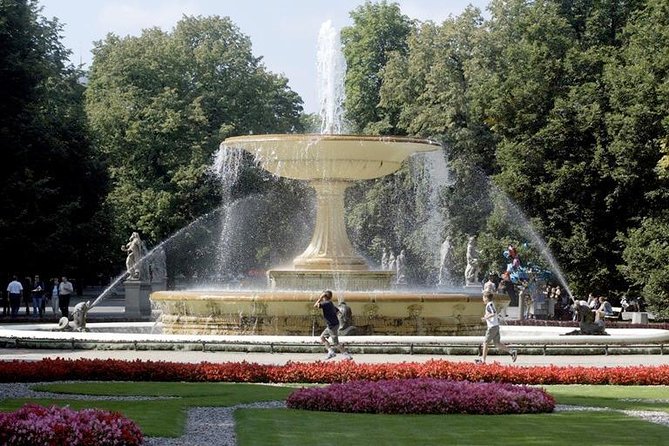
Saxon Gardens: urban planning in an open setting
Saxon Gardens gives the tour a change of pace. After streets and representative buildings, you’ll consider the city’s growth through its gardens and public spaces. The main theme remains the Saxon period and its intensive construction and urban development.
The stop lasts about 15 minutes. That is not a long garden visit, so think of it as a historical pause rather than free time to wander. You’ll be looking at how planned open areas fit into the city and how public spaces contributed to Warsaw’s changing form.
This is one of the places where the walk’s broad approach becomes clear. The guide moves between architecture, planning, social history, and the people connected with each period. If you prefer tours that explain the relationship between buildings and daily city life, this should be worthwhile.
If your group includes anyone who walks slowly, keep the two-hour schedule in mind. The route has several stops and continues from the Old Town through central Warsaw. The tour is described as suitable for most people, but it remains a walking experience with a fixed sequence of locations.
Evangelical Augsburg Church: a less familiar Warsaw story
The Evangelical Augsburg Lutheran Church receives its own 15-minute stop. You’ll admire the church and hear about its eventful history.
This is an important addition to a tour about Warsaw’s multi-ethnic past. The church gives the subject a visible religious and architectural setting, linking the German-speaking communities discussed at the start with a building that remains part of the city.
The supplied details do not promise an interior visit or a service. Plan on learning about the church from the guide and viewing it as part of the route. If you want to enter, ask the guide on the day, since access can depend on circumstances not specified here.
The stop also helps break up the larger story. After discussing economic and urban development, you get a reminder that migration affects worship, community life, and public identity as well as trade and construction.
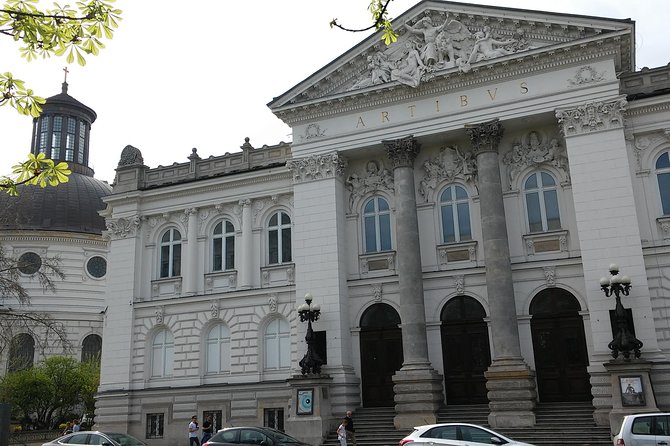
University of Warsaw: education, culture, and city names
At the University of Warsaw, the tour returns to representative buildings and the people who shaped Warsaw’s cultural and intellectual life. Architects, publishers, artists, scientists, and poets all enter the story here.
This stop is not simply about looking at a university façade. It shows how education and publishing help a city develop its ideas and public culture. You’ll also hear more about Polish figures whose names live on in neighborhoods and streets.
About 15 minutes is scheduled here. As with the Royal Castle area, that points to a guided exterior visit rather than a full exploration of university buildings. The value comes from the explanation: a street name or institution becomes a clue to the people Warsaw chose to remember.
The topic should work well for mixed-interest groups. You do not need to be an architecture specialist or an academic historian. The guide connects buildings and names with the wider growth of the city, and Marzena’s reported strength is her ability to make these subjects vivid while answering questions carefully.
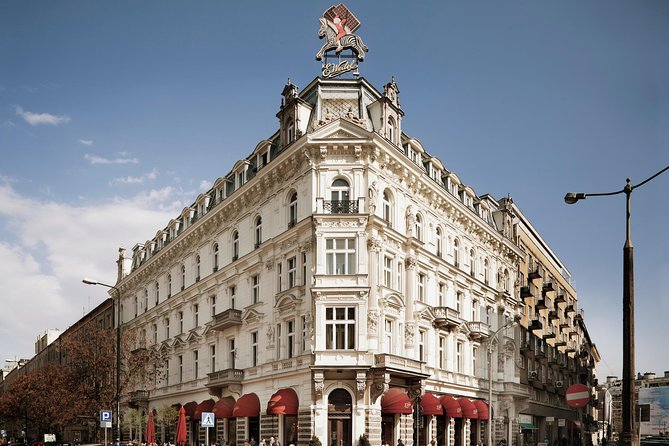
Wedel chocolate: ending on Szpitalna Street
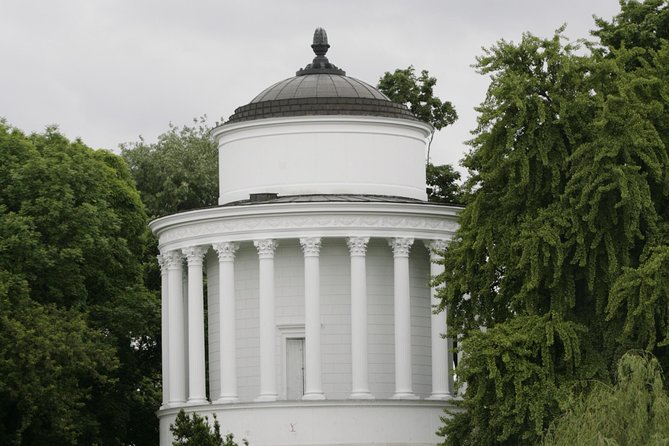
The walk finishes at Pijalnia Czekolady E.Wedel on Szpitalna Street. For more than 150 years, the Wedel name has been linked with chocolate, so the café offers a fitting closing note to a tour about business, brands, and Warsaw’s changing culture.
The stop is scheduled for about 15 minutes. It is a chance to finish with a recognizable Warsaw institution rather than ending at another monument. The location is the Emil Wedel coffee house, and the walk ends there.
Keep your expectations clear. The tour includes the licensed guide, but it does not list drinks, food, or chocolate purchases as included. You can treat the café as a convenient final stop and decide for yourself if you want to buy something.
This ending also gives you a practical choice. You can stay for a chocolate break, continue exploring nearby, or use the central location to make your next plans. Since the end point is different from the start, you get a route through Warsaw rather than a simple return walk to the market square.
What $70.01 per person buys you
The price is $70.01 per person. Since this is a private tour, the value depends heavily on the size of your group. For a couple or a small party, the cost is a meaningful expense for two hours. For a larger private group, the per-person price may feel easier to justify, especially since group discounts are listed.
You are paying for a licensed guide and a focused route through central Warsaw. You are not paying for museum entry, public transport, food, or drinks. All stops are listed with free admission, which keeps extra costs under your control, but it also means the price is mainly for the guiding and interpretation.
I would book it if you care about the theme and want personal attention. A private guide can respond to your group’s interests in a way a large public walk may not. I would hesitate if you only want a quick orientation to the Old Town or prefer to spend two hours inside the Royal Castle or another museum.
The strongest value lies in the subject. The connection between German-born families, Saxon-era building, Polish business founders, cultural figures, and modern street names is more specific than a basic Old Town circuit. You are buying a story, not a ticket to an attraction.
Timing, meeting point, and practical planning
Meet at Rynek Starego Miasta, postal code 00-272, Warsaw. The walk ends at Pijalnia Czekolady E.Wedel, Szpitalna 8, postal code 00-031, Warsaw.
Public transportation tickets are not included. The meeting point is near public transport, but you will need to pay for any tickets you use. Because the walk finishes elsewhere, check your onward plans before starting. The end point is central, but the tour does not return you to the Old Town square.
A mobile ticket is available, and confirmation is normally issued at booking. If you book within 12 hours of the start time, confirmation comes as soon as possible and depends on availability. The tour requires good weather, so poor conditions can lead to a different date or a full refund.
Cancellation is free up to 24 hours before the start time. After that point, the amount paid is not refunded, and changes made within 24 hours are not accepted. The cut-off uses local Warsaw time.
Most people can take part, and the experience is private for your group. The supplied information does not give a precise group-size limit, so ask PolinTours if your party is unusually large.
Who will get the most from this walk
This tour suits you if you enjoy social and cultural history, especially stories about migration, business, religion, education, and the arts. It is also a good choice for German-speaking visitors interested in the role of German-born families in Warsaw, though the available information does not state the tour language directly.
You’ll likely appreciate it if you have already seen the major Old Town sights and want more context. The route gives familiar places a new set of questions: Who built this? Who funded it? Who taught, printed, designed, wrote, or traded here? Why does this street or brand still matter?
It may be less suitable if you need a slow, highly detailed architectural tour. Seven stops in two hours calls for a brisk rhythm. It may also disappoint if you expect entrance tickets or a long café tasting, since neither is included.
The walk can work well for a group association or family gathering. The private setting lets the guide adapt explanations and handle questions. Marzena’s ability to explain topics in detail and respond to the group is one of the clearest reasons to choose this experience.
Should you book Multi-ethnic Warsaw?
Book this walk if you want to understand Warsaw through the people who helped build its economy, culture, faith communities, and public spaces. The route is compact, the theme is distinctive, and the finish at Wedel adds a pleasant local touch.
At $70.01 per person, it is not the cheapest way to see the Old Town. Its price makes the most sense for a private group that values a licensed guide and a conversation-led experience. If that describes you, this is a thoughtful two-hour introduction, especially with Marzena as your guide.
Skip it if your priority is entering museums, covering every royal sight, or finding the lowest-cost walking tour. Choose it when the human story of Warsaw matters as much as the buildings.
FAQ
How long does the Multi-ethnic Warsaw walk last?
The walk lasts approximately two hours.
Where does the tour begin?
It begins at Rynek Starego Miasta, 00-272 Warszawa, Poland.
Where does the walk end?
The tour ends at Pijalnia Czekolady E.Wedel, Szpitalna 8, 00-031 Warszawa, Poland.
Is the tour private?
Yes. Only your group participates in the private tour or activity.
Are public transportation tickets included?
No. Public transport tickets are not included in the tour price.
Are admission tickets included for the stops?
The listed stops have free admission, and the tour includes a licensed guide. The information does not include admission to the Royal Castle museum or purchases at the Wedel café.
What is the cancellation policy?
You can cancel up to 24 hours before the experience for a full refund. Cancellations or changes made less than 24 hours before the start time are not accepted for a refund. If poor weather causes the tour to be canceled, you will be offered another date or a full refund.
Recently added in Warsaw
- Warsaw Wolf’s Lair with St. Lipka and Mamerki Private Guided★ 4.2 · 3 reviews
- Taste of Poland, food tour and guided walk with 12 tasting★ 5.0 · 3 reviews
- Discover Warsaw’s most Photogenic Spots with a Local★ 5.0 · 3 reviews
- Lodz Small Group Tour from Warsaw with Lunch★ 4.0 · 3 reviews
- Jewish heritage in Warsaw★ 4.5 · 3 reviews
- Warsaw Outdoor Paintball with Transfers (all year round)★ 5.0 · 3 reviews
- Electric Scooter Tour: Full Tour – 3-Hours of Magic!★ 5.0 · 3 reviews
- Skip-the-Line Polin Museum Warsaw Jewish History Tour★ 5.0 · 3 reviews
Old Town Tours, compared.




Bike Tour of Old Town, Jewish Quarter and the Ghetto
Read our review →

Sightseeing EcoCruise around the Old Town of Gdansk
Read our review →
Where else this one turns up