
Reviewed · HISTORICAL TOURS
Historic Heart of Warsaw Walking Tour
Warsaw’s Old Town looks polished today, but this walk keeps pointing beneath the pretty façades. In two hours, you move from the Royal Castle and medieval walls to the Warsaw Ghetto boundary and the 1944 Uprising Monument, seeing how war and rebuilding shaped the city.
I like the small maximum group of 15, which should make it easier to hear and ask questions. I also like the mix of famous sights and quieter corners, including Kanonia, the Wishing Bell, and the Gnojna Gora lookout. The main limitation is time: eleven stops in about two hours means you will see each place briefly, not tour every interior.
Key points to know before you book
- The route covers 11 major stops, from Sigismund’s Column to the Warsaw Uprising Monument.
- Olivia and Agnieszka are named guides praised for humor, clear explanations, and strong storytelling.
- The tour links beautiful Old Town sights with difficult wartime history, including the Warsaw Ghetto boundary.
- Royal Castle and Maria Skłodowska-Curie Museum entry are extra, so plan to return if you want to go inside.
- The walk ends at the Warsaw Uprising Monument, about 15 minutes from the starting point.
- The $28.75 price includes a pre-tour information pack, visual aids, and local suggestions, not admission tickets.
A two-hour introduction to Warsaw’s many layers
This is a city walk with a useful shape. It begins in the royal center, moves through the Old Town’s lanes and squares, then turns toward the city’s wartime past before finishing at a major memorial.
That progression matters. You do not get a collection of disconnected photo stops. You see royal power, religious life, medieval defenses, scientific achievement, Jewish history, and Polish resistance in one compact route.
The tour is offered in English and uses visual aids. You also receive information before the tour, including frequently asked questions, useful links, and suggestions for places to eat, drink, and visit later. For a first afternoon in Warsaw, that extra guidance can save you time.
The listed price is $28.75 per person. I consider that fair for a two-hour guided walk, particularly if your guide is Olivia or Agnieszka, both singled out for humor and clear explanations. The value depends on what you want. If you only need directions and photographs, it costs more than walking alone. If you want the story behind the rebuilt streets and monuments, the fee is easier to justify.
More History Tours in Warsaw
- Warsaw: POLIN Museum of the History of Polish Jews Ticket
★ 4.7 · 1,142 reviews - Warsaw: Chopin Concert at Historical Venue in Old Town
★ 4.7 · 445 reviews - Small-Group Historical Guided Tour of Warsaw with pick up/drop off. Public Tour.
★ 4.5 · 343 reviews
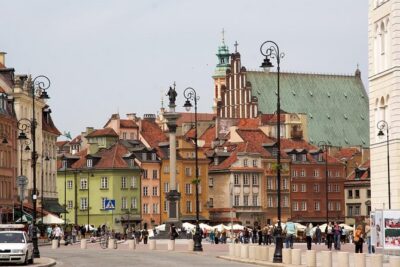
Starting at the Royal Castle and Sigismund’s Column
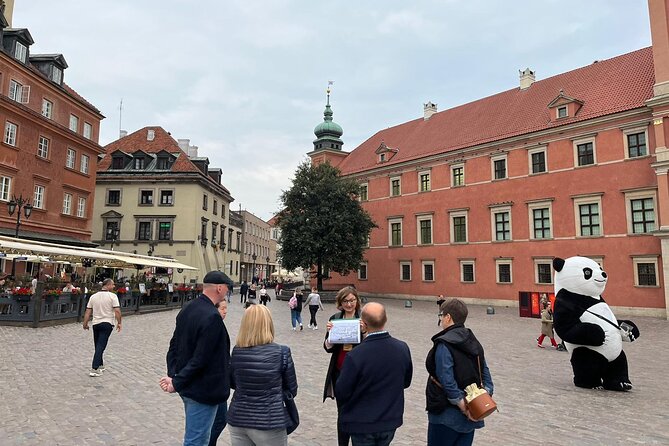
The meeting point is Sigismund’s Column at plac Zamkowy, in front of the Royal Castle area. This is a practical place to begin because it puts you directly in Warsaw’s old royal center.
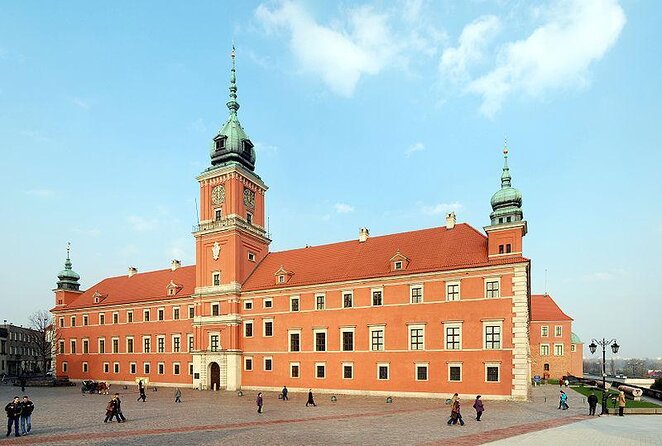
The Royal Castle is the first stop, with about 15 minutes set aside outside. The castle witnessed major chapters in Warsaw’s political life and gives the guide a natural way to explain the city’s former role as Poland’s capital.
Admission to the castle is not included. That is worth noting before you arrive. The walking tour is designed as an exterior visit, so you should not expect time for a full museum tour during the two-hour route. If the castle interests you, treat this walk as an introduction and return later with a separate ticket.
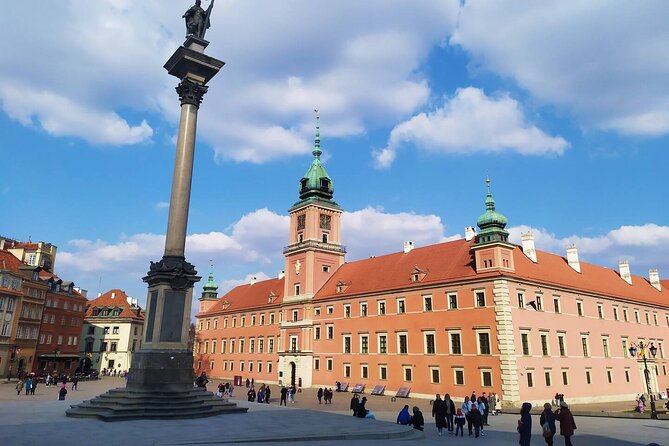
Next comes Sigismund’s Column, a free stop lasting about 10 minutes. The tall monument honors one of Poland’s kings and helps explain the importance of the royal square. It also gives you a clear visual anchor at the start of the walk.
Your guide can use this area to establish the basic story of Warsaw before the route becomes more detailed. I would pay attention here rather than rushing for photographs, because the opening explanation should help you understand the stops that follow.
Kanonia, the Wishing Bell, and a quieter side of the Old Town
From the royal square, the route heads toward Kanonia, a small square behind St. John the Baptist Cathedral. It is a pleasant change from the larger ceremonial spaces and a good example of how Warsaw’s Old Town rewards a short turn down a side street.
The stop lasts about 10 minutes and costs nothing. The setting is compact, so the guide’s explanation matters more than the amount of ground covered. This is one of the places where a local guide can point out details you might otherwise pass without noticing.
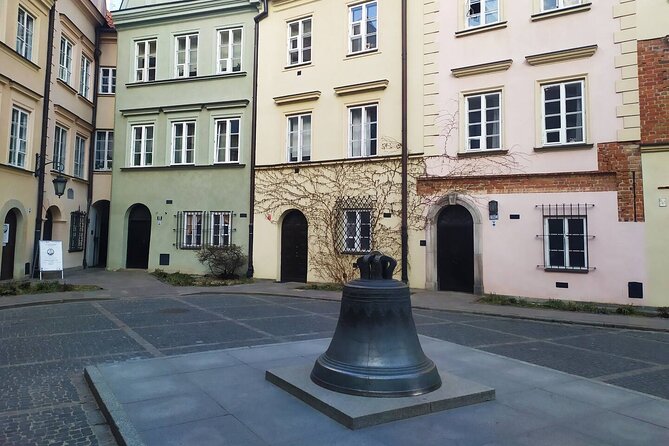
The Wishing Bell follows, with about five minutes at an old bell dating from the 17th century. It is a quick stop, but it adds a bit of local custom to the larger political and military story. The bell still draws people who come to make a wish, giving the walk a lighter moment between more serious subjects.
Do not expect a long visit at the bell. Five minutes is enough to hear the story and take a look, but not enough for a detailed historical presentation. That is typical of this tour: the route offers breadth, then gives you clues about where you may want to spend more time later.
Gnojna Gora and the view toward the Vistula
Gnojna Gora is one of the more unusual stops on the route. This lesser-known lookout point offers a view toward the Vistula River and the area across the water.
The stop lasts about 10 minutes and is free. A viewpoint gives the walk a needed pause after several close-set Old Town sights. It also helps you understand Warsaw as a riverside city rather than only a collection of historic streets.
The view is weather-dependent, of course, but the stop still has value even if conditions are not perfect. Your guide can connect the river and the city’s position to the wider story of Warsaw. Since the tour stays within a tight time frame, you should not count on lingering here for long.
I like this inclusion because it is not simply another famous monument. It gives you a change of pace and a different angle on the city. If you are taking photographs, this is one of the stops where you may want to be ready before the group arrives.
More Walking Tours in Warsaw
- Warsaw: Old Town Highlights Walking Tour in English
★ 4.7 · 1,516 reviews - Warsaw: Old Town Guided Walking Tour
★ 4.9 · 599 reviews - Half-Day Polish Food Walking Tour with Guide and Dinner
★ 4.5 · 381 reviews - Warsaw: Warsaw Ghetto Private Walking Tour with Hotel Pickup
★ 4.9 · 369 reviews
The Old Town Market Square and St. John’s Cathedral
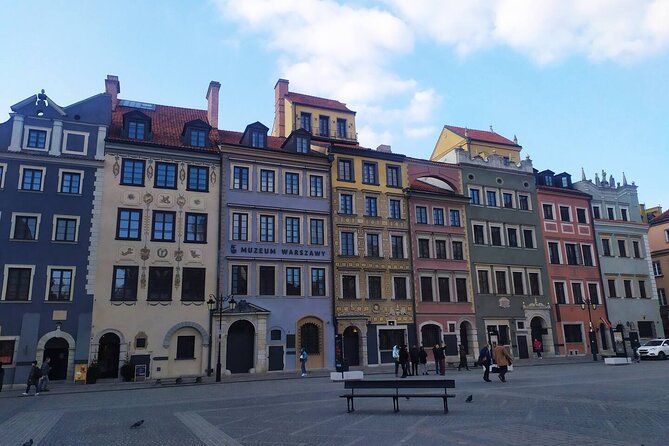
Rynek Starego Miasta, Warsaw’s Old Town Market Square, is the visual center of this part of the walk. Colorful townhouses frame the square, and the Warsaw Mermaid monument provides the city’s best-known symbol.
The tour allows about 10 minutes here. That is enough to take in the layout and hear the main story, but not enough to examine every façade. If you want quiet photographs, you may prefer to return outside the tour, since the group must keep moving.
The square is also a good place to understand Warsaw’s reconstruction. The buildings look old, but much of the Old Town was rebuilt after wartime destruction. That contrast between appearance and survival is one of the most important ideas in Warsaw, and this tour is well placed to explain it.
St. John the Baptist Cathedral receives another 10-minute stop. It is described as the most important church in Warsaw, and its position in the Old Town makes it a natural part of the route. Admission is free for this visit.
You should think of the cathedral stop as a guided look at an important building, not a dedicated church tour. The schedule leaves limited time for interior details, prayer, or quiet reflection. Still, the stop adds religious and civic context to the royal and public spaces already covered.
Medieval walls and the Warsaw Barbican
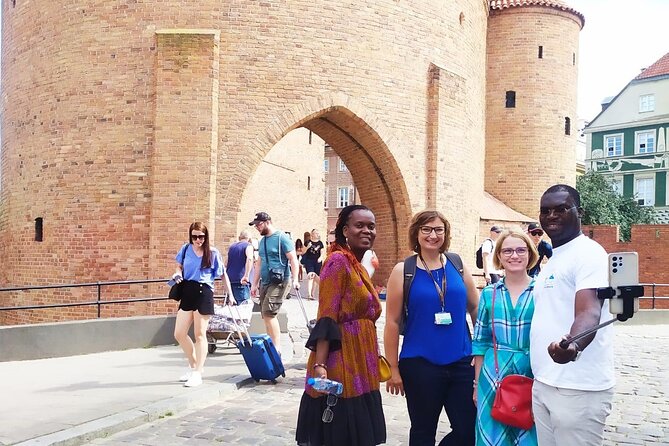
The Warsaw Barbican is a short five-minute stop. These medieval defensive walls once encircled the city and show how Warsaw was protected before modern warfare changed the meaning of urban defenses.
Five minutes is brief, but the Barbican is easy to understand at a glance. It also marks a shift in the route. You are leaving the central market area and moving toward places connected with individuals and events that shaped modern Poland.
Because the Barbican is free to see from the route, there is no extra admission cost. You can expect a concise explanation and time for a quick photograph. The value here comes from the position of the stop within the larger story, not from a long visit.
Maria Skłodowska-Curie’s birthplace
The next stop is the Maria Skłodowska-Curie Museum, located in the birthplace of the scientist who won two Nobel Prizes. The tour allows about 10 minutes outside or around the museum area.
Admission is not included. As with the Royal Castle, you will need a separate ticket if you want to visit the museum itself. The guide can give you the reason this place matters, while the museum offers the fuller experience for anyone interested in her life and work.
This stop broadens the walk beyond kings, churches, and war. Maria Skłodowska-Curie connects Warsaw to world science and gives the route a strong personal story. If you are planning to visit the museum, note its location during the walk and consider returning later rather than trying to fit an interior visit into the scheduled two hours.
The Warsaw Ghetto boundary and the Uprising Monument
The final section carries the greatest emotional weight. The route visits markers showing the maximum boundary of the Warsaw Ghetto established in 1940. These plaques mark an otherwise ordinary-looking city with evidence of the restrictions and suffering imposed during the German occupation.
The stop lasts about 10 minutes and is free. It is not a museum visit, and you should expect a direct explanation at the street level. That can be powerful because the markers sit within the city rather than behind an entrance or inside a display room.
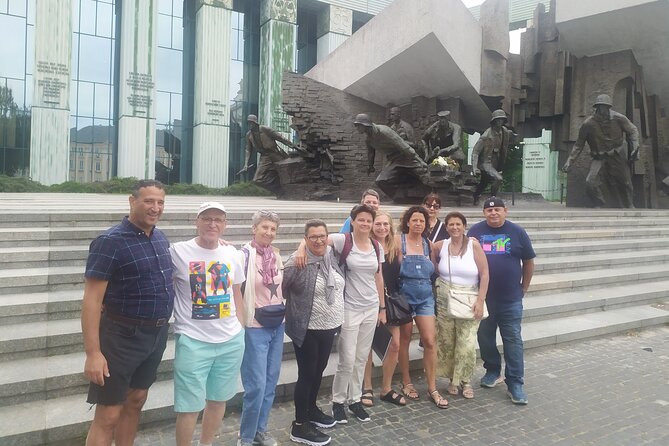
The walk ends at the Warsaw Uprising Monument on plac Krasińskich. This memorial honors the Warsaw Uprising of 1944 and provides a fitting final point for a route that has moved from royal Warsaw through destruction and resistance.
The ending is not back at the start. You finish about 15 minutes on foot from the meeting point. The guide can explain how to return if you need to go back to the Royal Castle area. For planning purposes, do not schedule a train, museum entry, or meal with no buffer immediately after the tour.
This final stretch is a major reason to choose the tour. You are not left with only a postcard view of Warsaw. The walk asks you to connect the Old Town’s reconstructed beauty with the people and events that nearly erased it.
What the guide adds to the experience
The named guides include Olivia and Agnieszka. The strongest praise centers on their humor, clear explanations, and ability to make the history easy to follow. One guide also handled a one-person tour, answering questions and shaping the experience around that guest’s interests.
That matters because this route contains a lot of information. Royal history, church history, scientific achievement, Jewish history, and the 1944 uprising can become a blur if the guide simply recites dates. A guide with a light touch and a good sense of timing can make the connections stick.
The group limit is 15 people. That is not a private tour, but it is small enough to feel more personal than a large street group. If the group is small on your date, you may have more room for questions. Do not assume a private experience, though, since the advertised maximum still allows a regular small group.
Visual aids are included, which is useful in a city where rebuilding can make it hard to picture what stood in a place before the war. The pre-tour information pack also gives you a chance to arrive with basic context instead of spending the first 20 minutes learning where everything is.
Practical value, pace, and access
The tour lasts about two hours and covers eleven stops. That is an efficient introduction, but the pace is active. You will stop often, listen, look, and then move on. Wear shoes suited to city walking and keep your schedule open enough to allow for the final walk away from the starting point.
The route is wheelchair-friendly, and service animals are welcome. Most people can participate, and the meeting area is near public transportation. The experience is offered in English with a mobile ticket, so you do not need to print a paper voucher.
The tour has free cancellation up to 24 hours before the start time. If you cancel within 24 hours, the payment is not refunded, and changes in that period are not accepted. The cut-off follows Warsaw local time.
At $28.75, the tour is best value for a first visit, a short stay, or anyone who wants a clear historical framework before exploring alone. It is less suitable if you prefer long museum visits, a slow photography walk, or a route focused on one subject.
Should you book the Historic Heart of Warsaw Walking Tour?
I would book this tour if you want Warsaw explained as a city of survival, not just a pretty Old Town. The route covers the essential central sights, but its real strength is the turn toward the Ghetto boundary markers and the Uprising Monument.
Choose it especially if you value a lively guide, want help finding meaningful details, or have only a few hours in the city. Olivia and Agnieszka are strong names to look for when available, based on the emphasis placed on humor, clarity, and personal questions.
Skip it if you already know Warsaw well or plan to spend most of your time inside the Royal Castle and Maria Skłodowska-Curie Museum. Those admissions are not included, and the walk gives you only a short introduction to each.
For most first-time visitors, the combination of a small group, visual aids, local recommendations, and a route that ends at a major memorial makes the $28.75 fee reasonable. Just arrive ready to walk, listen, and continue exploring after the guide says goodbye.
FAQ
How long is the Historic Heart of Warsaw Walking Tour?
The tour lasts approximately two hours.
Where does the tour start?
It starts at Sigismund’s Column on plac Zamkowy, 00-001 Warszawa, Poland.
Where does the tour end?
It ends in front of the Warsaw Uprising Monument on plac Krasińskich, 00-263 Warszawa, Poland.
Is the return walk included?
The tour ends about 15 minutes on foot from the meeting point. The guide can provide instructions for returning to the starting area if needed.
Is admission to the Royal Castle included?
No. Entry to the Royal Castle Museum is not included in the tour price.
Is admission to the Maria Skłodowska-Curie Museum included?
No. You must pay separately if you want to enter the museum.
Is the tour offered in English?
Yes. The tour is offered in English.
Is the walk wheelchair-friendly?
Yes. The tour is wheelchair-friendly, and service animals are welcome.
What is the maximum group size?
The tour has a maximum of 15 participants.
Recently added in Warsaw
- Warsaw Wolf’s Lair with St. Lipka and Mamerki Private Guided★ 4.2 · 3 reviews
- Taste of Poland, food tour and guided walk with 12 tasting★ 5.0 · 3 reviews
- Discover Warsaw’s most Photogenic Spots with a Local★ 5.0 · 3 reviews
- Lodz Small Group Tour from Warsaw with Lunch★ 4.0 · 3 reviews
- Jewish heritage in Warsaw★ 4.5 · 3 reviews
- Warsaw Outdoor Paintball with Transfers (all year round)★ 5.0 · 3 reviews
- Electric Scooter Tour: Full Tour – 3-Hours of Magic!★ 5.0 · 3 reviews
- Skip-the-Line Polin Museum Warsaw Jewish History Tour★ 5.0 · 3 reviews
Historical Tours, compared.

POLIN Museum of the History of Polish Jews Ticket
Read our review →

Gdańsk City Sights & History Guided Walking Tour in English
Read our review →
Small-Group Historical Guided Tour of Warsaw with pick up/drop off. Public Tour.
Read our review →Where else this one turns up