
Reviewed · MUSEUMS
Warsaw Uprising Museum (1944) + POLIN Museum : SMALL GROUP /inc. Pick-up/
Warsaw’s past comes into sharp focus on this four-hour visit to two museums that tell very different stories. The Warsaw Rising Museum shows the doomed 1944 fight against German occupation, while POLIN follows centuries of Jewish life in Poland. Together, they explain much of what shaped modern Warsaw.
I like the door-to-door pickup, especially if you want to fit both museums into one morning or afternoon without sorting out city transport. I also like the included audio guides, which let you set your own pace and choose from a long list of languages. The main catch is important: this is not a personal guided tour inside the museums. Your coordinator handles transport and tickets, then you explore independently.
Key points at a glance
- Two major museums in four hours: Spend about 1 hour 15 minutes at each museum, with time between them for transport.
- The Warsaw Rising Museum uses sound, film, photographs, and authentic objects: Its five-minute 3D flight over ruined Warsaw is one of the most striking parts.
- POLIN covers centuries of Jewish life in Poland: Multimedia displays look at culture, work, faith, family, and relations between Jewish and Christian communities.
- Pickup and return are included: A driver or coordinator collects you outside your hotel or apartment and returns you after POLIN.
- This is a small-group transport service, not a private museum guide: Groups can reach 15 people, and the museum visits use audio guides.
- The $114.28 price buys convenience as much as admission: It makes the most sense if you value hotel pickup, organized transfers, and a compact schedule.
Why these two Warsaw museums belong together
Warsaw can feel like a city rebuilt from fragments. Few places in Europe show so clearly how war, occupation, resistance, and cultural memory shape a capital. These museums approach that story from different angles.
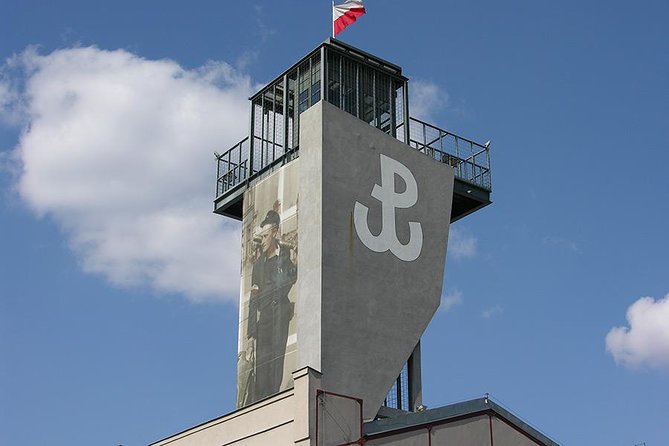
The Warsaw Rising Museum focuses on one violent episode in 1944, when Polish resistance fighters tried to liberate Warsaw before Soviet forces took control of the city. POLIN reaches much farther back, presenting the centuries-long presence of Jews in Poland and their contributions to Polish public life.
That contrast gives the outing its value. At the Rising Museum, you confront destruction and the cost of armed resistance. At POLIN, you see daily life, learning, religion, business, art, and the long relationship between Jewish and non-Jewish communities. I would not treat this as a light sightseeing stop. Both museums ask for attention, and the subject matter can be difficult.
The schedule gives you about 75 minutes in each museum. That is enough for a focused visit, but not enough to see every display at a leisurely pace. If you enjoy reading every panel, you may want separate visits. If you want a strong introduction to both institutions in one day, the timing is useful.
More Museum Tours in Warsaw
- Warsaw: POLIN Museum of the History of Polish Jews Ticket
★ 4.7 · 1,142 reviews - Warsaw: Polish Vodka Museum Tour with Tasting
★ 4.6 · 788 reviews - Warsaw: Ghetto, Jewish Cemetery & POLIN Museum Private Tour
★ 4.8 · 132 reviews
Entering the Warsaw Rising Museum in 1944
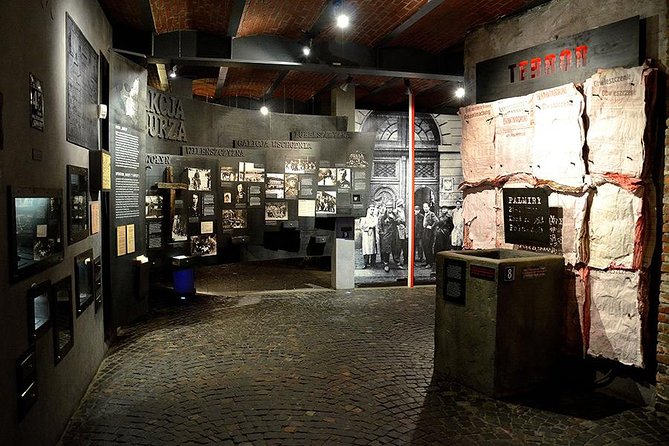
The Warsaw Rising Museum is designed less like a traditional collection of framed exhibits and more like a carefully built route through a national trauma. Images, sounds, films, and objects place you close to the experience of Warsaw before, during, and after the uprising.
The setting matters. Before the Second World War, Warsaw was known for grand tenements, rapid growth, modern infrastructure, and a mix of religious and cultural communities. By the end of the war, much of the city had been destroyed. The museum asks a hard question: what drove young Poles to fight when the cost of possible freedom could be so high?
You can see more than 1,000 authentic objects, along with about 1,500 photographs and films. That is a lot to absorb in 75 minutes, so I suggest choosing the audio guide language before you begin and keeping your pace steady. Do not try to read every word on the first pass. Focus on the main sequence, then return to displays that hold your attention.
The museum’s sound and visual effects are central to the experience. They help you understand that the uprising was not a single event but a series of changing phases, decisions, and setbacks. You will encounter the days before the fighting, the rising itself, and its eventual failure.
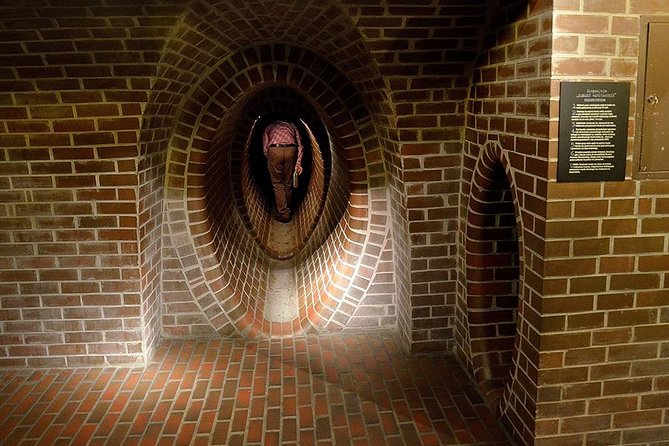
A five-minute 3D simulation shows Warsaw from above after the destruction. It is brief, but it gives scale to a story that can otherwise feel abstract. A photograph of a ruined street is powerful. Seeing the city as a vast field of damaged buildings makes the destruction easier to grasp.
The limitation is time. Seventy-five minutes may feel rushed here, particularly if you want to study the photographs and films closely. The museum contains enough material for a longer visit, so consider this stop an introduction rather than a complete examination.
Another point to understand before booking: the coordinator does not provide a sustained historical talk inside the museum. The driver may point out places of interest during the ride and help you with admission, but the museum visit itself is self-guided with audio support. That suits independent visitors who prefer control over the pace. It will disappoint you if you expect a guide beside you explaining every room.
Understanding POLIN’s centuries of Jewish life
POLIN Museum of the History of Polish Jews offers a wider, slower story. Instead of concentrating on one wartime event, it presents the long presence of Jewish communities in Poland and their role in the country’s culture, economy, learning, and science.
The museum uses multimedia displays to show how Jewish and Polish communities lived alongside one another over many centuries. You can look at family life, neighborhood connections, and Jewish-Christian relations. This makes POLIN more than a museum about persecution. It also presents the ordinary and creative parts of life that existed before the Holocaust and across earlier generations.
That balance is valuable. If you visit only museums focused on wartime destruction, you can leave with an incomplete picture of Jewish life in Poland. POLIN gives you the broader setting first: communities, religious practice, work, literature, education, and cultural exchange.
One especially distinctive feature is the virtual library. It presents examples of Hebrew and Yiddish literature in multimedia form, including Talmudic, religious, philosophical, and moral works. You can also use a press to print a title page from a 16th-century book. These hands-on touches help turn an enormous subject into something personal and approachable.
The exhibition also explores the way two cultures influenced one another. You may find displays about family and neighbors, as well as the relationship between Jewish and Christian communities. The museum’s strength is not just the amount of information. It is the way the material connects public events with everyday human relationships.
Again, 1 hour 15 minutes is a useful but limited window. POLIN is a large museum with many multimedia sections, and you will need to make choices. Use the audio guide to set priorities rather than wandering without a plan. If you want to understand the broad story, keep moving through the main route. If a particular section matters to you, accept that you will not see everything.
What the included audio guides really mean
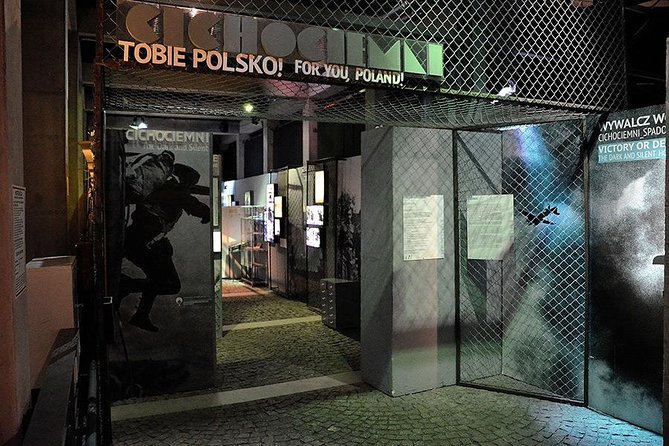
Audio guides are included at both museums, but the language lists are not identical. For the Warsaw Rising Museum, options include English, Polish, French, German, Spanish, Italian, Portuguese, Russian, Ukrainian, Chinese, Japanese, Hebrew, Dutch, Swedish, Danish, Finnish, Czech, Slovak, Hungarian, Romanian, Bulgarian, Croatian, Slovenian, Georgian, Azerbaijani, Macedonian, Indonesian, and several others.
POLIN offers audio guides in English, Belarusian, French, German, Hebrew, Hungarian, Italian, Polish, Russian, Spanish, and Yiddish. English is available at both stops.
This arrangement gives you independence. You can pause, move on, or spend longer with an object without waiting for a group explanation. It also helps if you prefer information in a language other than English.
The tradeoff is that audio guides cannot respond to your questions or adjust the route for your interests. The driver or coordinator is there to assist, not to conduct a full museum lecture. If you like quiet, self-paced visits, that is a fair exchange. If you want interpretation, anecdotes, and discussion throughout, book a dedicated guided museum visit instead.
A different kind of day in Warsaw:
- Warsaw: Chopin Concert in the Old Town
★ 4.8 · 2,287 reviews - Warsaw: Traditional Galar Cruise on The Vistula River
★ 4.6 · 1,640 reviews - Warsaw: Old Town Highlights Walking Tour in English
★ 4.7 · 1,516 reviews - Warsaw Concert: Chopin – Painted by Candlelights with Wine
★ 4.8 · 1,442 reviews
Pickup, transport, and the small-group setup
Pickup is offered from your hotel or apartment, and you need to provide the address when booking. On the day, the coordinator or driver waits outside the building entrance with a card showing your name and surname. That detail matters in Warsaw, where large apartment blocks and multiple entrances can make a meeting point unclear.
Transport uses a car or van, not a bus. The maximum group size is 15 people, so this is smaller and more personal than a standard coach outing, though it is not necessarily a private tour. The vehicle is wheelchair accessible, and most people can take part.
The ride between the two museums is part of the practical value. You do not need to study routes, buy separate tickets, or find the second museum after concentrating on a serious first stop. The coordinator can also point out places of interest during the drive.
Still, keep your expectations clear. The service is best understood as organized transport with museum admission, not as an escorted cultural tour. You meet the driver, receive help with the tickets and directions, visit each museum on your own with an audio guide, and then continue to the next stop.
The return transfer takes you from POLIN back to your hotel or apartment. That is particularly convenient after several hours of demanding material. You finish at your accommodation rather than searching for a taxi or public transport.
Is $114.28 a fair price?
At $114.28 per person, this is not the cheapest way to visit two Warsaw museums. You could potentially arrange your own taxi or public transport and buy museum admission separately. One critical view of this experience was that a taxi plus individual tickets and audio guides could cost less.
That criticism has some force. If you are comfortable navigating Warsaw, know where the museums are, and have plenty of time, the package may not offer the lowest possible price. You are paying for convenience rather than a long guided interpretation.
The price looks more reasonable if you value the full bundle: pickup from your accommodation, transport in a car or van, admission to both museums, audio guides, help from a coordinator, and return transport. It also saves planning time. For a short stay, that can matter more than squeezing out the lowest fare.
I would compare the cost against your own transport needs. If you already plan to take taxis and want to visit both museums on the same day, the difference may be small enough to justify the organized arrangement. If you are staying near the museums and enjoy planning your own route, book the tickets directly and keep the savings.
The experience is recommended by 93 percent of customers and holds a 4.5 rating from 14 reviews. That is a positive signal, but the sample is small. The clearest pattern is that the museums themselves are the main strength, while expectations about the word tour need careful handling.
Who should book this experience?
I would recommend it to first-time visitors who want a structured introduction to two major Warsaw museums without spending a day sorting out transport. It also suits people staying outside the central museum area, families or couples who prefer a car transfer, and anyone who needs wheelchair-accessible transport.
It works well if you are happy to read, listen, and explore independently. The English audio guides make the experience straightforward for English speakers, while the wide language choice helps international visitors.
I would be more cautious if you want a historian or local guide inside both museums. You will not receive a continuous personal explanation from the driver. The small group keeps the transfer manageable, but a group of up to 15 can still mean a shared schedule and fixed timing.
You should also think about the emotional weight. The Warsaw Rising Museum presents destruction, death, and the failure of the uprising. POLIN addresses a long and often painful history as well. These are worthwhile museums, but they are not casual entertainment stops.
Practical booking advice before you go
Confirmation arrives within 48 hours, subject to availability. A minimum of two people is required per booking, and the maximum is 15.
Give the provider your exact hotel or apartment address. On the day, wait before entering the building and look for the card with your name. That is the stated meeting arrangement and should make the pickup easier.
Admission, taxes, handling charges, local taxes, transport, and audio guides are included. Photos, postcards, and similar purchases are not included, so budget separately if you want souvenirs.
Free cancellation is available when you cancel at least 24 hours before the experience begins. Cancellations or changes made less than 24 hours before the start time are not accepted for a refund.
Should you book the Warsaw museums tour?
Book it if you want efficient door-to-door logistics and a clear introduction to the Warsaw Rising Museum and POLIN in one four-hour outing. The included tickets, car or van transfers, accessible vehicle, and audio guides create a useful package for a short visit.
Skip it if your main goal is the lowest price or a fully guided museum experience. In that case, arrange transport yourself or choose a specialist guide. For everyone else, this is a practical way to connect two serious, important museums, as long as you understand that the driver coordinates the visit and does not guide you through every gallery.
FAQ
How long does the experience last?
The experience lasts approximately four hours. Each museum visit is scheduled for about 1 hour 15 minutes, with transport between the stops and return transport afterward.
Which museums are included?
The experience includes admission to the Warsaw Rising Museum and the POLIN Museum of the History of Polish Jews.
Is hotel pickup included?
Yes. Door-to-door pickup is included from your hotel or apartment. You should provide the address when booking.
Where do I meet the driver or coordinator?
The coordinator or driver waits outside the entrance to your building with a card showing your name and surname.
Is return transport included?
Yes. Transport from POLIN back to your hotel or apartment is included.
Are museum admission tickets included?
Yes. Admission tickets to both museums are included in the price.
Are audio guides included?
Yes. Audio guides are included for both museums. English is available, along with several other languages.
Is this a fully guided museum tour?
No. The driver or coordinator helps with transport and the ticket process, while you explore the museums independently with audio guides.
How many people can join the experience?
A minimum of two people is required per booking, and the maximum group size is 15 people.
Is the transport wheelchair accessible?
Yes. The transport is wheelchair accessible, and most people can participate.
Recently added in Warsaw
- Warsaw Wolf’s Lair with St. Lipka and Mamerki Private Guided★ 4.2 · 3 reviews
- Taste of Poland, food tour and guided walk with 12 tasting★ 5.0 · 3 reviews
- Discover Warsaw’s most Photogenic Spots with a Local★ 5.0 · 3 reviews
- Lodz Small Group Tour from Warsaw with Lunch★ 4.0 · 3 reviews
- Jewish heritage in Warsaw★ 4.5 · 3 reviews
- Warsaw Outdoor Paintball with Transfers (all year round)★ 5.0 · 3 reviews
- Electric Scooter Tour: Full Tour – 3-Hours of Magic!★ 5.0 · 3 reviews
- Skip-the-Line Polin Museum Warsaw Jewish History Tour★ 5.0 · 3 reviews
Museums, compared.

Auschwitz-Birkenau Museum and Memorial Guided Tour from Krakow
Read our review →POLIN Museum of the History of Polish Jews Ticket
Read our review →


Krakow Schindler’s Factory Museum Guided Tour in English
Read our review →
Auschwitz Birkenau Museum Guided Tour with Pickup
Read our review →
Where else this one turns up