
Reviewed · MUSEUMS
Warsaw Uprising Museum (1944) + POLIN Museum: PRIVATE TOUR /inc. Pick-up/
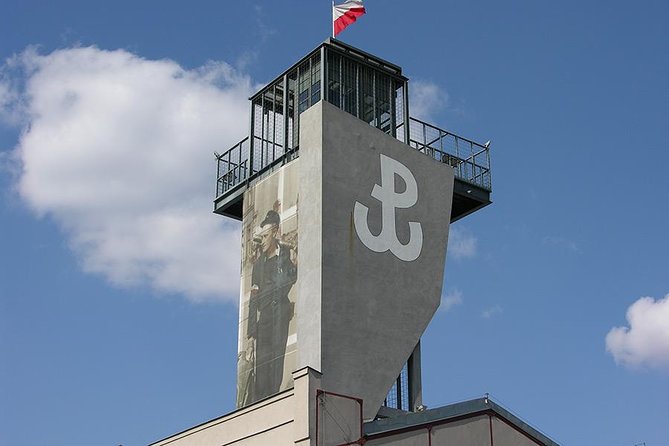
Warsaw’s past comes at you from two sharply different directions here. The Warsaw Rising Museum brings you into the city’s 1944 fight for freedom, while POLIN follows centuries of Jewish life in Poland. Together, they explain not just what happened to Warsaw, but what made the city worth fighting for.
I like the private door-to-door transport and the fact that your group travels alone. I also like the practical pairing of two major museums in one outing, with audio guides available in a wide range of languages. The main drawback is time: about 75 minutes at each museum can feel brisk, especially at POLIN.
Key points
- Two major museums in one half-day: Visit the Warsaw Rising Museum and POLIN without arranging separate transport.
- Private vehicle for two to six people: Your party travels alone, with pickup and return to your hotel, apartment, or another Warsaw address.
- Audio guides included: English is available, along with many other languages at both museums.
- Tomasz may be available: A past booking praised Tomasz for helping visitors make sense of POLIN, though a personal guide costs extra and must be arranged in advance.
- A serious history lesson: The tour links the 1944 uprising with the much longer story of Jewish life and Polish-Jewish relations.
- Best for organized museum days: The four-hour format works well if you want structure, transport, and a clear introduction rather than a slow, independent museum visit.
Two Museums, One Clearer Picture of Warsaw
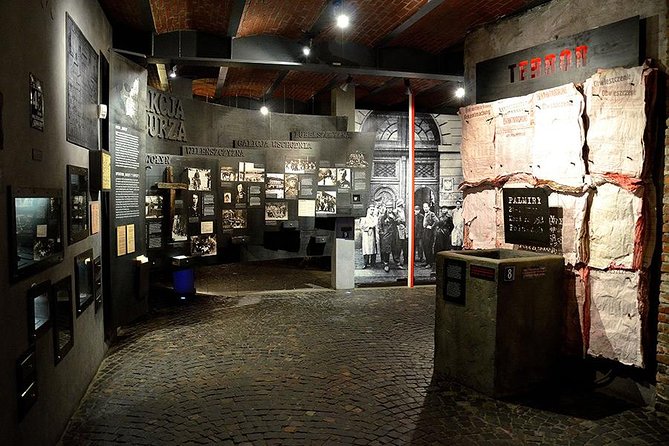
I find this combination smart because the museums answer different questions. The Warsaw Rising Museum asks why Warsaw’s people rose against German occupation in 1944, and what that decision cost. POLIN looks across hundreds of years, showing Jewish life in Poland and the ways Jewish and Polish cultures developed side by side.
That contrast matters. If you visit only the Rising Museum, you get a powerful account of wartime destruction and resistance. If you visit only POLIN, you gain a longer view of the communities, ideas, work, religion, literature, and family life that shaped the city before the Second World War. Taken together, the museums give you more context than either one alone.
You should also understand what kind of outing this is. It is not a long walking tour through Warsaw, and it is not a fully guided museum experience by default. You receive transport, admission, and audio guides, then explore the exhibitions with your own group.
More Museum Tours in Warsaw
- Warsaw: POLIN Museum of the History of Polish Jews Ticket
★ 4.7 · 1,142 reviews - Warsaw: Polish Vodka Museum Tour with Tasting
★ 4.6 · 788 reviews - Warsaw: Ghetto, Jewish Cemetery & POLIN Museum Private Tour
★ 4.8 · 132 reviews
The Warsaw Rising Museum and the Price of Freedom
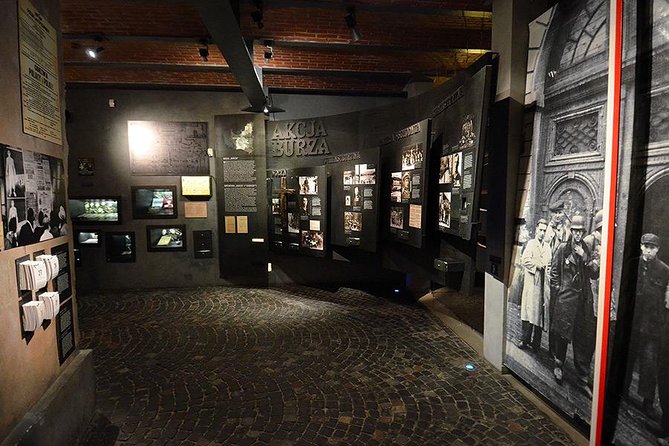
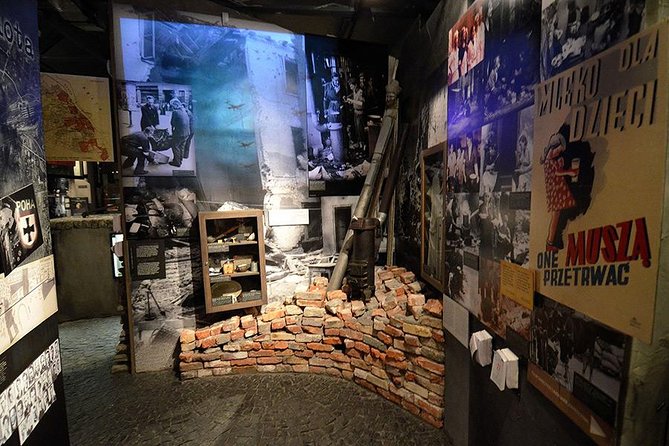
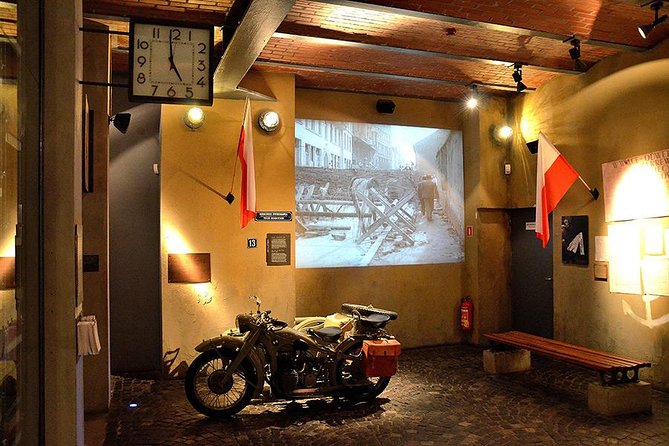
The first museum focuses on the Warsaw Uprising of 1944. Its subject is not a distant political event. It is the destruction of a city and the loss of a generation, including young people who expected to help shape Poland’s future.
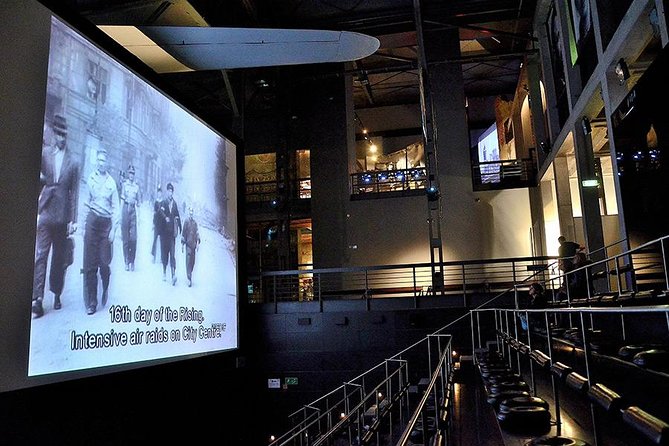
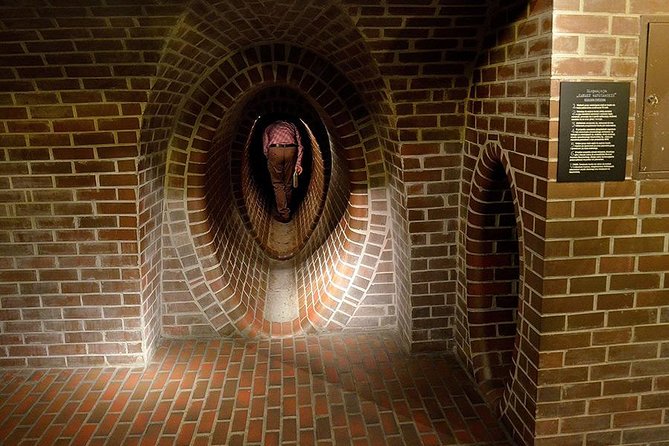
The museum is designed to feel active rather than purely academic. You can expect displays that place the uprising inside the physical and emotional world of wartime Warsaw. The aim is to help you understand why people chose to fight, even when the likely price was immense.
That question gives the museum its force: was the hope of freedom worth the human cost? You are not simply asked to memorize dates. You are pushed to think about occupation, resistance, sacrifice, and the terrible choices facing ordinary people.
The planned visit lasts about one hour and 15 minutes, with admission included. That is enough time for a purposeful first visit, but not enough for every display and detail. I suggest using the audio guide to keep your visit focused. Let it explain the main sections, then pause at the objects and accounts that speak most strongly to you.
The museum is described as a kind of time machine, and that is a useful way to think about it. Its strength is atmosphere and direct contact with the events of 1944. Its weakness, for some people, may be the emotional weight. This is not a light museum stop, and you should allow yourself some quiet time afterward.
The included audio guide is available in English, as well as Azerbaijani, Bulgarian, Chinese, Croatian, Czech, Danish, Finnish, French, Georgian, Hebrew, Spanish, Indonesian, Japanese, Macedonian, Dutch, German, Polish, Portuguese, Russian, Romanian, Slovak, Slovenian, Swedish, Ukrainian, Hungarian, and Italian.
If you want a personal guide at this museum, an individual licensed guide may be available for an additional 99 euros per group. The available languages listed are English, German, French, Russian, Italian, and Spanish. You need to request this when booking, and it is paid on the day if available.
That extra fee could be worthwhile if your group has little background in Polish history or if you want to ask questions as you go. Without it, you will rely on the audio guide and the driver or coordinator for practical help, not a full museum lecture.
POLIN Museum and Centuries of Jewish Life
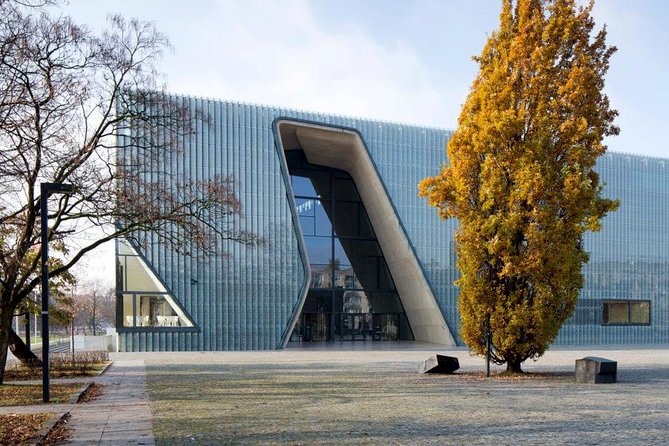
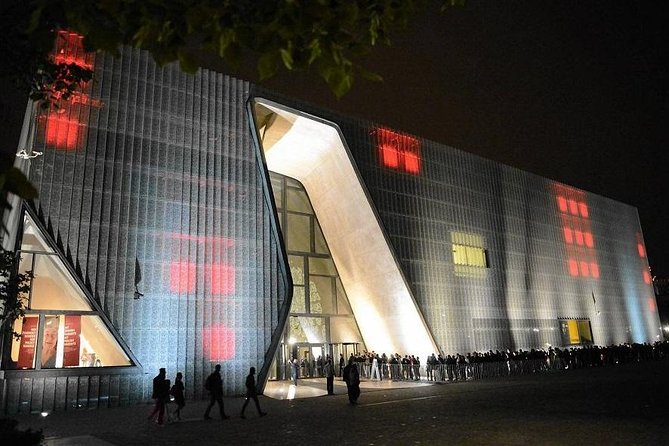
POLIN changes the pace and the scale. Instead of concentrating on one wartime uprising, it documents the centuries-old history of Jews in Poland. The museum explains Jewish contributions to Polish culture, the economy, and science, while also examining everyday relationships between Jewish and Christian communities.
This is important because it moves the story beyond wartime persecution. You encounter family life, neighborhoods, religion, education, literature, and the many ways communities lived together. The museum also looks at how Polish and Jewish cultures influenced one another over time.
One especially interesting feature is the virtual library. It presents Hebrew and Yiddish literature through multimedia displays, including religious, philosophical, and moral works. You can also print a title page from a sixteenth-century book using a press. That hands-on element gives the museum a welcome change of pace after the serious, text-heavy subjects elsewhere.
The planned POLIN visit also lasts about one hour and 15 minutes. I would treat that as an introduction, not a complete reading of the museum. There is a great deal to take in, and the exhibitions cover a much longer period than the Rising Museum.
The included POLIN audio guide is available in English, Belarusian, French, German, Hebrew, Hungarian, Italian, Polish, Russian, Spanish, and Yiddish. English-speaking visitors should have no trouble following the main material, while the broader language list makes this outing useful for mixed-language groups.
A private licensed guide may also be available at POLIN for 99 euros per group of one to six people. The listed languages are English, Hebrew, French, German, Russian, and Spanish. Again, you must ask about availability when booking.
A past booking specifically praised Tomasz for helping visitors navigate POLIN and understand it more clearly. If Tomasz is assigned to your outing, you may find his assistance especially useful. Still, the tour does not promise him by name, so I would not book on that assumption.
Why the Private Car Matters in a Four-Hour Tour
The vehicle is more than a comfortable extra. With two museums in roughly four hours, transport keeps the schedule from slipping. You are picked up at your hotel or apartment, taken to the Warsaw Rising Museum, transported to POLIN, and returned to your hotel or another Warsaw address.
Your group travels alone. The booking allows a minimum of two people and a maximum of six, so this is a good fit for a couple, family, or small group that wants control over the day without paying for a large private vehicle.
At pickup, the driver or coordinator waits before the entrance to the building with a card showing your name and surname. That detail matters in Warsaw, where apartment entrances and hotel lobbies can be confusing. When booking, provide the exact address of your hotel or apartment.
The driver is described as being at your disposal as a coordinator. That means you have help with the basic flow of the day, but you should not assume the driver is the same as a licensed museum guide. The standard package is transport plus audio guides.
You also receive transport between the two museums and return service from POLIN. You can indicate another destination in Warsaw at the end, which is handy if you plan to continue to dinner or another appointment.
A different kind of day in Warsaw:
- Warsaw: Chopin Concert in the Old Town
★ 4.8 · 2,287 reviews - Warsaw: Traditional Galar Cruise on The Vistula River
★ 4.6 · 1,640 reviews - Warsaw: Old Town Highlights Walking Tour in English
★ 4.7 · 1,516 reviews - Warsaw Concert: Chopin – Painted by Candlelights with Wine
★ 4.8 · 1,442 reviews
Audio Guide or Personal Guide?
The included audio guides keep the base price reasonable. You can listen in English or select another language, move at your own pace, and spend more or less time on sections that interest you. For visitors who prefer quiet concentration, this may be better than following a live commentary.
The tradeoff is interaction. An audio guide cannot answer a question about a particular object, explain a difficult political point in simpler terms, or adjust the visit to your interests. Since both museums cover serious and sometimes complicated subjects, some people will get more from a human guide.
The optional licensed guide costs 99 euros per group at each museum if available. For a full group of six, that can be a sensible shared expense. For only two people, it adds considerably to the price, so think about your own background before paying it.
I would choose the audio guides if you already know something about the Second World War, the Warsaw Uprising, or Jewish history in Poland. I would consider adding a guide if this is your first serious introduction to these subjects, or if you expect to have many questions.
Is $117.11 a Fair Price?
At $117.11 per person, this is not the cheapest way to visit two museums. But price comparisons need to include what you are getting: admission to both museums, a private car, hotel pickup, transport between stops, return transport, taxes, handling charges, local taxes, and audio guides.
For two people, the per-person cost is harder to ignore because the private transport cost is spread across a small group. For four to six people, the value improves. You are paying for convenience and time, not only museum entry.
The strongest value is for visitors with limited time in Warsaw. If you would otherwise arrange taxis, check museum locations, manage tickets, and find your way back to your accommodation, this package removes much of that work.
The weakest value is for someone already comfortable using Warsaw transport and happy to visit museums independently. You might spend less by arranging your own admission and taking public transport or taxis. You would also gain the freedom to spend three hours at POLIN or leave the Rising Museum after 45 minutes.
The four-hour schedule gives you structure. It also puts a limit on curiosity. If you read every panel, stop often, or want a relaxed coffee break, you may feel hurried.
Who Will Get the Most from This Outing?
I would recommend this tour to history-focused visitors, first-time visitors to Warsaw, and small groups that want a private plan without committing to a full-day excursion. Families with older children may also appreciate the private vehicle and the chance to discuss the museums together.
It is especially useful if you are staying outside the central museum area or do not want to work out transfers. The door-to-door setup makes the day simple.
I would be more cautious if you dislike audio guides, need a leisurely pace, or want a walking tour with extensive conversation. The standard package is not built around long personal commentary.
You should also be ready for difficult material. The Rising Museum deals with wartime death and the destruction of Warsaw. POLIN covers painful parts of Jewish and Polish history as well as cultural achievement and everyday life. The two museums are valuable partly because they do not reduce the city’s past to a simple story.
Booking Details That Matter
Confirmation is sent within 48 hours of booking, subject to availability. The experience requires at least two people and accepts a maximum of six, so solo visitors cannot book this particular format.
Pickup is offered from a hotel or apartment, and you should supply the address when booking. The driver or coordinator waits outside the building entrance with your name on a card. You can also give another Warsaw destination for the return transfer from POLIN.
Free cancellation is available if you cancel at least 24 hours before the start time. Cancellations or changes made inside that 24-hour window are not accepted for a refund, and the cut-off follows local Warsaw time.
Should You Book the Warsaw Museum Pair?
Book it if you want a well-organized private half-day that joins two essential Warsaw museums with minimal transport planning. The pairing gives you both the concentrated story of the 1944 uprising and the long account of Jewish life in Poland.
The best value comes with four to six people, especially if you value door-to-door service. Use the included audio guides first, then pay for a licensed guide only if your group needs personal explanation. Ask about guide availability when booking, and do not count on Tomasz specifically, even though his help with POLIN was praised.
Skip it if you prefer to set your own museum pace or already know how you will get around Warsaw. For everyone else, this is a practical way to cover two demanding, important museums in one focused outing.
FAQ
How long does the tour last?
The experience lasts approximately four hours. The planned visit includes about one hour and 15 minutes at the Warsaw Rising Museum and about one hour and 15 minutes at POLIN, with the remaining time used for transport and coordination.
Is hotel pickup included?
Yes. Door-to-door pickup is included from your hotel or apartment. You must provide the address when booking.
Where will the driver meet me?
The driver or coordinator waits before entering the building, holding a card with your name and surname.
Is the tour private?
Yes. Only your group participates, and no other clients travel in the car. The booking requires a minimum of two people and allows a maximum of six.
Are museum admissions included?
Yes. Admission to both the Warsaw Rising Museum and POLIN Museum is included.
Are audio guides included?
Yes. Audio guides are included at both museums. English is available at each, along with a wide selection of other languages.
Can I book a personal guide?
You can ask about an individual licensed guide when booking. If available, the additional cost is 99 euros per group for each museum, payable on the day of the tour. The guide is not included in the listed price.
Can I cancel for a full refund?
Yes, if you cancel at least 24 hours before the experience start time. Cancellations or changes made less than 24 hours in advance are not accepted for a refund.
Recently added in Warsaw
- Warsaw Wolf’s Lair with St. Lipka and Mamerki Private Guided★ 4.2 · 3 reviews
- Taste of Poland, food tour and guided walk with 12 tasting★ 5.0 · 3 reviews
- Discover Warsaw’s most Photogenic Spots with a Local★ 5.0 · 3 reviews
- Lodz Small Group Tour from Warsaw with Lunch★ 4.0 · 3 reviews
- Jewish heritage in Warsaw★ 4.5 · 3 reviews
- Warsaw Outdoor Paintball with Transfers (all year round)★ 5.0 · 3 reviews
- Electric Scooter Tour: Full Tour – 3-Hours of Magic!★ 5.0 · 3 reviews
- Skip-the-Line Polin Museum Warsaw Jewish History Tour★ 5.0 · 3 reviews
Museums, compared.

Auschwitz-Birkenau Museum and Memorial Guided Tour from Krakow
Read our review →POLIN Museum of the History of Polish Jews Ticket
Read our review →


Krakow Schindler’s Factory Museum Guided Tour in English
Read our review →
Auschwitz Birkenau Museum Guided Tour with Pickup
Read our review →
Where else this one turns up