
Reviewed · HISTORICAL TOURS
Private Historical Tour of Warsaw by a Retro Fiat with Pickup
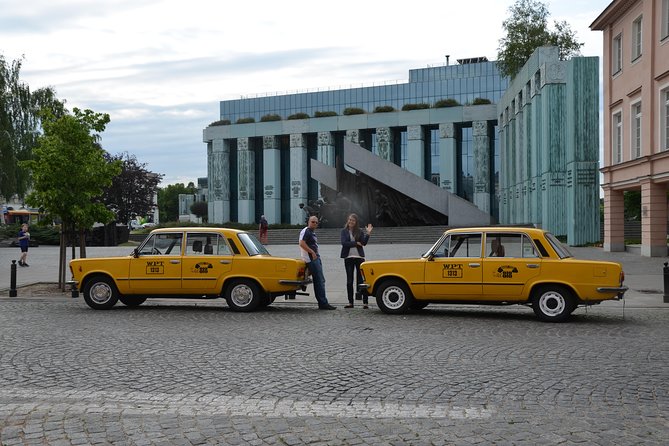
Warsaw’s past comes into view quickly from the back seat of a Polish Fiat 125p. In four hours, you move from the rebuilt Old Town to Jewish ghetto memorials, communist-era monuments, and the less reconstructed Praga district. I like the way the car lets you cover ground, and I like the mix of short walks with time on the road. The main drawback is comfort: the vintage Fiat has character, but some cars have no air-conditioning and can feel tight on a hot day.
I also like the private format. Your guide can adjust the route if you have already seen the Royal Castle or want more time around the former ghetto, Praga, or Łazienki Palace. Guides including Karol, Agata, Martin, Maks, Konrad, Hania, Alice, and Jakob have been praised for clear English, personal service, and strong knowledge of Warsaw’s difficult modern past.
Key points at a glance
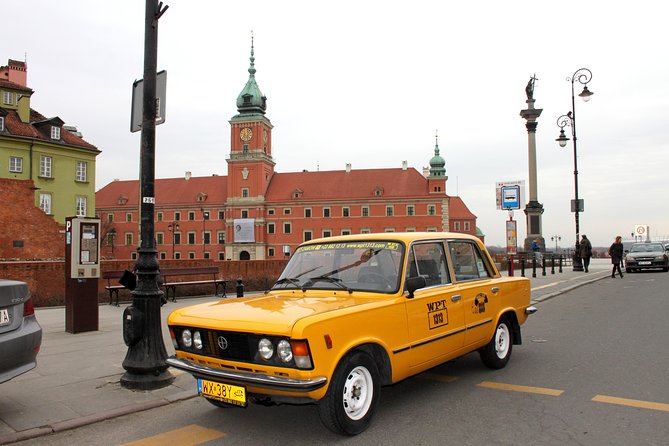
- A real Fiat 125p, not a themed bus: The vintage Polish car is part of the experience and attracts attention as you drive through the city.
- Warsaw’s major historical chapters in four hours: The route connects the medieval Old Town, World War II memorials, the Jewish ghetto, communism, and Praga.
- Private guiding makes the route flexible: Your guide can spend less time at places you already know and adapt the drive to your interests.
- A useful first look for short stays: The tour reaches both sides of the Vistula and works well if you have only an afternoon in Warsaw.
- Plenty of walking, but not a full walking tour: Most stops are brief, with the car linking them across the city.
- Good value for a private half-day: At $108.28 per person, the price makes the most sense for two or more people who want individual attention and broad coverage.
Why the retro Fiat changes the way you see Warsaw
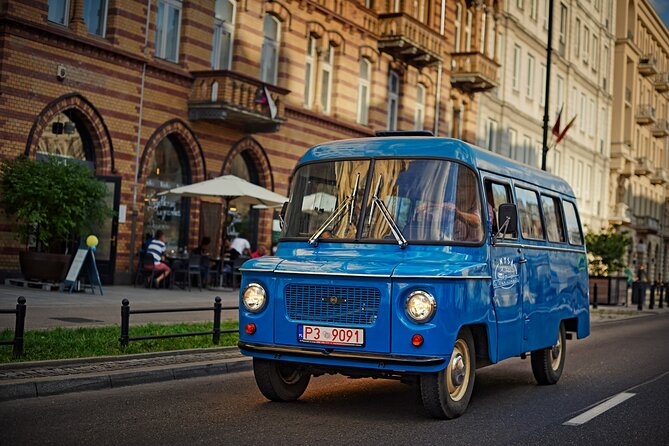
The Fiat 125p is more than transport. It is a small piece of Polish everyday life from the communist period, and its age gives the tour a local flavor that a standard minibus cannot match. A bright yellow car, a blue Fiat, and other carefully preserved vehicles have been used for these drives.
You will probably notice people looking at the car as it passes. That playful attention adds a lighter note to a tour that spends much of its time on war, occupation, murder, and political repression.
The car also solves a practical problem. Warsaw is spread out, and the most meaningful sites are not all close together. The Old Town, ghetto memorials, Palace of Culture and Science, and Praga district each need a different part of the city. Driving between them lets you see more without turning the day into a long march.
Still, this is not a luxury vehicle. One car described by a participant had no air-conditioning, so warm-weather comfort deserves some thought. The Fiat may also be less comfortable than a regular modern car. You are paying for atmosphere and a private guide, not polished executive transport.
More History Tours in Warsaw
- Warsaw: POLIN Museum of the History of Polish Jews Ticket
★ 4.7 · 1,142 reviews - Warsaw: Chopin Concert at Historical Venue in Old Town
★ 4.7 · 445 reviews - Small-Group Historical Guided Tour of Warsaw with pick up/drop off. Public Tour.
★ 4.5 · 343 reviews
The Old Town: rebuilt, beautiful, and full of clues
The tour begins with about an hour in Warsaw’s Old Town, the strongest architectural section of the route. It is listed as a UNESCO World Heritage site, but the key fact is that much of what you see was rebuilt after World War II.
Your guide points out the four buildings that survived the war. That detail gives the square, churches, and colorful facades a different meaning. The Old Town looks historic, but its story is also about destruction, memory, and painstaking reconstruction.
The longer stop here is useful because you have time to walk rather than view everything through the car window. Your guide can point out details that are easy to miss and explain how Warsaw’s prewar center differed from the city rebuilt afterward.
This part may overlap with a standard Old Town walking tour. If you already plan to spend a full day on the Old Town, tell your guide at the start. Several guides have adjusted the route for people who had already seen the main central sights.
Castle Square and the Royal Route
Castle Square takes roughly 15 minutes. It sits in front of the Royal Castle and links the Old Town with the Royal Route, so it is both a historic meeting place and an important street connection.
The most familiar feature is the column honoring King Sigismund III Vasa. Your guide explains why the column matters and places the square within Warsaw’s royal story.
This is a short stop, not a castle visit. Admission to the outdoor stops is free, but the tour does not include time inside the Royal Castle. If you want interiors, you will need to arrange that separately.
St. John’s Archcathedral and the old city gate
At St. John the Baptist Archcathedral, the guide explains who is buried there and how German forces destroyed the building during World War II. The stop lasts about 10 minutes, so expect an exterior-focused introduction rather than a long church visit.
You then leave the Old Town through the site of a former gate in Warsaw’s city walls. This small transition is useful because it shows how the old center once worked as a defended town, rather than simply as a pretty collection of streets.
A different kind of day in Warsaw:
- Warsaw: Chopin Concert in the Old Town
★ 4.8 · 2,287 reviews - Warsaw: Traditional Galar Cruise on The Vistula River
★ 4.6 · 1,640 reviews - Warsaw: Old Town Highlights Walking Tour in English
★ 4.7 · 1,516 reviews - Warsaw Concert: Chopin – Painted by Candlelights with Wine
★ 4.8 · 1,442 reviews
Warsaw’s uprising, seen through memorials
The Warsaw Uprising Monument commemorates the thousands of Poles who fought against the German Nazis. The planned stop is short, about 10 minutes, but its location helps connect the monument to the wider story of resistance and civilian suffering.
The tour also brings you to several places connected with the Warsaw Uprising, described as the largest armed uprising by civilians during World War II. This is one reason a private guide matters. You can ask how the uprising affected different parts of the city and how its memory fits into modern Poland.
One caution: the exact time available at each site can vary. One person found that the uprising monument was missed, so if it matters to you, mention it clearly when the tour begins. A private booking gives you a better chance of shaping the route, but four hours still requires choices.
POLIN and the Monument to the Ghetto Heroes
The stop outside POLIN Museum of the History of Polish Jews lasts about 15 minutes. The building won the European Museum of the Year Award in 2016, but this tour does not include museum admission or an indoor visit.
Instead, your guide uses the museum and nearby memorials to explain the long history of Poland’s Jewish community. The next stop, the Monument to the Ghetto Heroes, adds a more direct focus on the Warsaw Ghetto Uprising.
Here you hear about Mordechai Anielewicz and the basalt used for the monument. These details make the stop more than a quick photograph. The material itself connects the memorial to the Nazi plan for a monument celebrating German victory, a plan that was never carried out in the way intended.
The subject is painful, and the tour does not treat it as a simple sightseeing circuit. The short walking stops are best suited to people who want historical context and are prepared for a serious tone.
The ghetto wall fragment and the city’s missing streets
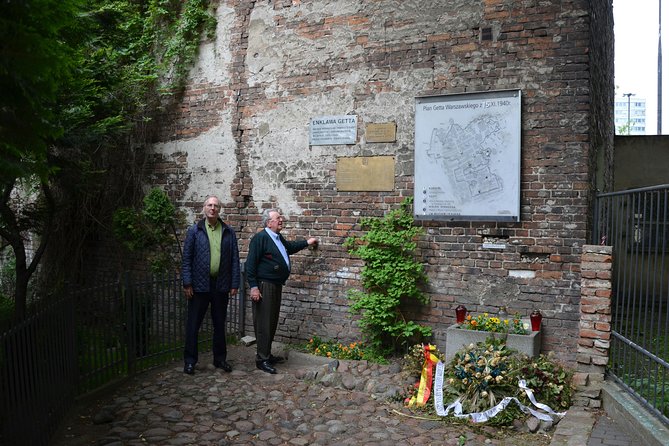
The remaining fragment of the ghetto wall receives about 30 minutes, one of the longer stops after the Old Town. Your guide explains where the Jewish quarter was and what happened to Warsaw’s Jewish population during the Nazi occupation.
The power of this stop comes partly from what is absent. Much of the former ghetto no longer survives, and the wall fragment can be easy to overlook without someone showing you where to look. The tour also includes other places tied to the ghetto and the wartime uprising.
You will not see a complete historic district here. The destruction was too extensive. Instead, you get fragments, memorials, street traces, and a guide who can connect them. That makes the stop especially valuable if you want to understand how the modern city sits on top of a nearly erased neighborhood.
Treblinka, the black market, and the communist city
Along the route, the guide points out the departure point for Treblinka, the extermination camp with gas chambers. This is a historical reference rather than a separate visit to Treblinka. The tour remains in Warsaw and uses the site to explain how people were transported from the city during the Holocaust.
You also hear about the most famous black market in communist Poland. That detail shifts the focus from wartime destruction to ordinary life under the communist system. It helps you see how people found goods, traded, and managed daily life when official supplies were limited.
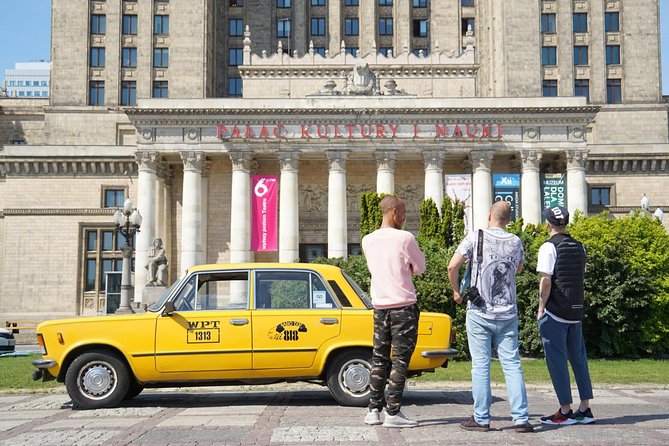
The Palace of Culture and Science gets about 15 minutes. This enormous building is Warsaw’s best-known communist-era landmark and a relic of the period when Soviet influence shaped the city. Your guide explains its political meaning and place in Warsaw today.
The stop is mainly an outside introduction. The tour does not include a ticket for the observation deck or other interior areas. Even so, the building works well as a visual marker because it can be seen from many parts of central Warsaw.
Praga Północ: the old Warsaw that survived
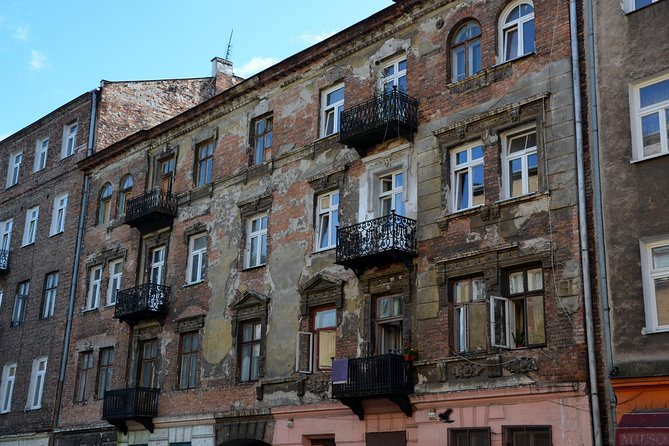
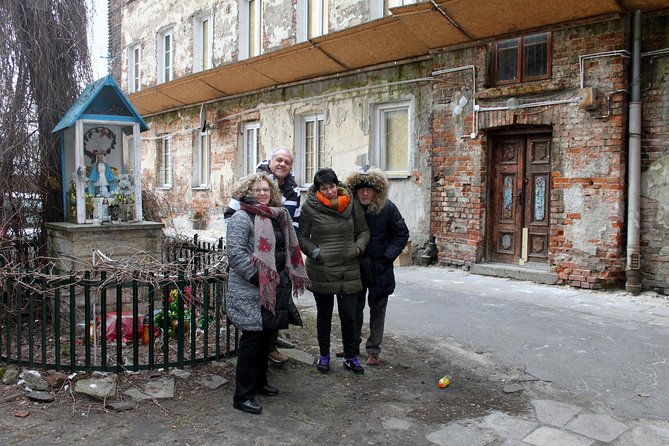
Praga Północ takes about 30 minutes and gives the tour its strongest contrast. The district was far less damaged during World War II than the western side of Warsaw, so it preserves a different sense of the prewar city.
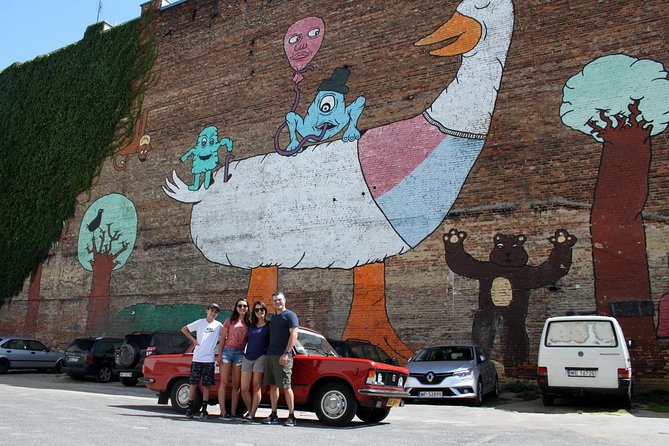
The experience here is not a polished historic-center visit. Praga is described as an exotic and unusual part of Warsaw, with older streets and street art among its defining features. You may find the area less tidy and less predictable than the rebuilt Old Town, which is exactly why it adds value.
Driving across the river is important. It lets you compare the reconstructed center with the eastern side, where more of the old urban texture survived. If you have only seen central Warsaw, Praga gives you a fuller sense of the city’s contrasts.
What the private format adds
The guide is with your group alone, and pickup and drop-off from central locations are included. The listed meeting point is the Palace of Culture and Science at Plac Defilad 1, though the guide can pick you up from a hotel lobby if it falls within the pickup area.
That flexibility has practical value. Guides have changed routes for people who had already visited the Palace of Culture and Science, the Old Town, or other central sights. Some have added Łazienki Palace, stopped for Polish vodka or traditional snacks, brought guests to a pączki shop, or suggested restaurants and other places to visit.
These additions are not guaranteed parts of every booking. They depend on the guide, the day, traffic, and your interests. I would treat them as possible personal touches, not promised inclusions.
The strongest guide qualities are clear English, warmth, and the ability to explain difficult subjects without turning the tour into a lecture. Karol has been praised for detailed historical explanations, Agata for her polished English and social context, Martin for humor and local insight, Konrad for considerate service and Polish treats, and Hania for tailoring details to a guest’s interests.
Is $108.28 per person a fair price?
At $108.28 per person, this is not the cheapest way to see Warsaw. Public transport and self-guided walks cost far less, and many Old Town sights can be visited without an admission fee.
The price looks better when you consider what is included: four hours, a private vehicle, pickup and drop-off from central locations, and a professional local guide. For a couple or small group, it buys direct conversation and a route across both sides of the city.
I see the tour as especially good value when you have only one day or a short afternoon. It gives you a citywide orientation before you choose where to return on foot. It also suits anyone who wants less walking but still wants to get out at major memorials and neighborhoods.
Group discounts are available, and only your party takes part. The experience is offered in English and is near public transportation. Most people can participate, though the vintage car itself may not offer the space or cooling of a modern vehicle.
Booking around 36 days ahead is the average pattern, so reserving early is sensible for a specific date or preferred pickup time. Confirmation arrives at booking. Free cancellation is available up to 24 hours before the start time, while later cancellations and changes are not accepted.
Who should book this Warsaw tour?
I would choose this tour if you want history tied to real places rather than a quick list of monuments. It works well for first-time visitors, couples, families, and small groups with limited time.
It is also a smart option if you have already booked an Old Town walk and want something different. Tell the guide what you have seen. The private setup makes it possible to spend more time in Praga, around the ghetto remains, or at other sites that interest you.
I would think twice if you want a slow, detailed visit inside museums and churches. The tour focuses on outdoor stops, short walks, and explanations from the guide. It gives you breadth and context, not long interior visits.
Should you book it?
Book it if you want to cover Warsaw’s main historical chapters in one half-day and like the idea of doing it in a genuine Polish Fiat. The best part is the combination of efficient driving, meaningful short walks, and a guide who can answer the questions that a bus commentary cannot.
Skip it if the retro car is less important to you than maximum comfort, or if you prefer to spend hours inside museums. For everyone else, especially visitors with just one day in Warsaw, this is a lively and useful introduction to a city that cannot be understood from the rebuilt Old Town alone.
FAQ
How long is the private Fiat tour?
The tour lasts approximately four hours.
What vehicle is used?
Transport is provided in a private retro Fiat 125p.
Is the tour private?
Yes. Only your group participates in the activity.
Is hotel pickup available?
Pickup and drop-off are offered from central locations. The guide can collect you from your hotel lobby if it is within the pickup area. If not, you can contact the provider to find another solution.
Where is the listed meeting point?
The listed meeting point is the Palace of Culture and Science, Plac Defilad 1, 00-901 Warszawa, Poland.
What language is the tour offered in?
The tour is offered in English.
Does the tour include museum or attraction admission?
The listed stops have no admission ticket included or required for the outdoor visit. The tour includes outside visits to places such as POLIN Museum and the Palace of Culture and Science, but no indoor admission is specified.
What is the cancellation policy?
You can cancel up to 24 hours before the experience starts for a full refund. Cancellations or changes made less than 24 hours before the start time are not accepted.
Recently added in Warsaw
- Warsaw Wolf’s Lair with St. Lipka and Mamerki Private Guided★ 4.2 · 3 reviews
- Taste of Poland, food tour and guided walk with 12 tasting★ 5.0 · 3 reviews
- Discover Warsaw’s most Photogenic Spots with a Local★ 5.0 · 3 reviews
- Lodz Small Group Tour from Warsaw with Lunch★ 4.0 · 3 reviews
- Jewish heritage in Warsaw★ 4.5 · 3 reviews
- Warsaw Outdoor Paintball with Transfers (all year round)★ 5.0 · 3 reviews
- Electric Scooter Tour: Full Tour – 3-Hours of Magic!★ 5.0 · 3 reviews
- Skip-the-Line Polin Museum Warsaw Jewish History Tour★ 5.0 · 3 reviews
Historical Tours, compared.
POLIN Museum of the History of Polish Jews Ticket
Read our review →
Gdańsk City Sights & History Guided Walking Tour in English
Read our review →
Small-Group Historical Guided Tour of Warsaw with pick up/drop off. Public Tour.
Read our review →Where else this one turns up