
Reviewed · HISTORICAL TOURS
Gdańsk City Sights & History Guided Walking Tour in English
Gdańsk’s beauty comes with a story of destruction and rebirth. On this 150-minute walk, you follow the old royal route from the Golden Gate through Long Market to the harbor, while your guide explains how the city became a Baltic trading power, how WWII began here, and how Solidarity helped weaken communism in Eastern Europe. The rebuilt streets are not just pretty scenery. They are part of the lesson.
I like the clear historical sweep, from medieval merchants to the modern independence movement, and I like the practical pace, with time for questions, photos, and sometimes a warm-up stop in cold weather. The main drawback is that this is a general group tour, not a private walk, so larger groups can be harder to manage around busy sights. At $26, though, it is a strong introduction to Gdańsk.
Key reasons to choose this Gdańsk walk
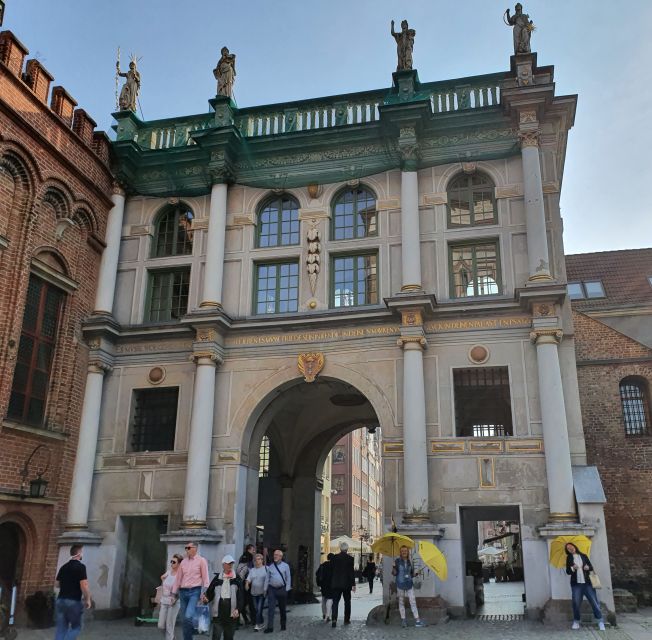
- The Golden Gate starting point makes it easy to find the group, especially if you look for the yellow umbrella.
- Long Market and Neptune Fountain show off the city’s grand merchant architecture and royal route.
- St. Mary’s Basilica gives you a close look at the world’s largest brick Gothic church.
- Żuraw crane connects Gdańsk’s medieval trade to its canals, riverfront, and maritime identity.
- WWII and Solidarity stories add the political context that sightseeing alone cannot provide.
- Guides bring different strengths, with names such as Tufi, Kate, Sandra, Marcin, and Filip praised for humor, clarity, and enthusiasm.
Starting at the Golden Gate with Gdańsk’s past in view
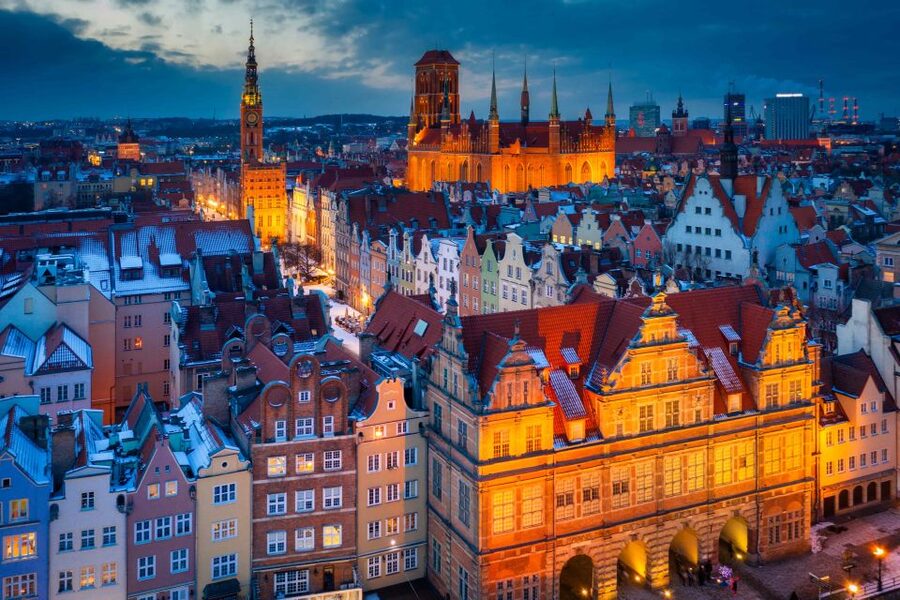
You meet at the Golden Gate, or Złota Brama, one of the most recognizable entrances to Gdańsk’s historic center. Look for the yellow umbrella. That small detail matters in a city where several walking groups may gather around the same streets.
The starting point is more than a convenient meeting place. It introduces the city’s old ceremonial route, the path used for centuries by Poland’s kings. From here, the walk heads into the former merchant town, where tall, narrow façades line the main streets in close formation.
Your guide sets the tone early by explaining Gdańsk’s mixed cultural character. Polish, Dutch, and German influences all shaped the city, and that blend appears in its architecture, trading traditions, and changing political loyalties. The result is a place that cannot be understood through a single national story.
I find this opening useful because it gives you a way to read the city. Instead of seeing a row of colorful houses as a pleasant backdrop, you begin to see a port city shaped by commerce, migration, royal power, and shifting borders.
More History Tours in Gdansk
- Gdansk: City Cruise on Historical Polish Boat
★ 4.8 · 2,913 reviews - Gdańsk: Sunset Cruise on a Historic Polish Boat
★ 4.9 · 977 reviews - Historic City Center Tour Gdansk in German
★ 4.6 · 455 reviews
The rebuilt townhouses and the cost of war
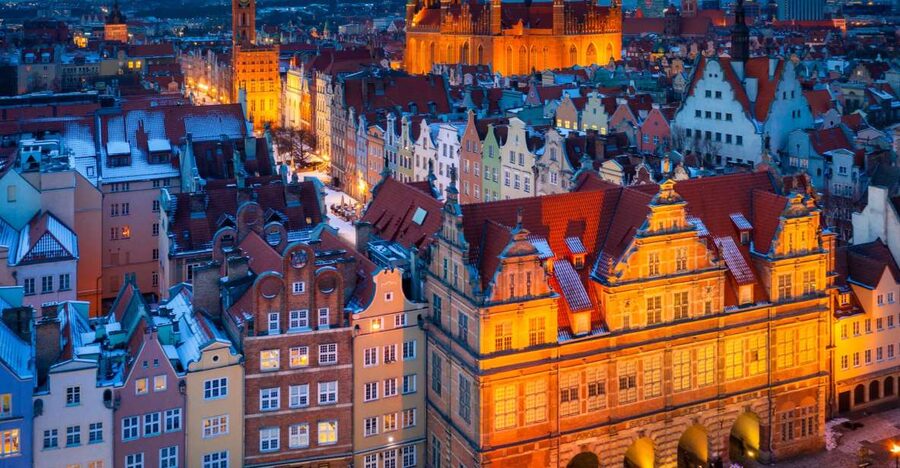
The merchant townhouses are among Gdańsk’s most striking sights. Their narrow fronts, decorative details, and bright colors create the image many people carry away from the city. Yet these buildings were destroyed during WWII and later rebuilt with painstaking care.
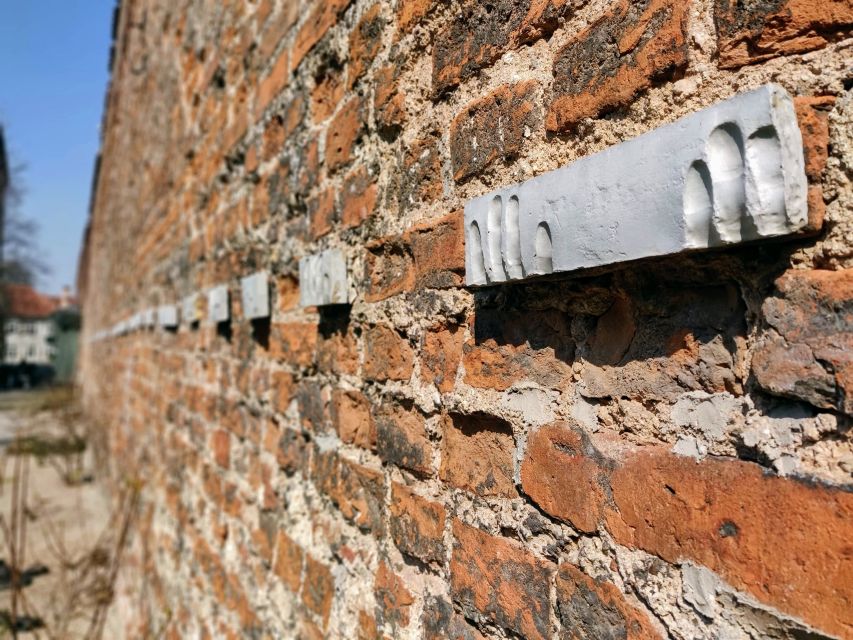
That fact changes the mood of the walk. You are not looking at an untouched medieval quarter. You are looking at a reconstructed historic center, restored so carefully that it can feel original at first glance.
A good guide helps you hold both ideas at once. The architecture is beautiful, but it also reflects a major effort to recover the city’s identity after devastation. The rebuilding story gives the façades more weight and helps explain why Gdańsk feels both old and newly made.
The tour also explains how local merchants helped make Gdańsk one of the wealthiest ports on the Baltic Sea. You hear about the city as a trading center rather than simply a collection of churches and monuments. That commercial background makes the grand scale of the central streets easier to understand.
The group format can be noticeable here. A small group can gather around a façade without much trouble, while a larger group may need to spread out or stand farther back. One useful point from the experience is that group size can vary, so keep close to the yellow umbrella and guide as the walk moves through the center.
Long Market and Neptune’s watchful fountain
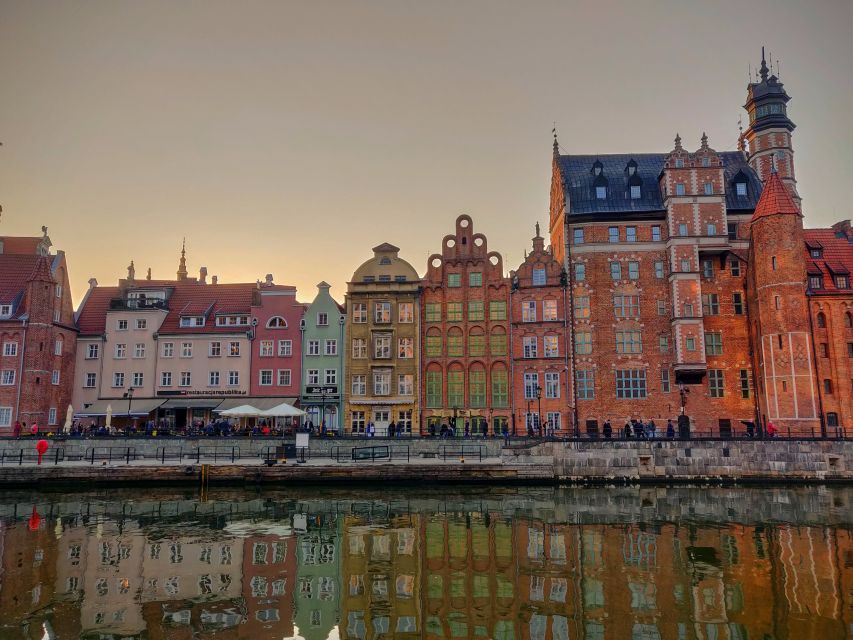
Long Market, or Długi Targ, is the visual heart of the route. The broad street is lined with ornate façades and leads your eye toward the river. This is where the city’s wealth and civic pride are most obvious.
The Neptune Fountain is the natural focus. Neptune links Gdańsk to the sea, and the fountain has become one of the city’s best-known symbols. Your guide uses the stop to explain the city’s maritime character and its place in Baltic trade.
This is also one of the busier photo stops, so you should expect people moving through the area. The benefit of joining a guide is that you can learn what you are looking at without spending your whole visit reading plaques or trying to connect isolated facts.
The walk is not built around rushing from one landmark to another. Guides such as Kate, Tufi, Sandra, and Marcin have been praised for keeping the tone lively while leaving room for questions. Their styles differ, but the strongest guides make the historical material feel like a connected story rather than a list of dates.
That matters in Gdańsk. The city’s past includes long periods of prosperity, political pressure, war, and resistance. You need a guide who can explain how those periods fit together, especially when the buildings themselves have been rebuilt.
St. Mary’s Basilica and the rhythm of the clock
St. Mary’s Basilica is one of the tour’s major visual rewards. Its Gothic brickwork is massive, plain in some places, richly detailed in others, and unlike the stone churches many people expect to see in Western Europe. It is recognized as the largest brick Gothic church in the world.
The exterior alone is worth the stop, but the guide’s explanation gives it scale and purpose. The church is not just another old building on the route. It shows the resources and ambition of medieval Gdańsk, along with the local preference for brick construction.
The timing can add a pleasant surprise. Several guides have arranged the route so the group reaches the church around noon, allowing you to see the figures move on its clock. This depends on the start time and the day’s pace, so it should not be treated as guaranteed, but it is a nice example of how a guide can turn a standard sight into a timed experience.
In cold weather, this stop also offers a practical break from the streets. Participants have described guides moving some explanations indoors or allowing time for coffee and warmth when temperatures dropped well below freezing. The tour runs rain or shine, so that kind of flexibility can make a real difference.
You should still dress for the forecast. Wear weather-appropriate clothing and comfortable shoes. The tour lasts two and a half hours, and even a relaxed walking pace feels long if you are underdressed or wearing footwear meant only for photographs.
More Walking Tours in Gdansk
- Main Town Gdańsk Walking Tour
★ 5.0 · 644 reviews - Discover Gdansk Walking Tour
★ 5.0 · 495 reviews - Gdańsk: Old Town Private Walking Tour with Legends and Facts
★ 4.9 · 245 reviews - Gdansk Old Town 2-Hour Walking Tour
★ 4.5 · 94 reviews
Along the canals to the Żuraw crane
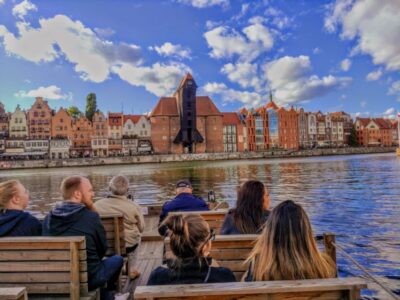
The route continues toward Gdańsk’s waterways, where rivers and canals reveal the city’s working side. This portion helps connect the grand central streets with the port that made the city prosperous.
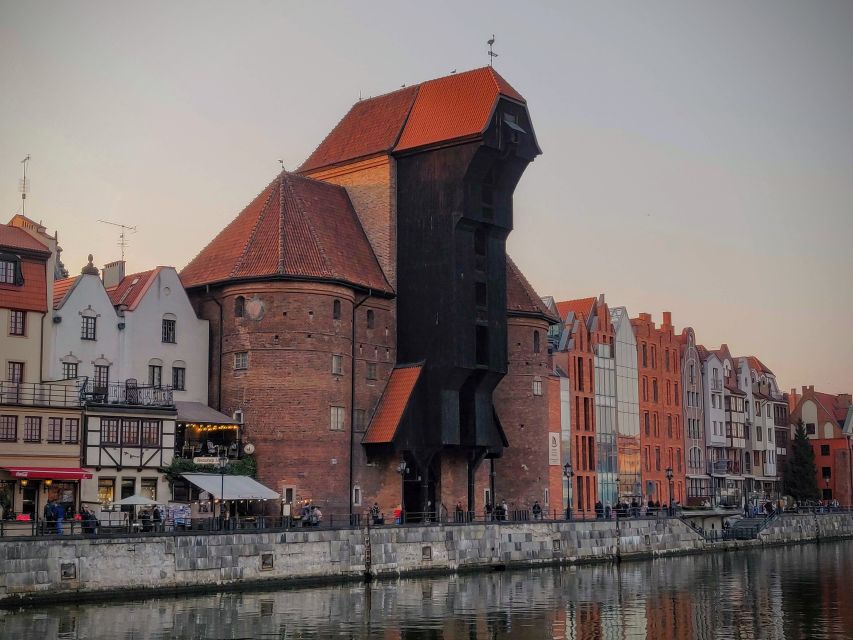
The Żuraw crane is the star of the harbor section. This medieval treadwheel crane is the largest of its kind in the world and one of Gdańsk’s strongest symbols. Its wooden structure looks striking against the water, but its real importance lies in what it tells you about the city’s trade.
Before modern machinery, workers powered cranes like this by walking inside large wooden wheels. The structure could handle cargo moving between ships and the waterfront, making it part of the practical system that supported the merchant city.
I like this stop because it prevents the walk from becoming a purely architectural tour. You see how goods moved, how the harbor functioned, and why control of this port mattered. The canal views also give you a change of pace after the dense streets around Long Market.
The harbor can be exposed to wind, particularly in winter. That is another reason to bring a warm outer layer even if the weather looks manageable when you leave your hotel.
How Gdańsk connects WWII and Solidarity
The most important part of the tour is the modern history. Gdańsk is closely tied to the beginning of WWII, and your guide explains how the conflict began in the city and what that meant for its people.
This section can be sobering, especially when the guide connects the war to the destruction of the center and the later rebuilding of the townhouses. The subject is not treated as a decorative footnote. It helps explain why so much of Gdańsk’s identity is tied to memory, loss, and recovery.
The tour then moves toward the story of Solidarity, the movement that helped lead to the fall of communism in the Eastern Bloc. Gdańsk’s push toward independence did not end with medieval privileges or changing borders. It continued into the modern period through organized opposition and demands for political freedom.
For you, this gives the city a wider European meaning. Gdańsk is not only a handsome Baltic port. It is also a place where arguments about self-rule, national identity, and freedom have repeatedly shaped daily life.
The best guides handle this material with both care and energy. Filip, also referred to as Philip or Tufi in guide introductions, has been praised for clear explanations and strong storytelling. Other guides, including Kate, Sandra, Marcin, and Paul, have been singled out for humor, passion, and the ability to make difficult periods understandable in plain English.
What the guide adds to the experience
This tour depends heavily on the individual guide. The route is excellent, but the same streets can feel flat if the explanation is rushed or overly packed with facts.
The strongest guides use personal anecdotes, local recommendations, and humor to keep the story moving. Tufi has been described as especially lively and passionate. Kate is praised for clarity and a strong command of the city’s story. Sandra is often noted for thoughtful explanations and good practical advice. Marcin and Filip are also known for animated storytelling.
You should expect a live English-speaking guide, not an audio recording or a fixed script delivered through headphones. That means you can ask questions and request suggestions for the rest of your stay. Guides have recommended places to eat and other sights, including options suited to different budgets and tastes.
There is a trade-off. A 150-minute walk covers several centuries, and one person found that the amount of history could be a lot to absorb. Another thought the walk could be shortened slightly. If you prefer a quick orientation with only a few facts, this may feel dense.
I think the length works best when you take notes mentally rather than trying to remember every name and date. Use the tour to understand the broad shape of Gdańsk. Then return later to the places that caught your attention.
Is $26 good value for Gdańsk?
At $26 per person, this is good value if you want context along with the major sights. You get a 150-minute walking tour and a live guide, with no separate charge for the basic guiding service listed for the activity.
The value is strongest for a first visit. In one walk, you see the Golden Gate, merchant townhouses, Long Market, Neptune Fountain, St. Mary’s Basilica, canals, and Żuraw crane. You also receive the political and wartime background needed to understand the city beyond its postcard views.
This is not a private tour. The activity joins the general walking tour, and the amount paid covers the reservation fee and guide’s payment. If you want a smaller private experience, you can contact the supplier after booking to ask about arranging one.
One point deserves attention: the payment structure may not be obvious to everyone at the end, because the general walk can resemble a free walking tour. Keep your booking details handy so you understand what you have already paid for. The tour provider is Walkative Tours.
You can cancel up to 24 hours before the activity for a full refund, and you can reserve now and pay later. Those terms are useful if your Gdańsk plans are still shifting.
Best time to take this walking tour
I would schedule this early in your stay. The route gives you a working map of the center, points out places you may want to revisit, and provides restaurant suggestions for later meals.
Winter is possible, but do not underestimate the cold. The walk has operated in snow, rain, and strong wind, and guides have adjusted with coffee or warm-up breaks when needed. The tour still takes place in poor weather, so dress for the day rather than hoping the forecast improves.
The clock at St. Mary’s Basilica may be a reason to choose a midday start if that timing is available. Again, the exact schedule depends on the departure time, but reaching the church around noon can add a memorable detail.
Summer should make the outdoor sections easier, but central Gdańsk can be busy. A guide helps you keep moving and understand the sights, although a large group may take longer to gather at popular stops.
Who should book this experience?
I recommend it for first-time visitors, history-minded visitors, and anyone who wants the city’s main sights explained in clear English. It also suits people arriving for a short stay, since the route covers so much ground without requiring transport.
Families and mixed-age groups can benefit from the storytelling, especially if younger participants lose interest in formal museum displays. The guide can answer questions and vary the explanation more easily than a printed guidebook.
It is also a good choice for visitors who want to understand the connection between Gdańsk’s medieval trade, WWII, and Solidarity. Those subjects can seem unrelated when encountered separately. On foot, they form a much clearer story.
You may prefer a private tour if you dislike groups, want a slower pace, or need to spend more time at specific interiors. This experience is also less suitable if you want a museum-heavy visit, since the main focus is outdoor streets, façades, landmarks, and historical explanation.
Should you book the Gdańsk City Sights and History Tour?
Yes, if you want a strong first look at Gdańsk for a reasonable price. The combination of royal streets, rebuilt architecture, the Neptune Fountain, St. Mary’s Basilica, Żuraw crane, WWII, and Solidarity gives you far more than a quick photo walk.
Book it near the beginning of your stay, wear proper clothing, and stay close to the yellow umbrella. Choose this tour for broad context and lively explanation. Choose a private option instead if group size, a slower pace, or a highly tailored itinerary matters most to you.
FAQ
How long does the Gdańsk walking tour last?
The tour lasts 150 minutes, or two and a half hours.
What language is the tour conducted in?
The live tour guide speaks English.
Where does the tour meet?
The meeting point is the Golden Gate, called Złota Brama in Polish. Look for a yellow umbrella.
What is included in the price?
The price includes the walking tour and a guide. Hotel pickup and drop-off are not included.
Does the tour operate in bad weather?
Yes. The tour takes place rain or shine, so bring weather-appropriate clothing.
Is the tour private or part of a general group?
It joins the general walking tour. If you want a smaller private tour, contact the supplier after booking to ask about arranging one.
Recently added in Gdansk
- Szymbark: Kashubian Switzerland 5-Hour Private Tour★ 3.7 · 3 reviews
- Segway Tour Gdańsk: Shipyard Tour – 1,5-Hour of Magic!★ 5.0 · 3 reviews
- Stutthof Concentration Camp and Museum of WWII: Private Tour★ 4.7 · 3 reviews
- Sopot Sunset Cruise with Welcome Drink★ 3.5 · 3 reviews
- Gdansk: Basic Bike Tour★ 4.3 · 3 reviews
- Gdansk: Bubble Football with Hotel Transfers★ 5.0 · 3 reviews
- Artus Court and Gdansk Old Town Private Tour with Tickets★ 4.7 · 3 reviews
- Gdansk: Oliwa Zoo with Tickets and Roundtrip Transportation★ 5.0 · 3 reviews
Historical Tours, compared.
POLIN Museum of the History of Polish Jews Ticket
Read our review →

Small-Group Historical Guided Tour of Warsaw with pick up/drop off. Public Tour.
Read our review →
Where else this one turns up