
Reviewed · OLD TOWN TOURS
Gdańsk: Old Town Private Walking Tour with Legends and Facts
Gdańsk tells two powerful stories at once. One unfolds along grand streets lined with Gothic and Renaissance buildings. The other begins at the shipyards, where the Solidarity movement helped bring down communist rule in Poland. This private walk links both stories, with your guide adding local legends, practical tips, and the small details you could miss alone.
I like the private format, since the guide can adjust the pace and answer your questions without a large group getting in the way. I also like the route choices: the two-hour walk gives you a solid first look, while the six-hour version reaches the European Solidarity Centre and the Monument to the Fallen Shipyard Workers of 1970. The main drawback is simple: $107 per person is a serious price for a walking tour, especially if you choose the short route.
The strongest part of the experience depends on your interests. Kaja and Karina have guided visitors through the city with warmth and clear explanations, while Krzysztof has been praised for giving a full three-hour walk without rushing. If you want a quick orientation, choose two hours. If Gdańsk’s wartime, trade, and communist-era stories matter to you, allow four to six hours.
Key points to know before booking
- Upland Gate is the starting point: Meet under the tourist information sign at Brama Wyżynna, about eight minutes from Gdańsk’s Main Railway Station.
- The two-hour route covers the classic center: Expect Golden Gate, Dluga Street, Long Market, Neptune’s Fountain, Artus Court, the Green Gate, St Mary’s Basilica, and the Great Armoury.
- Longer tours add real historical weight: The four-hour option includes St Bridget’s Church and its remarkable amber altar.
- The six-hour route reaches Solidarity sites: You visit the shipyard memorial and the European Solidarity Centre with a skip-the-line ticket.
- This is a flexible private walk: The guide can adjust the tour around your interests, and nine languages are available.
- Pickup has a narrow limit: Accommodation pickup is offered only within 1.5 kilometers of the meeting point in Gdańsk Old Town.
Starting at Upland Gate, where Gdańsk begins to unfold
The meeting point at Upland Gate, or Brama Wyżynna, works well for a first visit. It sits at Wały Jagiellońskie 2A, roughly eight minutes from the Main Railway Station, and marks the entrance to the historic center.
Your guide begins with the city’s basic story before leading you through the old defensive line. This opening matters because Gdańsk can feel like a collection of handsome streets until someone explains how trade, war, religion, and politics shaped them.
You meet a guide licensed by the city and fluent in your chosen language. English, German, Polish, Spanish, French, Italian, Russian, Norwegian, and Swedish are offered. The experience is private, so you are not tied to the questions or walking speed of a larger group.
The guides who have led this experience include Kaja, also referred to as Karina in one booking, Krzysztof Przyborowski, Gabriella, and Weronika. The consistent praise for these guides centers on warmth, clear speech, strong local knowledge, and a willingness to adapt. One useful detail is that Krzysztof led a three-hour evening walk without making the group feel hurried. That flexibility is valuable if you arrive later in the day.
More Old Town Tours in Gdansk
- Gdańsk: Sightseeing EcoCruise around the Old Town of Gdansk
★ 4.6 · 719 reviews - Gdansk Old Town 2-Hour Walking Tour
★ 4.5 · 94 reviews - Sunset on the Shipyard and Old Town Evening Cruise
★ 4.5 · 86 reviews
Golden Gate and Dluga Street, Gdańsk’s grand front door
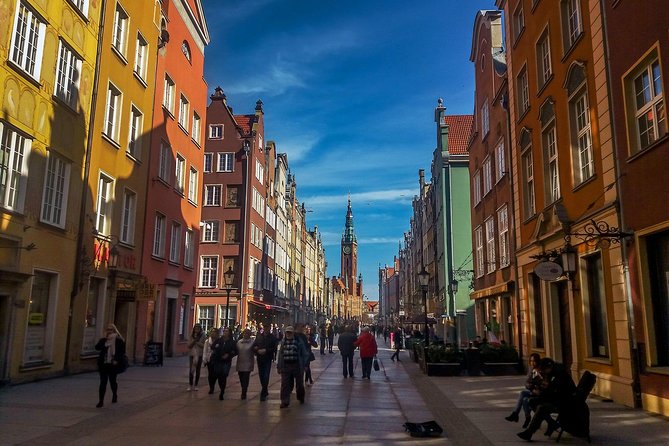
From Upland Gate, you pass toward the Golden Gate and enter Dluga Street. This is the city’s ceremonial spine, with tall façades and decorative details that make the walk feel more like an open-air history book than a normal city street.
Your guide gives you the basic facts, but the legends are part of the appeal. The experience is designed to explain why certain buildings look the way they do, how merchants used the center, and how Gdańsk developed as a major port and industrial city.
I would pay attention to the practical advice here. During the two-hour route, the guide can point you toward local restaurants, pubs, and souvenir shops. That makes the walk useful beyond sightseeing, especially if Gdańsk is your first stop in Poland and you want help choosing where to eat or what kind of amber souvenir is worth considering.
The short route is not an exhaustive tour of the city. It is a well-shaped introduction to the central sights, and it works best if you want orientation on your first day. If you already know the Main Town, the longer options offer more substance.
Long Market, Neptune’s Fountain, and Artus Court
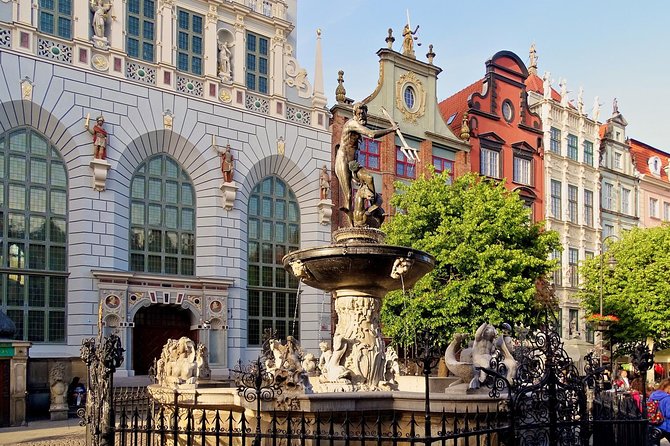
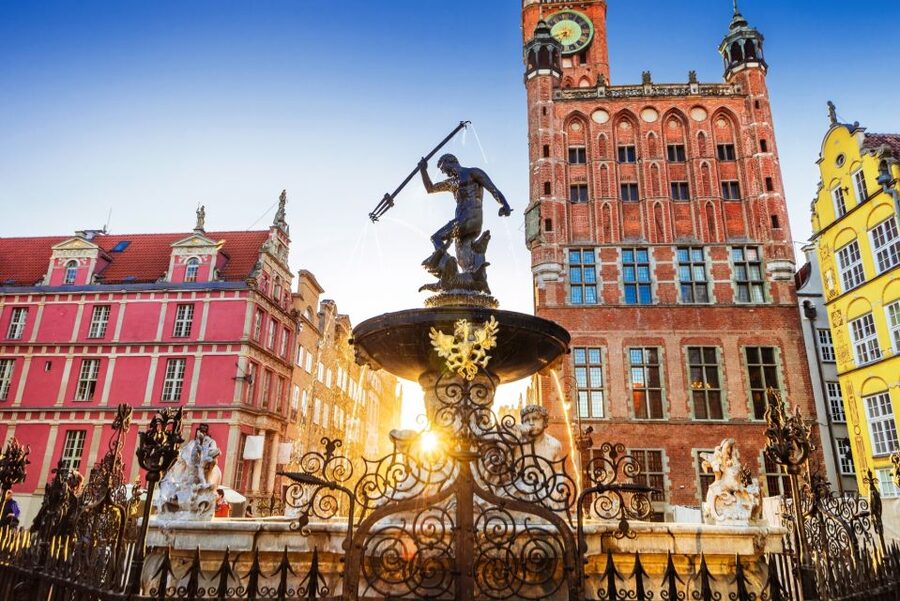
Long Market is the visual center of the walk. Here you see Gdańsk Town Hall, the Golden House, and Neptune’s Fountain, a 17th-century landmark that has become one of the city’s most familiar meeting points.
The buildings around the square are more than pretty façades. They show the wealth and ambition of merchants who made their fortunes through Baltic trade. Your guide can give the streets context, so you understand why the center feels grander than you might expect from a city that suffered so much destruction in the 20th century.
Artus Court adds another layer. It was once a meeting place for the city’s merchants and now serves as a branch of the Gdańsk History Museum, with local history and art collections. The tour takes you to the building, but the supplied details do not promise a separate paid interior visit on every route. If you want substantial museum time, confirm exactly what your selected option includes before booking.
That distinction is worth keeping in mind throughout the tour. A walking tour can show you the setting and explain the story, but it is not the same as spending an hour inside every museum or church.
Green Gate and the Motława River
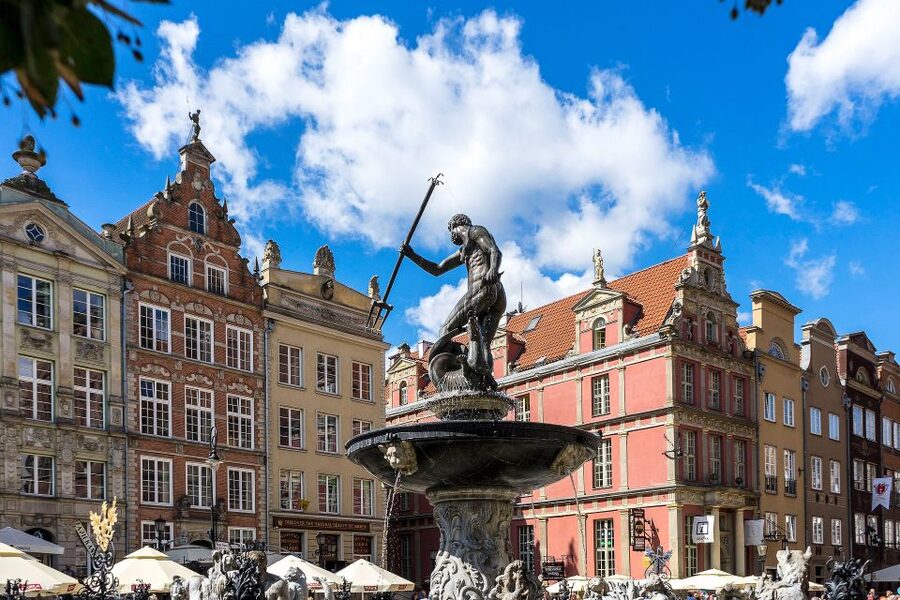
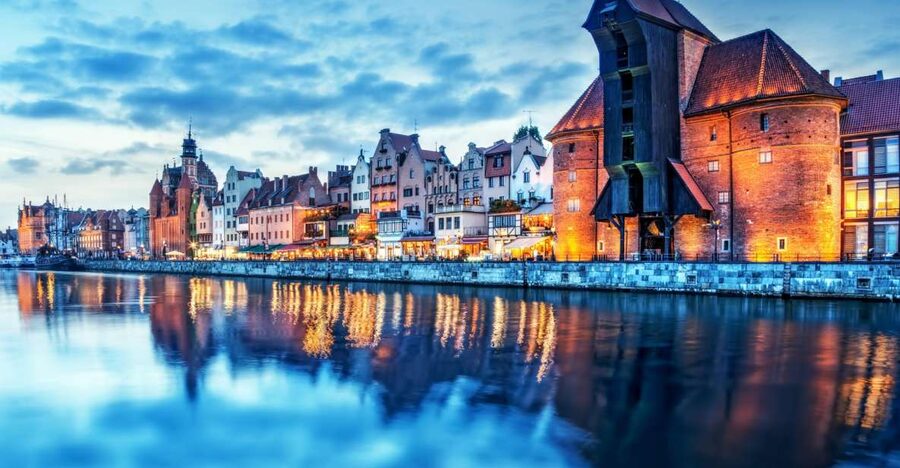
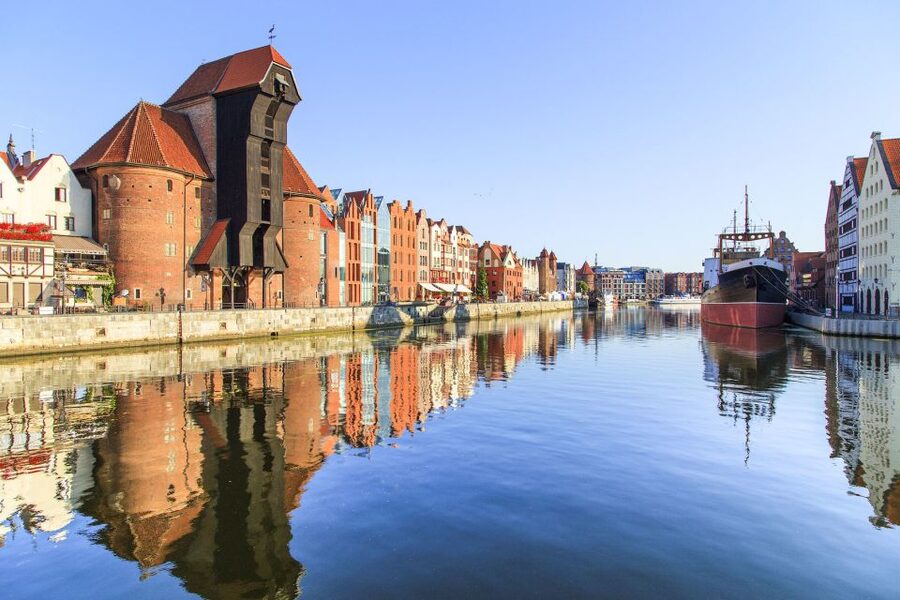
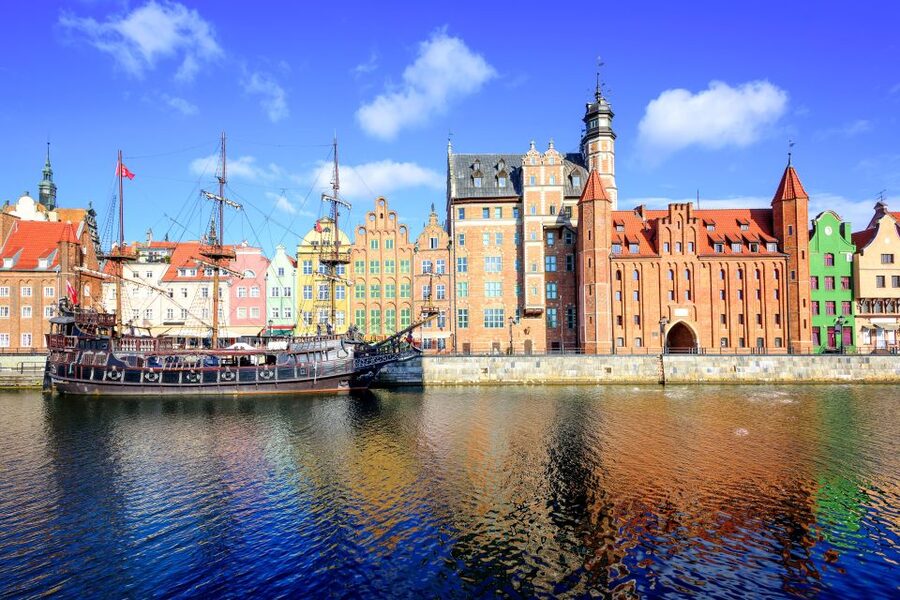
At Green Gate, the route reaches the Motława River. The view shifts from formal streets to water, warehouses, bridges, and the old port setting that helped make Gdańsk prosperous.
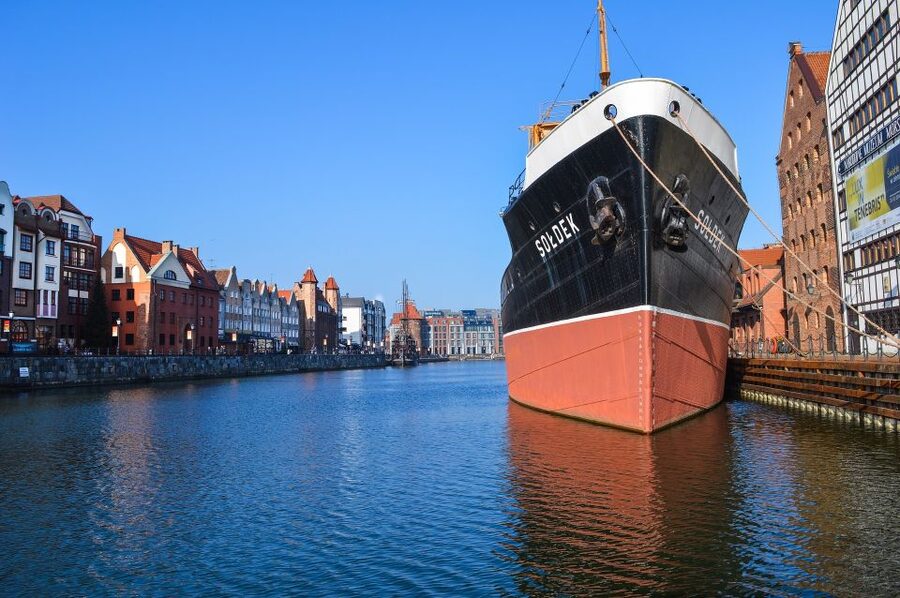
This is a good pause in the walk. After the dense architecture of Dluga Street and Long Market, the river gives you space to understand the city’s geography. Gdańsk was not simply a pretty medieval center. It was a working seaport tied to shipping, trade, and industry.
The three-hour option expands across the river islands. On Wyspa Spichrzow, you see redeveloped areas alongside old brick structures and warehouse ruins. Your guide explains the island’s role in trade, which helps connect the grand merchant buildings on Long Market with the storage and shipping work that supported them.
The route also reaches Olowianka, where the red-brick Baltic Symphony Hall provides another strong riverside view. This section is useful if you want more than postcard architecture. It shows the city’s effort to reuse old industrial areas while keeping visible links to its port past.
More Walking Tours in Gdansk
- Gdańsk City Sights & History Guided Walking Tour in English
★ 4.8 · 876 reviews - Main Town Gdańsk Walking Tour
★ 5.0 · 644 reviews - Discover Gdansk Walking Tour
★ 5.0 · 495 reviews - Gdańsk Old Town Private Walking Tour with Legends and Facts
★ 5.0 · 65 reviews
St Mary’s Basilica, a huge brick church with a calm interior
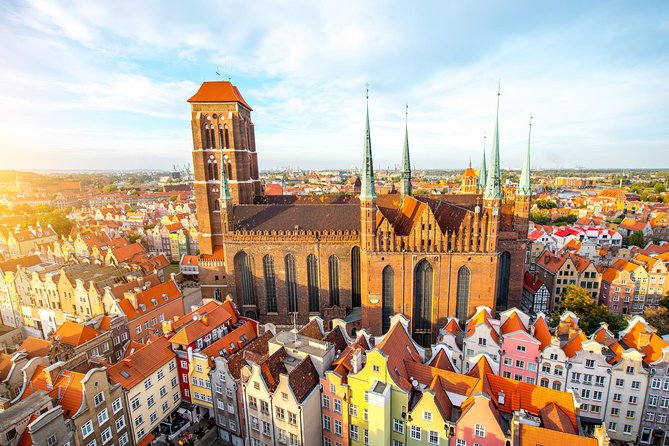
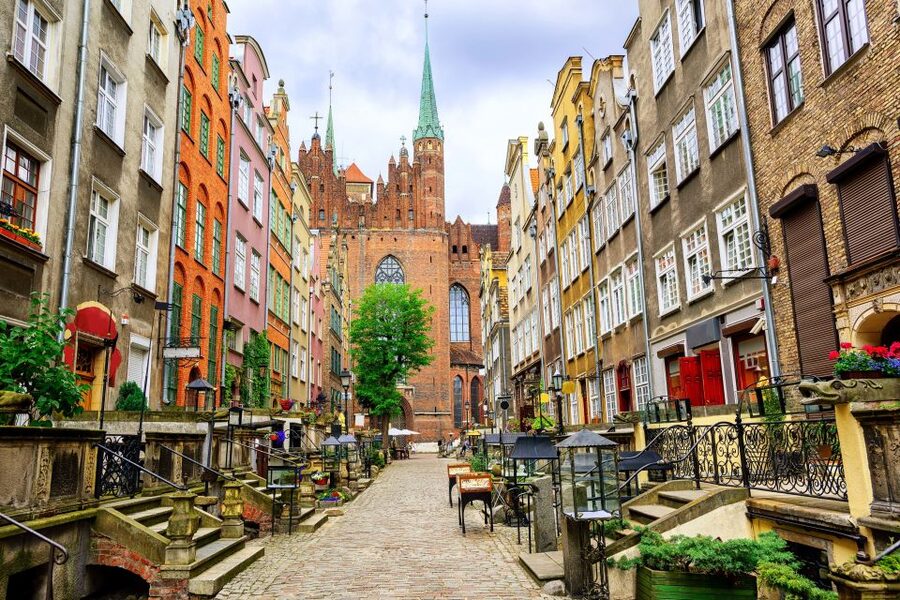
St Mary’s Basilica is one of the major stops on every option. It is among the largest brick churches in the world, and its scale becomes clear as soon as you step inside the broad hall church.
The free parts of the church are included in all routes. You see the ornate altar, the organ set, and the royal chapel. The interior is not a quick photo stop. Even a short visit gives you a change of mood, from busy streets to a large, quiet space shaped by centuries of religious life.
The church also helps explain why Gdańsk’s architecture feels so distinctive. Brick construction is a strong local feature, and St Mary’s shows how impressive that material can be when used on a monumental scale.
Allow a little extra attention here. A guide can point out details you might otherwise walk past, but the tour still has a schedule. If church interiors are a major reason for your visit, the four or six-hour option gives you more breathing room than the basic route.
The Great Armoury and the end of the classic walk
The two-hour tour ends at the Great Armoury, one of Gdańsk’s finest Renaissance buildings. Its decorative façade makes a fitting final stop for the central route.
By this point, you have crossed the city from its old defenses through its merchant center, religious heart, and riverfront. The route is compact enough for a first orientation, yet it includes the buildings most people want to see.
I would choose this option if you have a tight schedule, are arriving by train, or want a private introduction before exploring on your own. It also suits families who may not want a full day of walking. One earlier booking specifically noted that the guide engaged children, which suggests the stories and legends can work well for mixed-age groups.
The tradeoff is that you will not reach St Bridget’s Church, the shipyard memorial, or the European Solidarity Centre. Those are not minor extras if modern Polish history is high on your list.
St Bridget’s Church and the amber altar
The four-hour route adds St Bridget’s Church, a quieter and more unusual stop. Its importance is tied to the Solidarity movement. During martial law, the church served as a sanctuary for Solidarity leaders.
One of the large church doors shows scenes from August 1980 through the imposition of martial law in December 1981. This gives the political story a human and visual focus. Instead of hearing only dates and names, you see how the movement is remembered in a religious setting.
The church is also known for its amber altar. Amber is the raw material most closely linked with this part of Poland, and the altar gives you a direct connection between local craft, faith, and regional identity.
I think this four-hour option is the best middle choice for many people. You still see the major Main Town sights and the Motława islands, but you also gain a more personal account of the Solidarity period. It is long enough to add substance without committing to the full six-hour historical route.
The shipyard memorial and the European Solidarity Centre
The six-hour option extends from the Old Town toward the Main Town and former shipyard area. Here, the focus changes from medieval commerce to workers, protest, and the collapse of communist rule in Poland.
The Monument to the Fallen Shipyard Workers of 1970 commemorates workers killed during anti-communist riots. It is a sober stop, and it gives the later Solidarity story a necessary beginning. The movement did not appear out of nowhere. The memorial points to earlier conflict between workers and the communist government.
The European Solidarity Centre then provides the main museum experience. You receive a skip-the-line ticket, and the exhibits explain the Solidarity riots and the trade union movement that helped bring an end to communist government in Poland.
If you care about 20th-century Europe, this is the most valuable addition in the whole experience. The guide supplies the local setting and political background, while the museum gives you a fuller framework. You should choose six hours only if you are willing to spend much of the day on foot and want history to be the main subject.
The route does not treat Gdańsk as a frozen medieval town. That is one of its strengths. You see how the city moved from merchant wealth and port trade to industrial labor and political resistance.
How much walking and time should you choose?
The tour lasts from two to six hours, with starting times based on availability. All options are private, so your own pace matters more than it would on a fixed group excursion.
Choose two hours if you want:
- The central sights without a full-day commitment
- Restaurant and shopping advice early in your stay
- A compact introduction for a family or first visit
- A guide-led walk before exploring independently
Choose three hours if you want the river islands and port context. Wyspa Spichrzow and Olowianka add a different side of the city, with warehouse remains and the Baltic Symphony Hall.
Choose four hours if St Bridget’s Church and the amber altar appeal to you. This is the strongest balance between the old center and the Solidarity story.
Choose six hours if you want the full historical arc, including the shipyard memorial and European Solidarity Centre. The route is more demanding in time, but the added context makes the higher duration worthwhile for history-focused visitors.
The tour is wheelchair accessible, though the exact comfort of every historic surface and interior space is not detailed. If mobility is a concern, contact the provider before booking so the route can be discussed.
Price, pickup, and practical value
The stated price is $107 per person. That is high for a two-hour walk, but the calculation changes when you consider the private guide, official city license, language choice, and the extra sites on the longer routes.
The six-hour option includes a skip-the-line ticket to the European Solidarity Centre. The four-hour option includes regular admission to St Bridget’s Church, while St Mary’s free sections are included throughout. These inclusions make the longer tours easier to justify than the short one.
Pickup is available only from accommodation in Gdańsk Old Town within 1.5 kilometers of Upland Gate. If you provide your address, the guide can meet you there when it fits the limit. Otherwise, meet at the tourist information sign under Brama Wyżynna.
Check your email the day before, since important meeting information is sent then. You can cancel up to 24 hours ahead for a full refund, and the reserve-now, pay-later option keeps your plans flexible.
Who will get the most from this private walk?
I would recommend it most strongly to first-time visitors who want the city explained rather than simply photographed. The private format is also useful for couples, families, and small groups with different interests.
History fans should choose four or six hours. The four-hour tour connects St Bridget’s Church with the Solidarity story, while the six-hour tour adds the main museum and shipyard memorial.
Architecture fans may be satisfied with two or three hours. You will see the major façades, the Renaissance Great Armoury, St Mary’s Basilica, the riverfront, and the merchant center without spending the whole day in museums.
Food and shopping planners will appreciate the local advice during the short route. The guide can point you toward restaurants, pubs, and souvenir shops, which is especially helpful when amber products fill many of the central storefronts.
The tour is less suitable if you want complete independence or prefer to spend long periods inside museums. The guide can explain the city and adapt the walk, but the format remains a structured route with a set duration.
Should you book the Gdańsk Old Town tour?
Book it if you want a private introduction that connects medieval Gdańsk with the Solidarity movement. The guides, including Kaja, Karina, Krzysztof, Gabriella, and Weronika, have been praised for warmth, clear explanations, strong local knowledge, and personal attention.
For the best value, I would skip the two-hour version unless your schedule is tight. The four-hour route adds St Bridget’s Church and its amber altar, while the six-hour tour is the better choice for anyone who wants the European Solidarity Centre and the shipyard story.
At $107 per person, this is not a bargain walking tour. It earns its price through privacy, a licensed multilingual guide, flexible pacing, and meaningful historical context. Choose it when you want Gdańsk to make sense, not merely look attractive.
FAQ
Where does the Gdańsk walking tour begin?
Meet your guide in front of the tourist information sign under the High Gate, Brama Wyżynna, at Wały Jagiellońskie 2A, 80-887 Gdańsk. It is about eight minutes from the Main Railway Station.
Can the guide pick me up from my accommodation?
Pickup is available from accommodation in Gdańsk Old Town within 1.5 kilometers of the meeting point. If your address is outside that area, you will meet the guide at the specified meeting point and the itinerary may be adjusted.
How long does the tour last?
You can choose a two, three, four, or six-hour option, depending on availability and the route you select.
Which attractions are included in the two-hour route?
The route includes Upland Gate, Golden Gate, Dluga Street, Long Market, Gdańsk Town Hall, the Golden House, Neptune’s Fountain, Artus Court, Green Gate, St Mary’s Basilica, and the Great Armoury.
Is entry to St Mary’s Basilica included?
Entry to the free parts of St Mary’s Church is included with every tour option. The tour includes the grand hall church, ornate altar, organ set, and royal chapel.
What does the three-hour tour add?
The three-hour option adds sightseeing on the Motława River islands, including Wyspa Spichrzow and Olowianka. You see old brick structures, warehouse ruins, and the red-brick Baltic Symphony Hall.
What is included in the four-hour option?
The four-hour tour includes regular admission to St Bridget’s Church. You can see Solidarity scenes on one of its large doors and the church’s amber altar.
Does the six-hour tour include the European Solidarity Centre?
Yes. The six-hour option includes a skip-the-line ticket to the European Solidarity Centre, along with the Monument to the Fallen Shipyard Workers of 1970.
Which languages are available?
The live guide is available in English, German, Polish, Spanish, French, Italian, Russian, Norwegian, and Swedish.
Recently added in Gdansk
- Szymbark: Kashubian Switzerland 5-Hour Private Tour★ 3.7 · 3 reviews
- Segway Tour Gdańsk: Shipyard Tour – 1,5-Hour of Magic!★ 5.0 · 3 reviews
- Stutthof Concentration Camp and Museum of WWII: Private Tour★ 4.7 · 3 reviews
- Sopot Sunset Cruise with Welcome Drink★ 3.5 · 3 reviews
- Gdansk: Basic Bike Tour★ 4.3 · 3 reviews
- Gdansk: Bubble Football with Hotel Transfers★ 5.0 · 3 reviews
- Artus Court and Gdansk Old Town Private Tour with Tickets★ 4.7 · 3 reviews
- Gdansk: Oliwa Zoo with Tickets and Roundtrip Transportation★ 5.0 · 3 reviews
Old Town Tours, compared.

Bike Tour of Old Town, Jewish Quarter and the Ghetto
Read our review →

Sightseeing EcoCruise around the Old Town of Gdansk
Read our review →
Where else this one turns up