
Reviewed · MUSEUMS
Warsaw: Guided tour of the Cold War Museum
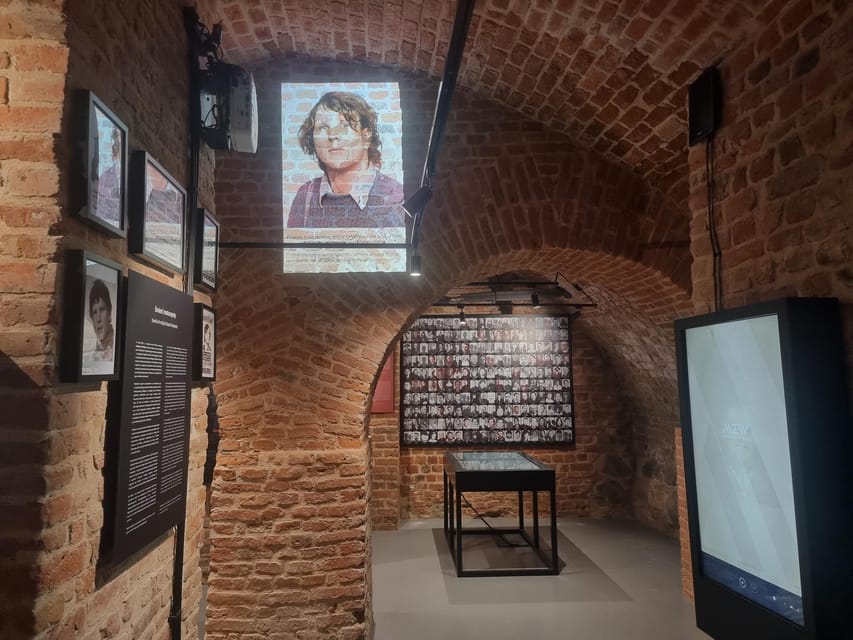
The most striking thing here is the setting: this museum occupies a former communist militia station where high-school student Grzegorz Przemyk was beaten to death during Poland’s martial law period. You are not just looking at old maps and uniforms. You are entering a place tied to the human cost of the system the museum examines.
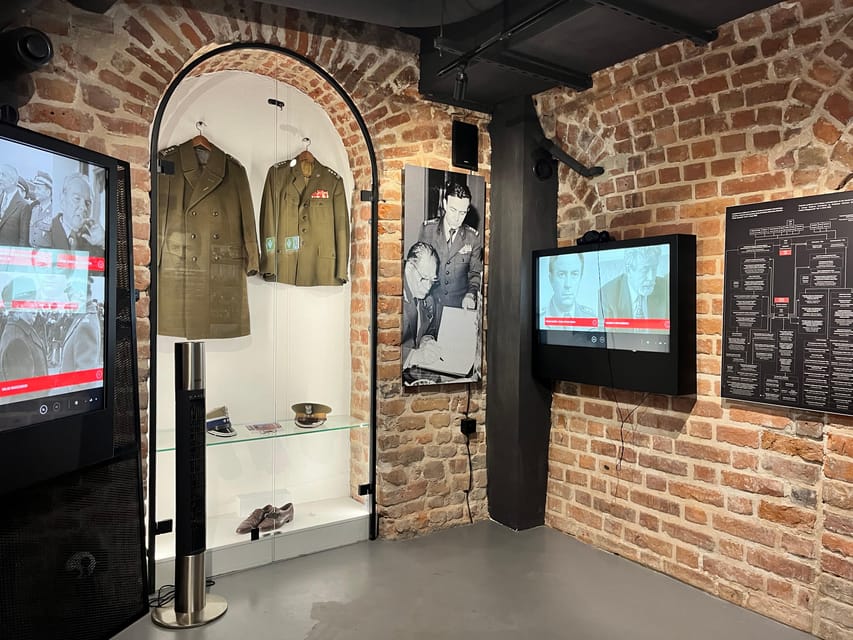
I like the hands-on exhibits, especially the three VR games, the Cold War quiz, and the hologram of a space station. I also like the personal focus on General Ryszard Kukliński, President Ronald Reagan, and Pope John Paul II. The main consideration is the museum’s clear Polish and anti-Soviet viewpoint, so you should approach it as a Polish interpretation of the Cold War rather than a detached survey of every side.
Key points to know before you go
- A former militia station: The museum’s building is linked to the death of Grzegorz Przemyk during martial law.
- More than 50 multimedia displays: Touch screens, VR goggles, multimedia tables, a cinema, an autonomous robot, and other interactive features keep the visit active.
- A Polish view of the Cold War: The story gives special attention to Poland’s opposition movement and General Ryszard Kukliński.
- Space-age exhibits: You can follow the story of space flights and see a hologram of a space station.
- A strong family option: Interactive games and quiz features suit children and teenagers, including the 12 to 16 age range.
- Good group value: The price is $78 for a group of up to 10, with entry and all exhibition attractions included.
A Cold War museum with a serious address
The Cold War Museum is only about 40 meters from Warsaw’s Old Town Square, making it easy to add to a day of central Warsaw sightseeing. You meet at the Registry Office of the Capital City Warsaw, then visit the museum and return to that same area.
The short walk matters. You do not need to plan a separate ride across the city or lose half a day getting there. At the same time, the museum is not a quick roadside attraction. Allow 90 minutes to two hours, depending on the starting time and how much attention you give the interactive displays.
The location gives the visit extra weight. During the Polish People’s Republic, the address housed a communist militia station. Grzegorz Przemyk, a high-school graduate and well-known victim of martial law, was beaten there and later died. The building therefore connects the international Cold War with a specific Polish story of state violence.
That context changes how you read the displays. A uniform is not simply a costume from the past. A map is not only a geography lesson. The objects point back to a period when political power reached into daily life, public speech, policing, and personal choices.
More Museum Tours in Warsaw
- Warsaw: POLIN Museum of the History of Polish Jews Ticket
★ 4.7 · 1,142 reviews - Warsaw: Polish Vodka Museum Tour with Tasting
★ 4.6 · 788 reviews - Warsaw: Ghetto, Jewish Cemetery & POLIN Museum Private Tour
★ 4.8 · 132 reviews
How the guided visit unfolds
Your guide leads you through the museum rather than leaving you to decode a wall of dates. The stated duration gives enough time for an overview of the Cold War’s beginnings, its course, the countries involved, and the conflict between the American-led and Soviet-led blocs.
The museum presents the period from a Polish perspective. That means Poland’s experience is central, not an afterthought. You will encounter the pressure of the Soviet bloc, the struggle for truth, and the part played by Polish figures in the wider confrontation between the two systems.
The guide language information lists Polish and English for live tours. The included-tour details also list Russian, German, and Spanish among the available tour languages, so check the chosen date and language before booking. English-language guiding is specifically offered, and one particularly praised guide, Filip, is also the museum’s director. Another guide, Cyprian, is noted for his strong involvement and extensive command of the subject.
A live guide is useful here because the story has political and moral arguments built into it. You can ask for clarification instead of treating every display as self-explanatory. That is especially helpful if you know the broad Cold War story but have less background on Poland after the Second World War.
Original objects that make the period concrete
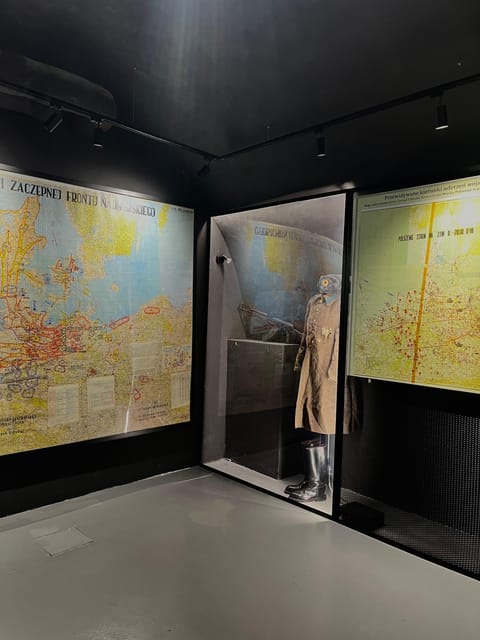
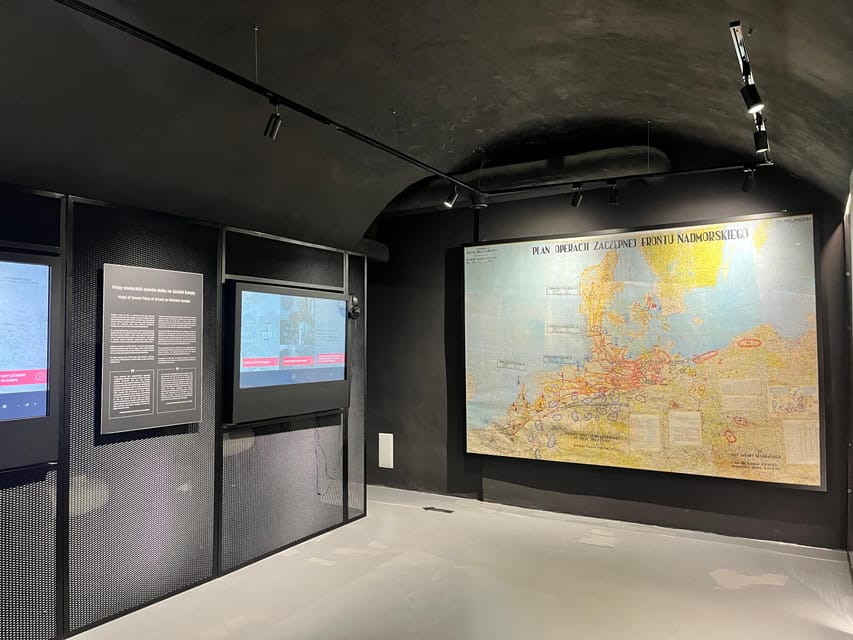
The exhibition includes original devices, maps, and uniforms used during the Cold War. These are the objects that give the museum its physical pull. Dates and speeches can feel distant, but a real uniform or communication device makes the era easier to picture.
You can expect the displays to cover the full Cold War period, not just its final years. The museum’s story includes the rivalry between the two blocs and the countries involved in the struggle. It also places strong attention on the last two decades of the conflict, when pressure on the Soviet system grew and Poland became a key part of the story.
The focus on General Ryszard Kukliński is unusual for a Warsaw museum experience. The museum presents him as a Polish and American hero who passed information to the United States while serving within Poland’s communist military structure. The tour treats his actions as central to the eventual weakening of the Iron Curtain.
That emphasis will appeal to visitors interested in intelligence, military planning, and the hidden side of the Cold War. It may be less satisfying if you want a fully even-handed account of every government’s conduct. The museum’s purpose is to explain Poland’s contribution to the victory of the free world over Soviet communism, so its position is direct.
Multimedia tables, a quiz, and a museum robot
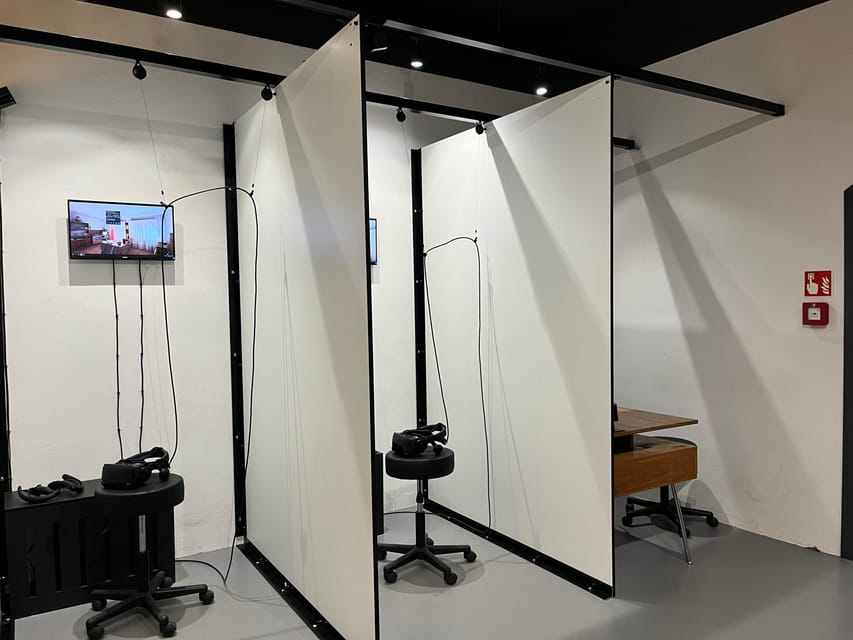
This is not a case of walking from glass case to glass case in silence. The exhibition uses more than 50 multimedia elements, including touch screens, multimedia tables, a cinema, VR goggles, and an autonomous robot that serves as a guide.
The multimedia knowledge quiz is a smart way to break up the historical material. You can test what you have picked up about the Cold War, its major players, and its turning points. For families, the quiz gives younger visitors a reason to stay engaged when the political story becomes dense.
The autonomous robot is another unusual feature. It is described as the first and only museum robot of its kind in Poland, serving as an independent guide. You should not expect the robot to replace the live guide on a booked tour, but its presence adds a modern layer to a museum about technology, surveillance, and competition between systems.
The mix works best for visitors who like to interact with exhibits. If you prefer a quiet museum with long written panels and little technology, the format may feel busy. The benefit is that you can approach the Cold War through images, objects, video, touch screens, and games rather than through text alone.
A different kind of day in Warsaw:
- Warsaw: Chopin Concert in the Old Town
★ 4.8 · 2,287 reviews - Warsaw: Traditional Galar Cruise on The Vistula River
★ 4.6 · 1,640 reviews - Warsaw: Old Town Highlights Walking Tour in English
★ 4.7 · 1,516 reviews - Warsaw Concert: Chopin – Painted by Candlelights with Wine
★ 4.8 · 1,442 reviews
Three VR games put you inside the story
The three VR games are among the clearest reasons to choose this museum over a standard historical display. They let you feel like a participant in the Cold War, at least in a controlled museum setting.
The supplied details do not specify the exact scenarios or game length, so you should not book expecting a particular mission or simulation. What is clear is that VR is part of the included admission, not an extra attraction requiring another payment.
This matters for families and mixed-interest groups. A parent may want the political and military story, while a teenager may need a more active way into the subject. The VR games provide that bridge. They also show how the museum is trying to connect a historic conflict with the interactive technology of today.
There is a practical tradeoff. The more time you spend with VR and other multimedia, the less time you may have for every original object and explanation. On a first visit, I would listen to the guide’s main story first, then give the interactive displays your remaining time.
Space flights and the hologram station
The space-flight section adds a different mood to the museum. The Cold War was not only about soldiers, borders, spies, and ideology. It was also a contest in science, engineering, prestige, and public imagination.
You can learn about the history of space flights and see a hologram of a space station. The display helps show how the rivalry between the blocs reached far beyond Europe. Space achievements were presented as proof that one political system could outbuild and outthink the other.
For children, this may be the easiest entry point. For adults, it helps explain why space exploration mattered so much during the Cold War. The hologram is a visual highlight, but its real value is the link between technology and propaganda.
The people behind the museum’s story
The exhibition gives special attention to three figures: Ronald Reagan, Pope John Paul II, and General Ryszard Kukliński. This human focus keeps the final decades of the Cold War from becoming a list of summits and weapons.
Reagan represents the American side of the confrontation and the pressure placed on the Soviet system. John Paul II represents the influence of a Polish pope on a country living under communist rule. Kukliński represents the secret military and intelligence struggle, as presented by the museum.
The emphasis on these three figures gives you a clear route through a complicated period. It also tells you what kind of museum this is. You will find a strong argument about leadership, courage, faith, resistance, and the eventual collapse of communism in Eastern Europe.
I would pair this visit with a broader Warsaw history experience if you have time. The museum gives Poland a central role, which is valuable, but its story works best when you also understand the wider European and American context.
Why families may enjoy this serious subject
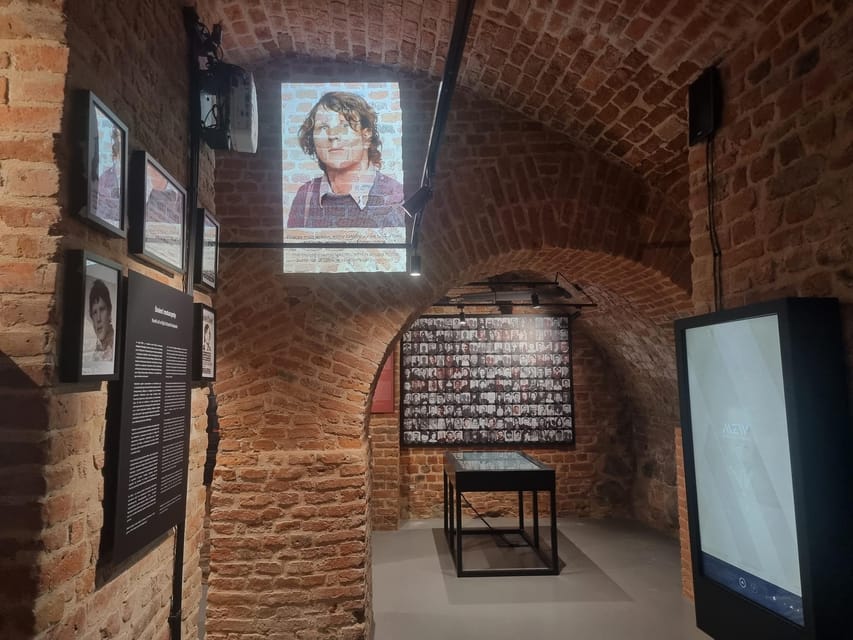
The museum is open to all ages and includes attractions designed for children. The quiz, VR games, touch screens, multimedia tables, cinema, robot, and hologram give younger visitors several ways to take part.
The visit also suits families with teenagers better than a purely text-based history museum might. A family visit involving children aged 12 and 16 can become a shared discussion about propaganda, military power, technology, and personal courage rather than a forced march through dates.
Still, the subject is not light. The building’s connection to Przemyk’s death and the museum’s treatment of communist repression may be difficult for some children. I would explain the basic setting before you enter and let the guide handle the fuller account.
Four-legged visitors are also welcome, which is unusual among Warsaw museums. Food, drinks, smoking, vaping, alcohol, and drugs are not allowed inside.
Price, group size, and practical value
The price is $78 per group of up to 10 people. That is strong value if you are traveling with a family or a small group, since the same group price covers admission, the guided tour, and all attractions in the exhibition.
For a full group of 10, the cost works out to less than $8 per person. For two people, it is closer to $39 each, so the value depends heavily on how many people share the booking. A solo visitor or couple may find the fixed group price less attractive than a larger party.
The included attractions matter. You are not paying an entry fee and then facing separate charges for the VR games, quiz, or hologram display. The museum also offers free cancellation up to 24 hours before the start time and a reserve-now, pay-later option, which helps if your Warsaw plans may shift.
The museum is not suitable for wheelchair users. That is an important limitation to check before booking. The stated meeting point is close to Old Town Square, and the activity returns you to the Registry Office area after the museum visit.
Who should book this museum
I would choose this experience if you want Poland at the center of your Cold War education. It is especially useful for first-time visitors who know the conflict mainly through American or Western European history and want to understand what it meant inside the Soviet bloc.
It also suits families, teenagers, military-history fans, people interested in intelligence work, and anyone drawn to the political history of modern Poland. The technology gives the visit energy, while the former militia station gives it a serious human setting.
You may want to skip it if your interest is limited to architecture, art, or a short Old Town sightseeing stop. The museum asks you to think about ideology, repression, resistance, and competing versions of the past. Its strong viewpoint is a feature for some people and a limitation for others.
My verdict on the Cold War Museum
Book this tour if you want an active, Poland-centered account of the Cold War and you can share the $78 group price with several people. The VR games, space-station hologram, original objects, and museum robot make the subject approachable, while the building’s connection to Grzegorz Przemyk gives the visit real gravity.
The best reason to go is the guide-led interpretation. Filip, the museum director, and Cyprian are both associated with especially engaged guiding, and a live guide can explain the museum’s strong views in context. Give yourself the full two hours if the multimedia displays matter to you.
I would not treat this as the final word on the Cold War. Treat it as a focused Polish account, one that gives General Kukliński, Reagan, John Paul II, and Polish resistance a central place. For many people, that is exactly the perspective missing from their understanding of the twentieth century.
FAQ
Where does the Cold War Museum tour meet?
The meeting point is at the Registry Office of the Capital City Warsaw, about 40 meters from Warsaw’s Old Town Square.
How long does the museum visit take?
The stated duration is between 90 minutes and two hours. Starting times vary, so check availability when choosing your date.
What is included in the price?
Admission to the exhibitions, access to all attractions within the exhibition, and a guided tour are included.
How much does the experience cost?
The price is $78 per group of up to 10 people.
Is the tour available in English?
Yes. Live guiding is listed in Polish and English. The included tour information also lists Russian, German, and Spanish, so check the selected booking option for the language available on your date.
Can children visit the Cold War Museum?
Yes. The museum is open to all ages and includes attractions for children, such as interactive games, a quiz, VR experiences, and multimedia displays.
What technology is used inside the museum?
The exhibition includes more than 50 multimedia elements, including touch screens, multimedia tables, VR goggles, a cinema, an autonomous robot, and a hologram of a space station.
Are the VR games included?
Yes. Access to all attractions within the exhibition is included, including the three VR games described for the visit.
Is the museum suitable for wheelchair users?
No. The experience is listed as not suitable for wheelchair users.
Can I cancel the booking?
You can cancel up to 24 hours in advance for a full refund. A reserve-now, pay-later option is also available.
Recently added in Warsaw
- Warsaw Wolf’s Lair with St. Lipka and Mamerki Private Guided★ 4.2 · 3 reviews
- Taste of Poland, food tour and guided walk with 12 tasting★ 5.0 · 3 reviews
- Discover Warsaw’s most Photogenic Spots with a Local★ 5.0 · 3 reviews
- Lodz Small Group Tour from Warsaw with Lunch★ 4.0 · 3 reviews
- Jewish heritage in Warsaw★ 4.5 · 3 reviews
- Warsaw Outdoor Paintball with Transfers (all year round)★ 5.0 · 3 reviews
- Electric Scooter Tour: Full Tour – 3-Hours of Magic!★ 5.0 · 3 reviews
- Skip-the-Line Polin Museum Warsaw Jewish History Tour★ 5.0 · 3 reviews
Museums, compared.

Auschwitz-Birkenau Museum and Memorial Guided Tour from Krakow
Read our review →POLIN Museum of the History of Polish Jews Ticket
Read our review →


Krakow Schindler’s Factory Museum Guided Tour in English
Read our review →
Auschwitz Birkenau Museum Guided Tour with Pickup
Read our review →
Where else this one turns up