
Reviewed · HISTORICAL TOURS
Warsaw: Communist History Self-Driving Tour
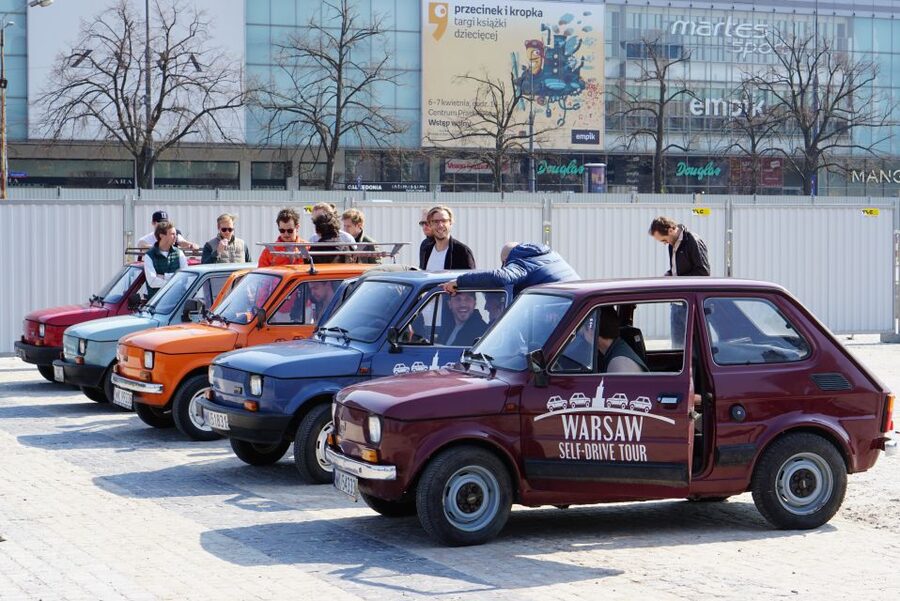
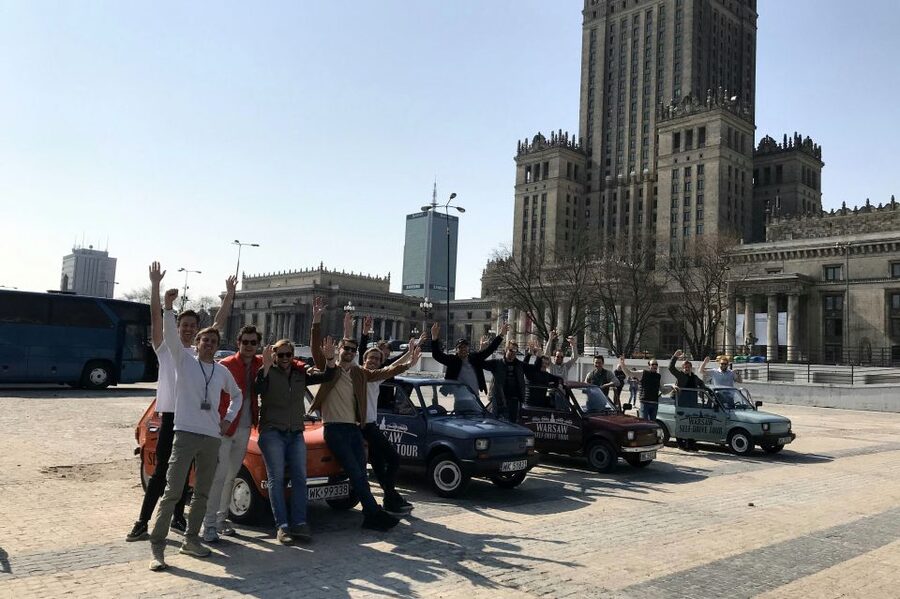
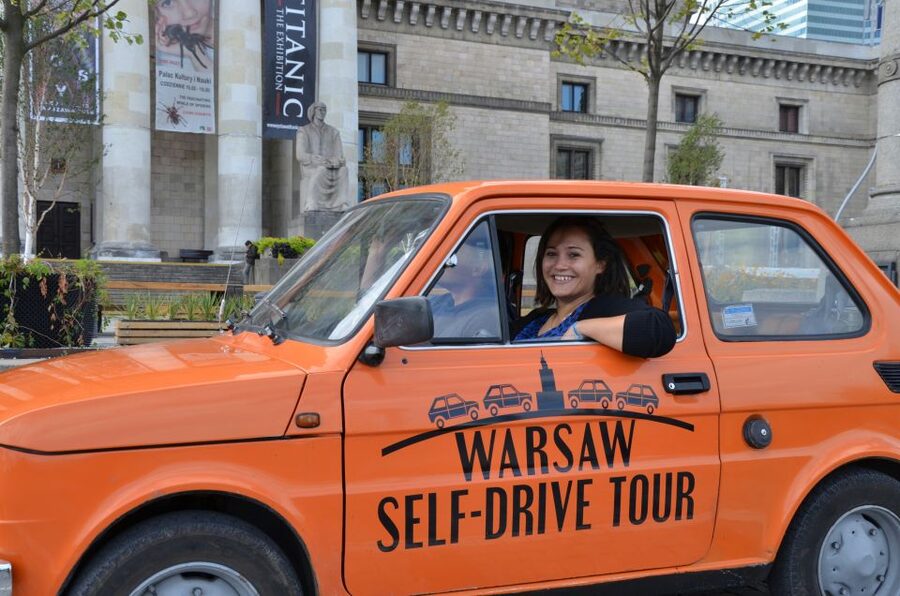
A little red or pastel Fiat 126p Toddler is an unlikely history classroom, but that is exactly what makes this Warsaw tour work. You take the wheel, follow your guide through the city, and connect communist-era buildings with stories about everyday Polish life.
I like two things right away: you drive the car yourself, and the tour treats history as something lived, not just something printed on a plaque. Guides including Jacob, Jonas, Agata, and Alek bring personal, cultural detail to the route. The main consideration is that this is only partly a driving tour. About half the 150 minutes is spent walking, and you need a valid license, comfortable shoes, and a 500 PLN security deposit.
Key Points
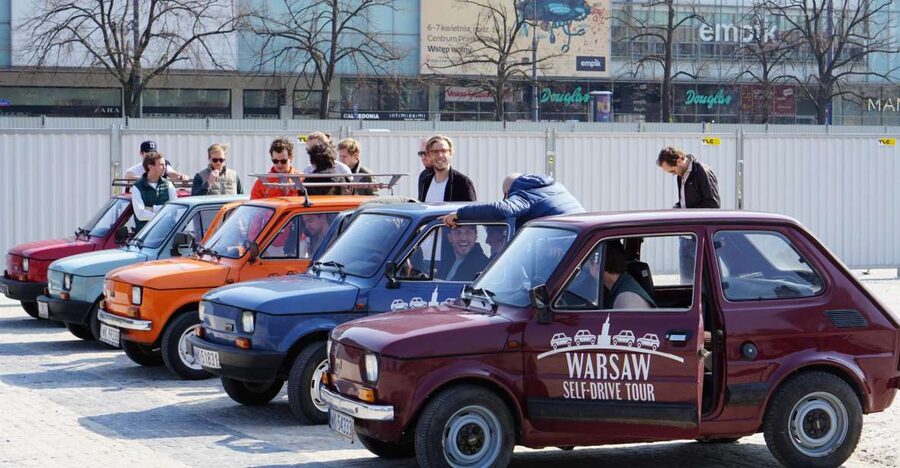
- Drive a Fiat 126p Toddler: You get a 20-minute driving lesson before taking this famous small car onto Warsaw streets.
- See Stalin-era Warsaw: The route includes the Palace of Culture and Science, Constitution Square, Party headquarters, and Muranów housing blocks.
- Learn through local stories: Guides explain how communist life worked, how Warsaw has changed, and what Polish identity means today.
- Expect a half-driving, half-walking outing: The tour can be adjusted to suit your needs, but it is not a drive-by sightseeing loop.
- Finish with Polish vodka: A vodka shot is included for adults aged 18 and over, with chocolate sometimes included as part of the farewell.
- Bring the right documents: Your driver’s license is checked, and large bags and pets are not allowed.
Why a Tiny Fiat Makes a Good History Guide
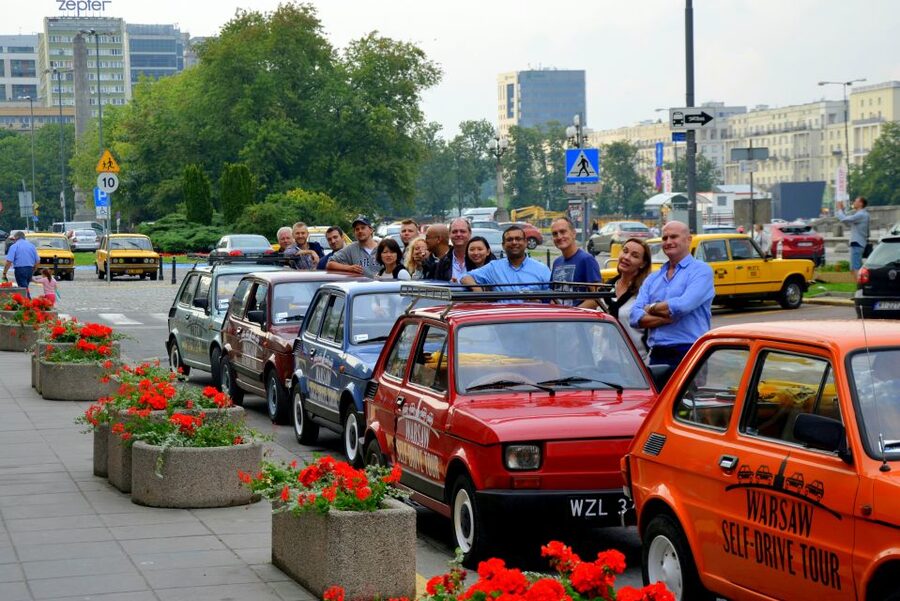
The Fiat 126p, affectionately known in Poland as the Toddler, was a familiar sight during the communist period. Its small size and modest design say plenty about the era: private cars were practical possessions, not status symbols, and getting one could be a major event.
You do not simply sit in the back and listen. After a 20-minute lesson, you drive the car yourself. That turns the outing into a shared activity rather than a standard city tour. The car is part of the story, not just transport between stops.
I would not choose this experience if you want a quiet, formal history lecture. The Fiat is old, the streets are active, and the fun comes partly from the unusual vehicle. The driving also means you need to stay alert. Still, the guide remains responsible for the route and uses the drive to set up each historical stop.
The tour is priced at $69 per person. That is more than a basic walking tour, but the price includes the car, driving instruction, a professional local guide, photographs sent by email, and a vodka shot at the end. If you value an activity that combines transport, storytelling, and hands-on participation, the cost is reasonable.
More History Tours in Warsaw
- Warsaw: POLIN Museum of the History of Polish Jews Ticket
★ 4.7 · 1,142 reviews - Warsaw: Chopin Concert at Historical Venue in Old Town
★ 4.7 · 445 reviews - Small-Group Historical Guided Tour of Warsaw with pick up/drop off. Public Tour.
★ 4.5 · 343 reviews
Starting Beside the Palace of Culture and Science
The meeting point is easy to identify but deserves care. Your guide meets you at the back of the Palace of Culture and Science, near the Tourist Information office on the Emilii Plater street side, at Parade Square.
This enormous building is the natural starting point. It was built during the Stalin era and is often called Stalin’s Gift. The nickname carries mixed feelings. The building is one of Warsaw’s best-known symbols, but it also recalls a period when Poland was under Soviet influence and political freedom was sharply limited.
Your guide explains why the palace was built, how its construction affected Warsaw, and how its meaning has shifted over time. You may know the building simply as a tall central landmark, but its story is tied to power, urban planning, and the way communist governments used architecture to project authority.
Do not expect the tour price to cover every possible interior admission. Entrance fees are not included, and the key emphasis is on the building’s story and the surrounding city. The guide will help you understand what you are seeing from outside and as you move through the district.
Learning the Fiat Before Entering the Streets
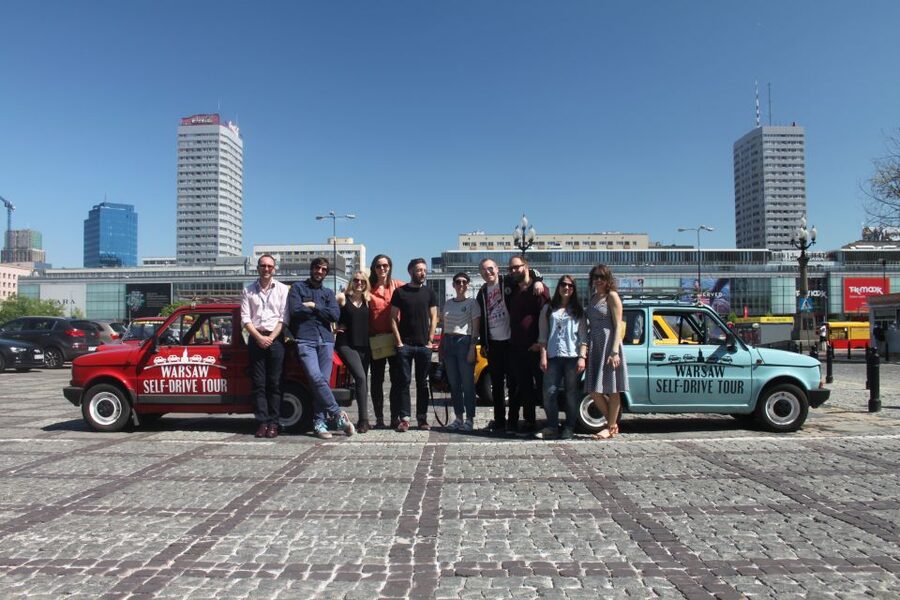
Before setting off, you receive a 20-minute driving lesson. This is important because the Fiat 126p is part of the experience’s character. It is a small, older car rather than a modern rental vehicle, so the lesson gives you time to get comfortable before joining Warsaw traffic.
You need to bring your driver’s license, and it will be checked before the tour. A 500 PLN security deposit is also required and refunded after the experience, assuming the vehicle is returned as agreed. Keep this in mind when working out your spending money for the day.
The booking requires at least two people. That makes sense for the format, since the car and guide work best as a small shared outing. The supplied information does not specify a maximum group size, so you should check the available departure when booking if group size matters to you.
Large bags and luggage are not allowed. Leave your suitcase at your accommodation and bring only what you need. Comfortable shoes are also important because you will get out of the car and walk around several areas.
Constitution Square and Stalin-Era Design
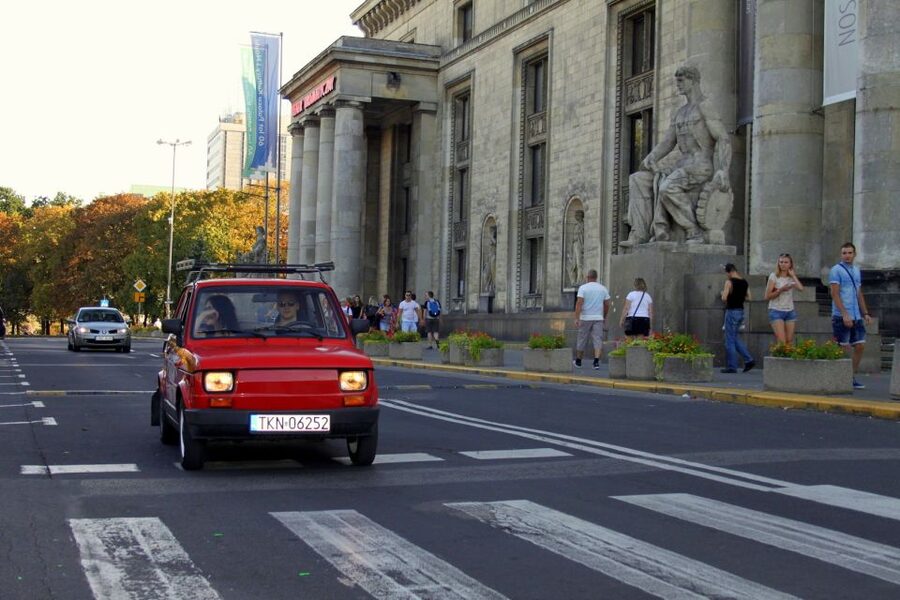
One of the most striking stops is Constitution Square, a representative communist housing district with wide planning and imposing Stalin-era architecture. This is where the tour moves beyond a single famous building and shows how the system shaped whole parts of Warsaw.
The square was designed to communicate order, scale, and state power. The surrounding housing was also practical: large numbers of people needed homes after the destruction of the Second World War, and communist planners built districts that could house many residents close to workplaces and public services.
Your guide adds the human side. You hear about ordinary routines, shortages, social habits, and the gap between official slogans and private life. These details help you read the buildings differently. Instead of seeing only a grand facade, you begin to think about the people who lived in the flats behind it.
The drawback is that communist architecture can feel repetitive if you are not interested in design or political history. This tour helps by keeping the commentary lively and personal. Guides have been praised for adapting the discussion to the subjects that interest you, so say early if you want more architecture, daily life, politics, or modern Poland.
A different kind of day in Warsaw:
- Warsaw: Chopin Concert in the Old Town
★ 4.8 · 2,287 reviews - Warsaw: Traditional Galar Cruise on The Vistula River
★ 4.6 · 1,640 reviews - Warsaw: Old Town Highlights Walking Tour in English
★ 4.7 · 1,516 reviews - Warsaw Concert: Chopin – Painted by Candlelights with Wine
★ 4.8 · 1,442 reviews
The Communist Party Headquarters and Its Second Life
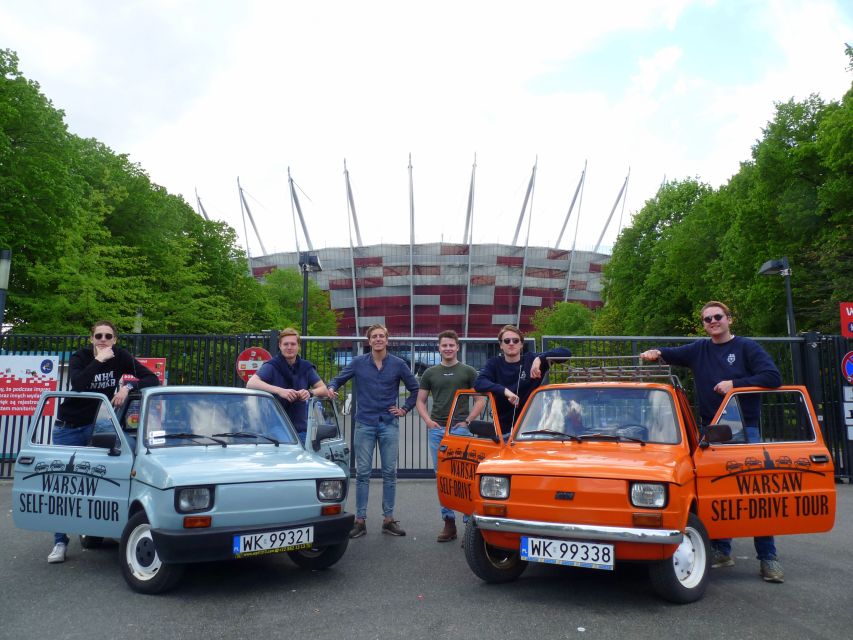
The former House of the Polish Communist Party is another key stop. Its importance comes from what happened inside, not just from its appearance. The building was connected with the political system that governed Poland during the communist period, making it a useful place to discuss decision-making, ideology, and public control.
The guide also explains what the building is used for today. That change matters. Warsaw has not simply erased its communist past. Many buildings have been given new purposes, and their current lives sit beside memories of the previous system.
This is one of the strongest reasons to take the tour with a local guide. A photograph of the building tells you very little about its role. The explanation turns it into a point of reference for understanding how the city moved from communist government to modern Poland.
The tour does not present the era as a cartoon. You hear about how life changed after communism and what those changes mean for Polish people today. That balance is useful if you know little about Poland or if your understanding comes mainly from broad Cold War history.
Muranów Housing Blocks and the Texture of Daily Life
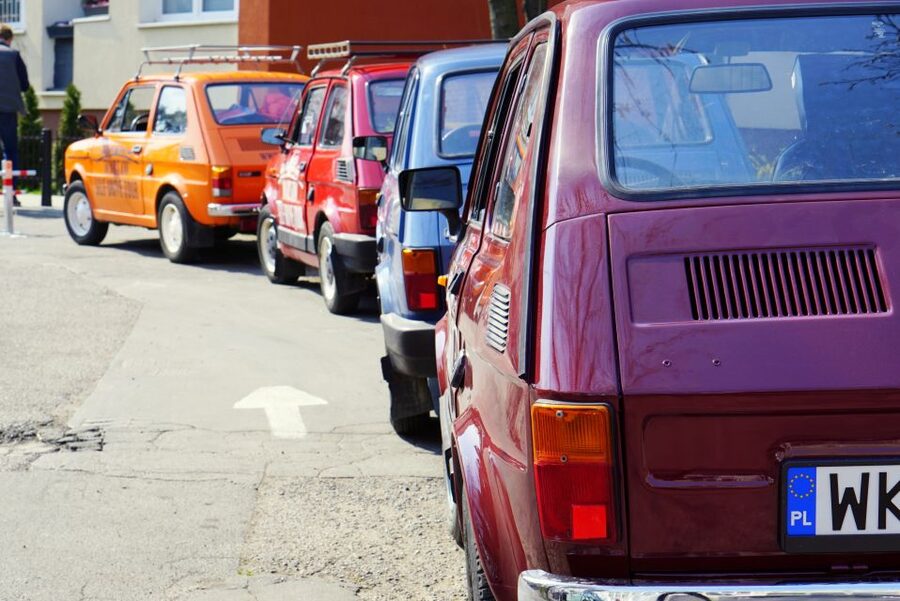
The route continues to communist-era housing blocks in Muranów. This district adds another layer to the story because it focuses on residential life rather than grand political buildings.
Housing blocks can look plain from a passing car, but the guide helps you notice their scale, layout, and place in the city. You learn how families lived, how neighborhoods functioned, and how the physical form of Warsaw reflected government priorities.
Muranów is also a reminder that history is not confined to monuments. People still live in these buildings. The district is part of present-day Warsaw, and that makes the visit more grounded than a route made up only of official landmarks.
The tour’s half-walking format works well here. You have time to leave the car, look around, and ask questions. If walking is difficult, the experience can be adapted to suit your needs, but you should tell the provider in advance so the route can be adjusted properly.
Stories About Poland Before and After Communism
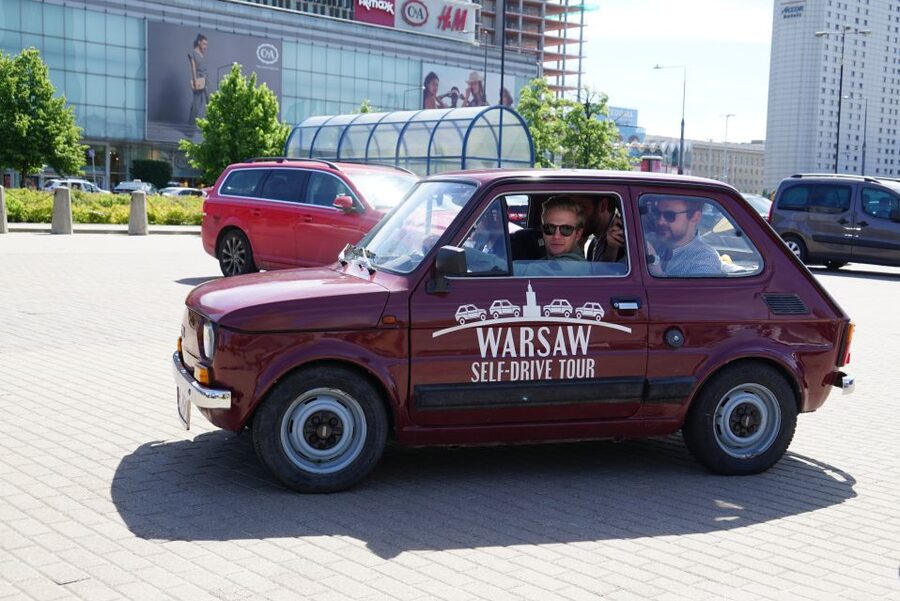
The best part of the experience is the way the guide connects buildings to life. You hear entertaining facts about Warsaw during communism, then learn how the city and country changed afterward.
The guides named in the feedback include Jacob, Jonas, Agata, and Alek. The comments about them point to a warm, flexible approach. One guide adjusted the discussion to match the group’s interests, while another was praised for combining history with cultural commentary. That is useful because the tour can work for both first-time visitors and people who already know the basic political timeline.
You should expect conversation, not a memorized speech delivered without pause. Ask about the car, food, family life, politics, or the meaning of the buildings you pass. The format gives the guide room to respond to your interests.
The cultural element is especially valuable. Poland’s communist past is not only a story about Soviet pressure or government offices. It also shaped work, shopping, travel, housing, family habits, and ideas about freedom. Hearing how life changed since then gives the tour a more personal center.
A Small Taste of Polish Hospitality at the End
The experience ends with a traditional Polish vodka shot for participants aged 18 and over. This is a brief farewell rather than a tasting session, so you should not book the tour expecting a full introduction to Polish spirits.
Chocolate may also be included at the end, depending on the guide and arrangement. It is a small touch, but it fits the relaxed tone of the outing. After two and a half hours of driving, walking, and history, the final drink gives everyone a chance to talk informally.
If you do not drink alcohol, ask the provider about the finishing arrangement before booking. The supplied details confirm the vodka shot for adults, but they do not specify an alternative drink.
How the Tour Fits Into Your Warsaw Plans
At 150 minutes, this is easy to fit into a full day of sightseeing. You begin and end near the Palace of Culture and Science, placing you in central Warsaw for whatever comes next.
The timing has another advantage. You get enough time for several stops without giving up an entire day. The 20-minute lesson uses part of the schedule, but it is necessary and helps make the driving portion more relaxed.
Plan for changing conditions. You will be outside for parts of the tour, and comfortable shoes are essential. Large bags are prohibited, so this is best scheduled after dropping luggage at your hotel rather than immediately after arriving in Warsaw.
The tour is offered in English or Polish. If you want the most from the historical discussion, select the language in which you can comfortably ask questions. The local guide is central to the experience, especially at the Party headquarters and housing districts where the buildings need explanation.
Free cancellation is available up to 24 hours before the start, and you can reserve and pay later. Those options help if your Warsaw schedule is still changing, but you should still confirm the available start time before making other plans.
Who Will Enjoy This Experience Most
I would recommend this tour to you if you like history with a physical hook. Driving a period Fiat gives the subject a playful edge, while the route covers serious questions about power, housing, identity, and change.
It is a particularly good choice for:
- Couples or friends who want to share the driving
- First-time visitors who want context for central Warsaw
- History fans interested in everyday life under communism
- People who prefer a small, active outing to a standard bus tour
- Adults who enjoy unusual vehicles and local conversation
You may want another type of tour if you dislike driving, want a strictly chronological history lesson, or prefer to see Warsaw’s major sights without leaving the vehicle. The old Fiat is part of the charm, but it also means the experience is less polished than a modern private car tour.
Families should check the arrangements before booking, especially if children need special seating. The available information confirms the two-person minimum and license requirement, but does not provide detailed age or seating rules.
Should You Book the Warsaw Fiat 126p Tour?
Book it if you want to understand communist Warsaw through buildings, streets, and stories rather than through a museum display alone. The hands-on Fiat drive gives the outing a clear identity, while Constitution Square, Party headquarters, Muranów, and the Palace of Culture provide solid historical content.
At $69 per person, the tour offers good value for a 2.5-hour experience that includes instruction, a guide, photos, and the final vodka shot. Just arrive with your license, leave large bags behind, allow for walking, and remember the 500 PLN refundable deposit.
If the idea of driving an iconic Polish car sounds more fun than sitting in a tour vehicle, this is an easy choice. If you want a quiet and highly formal account of Polish history, choose a museum or walking lecture instead. For most visitors who want history, local stories, and a memorable way to move through Warsaw, this tour earns its place in your plans.
FAQ
How long is the Warsaw Communist History Self-Driving Tour?
The tour lasts 150 minutes, or two and a half hours. It includes a 20-minute driving lesson and a mix of driving and walking.
Where does the tour meet?
Your guide meets you at the back of the Palace of Culture and Science, by the Tourist Information office on the Emilii Plater street side, at Parade Square.
Do I need a driver’s license?
Yes. You must bring a valid driver’s license, and it is checked before the tour.
Is a security deposit required?
Yes. A 500 PLN security deposit is required and refunded after the tour.
Is the tour available in English?
Yes. The live guide can lead the tour in English or Polish.
Is the vodka shot included?
Yes. A traditional Polish vodka shot is included at the end for participants aged 18 and over.
Recently added in Warsaw
- Warsaw Wolf’s Lair with St. Lipka and Mamerki Private Guided★ 4.2 · 3 reviews
- Taste of Poland, food tour and guided walk with 12 tasting★ 5.0 · 3 reviews
- Discover Warsaw’s most Photogenic Spots with a Local★ 5.0 · 3 reviews
- Lodz Small Group Tour from Warsaw with Lunch★ 4.0 · 3 reviews
- Jewish heritage in Warsaw★ 4.5 · 3 reviews
- Warsaw Outdoor Paintball with Transfers (all year round)★ 5.0 · 3 reviews
- Electric Scooter Tour: Full Tour – 3-Hours of Magic!★ 5.0 · 3 reviews
- Skip-the-Line Polin Museum Warsaw Jewish History Tour★ 5.0 · 3 reviews
Historical Tours, compared.

POLIN Museum of the History of Polish Jews Ticket
Read our review →

Gdańsk City Sights & History Guided Walking Tour in English
Read our review →
Small-Group Historical Guided Tour of Warsaw with pick up/drop off. Public Tour.
Read our review →Where else this one turns up