
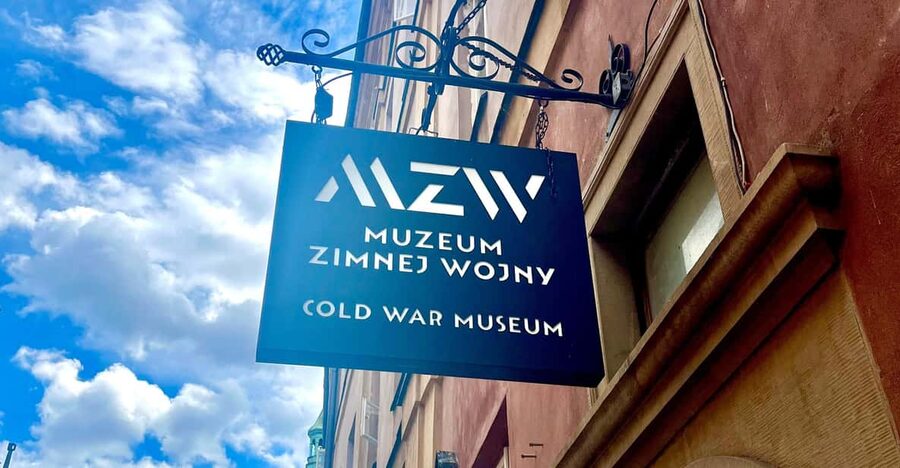
Reviewed · MUSEUMS
Warsaw: Cold War Museum Entry Ticket
Warsaw’s Cold War Museum turns a tense chapter of modern history into a hands-on visit. You’ll see original devices, maps, uniforms, and displays about the rivalry between the Soviet and Western blocs, then test yourself with a multimedia quiz and three virtual reality games. The Polish viewpoint gives the exhibition a clear point of view rather than a bland timeline.
I like the mix of serious history and playful technology, especially the VR missions and hologram of a space station. I also like the setting, a former communist militia station linked to the death of high school graduate Grzegorz Przemyk during martial law. The main drawback is that the exhibition presents a strongly pro-Western interpretation, and the museum is not suitable for wheelchair users.
Key points to know before you go
- A Polish perspective on the Cold War: The museum presents Poland’s role in the defeat of Soviet communism, with special attention to Ronald Reagan, Pope John Paul II, and General Ryszard Kukliński.
- More than 50 multimedia features: Touch screens, interactive tables, cinema displays, VR goggles, and a hologram make this more active than a traditional museum visit.
- Three Cold War VR games: You can take the role of a secret agent and try to disrupt Soviet invasion plans.
- A space history section: Learn about space flights and see a hologram representing a space station.
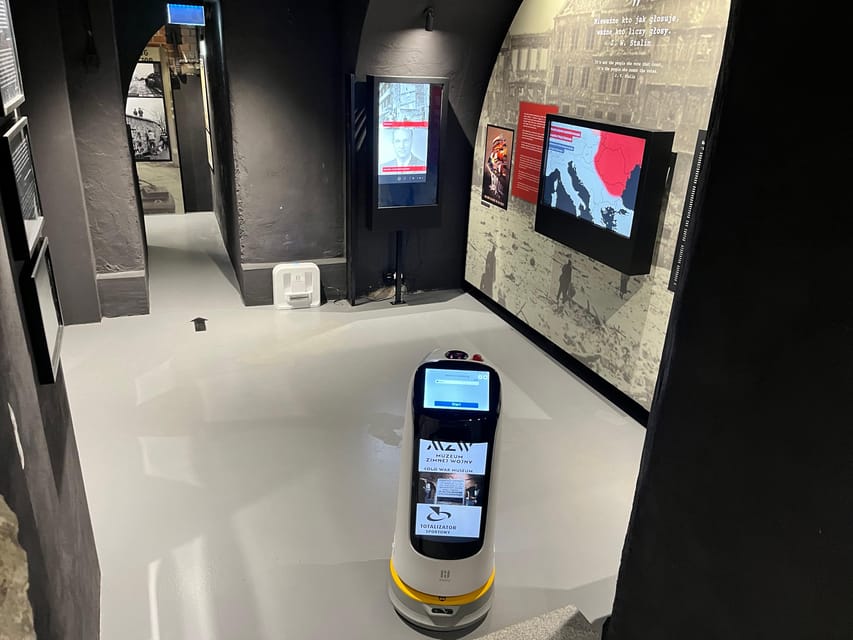
- An autonomous robot guide: The robot can guide you through the museum, a first-of-its-kind feature in Poland.
- Easy Old Town location: The entrance is about 40 meters from Warsaw’s Old Market Square, though transportation is not included.
Entering a former militia station near Old Market Square
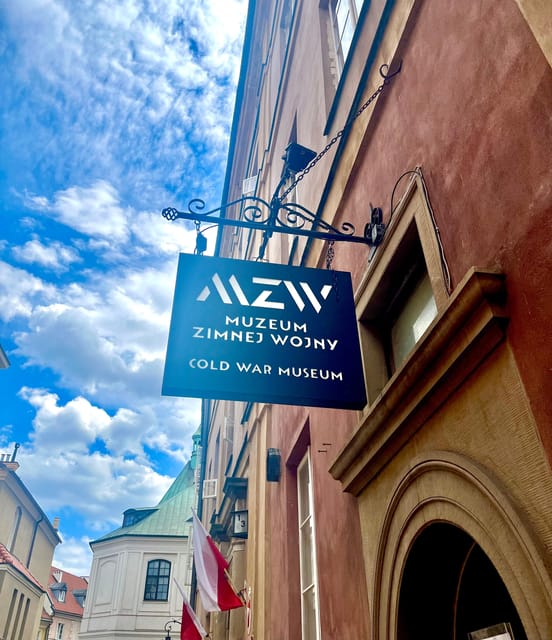
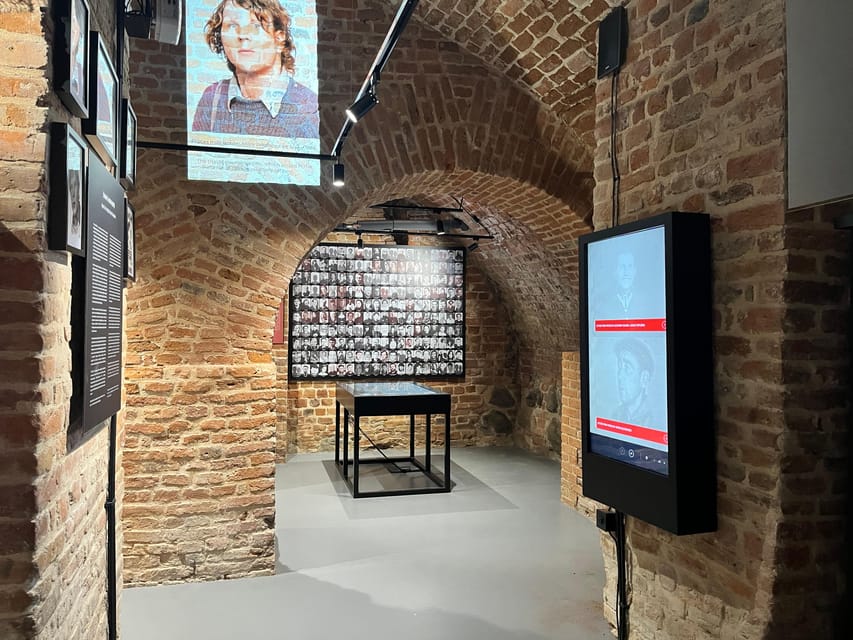
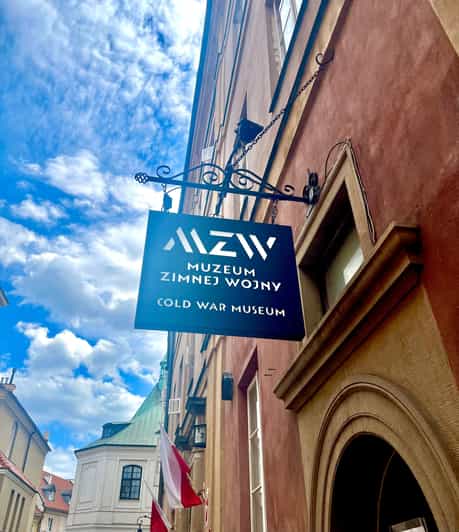
The museum is in a location that adds weight before you even reach the first display. During the Polish People’s Republic, the building housed a communist militia station. It was also the place where Grzegorz Przemyk, a high school graduate and later a well-known victim of martial law, was beaten to death.
That history changes the mood of the visit. You are not simply looking at old uniforms and spy equipment in a neutral gallery. You are standing in a building connected to the abuses of the system the exhibition sets out to explain and condemn.
The museum sits about 40 meters from Old Market Square, so it is easy to add to a walk through Warsaw’s historic center. You do not need transportation as part of the booking, and you show your ticket at the entrance. The convenient location makes this a practical stop between the square, the old town streets, and other central sights.
The museum welcomes visitors of all ages. You should keep in mind that wheelchair users cannot take part, and the building’s historic setting may not offer the same ease of movement as a modern museum.
More Museum Tours in Warsaw
- Warsaw: POLIN Museum of the History of Polish Jews Ticket
★ 4.7 · 1,142 reviews - Warsaw: Polish Vodka Museum Tour with Tasting
★ 4.6 · 788 reviews - Warsaw: Ghetto, Jewish Cemetery & POLIN Museum Private Tour
★ 4.8 · 132 reviews
How the museum tells the Cold War story
The exhibition covers the full Cold War period and the countries involved in the conflict between the two blocs. Its central message is that Poland made an important contribution to the victory of the capitalist world over Soviet communism.
That is a firm interpretation. You will not get a detached, evenly weighted account of every political decision on both sides. Instead, the displays frame the period from a Polish and strongly anti-communist point of view. For visitors who want to understand how many Poles remember the era, this is useful. It puts Polish resistance, religious leadership, political pressure, and intelligence work near the center of the story.
The exhibition gives particular attention to three figures from the final two decades of the Cold War:
- President Ronald Reagan, presented as a major Western leader in the struggle against Soviet communism.
- Pope John Paul II, whose Polish identity and moral influence are treated as central to the story.
- General Ryszard Kukliński, a Polish military officer whose actions are linked to the Western effort against the Soviet bloc.
These people are not side notes. Their messages, commitments, and deeds shape much of the museum’s narrative. If you already know the broad Cold War timeline, the museum’s value comes from seeing those events through this Polish lens.
If you prefer a museum that gives equal space to every national viewpoint, you may find the interpretation selective. I would treat that as an important part of the visit rather than a surprise. Go ready to learn how the museum makes its case, not expecting a purely neutral textbook.
Original objects, maps, and uniforms
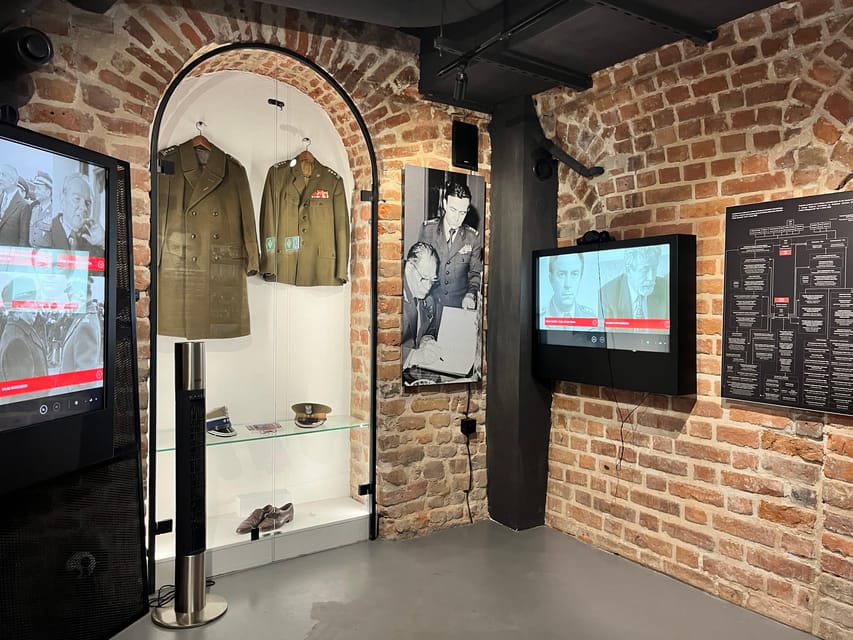
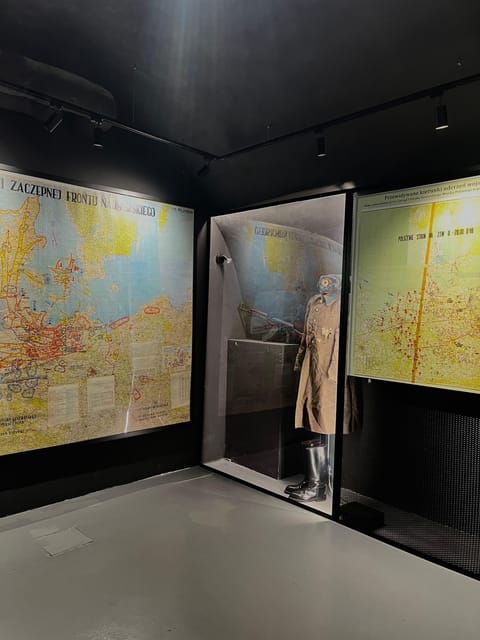
The physical displays give the technology a firm base. You can see original devices, maps, uniforms, and other objects connected with the Cold War period. These items help explain the daily machinery of the conflict, from military planning to communication and political control.
The objects matter because Cold War history can otherwise feel abstract. Terms such as Soviet bloc, capitalist world, martial law, intelligence, and nuclear rivalry describe enormous forces, but an old uniform or a marked map brings those forces down to human scale.
The museum also presents influential people and important events through descriptions and visual displays. You should allow time to read rather than rushing from screen to screen. The exhibition is built for interaction, but its strongest moments depend on understanding the text around the objects.
The combination is particularly helpful if you are visiting with family members of different ages. Younger visitors may head first for the goggles and screens, while adults can spend longer with the political and military material. The museum is open to Polish and foreign visitors, and support is available in English and Polish.
Touch screens and the multimedia knowledge quiz
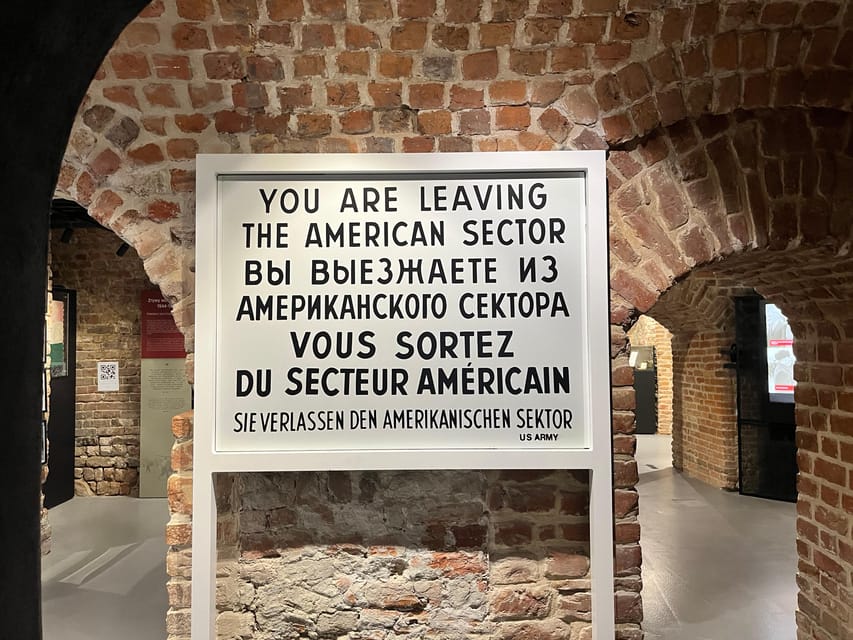
The museum uses more than 50 multimedia features across the exhibition. These include touch screens, multimedia tables, video material, and cinema presentations.
I like this approach when it helps you connect separate events. A map can show the division between the two blocs, while a screen can explain the people and decisions behind it. The multimedia tables and touch screens also let you move at your own pace instead of waiting for a guide to finish a fixed speech.
One especially useful feature is the Cold War knowledge quiz. It gives you a chance to check what you have picked up as you move through the museum. You do not need to arrive as a Cold War expert. The quiz works best as a light test of memory after you have looked through the displays.
Do not expect every part of the visit to feel like a game. The subject includes repression, military threat, political violence, and the human cost of authoritarian rule. The interactive elements make the material easier to approach, but they do not remove its serious side.
The cinema adds another way to absorb the story. Since the information supplied does not specify the film’s length or schedule, check the current arrangements when you arrive if a particular screening matters to you.
A different kind of day in Warsaw:
- Warsaw: Chopin Concert in the Old Town
★ 4.8 · 2,287 reviews - Warsaw: Traditional Galar Cruise on The Vistula River
★ 4.6 · 1,640 reviews - Warsaw: Old Town Highlights Walking Tour in English
★ 4.7 · 1,516 reviews - Warsaw Concert: Chopin – Painted by Candlelights with Wine
★ 4.8 · 1,442 reviews
Space flights and the hologram station
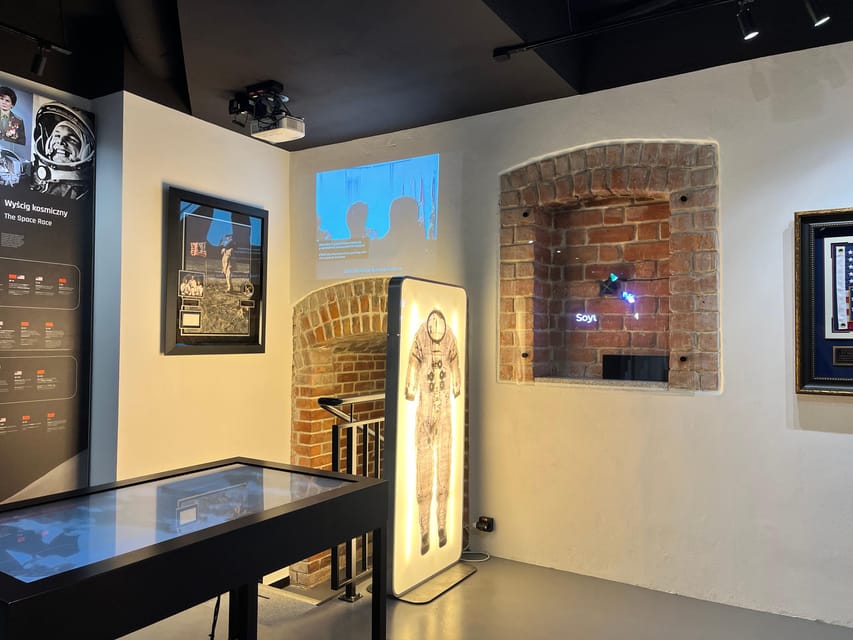
The space section widens the story beyond Poland and Europe. Space flights were one of the clearest public contests between the United States and the Soviet Union, with each side using science and engineering to prove the strength of its system.
Here, you can learn about the history of space flights and see a hologram of a space station. It is a useful change of pace from military maps and political displays. The space race was not only about rockets. It was also about prestige, technology, education, propaganda, and the promise of the future.
The hologram should appeal to visitors who enjoy visual displays, though you should think of it as one element within the larger exhibition rather than a full space museum. The supplied information does not identify the station or describe a detailed spacecraft collection, so keep your expectations focused on Cold War space history rather than a large aerospace exhibit.
Three VR games built around Cold War missions
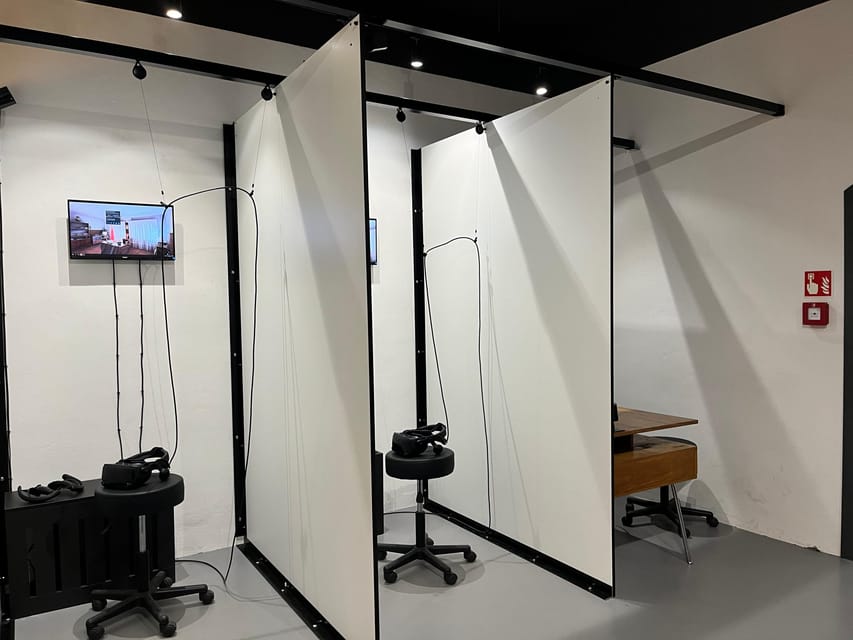
The three VR games are likely to be the most memorable part for many visitors. Wearing the goggles, you can play the role of a Cold War secret agent and try to compromise plans connected with a Soviet invasion.
This turns a complicated political conflict into a direct task. You are no longer only reading about espionage, military plans, and the rivalry between the blocs. You are asked to act within a simulated Cold War situation.
I like that there are three games rather than one short virtual reality feature. It gives the interactive section more substance and helps explain why the museum has appeal beyond its text panels. A visitor who might lose interest in long political explanations has a clear reason to keep moving through the exhibition.
The VR games also show the museum’s limits. They are designed to create the feeling of participating in the Cold War, not to replace historical study. Treat them as an interpretation tool. The missions can make the stakes easier to grasp, but the museum’s written displays and original objects provide the needed context.
Because the available information does not specify session length, age limits, or any health restrictions, ask the host or greeter for details before you begin if you have concerns about VR. English and Polish assistance is available.
Meeting the autonomous robot guide
The autonomous robot is one of the museum’s most unusual features. It can guide you through the exhibition without a human guide leading the whole visit.
This is the first museum in Poland described as having a robot serving as an autonomous guide. For families and technology fans, that novelty alone may make the museum more appealing. It also fits the subject: a museum about scientific rivalry and competing visions of the future uses a machine to help tell its story.
You should not confuse the robot with a personal historian who can adapt a full tour to your questions. The booking includes the autonomous robot guide, but a separate human guide is not included. A host or greeter can assist in English or Polish, which is useful at the entrance and for basic help during the visit.
The robot works best as one part of the museum’s technology package. The VR games, screens, tables, hologram, cinema, and robot all serve different purposes. Together they keep the visit active, though some visitors may prefer a quieter museum with fewer digital elements.
How much value do you get for $12?
At $12 per person, the ticket is reasonably priced for a central Warsaw museum with admission to all exhibitions and attractions included. You are not paying separately for the VR games, the quiz, the space hologram, or the robot guide.
The value depends on your interests. If you enjoy Cold War politics, Polish modern history, military subjects, or interactive technology, you can get a lot from the ticket. The exhibition presents original objects as well as digital displays, so it is not simply an arcade with a historical label.
It is less compelling if you want a broad, neutral account of twentieth-century Europe or a museum focused mainly on everyday civilian life. The exhibition’s main argument is clear and politically charged. You should value it as a Polish interpretation of the Cold War, with technology used to make that interpretation easier to follow.
The ticket is valid for three months, so you have flexibility when planning your Warsaw days. You need to check availability for starting times, and transportation is not included. Free cancellation is available up to 24 hours before the visit, and you can reserve now and pay later, which helps if your schedule is still changing.
Who should visit the Cold War Museum?
I would recommend this museum to you if you fit one or more of these groups:
- You want to understand the Cold War from a Polish perspective.
- You enjoy museums that mix original objects with screens, VR, and other technology.
- You are interested in Ronald Reagan, Pope John Paul II, or Ryszard Kukliński.
- You want an Old Town attraction that can work for both adults and children.
- You enjoy space history and the political competition behind the space race.
- You want to see how a historic site can shape the meaning of an exhibition.
The museum is also a good choice for a return visit to Warsaw. The city’s better-known sights often focus on the Second World War, the destruction of the old city, or Poland’s earlier royal history. This exhibition moves into the postwar decades and explains the political world that shaped modern Poland.
I would be more cautious if you dislike interactive displays, need step-free access for a wheelchair, or want a guide to lead you through every section. You may also want to read a second account of the Cold War before or after your visit so you can place the museum’s strong viewpoint in a wider context.
Practical details for planning your visit
The museum is in Mazovia Province, in central Warsaw, around 40 meters from Old Market Square. You show your ticket at the entrance, and transportation is not included.
English and Polish support is available from the host or greeter. A separate guide is not included, but the autonomous robot guide is part of the admission.
Food, drinks, smoking, vaping, alcohol, and drugs are not allowed inside. One useful detail for animal lovers is that four-legged visitors are welcome, making this one of the few museums in Warsaw where you can visit with a pet.
The attraction is open to visitors of all ages, but wheelchair users should not book because it is listed as unsuitable for them. Since the ticket remains valid for three months, you can fit the museum into your schedule rather than forcing it into a particular day.
Should you book the Cold War Museum?
Book it if you want a modern, interactive museum that explains the Cold War through Polish experience. The three VR games, original artifacts, space section, multimedia quiz, and robot guide give the visit more variety than a standard display of panels and photographs.
Before booking, be comfortable with the museum’s clear pro-Western position and its emphasis on Reagan, John Paul II, and Ryszard Kukliński. I would also skip it if wheelchair access is essential or if you want a fully human-led tour.
For most visitors interested in Poland’s recent past, $12 is a fair price, especially with all attractions included and the convenient Old Town location. It is a focused museum, not a neutral encyclopedia, but that focused Polish viewpoint is exactly what makes the visit useful.
FAQ
Where is the Cold War Museum located?
The Cold War Museum is about 40 meters from Warsaw’s Old Market Square in Mazovia Province, Poland.
What is included with the ticket?
Admission to the exhibitions, access to all attractions within the exhibition, and use of the autonomous robot guide are included.
Is a human guide included?
No. A separate guide is not included, but a host or greeter is available in English and Polish. The museum also has an autonomous robot guide.
How long is the ticket valid?
The ticket is valid for three months. You should check availability for the available starting times.
Does the museum include VR activities?
Yes. The exhibition includes three VR games designed to make you feel like a Cold War participant, including a secret-agent scenario involving Soviet invasion plans.
Can I visit with a dog or another four-legged pet?
Yes. Four-legged visitors are welcome, making this one of the few museums in Warsaw that allows them.
Is the museum suitable for wheelchair users?
No. The museum is listed as not suitable for wheelchair users.
Recently added in Warsaw
- Warsaw Wolf’s Lair with St. Lipka and Mamerki Private Guided★ 4.2 · 3 reviews
- Taste of Poland, food tour and guided walk with 12 tasting★ 5.0 · 3 reviews
- Discover Warsaw’s most Photogenic Spots with a Local★ 5.0 · 3 reviews
- Lodz Small Group Tour from Warsaw with Lunch★ 4.0 · 3 reviews
- Jewish heritage in Warsaw★ 4.5 · 3 reviews
- Warsaw Outdoor Paintball with Transfers (all year round)★ 5.0 · 3 reviews
- Electric Scooter Tour: Full Tour – 3-Hours of Magic!★ 5.0 · 3 reviews
- Skip-the-Line Polin Museum Warsaw Jewish History Tour★ 5.0 · 3 reviews
Museums, compared.

Auschwitz-Birkenau Museum and Memorial Guided Tour from Krakow
Read our review →POLIN Museum of the History of Polish Jews Ticket
Read our review →


Krakow Schindler’s Factory Museum Guided Tour in English
Read our review →
Auschwitz Birkenau Museum Guided Tour with Pickup
Read our review →
Where else this one turns up