
Reviewed · MUSEUMS
Palace of Culture & Science + Warsaw Uprising Museum: SMALL GROUP /inc. Pick-up/
The striking part of this four-hour outing is the contrast between the Palace of Culture and Science, a huge Soviet-era symbol, and the Warsaw Uprising Museum, an intensely personal account of the city’s destruction in 1944. One stop looks down on Warsaw from a monument of communist power. The other asks why young Poles rose against Nazi occupation at such a terrible cost.
I like the door-to-door transport, especially in a city where two major sights sit apart. I also like the balance of a live guided visit at the Palace and an audio-guided museum visit, which lets you move at your own pace.
The main thing to check is group size. The tour is promoted as limited to eight passengers, but the booking information also lists a maximum of 15 people per booking. If a very small group matters to you, confirm that point before paying.
Key points to know before you book
- Two very different views of Warsaw: See communist-era architecture, then confront the human story of the 1944 uprising.
- Hotel or apartment pickup: You do not need to find a city-center meeting point at 9:30 a.m.
- About 90 minutes at each sight: The schedule gives you a focused introduction, not an all-day museum visit.
- Many language choices: Palace guiding is offered in eight languages, and the museum audio guide covers a much longer list.
- Transport is included throughout: Ride from your accommodation to the Palace, onward to the museum, and back again.
- Price reflects convenience: At $111.23 per person, the cost makes the most sense if you value private transport, admission, and a structured half-day.
Why this pairing works so well in Warsaw
Warsaw can feel like several cities at once. It has rebuilt historic areas, modern streets, and reminders of the 20th century’s harsh political changes. This tour puts two important symbols side by side.
The Palace of Culture and Science represents the postwar communist period and the Soviet influence that shaped Poland after World War II. The Warsaw Uprising Museum focuses on 1944, when the Polish underground launched an armed revolt against German occupation.
These are not interchangeable history stops. The Palace is about power, architecture, and public memory. The museum is about choices made under pressure, civilian suffering, resistance, and the destruction of a city.
I like this combination because it keeps the morning from becoming a single-note history lesson. You first see the political symbol that dominates central Warsaw. Then you move into a museum built around voices, images, objects, and multimedia displays.
The order also makes sense. The Palace is the easier, more architectural introduction. The museum asks for more emotional attention, so you may appreciate having the city’s broader 20th-century setting in mind first.
More Museum Tours in Warsaw
- Warsaw: POLIN Museum of the History of Polish Jews Ticket
★ 4.7 · 1,142 reviews - Warsaw: Polish Vodka Museum Tour with Tasting
★ 4.6 · 788 reviews - Warsaw: Ghetto, Jewish Cemetery & POLIN Museum Private Tour
★ 4.8 · 132 reviews
Starting at the Palace of Culture and Science
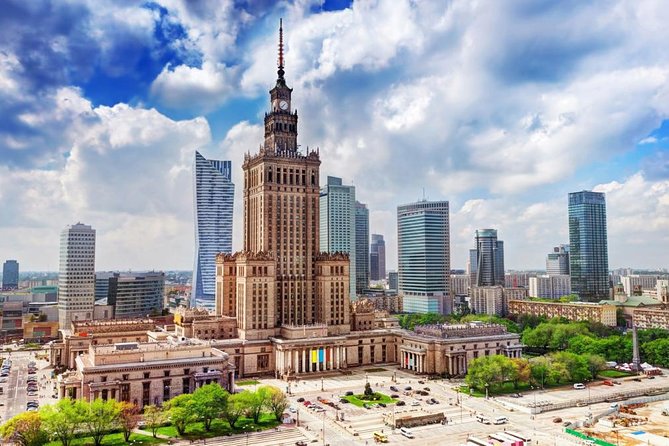
The Palace is difficult to miss. Its enormous scale, tall central tower, and wide base make it one of Warsaw’s most recognizable buildings. It remains controversial because it was built as a gift from the Soviet Union during the communist era, a period many Poles associate with political control and limited independence.
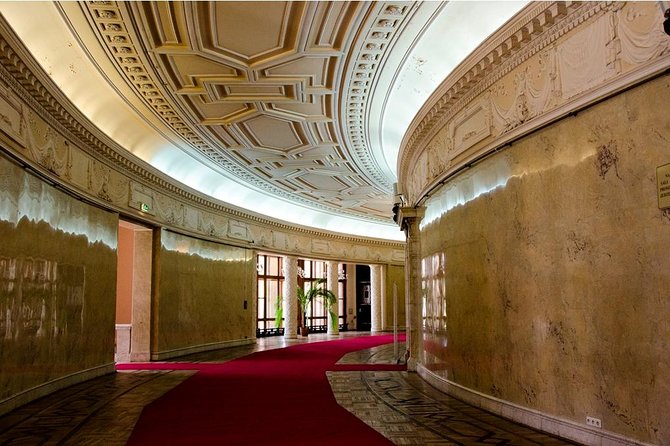
You will not simply look at the facade and leave. The visit includes an interior tour, where marble, mosaics, giant windows, and social-realist design show how the building presented authority through architecture.
The complex contains more than 3,000 rooms, including restaurants, theaters, cinemas, offices, conference and concert halls, a university, and even a swimming pool. You will not see all of them in 90 minutes, of course. The point is to understand the Palace as a functioning city within the city, not just a tower.
The architecture can feel heavy and formal. That is part of its value. The building was designed to impress, and its scale gives you a physical sense of how the communist state wanted to project permanence and strength.
A guided visit is useful here because the building’s meaning is not obvious from its walls alone. Your guide can explain the social-realist style and why the Palace provokes mixed feelings in Warsaw. Some people see an unwanted reminder of Soviet domination. Others accept it as part of the city’s complicated identity.
The tour includes a guided visit in Polish, English, German, Italian, Spanish, French, Hebrew, or Russian. The exact language you receive should be selected or confirmed when booking.
The view from above
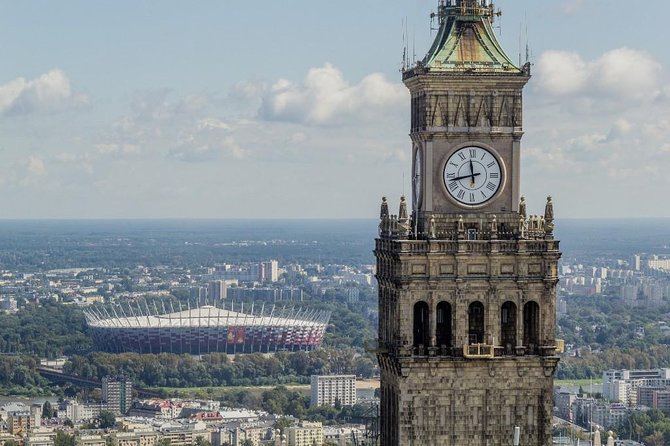
One of the Palace’s main attractions is the view across Warsaw. A high lookout gives you a broad look at the city, and the 360-degree panorama is one of the most useful ways to get your bearings.
The view is especially valuable early in a Warsaw visit. You can see how the city’s newer buildings, rebuilt quarters, and older surviving areas sit around this enormous central landmark. It helps turn a collection of streets into a clearer mental map.
There can be queues, and elevator service may affect timing. One account of a Palace visit noted that one of two elevators was under repair in December. That does not mean your tour will face the same delay, but it is a reminder that the lookout portion may not run like clockwork.
For comparison, Palace lookout tickets have been available online at 20 Polish złoty for adults and 15 złoty for students. This tour includes admission, so you should not need to buy a separate ticket. The important value here is not just entry. It is having transport and a guide wrapped around the visit.
If your only goal is the view, a stand-alone Palace visit will cost much less. If you want the Palace explained and paired with the Uprising Museum, the package makes more sense.
Moving from communist power to wartime resistance
After the Palace, included transport takes you to the Warsaw Uprising Museum. This transfer is a practical advantage. You avoid working out a public transport route, checking connections, and losing time between two major sights.
The tour is designed to last about four hours, with roughly 90 minutes at each stop. That leaves limited spare time, but the structure is efficient. You get a clear introduction to both places without giving up an entire day.
The Palace and museum tell stories from different decades, yet they belong to the same troubled century. The Palace shows the political order that followed the war. The museum shows what happened to Warsaw before that new order took shape.
A different kind of day in Warsaw:
- Warsaw: Chopin Concert in the Old Town
★ 4.8 · 2,287 reviews - Warsaw: Traditional Galar Cruise on The Vistula River
★ 4.6 · 1,640 reviews - Warsaw: Old Town Highlights Walking Tour in English
★ 4.7 · 1,516 reviews - Warsaw Concert: Chopin – Painted by Candlelights with Wine
★ 4.8 · 1,442 reviews
Entering the Warsaw Uprising Museum
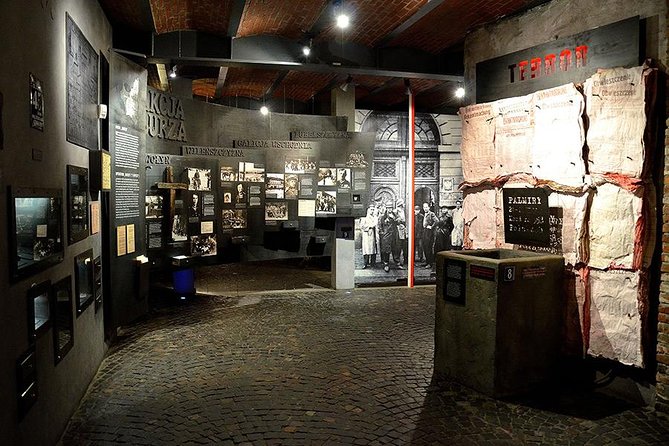
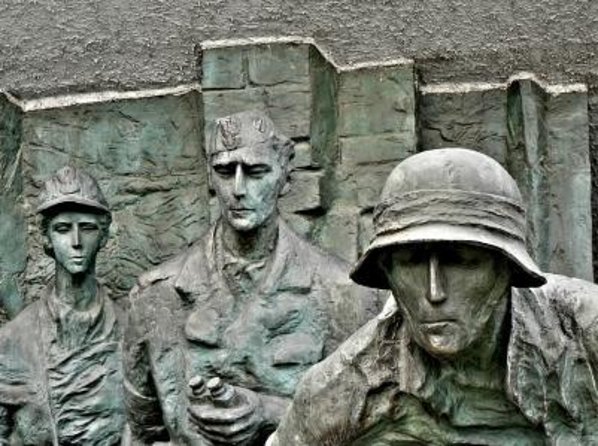
The Warsaw Uprising Museum covers the 1944 revolt against German occupation. The uprising was launched by the Polish underground, including many very young people. It ended with enormous loss of life and the destruction of Warsaw on a massive scale.
The museum does not treat this as a simple story of victory or defeat. It asks why the uprising happened, what the fighters hoped to achieve, and whether the price of a possible freedom was too high.
That makes the visit more demanding than a conventional display of paintings or historic objects. The multimedia format places you close to the choices and fears of the period. Photographs, recordings, written accounts, and visual displays help explain what daily life and resistance looked like in wartime Warsaw.
You receive an audio guide, with options including English, Polish, German, French, Spanish, Italian, Portuguese, Russian, Chinese, Japanese, Korean, Dutch, Swedish, Ukrainian, and many other languages. This is helpful because the museum contains a great deal of information, and you can follow the material in a language you understand well.
The audio guide also gives you some control. If a particular section holds your attention, you can spend longer with it. If you find the subject emotionally difficult, you can slow down rather than being pushed from one display to another by a live group.
The drawback is time. Ninety minutes is enough for a strong introduction, but not enough to study every exhibit carefully. If World War II history is your main reason for visiting Warsaw, you may want to return to the museum on another day.
What makes the museum different
The museum’s strength is the way it connects large events with ordinary lives. The destruction of Warsaw can sound like an abstract statistic until you see the evidence of streets, homes, families, and young people caught in the fighting.
The city before 1944 had been known for its architecture, religious communities, social life, and steady growth. The uprising and its aftermath changed that city almost beyond recognition. The museum helps you grasp the scale of that loss without reducing it to a list of dates.
I would give the museum your freshest attention. The subject is serious, and the multimedia presentation can be intense. You may want a little quiet time afterward, though this tour moves on to the return transfer.
This stop is likely to matter most to people who want more than a quick look at Warsaw’s rebuilt center. It explains why the city’s modern appearance cannot be understood without knowing what was destroyed and what had to be rebuilt.
Small-group travel and the pickup service
Pickup begins at 9:30 a.m. from your hotel or apartment. The provider describes the experience as a small-group tour, with up to eight passengers, and the activity is also described as private to your group.
There is a conflicting capacity detail in the booking information, which permits up to 15 people per booking. I would ask for confirmation if you are booking because you want an eight-person maximum. A small group can make transfers quicker and questions easier, while a group of 15 feels less personal.
The door-to-door service is the clearest practical benefit. You do not need to reach a meeting point, and you do not have to navigate between the Palace and museum. At the end, transport returns you to your hotel or apartment.
A driver or coordinator is available to help during the outing. The information does not provide a guide’s name, so you should not book expecting a particular individual.
The tour is listed as suitable for most people. No detailed accessibility information is provided, so you should ask the operator about mobility needs before booking.
What $111.23 gets you
The price is $111.23 per person. That is a high figure compared with visiting the Palace and museum independently, especially if you are comfortable using Warsaw’s public transport.
Your payment includes admission to both attractions, the Palace guide, the museum audio guide, transport from your accommodation to the Palace, the transfer to the museum, the return ride, taxes, and handling charges. Photos and postcards are not included, but those are optional purchases.
I see the price as a convenience fee as much as an admission fee. You are paying to avoid planning the route, avoid public transport, and fit two major sights into one morning. For a first visit, or for anyone with limited time, that can be worthwhile.
The value is stronger for two or more people traveling together. A minimum of two people is required per booking, and the private-group setup can make the outing easier to manage than joining a large city tour.
The value is weaker if you mainly want the Palace lookout. That portion can be visited separately for a small admission price, and the museum can also be arranged on its own. Compare the total cost of individual tickets, local transport, and any guide you would otherwise hire.
Who should book this half-day tour
I would choose this tour if you want a structured history morning and prefer not to manage city transport. It suits first-time visitors, couples, families, and anyone staying outside the immediate center.
It is also a good fit if you want two different forms of interpretation. The Palace provides a live guide and a look at the city from above. The museum gives you a self-paced audio guide and a close look at wartime Warsaw.
History fans should find the pairing particularly useful. The experience covers both communist-era symbolism and the 1944 uprising, rather than treating Warsaw as only a rebuilt old town.
You may want a different plan if you dislike guided schedules or like spending half a day at one museum. The 90-minute time limit at each stop is efficient, but it can feel rushed for serious museum readers.
Also consider the emotional weight of the Uprising Museum. This is not a light sightseeing stop. You should leave enough space in your day to process what you see.
Timing, cancellation, and booking details
The start time is 9:30 a.m., and the total duration is about four hours. Confirmation is sent within 48 hours of booking, subject to availability.
You can cancel for a full refund up to 24 hours before the local start time. Cancellations or changes made inside that 24-hour window are not accepted for a refund.
A mobile ticket is provided, which is useful if you do not want to manage paper documents. Keep your pickup details clear when booking, since the service begins at your accommodation rather than at a standard public meeting point.
Should you book it?
Book this tour if you want Warsaw’s major 20th-century stories explained in one organized morning, with admission and all transport handled for you. The Palace’s unusual architecture and wide city view are a strong opening, while the Uprising Museum supplies the more serious historical core.
Skip it if your main interest is only the Palace lookout, or if you prefer to spend several hours moving slowly through one museum. The price is not the cheapest way to see these sights.
Before booking, confirm the actual group size and the language of the Palace guide. If those details suit you, the tour offers a sensible, focused introduction to a city whose history is far more complicated than its rebuilt streets first suggest.
FAQ
Where does the tour start?
Pickup is provided from your hotel or apartment, with a scheduled start time of 9:30 a.m.
How long does the experience last?
The tour lasts about four hours in total.
Which attractions are included?
The tour visits the Palace of Culture and Science and the Warsaw Uprising Museum.
Is admission included?
Yes. Admission tickets for both the Palace of Culture and Science and the Warsaw Uprising Museum are included.
Is transport included between the stops?
Yes. Transport is provided from your accommodation to the Palace, from the Palace to the museum, and from the museum back to your hotel or apartment.
What languages are available at the Palace?
The guided Palace visit is available in Polish, English, German, Italian, Spanish, French, Hebrew, and Russian.
What languages are available for the museum audio guide?
The audio guide is available in many languages, including English, Polish, German, French, Spanish, Italian, Portuguese, Russian, Chinese, Japanese, Dutch, Swedish, Ukrainian, and others listed by the provider.
How many people can join the tour?
The tour is promoted as a small-group experience limited to eight passengers. The booking information also states a maximum of 15 people per booking, so confirm the final group size before booking.
Can I cancel for a refund?
Yes. You can cancel at least 24 hours before the local start time for a full refund. Cancellations or changes made less than 24 hours before the start are not accepted for a refund.
Recently added in Warsaw
- Warsaw Wolf’s Lair with St. Lipka and Mamerki Private Guided★ 4.2 · 3 reviews
- Taste of Poland, food tour and guided walk with 12 tasting★ 5.0 · 3 reviews
- Discover Warsaw’s most Photogenic Spots with a Local★ 5.0 · 3 reviews
- Lodz Small Group Tour from Warsaw with Lunch★ 4.0 · 3 reviews
- Jewish heritage in Warsaw★ 4.5 · 3 reviews
- Warsaw Outdoor Paintball with Transfers (all year round)★ 5.0 · 3 reviews
- Electric Scooter Tour: Full Tour – 3-Hours of Magic!★ 5.0 · 3 reviews
- Skip-the-Line Polin Museum Warsaw Jewish History Tour★ 5.0 · 3 reviews
Museums, compared.

Auschwitz-Birkenau Museum and Memorial Guided Tour from Krakow
Read our review →POLIN Museum of the History of Polish Jews Ticket
Read our review →


Krakow Schindler’s Factory Museum Guided Tour in English
Read our review →
Auschwitz Birkenau Museum Guided Tour with Pickup
Read our review →
Where else this one turns up