
Reviewed · HISTORICAL TOURS
Wroclaw: Third Reich and World War Two Historical Tour
Wroclaw’s wartime story is unusual because the city was German until 1945, then became part of Poland after a siege that damaged or destroyed much of the city. This two-hour walking tour connects that upheaval with places such as the former Gestapo building, White Stork Synagogue, and Cathedral Island.
I like the clear route from Hotel Monopol to the historic islands, and I like the attention given to Jewish heritage and the Holocaust, subjects that can get lost in a general city tour. Guides including Michal, also listed as Michael in one account, are praised for detailed explanations and thoughtful answers.
The main drawback is that this is a serious subject with a fair bit of walking, and much of the wartime city no longer exists in its prewar form. Snow or rain can also make the route less comfortable, so bring sensible shoes and outdoor clothing.
Key points to know before you book
- The city changed national identity after 1945: Learn how German Breslau became Polish Wroclaw after the war.
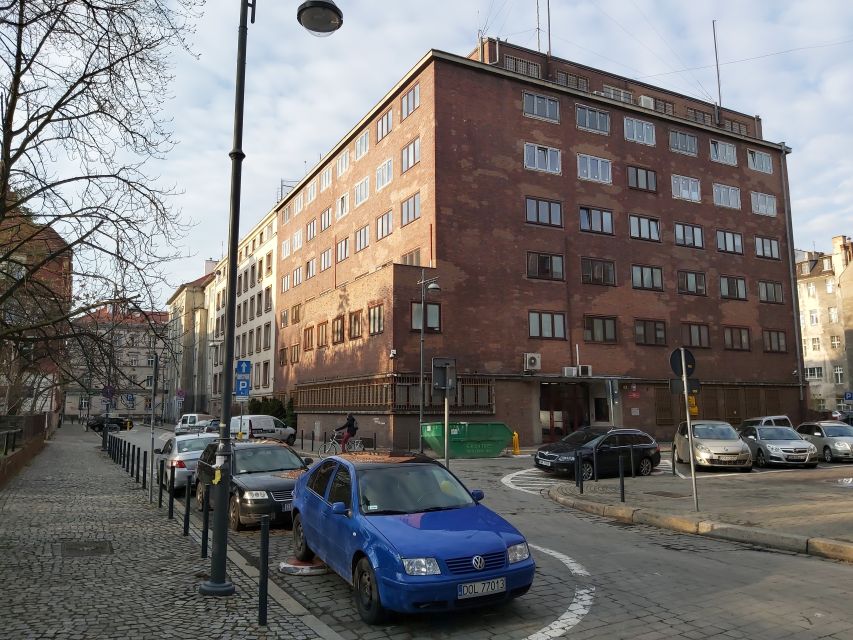
- The former Gestapo building anchors the story: This stop gives the tour a direct connection to Nazi rule and repression.
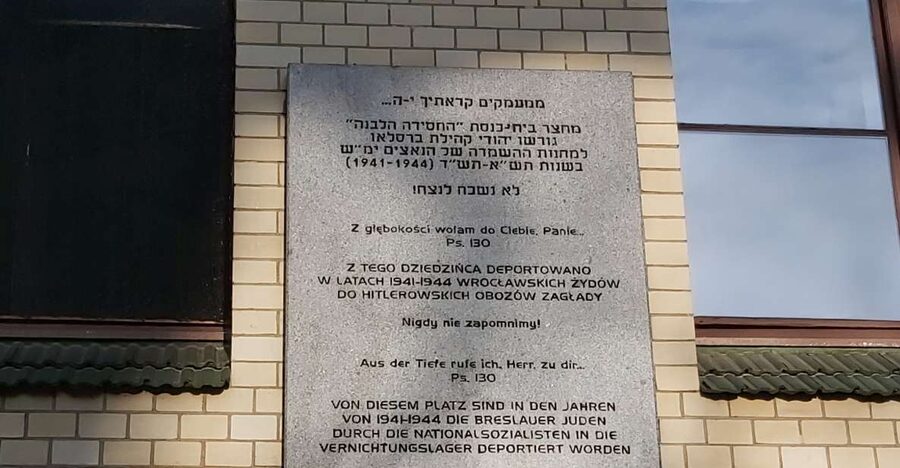
- Jewish history receives real attention: The White Stork Synagogue and Holocaust stories add human depth to the military and political history.
- The route ends on Cathedral Island: You finish beside one of Wroclaw’s most important historic areas rather than returning to the hotel.
- Expect a walking tour, not a museum visit: The experience focuses on streets, memorials, churches, gardens, and city spaces.
- The tour needs at least four participants: Check the start time and operating status before setting your plans in stone.
Why Wroclaw’s wartime story is different
Wroclaw can confuse you at first. The city feels Polish today, yet much of its earlier story belongs to Germany. Until the end of World War Two, it was known as Breslau and formed part of Germany. The tour starts by setting out this change, which helps you understand why the streets, memorials, churches, and surviving buildings carry several layers of identity.
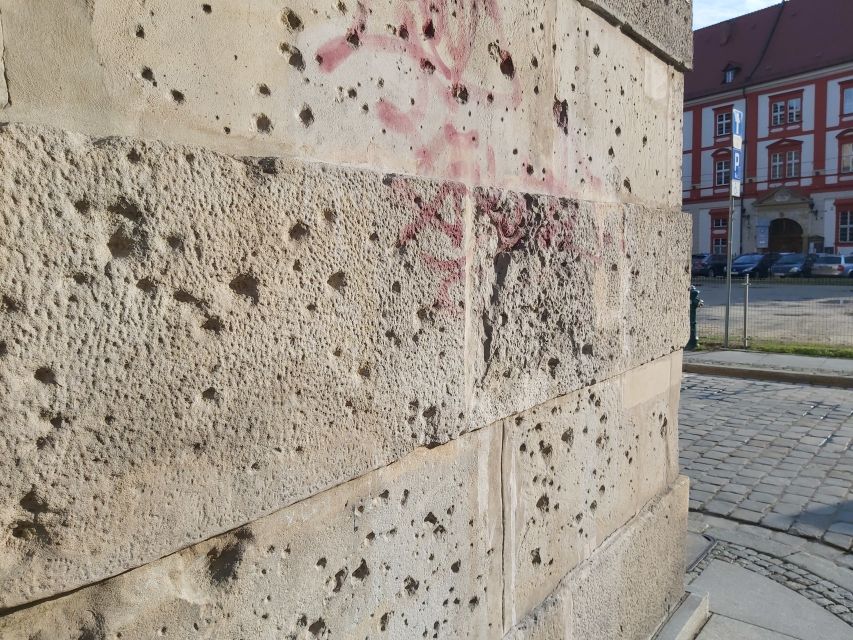
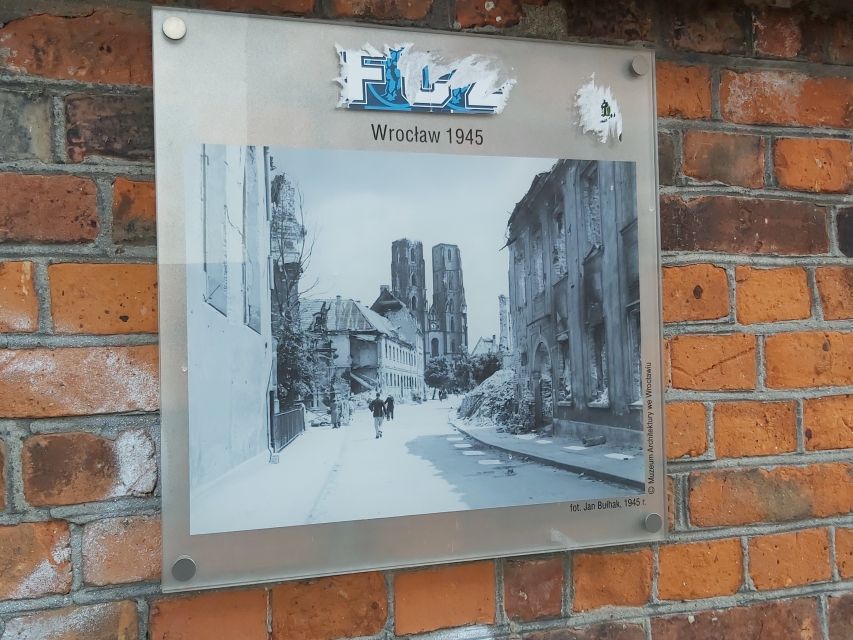
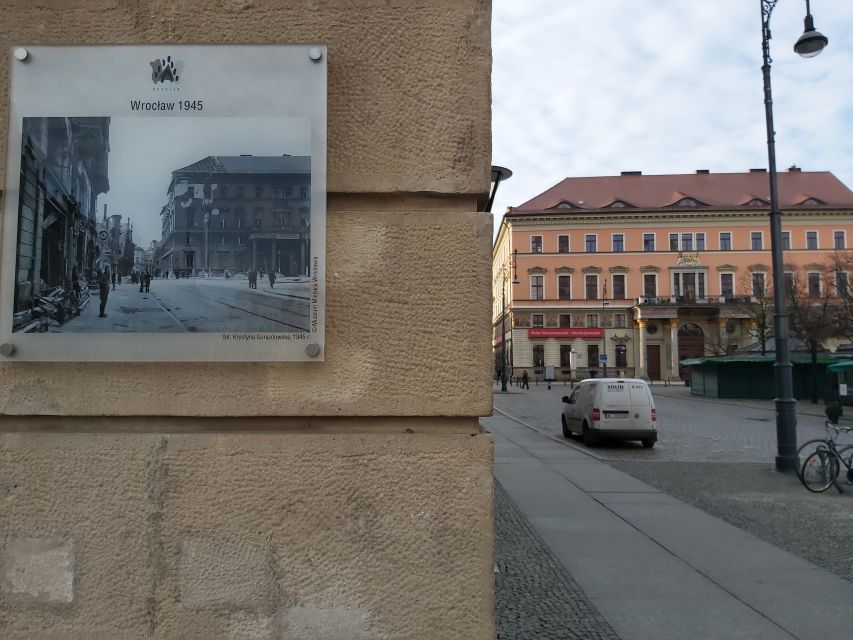
The final months of the war are central to the experience. Between February and May 1945, Wroclaw endured a siege, and large parts of the city were damaged or destroyed. You will not simply hear about a battle far away from the center. You will walk through the places where the city’s civic life had been disrupted, then consider how the remaining structures were rebuilt and given a new national setting.
I find this context useful because Wroclaw’s appearance does not always reveal its wartime past. Some places look calm and polished now. The guide’s job is to connect those ordinary streets with the people, institutions, and decisions that shaped them during the war.
This is not a tour built around dramatic ruins. In fact, that is one of its limits. You should expect stories, memorials, surviving landmarks, and visual clues rather than a long sequence of untouched wartime buildings.
More History Tours in Wroclaw:
- Best of Wroclaw 3-Hour History and Culture Walking Tour
★ 4.9 · 49 reviews - Wroclaw: Private Tour by smal Historic Tram (1,5h, 16 seats)
★ 4.8 · 24 reviews - UNESCO World Heritage-listed Church of Peace Day Tour from Wroclaw
★ 4.5 · 14 reviews
Meeting at Hotel Monopol and setting the scene
You meet outside the main entrance of Hotel Monopol. Look for a guide holding a sign marked World War Two Tour. Hotel pickup and drop-off are not included, so you need to make your own way to the starting point.
The opening near Hotel Monopol is practical. It places you close to Wroclaw’s Old Town and gives the guide room to explain the city’s political past before the walk gathers pace. A good introduction matters here because the subject involves German rule, wartime destruction, Jewish life, the Holocaust, and postwar population change.
The tour is conducted in English with a live guide. The strongest feedback centers on the guide’s ability to explain complicated events clearly. Michal is described as friendly and highly prepared, while another account names Michael and highlights his willingness to answer questions and suggest books for further reading.
That detail tells me this tour works best when you treat it as a conversation, not a recorded commentary. If you have family connections to displaced German communities, questions about the Holocaust, or an interest in postwar borders, bring those questions with you.
Old Town streets and the former Gestapo building
The walk moves through Wroclaw’s Old Town, using public spaces to explain life under German rule and the machinery of the Nazi period. The former Gestapo building is one of the most important stops because it gives the history a physical address.
You can expect the guide to explain the role of the Gestapo within the period’s system of control and fear. The building is not merely an attractive facade to photograph. It represents how political repression operated within an ordinary city, surrounded by streets where people worked, worshipped, shopped, and carried on with daily life.
This part of the route should appeal to you if you prefer history tied to exact locations. Instead of hearing only about national events, you can ask how they affected Wroclaw itself. The tradeoff is that the tour does not promise entry into every building. Monument opening times can change, and the experience is primarily an outdoor walk.
Wolności Square adds another useful point of reference. Large public spaces often make it easier to discuss how cities are used for power, ceremony, movement, and destruction. Here, the guide helps connect the physical setting with Wroclaw’s wartime and postwar changes.
The White Stork Synagogue and Wroclaw’s Jewish heritage
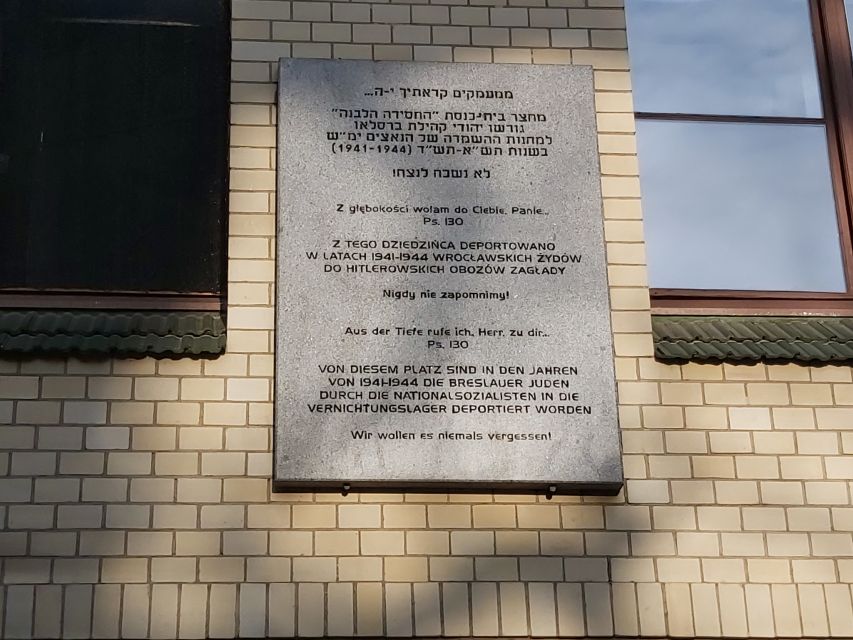
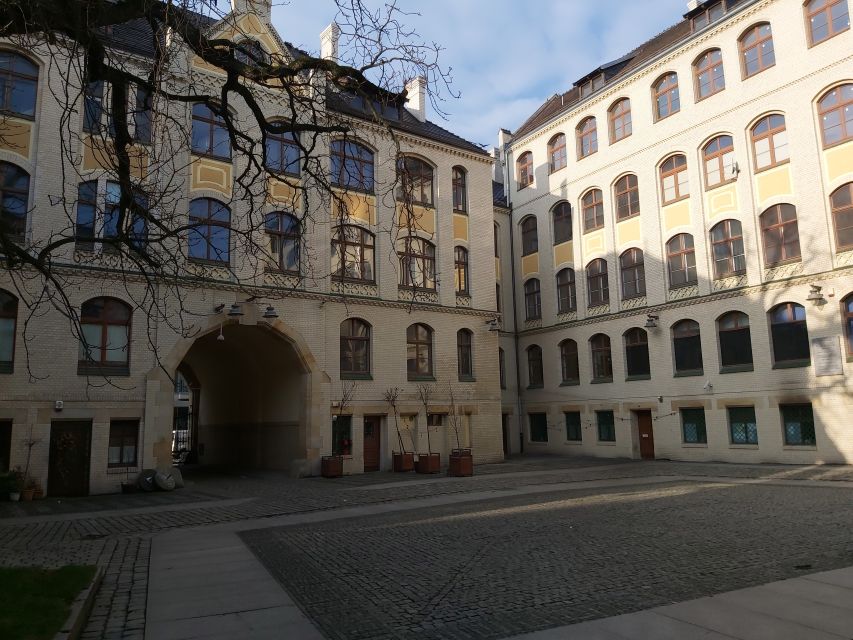
The White Stork Synagogue is a key stop for understanding the city’s Jewish past. The tour places local Jewish heritage alongside the wider story of Nazi persecution and the Holocaust, rather than treating Jewish history as a brief aside.
That focus is one of the best reasons to choose this experience. A military tour can leave you thinking mainly about armies, sieges, and ruined buildings. This route also asks what happened to a community, its places of worship, and its place in the city.
The synagogue gives the guide a concrete setting for discussing Jewish life before the war and persecution during the Nazi era. The subject is painful, and the value of a small-group walking tour is that you can pause and ask for clarification instead of rushing through a large museum display.
You should not expect a full synagogue tour or a dedicated Holocaust museum visit based on the details provided. The emphasis is on the exterior route and the guide’s interpretation. If your main goal is an extensive museum collection, you may need another visit in addition to this walk.
A few more Wroclaw half days to consider
- Wroclaw: E-Car Tour and Audio Guide
★ 4.6 · 1,738 reviews - Wroclaw: 2-Hour Private Guided Tour by Electric Car
★ 4.8 · 805 reviews - Wrocław: Old Town and Ostrów Tumski Walking Tour in English
★ 4.8 · 311 reviews - Wroclaw: Private Old Town Guided Walking Tour (2 hours)
★ 4.8 · 275 reviews
Memorials, churches, and the Ossolineum Garden
The Dietrich Bonhoeffer Memorial brings another individual voice into the story. Bonhoeffer was a German pastor and opponent of Hitler, and the memorial gives the guide a way to discuss resistance, conscience, and the difficult choices people faced under dictatorship.
The inclusion of the memorial broadens the tour beyond a simple account of German military defeat. You get a chance to consider that wartime society was not made up of one uniform group with identical views. Some people supported the regime, some suffered under it, and some resisted it at great personal cost.
The University Church adds a religious and architectural setting to the route. Churches can help explain the city’s older institutions and the way public life continued, or was interrupted, during war. The stop also gives you a change of pace from political sites and memorials.
At the Ossolineum Garden, the route shifts toward a quieter city space. The garden and its nearby institutions help show that Wroclaw is more than a collection of battle sites. The guide can use the surroundings to explain how the city’s cultural life and built environment changed after the war.
I would pay attention to transitions between these stops. The most useful part may not be any single monument. It is the way the guide links a memorial, a church, a former security building, and a garden into one story about power, belief, culture, and survival.
Sand Island and the route toward Cathedral Island
The walk continues to Sand Island and then Cathedral Island, known in Polish as Ostrów Tumski. These islands are among the most memorable parts of the route because they give you a different view of Wroclaw’s historic core.
Sand Island helps the guide explain the city through its waterways and older urban structure. You can expect the pace to remain on foot, with the guide pointing out historical features along the way rather than taking you between stops by vehicle.
Cathedral Island is the final destination. Ending here gives the tour a strong sense of place, and it means you can continue exploring after the guide finishes. It is also a useful ending for the historical story, since the area allows you to reflect on what survived, what was rebuilt, and how a formerly German city became part of postwar Poland.
The end point is not the same as the starting point, so plan your next activity from Cathedral Island rather than Hotel Monopol. The supplied details do not specify transport back to the hotel, and none is included.
What two hours can and cannot cover
Two hours is enough for a focused introduction, but not enough for every detail of Wroclaw’s wartime past. The guide must keep moving between several locations, so you will receive a broad historical framework rather than a lengthy stop at each site.
That short format is a strength if you want to fit the tour between other plans. At $31 per person, the cost is reasonable for a licensed guide, a live English-language explanation, and two hours of guided walking. You are paying for interpretation and local context, not for meals, transport, or admission to a series of museums.
The value depends on your interests. If you already know a great deal about the siege of Wroclaw, German history, or the Holocaust, you may want a longer specialist experience. If you are starting from scratch, the tour gives you a useful framework for exploring the city on your own.
One recent participant described the route as involving a fair bit of walking. That is important. The distance may feel easy in good weather, but snow, rain, or cold can make a serious walking tour tiring. The experience operates rain or shine, so check the forecast and wear shoes that can handle wet pavement.
The tour requires at least four participants to operate. That condition matters if you are building a tightly timed day around it. Check availability before you rely on a particular departure.
A guide-led history lesson with a human scale
The guide is the heart of this experience. The strongest comments focus on clear communication, detailed knowledge, friendly manner, and the ability to answer questions. One participant especially valued the guide’s examples and suggestions for books and other material to read later.
That makes the tour more useful than a route that simply names buildings. You can ask how German rule affected local life, what happened to Jewish residents, why the city was damaged so heavily, and how the postwar transformation unfolded.
The subject also has a personal side. People with family links to displaced Germans may find the tour especially meaningful, since Wroclaw’s change after 1945 affected entire populations. The guide can help place that experience within the wider political story without reducing the city to one national viewpoint.
The available language is English. A participant expressed interest in a German option, but German guiding is not listed here. If you need German, confirm before booking rather than assuming it will be available.
Who should book this Wroclaw tour?
I would choose this walk if you want to understand why Wroclaw feels historically layered, or if you prefer a guide who can connect places with difficult events. It suits first-time visitors who want a clear starting point, history students, and anyone interested in the Holocaust, German-Polish relations, or the final months of World War Two.
It is also a good fit if you like walking tours that finish in a useful area for further sightseeing. After Cathedral Island, you can continue your own exploration without having to return to the original meeting point.
I would think twice if you want extensive indoor access, a slow museum-style presentation, or very little walking. Much of the city was destroyed, so the physical evidence can feel limited compared with places where wartime buildings remain intact. The guide’s storytelling carries much of the experience.
The tour is wheelchair accessible, though the route remains an outdoor city walk and the weather can affect comfort. You will need to arrange your own food and drinks, and neither hotel pickup nor drop-off is provided.
Should you book it?
Book this tour if you want a concise, serious introduction to Wroclaw’s German past, wartime destruction, Jewish heritage, and postwar rebirth. The price is fair for two hours with a licensed guide, and the consistently strong feedback about Michal or Michael suggests that the quality of explanation is the main reason to go.
Skip it if your priority is a long list of preserved wartime structures or a museum collection. For most history-minded visitors, though, the former Gestapo building, White Stork Synagogue, Bonhoeffer Memorial, and Cathedral Island create a worthwhile route through a complicated city story. Bring questions, allow for walking, and dress for the weather.
FAQ
Where does the tour begin?
Meet your guide outside the main entrance of Hotel Monopol in Wroclaw. The guide will hold a sign that says World War Two Tour.
Where does the tour finish?
The tour finishes on Cathedral Island in Wroclaw.
How long does the tour last?
The guided walking tour lasts two hours.
What language is the tour offered in?
The live tour guide speaks English.
How much does the tour cost?
The listed price is $31 per person.
Is hotel pickup included?
No. Hotel pickup and drop-off are not included.
Are food and drinks included?
No. Food and drinks are not included.
Is the tour wheelchair accessible?
Yes, the activity is listed as wheelchair accessible.
Does the tour operate in bad weather?
Yes. The tour takes place rain or shine.
How many people are needed for the tour to operate?
The tour requires at least four participants to operate.
Recently added in Wroclaw
- CITY QUEST WROCLAW: unlock the mysteries of this city!★ 5.0 · 3 reviews
- Wroclaw: Old City Walk and Cruise with Small Gondola★ 4.7 · 3 reviews
- Private Transfer from Wroclaw (WRO) Airport to Wroclaw city centre★ 5.0 · 3 reviews
- Wroclaw : Walking Custom Tour with a Local Guide★ 4.8 · 3 reviews
- Wrocław: Ostrów Tumski and Old Town Highlights Private Tour★ 5.0 · 3 reviews
- Wroclaw Jewish Quarter Private Guided Tour★ 5.0 · 3 reviews
- Electric Scooter Tour: Full Tour (Old Town + Ostrów Tumski)★ 5.0 · 3 reviews
- Segway Tour Wroclaw: Ostrów Tumski Tour – 1,5-Hours of Magic!★ 5.0 · 3 reviews
Historical Tours, compared.

POLIN Museum of the History of Polish Jews Ticket
Read our review →

Gdańsk City Sights & History Guided Walking Tour in English
Read our review →
Small-Group Historical Guided Tour of Warsaw with pick up/drop off. Public Tour.
Read our review →Where else this one turns up