
Reviewed · WARSAW TOURS
Warsaw Communism Private Tour in a Retro Fiat
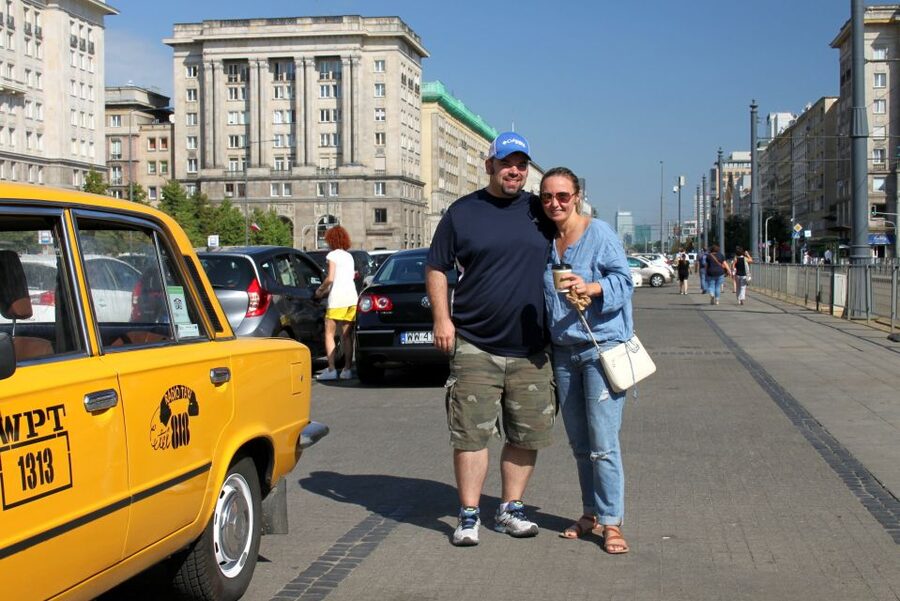
Warsaw’s communist past is best understood from the back seat of a Fiat 125p, the boxy Polish car that once filled the city’s streets. This private four-hour tour links the Palace of Culture, Constitution Square, the former Communist Party headquarters, and Muranów with plainspoken stories about daily life under the system. I like the old car and the personal guide format. The main drawback is that you spend only a short time at each place, so this is an introduction rather than a full architectural study.
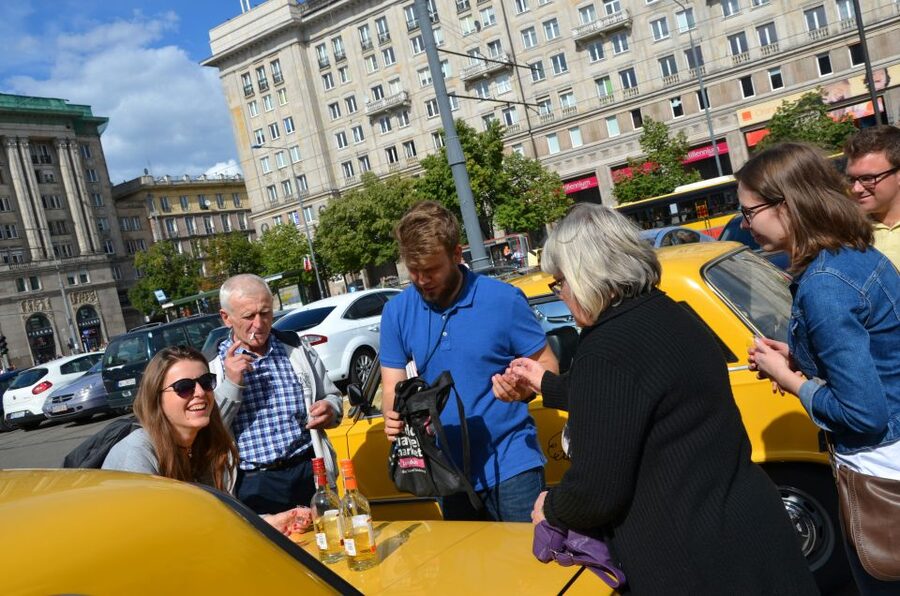
I also like the mix of driving and walking, plus the small Polish snack and vodka shot on board. Guides such as Martin and Max have been praised for explaining both the political system and its effect on ordinary people, and Martin has worked especially well with families. Traffic can alter the route, and groups larger than four use a blue vintage minivan instead of the Fiat.
Key points to know before booking
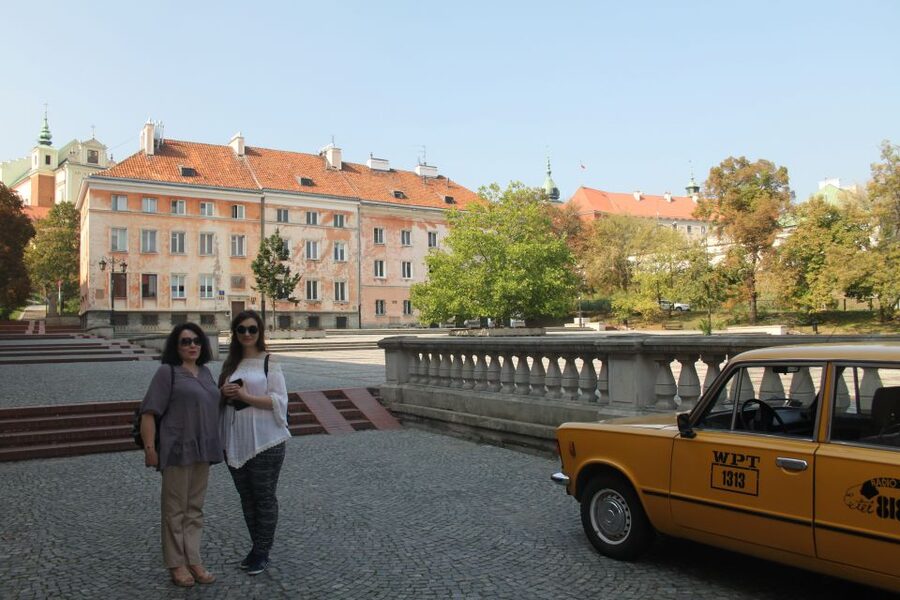
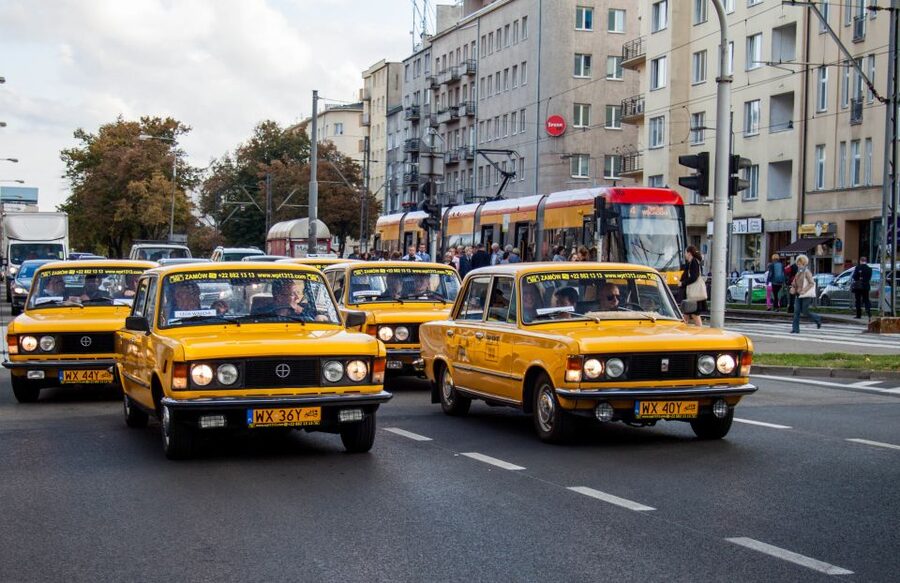
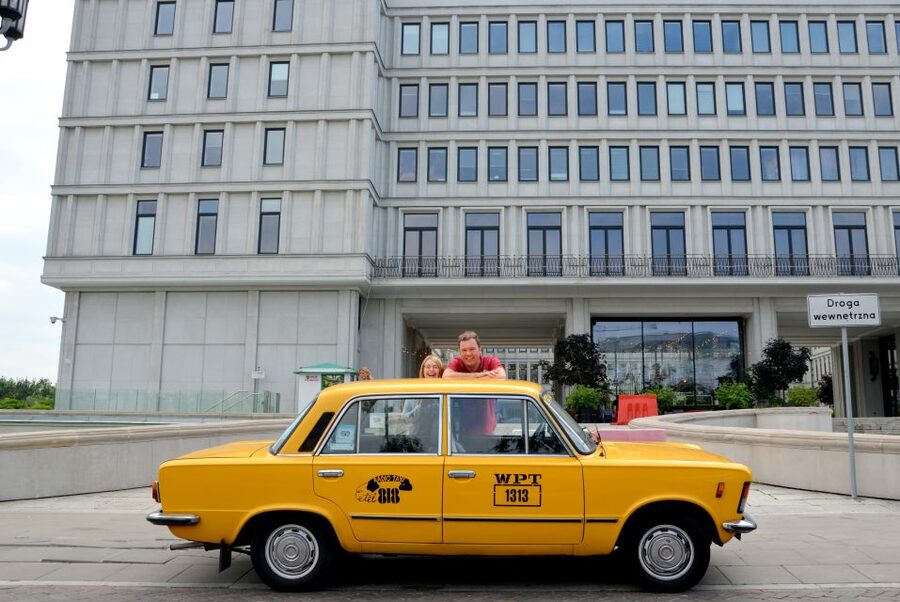
- The Fiat 125p is part of the lesson: The car connects the sights to the everyday experience of communist Poland.
- The Palace of Culture anchors the route: You hear why this huge Stalin-era building was called a gift from Moscow.
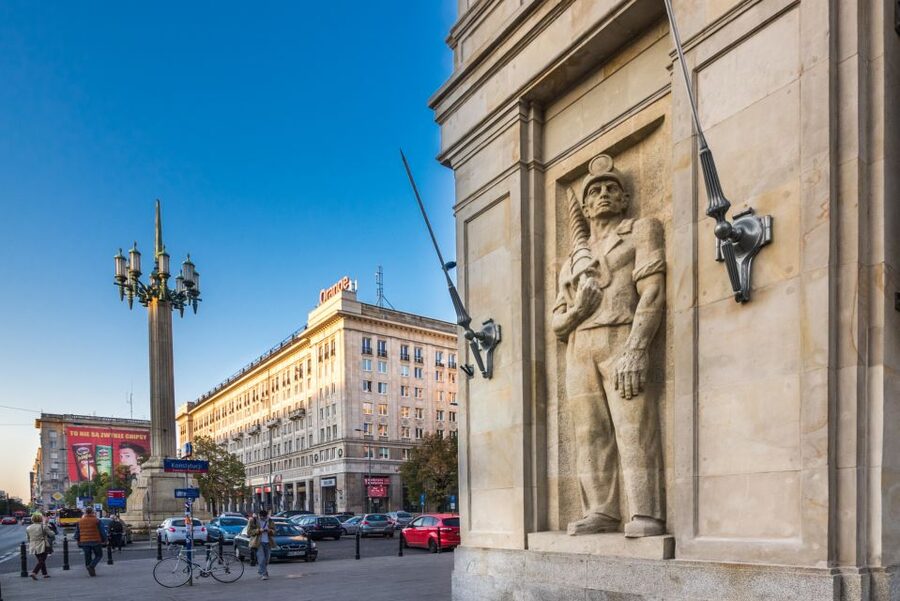
- Constitution Square shows planned housing: Its worker-oriented blocks reveal how architecture supported the state’s message.
- The tour reaches beyond postcard sights: You visit the former Communist Party headquarters, the Ministry of Agriculture, and Muranów.
- The route is private and adjustable: You can ask to focus on a particular place or reduce the walking.
- The price includes useful extras: Hotel pickup and drop-off in central Warsaw, a vodka shot, a doughnut, transport, and emailed photos are included.
Why a Fiat 125p makes Warsaw’s past easier to understand
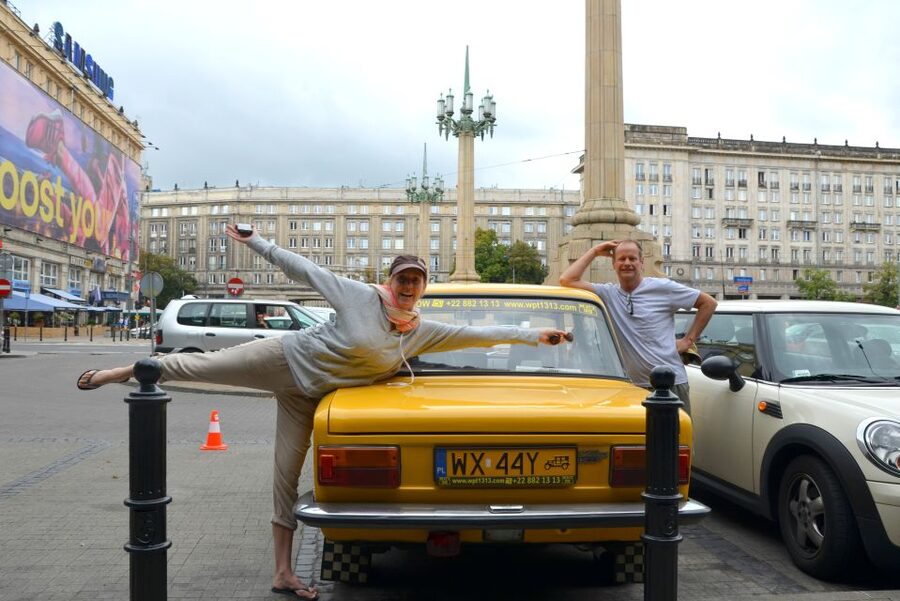
A standard walking tour can explain communist Warsaw. Riding in an 1980s historical vehicle gives the subject a more tangible edge.
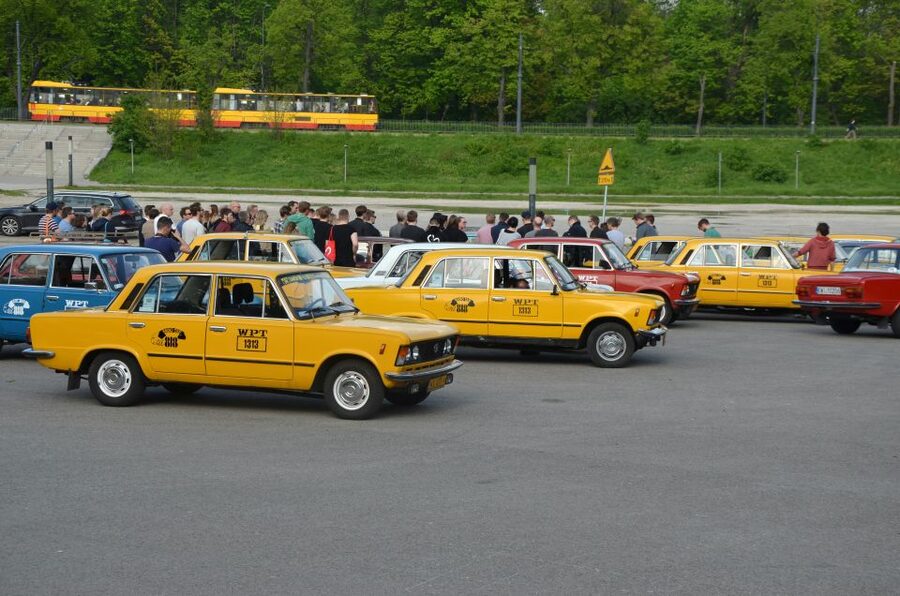
The Fiat 125p was not merely an old car. It represents the limited choices, long waits, and modest comforts associated with life behind the Iron Curtain. The tour does not ask you to admire the vehicle as a museum object only. You use it to move through districts shaped by the same era you are studying.
Your driver-guide collects you at your centrally located Warsaw hotel, or another central pickup point, at the hour you choose. The experience is private, so you can ask questions without worrying about holding up a large group. English is the stated tour language.
The four-hour schedule is split roughly between driving and walking. That balance matters. From the car, you get a broad sense of how the districts connect. On foot, you can pause near buildings and hear the details that are easy to miss through a window.
The tour can be adapted to suit your walking needs. You should still bring comfortable shoes, since the experience requires a moderate amount of walking unless you arrange a gentler version with the guide. The activity is listed as wheelchair accessible, but it is sensible to discuss your exact requirements when booking.
A few more Warsaw half days to consider
- Warsaw: Chopin Concert in the Old Town
★ 4.8 · 2,287 reviews - Warsaw: Traditional Galar Cruise on The Vistula River
★ 4.6 · 1,640 reviews - Warsaw: Old Town Highlights Walking Tour in English
★ 4.7 · 1,516 reviews
The Palace of Culture and Science: Warsaw’s unavoidable symbol
The first major stop is the Palace of Culture and Science, the enormous Stalin-era tower that dominates central Warsaw.
Its scale is the point. The building was presented as a gift from Moscow, but that gift carried political weight. It was a visible reminder of Soviet power and of Poland’s place within the communist sphere. Your guide explains how it was built, why it became such a loaded symbol, and the anecdotes that surround it.
You do not need a long lecture to understand the building’s effect. Look up at its mass, then look at the modern city around it. Warsaw has changed sharply since the communist period, yet the palace remains difficult to ignore. That contrast helps explain why some people see it as part of the city’s identity while others see it as an unwanted reminder of foreign control.
The tour focuses on the building’s story rather than promising a full interior visit or an observation-deck experience. If you want to explore those separately, ask your guide what is possible during your chosen route. The useful question here is not simply whether the palace is attractive. It is what the building was meant to communicate, and how that meaning changed after communism ended.
Constitution Square and the architecture of the working class
At Constitution Square, the tour turns from one giant monument to a complete urban setting.
This Stalin-era housing district was planned as one of the most representative communist areas in Warsaw. Its blocks were built with workers in mind, and the scale of the square helped create a public setting for the new social order. The architecture was not meant to be private and quiet. It was meant to look organized, collective, and purposeful.
Your guide points out the design and explains how buildings such as these reflected the Party’s influence. I find this stop useful because it moves the discussion away from famous leaders and grand political events. Housing tells you how the state imagined ordinary life: where people would live, how neighborhoods would look, and what values public buildings should express.
Do not expect a preserved time capsule. Warsaw is a living capital, and the square has changed use over the years. That is part of its value. You see communist planning in a present-day setting, with the older forms still visible even as daily life has moved on.
The walking portion here may involve standing outside and looking closely at facades, streets, and public spaces. Comfortable shoes will make the stop more pleasant, especially if you choose to add extra sights to the route.
The ministerial district and the former Party headquarters
The tour continues through the communist ministerial district, including the Ministry of Agriculture. This part of the route adds a more official face to the story.
Housing shows how the system organized daily life. Ministries show how it organized power. Your guide explains the role of government buildings and shares stories connected with the people and institutions that worked inside them.
You also see the former House of the Communist Party and learn what the building is used for now. That change of function is one of the most practical ways to understand Warsaw after 1989. Political systems can end, but their buildings remain. New occupants, new businesses, and new public uses can give old structures a second life without erasing their past.
This stop is best for people who enjoy political and architectural context. If you prefer only famous sights, the building may seem less immediately exciting than the Palace of Culture. Still, it helps complete the picture. Communism was not only a style of apartment block or a towering monument. It was a working government with offices, ministries, rules, and routines.
A different kind of day in Warsaw:
- Warsaw Concert: Chopin – Painted by Candlelights with Wine
★ 4.8 · 1,442 reviews - Warsaw: City Sightseeing Hop-On Hop-Off Bus Tour
★ 3.6 · 1,415 reviews - Warsaw: POLIN Museum of the History of Polish Jews Ticket
★ 4.7 · 1,142 reviews - #1 Pub Crawl Warsaw with Optional Premium 1 Hour Open Bar
★ 5.0 · 790 reviews
Muranów and the difficult history beneath the housing blocks
The route then reaches Muranów, where communist-era housing was built upon the former Warsaw Ghetto.
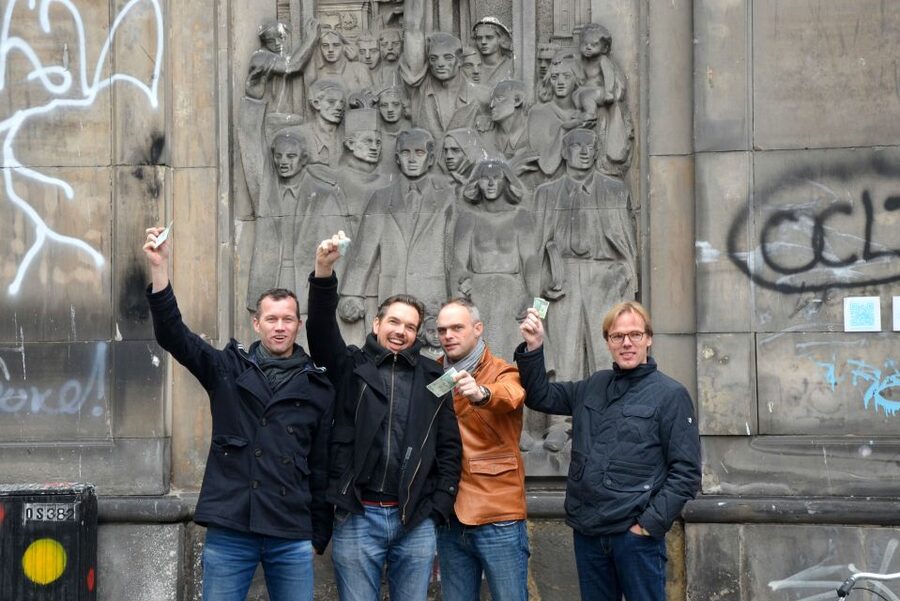
This is the most sensitive part of the tour. The blocks are not simply examples of postwar housing. They occupy ground marked by the destruction of the Jewish community during the Second World War. The tour connects that setting to later communist architecture and explains how the Party shaped the way such areas were rebuilt and presented.
You should give this stop your full attention. The subject is heavier than the lighthearted car, snack, and vodka might suggest. The experience works best when you understand that Warsaw’s communist story cannot be separated neatly from the war and the city’s near destruction.
Muranów also shows how layers of history can sit in one neighborhood. You see practical housing from the communist period, but the ground and streets carry an older memory. Your guide’s explanations are important here, since the buildings alone will not tell you why this district matters.
The tour does not turn every stop into a long museum visit. Instead, it uses the streets and architecture as prompts for conversation. That keeps the pace manageable, though anyone wanting an in-depth study of the ghetto or postwar reconstruction will need additional time elsewhere in Warsaw.
Stories about daily life, not just dates and leaders
The strongest part of the experience is the conversation in the car.
The guide talks about how communism began in Poland, how it affected Polish people, and how it ended. Just as important, you hear about what the system meant in everyday terms. The supplied feedback points to guides such as Martin and Max explaining the subject clearly and answering questions in English. Martin has also been singled out for connecting well with children.
That family point matters. A four-hour political history tour can lose younger visitors if it becomes a list of dates. The old car, the changing neighborhoods, and the chance to ask direct questions give the subject a physical shape. Children may remember the unusual vehicle first, then absorb the larger story through the places you visit.
You can ask about a location that interests you, and the agenda can be tailored. This flexibility is a real advantage over a fixed group outing. You might want more time on architecture, postwar rebuilding, Polish politics, or ordinary life. The guide can adjust the route, though traffic may require changes.
The tour is not a debate about communism in the abstract. It is about how a political system affected a particular city and its people. That local focus makes the experience more useful than a general history talk.
The vodka shot, doughnut, and other small touches
A vodka shot and a Polish doughnut are included during the ride. These are modest extras, but they suit the theme. Food and drink offer an easy way to talk about Polish habits, celebrations, and the small pleasures of daily life.
You should not book this as a food tour. The snack is a taste, not a meal. The vodka is also only a shot, so it should be treated as a cultural touch rather than the main event. If you do not drink alcohol, ask about skipping it. The supplied information does not specify an alternative drink.
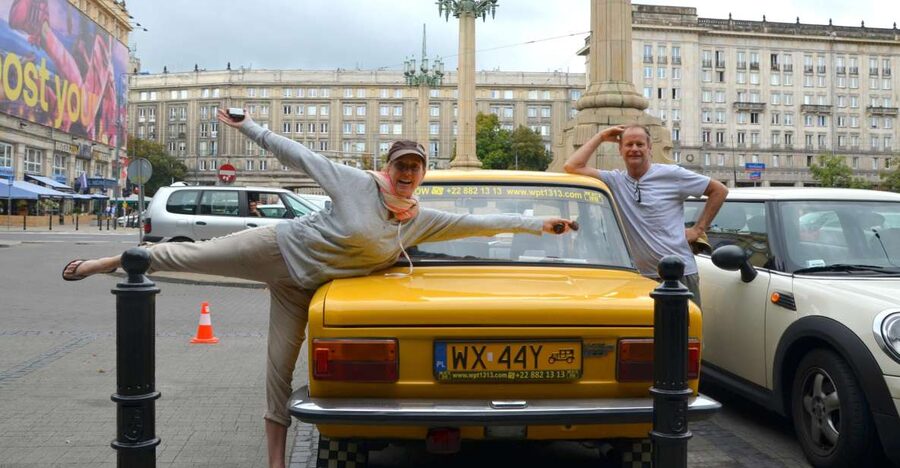
Photos from the tour are emailed afterward. That is useful because the Fiat itself makes a memorable subject, and you can enjoy the sights without constantly stopping to take pictures. The tour also includes hotel pickup and drop-off within central Warsaw, which saves you from arranging a taxi at either end.
How the $105 price compares with the experience
At $105 per person, this is not the cheapest way to see Warsaw’s communist sights. The cost makes more sense for couples, families, or small private groups who value a guide’s attention and the vintage vehicle.
You are paying for four hours, private transport, an English-speaking local guide, central pickup and drop-off, the vodka and doughnut, and emailed photos. A larger group can reduce the per-person cost if the booking arrangement allows it, but groups over four move in a blue vintage minivan rather than the Fiat 125p. That vehicle change may matter if the old Fiat is the main reason you are booking.
The better comparison is with a standard private city tour, not with a public bus ride. Here, the car is part of the interpretation. You are not simply being driven between monuments. The vehicle, streets, and guide’s stories work together.
For a visitor with only a short stay, the tour offers a compact introduction to a subject that can otherwise feel scattered across Warsaw. For someone already familiar with Polish communist history, the value depends on the personal route and guide conversation. You may prefer a museum or a longer architectural walk if you want more detail at each stop.
Who will get the most from this four-hour tour
I would recommend this experience to you if you want history explained through real streets rather than only through displays. It suits first-time visitors who want a clear introduction to postwar Warsaw, families looking for an unusual sightseeing format, and anyone interested in architecture, political history, or old cars.
It is also a good fit if you prefer a private pace. You can ask questions, request a different emphasis, and adapt the walking. The tour has received a full five-star rating across 25 reviews, with particular praise for clear explanations, friendly English communication, and guides who engage children.
I would think twice if you want a quiet ride with little conversation. The guide is central to the experience, and the tour depends on listening and asking questions. I would also consider another activity if your priority is a long visit inside museums or a detailed study of wartime Jewish history. Muranów is included, but the tour cannot cover every part of that story in four hours.
The Fiat is small and historic. That is the charm, but it also means the vehicle may not suit everyone’s idea of comfort. Groups larger than four use the blue vintage minivan, so check the vehicle arrangement if the Fiat is essential to your plans.
Practical details for a smoother ride
Your pickup is from a centrally located Warsaw hotel or another central point. The tour lasts four hours, and starting times are available according to the booking schedule.
Wear comfortable shoes. Although the experience is half driving and half walking, the route requires enough time on foot to make footwear important. Tell the provider in advance if you want to reduce the walking, since the tour can be adapted.
Pets are not allowed. The activity is listed as wheelchair accessible, but because the transport is a historical vehicle and the route includes walking, share your specific mobility needs before you go.
You can cancel up to 24 hours before the activity for a full refund, and reserve now while paying later. These terms are helpful if your Warsaw schedule is still changing.
Should you book the Warsaw Communism Private Tour?
Book it if you want Warsaw’s communist period explained through buildings, streets, and everyday stories, with the bonus of riding in a Fiat 125p. The private format, adjustable route, central pickup, and family-friendly guiding make it a practical choice, especially for a first visit.
Skip it if the $105 price feels high for an introductory tour, if you need extensive museum time, or if your group is larger than four and the Fiat itself is the chief attraction. For everyone else, this is a lively and focused way to connect the Palace of Culture, worker housing, government offices, and Muranów into one understandable story.
FAQ
How long does the Warsaw Communism Private Tour last?
The tour lasts four hours, including driving and walking between communist-era sights.
What vehicle is used for the tour?
Groups of up to four people are transported in a historical Fiat 125p from the 1970s or 1980s. Groups larger than four are driven in a blue vintage minivan.
Which sights are included?
The route includes the Palace of Culture and Science, Constitution Square, the communist ministerial district, the Ministry of Agriculture, the former House of the Communist Party, and communist-era housing in Muranów.
Is hotel pickup included?
Yes. Pickup and drop-off are included from your centrally located Warsaw hotel or another centrally located point.
Is the tour available in English?
Yes. The tour has a live English-speaking guide. Guides who have led the experience include Martin and Max.
Can the walking be adjusted?
Yes. The tour normally involves a moderate amount of walking and is about half walking and half driving, but it can be adapted to suit your requirements.
Recently added in Warsaw
- Warsaw Wolf’s Lair with St. Lipka and Mamerki Private Guided★ 4.2 · 3 reviews
- Taste of Poland, food tour and guided walk with 12 tasting★ 5.0 · 3 reviews
- Discover Warsaw’s most Photogenic Spots with a Local★ 5.0 · 3 reviews
- Lodz Small Group Tour from Warsaw with Lunch★ 4.0 · 3 reviews
- Jewish heritage in Warsaw★ 4.5 · 3 reviews
- Warsaw Outdoor Paintball with Transfers (all year round)★ 5.0 · 3 reviews
- Electric Scooter Tour: Full Tour – 3-Hours of Magic!★ 5.0 · 3 reviews
- Skip-the-Line Polin Museum Warsaw Jewish History Tour★ 5.0 · 3 reviews
Warsaw Tours, compared.

Traditional Galar Cruise on The Vistula River
Read our review →
Warsaw Concert: Chopin – Painted by Candlelights with Wine
Read our review →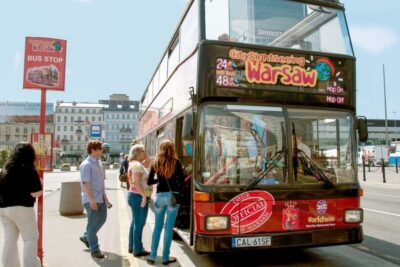

POLIN Museum of the History of Polish Jews Ticket
Read our review →
#1 Pub Crawl Warsaw with Optional Premium 1 Hour Open Bar
Read our review →