Reviewed · WARSAW TOURS
Warsaw Behind the Scenes – small group tour with hotel pickup
Warsaw’s story is unusually hard to read from its streets alone. A modest apartment block in Muranów can sit above the former Jewish Ghetto, while a quiet intersection on Chłodna Street once held a wooden bridge featured in The Pianist. This tour uses a vintage Żuk minibus and old photographs to connect those ordinary-looking places with the events that shaped them.
I like the way the tour links several chapters rather than treating World War II as an isolated subject. I also like the move across the Vistula to Praga, where prewar buildings and courtyards offer a different feel from rebuilt central Warsaw. The main consideration is comfort: some historic vehicles lack air conditioning and seat belts, and the tour includes walking at each stop.
The key points at a glance
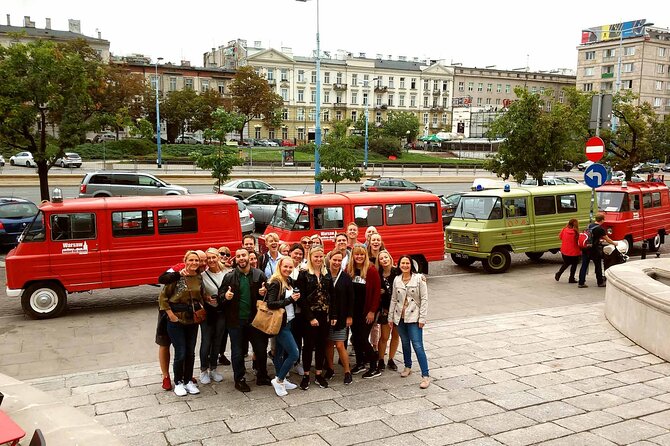
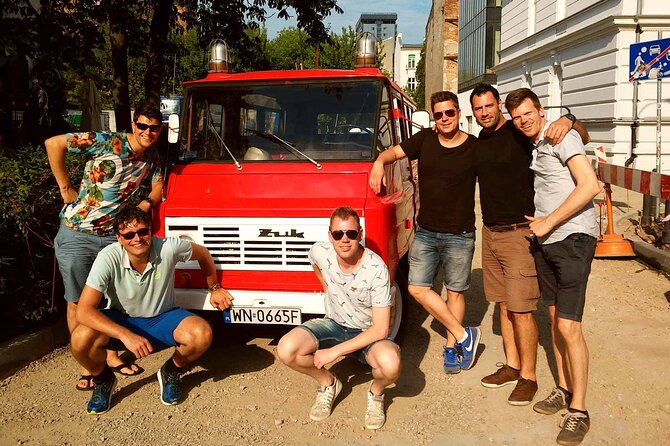
- A vintage Żuk sets the tone: The old Polish minibus is used mainly between stops and adds a memorable Communist-era touch to the outing.
- Warsaw’s wartime story is shown on location: Muranów, Chłodna Street, Nowolipki, and Bielańska help explain the Jewish Ghetto, the 1943 uprising, the 1944 Warsaw Uprising, and the city’s destruction.
- Praga provides a rare glimpse of older Warsaw: This district survived the war more intact than central Warsaw and retains Belle Époque buildings, courtyards, and a strong local character.
- The tour covers more than World War II: You’ll also learn how Warsaw was rebuilt under Soviet influence and how Solidarity and Pope John Paul II helped bring communist rule to an end.
- Small vehicles keep the outing personal: Each minibus carries up to eight people, although the total tour can reach 39 people across several vehicles.
- Hotel pickup saves time: Pickup and drop-off are offered for listed hotels, with the exact collection time confirmed after booking.
Why this tour helps you read modern Warsaw
Warsaw can feel confusing at first. The Old Town looks centuries old, but much of it was rebuilt after World War II. Modern apartment districts may conceal the footprint of the Jewish Ghetto, and grand Communist-era buildings can seem disconnected from the city’s prewar identity.
This three-hour experience, sometimes lasting closer to four hours depending on traffic and questions, gives you a useful framework. You move from the Nazi occupation and the Jewish Ghetto to the Warsaw Uprising, postwar Soviet control, the rebuilding of the capital, and the political changes of 1989.
The route is especially helpful on your first day. It gives you a sense of where the main districts sit, how the Vistula divides the city, and why Warsaw looks so different from one neighborhood to the next. Guides such as Tom, Marcin, Mark, Artur, Jan, and Lucas have been singled out for clear storytelling, humor, and a willingness to answer questions. Your guide will vary, but the experience depends heavily on having someone who can explain the history without turning every stop into a lecture.
You will not spend the entire time riding. The minibus is transportation between locations, while each stop includes a short walk and a talk outdoors. Wear shoes that can handle pavements and uneven surfaces, and dress for the weather.
A few more Warsaw half days to consider
- Warsaw: Chopin Concert in the Old Town
★ 4.8 · 2,287 reviews - Warsaw: Traditional Galar Cruise on The Vistula River
★ 4.6 · 1,640 reviews - Warsaw: Old Town Highlights Walking Tour in English
★ 4.7 · 1,516 reviews
Muranów, where the ground carries the story
The first major stop is Muranów, built over the former Jewish Ghetto created by Nazi Germany in 1940. Today, much of the district appears to be a postwar residential area. That contrast is the point.
Your guide explains how the ghetto was sealed, how people were forced into it, and how the area was destroyed. The postwar buildings are not simply background scenery. They occupy ground where an entire neighborhood once existed, so the modern streets require explanation before they make sense.
This is a serious opening. If you want a light sightseeing ride with only occasional historical remarks, this may feel heavy. If you want to understand Warsaw beyond its restored Old Town, Muranów is essential.
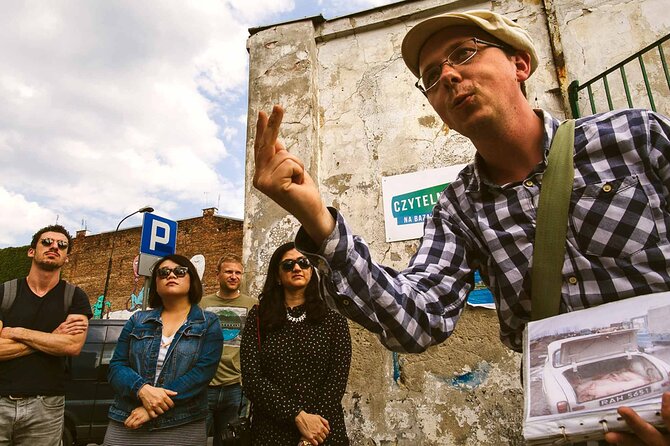
A useful feature is the guide’s use of historical photographs. Seeing the same street before the war, during the occupation, and after destruction helps you picture a city that no longer exists. One practical tip: consider visiting the POLIN Museum of the History of Polish Jews during your stay. One person found that the museum helped put the guide’s introduction into a clearer framework, while the tour itself gave the museum’s subject matter a physical setting.
Chłodna Street and the wooden ghetto bridge
At Chłodna and Żelazna Streets, the guide brings out the story of the wooden bridge that once crossed above the road. It connected two sealed sections of the ghetto while street traffic continued below.
The bridge became widely known through The Pianist, but the real value of this stop is not its film connection. It shows how the ghetto was divided and controlled. Historical photographs allow you to compare the present intersection with the structure that once dominated it.
This is a short stop, about 15 minutes, so expect an explanation rather than a museum visit. You will need to use your imagination, and the photographs do much of the work. The location itself does not look dramatic today, which makes the guide’s context important.
Nowolipki and the 1943 uprising
The stop at Nowolipki turns to the Warsaw Ghetto Uprising of 1943. Jewish resistance fighters made a final stand against deportation, fighting for several weeks before the ghetto was razed.
The guide explains how the uprising is remembered and how traces of the past remain layered into the current city. This part of the tour handles a difficult subject, so it suits you best if you want a serious account rather than a quick list of dates.
The short timing also means you should ask questions as you go. Guides have been praised for adjusting the discussion to the group, and this is where that flexibility matters. A history teacher, for example, found the explanations offered facts that were not already familiar. You do not need specialist background, but you will get more from the stop if you arrive ready to listen and ask.
A different kind of day in Warsaw:
- Warsaw Concert: Chopin – Painted by Candlelights with Wine
★ 4.8 · 1,442 reviews - Warsaw: City Sightseeing Hop-On Hop-Off Bus Tour
★ 3.6 · 1,415 reviews - Warsaw: POLIN Museum of the History of Polish Jews Ticket
★ 4.7 · 1,142 reviews - #1 Pub Crawl Warsaw with Optional Premium 1 Hour Open Bar
★ 5.0 · 790 reviews
Bielańska and the destruction of Warsaw
At Bielańska, the story widens from the ghetto to Poland’s wartime and postwar fate. Your guide explains how agreements between the Western Allies and Stalin placed Poland under Soviet control, and how the 1944 Warsaw Uprising became the city’s final attempt to change that outcome.
After the uprising failed, Nazi forces systematically destroyed about 85 percent of Warsaw. The Red Army entered the ruins in January 1945. That figure is difficult to grasp until you understand the city’s rebuilt appearance, and this stop helps explain why Warsaw can look both historic and entirely new.
The guide’s photographs are particularly valuable here. They show the gap between prewar Warsaw, the ruins after the war, and the capital that was rebuilt afterward. You are not just hearing that the city was destroyed. You are seeing how total that destruction was.
Praga, across the Vistula
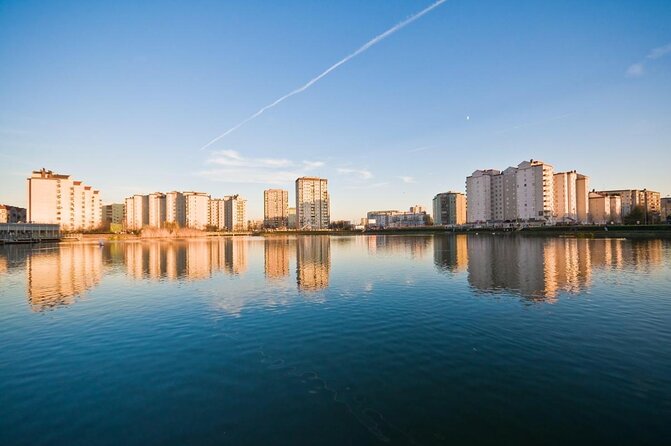
Crossing the Vistula brings a sharp change in mood and architecture. Praga Północ survived the war far more intact than much of central Warsaw, so its streets can offer a sense of the older city that rebuilt districts cannot.
You’ll see river views, Belle Époque buildings, traditional courtyards, and signs of a neighborhood that spent years outside the usual sightseeing circuit. Praga has since become one of Warsaw’s creative districts, but it still retains a local identity and has not been shaped entirely around mass tourism.
This is my favorite part for understanding everyday Warsaw. The district is not presented as a polished historic quarter. Its appeal comes from the mixture of old buildings, working neighborhoods, and newer creative activity. You will see a city that survived rather than one reconstructed from plans.
The 30-minute stop gives you more time to look around than the shorter wartime locations. Still, do not expect a long independent exploration. The tour keeps moving, and the main purpose is to understand how Praga differs from the rest of Warsaw.
Śródmieście and the Communist rebuilding project
Back in central Warsaw, the tour stops near the former headquarters of the Polish Communist Party. Here, the guide discusses the challenge of rebuilding a capital that had been almost wiped out.
Architects wanted a modern, functional city. Communist authorities also expected the rebuilt capital to reflect Soviet-inspired political ideas. The result was a series of compromises visible in Warsaw’s streets, public buildings, housing blocks, and broad urban spaces.
This stop helps explain why central Warsaw can feel so varied. You may see reconstructed historic buildings close to postwar modernism and monumental Communist-era architecture. Instead of judging the city only by its appearance, you learn why these different styles ended up together.
The stop lasts about 30 minutes, making it one of the more substantial parts of the route. It is a good moment to ask how Warsaw’s reconstruction differed from simple restoration. The answer helps you appreciate that the city was not merely repaired. It was redesigned, argued over, and given a new political purpose.
1989 and the city’s latest transformation
The final section covers 1989, when the Solidarity movement and Pope John Paul II played important roles in ending communist rule in Poland. Warsaw then entered a new period of democracy and capitalism, bringing another major change to the city.
This ending prevents the tour from becoming a memorial to wartime suffering alone. Warsaw’s story continues through political change, economic adjustment, and the everyday life of a modern capital.
You finish with a better sense of how the past remains present. A rebuilt street, a Communist-era office, and a changing district such as Praga are all parts of the same story. The tour does not claim that Warsaw has one simple identity. It shows you why the city can feel rebuilt, improvised, historic, and modern at the same time.
The Żuk ride: charming, useful, and not luxurious
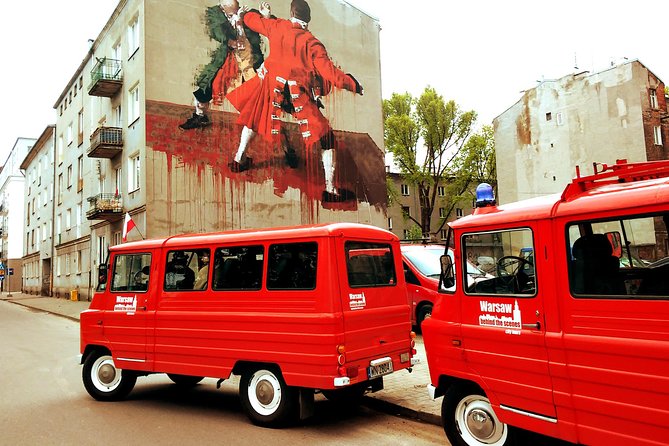
The vintage Żuk is one of the experience’s strongest features. These Polish minibuses recall the Communist period and make the journey between stops feel connected to the history being discussed. Guides have used humor and storytelling to turn the vehicle into part of the experience, not just a transfer van.
But you should know what you are booking. The vehicles are historic rather than modern touring coaches. Some do not have air conditioning, and some do not have seat belts, which is permitted for historic vehicles. All have heating for winter, but summer comfort may be limited.
Each minibus holds up to eight people. The operator has a fleet of five vehicles, so the total outing can reach 39 people, even though your individual vehicle should remain small. The tour may therefore feel intimate inside the Żuk while still operating as a larger group overall.
Rain does not necessarily stop the tour, and a guide may bring you as close to sights as possible in poor weather. Still, you should bring sensible clothing and shoes. The minibus is part of the charm, but it is not the right choice if you require modern vehicle comforts.
Price, timing, and what you receive
At $133.08 per person, this is not Warsaw’s cheapest sightseeing option. The value comes from the combination of hotel pickup, a small vehicle, a local guide, visual aids, and a route that connects several districts that are awkward to combine on foot.
You are paying for interpretation as much as transport. The former ghetto sites, Praga, and Communist-era central Warsaw are spread across the city. A taxi or public transit can move you between them, but it will not explain what you are seeing or provide old photographs at the exact location.
The advertised duration is about three hours. Some experiences have run closer to four hours, especially when the guide allows time for questions or adds a useful stop. If you have an appointment immediately afterward, allow extra time rather than planning a tight connection.
Pickup is available only from listed hotels unless you arrange another meeting point with the operator. After booking, watch the Viator message system for the exact pickup time, since the vehicle collects people from different hotels. The listed start time is 10:00 a.m.
The tour needs at least two people to operate. A solo booking can still go ahead if another booking has at least two people, but it is not guaranteed to run solely for one person.
Who will get the most from this tour
I would choose this tour if you want historical context, less obvious neighborhoods, and a practical introduction to Warsaw. It is particularly useful for a first day, when you want to understand the city before exploring its museums and monuments on your own.
It suits:
- First-time visitors who want a city orientation with substance
- People interested in World War II, Jewish history, and postwar Poland
- Visitors who enjoy local guides and unusual transport
- Families with older children who can follow serious historical material
- Anyone curious about Praga and districts beyond the usual center
Children must be over 150 centimeters to book instantly online. For a child under that height, contact the operator in advance about a booster seat, which is required under Polish law.
I would think twice if you want a relaxed panoramic ride with little walking, if you dislike historic vehicles, or if you already have a strong grasp of Warsaw’s wartime and Communist history. The tour moves quickly, and the short stops cannot provide the depth of a dedicated museum visit.
Should you book Warsaw Behind the Scenes?
Book it if you want to understand why Warsaw looks the way it does, not simply collect a list of landmarks. The combination of Muranów, the ghetto bridge site, the uprising locations, Praga, Communist-era rebuilding, and 1989 gives you a useful map of the city’s past.
The strongest reasons to go are the guides, the old photographs, and the Żuk itself. Guides such as Tom, Marcin, Mark, and Artur have been praised for strong English, humor, empathy, and the ability to adjust the pace to the group. Your guide will determine the exact tone, but the format encourages questions and personal interests.
The main cautions are the outdoor walking, serious subject matter, uncertain exact duration, and basic comfort of some vehicles. For many people, those are fair trade-offs for a small-group ride through parts of Warsaw you could easily miss on your own.
FAQ
How long does the Warsaw Behind the Scenes tour last?
The advertised duration is approximately three hours. Some tours may last closer to four hours depending on traffic, questions, and the pace of the group.
What time does the tour start?
The listed start time is 10:00 a.m. The exact hotel pickup time is confirmed after booking because the operator collects people from several hotels.
Is hotel pickup included?
Pickup and drop-off are available for listed hotels. If your hotel is not listed, contact the operator to arrange the most suitable pickup point.
What language is the tour offered in?
The tour is offered in English.
How many people ride in each minibus?
Each vintage minibus accommodates up to eight passengers. The entire operation can include as many as 39 people across a fleet of five minibuses.
Does the tour visit former Jewish Ghetto sites?
Yes. The route includes Muranów, Chłodna and Żelazna Streets, and Nowolipki, with explanations of the ghetto, the wooden bridge, and the 1943 Warsaw Ghetto Uprising.
Does the tour cross the Vistula River?
Yes. The tour crosses the river to visit Praga Północ, a district known for prewar buildings, traditional courtyards, and a local identity shaped by surviving the war more intact than central Warsaw.
Are children allowed on the tour?
Children over 150 centimeters can be booked online. For children under 150 centimeters, contact the operator in advance to check the availability of a required booster seat.
Can I cancel for a full refund?
Yes. You can cancel for a full refund up to 24 hours before the experience start time. Cancellations or changes made less than 24 hours before the start are not accepted for a refund.
Recently added in Warsaw
- Warsaw Wolf’s Lair with St. Lipka and Mamerki Private Guided★ 4.2 · 3 reviews
- Taste of Poland, food tour and guided walk with 12 tasting★ 5.0 · 3 reviews
- Discover Warsaw’s most Photogenic Spots with a Local★ 5.0 · 3 reviews
- Lodz Small Group Tour from Warsaw with Lunch★ 4.0 · 3 reviews
- Jewish heritage in Warsaw★ 4.5 · 3 reviews
- Warsaw Outdoor Paintball with Transfers (all year round)★ 5.0 · 3 reviews
- Electric Scooter Tour: Full Tour – 3-Hours of Magic!★ 5.0 · 3 reviews
- Skip-the-Line Polin Museum Warsaw Jewish History Tour★ 5.0 · 3 reviews
Warsaw Tours, compared.
Traditional Galar Cruise on The Vistula River
Read our review →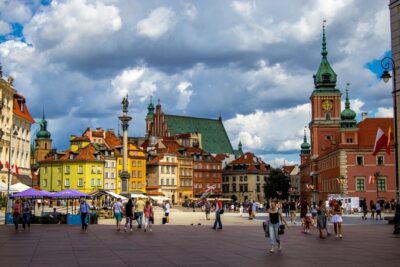
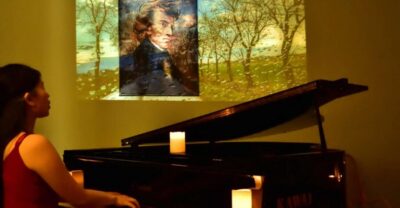
Warsaw Concert: Chopin – Painted by Candlelights with Wine
Read our review →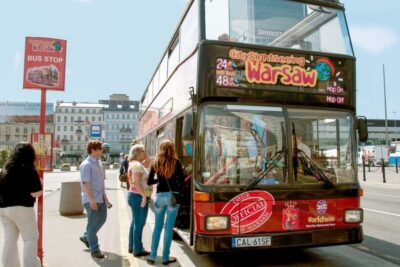
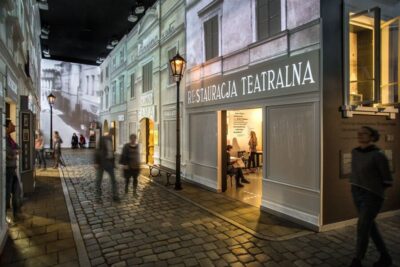
POLIN Museum of the History of Polish Jews Ticket
Read our review →
#1 Pub Crawl Warsaw with Optional Premium 1 Hour Open Bar
Read our review →