
Reviewed · WARSAW TOURS
Private half-day tour to Treblinka with hotel pickup
Treblinka is not a place you visit for scenery or entertainment. You go to understand how the Warsaw Ghetto’s liquidation led to the murder site at Treblinka II, then walk through a memorial built where almost no original camp buildings remain. The railway ramp and field of memorial stones make the history painfully clear without turning the site into a theatrical display.
I like the private format, which gives your group room for questions and serious conversation. I also like the short Warsaw stops at POLIN and Umschlagplatz, since they provide a useful thread between city history and the camp itself. The main drawback is the long, emotionally heavy subject matter, along with a possible language detail to confirm: the tour is offered in English, while the Treblinka description refers to a German-speaking guide.
Key points at a glance
- Treblinka II is the main event: Walk through the symbolic gate, follow the railway ramp, and see the large memorial made of individual stones.
- The Warsaw stops add vital context: POLIN and Umschlagplatz connect the ghetto’s destruction with the deportations to killing centers.
- Private travel keeps the visit personal: Only your own group takes part, with a licensed guide and direct time for questions.
- Hotel pickup is included: Central Warsaw hotels are collected at reception, while pickup outside the center is arranged by email.
- The tour takes about six hours: The scheduled Treblinka visit lasts about 90 minutes, with the rest of the time used for transport and Warsaw context.
- This is for mature visitors: Children under 15 are not permitted, and the subject demands patience and emotional readiness.
Why Treblinka is a different day trip from Warsaw
Many people first hear about Nazi camps through Auschwitz-Birkenau, but Treblinka tells a different story. The site is tied directly to Operation Reinhard, the Nazi murder operation aimed at the Jewish population in occupied Poland. Treblinka II became one of the most efficient killing centers in that system and the second-largest murder operation of its kind in Nazi-occupied Poland.
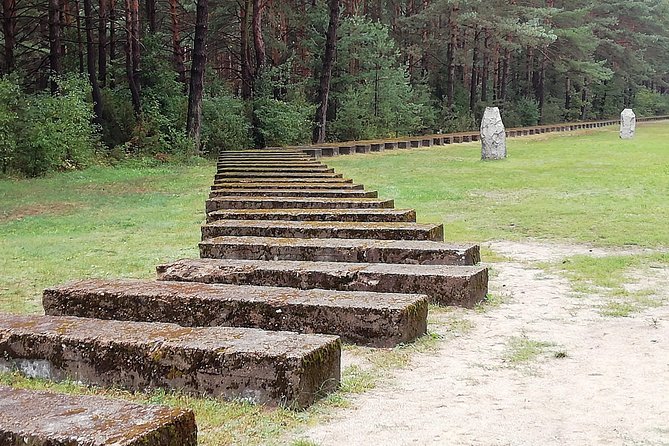
What makes the visit especially striking is the lack of surviving camp buildings. You do not walk through rows of barracks or preserved rooms. Instead, you enter a symbolic gate, follow the route of the railway arrival area, and encounter a memorial made from thousands of stones. The absence of visible infrastructure forces you to rely on the guide, the museum, and the memorial’s design.
I find this kind of visit requires a different pace. You are not checking off a collection of objects. You are listening, looking closely, and allowing the setting to communicate through symbols. The tour works best if you approach it as a serious history lesson rather than a standard sightseeing outing.
The private arrangement matters here. Your guide can explain the site at a pace that suits your group, pause for questions, and avoid the rushed feeling that can come with a large coach excursion. Feedback specifically praises Marzena for being personable and for discussing Polish history and culture along with the camp’s story.
More half day trips in Warsaw:
- Half-Day Polish Food Walking Tour with Guide and Dinner
★ 4.5 · 381 reviews - Half-Day Warsaw City Sightseeing Bike Tour for Small Group
★ 5.0 · 240 reviews - Zelazowa Wola: Frederic Chopin Half-Day Private Tour
★ 4.7 · 18 reviews
The POLIN stop and the story of the Warsaw Ghetto
The first stop is at the POLIN Museum of the History of Polish Jews, where you learn about the liquidation of the Warsaw Ghetto. The scheduled time is about 10 minutes, and admission for this stop is listed as free.
Do not expect a full museum visit in that short period. The useful point here is orientation. Your guide begins to explain what happened in Warsaw before connecting it to the deportations and murder operation at Treblinka. If you are planning to visit the POLIN museum separately, this stop can help you place its broader subject within the day’s focus.
The short visit also makes practical sense. A half-day tour cannot provide a full POLIN exhibition visit and a proper trip to Treblinka. Instead, you get a compact introduction before leaving the city. I would treat it as historical preparation, not as a replacement for spending several hours inside the museum.
The pickup information uses Anielewicza 0601-025 Warsaw as the meeting point, but central hotel pickup is also offered. At a city-center hotel, pickup takes place at reception. For accommodation outside the center, you need to arrange the details by email, so do not leave that exchange until the morning of the tour.
Umschlagplatz and the machinery of deportation
The second Warsaw stop is Umschlagplatz, also scheduled for about 10 minutes. This was the transshipment center connected with the deportation of Jews from the Warsaw Ghetto. Here, the guide explains its symbolic meaning and how the Nazi plan for the Final Solution was put into practice.
This stop is brief, but it gives the day an important middle chapter. POLIN introduces the destruction of Jewish life in Warsaw. Umschlagplatz shows the point at which people were gathered and sent away. Treblinka then reveals the destination and the scale of the killing operation.
I appreciate the sequence because it gives you a clear line through events instead of presenting Treblinka as an isolated site. The tour is asking you to understand a process: the ghetto’s liquidation, the forced gathering and deportation, and the camp built for mass murder.
Ten minutes is enough for an explanation and a look at the memorial setting, but not enough for a long discussion. If this subject is central to your visit to Warsaw, you may want to return to both POLIN and Umschlagplatz on another day. This tour gives you context, not a complete Warsaw Jewish heritage program.
Entering the Treblinka II memorial grounds
The Treblinka portion lasts about 90 minutes and includes admission to the Museum of Combat and Martyrdom in Treblinka. You enter through a symbolic main gate and walk along the railway ramp, the place associated with the arrival of deportation trains.
The guide explains the site’s history while you move through the grounds. Since the original camp infrastructure is no longer visible, the memorial itself becomes the main visual record. This can be more demanding than visiting a preserved camp because you must listen carefully and use your imagination without inventing details.
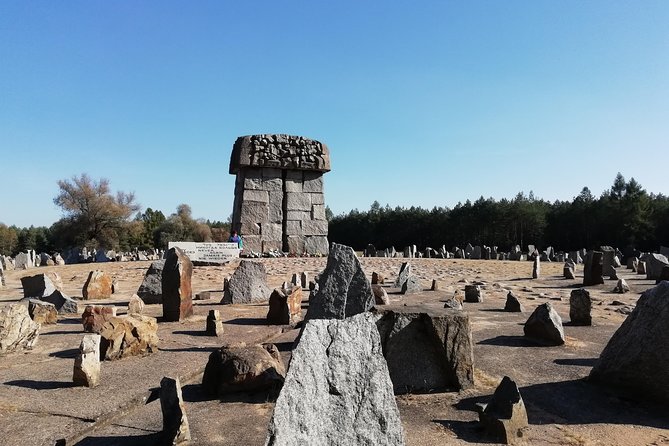
The memorial stones are the heart of the visit. Each stone represents a place associated with the people murdered at Treblinka. Together they create a stark field that recalls a destroyed world without rebuilding the camp as a museum set. The effect is quiet and severe, and the guide’s explanations help you understand why the memorial takes this form.
You also stop at the main Holocaust Memorial. The tour explains its symbolism and gives you time to take in the scale of the site. The wording in the tour information calls the memorial breathtaking, but I would read that carefully. This is not beauty in an easy or decorative sense. Its power comes from the contrast between the open ground, the many stones, and the knowledge of what happened there.
A few more Warsaw half days to consider
- Warsaw: Chopin Concert in the Old Town
★ 4.8 · 2,287 reviews - Warsaw: Traditional Galar Cruise on The Vistula River
★ 4.6 · 1,640 reviews - Warsaw: Old Town Highlights Walking Tour in English
★ 4.7 · 1,516 reviews - Warsaw Concert: Chopin – Painted by Candlelights with Wine
★ 4.8 · 1,442 reviews
Janusz Korczak and the children from his orphanage
One particularly human part of the visit concerns Janusz Korczak and the children from his orphanage. The guide tells their story as part of the Treblinka memorial tour.
This detail matters because a place connected with mass murder can otherwise become hard to grasp at a personal level. Statistics describe scale, but the story of Korczak and the children points back to individual lives, relationships, and responsibility. It gives you one human thread to hold onto while learning about the larger operation.
The tour information does not provide a long separate stop for this story, so expect it to be woven into the walk and the guide’s explanation. The private setting should help if you want to ask about Korczak, the orphanage, or the choices people faced during the ghetto’s liquidation.
What the private format adds
This is a private activity, so only your group takes part. That is a meaningful advantage at a memorial site. You can ask direct questions without worrying about holding up a large party, and the guide can keep the tone suited to your group.
The supplied feedback gives special attention to the guide and driver. One guest names Marzena and describes her as personable, with an enjoyable one-on-one discussion about Polish history and culture. Another response praises the guide and driver for providing an enlightening, informative, and truthful visit. Those comments point to the two roles that matter most here: clear historical explanation and calm, dependable transport.
A licensed guide is included, as is an air-conditioned vehicle. You also receive a soft drink. Snacks, lunch, coffee, and tea are not included, so plan around that. Since the tour begins at 9:00 in the morning and lasts about six hours, you may want to eat before pickup and arrange lunch afterward.
The tour is listed in English, but the Treblinka description refers to a German-speaking guide. That is worth clarifying with PolinTours before booking if language is important to you. The named guide in the feedback is Marzena, but guide availability is not guaranteed.
Time, transport, and the $165.61 price
The listed price is $165.61 per person. That is not a low-cost bus outing, but the right comparison is not simply the price of a train ticket or a shared transfer. The fee covers roughly six hours, hotel pickup and return, an air-conditioned vehicle, admissions, and a licensed guide for a private group.
For two or more people, the private format can make the price easier to justify, especially if you value flexibility and conversation. Group discounts are offered, though the exact reduction is not provided. You should check the final price for your party rather than assume a fixed discount.
The tour begins at 9:00 a.m. and ends back at the meeting point. Central hotel pickup is handled at reception. Hotels outside the city center require an email arrangement, which may affect the exact start details.
The drive itself is part of the day, even though the advertised itinerary gives only the stop durations. The two Warsaw stops total about 20 minutes, and the Treblinka visit takes about 90 minutes. The remaining time is used for travel between Warsaw and Treblinka, pickup, return, and the guide’s explanations.
That timing is efficient for a half-day outing, but it is not leisurely. You get a focused introduction rather than an entire day devoted to Warsaw Jewish history and the Treblinka site. For many visitors, that balance works well. You leave room in your Warsaw schedule while still reaching a place that is difficult to visit without organized transport.
Who should book this tour
I would recommend this experience to adults and older teenagers who want historical context, a private guide, and straightforward transportation from Warsaw. It suits people who prefer a serious, focused visit over a general sightseeing day.
It is also a good fit if you want to connect Warsaw’s wartime story with Treblinka rather than treat the camp as a separate stop. The order of the day gives you a useful framework: the ghetto, the deportation point, and the killing center.
The tour is not suitable for children under 15. Even for older children, consider the subject carefully. The site is emotionally intense, and the experience depends on listening to difficult material with attention.
You should also be comfortable with a memorial visit where little physical camp structure remains. If you need preserved buildings and extensive museum displays to understand a site, Treblinka may require more effort from you. If you value symbolism, guided interpretation, and quiet reflection, the setting can be especially powerful.
Practical advice before you go
Start with food and water planning. A soft drink is included, but snacks, lunch, coffee, and tea are not. The tour begins early and runs for about six hours, so eat breakfast before pickup and do not expect a meal during the scheduled stops.
Give the provider accurate hotel details. City-center pickup takes place at reception, while pickup outside the center is arranged by email. The listed start point is Anielewicza 0601-025 Warsaw, and the activity returns to the meeting point.
Confirm the guide language if you need English specifically. The booking information says the experience is offered in English, while the Treblinka description mentions a German-speaking guide. A short message to PolinTours can prevent confusion.
Wear clothing suited to walking outdoors. The information confirms that you walk through the camp grounds and along the railway ramp, but it does not specify the surface or conditions. Comfortable shoes are a sensible choice without assuming a particular type of path.
Finally, leave some space in your day afterward. The tour deals with the Warsaw Ghetto liquidation, deportations, mass murder, and the story of children sent to Treblinka. You may prefer a quiet meal or a slower afternoon rather than another tightly scheduled attraction.
Cancellation and booking details
You receive confirmation at booking unless you reserve within 12 hours of departure. In that case, confirmation arrives as soon as possible and depends on availability.
Free cancellation is available up to 24 hours before the experience begins, with a full refund. Cancellations or changes made less than 24 hours before the start time are not accepted for a refund, and the cutoff follows local time.
The tour is near public transportation, and the information says most people can participate. It is still a serious walking and memorial visit, so consider your own comfort with the outdoor portion and the emotional demands of the subject.
Should you book the Treblinka tour?
Book it if you want a private, guided visit that explains Treblinka through Warsaw’s wartime story. The combination of POLIN, Umschlagplatz, and Treblinka gives the day a clear structure, while hotel pickup removes much of the transport problem.
The strongest reasons to choose it are the private group, the guide-led interpretation, and the chance to walk through the symbolic gate and railway ramp rather than simply view the memorial from outside. The named guide Marzena receives particular praise for personal conversation and clear explanation.
Skip it, or choose a longer alternative, if you want extensive time inside POLIN, a full-day historical program, or a visit with more preserved camp buildings. Also confirm the guide language before paying if English service is essential.
For the right visitor, the $165.61 price buys more than transport. It buys a focused day of context, explanation, and access to one of Poland’s most difficult memorial sites, handled in a small and personal setting.
FAQ
How long does the Treblinka tour last?
The experience lasts approximately six hours, including hotel pickup and return, the Warsaw stops, transportation, and the Treblinka visit.
What time does the tour start?
The scheduled start time is 9:00 a.m.
Is hotel pickup included?
Yes. Pickup and return to the hotel are included. At city-center hotels, pickup takes place at reception. Hotels outside the city center require pickup arrangements by email.
Is the tour private?
Yes. Only your own group participates in this activity.
What language is the tour offered in?
The experience is offered in English. The Treblinka description also refers to a German-speaking guide, so confirm the exact guide language with PolinTours before booking if needed.
What is included in the price?
The price includes an air-conditioned vehicle, hotel pickup and return, admissions, a licensed tour guide, and a soft drink.
Are food and coffee included?
No. Snacks, lunch, coffee, and tea are not included.
Can children join the tour?
No. The tour is not suitable for children under 15 years old.
What is the cancellation policy?
You can cancel up to 24 hours before the start time for a full refund. Cancellations or changes made less than 24 hours before the start time are not accepted for a refund.
Recently added in Warsaw
- Warsaw Wolf’s Lair with St. Lipka and Mamerki Private Guided★ 4.2 · 3 reviews
- Taste of Poland, food tour and guided walk with 12 tasting★ 5.0 · 3 reviews
- Discover Warsaw’s most Photogenic Spots with a Local★ 5.0 · 3 reviews
- Lodz Small Group Tour from Warsaw with Lunch★ 4.0 · 3 reviews
- Jewish heritage in Warsaw★ 4.5 · 3 reviews
- Warsaw Outdoor Paintball with Transfers (all year round)★ 5.0 · 3 reviews
- Electric Scooter Tour: Full Tour – 3-Hours of Magic!★ 5.0 · 3 reviews
- Skip-the-Line Polin Museum Warsaw Jewish History Tour★ 5.0 · 3 reviews
Warsaw Tours, compared.

Traditional Galar Cruise on The Vistula River
Read our review →
Warsaw Concert: Chopin – Painted by Candlelights with Wine
Read our review →

POLIN Museum of the History of Polish Jews Ticket
Read our review →
#1 Pub Crawl Warsaw with Optional Premium 1 Hour Open Bar
Read our review →