
Reviewed · SCHINDLER'S FACTORY TOURS
Krakow: Schindler’s Factory Tour & Skip-the-Line Entry
Krakow’s Schindler Factory is less a tour of machinery than a carefully staged journey through the city from 1939 to 1945. You’ll see Schindler’s preserved office, enamel pots arranged as the Survivor’s Ark, a Jewish apartment, Plaszow camp artifacts, and a tram film that puts wartime life into human terms. The museum tells Krakow’s story, not just Oscar Schindler’s.
I like the strong live guiding, which helps make sense of a museum filled with photographs, documents, and multimedia displays. I also like the skip-the-line entry, since timed admission can be limited. The main drawback is clear: if you want a full account of Schindler himself or a working factory tour, this is not quite that. The focus is the wider wartime story of Krakow.
Key points at a glance
- Schindler’s preserved office: Enter the administrative room associated with Oscar Schindler and see the factory’s famous enamel-pot installation.
- A city under occupation: Follow the changing lives of Polish residents, Jewish families, and Nazi occupiers from 1939 to 1945.
- Theatrical museum design: Walk through recreated streets, a typical Jewish apartment, a tram scene, and the Hall of Choices.
- A 90-minute guided visit: The guide keeps the story moving, though you may have limited time to read every display.
- Skip-the-line access: Your ticket helps you avoid the regular ticket queue, a useful advantage when entry slots are scarce.
- Five guide languages: Tours are offered in English, Spanish, Italian, French, and German.
What this Schindler Factory visit really covers
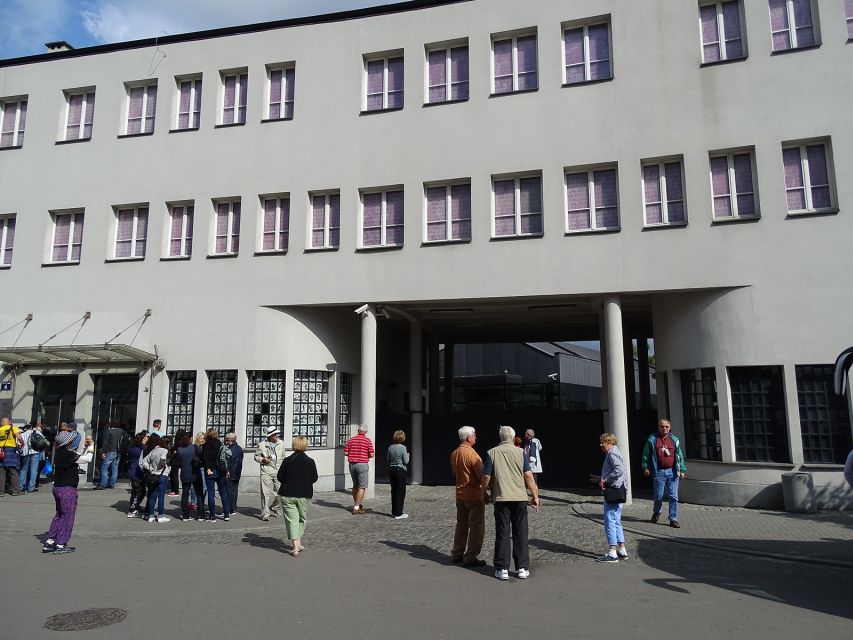
The museum occupies the former enamel factory made famous by Steven Spielberg’s Schindler’s List. That connection draws many people through the door, but the museum’s purpose is broader.
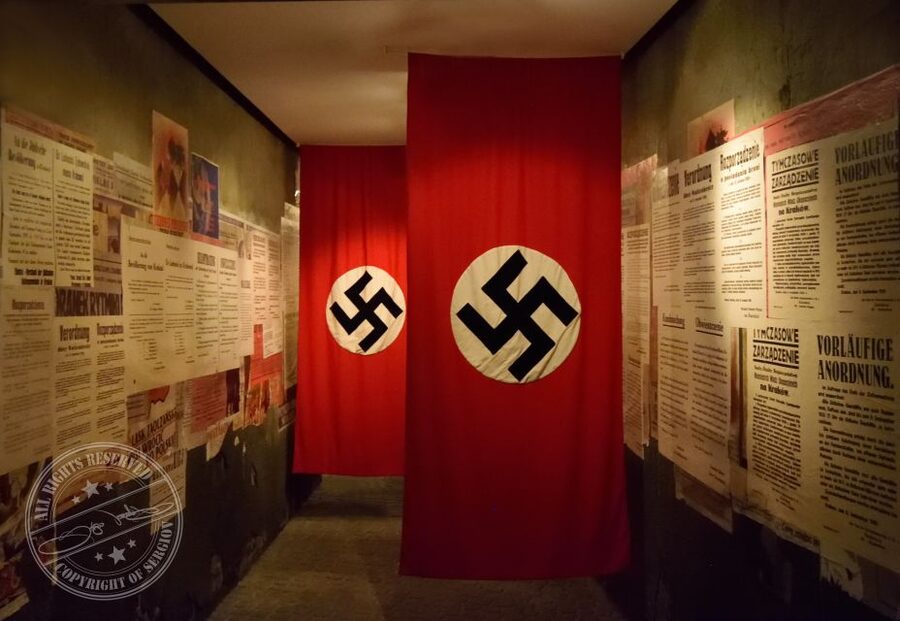
You’ll learn how Krakow changed under Nazi rule, beginning with the occupation in 1939 and continuing through the end of the war in 1945. The story includes both Polish and Jewish residents, as well as the Nazi authorities who broke apart Krakow’s long Polish-Jewish life.
That wider focus matters. Oscar Schindler is part of the story, but he is not the whole museum. You should book this experience if you want context about the city, the occupation, and the choices people faced. You may feel short-changed if you expect a room-by-room account of Schindler’s business or a traditional factory visit.
A guide is especially useful here because the displays ask you to connect many different kinds of evidence: documentary photographs, eyewitness accounts, film material, objects, and multimedia presentations. Without some explanation, the amount of information could feel scattered. A good guide gives the exhibits a clear order and helps you understand why each room matters.
Other visits to Schindler's Factory:
- Krakow: Oskar Schindler’s Factory Entry Ticket & Guided Tour
★ 4.2 · 3,793 reviews - Krakow: Schindler’s Factory Tour with Entrance Ticket
★ 4.5 · 3,182 reviews - Krakow: Schindler’s Factory Skip-the-Line Ticket
★ 4.4 · 3,105 reviews
Entering Schindler’s former administrative building
Meet your guide at Lipowa 4, outside the main entrance of the museum. Look for the guide holding an excursion.city sign. The meeting point is straightforward, but arrive with enough time to find the entrance and gather your group before the timed visit begins.
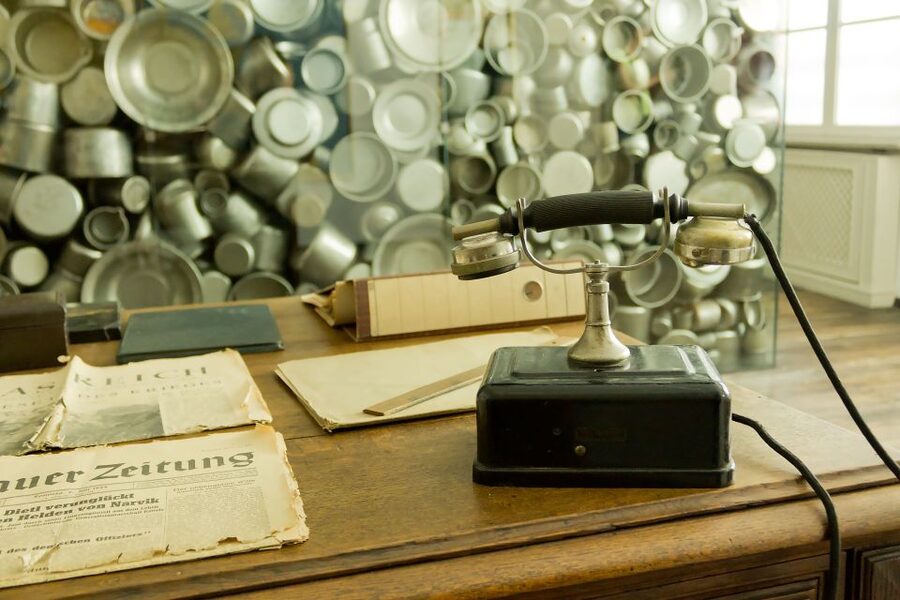
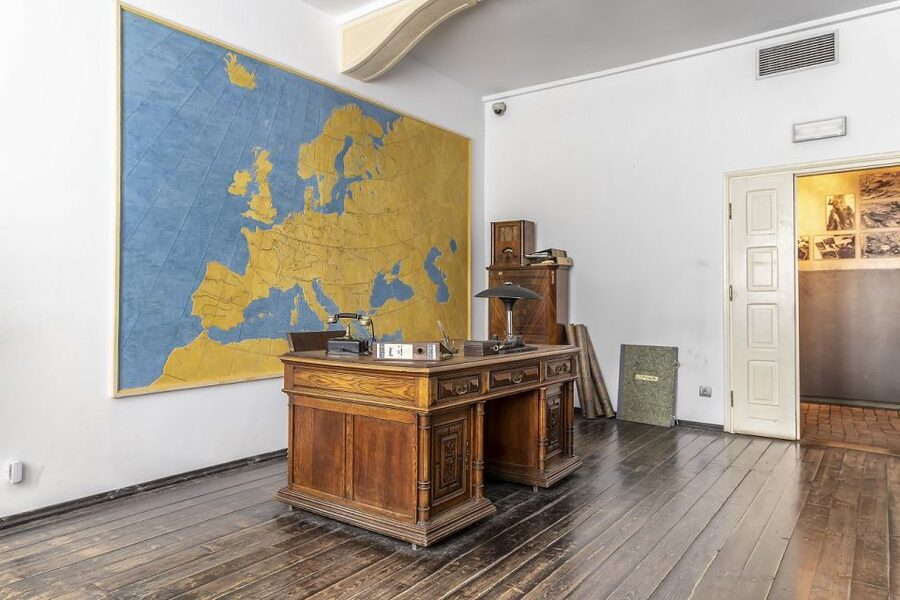
The first major point of interest is Schindler’s office, preserved inside the factory’s administrative building. This is the closest the experience comes to a personal encounter with Schindler’s working world.
The office gives the museum a physical link to the man known for employing and protecting Jewish workers. Still, the room is not presented as a shrine. It works better as an entry point into the larger story of the factory, its workers, and the city around it.
Nearby, the Survivor’s Ark uses thousands of enamel pots. The image recalls the products made at the factory, while also pointing toward the people whose lives were caught up in the war. It is one of the museum’s most memorable visual pieces, and your guide can explain how it fits the exhibition’s larger message.
Krakow from 1939 to 1945
The heart of the visit is the account of everyday life during the Nazi occupation. This means more than military events and dates. You’ll encounter the disruption of homes, neighborhoods, work, family life, and the older relationship between Krakow’s Polish and Jewish communities.
The exhibition presents the experiences of Polish residents, Jewish residents, and Nazi occupiers. That three-sided view is important. It avoids reducing Krakow’s wartime past to a single hero story and shows how different groups experienced the same city under radically different conditions.
You may see documentary photographs and personal accounts that require quiet attention. The material is serious, and the visit can be emotionally heavy. The guide’s role is not simply to point at objects, but to help you place them in the sequence of occupation, persecution, resistance, and survival.
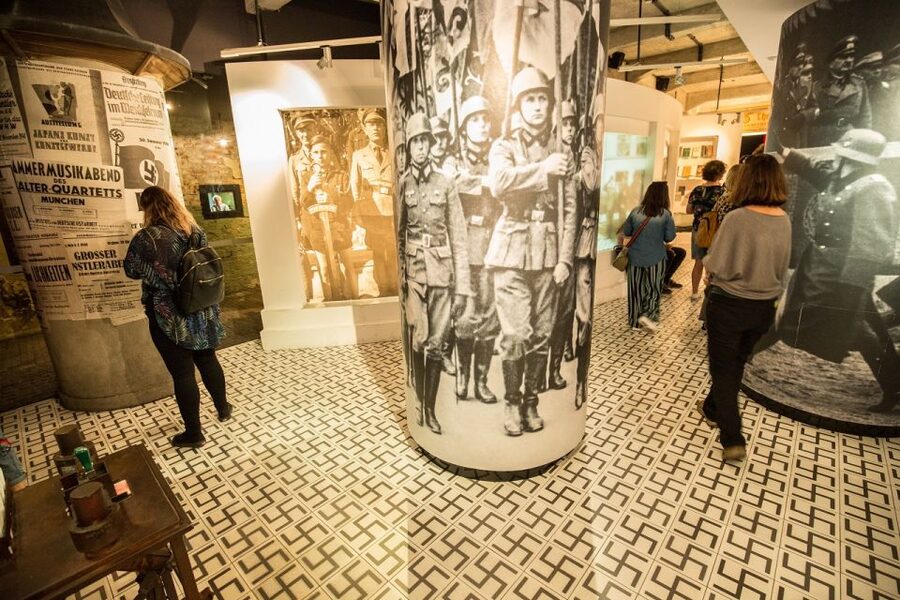
The museum also uses sound, film, and staged rooms to make the history more immediate. This approach will suit you if you prefer historical sites that use scenes and atmosphere alongside written panels. If you like to read every label at your own pace, the guided format may feel brisk.
A theatrical walk through the occupied city
Stage designer Michał Urban and theatre director Łukasz Czuj shaped the exhibition’s theatrical and cinematic presentation. Instead of moving through a plain set of galleries, you walk through recreated sections of Krakow’s historical city space.
This design is one of the visit’s defining features. Streets, rooms, objects, and film are arranged to give you a sense of the city as a lived place, not just a backdrop for wartime events.
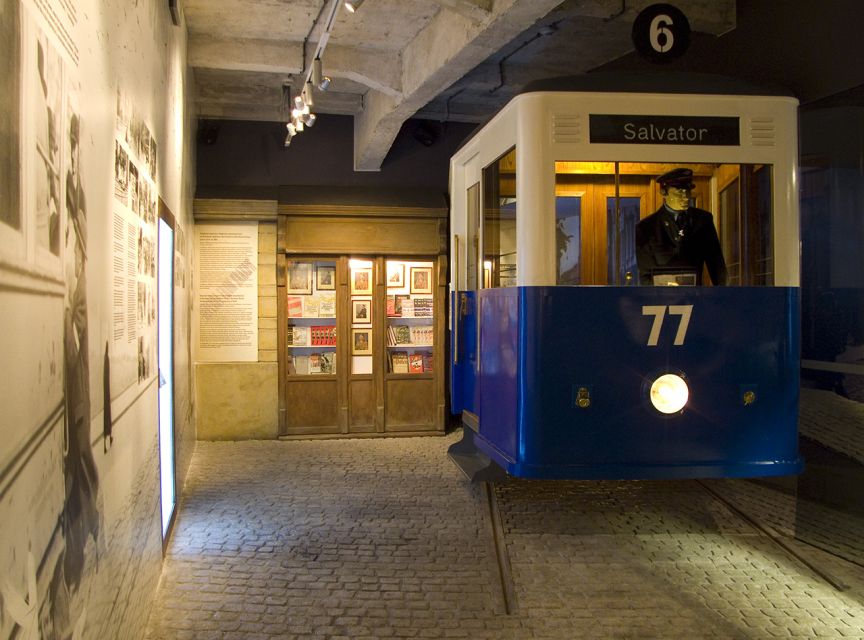
You’ll board a tram and watch a documentary about daily life in Krakow. The tram does more than add atmosphere. It gives you a moving view of the city’s ordinary routines and shows how familiar public spaces were altered by occupation.
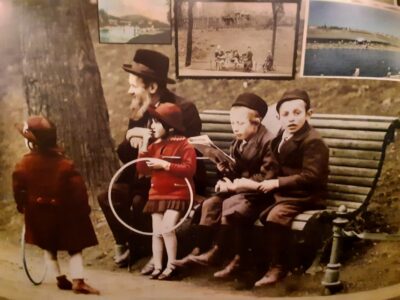
You’ll also visit a typical Jewish apartment. This is a valuable change of scale. Large political events become easier to understand when you see them through the setting of a home, where people had to deal with rules, fear, uncertainty, and the loss of normal life.
The theatrical layout can make the museum easier to follow, especially during a short visit. The trade-off is that some spaces may feel designed for movement and impression rather than long, careful reading. If you want to study each document, consider returning after the guided portion if museum access allows it. The supplied information confirms that the tour lasts 90 minutes, but it does not promise extra independent time.
More skip the line tickets in Krakow:
- From Krakow: Wieliczka Salt Mine Tour & Skip the Line Ticket
★ 4.4 · 3,925 reviews - Auschwitz-Birkenau Skip-the-Line Guided Tour
★ 4.3 · 3,617 reviews - Auschwitz-Birkenau: Skip-the-Line Entry Ticket & Guided Tour
★ 4.4 · 3,052 reviews - Schindler’s Factory in Krakow: Guided Tour & Skip the Line Ticket
★ 4.5 · 1,714 reviews
Plaszow artifacts and the Hall of Choices
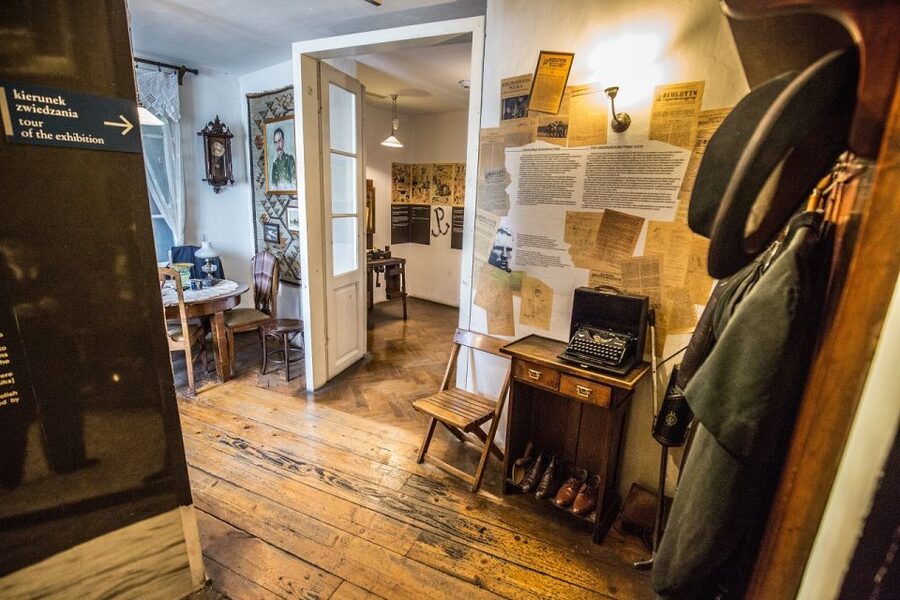
The visit includes artifacts connected with the Plaszow camp. These objects add a direct link to one of the most painful parts of Krakow’s wartime story.
Your guide can help explain the significance of the artifacts and place them within the wider occupation. This is another section where context matters. Objects from a camp can be difficult to interpret on their own, particularly when the museum combines personal testimony, images, and staged surroundings.
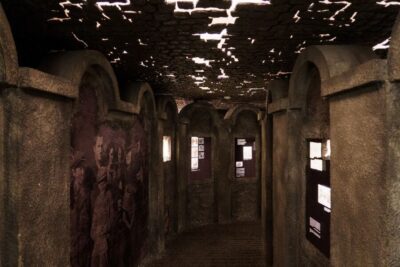
The Hall of Choices brings the ethical question to the front. This sculptural installation represents the decisions people faced during the war. It is not simply a room about what happened. It asks you to consider the pressure, danger, and uncertainty behind individual actions.
I find this kind of presentation useful when it leads to careful thought rather than easy judgment. The museum does not allow the visitor to remain a distant observer. You are asked to think about the limited choices available to people living under violent rule.
Expect the mood to become more reflective as the tour progresses. This is not a light sightseeing stop to fit between lunch and shopping. Give yourself a little quiet time afterward if you can.
Why the guide makes a difference
The strongest part of this booking is the live guide. The guide can connect the museum’s rooms, answer questions, and explain details that may not be obvious from the displays.
Past groups have praised guides for clear English, strong preparation, and patience. One small group had only three people, allowing the guide to answer questions and adjust the pace. Another guide was especially patient with a visitor who walked more slowly. Group size can vary, so you should not assume every departure will be this intimate, but a small group can make the 90-minute format work very well.
The guide-led approach also has a drawback. One visitor wanted more time to read the displays, but the guide continued narrating. That is a fair warning. The tour is built around a set pace, and the guide may need to keep moving to cover the museum’s main sections.
If you want to read everything, tell the guide early. You can also decide which matters more to you: hearing the full explanation or pausing at selected displays. A 90-minute visit cannot provide both a detailed spoken tour and unlimited reading time.
The tour is offered in English, Spanish, Italian, French, and German. Check the language when booking, since the value of a history tour depends heavily on how easily you can follow the explanation.
Is $49 a fair price?
At $49 per person, this is not the cheapest museum entry in Krakow. You are paying for the admission ticket and a professional guide, not food, drinks, or transportation.
The price makes the most sense if you value a timed entry and want help making sense of a dense, emotional museum. Skip-the-line access can save you from waiting at the ticket queue, while the guide gives the visit a clear structure. For a first visit to Krakow, that combination can be worthwhile.
The value is weaker if you already know the occupation period well, prefer to read independently, or mainly want to see Schindler’s office. In that case, the broader museum focus may not match your expectations.
I would think of the $49 as paying for orientation and interpretation. You are not buying a long excursion. You are buying 90 minutes in which someone helps you understand a complicated museum without spending your first hour figuring out how its rooms fit together.
Timing, entry, and practical details
The guided visit lasts 1.5 hours. Starting times vary, so check availability when you choose your date. The museum controls its schedule, and tour times may change.
From January 1, 2026, the listed time is approximate and the exact entry time is not guaranteed. The museum uses personalized tickets, so you must provide the full name of every participant when reserving. Bring a passport or ID card for entry. Without the required identification, admission may be refused.
This is especially important for families or groups. Check every name before completing the reservation, and make sure each person carries the same identification used for the booking.
Food and drinks are not allowed inside. Large bags and luggage are also prohibited. Leave your suitcase at your accommodation rather than arriving with it at the museum entrance.
You can cancel up to 24 hours before the activity for a full refund, and the reserve-now, pay-later option lets you keep your plans flexible. Still, do not treat the preferred time as fixed after January 1, 2026. Keep an eye on messages in case the museum adjusts the schedule. One past booking had its tour time changed twice, so checking updates is sensible.
Monday opening hours may be reduced, with closing around midday. If Monday is your only option, confirm the available departure carefully before booking.
Who should book this experience?
I would choose this tour if you want to understand Krakow during the occupation rather than simply collect a famous film location. It suits history-minded visitors, first-time visitors to Krakow, and anyone who prefers a guide to lead them through a museum’s main ideas.
It also works well for people who want a focused visit. Ninety minutes is long enough to see the central rooms without giving up half a day, though you should not expect to read every panel.
The tour may suit you if English, Spanish, Italian, French, or German is your preferred tour language. It can also work for visitors with limited walking speed, since a past guide was willing to proceed patiently, though the activity data does not specify a formal accessibility program.
I would be cautious if your main interest is Oscar Schindler as an individual. The museum includes his office and the factory connection made famous by Schindler’s List, but much of the visit concerns Krakow’s wartime society. That broader approach is a strength for many people, but it should not come as a surprise.
Should you book the Schindler Factory tour?
Book it if you want a well-organized introduction to Krakow under Nazi occupation, with a live guide, timed entry, and a museum design that uses film, staged rooms, objects, and personal accounts.
Do not book it expecting a conventional factory tour or a long biography of Oscar Schindler. The real subject is the city and its people during the war. At $49, the tour is a fair choice when you want guidance and want to avoid the ticket line. If you prefer to explore at your own speed, the fixed 90-minute pace may frustrate you.
Bring your passport or ID, avoid large bags, watch for schedule updates, and arrive at the main entrance on Lipowa 4. Go ready for a serious visit, not a quick film-location stop.
FAQ
Where does the Schindler Factory tour meet?
Meet your guide at the front entrance of the museum at Lipowa 4, 33-332 Kraków, Poland. The guide will hold an excursion.city sign.
How long does the guided tour last?
The guided tour lasts 90 minutes, or 1.5 hours.
What languages are available?
The live tour guide is available in English, Spanish, Italian, French, and German.
Does the tour include museum admission?
Yes. Entrance fees and a professional guide are included.
Is food or drink included?
No. Food and drinks are not included, and food and drinks are not allowed inside the museum.
Can I bring luggage or a large bag?
No. Luggage and large bags are not allowed.
Do I need identification?
Yes. Bring a passport or ID card. From January 1, 2026, personalized tickets require the full names of all participants, and you must bring identification for entry.
Can I cancel the booking?
You can cancel up to 24 hours in advance for a full refund. The reserve-now, pay-later option lets you book without paying immediately.
Recently added in Krakow
- Auschwitz-Birkenau and Krakow Private Car Trip from Katowice★ 4.3 · 3 reviews
- Wawel Castle, Old Town with St. Mary’s Church Guided Tour★ 5.0 · 3 reviews
- Private tour to Zakopane and Thermal Baths from Krakow★ 5.0 · 3 reviews
- Wawel Castle, Cathedral, Rynek Underground Tour with Lunch★ 5.0 · 3 reviews
- From Krakow: Chocholow Thermal Hot Springs (hotel pick up)★ 5.0 · 3 reviews
- Legends of Cracow ROBOTIC SHOW★ 4.0 · 3 reviews
- Guided Beer Tour in Krakow★ 4.5 · 3 reviews
- From Krakow: Zakopane and Thermal Pools Guided Trip★ 5.0 · 3 reviews
Schindler's Factory Tours, compared.
Oskar Schindler’s Factory Entry Ticket & Guided Tour
Read our review →
Schindler’s Factory Tour with Entrance Ticket
Read our review →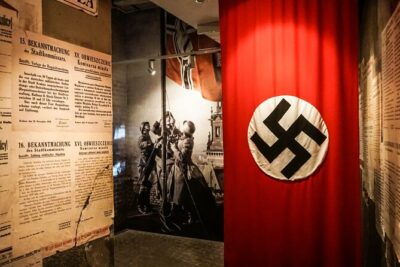
Schindler’s Factory in Krakow: Guided Tour & Skip the Line Ticket
Read our review →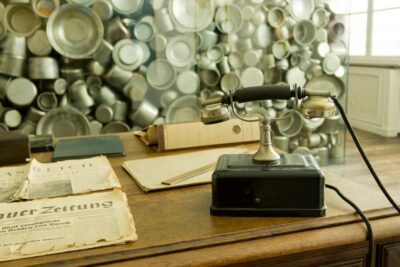
Schindler’s Factory Ticket with Guided Tour Option
Read our review →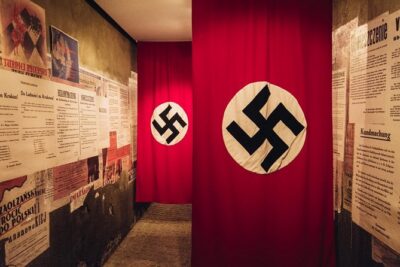
Krakow Schindler’s Factory Guided Tour with Admission Ticket
Read our review →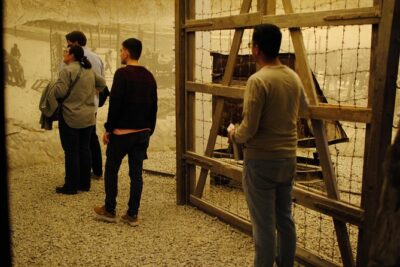
Krakow Schindler’s Factory Museum Guided Tour in English
Read our review →Where else this one turns up