
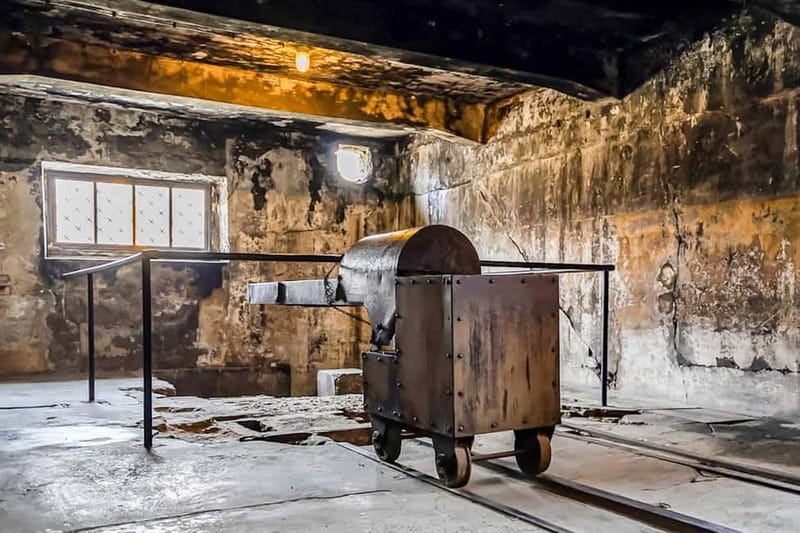
Reviewed · AUSCHWITZ-BIRKENAU MEMORIAL TOURS
Auschwitz-Birkenau Skip-the-Line Guided Tour
Auschwitz-Birkenau is not a sightseeing stop to rush through. It is a place for careful attention, and this tour gives you that structure with an official museum guide, pre-booked entry, and transport between the two separate camp sites. I especially like the clear four-hour route and the fact that the guide leads you through both Auschwitz I and Birkenau, rather than leaving you to piece the visit together alone.
I also like the headset system at Auschwitz I, which helps you hear the guide in a large group, and the practical bus transfer between the sites. The main drawback is that your chosen starting time is not guaranteed. The museum may change it, sometimes from morning to afternoon, and you are normally told the final time the day before.
Key points to know before booking
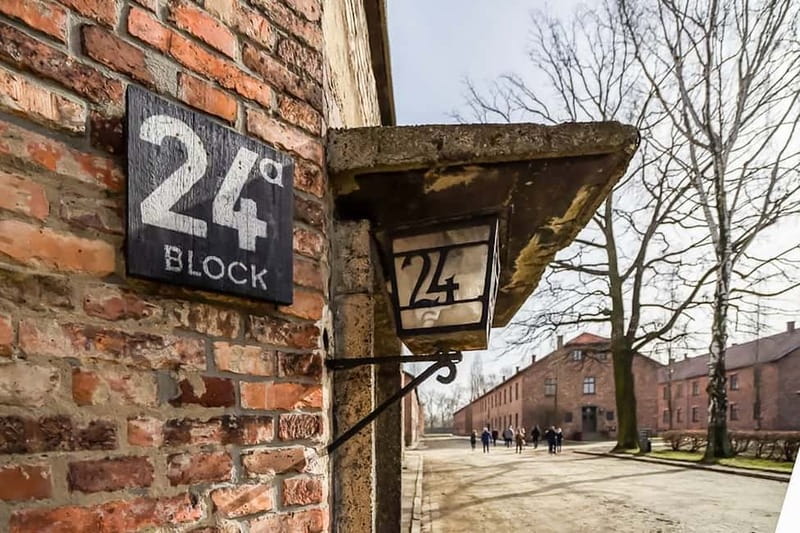
- Auschwitz I and Birkenau are both included: You spend about two hours at Auschwitz I and roughly 90 minutes at Auschwitz II-Birkenau.
- The guide is an official museum guide: Tours are offered in English, German, or French, with headsets used to make the commentary easier to follow.
- The camps are connected by a short bus ride: The transfer takes about 10 minutes and is included in the price.
- The meeting time can change: Keep the full day flexible until the provider confirms your final time 24 hours before the visit.
- The experience is emotionally demanding: Wear comfortable shoes, bring identification, and prepare for a serious memorial visit rather than a casual museum outing.
- The $53 price covers useful basics: Entry, the official guide, headsets, camp transport, and a local host are included. A lunch box is available only with selected options.
Why a guided Auschwitz visit matters
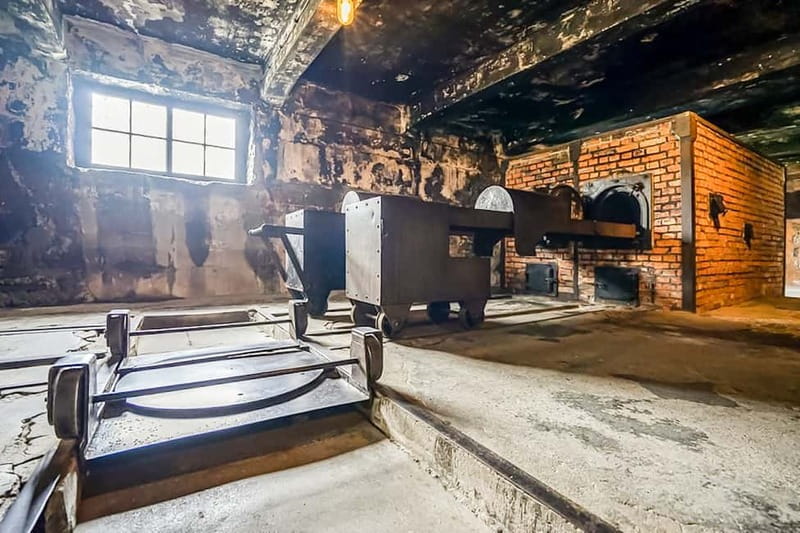
The first thing to understand is the scale of the site. Auschwitz-Birkenau is not one compact museum building. It is a memorial complex made up of Auschwitz I and Auschwitz II-Birkenau, separated by a short drive.
A guide gives the visit shape. You move through the grounds in a set order, stop at important locations, and hear the facts in their proper context. That matters here because the setting can feel quiet and deceptively ordinary in places. Without explanation, you could easily miss the meaning of a building, a gate, or a section of the camp.
This is also a place where a guide’s tone matters. Several guides named in the feedback, including Peter, Jacob, Magdalen, and Martin, were praised for speaking with care and feeling. You should not expect entertainment or theatrical storytelling. The strongest guides use personal stories and clear facts to help you understand the people who were imprisoned and murdered here.
The subject is World War II and the Holocaust, so the mood is heavy. I would not book this as a filler activity between lighter attractions. Give yourself time afterward. You may want a quiet walk, a meal, or an hour without another scheduled stop.
Other guided visits to the Auschwitz-Birkenau Memorial:
- From Krakow: Auschwitz-Birkenau Guided Tour & Hotel Pickup
★ 4.5 · 33,358 reviews - From Krakow: Auschwitz-Birkenau Guided Tour & Hotel Pickup
★ 4.5 · 29,340 reviews - Krakow: Auschwitz Guided Tour with Optional Hotel Pickup
★ 4.5 · 15,280 reviews
Meeting at Męczeństwa Narodów 14
The tour begins at Męczeństwa Narodów 14, at a meeting point marked by a logo board on the main building. A local host meets you there, helps you find the right entrance, and gives practical advice about planning the visit.
This small step is useful. The entrance area can be busy, and the ticket and security process is easier when someone points you in the right direction. The host also helps bridge the gap between arriving at the site and meeting the official museum guide.
Bring your passport or national identity card. This is not an optional extra to tuck away in your luggage. Identification is specifically required information for the activity.
The tour ends back at the meeting point. You are responsible for getting to Męczeństwa Narodów 14 in the first place. Transport from Krakow or another city is not included, nor are parking fees.
Auschwitz I and the Arbeit Macht Frei gate
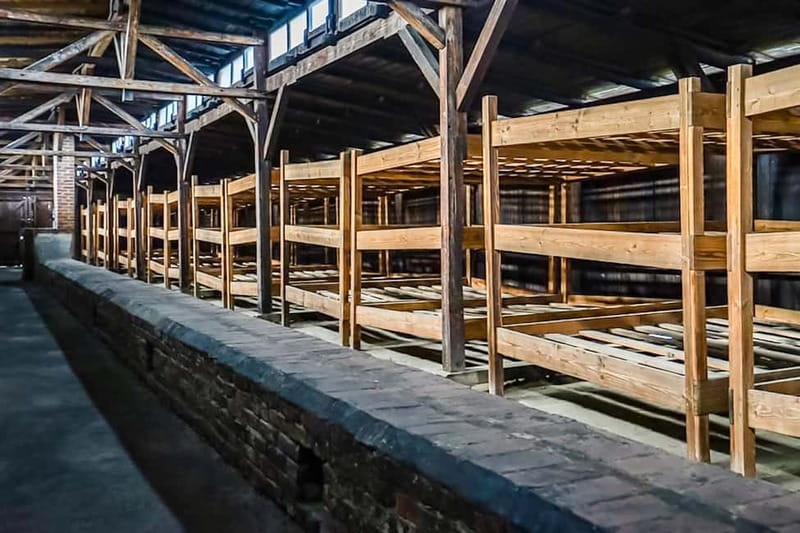
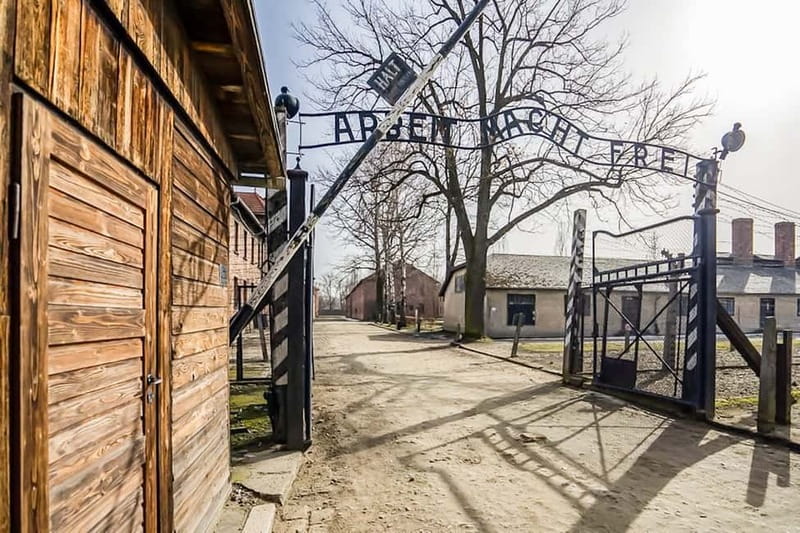
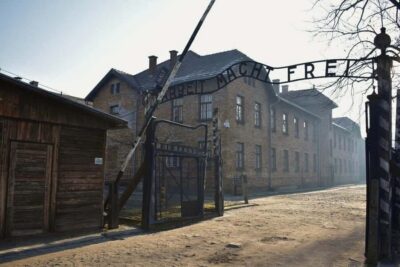
The first main visit lasts about two hours at Auschwitz I. You enter through the familiar gate marked Arbeit Macht Frei, a phrase that translates as work sets you free. The gate is one of the most recognizable images connected with Auschwitz, but the visit quickly moves beyond that single symbol.
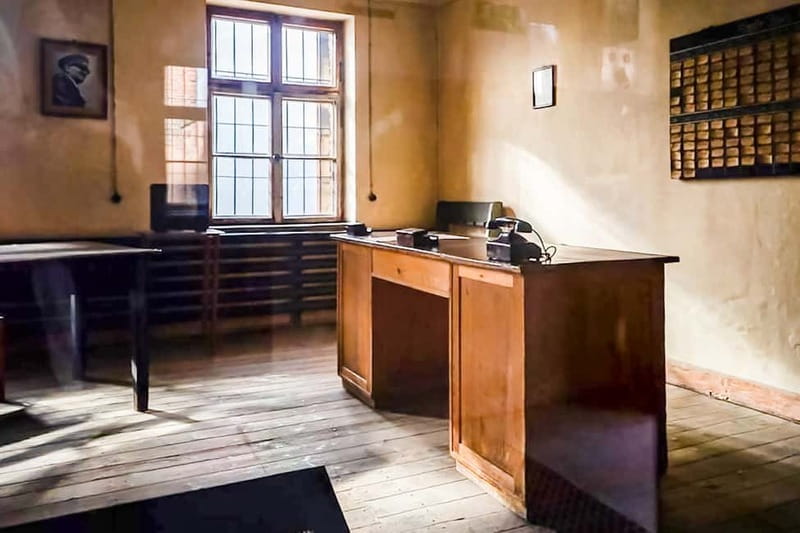
Auschwitz I contains the original camp buildings and museum displays. Your official guide explains how the site operated, how prisoners were registered and controlled, and how the camp fit into the wider Nazi system of persecution and murder.
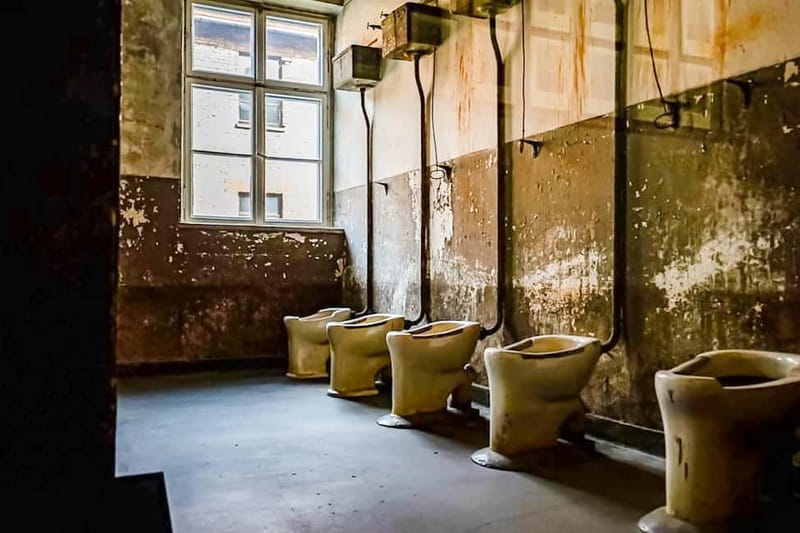
The value of the guide is strongest inside the buildings. You might see rooms, corridors, photographs, documents, or personal belongings, but the guide explains what they represent and why they matter. The information is delivered in a serious, orderly way, which helps you take in difficult material without being left to guess at its meaning.
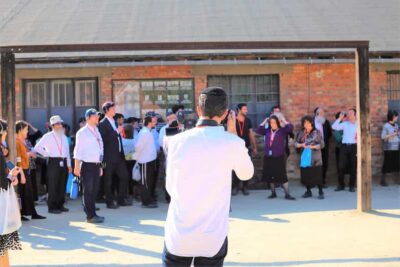
Headsets are included for the guided portion. They are especially helpful when the group pauses in a courtyard or outside a building. You can listen without crowding directly around the guide, although you still need to stay close enough to follow the route.
The pace is purposeful. You are not given unlimited time at every display, and the memorial service controls the length of the tour. That is the tradeoff for a structured visit. You cover the major material in a limited time, but you may not be able to linger as long as you would on an independent visit.
The 10-minute transfer to Birkenau
After Auschwitz I, the group travels by bus or coach for about 10 minutes to Auschwitz II-Birkenau. This transfer is included, so you do not need to arrange your own ride between the sites.
The short journey also gives you a moment to collect yourself. The two sites feel different in scale, and Birkenau requires more walking outdoors. Comfortable shoes are important, not as a general travel slogan but because the route includes substantial time on foot over memorial grounds.
The bus connection keeps the group together and makes the schedule easier to follow. It also removes one practical worry from a serious day. You can focus on the visit instead of trying to work out local transport between the two entrances.
More skip the line tickets in Krakow:
- From Krakow: Wieliczka Salt Mine Tour & Skip the Line Ticket
★ 4.4 · 3,925 reviews - Krakow: Schindler’s Factory Skip-the-Line Ticket
★ 4.4 · 3,105 reviews - Auschwitz-Birkenau: Skip-the-Line Entry Ticket & Guided Tour
★ 4.4 · 3,052 reviews - Schindler’s Factory in Krakow: Guided Tour & Skip the Line Ticket
★ 4.5 · 1,714 reviews
Birkenau’s vast scale and open grounds
At Auschwitz II-Birkenau, the visit lasts about 60 to 75 minutes, with a break of around 15 minutes included in the schedule. The site is physically larger and more open than Auschwitz I. That size is part of what makes the visit so difficult to absorb.
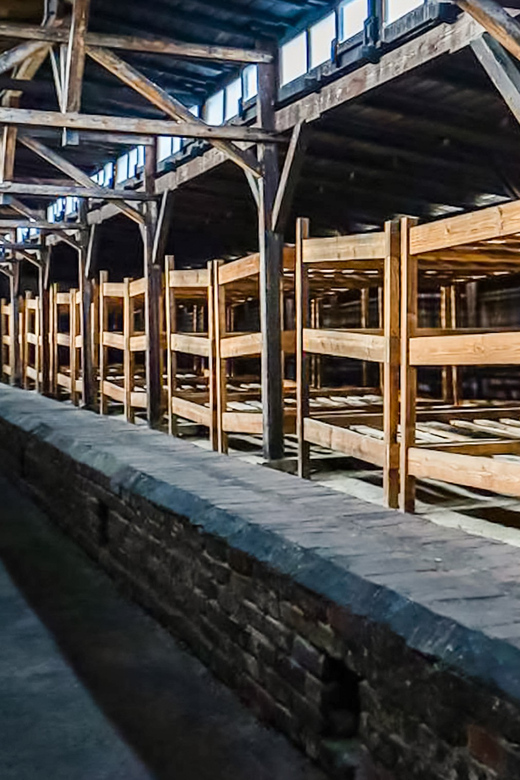
Your guide explains the layout and the purpose of the camp, helping you understand how the railway, barracks, fences, and other remains fit together. The broad grounds make the industrial scale of the Nazi camp system easier to grasp than photographs can.
The Birkenau section can be harder physically. One person in the feedback had trouble keeping up with the group and found the absence of headsets there less convenient. The guide may stop at regular intervals, but the group still has to move across a large outdoor site.
If you have limited mobility, take this seriously. The camps are not adapted for wheelchair use. The activity information advises anyone who decides to attend with a wheelchair to come with someone who can provide assistance. The provider and guide cannot change the memorial’s pace or route.
The Birkenau break is short. Bring water and dress for the weather, since much of this portion takes place outside. Alcohol and drugs are not allowed, and the site also prohibits pets and oversize luggage. Short skirts are listed among the clothing restrictions, so choose respectful, practical clothing.
Timing is the biggest practical catch
The advertised duration is about 3.5 to 4 hours, but the exact start time depends on the museum’s reservation system. The preferred time you select is not guaranteed. The provider may contact you the day before with a different time.
This is the most important planning point. A booking at 10:00 in the morning could be shifted to noon or 13:00, according to the experiences provided. That change does not qualify for a refund, so do not schedule a train, flight, or tightly timed afternoon activity immediately afterward.
I recommend keeping the whole day flexible. The tour itself is only about four hours, but the final start time may move, and the museum controls the pace and length of breaks. Communication from the local operator has included WhatsApp messages and phone calls, which makes last-minute changes easier to manage, but you still need to check your messages.
The good news is that the operator appears to give clear meeting instructions and keeps transport organized. The downside is that skip-the-line access does not mean complete control over the clock. It saves queue time, not scheduling uncertainty.
What the $53 price really covers
At $53 per person, this tour is not simply an entrance ticket. The price includes pre-booked admission to Auschwitz I, skip-the-line access to the Auschwitz-Birkenau complex, an official museum guide, a local host, headsets, and transportation between Auschwitz I and Birkenau.
That package makes sense if you want a guided visit and are arriving independently. Buying the pieces separately could be awkward, especially when you consider the need to coordinate the two sites and the official museum schedule.
The value is less clear if you already have transport, speak Polish, and prefer to read at your own pace. A guided group sets the route and timing for you. You gain organization and context, but lose some freedom to stop longer at particular exhibits.
A lunch box is available with certain booking options. It includes two bread-roll sandwiches, with meat, vegetarian, or vegan choices, an apple, a banana, a dark chocolate wafer, and 500 milliliters of still water. Food and drinks are not otherwise included, so check the option carefully before assuming lunch is covered.
Parking is extra. One reported parking charge was 45 zloty, which is worth knowing if you are driving. The tour price also does not include transportation from Krakow or any other city.
How the guiding experience works
The official guide is the heart of the tour. Guides such as Jacob and Magdalen were singled out for clear explanations and a respectful manner, while Peter was praised for combining professionalism with a humane approach. These details matter because the subject demands more than a list of dates.
You should expect information about the camps, the war, Nazi persecution, and the people held there. A good guide connects the physical remains to individual lives and choices. Personal stories can make the visit more direct, but the guide should still keep the focus on the memorial and its historical meaning.
Headsets help at Auschwitz I, where groups may spread out around buildings. At Birkenau, the headset arrangement may be different or unavailable, so stay near the guide and pay attention when the group moves. If you walk slowly, tell the guide or host early rather than waiting until you are far behind.
Group sizes can include people of different ages and fitness levels. The guide may pause for the group, but this is not a private tour. If you want long, quiet periods at each site, choose a longer visit if one is available. The four-hour format is designed to cover both camps in one day.
The emotional side of the visit
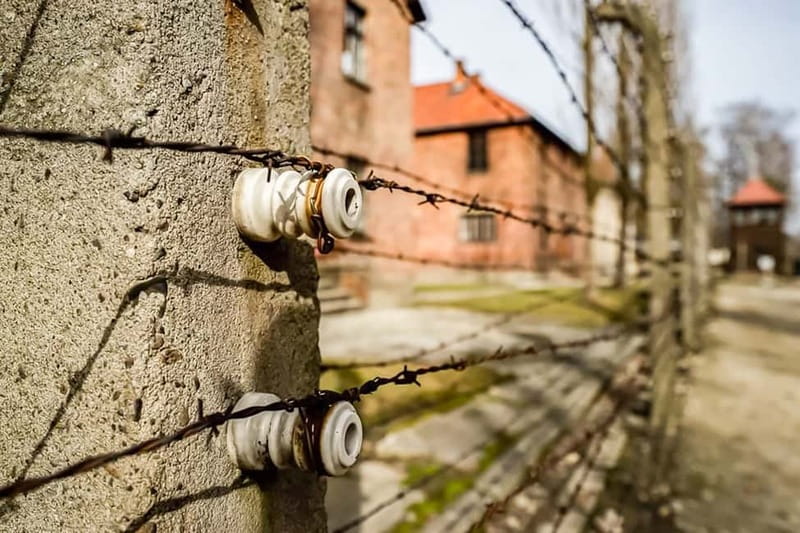
Auschwitz-Birkenau can be humbling and upsetting. That is not a flaw in the tour, but it is something you should prepare for. You are visiting a memorial to mass murder, and the displays and grounds can leave you quiet for the rest of the day.
The best approach is to treat the site with respect. Follow the clothing rules, leave large bags behind, keep your phone use discreet, and listen to the guide. This is not a place for casual photos or loud conversation.
I appreciate that the tour gives the site room to speak for itself. The guide provides context, but the buildings, objects, and open grounds remain central. Reports of guides adding a personal touch, including family connections to the camp, show how the human side of the subject can come through without turning the visit into a performance.
Give yourself time to process what you see. The final portion at Birkenau may feel especially stark because of its scale and open setting. You may remember individual details from Auschwitz I, then understand their wider setting more clearly at Birkenau.
Who should choose this four-hour tour?
This experience suits you if you want a serious, organized first visit and do not want to manage museum entry, site transfers, and route planning yourself. It is also a good fit if you are staying nearby and can reach the meeting point without included city transport.
It works well for adults, older children, history students, and anyone who wants a clear introduction to Auschwitz-Birkenau. The subject is not suitable for every child, so parents should decide based on age and maturity.
You may want a longer visit if you prefer more time with the exhibits, need a slower walking pace, or want to reflect quietly at each stop. One person who took the four-hour format said they would return for an eight-hour guided tour. That is a useful clue: four hours can cover the essential route, but it cannot offer unlimited time.
You should also think carefully about mobility. The camps are not wheelchair-adapted, and Birkenau involves outdoor walking. Go with someone who can help if you need assistance.
Cancellation, languages, and final planning
You can cancel up to 24 hours before the activity for a full refund, and the reserve-now, pay-later option keeps your plans more flexible. Those policies help, but they do not remove the problem of a museum-imposed time change.
Tours are offered in English, German, and French. Select the language that lets you follow difficult material without strain.
Before leaving for the meeting point, check your messages for the confirmed time. Bring your passport or ID, wear comfortable shoes, avoid oversize luggage, and allow extra room in your day. If you drive, budget for parking separately.
Should you book the Auschwitz-Birkenau guided tour?
I would book this tour if you want the official guide and organized camp transfer more than complete independence. At $53, the combination of entry, guidance, headsets, and transport is fair value, especially for a first visit.
I would not book it if your day depends on a fixed morning departure or if you need a fully accessible route. The time change is the main nuisance, and the walking conditions at Birkenau may be difficult for some people.
For most independent visitors, this is a sensible way to see both Auschwitz I and Auschwitz II-Birkenau in one carefully managed visit. Keep your schedule open, arrive prepared, and approach the experience as a memorial visit first and a tour second.
FAQ
How long does the Auschwitz-Birkenau tour last?
The activity lasts about 3.5 to 4 hours. You spend around two hours at Auschwitz I, travel about 10 minutes by bus, take a break of roughly 15 minutes at Birkenau, and visit Auschwitz II-Birkenau for about 60 to 75 minutes.
What language is the tour offered in?
The live guided tour is available in English, German, or French.
Is transport between Auschwitz I and Birkenau included?
Yes. Transportation between the two camps is included and takes about 10 minutes.
Does the tour include transportation from Krakow?
No. Transportation from Krakow or another city is not included. You must reach the meeting point at Męczeństwa Narodów 14 yourself.
Can the tour time change after booking?
Yes. The preferred time is not guaranteed because it depends on the museum reservation. The provider sends the confirmed meeting time 24 hours before the visit, and a change does not qualify for a refund.
What should I bring?
Bring your passport or ID card. Comfortable shoes are also a sensible choice because the visit includes walking at both camps.
Is the site suitable for wheelchair users?
The camps are not adapted for wheelchair use. If you decide to attend with a wheelchair, the activity information advises going with someone who can provide assistance.
Recently added in Krakow
- Auschwitz-Birkenau and Krakow Private Car Trip from Katowice★ 4.3 · 3 reviews
- Wawel Castle, Old Town with St. Mary’s Church Guided Tour★ 5.0 · 3 reviews
- Wawel Castle, Cathedral, Rynek Underground Tour with Lunch★ 5.0 · 3 reviews
- From Krakow: Chocholow Thermal Hot Springs (hotel pick up)★ 5.0 · 3 reviews
- Private tour to Zakopane and Thermal Baths from Krakow★ 5.0 · 3 reviews
- Legends of Cracow ROBOTIC SHOW★ 4.0 · 3 reviews
- From Krakow: Zakopane and Thermal Pools Guided Trip★ 5.0 · 3 reviews
- Guided Beer Tour in Krakow★ 4.5 · 3 reviews
Auschwitz-Birkenau Memorial Tours, compared.
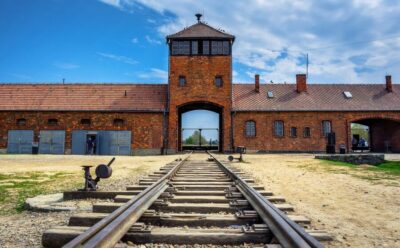
Auschwitz-Birkenau Guided Tour & Hotel Pickup
Read our review →Auschwitz Guided Tour with Optional Hotel Pickup
Read our review →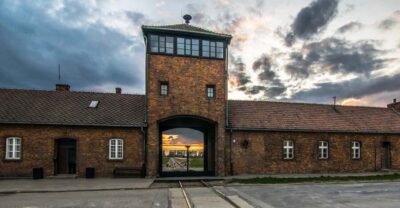
Auschwitz-Birkenau Guided Tour with Pickup & Lunch
Read our review →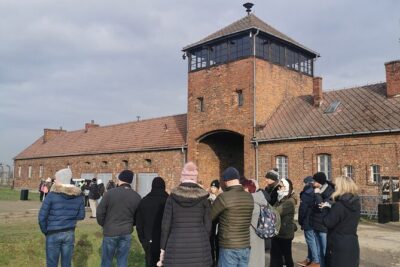
Krakow to Auschwitz Birkenau Guided Tour with Transfer and Ticket
Read our review →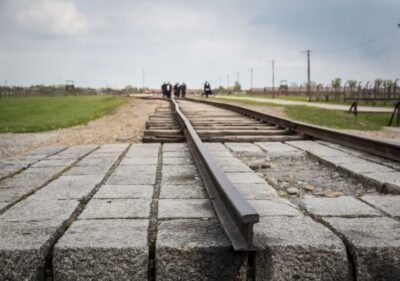
Auschwitz Birkenau Small Group Tour with Pickup
Read our review →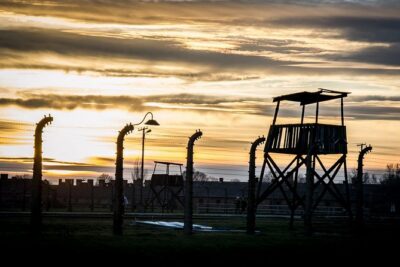
Auschwitz Birkenau Guided Tour with Ticket Hotel Pickup Small Van
Read our review →Where else this one turns up