
Reviewed · AUSCHWITZ-BIRKENAU MEMORIAL TOURS
Krakow to Auschwitz Birkenau Guided Tour with Transfer and Ticket
Auschwitz-Birkenau is not a sightseeing stop you casually check off. It is a place of evidence, silence, and unbearable human cruelty. This tour takes you from Krakow to both camps, where a licensed museum guide explains the medical experiments, selections, gas chambers, crematoria, and the lives stolen there.
I like two things right away: the transport and tickets are handled for you, and the guide uses a headset at Auschwitz I, so you can hear the history without crowding around one speaker. The staff also keeps communication clear, with pickup instructions and updates sent before departure.
The main drawback is the fixed pace. You visit as part of a guided group, and one guest found there was not enough time to read every display or pause with each exhibit. Add cold weather, uneven paths, and up to 70 percent of the day outdoors, and this becomes a demanding seven-hour outing.
Key points to know before booking
- Two camps in one day: Visit Auschwitz I and the much larger Birkenau site, only a short transfer apart.
- Museum guide with headsets: Auschwitz I commentary is easy to follow, though headsets may not be available at Birkenau.
- Round-trip Krakow transport: The drive takes about 1 hour and 15 minutes each way, covering roughly 65 kilometres.
- Groups up to 30 people: The standard option is good value, while the tour limited to 15 people offers a more personal feel.
- Bring food and warm clothing: Lunch is not included, there is no full meal break, and much of the visit is outside.
- ID is essential: Every participant must bring a passport or identity card matching the full name used at booking.
Why this Auschwitz tour matters
Auschwitz-Birkenau is the former Nazi German concentration and extermination camp complex near Oswiecim. Auschwitz I began as a detention camp, first used for Polish citizens arrested after Germany annexed the country in 1939. Birkenau, also called Auschwitz II, was later built on a much larger scale.
The visit is difficult because the site does not rely only on dates and speeches. You see original buildings, barbed wire, fortified walls, barracks, confiscated belongings, and the remains of killing facilities. Exhibits include shoes, glasses, suitcases, hair, and ordinary household objects taken from people who were sent there.
That physical evidence changes the way you understand the history. A number on a page can feel distant. A suitcase with a name on it, or a room filled with personal possessions, makes the crime painfully individual.
The tour is also carefully structured. You do not wander alone at your own speed. A licensed guide leads the group through the museum, explains the historical setting, and keeps everyone moving according to the assigned schedule. That arrangement can feel restrictive, but it also gives the visit shape and prevents confusion at a site that receives large numbers of people.
The tone is appropriately serious. This is not a place for loud conversation, casual posing, or hurried entertainment. Smart-casual clothing and respectful conduct are required, and the museum prohibits eating, smoking, and disruptive behaviour during the visit.
More Private Drivers in Krakow
- From Krakow: Auschwitz Birkenau Tour with Transfer
★ 4.0 · 6,134 reviews - Krakow: Auschwitz-Birkenau Guided Tour with Ticket and Transfer
★ 4.5 · 3,784 reviews - Krakow to Wieliczka: Salt Mine Guided Tour with Ticket & Transfer
★ 4.5 · 3,193 reviews
Leaving Krakow for Oswiecim
Your day begins in Krakow, either with a hotel pickup if you choose the limited-to-15 option or from an arranged meeting point. People staying near the Main Square are assigned the nearest practical pickup location. If your accommodation sits in a restricted traffic zone, you may need to walk to an accessible street.
This part requires attention. Pickup locations can change because of roadworks, and western Krakow currently has areas where pickup is unavailable. The meeting point at Floriana Straszewskiego 19 beside the Philharmonic is also temporarily closed, so check the final instructions rather than relying on an old map pin.
The departure time depends on the museum schedule and is confirmed the day before. Booked times are approximate, since museum entry slots and road traffic can affect the timetable. You should keep the morning flexible instead of scheduling a tight activity immediately afterward.
The drive to Oswiecim takes about 75 minutes each way. The vehicle is air-conditioned and may be a van or minibus. Some people use the journey to rest, especially on the early departure, while the group leader and driver manage the practical details.
A short break follows arrival. You can get coffee, use the time to regroup, or look at outdoor displays before meeting the licensed Auschwitz-Birkenau guide. Do not expect a leisurely café stop or a full breakfast opportunity. Eat before leaving Krakow.
Auschwitz I and the gate with the infamous sign
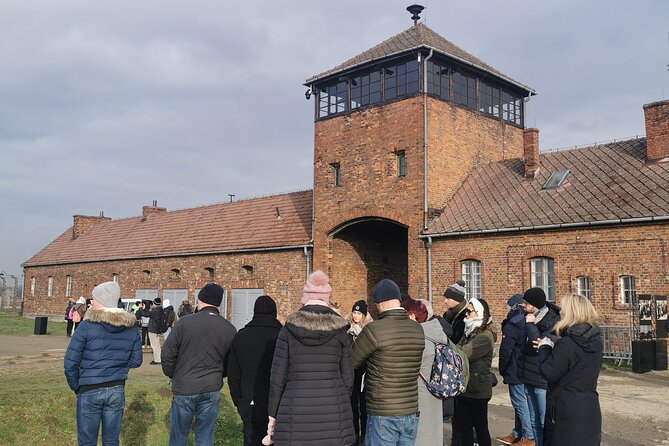
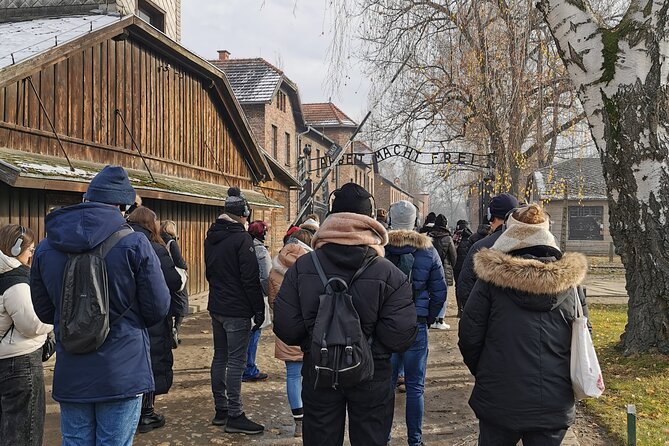
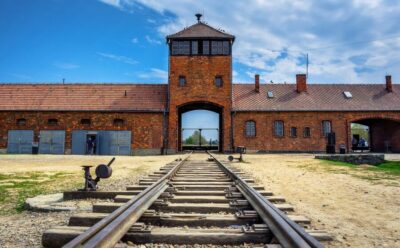
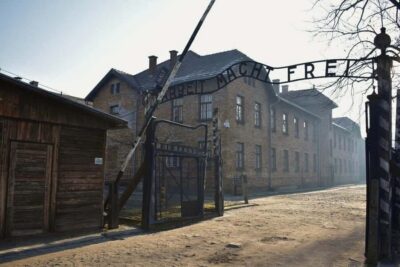
The first camp is Auschwitz I, entered through the familiar gate bearing the words Arbeit Macht Frei. The site was originally intended as a concentration camp and detention centre, not yet the enormous killing complex most people picture when they hear the name Auschwitz.
This section generally lasts about two hours. You walk through original brick buildings and exhibitions that explain how the camp system operated, how prisoners were registered and controlled, and how persecution developed into mass murder.
Your guide discusses the gas chambers, crematoria, forced labour, medical experiments, and the treatment of prisoners. The subject matter is presented in a sober, factual way. One guide remembered in particular, Marta, was praised for explaining the site with empathy while still covering a great deal of detail. Other guides, including Miso, have been described as passionate and clear.
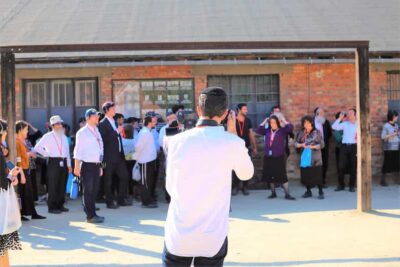
The headset is a real practical advantage here. Auschwitz I can be busy, and the group may spread out between rooms. Instead of straining to hear, you can listen while looking at the exhibits. The standard group can contain up to 30 people, and the audio system helps reduce the sense of everyone pressing around the guide.
The trade-off is time. A two-hour visit sounds generous until you are moving through several buildings and trying to read photographs, documents, and explanatory boards. The guide must cover the main story, and the museum controls the timing. If you prefer to linger over every display, this format may feel rushed.
Expect stairs in some buildings and plenty of walking. The paths are generally manageable, but the day is not effortless. Comfortable shoes matter, and you should choose footwear that can cope with mud or poor weather.
The short transfer to Birkenau
After Auschwitz I, you receive a break of up to 15 minutes. Then the vehicle takes you to Birkenau, roughly three minutes away. This is not a second full journey, but the pause helps you absorb the first camp and prepare for a very different setting.
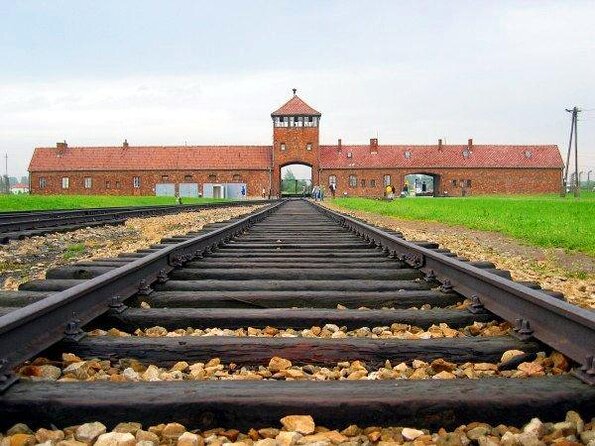
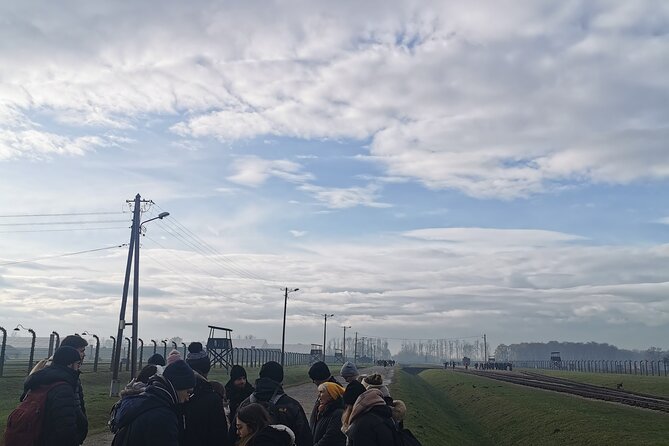
Birkenau is vast and open. Its scale is one of the hardest things to process. The camp was built in 1941 on Heinrich Himmler’s orders and could hold around 90,000 prisoners. Its purpose was tied directly to the Nazi plan to remove Jews from Europe and murder them on an industrial scale.
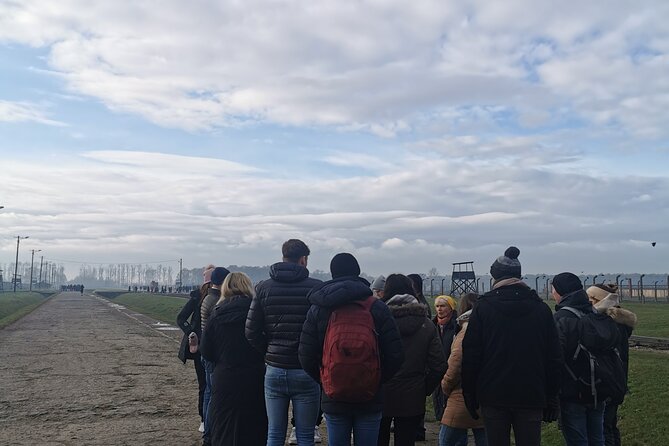
Here you see the long entrance railway, open ground, barracks, fences, watchtowers, and the remains of crematoria. The site feels less enclosed than Auschwitz I, but that does not make it less oppressive. The sheer distance between structures shows how large the operation became.
The guide continues the story, explaining living conditions, prisoner selections, and the pseudo-scientific medical experiments carried out by Nazi doctors, including Josef Mengele. You also hear how the 60th Army of the First Ukrainian Front reached the camp on January 27, 1945, bringing liberation to those who remained.
Birkenau is mostly outdoors, and this is where preparation matters most. Headsets may not be available for this section, so hearing the guide can be harder if the group spreads out or the wind is strong. Stay close enough to follow the commentary, and do not assume that the second camp will feel like a shorter, easier add-on.
The open setting also exposes you to the weather. In winter, temperatures can fall extremely low, and one account describes conditions between minus 10 and minus 25 degrees Celsius. In summer, bring water. In rain, snow, wind, or heat, you will feel the elements for much of the visit.
Other guided visits to the Auschwitz-Birkenau Memorial:
- From Krakow: Auschwitz-Birkenau Guided Tour & Hotel Pickup
★ 4.5 · 33,358 reviews - From Krakow: Auschwitz-Birkenau Guided Tour & Hotel Pickup
★ 4.5 · 29,340 reviews - Krakow: Auschwitz Guided Tour with Optional Hotel Pickup
★ 4.5 · 15,280 reviews - Krakow: Auschwitz-Birkenau Guided Tour with Pickup & Lunch
★ 4.5 · 9,800 reviews
The practical cost of a seven-hour day
At around $36.28 per person, this is a strong-value way to reach Auschwitz-Birkenau from Krakow. The price includes entry fees for Auschwitz I and Birkenau, a licensed local guide, transport in an air-conditioned vehicle, insurance, taxes, and headsets for the first camp.
Buying these pieces separately would require more planning. You would still need to arrange the 65-kilometre journey, arrive for the correct museum slot, and understand how to move between Auschwitz I and Birkenau. This tour turns that into one coordinated day.
The standard group size is up to 30 people. That is not intimate, but it is within the museum rules and is made easier by the headset system. If you want less waiting and a closer connection with the guide, compare the price of the tour limited to 15 people. The smaller option costs more, but it may be worthwhile for a site where listening and reflection are important.
Hotel pickup is only available with the limited-to-15 option. The lower-priced choices use a meeting point and include drop-off back at the agreed location. Ask yourself how much convenience matters, particularly if you are staying outside central Krakow or travelling with older family members.
Lunch and drinks are not part of the basic price. There is no time for a proper meal between the two camp visits, and you should not count on finding food inside the museum complex. Bring a snack and water, or choose an offered lunch box if available. Some people liked the fresh food and found it useful after the Auschwitz I section, while others preferred buying their own before departure.
Communication, drivers, and the pickup process
The strongest practical feature is the communication before the day. You receive a welcome message with the booking confirmation, followed by final departure and pickup details. This matters because the exact departure time depends on the museum schedule.
The driver or group coordinator is also part of the experience. Norbert has been singled out for giving clear instructions and keeping the day organised, while Eric was noted for calling when a passenger was running late for the meeting point. Drivers such as Daniel have also been praised for looking after the group during the long day.
That said, central pickup points can be busy and a little chaotic. Keep your phone on, read the final message carefully, and arrive early. If you are unsure where to stand, ask the coordinator rather than waiting at the wrong side of a square.
The return to Krakow includes at least a 20-minute break after the museum visit. You can rest, visit a bookstore or grocery store, or buy something before the drive back. The return journey takes about another 75 minutes, and the tour ends at the predetermined Krakow address or meeting point.
Who should choose the small-group option?
The standard tour suits you if value and convenience matter most. You receive the same two-camp structure, museum admission, transport, and licensed guiding without paying for a private experience.
I would consider the 15-person version if you dislike crowds, want easier contact with the guide, or are visiting in difficult weather. Smaller numbers can make it easier to hear instructions and stay together, though the museum’s own rules and schedule still control the visit.
Neither option gives you individual pacing. This is important. You cannot simply leave the group for half an hour in an exhibition that interests you. The tour is designed to cover both camps within the available entry window, so choose it for structure, not freedom.
The experience is best for adults and older children who can handle difficult material and a long day. Most people can participate, but you should be comfortable walking on uneven ground and spending extended periods outside. If mobility is a concern, ask the operator for current practical guidance before booking, since the experience includes stairs and substantial walking.
What to pack for Auschwitz-Birkenau
A few simple choices will improve the day:
- Wear sturdy, comfortable shoes that you do not mind getting dirty.
- Dress in layers, especially from autumn through spring.
- Bring a waterproof outer layer when rain is possible.
- Carry water on warm days.
- Eat breakfast before an early departure.
- Pack a snack if you do not order a lunch box.
- Bring your passport or identity card.
- Keep your phone available for pickup messages.
- Follow photography rules and never use flash where it is prohibited.
Photography is allowed in most areas, except where signs say otherwise. Flash photography is not allowed inside buildings. At a place like this, taking fewer photographs and paying attention to the guide is often the better choice.
Security screening is required before entry, similar to an airport-style check. Leave extra patience in your schedule, and remember that the museum can be busy even when transport and entry arrangements are well organised.
Is the pace too fast?
This is the most important criticism to consider. The tour is praised for keeping to time, but that strength can also become a weakness. A guide who covers the full historical story has to keep the group moving, and you may not have time to read every panel or stand quietly in every room.
The best way to handle this is to decide what you want from the visit. If you want a clear introduction to both camps, the guided pace is useful. If you want long periods of private reflection or detailed reading, an individual visit may suit you better, if available under the museum’s current rules.
The subject itself also affects your sense of time. Auschwitz I can feel packed with information, while Birkenau can feel physically expansive and emotionally heavy. You may leave wishing for more time, even after seven hours away from Krakow.
Should you book this Krakow to Auschwitz tour?
I would book it if you want a practical, affordable, well-managed visit to both Auschwitz I and Birkenau. The combination of transport, admission, museum guiding, clear communication, and return transfer removes most of the day’s logistical problems.
Choose the small-group option if the extra cost fits your budget, particularly if hotel pickup is useful. Choose the standard group if price matters more and you are comfortable meeting in central Krakow.
Do not book it expecting a relaxed excursion or the freedom to wander. Book it because you want a serious introduction to one of Europe’s most important memorial sites, with the historical context provided by a licensed guide. Prepare for cold, walking, limited meal time, and strong emotions. If you do, this tour offers good value and a respectful way to make the visit.
FAQ
How long does the Krakow to Auschwitz-Birkenau tour take?
The experience lasts about seven hours. The drive from Krakow to Oswiecim takes around 1 hour and 15 minutes each way, with visits to Auschwitz I and Birkenau in between.
Are entrance tickets included?
Yes. Admission to both Auschwitz I and Auschwitz II Birkenau is included in the tour price.
Is hotel pickup available?
Hotel pickup is available only with the tour limited to 15 people option. Other options use a designated Krakow meeting point and include drop-off at the arranged location.
What time does the tour leave Krakow?
The departure time depends on Auschwitz-Birkenau Museum availability. The final time is confirmed the day before, and booked times may change because of museum scheduling or traffic.
Do I need to bring identification?
Yes. Every participant must bring a passport or identity card. The name must match the full name provided during booking, and entry can be refused without valid identification.
Is lunch included?
No. Food and drinks are not included in the basic tour. There is no time for a full meal between the visits, so bring a snack and water or select an available packed lunch option.
How large is the group?
The tour can have a maximum of 30 participants. A separate option limits the group to 15 people.
Does the tour run in bad weather?
Yes. The tour operates in all weather, and up to 70 percent of the visit takes place outdoors. Dress appropriately, especially in winter, and bring water during warm weather.
Recently added in Krakow
- Auschwitz-Birkenau and Krakow Private Car Trip from Katowice★ 4.3 · 3 reviews
- Wawel Castle, Old Town with St. Mary’s Church Guided Tour★ 5.0 · 3 reviews
- Wawel Castle, Cathedral, Rynek Underground Tour with Lunch★ 5.0 · 3 reviews
- From Krakow: Chocholow Thermal Hot Springs (hotel pick up)★ 5.0 · 3 reviews
- Private tour to Zakopane and Thermal Baths from Krakow★ 5.0 · 3 reviews
- Legends of Cracow ROBOTIC SHOW★ 4.0 · 3 reviews
- From Krakow: Zakopane and Thermal Pools Guided Trip★ 5.0 · 3 reviews
- Guided Beer Tour in Krakow★ 4.5 · 3 reviews
Auschwitz-Birkenau Memorial Tours, compared.
Auschwitz-Birkenau Guided Tour & Hotel Pickup
Read our review →Auschwitz Guided Tour with Optional Hotel Pickup
Read our review →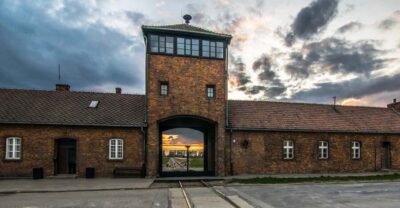
Auschwitz-Birkenau Guided Tour with Pickup & Lunch
Read our review →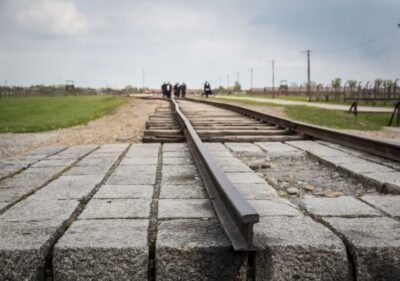
Auschwitz Birkenau Small Group Tour with Pickup
Read our review →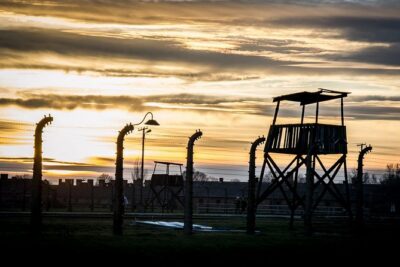
Auschwitz Birkenau Guided Tour with Ticket Hotel Pickup Small Van
Read our review →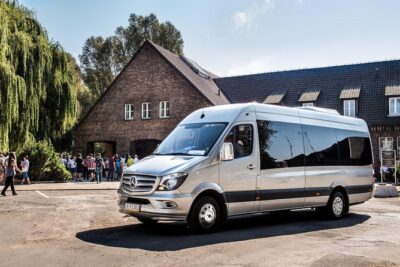
Day Trip: Auschwitz-Birkenau and Wieliczka Salt Mine from Krakow
Read our review →Where else this one turns up