
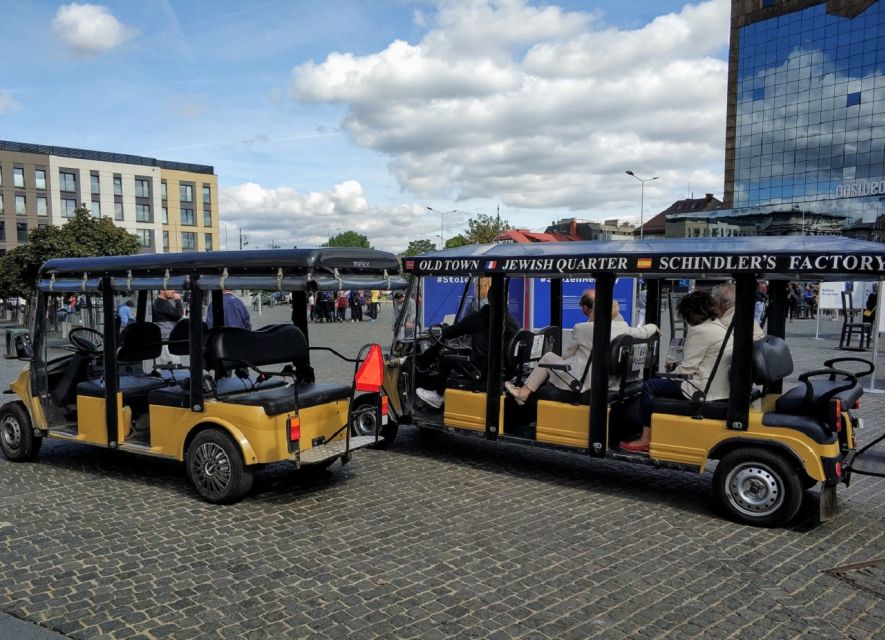
Reviewed · SCHINDLER'S FACTORY TOURS
Krakow: Kazimierz by Golf Cart and Schindler’s Factory Tour
Krakow’s wartime story becomes much clearer when you see the places before stepping into the museum. This three-hour tour rolls through Kazimierz and the former Jewish ghetto in a heated golf cart, then takes you inside Schindler’s Factory for the city’s Nazi occupation story.
I like the easy mix of sightseeing and serious history. The cart covers ground without tiring you out, and the visit to Schindler’s Factory Museum adds photographs, personal objects, and period reconstructions that give the past a human scale. The drawback is pace: one visitor found there was not enough time to read every plaque, so this is better for a guided overview than a slow museum study.
Key points at a glance
- See three distinct parts of Krakow: Jewish Kazimierz, Christian Kazimierz, and Podgórze, the former Jewish ghetto.
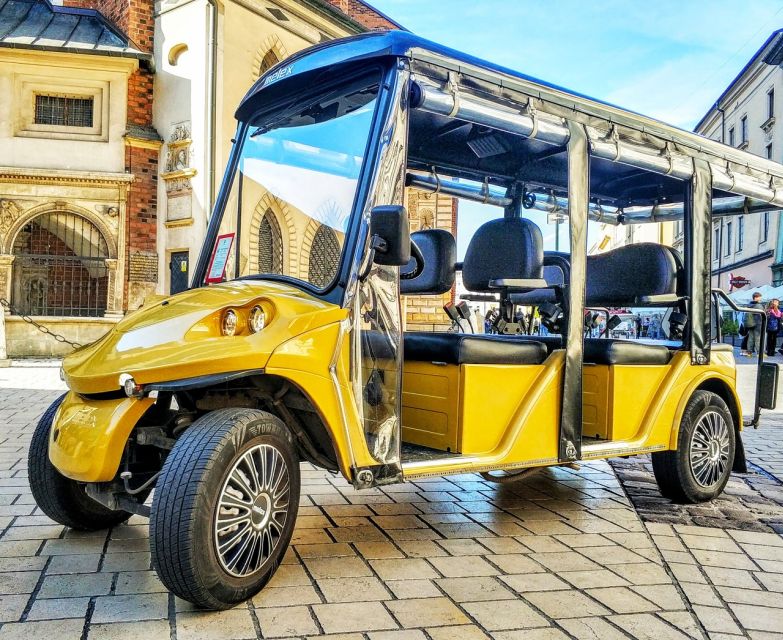
- Ride in comfort: The heated golf cart has English audio commentary and protects you from cold weather.
- Stop at powerful wartime sites: You pass the remaining ghetto wall, Ghetto Heroes Square, and Under the Eagle Pharmacy.
- Enter with a live guide: A licensed English-speaking guide leads the museum visit, unlike the audio-guided cart section.
- Expect a museum, not a working factory: Schindler’s former building now holds an exhibition and no longer contains original production equipment.
- Allow for a brisk visit: Three hours covers a lot, but you may not have time to read every museum panel.
Why this route works for seeing Krakow’s difficult past
This experience is built in two parts, and that order makes sense. First, you move through the streets where Jewish life, forced relocation, and wartime persecution took place. Then you visit the museum, where a guide explains how those events affected individuals and families.
The golf cart is not just a ride for tired feet. It helps you connect separate parts of the city. Kazimierz lies on one side of the Vistula River, while Podgórze, where the ghetto was created during World War II, lies across the river. Seeing both areas in one outing saves time and shows how close these places are geographically, even though their wartime roles were very different.
You also get two styles of interpretation. The cart uses English audio commentary, giving you a steady flow of background while you look outside. At the museum, a live guide can explain the exhibition and answer questions as the visit develops.
That combination suits you if you want more than a quick photo stop but do not want to spend an entire day inside a museum. It is also useful early in a Krakow visit, since it gives you names, places, and historical connections that make later walks through the city easier to understand.
Other visits to Schindler's Factory:
- Krakow: Oskar Schindler’s Factory Entry Ticket & Guided Tour
★ 4.2 · 3,793 reviews - Krakow: Schindler’s Factory Tour with Entrance Ticket
★ 4.5 · 3,182 reviews - Krakow: Schindler’s Factory Skip-the-Line Ticket
★ 4.4 · 3,105 reviews
Kazimierz by heated golf cart
You meet at the Kiss&Ride parking area in front of the Żabka store. Arrive at least 10 minutes early. Once the group has entered, late arrivals cannot be accommodated, and the ticket is not refundable.
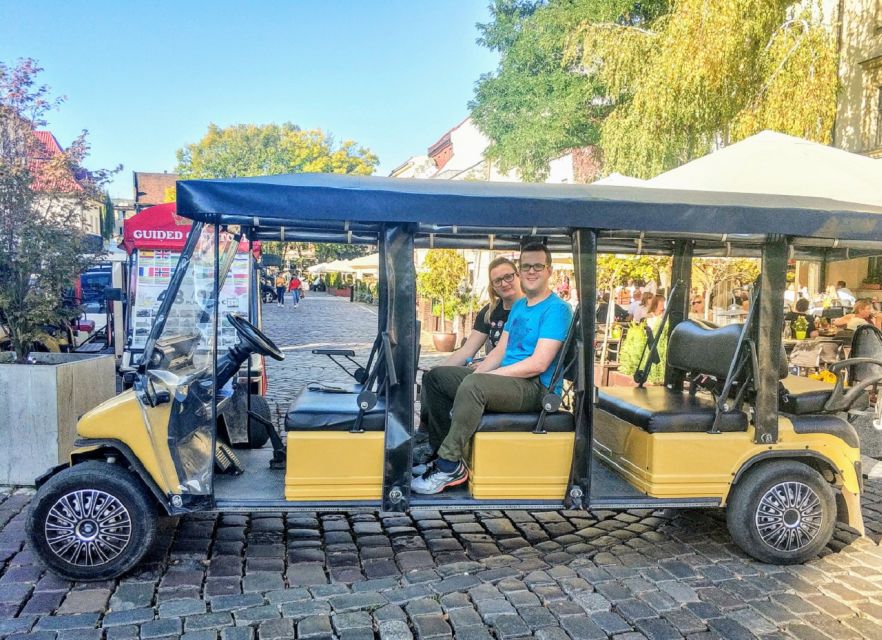
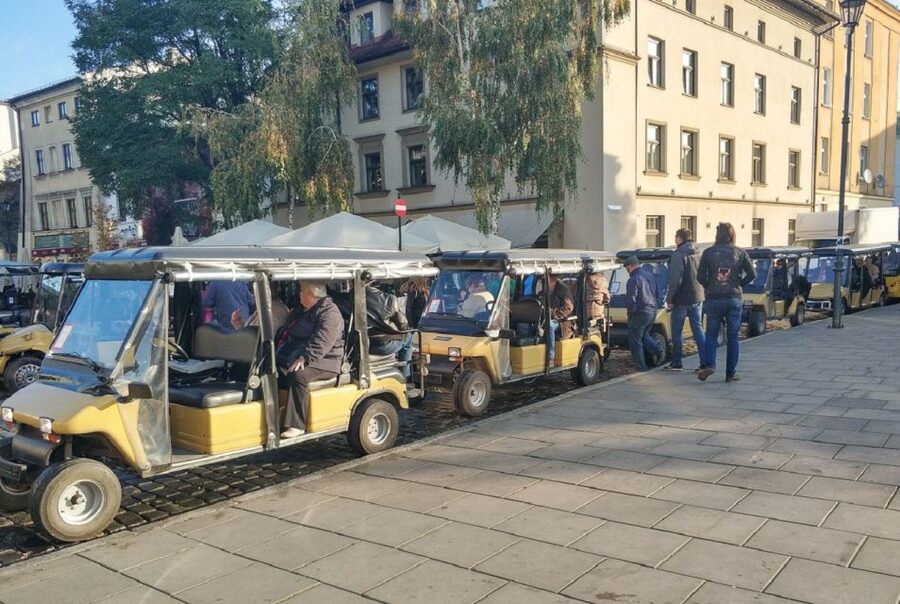
The vehicle is a comfortable, heated golf cart with an English audio guide. That matters in Krakow, where weather can change quickly and the route includes time outdoors. You can sit back and watch the streets pass instead of trying to follow a guide through traffic on foot.
Kazimierz was once a separate town and became a major centre of Jewish culture. The route passes historic synagogues, narrow streets, and locations connected with Jewish traditions that remain part of the district today. You get a sense of the area as a living neighbourhood, not only as a memorial site.
The cart also moves through the Christian part of Kazimierz. Cafés, galleries, and busy streets show another side of the district, one shaped by long contact between Jewish and Christian communities. This section helps prevent the area from being reduced to a single chapter of tragedy.
The experience is relaxed, but the subject matter is not light. The audio commentary gives context as you pass buildings and streets, though the amount you absorb depends on how clearly you can hear and how much you already know about Krakow. If you want to stop often for close architectural study, a walking tour may serve you better.
Crossing the Vistula into Podgórze
The route crosses the Vistula River into Podgórze, the district used as Krakow’s Jewish ghetto during the Nazi occupation. This change of setting is one of the most useful parts of the tour because you can see the physical distance between Kazimierz, where Jewish life had developed over centuries, and the area where residents were forcibly confined.
The remaining fragment of the ghetto wall is a stark stop. It is not a grand monument, and that is precisely why it can be effective. A small surviving section makes the system of confinement feel physical rather than abstract.
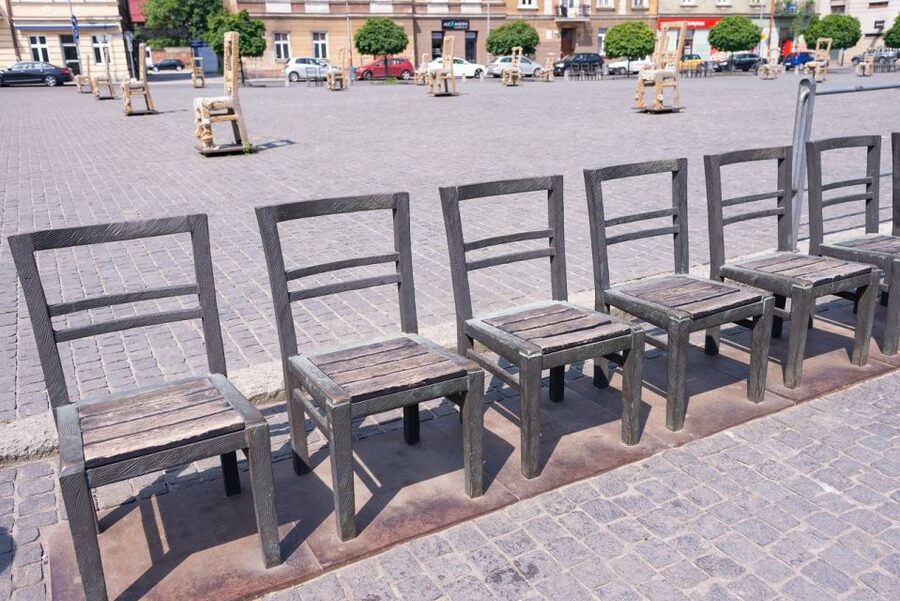
At Ghetto Heroes Square, you see the distinctive chair memorial. The empty chairs recall the belongings and furniture left behind when people were expelled from their homes. The site is easy to remember, and the guide or audio commentary gives it meaning beyond its unusual appearance.
The route also passes Under the Eagle Pharmacy. During the occupation, this pharmacy operated in the ghetto, and its location is tied to the story of help and resistance under Nazi rule. Together, these stops show different parts of the period: forced removal, daily fear, and individual efforts to help others.
You should not expect long, quiet periods at every site. The cart route is designed to show you several places in a limited time. Take mental notes of the locations you may want to revisit on foot, especially if you plan to return to Ghetto Heroes Square or the pharmacy later.
Inside Schindler’s Factory Museum
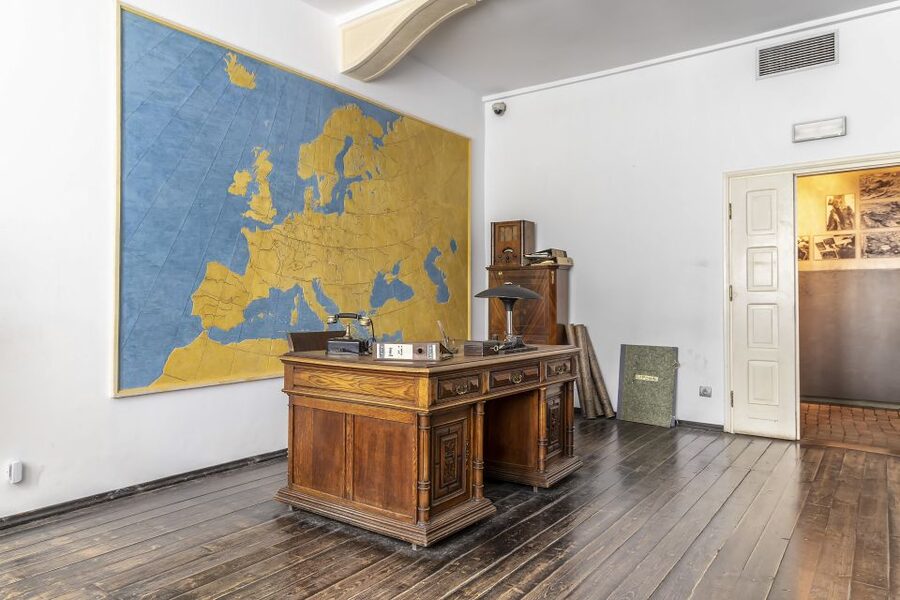
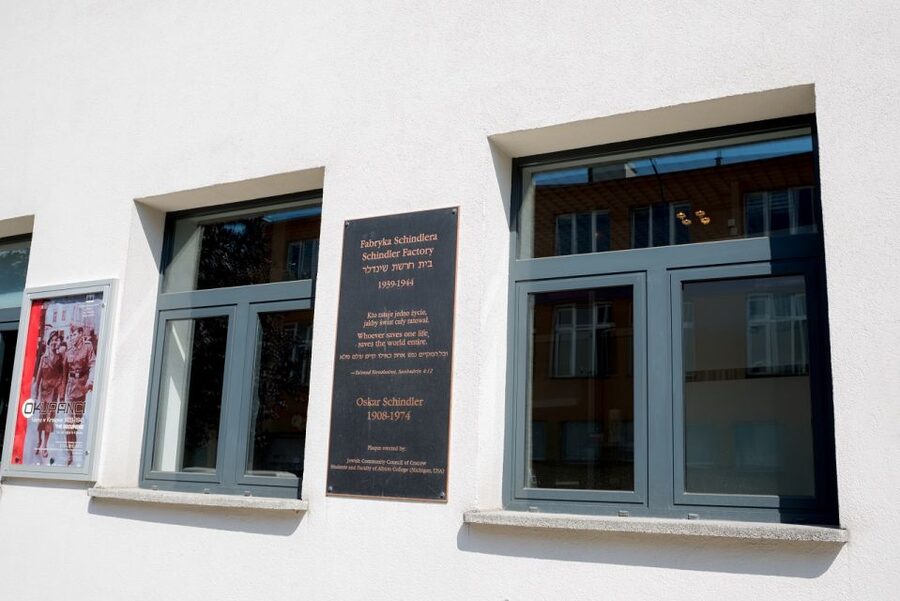
The museum visit is the main historical section of the experience. Schindler’s former enamel factory now houses the exhibition Krakow under Nazi Occupation 1939 to 1945. It does not operate as a factory today, and you will not see the original production equipment.
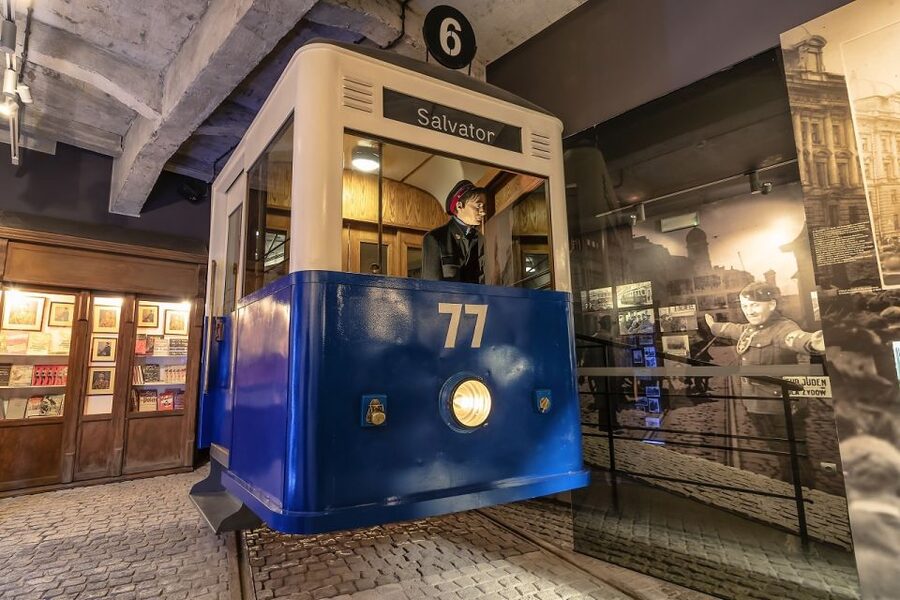
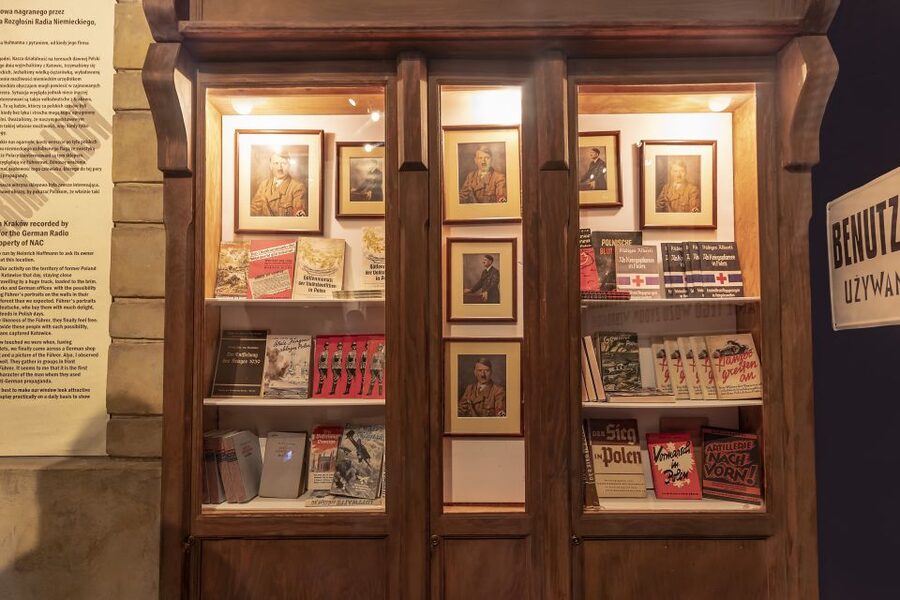
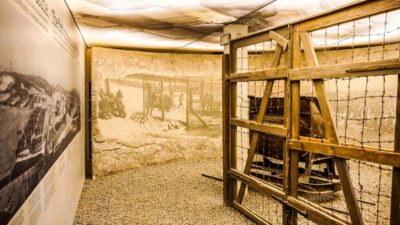
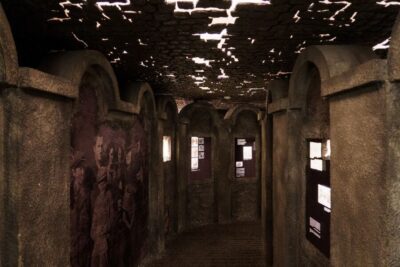
Instead, the museum tells the wartime story through photographs, personal objects, reconstructed streets, and room settings from the 1940s. These details help you picture ordinary routines under extraordinary pressure: work, registration, restricted movement, fear of deportation, and the uncertainty faced by both Jewish and non-Jewish residents.
Your licensed English-speaking guide leads this part of the tour. The guide explains Oskar Schindler’s role and places it within the wider story of Krakow. Schindler employed Jewish workers and used his influence and resources to protect them from deportation. More than a thousand men and women survived through these efforts.
That story matters, but the museum does not present Schindler as the only subject. The exhibition also focuses on the people he employed, often called Schindlerjuden, and on the wider fate of Krakow’s Jewish community. You learn about lives shaped by official persecution, not just the actions of one businessman.
This wider focus is the museum’s great strength. If you know Schindler only from the film, the visit gives you a more complete picture. You see how his choices fit into a system of occupation, bureaucracy, forced labour, and deportation. You also see why rescue was difficult and why the survival of his workers was so remarkable.
Other Jewish Quarter and Kazimierz walks:
- Krakow: Jewish Quarter and Former Ghetto Tour
★ 4.9 · 1,441 reviews - Krakow: Bike Tour of Old Town, Jewish Quarter and the Ghetto
★ 4.9 · 1,155 reviews - Krakow: Kazimierz Jewish Quarter Walking Tour
★ 4.8 · 571 reviews - Krakow: Kazimierz, Schindler’s Factory & Ghetto Guided Tour
★ 4.8 · 460 reviews
Original objects and reconstructed streets
The museum uses a mixture of original artifacts and authentic reconstructions from the 1940s. Personal objects can make history feel close, while reconstructed streets help you understand the scale of the city and the restrictions placed on its people.
The balance is useful for visitors who find a room full of text panels tiring. You are not asked to rely on dates and names alone. The physical displays create a sense of place, and the guide connects those displays to specific events and people.
Still, this is not a slow, self-paced museum visit. The tour has a fixed three-hour duration, and the factory section follows a group schedule. One practical concern is that you may not have enough time to read every plaque on the walls. If you like to examine each label carefully, plan to treat this outing as an introduction rather than your final museum visit.
The guided format also means you give up some control over the pace. In return, you get a person who can point out what deserves attention and explain difficult material without leaving you to piece it together alone. For many people, that trade is worthwhile, especially when the exhibition contains more information than you can absorb at a glance.
What the guide adds to the experience
The cart section uses audio commentary, while the museum portion has a live guide. Keep that difference in mind when deciding what sort of tour you want.
A strong cart guide can make the first half feel personal and local. Andrzej, one of the guides associated with the experience, was praised for his local knowledge, clear information, and humour. That combination matters. The subject is heavy, and a guide who can explain the city naturally while keeping the group at ease can make the ride more engaging.
The audio guide has a different advantage. It provides commentary without requiring you to stay beside a walking guide in a crowded street. You can look at the buildings and memorials as the information comes through your headset.
Inside the factory, the live guide is more important. The museum holds several connected stories, and a guide can explain which details link to Schindler, the ghetto, the Jewish community, and the wider occupation. The museum guide is described as personable and well informed, but remember that the experience is conducted in one language. Select English when booking if that is the language you need.
Is the $80 price good value?
At $80 per person, this is not the cheapest way to see Kazimierz. You are paying for a private transport format, an audio-guided route, fast-track museum admission, and a licensed guide inside Schindler’s Factory.
The value depends on how you normally travel. If you would otherwise pay separately for transport, a Kazimierz visit, and a guided museum entry, the package is convenient. It also removes the need to work out how to connect Kazimierz with Podgórze and the factory on your own.
I see the strongest value in the time saved. In three hours, you cover several districts and a major museum without arranging separate tickets or finding your way across the river. The heated cart is another benefit in poor weather, though it is less essential on a warm, dry day.
The price is harder to justify if you already know Krakow well, prefer long museum visits, or plan to explore Kazimierz on foot at your own pace. You may get more from separate visits, especially if you want to read every display and return to the wartime sites later.
Fast-track admission is useful because it reduces waiting at one of Krakow’s most visited museums. The final start time is not fully guaranteed, however. You can request a preferred time, but museum and site schedules may require adjustments. Keep some flexibility in your day.
Who should book this three-hour tour?
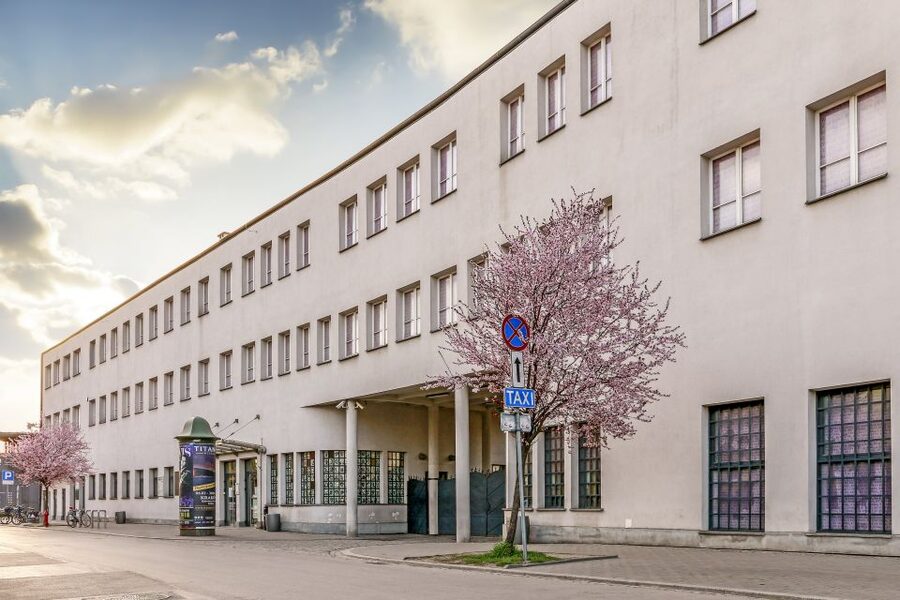
This outing suits first-time visitors who want a clear introduction to Krakow’s Jewish Quarter and wartime history. It also works well for anyone who prefers sitting to walking, particularly in cold weather, while still wanting to see several districts.
Families with older children may appreciate the cart ride and visual displays, though the subject is serious and includes persecution, deportation, and wartime suffering. You should decide in advance whether the museum’s material is suitable for the children in your group.
History-minded visitors will enjoy the museum’s wider focus on daily life, not only Schindler’s personal story. The experience is also a good fit if you want an expert to organize the story for you rather than reading your way through a museum alone.
It is less suitable for wheelchair users, since the activity is specifically marked as not suitable for wheelchair access. If you need a fully accessible experience, confirm arrangements before booking.
Bring comfortable shoes even though much of the route is by cart. You will still be moving through museum spaces and historic areas. Comfortable clothes, a camera, and food and drinks are also sensible, though food and drinks are not included.
How to get the most from the visit
Arrive early at the meeting point, since late entry is not allowed once the group has left. Write down the meeting point clearly: the Kiss&Ride parking area in front of the Żabka store.
Listen closely during the Kazimierz section, even if the cart ride feels casual. The district’s synagogues, streets, and community sites provide the background for everything that follows in Podgórze and at the museum.
At the ghetto wall and Ghetto Heroes Square, pay attention to the relationship between the memorials and the surrounding streets. These are not isolated history displays. They sit in the city, among ordinary buildings and modern daily life.
Inside the museum, focus first on the guide’s explanation. You can look at smaller labels when time allows, but do not let the wish to read every word distract you from the main story. If a particular person or event catches your attention, note it for later research or a return visit.
The cart and museum use different kinds of storytelling, so give yourself a moment to adjust. The first half shows you where events happened. The second half explains what occupation meant for people living there.
Booking details worth knowing
The experience lasts three hours, and availability depends on the starting time selected. All times are approximate and can change because of museum or site scheduling.
The cart ride includes an English audio guide. The museum visit is led in English by a professional licensed guide, and group tours are conducted in a single language.
Personalized museum tickets require the full names of all participants when you book. If names are missing, entry may be denied. The activity includes fast-track admission, but it does not include hotel pickup, hotel drop-off, food, or drinks.
You can cancel up to 24 hours before the activity for a full refund. The reserve-now-and-pay-later option also gives you some flexibility when your Krakow plans are still changing.
Should you book it?
Book this tour if you want an efficient, guided introduction to Kazimierz, the former ghetto, and Schindler’s Factory in one morning or afternoon. The heated golf cart, the route across the Vistula, and the live museum guide make it easy to connect places that can feel scattered on a first visit.
Choose something else if you want to linger over every museum panel, spend hours photographing synagogue details, or explore Kazimierz entirely on foot. At $80, the tour earns its price through convenience, transport, and interpretation rather than free time.
For most first-time visitors with limited time, I would consider it a strong choice. Go in expecting a brisk overview, not a private museum study, and you will get a thoughtful look at Krakow’s Jewish life, wartime suffering, and the people who endured it.
FAQ
How long does the Krakow Kazimierz and Schindler’s Factory tour last?
The experience lasts three hours, including the golf cart route and the museum visit.
Where is the meeting point?
You meet at the Kiss&Ride parking area in front of the Żabka store.
Is hotel pickup included?
No. Hotel pickup and drop-off are not included.
Is the golf cart heated?
Yes. The vehicles are heated and equipped with an audio guide.
What language is the tour conducted in?
The activity is conducted in English. The cart includes English audio commentary, and the museum section has a live English-speaking guide.
Does the tour include entry to Schindler’s Factory Museum?
Yes. Fast-track admission to Schindler’s Factory is included.
Is Schindler’s Factory still a working factory?
No. The building now operates as a museum and does not contain the original production equipment.
What names are needed when booking?
You must provide the full names of all participants because the museum issues personalized tickets.
Is the tour suitable for wheelchair users?
No. The activity is marked as not suitable for wheelchair users.
More golf cart and segway routes in Krakow
- Krakow: City Sightseeing Tour by Electric Golf Cart
★ 4.5 · 3,264 reviews - Krakow: City Sightseeing Tour Eco Electric Buggy Golf Cart
★ 4.7 · 3,143 reviews - Krakow: Extended City Sightseeing Tour – Eco Buggy Golf Cart
★ 4.7 · 794 reviews - Krakow: Old Town Guided Segway Tour
★ 4.7 · 756 reviews
Recently added in Krakow
- Auschwitz-Birkenau and Krakow Private Car Trip from Katowice★ 4.3 · 3 reviews
- Wawel Castle, Old Town with St. Mary’s Church Guided Tour★ 5.0 · 3 reviews
- Wawel Castle, Cathedral, Rynek Underground Tour with Lunch★ 5.0 · 3 reviews
- From Krakow: Chocholow Thermal Hot Springs (hotel pick up)★ 5.0 · 3 reviews
- Private tour to Zakopane and Thermal Baths from Krakow★ 5.0 · 3 reviews
- Legends of Cracow ROBOTIC SHOW★ 4.0 · 3 reviews
- From Krakow: Zakopane and Thermal Pools Guided Trip★ 5.0 · 3 reviews
- Guided Beer Tour in Krakow★ 4.5 · 3 reviews
Schindler's Factory Tours, compared.
Oskar Schindler’s Factory Entry Ticket & Guided Tour
Read our review →
Schindler’s Factory Tour with Entrance Ticket
Read our review →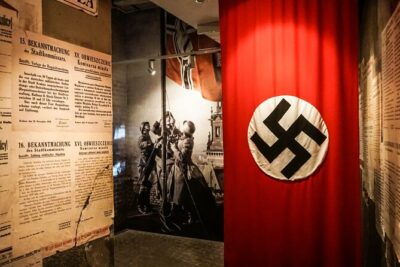
Schindler’s Factory in Krakow: Guided Tour & Skip the Line Ticket
Read our review →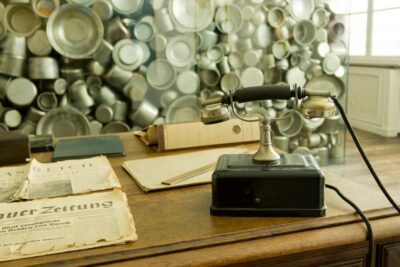
Schindler’s Factory Ticket with Guided Tour Option
Read our review →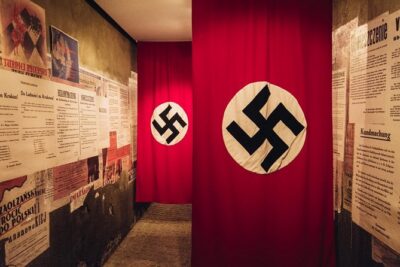
Krakow Schindler’s Factory Guided Tour with Admission Ticket
Read our review →
Krakow Schindler’s Factory Museum Guided Tour in English
Read our review →Where else this one turns up