
Reviewed · WARSAW TOURS
Jewish Warsaw
Jewish Warsaw is best understood on foot and in small pieces: a square, a synagogue, a preserved street, a cemetery, and finally the POLIN Museum. This private tour connects those places into one clear story, from the large Jewish community that lived here before World War II to the city’s memorials and surviving traces.
I like the private format, since your guide can adjust the pace and explain details that would be easy to miss alone. I also like the route’s range: you see the only surviving working synagogue, Isaac Bashevis Singer’s old neighborhood, Janusz Korczak’s burial place, and the spot where Willy Brandt knelt in remembrance.
The main consideration is time. Three hours is enough for an introduction, not a full study of Jewish Warsaw. Admission to the Nozyk Synagogue and Jewish Cemetery is not included, and the tour ends outside POLIN rather than including time inside its exhibitions.
Key points to know before booking
- See the only Warsaw synagogue that survived World War II and remains in use.
- Visit the Jewish Cemetery, with graves of rabbis, zaddiks, and Jewish families.
- Follow streets linked with Isaac Bashevis Singer, including Krochmalna and Chlodna.
- Pause at the Ghetto Heroes Monument, where Willy Brandt made his famous gesture of remembrance.
- End at POLIN Museum, whose architecture and symbolism receive an introduction before you explore inside independently.
- Travel privately for about three hours, with hotel pickup available and an English-speaking guide.
Jewish Warsaw begins at Grzybowski Square
The tour starts at Grzybowski Square, a useful place to get your bearings. This was part of pre-war Jewish Warsaw, when the city held the largest Jewish community in Europe. Your guide sets the scene here before leading you through streets where Jewish homes, shops, religious institutions, and daily life once filled the area.
I appreciate starting with the city as a living community rather than beginning only with wartime destruction. The first 15 minutes establish that Jewish Warsaw was not simply a victim’s story. It was a major center of family life, business, worship, publishing, education, and culture.
The square is also the tour’s stated meeting point, at Pl. Grzybowski 2. If you choose hotel pickup, the guide either meets you at reception with a PolinTours sign or waits in a car outside your hotel. Hotels well outside the center use an agreed meeting place arranged by email.
A few more Warsaw half days to consider
- Warsaw: Chopin Concert in the Old Town
★ 4.8 · 2,287 reviews - Warsaw: Traditional Galar Cruise on The Vistula River
★ 4.6 · 1,640 reviews - Warsaw: Old Town Highlights Walking Tour in English
★ 4.7 · 1,516 reviews
Prozna Street preserves a small piece of the old city
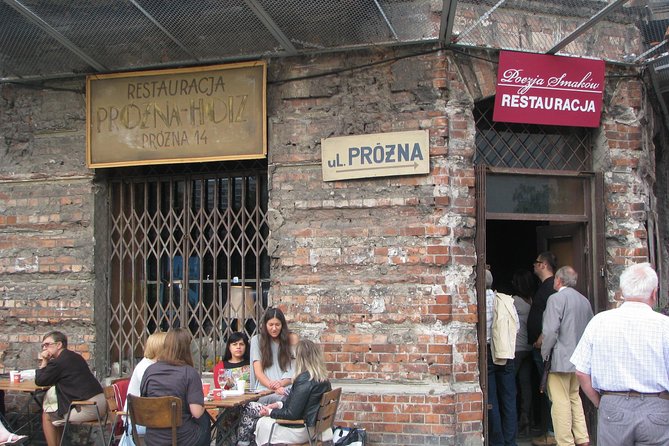
From the square, you stop on Prozna Street, one of the few Jewish commercial streets preserved in its original form. The stop lasts about 10 minutes, which is brief, but the street gives the guide a physical setting for stories about its former inhabitants.
This is where names and family connections can make the past feel less abstract. The tour brings up well-known families and figures who lived in Warsaw, linking the buildings to the people who used them. You are not simply looking at old façades. You are hearing about a neighborhood shaped by work, trade, and ordinary routines.
Do not expect a long independent visit here. Prozna is a short stop within a moving route, so listen closely while the guide explains what the street represented.
Nozyk Synagogue is a living place of worship
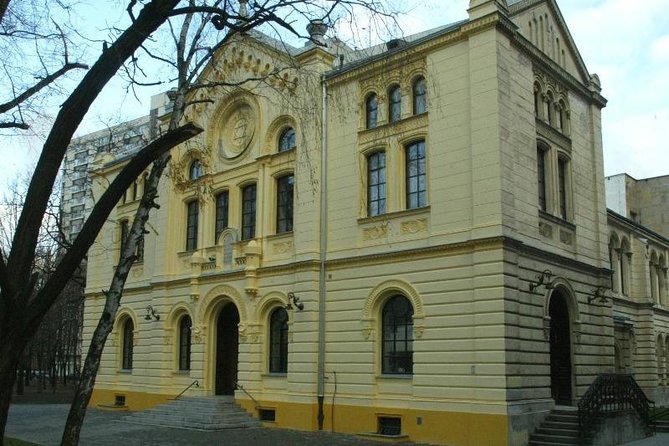
The next stop is the Nozyk Synagogue, the only synagogue in Warsaw that survived World War II and still operates. The visit is planned for about 15 minutes.
That fact gives this stop unusual weight. The building is not only a historic structure or a memorial. It remains a working religious site, so you should approach it with the same respect you would show any active place of worship.
Admission is not included in the tour price. The supplied details list an entrance fee of €5 per person, so budget for that extra cost. Dress and behavior should be suitable for a religious setting, though the tour information does not provide specific clothing rules.
For many people, this will be the clearest link between pre-war Jewish Warsaw and Jewish life in the city today. It is also a useful counterpoint to the later memorial sites.
Krochmalna and Chlodna connect streets to people
The route continues through Krochmalna, a street closely linked with the writing of Isaac Bashevis Singer, the Nobel Prize winning author. The stop is short, about five minutes, but the literary connection gives the neighborhood another layer.
Singer’s Warsaw is not presented as a museum exhibit here. Instead, you pass through streets and places that appear in his prose. If you have read his work, this part of the walk may carry special meaning. If you have not, the guide still uses the location to show how Jewish Warsaw entered literature.
At Chlodna Street, you spend about 10 minutes looking at houses that remain in their original condition and exploring Warsaw backyards. This is one of the route’s more grounded moments. Grand monuments tell you what a city wants remembered. Courtyards and modest residential buildings show how people actually lived.
The tour does not promise that every building is perfectly restored. That is part of the point. You see surviving fragments in a modern city, with later changes around them. The contrast can be striking, but it also means you should not expect a complete pre-war neighborhood.
A different kind of day in Warsaw:
- Warsaw Concert: Chopin – Painted by Candlelights with Wine
★ 4.8 · 1,442 reviews - Warsaw: City Sightseeing Hop-On Hop-Off Bus Tour
★ 3.6 · 1,415 reviews - Warsaw: POLIN Museum of the History of Polish Jews Ticket
★ 4.7 · 1,142 reviews - #1 Pub Crawl Warsaw with Optional Premium 1 Hour Open Bar
★ 5.0 · 790 reviews
Keret House offers a modern architectural surprise
Keret House is a very different stop. The guide introduces what is described as the world’s narrowest house and explains its history. The visit lasts about 10 minutes.
This small structure adds a contemporary note to a tour otherwise focused on older buildings, memory, and loss. It shows how Warsaw continues to respond to its difficult past through unusual art and architecture.
The stop is primarily an outside look and explanation based on the supplied tour details. Do not book this expecting a standard house museum visit or a lengthy interior tour. Its value comes from the story and the contrast with the surrounding city.
The Jewish Cemetery requires time and attention
The Jewish Cemetery is the longest stop, at about 40 minutes, and it is one of the most important parts of the route. Admission is not included, and the tour information identifies an entrance fee of €5 per person for Jewish Warsaw.
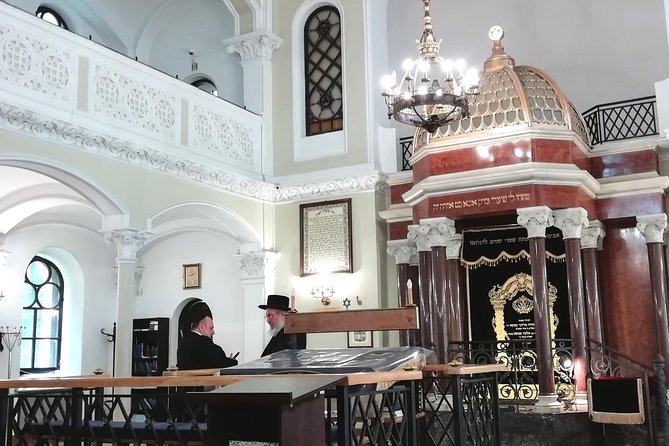
Here you see the resting places of famous rabbis, zaddiks, and Jewish families. Your guide explains Jewish burial customs and traditions, which helps you read the cemetery as more than a collection of names and stones.
The cemetery also opens several doors into Warsaw’s wider story. The tour includes an introduction to Esperanto, Janusz Korczak’s orphanage, and the Jewish theater. Those subjects may seem separate at first, but together they show the range of Jewish cultural and social life in the city.
Allow yourself to slow down here. Forty minutes is not a long time for a cemetery of this importance, especially if you want to read inscriptions or pause at particular graves. The route is guided, so you will get context, but you may not have much spare time for independent wandering.
Because the experience requires good weather, this outdoor portion matters when you choose your date. The provider says a weather cancellation leads to another date or a full refund.
The Ghetto Heroes Monument carries a famous wartime memory
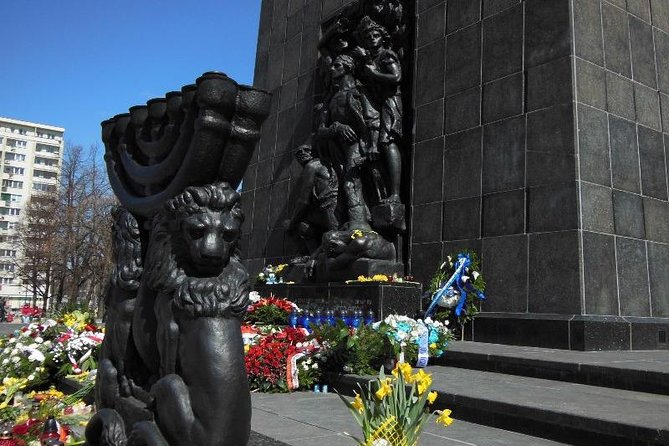
The tour then reaches the Ghetto Heroes Monument, with about 15 minutes devoted to the site. This is where Willy Brandt made his famous kneeling gesture in remembrance.
The moment is often recalled because it was simple and unexpected. Your guide places it within the broader story of wartime Warsaw and the people commemorated by the monument.
This stop is not just a photo pause. It is a place where memory, politics, and public responsibility meet. Listen for the explanation rather than rushing through. The monument marks a central part of Jewish Warsaw’s wartime history, but the tour’s earlier stops help you understand what existed before the war and what was lost.
POLIN Museum is the right final stop
The tour ends at the POLIN Museum of the History of Polish Jews, on Mordechaja Anielewicza 6. The guide spends about 15 minutes discussing the building’s architecture and symbolism.
Ending here makes sense. The museum offers a much wider account of Jewish life in Poland, while the tour gives you streets and places to connect with that story. The guide does not include time inside the museum galleries, but you can continue on your own after the tour with the museum’s audio guides.
Plan your day carefully if you want to enter POLIN afterward. The tour’s three-hour length covers the outdoor route and explanations, not a museum visit. You may need a separate ticket, and the supplied information does not give a museum admission price or opening schedule.
The building itself is part of the stop. Even without going inside, you receive an introduction to its design and symbolism. If Jewish Warsaw is a major reason for your visit, adding museum time after the tour would make the day much fuller.
What the $89.35 price really covers
The listed price is $89.35 per person. That is not the price of a museum ticket package or an all-inclusive sightseeing day. You are paying for a private, English-language introduction to Jewish Warsaw, transport in an air-conditioned vehicle, and a guide who leads your group through a complex route.
The private format is the strongest value point. Only your group participates, so you are not sharing the guide’s attention with a large crowd. That matters at the cemetery and synagogue, where questions and pacing can affect the experience.
You should add the stated €5 entrance fee for Jewish Warsaw, which covers admission costs not included in the booking. Lunch is also not included. If the tour uses public transport instead of the vehicle arrangement, the provider recommends buying a ticket in advance or carrying small change.
Group discounts are available, though no discount amount is provided. Since the experience is priced per person, larger private groups should check the final total before booking.
One detailed account praises guide Mary for presenting both familiar and lesser-known information and for reaching places the family would not have found alone. That is exactly where this tour earns its keep: not through grand comforts, but through local connections and a route that would be hard to assemble efficiently by yourself.
Transport, timing, and practical limits
The experience lasts approximately three hours. It starts at Grzybowski Square and ends at POLIN, so it is not a round-trip excursion back to your hotel.
Hotel pickup is offered. The guide meets you at reception with a PolinTours sign or waits in the car near the hotel entrance. If your hotel is far outside central Warsaw, the pickup point is arranged by email.
The tour is offered in English and confirmation normally arrives at booking. Reservations made within three days of departure may receive confirmation within 48 hours, subject to availability.
The tour is listed as suitable for most people and near public transportation. Still, the route includes outdoor stops, streets, a cemetery, and time spent moving between locations. If you need a highly specific mobility arrangement, ask the provider before booking, since the supplied details do not spell out accessibility features.
Free cancellation is available until 24 hours before the start time. A cancellation inside that window is not refunded, and late changes are not accepted. The local start time controls the cutoff.
Who will get the most from this tour
I would choose this tour if you want a focused first look at Jewish Warsaw and prefer a guide to connect the sites for you. It suits anyone interested in Jewish culture, Polish history, literature, architecture, cemeteries, or the way a city remembers its past.
It is especially useful for first-time visitors to Warsaw who have limited time. The route gathers major sites into one morning or afternoon and ends at POLIN, where you can continue learning independently.
Readers of Isaac Bashevis Singer will get an added pleasure from Krochmalna. Those interested in Janusz Korczak, Jewish burial customs, Esperanto, or the Jewish theater will also find the cemetery stop unusually broad for a short city tour.
I would hesitate if you want several hours inside museums, long periods for photography, or a slow walk with no fixed schedule. The itinerary has nine stops, so the pace is purposeful. You will see a lot, but some locations receive only five to 15 minutes.
Should you book Jewish Warsaw?
Book it if you want a private guide, hotel pickup, and a carefully linked route through Jewish Warsaw in about three hours. The best parts are the Nozyk Synagogue, the Jewish Cemetery, the literary streets connected with Singer, and the final handoff to POLIN Museum.
Before paying, remember the two practical extras: admission fees are not included, and the museum visit comes after the tour rather than inside it. Also check the weather, since the experience can be canceled for poor conditions.
For a short, personal introduction to the city’s Jewish past and present, the $89.35 price is reasonable, especially for a private group. For a full museum day or a deeply detailed historical study, use this as your starting point and leave extra time for POLIN.
FAQ
How long does the Jewish Warsaw tour last?
The tour lasts approximately three hours.
Where does the tour start?
It starts at Grzybowski Square, Pl. Grzybowski 2, 00-824 Warszawa, Poland.
Where does the tour end?
The tour ends at the POLIN Museum of the History of Polish Jews, Mordechaja Anielewicza 6, 00-157 Warszawa, Poland.
Is hotel pickup available?
Yes. The guide can meet you at your hotel reception with a PolinTours sign or wait in a car near the hotel entrance. If your hotel is far outside the center, the meeting point is arranged by email.
Is the tour private?
Yes. Only your group participates in the private tour.
Is the tour offered in English?
Yes. The tour is offered in English.
Are entrance fees included?
No. The Jewish Warsaw entrance fee is listed as €5 per person. Admission to the Nozyk Synagogue and Jewish Cemetery is not included.
Does the tour include the POLIN Museum?
The tour ends at POLIN Museum and includes an introduction to its building, architecture, and symbolism. Museum entry and time inside the exhibitions are not included, though you can visit afterward with audio guides.
Can I cancel for a full refund?
Yes, if you cancel at least 24 hours before the experience start time. Cancellations made less than 24 hours in advance are not refunded. If poor weather causes the provider to cancel, you are offered another date or a full refund.
Recently added in Warsaw
- Warsaw Wolf’s Lair with St. Lipka and Mamerki Private Guided★ 4.2 · 3 reviews
- Taste of Poland, food tour and guided walk with 12 tasting★ 5.0 · 3 reviews
- Discover Warsaw’s most Photogenic Spots with a Local★ 5.0 · 3 reviews
- Lodz Small Group Tour from Warsaw with Lunch★ 4.0 · 3 reviews
- Jewish heritage in Warsaw★ 4.5 · 3 reviews
- Warsaw Outdoor Paintball with Transfers (all year round)★ 5.0 · 3 reviews
- Electric Scooter Tour: Full Tour – 3-Hours of Magic!★ 5.0 · 3 reviews
- Skip-the-Line Polin Museum Warsaw Jewish History Tour★ 5.0 · 3 reviews
Warsaw Tours, compared.

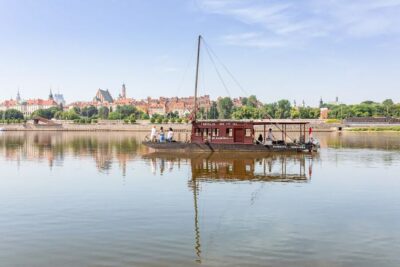
Traditional Galar Cruise on The Vistula River
Read our review →
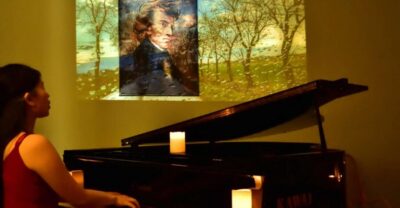
Warsaw Concert: Chopin – Painted by Candlelights with Wine
Read our review →

POLIN Museum of the History of Polish Jews Ticket
Read our review →
#1 Pub Crawl Warsaw with Optional Premium 1 Hour Open Bar
Read our review →