
Reviewed · WARSAW TOURS
Jewish Legacy in Warsaw. Private Tour with the best local specialist.
Warsaw’s Jewish story is told most clearly through places that survived, places that were destroyed, and places rebuilt to keep memory alive. This private route links the Nożyk Synagogue, the POLIN Museum area, the former ghetto wall, Umschlagplatz, and the Mila 18 memorial before moving to film locations in Praga. The route gives you both Jewish heritage and wartime Warsaw, rather than treating the subject as a single museum visit.
I like the private format, since your group of up to three can ask questions and set the pace. I also like the range of stops: Nożyk Synagogue provides a living connection to Jewish Warsaw, while the ghetto sites make the destruction and resistance easier to place on a modern city map. The main concern is reliability: one booking had no guide arrive for the 9:00 am pickup, and calls went unanswered before a refund was issued.
- Nożyk Synagogue is Warsaw’s oldest surviving synagogue.
- The POLIN Museum area introduces the subject through a major modern institution and its striking interior.
- The surviving ghetto wall fragment gives you a small but powerful piece of the former ghetto boundary.
- Umschlagplatz and Mila 18 connect deportation with armed resistance.
- Chłodna Street shows how the ghetto was divided into smaller and larger sections.
- Praga adds film history, including locations associated with The Pianist, plus an optional look at a villa linked with The Zookeeper’s Wife.
Why This Private Warsaw Route Matters
I find this experience useful because it connects several types of memory. You are not only looking at monuments. You are also seeing a functioning synagogue, a museum site, a remaining wall fragment, a deportation point, a bunker memorial, and streets used in a major film.
That variety matters in Warsaw. The wartime Jewish district was largely destroyed, and many locations now sit among ordinary apartment blocks, roads, and new construction. A local specialist can help you understand what is no longer visible and how the surviving markers fit together.
The experience is private for your group, with a maximum of three people. That is a good size for a serious subject. You can ask for clarification without addressing a busload of strangers, and the guide can spend more or less time on the places that matter most to you.
The tour is offered in English and begins at 9:00 am. Pickup is available throughout Warsaw, which saves you the trouble of finding a starting point across town. The price is $361.23 per group, not per person. For three people, that works out to about $120.41 each. For one person, it is a costly private outing, but for a small group that wants personal attention, the price is easier to justify.
Nożyk Synagogue, Warsaw’s Oldest Surviving Synagogue
The first listed stop is Nożyk Synagogue at Twarda 6. You spend about 20 minutes here, enough for an introduction and a look at the building rather than a long service or full museum visit.
Its importance is plain: this is the oldest existing synagogue in Warsaw. It survived the Nazi period, partly because of its location and its usefulness during the final chapter of the ghetto. That survival gives the stop a special weight. Much of Jewish Warsaw must be reconstructed through memorials, photographs, and museums. Here, you have an actual synagogue still connected to the city’s Jewish life.
I would treat this as a focused orientation stop. Twenty minutes is not long, so do not expect an extended architectural tour. Its value comes from beginning with a living place of worship before moving to sites tied to destruction and death.
A few more Warsaw half days to consider
- Warsaw: Chopin Concert in the Old Town
★ 4.8 · 2,287 reviews - Warsaw: Traditional Galar Cruise on The Vistula River
★ 4.6 · 1,640 reviews - Warsaw: Old Town Highlights Walking Tour in English
★ 4.7 · 1,516 reviews
The POLIN Museum Area and a Short Interior Look
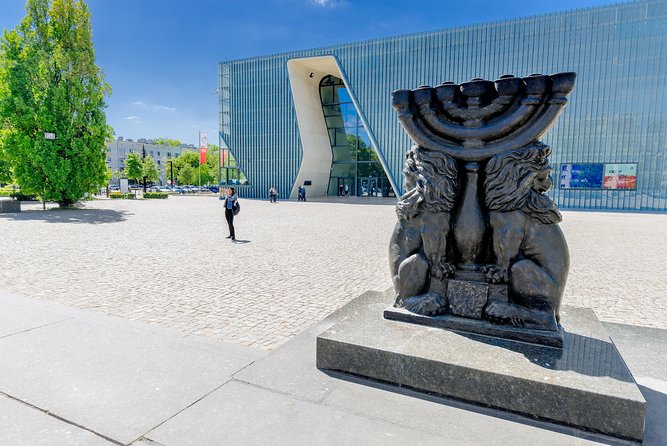
The route continues to the POLIN Museum of the History of Polish Jews at Mordechaja Anielewicza 6. The planned visit lasts about 50 minutes and includes the museum area plus a quick look inside at the interior design.
The museum is presented as an important place for Jewish heritage in Poland and as one of the first institutions to address the subject in a broad, careful way. Even without a full museum visit, seeing the building helps you understand the scale of the story being told.
The wording of the itinerary matters here. This is a quick look, not a full examination of the museum’s permanent exhibition. If you want to read every panel and spend hours with the displays, you will need separate time. For this tour, the POLIN stop works as a visual and intellectual frame for the sites that follow.
Nearby is the monument commemorating Willy Brandt’s 1970 gesture of kneeling before the Ghetto Heroes Monument. The stop is listed as a pass-by, so expect a view rather than a dedicated visit. The gesture represents apology and reconciliation, adding a later chapter to the wartime story.
The Fragment of Ghetto Wall at Złota 60
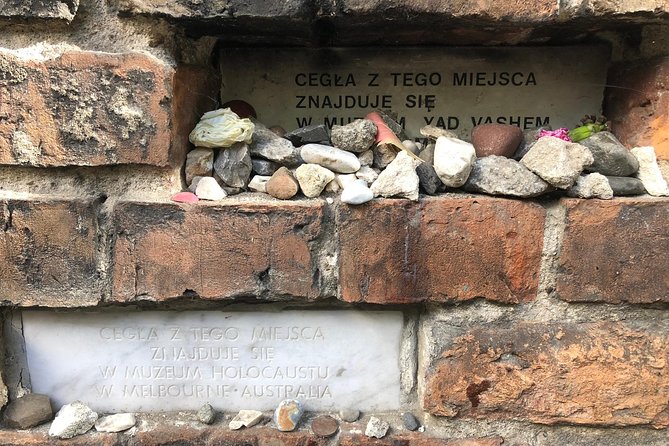
At Złota 60, you see the remaining fragment of the Warsaw ghetto wall. The planned stop lasts around 20 minutes.
The physical scale is likely to surprise you. You are not looking at a complete district or a large fortified structure. You are looking at a surviving section of the boundary that once enclosed the largest Jewish ghetto described in the tour material.
That small size is part of the point. Modern Warsaw has changed around it, and the fragment can be easy to miss without guidance. A specialist can explain how the wall functioned and why this modest remnant matters.
The site was officially recognized by Chaim Herzog in 1992 and is visited by thousands each year. I would allow time to pause here rather than rushing through it for a photograph. The wall fragment carries more meaning when you picture it as part of a much larger barrier, now mostly gone.
Umschlagplatz and the Route to Treblinka
The next stop is Umschlagplatz, at the corner of Stawki and Dzika Streets. You spend about 20 minutes at the place once described as the cargo railroad terminal of the ghetto.
This is where Jewish people were gathered and taken to the Treblinka death camp. The plainness of the location can make the explanation even harder to absorb. It was a transport point, but the people moved through it were not being sent on an ordinary journey.
I value this stop because it shifts the focus from walls and buildings to the machinery of deportation. The surrounding city continues its daily life, while the memorial marks a place where Warsaw’s Jewish population was forcibly removed.
Twenty minutes gives you time for context and reflection, though the subject is heavy. If you are visiting with children or with someone sensitive to Holocaust sites, be prepared for the emotional weight of the route.
A different kind of day in Warsaw:
- Warsaw Concert: Chopin – Painted by Candlelights with Wine
★ 4.8 · 1,442 reviews - Warsaw: City Sightseeing Hop-On Hop-Off Bus Tour
★ 3.6 · 1,415 reviews - Warsaw: POLIN Museum of the History of Polish Jews Ticket
★ 4.7 · 1,142 reviews - #1 Pub Crawl Warsaw with Optional Premium 1 Hour Open Bar
★ 5.0 · 790 reviews
Mila 18 and the Memory of Resistance
At the corner of Mila and Dubois Streets, the tour visits the memorial at Mila 18 for about 20 minutes. This site marks the largest bunker in the Jewish ghetto in Warsaw.
The bunker was used by Mordechaj Anielewicz, leader of the uprising, and nearly 30 other members of the Jewish Fighting Organization. Their hiding place connects this stop with the armed resistance that took place in the ghetto.
Mila 18 works best after Umschlagplatz. One site shows the forced departure of people sent to their deaths. The other recalls people who chose to resist, even when the odds were grim. The sequence gives the route a clear emotional and historical shape.
The memorial is not a preserved bunker interior described as an attraction. It is a place of remembrance. Expect the guide to explain what happened at the site and help you read the modern memorial in relation to the vanished ghetto.
The Warsaw Ghetto Heroes Monument
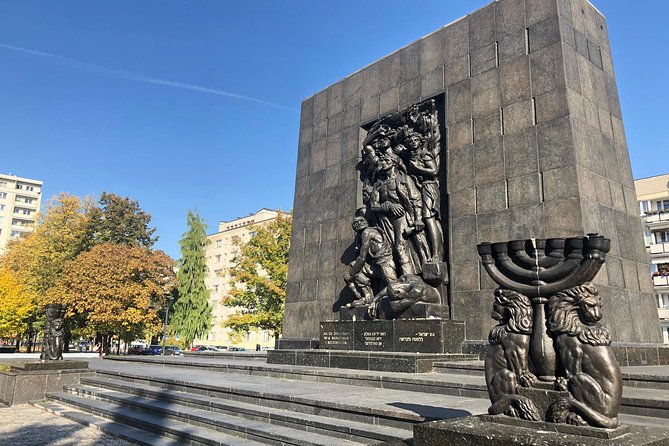
The route includes about 50 minutes at the Monument to the Heroes of Warsaw on Nowy Przejazd. The supplied description identifies it as a memorial to the Jewish people who endured the nightmare of the ghetto.
This is one of the longer stops, and that makes sense. A major memorial needs time to view its design, hear its story, and consider how it relates to the surrounding area. The nearby Willy Brandt monument, seen in passing, adds a reminder that memory can also involve responsibility and reconciliation.
I would listen closely to the guide here. The meaning of a memorial often lies in its symbols and setting, not just its inscription. The private format should make it easier to stop for questions rather than moving along with a large group.
Chłodna Street and the Divided Ghetto
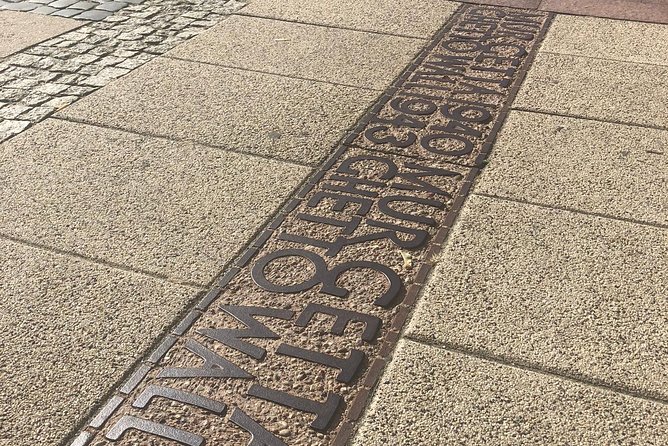
Chłodna Street gets about 10 minutes. The key sight is the former footbridge that linked the smaller ghetto section with the larger section.
The street is described as one of the liveliest and most dangerous areas of the ghetto. That combination is important. The ghetto was not a silent, empty place. People lived, worked, traded, suffered, and tried to survive within a system designed to control and destroy them.
The bridge also helps you picture the ghetto as divided into sections rather than as one uniform enclosure. A short stop can still be useful if the guide points out the location and explains how movement worked across the separate areas.
This is one of the places where modern Warsaw makes historical imagination difficult. Much of what you see today is an ordinary city street. The guide’s explanation is essential because the physical evidence is limited.
Praga, Film Locations, and an Optional Villa
The final listed stop moves across the Vistula to Praga North, with about 40 minutes on streets around Ząbkowska. This part of the route connects wartime Warsaw with cinema.
You see locations used by Roman Polański for scenes in The Pianist. That adds a different way to approach the city’s past. Film can bring international attention to places, but the streets themselves remain more important than the movie connection. You are seeing part of Warsaw’s built environment while considering how it was used to represent the city on screen.
The tour also offers a visit to the villa associated with The Zookeeper’s Wife. The villa visit is optional and depends on your interest. Since the information does not promise a full interior visit, ask the guide what can actually be seen before making it a priority.
Praga gives the route a change of pace after several memorial sites. I like that contrast, but you should understand the focus. This is not a separate architectural tour of the district. It is a selection of streets and film-related locations linked to the wider story of Warsaw.
Timing, Pickup, and the Private Format
The tour begins at 9:00 am, with pickup offered anywhere in Warsaw. That makes it practical if you are staying away from the central meeting areas. You should still make sure your phone is working and that you have a clear pickup arrangement before the start time.
The route includes several short stops and a few longer ones. The listed stop times add up to roughly four hours, before accounting for driving between locations and the optional villa. The actual outing can therefore take longer than the timed visits suggest.
A private group of up to three is the strongest part of the format. You can discuss the level of detail you want, pause at a memorial, or ask for more context about a particular family, site, or film connection. The English-language option also makes the experience accessible to visitors who do not speak Polish.
There is one serious practical warning. One scheduled pickup failed completely: the guide did not arrive at 9:00 am, calls to the local number went unanswered, and the booking company later arranged a refund that arrived in one business day. This appears to be an isolated service failure rather than a description of the route itself, but it is worth taking seriously because the tour is built around a personal pickup.
The booking includes free cancellation up to 24 hours before the start time. Changes or cancellations made inside that window are not accepted for a refund. Service animals are allowed, the tour is near public transportation, and most people can participate.
Is $361.23 Good Value for Three People?
At $361.23 per group, the price is easier to defend with three people than with one. A group of three pays about $120.41 per person, while two people pay about $180.62 each. For a private English tour with pickup across Warsaw, the value comes from the guide’s time, transportation between scattered sites, and the ability to ask questions.
The price is less attractive if you only want a quick visit to one memorial or the POLIN Museum. You would be paying for a route that covers many locations, including several brief stops and a move to Praga.
I think the tour makes the most sense for people who want a guided framework for Warsaw’s Jewish legacy and have limited time in the city. It is also a sensible choice for a small family or group that wants privacy around a difficult subject.
Who Should Book This Tour?
I would recommend it to you if you want to connect places rather than visit them in isolation. The route is especially useful if you have not studied the Warsaw ghetto in detail and want a guide to explain how the synagogue, wall, deportation point, resistance memorial, and divided streets relate to each other.
It also suits anyone interested in the way Warsaw’s past appears in film. The Praga section and the optional villa broaden the experience beyond formal memorials.
You may want another plan if your main goal is an in-depth POLIN Museum visit. The museum stop is limited to the area and a quick look inside, so this tour does not replace a dedicated museum visit.
You should also think carefully about the emotional pace. The itinerary covers deportation, death, resistance, and destruction in a compact period. That is historically useful, but it can be demanding. The private setup gives you some control, yet the subject itself remains difficult.
Should You Book Jewish Legacy in Warsaw?
I would book this private tour if you are in Warsaw for a short stay, want pickup from your accommodation, and prefer a guide-led route through Jewish heritage sites. The strongest reasons are the small group size, the wide range of locations, and the way the itinerary links living Jewish memory with the former ghetto and its memorials.
I would not book it without confirming the pickup details if your schedule is tight. The single failed appointment is a real warning, even though the refund was handled quickly. If the operator confirms the meeting clearly, this can be a valuable half-day introduction to one of Warsaw’s most important subjects.
FAQ
Where does the tour begin?
The tour starts at 9:00 am, and pickup is offered from locations throughout Warsaw.
Is the tour private?
Yes. Only your group participates, with a maximum of three people per booking.
Is the tour offered in English?
Yes. The experience is offered in English.
Which synagogue does the tour visit?
The tour visits Nożyk Synagogue at Twarda 6, identified as the oldest existing synagogue in Warsaw.
Does the tour include a full visit to the POLIN Museum?
The itinerary includes a visit to the POLIN Museum area and a quick look inside at the interior design. It does not state that a full museum exhibition visit is included.
Can I cancel for a full refund?
Yes, if you cancel at least 24 hours before the experience starts. Cancellations or changes made less than 24 hours before the start time are not accepted for a refund.
Recently added in Warsaw
- Warsaw Wolf’s Lair with St. Lipka and Mamerki Private Guided★ 4.2 · 3 reviews
- Taste of Poland, food tour and guided walk with 12 tasting★ 5.0 · 3 reviews
- Discover Warsaw’s most Photogenic Spots with a Local★ 5.0 · 3 reviews
- Lodz Small Group Tour from Warsaw with Lunch★ 4.0 · 3 reviews
- Jewish heritage in Warsaw★ 4.5 · 3 reviews
- Warsaw Outdoor Paintball with Transfers (all year round)★ 5.0 · 3 reviews
- Electric Scooter Tour: Full Tour – 3-Hours of Magic!★ 5.0 · 3 reviews
- Skip-the-Line Polin Museum Warsaw Jewish History Tour★ 5.0 · 3 reviews
Warsaw Tours, compared.

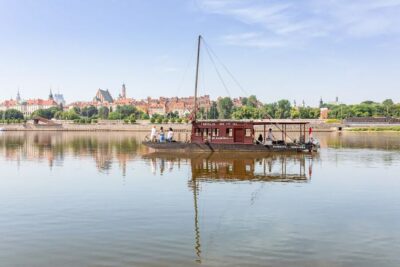
Traditional Galar Cruise on The Vistula River
Read our review →
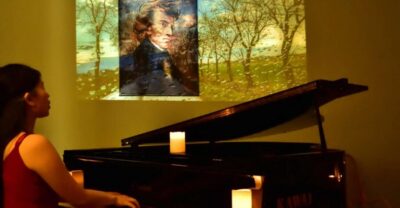
Warsaw Concert: Chopin – Painted by Candlelights with Wine
Read our review →

POLIN Museum of the History of Polish Jews Ticket
Read our review →
#1 Pub Crawl Warsaw with Optional Premium 1 Hour Open Bar
Read our review →