Reviewed · WARSAW TOURS
Discover the Dark Side of Warsaw in Praga District by Retro Bus
Warsaw’s Praga district gives you a side of the capital that polished central streets cannot. You ride across the Vistula in a 1980s retro bus, then explore old courtyards, murals, former factories, and streets that survived much of World War II. The tour’s dark reputation is part history, part local character, and part clever storytelling.
I like the hot chocolate at E. Wedel, a genuine Warsaw institution, and I like the way this trip links Praga’s past to its present-day bars, cafes, art, and redevelopment. Guides such as Konrad, Marcin, and Paweł have earned strong praise for clear English, humor, and memorable stories.
The main drawback is pace. Two and a half hours is not long for such a complicated district, and a large group can mean rushed stops. The bus may also feel warm on a hot day, and its old mechanics are part of the charm but not always perfectly reliable.
Key points at a glance
- Ride a genuine-feeling 1980s coach from the Palace of Culture and Science across the Vistula.
- Stop at E. Wedel for a cup of hot chocolate and stories about Warsaw’s famous chocolate maker.
- See Praga’s rougher historic side, including Brzeska Street, Różycki’s Bazaar, old courtyards, and former industrial sites.
- Visit Koneser Warsaw Vodka Factory and hear how alcohol production shaped the district.
- Look for film connections, including streets used in Roman Polański’s The Pianist.
- Expect a guide-led history lesson, with WWII, Communist-era Warsaw, street art, and local anecdotes woven into the drive.
Why Praga belongs on your Warsaw plan
Most first visits to Warsaw focus on the rebuilt Old Town, the Royal Route, museums, and the Palace of Culture. Those places matter, but they do not show the whole city. Praga, on the eastern bank of the Vistula, offers a rougher and less polished view of Warsaw.
The district was once separate from Warsaw and developed its own identity. It later became known for old tenements, factories, courtyards, markets, nightlife, and a tougher reputation than the rebuilt center. Parts of Praga escaped the destruction that hit much of Warsaw during WWII, so you can still see prewar buildings among newer apartments and renovated cultural spaces.
That contrast is the real point of the tour. You are not being taken from one grand sight to another. Instead, you are shown how Warsaw changed through war, Soviet influence, industry, poverty, redevelopment, and new creative life.
The title suggests something sinister, but do not expect a horror tour. The dark side refers mainly to Praga’s former reputation and hard-edged past. The experience is historical and often funny, not frightening.
A few more Warsaw half days to consider
- Warsaw: Chopin Concert in the Old Town
★ 4.8 · 2,287 reviews - Warsaw: Traditional Galar Cruise on The Vistula River
★ 4.6 · 1,640 reviews - Warsaw: Old Town Highlights Walking Tour in English
★ 4.7 · 1,516 reviews
Starting beside Stalin’s Warsaw landmark
The bus waits outside the Palace of Culture and Science, by the Warsaw Tourist Information Office at pl. Defilad 1. This is a practical meeting point in the city center and easy to connect with by public transport.
The building itself sets the tone. The Palace of Culture and Science was presented as a gift from Joseph Stalin and remains one of the most recognizable symbols of postwar Warsaw. Before you even cross the river, the guide introduces stories tied to the city center, including Warsaw’s famous artificial date palm, the National Museum during WWII, the UEFA Euro 2012 football stadium, and the city’s postwar rebuilding.
The supplied schedule gives both 10:30am and 11:00am as possible start times. Treat the time on your confirmation as the one that matters, and arrive early. The activity returns to this same meeting point after roughly two and a half hours.
Crossing the Vistula in a vintage bus
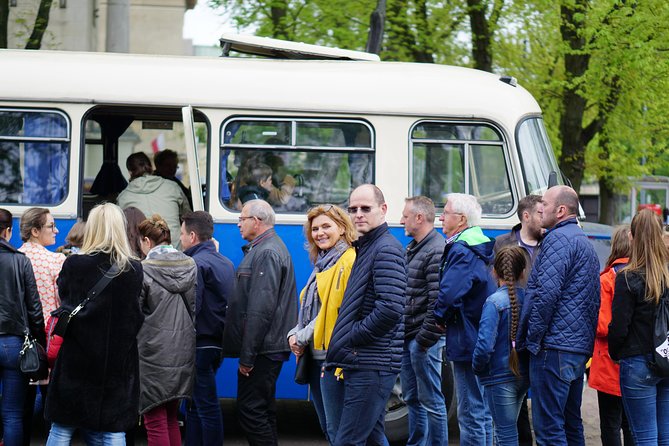
The bus is not just transport. It is part of the experience. Its old design gives the journey a visual link to Communist-era Warsaw, when public vehicles were utilitarian, noisy, and built for everyday life rather than sightseeing comfort.
You get live commentary while riding, with the guide pointing out landmarks along the route. The bus crosses the Vistula, Poland’s main river, and the city opens into a different kind of Warsaw on the eastern bank.
The vehicle’s age has practical limits. There is no promise of modern air conditioning, and one account describes passengers helping push the bus after its battery became cold. That sounds inconvenient, but it also shows what you are buying: a historic-feeling ride, not a silent luxury coach.
On a very warm day, bring water and dress sensibly. The tour operates in all weather, and drinks are not included apart from the specified hot chocolate.
E. Wedel and the first taste of Praga
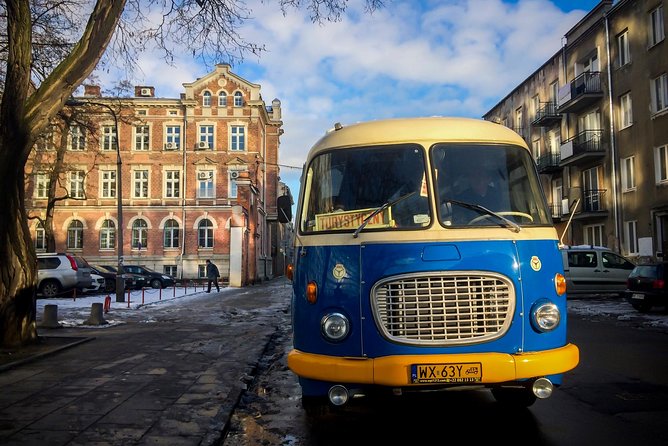
The first formal stop is E. Wedel, a 19th-century chocolate factory. You receive a cup of hot chocolate and hear about the factory’s place in Warsaw’s story. This is more than a quick refreshment break. Wedel is one of the city’s best-known food names, and the stop adds a local taste to a tour otherwise heavy with politics, war, and architecture.
The hot chocolate is especially welcome in cool weather, though one person also enjoyed it during an unusually warm day. The portion is a cup rather than a full meal, so do not count on this as lunch.
The schedule allows about 20 minutes. That is enough for the drink and a short explanation, but not enough for a long visit. If chocolate is a major reason for booking, keep your expectations sensible. The value is the combination of drink, factory story, and a break from the bus.
A different kind of day in Warsaw:
- Warsaw Concert: Chopin – Painted by Candlelights with Wine
★ 4.8 · 1,442 reviews - Warsaw: City Sightseeing Hop-On Hop-Off Bus Tour
★ 3.6 · 1,415 reviews - Warsaw: POLIN Museum of the History of Polish Jews Ticket
★ 4.7 · 1,142 reviews - #1 Pub Crawl Warsaw with Optional Premium 1 Hour Open Bar
★ 5.0 · 790 reviews
Kamionek, Warsaw East, and the city of contrasts
As the route continues, the guide explains how Kamionek changed from an industrial and working neighborhood into an area with newer cafes, bars, and creative businesses. This is one of the more useful parts of the tour because it shows redevelopment in progress rather than presenting Praga as a frozen relic.
You also pass Warsaw East railway station and hear the argument over whether it is the city’s most beautiful station. The answer is left to the guide, which gives the stop a conversational feel rather than a checklist approach.
Another unusual sight is one of Warsaw’s longest buildings. The route also includes views of the Royal Castle, the Warsaw Nike monument, and the main street enlarged after WWII. These details help connect Praga to the wider capital. You are not seeing an isolated neighborhood. You are seeing how the river, transport lines, monuments, and rebuilt center fit together.
Basilica of the Sacred Heart of Jesus
The Basilica of the Sacred Heart of Jesus is one of the principal stops, with about 20 minutes set aside. The church is presented as one of Poland’s most beautiful, and the visit gives the tour a change of mood after the factory and city streets.
The value here is not only the building itself. Churches in Warsaw often carry layers of national, religious, and wartime meaning, and the guide provides the context. Since the stop is short, you should expect a focused visit rather than a long architectural study.
This is also a reminder that Praga is not only industrial or gritty. Religious buildings, old housing, markets, factories, murals, and new businesses sit close together. The district makes more sense when you see all of those pieces in one outing.
Koneser and the former vodka industry
Koneser Warsaw Vodka Factory is another 20-minute stop. The former factory complex gives you a look at Praga’s industrial past and its connection to vodka production.
The guide explains how the factory affected the district and considers whether vodka had a real influence on local life. The subject is handled as social history, not as a drinking session. Food and drinks are not included beyond the hot chocolate, so do not expect a tasting here.
Koneser also represents the district’s newer direction. Former industrial spaces can take on new uses, and this area helps you see how old factories became part of modern Praga’s cultural and commercial scene. The tour does not leave you with the impression that every old building is untouched. Instead, it shows a neighborhood changing in front of you.
Brzeska Street, murals, and Praga’s hard reputation
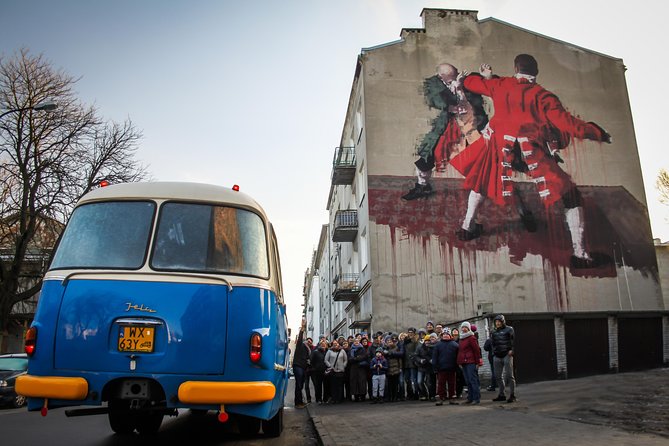
The streets of Brzeska and Stalowa bring you closer to the side of Praga that gives the tour its name. You see colorful murals dealing with Polish history and political life, along with old walls and traces of the district’s past.
Street art is present, but it is not the whole tour. If you want a dedicated mural walk, this experience may feel too broad. You get a selection of painted walls while the guide keeps the larger focus on history, housing, politics, and local change.
The route also reaches Różycki’s Bazaar, described as Warsaw’s longest-operating marketplace. In the past, it had a reputation for shady trade, including forged documents. The important thing is the shift from past to present. You can see what the market is like now and compare it with the stories of its earlier years.
This section works best if you enjoy places that are imperfect and still in use. Praga is not presented as a spotless postcard district. Some streets may feel worn, and the atmosphere can change from one block to the next. That is exactly why the guide matters.
The streets of The Pianist
One of the most cinematic moments comes on a picturesque street used as a location for Roman Polański’s The Pianist. The connection gives a personal scale to the district’s WWII story.
Warsaw was heavily damaged during the war, and much of the central city was rebuilt. Praga’s surviving prewar buildings help you picture the city before and after that destruction in a way that a reconstructed facade cannot fully provide.
The tour also refers to The Zookeeper’s Wife and passes near Warsaw Zoo. These film connections are brief, but they give you a useful reason to look more closely at the streets. You are not simply passing old buildings. You are seeing places that have served as visual records of Warsaw’s wartime past.
The Praga Bermuda Triangle and a prewar courtyard
The Praga Bermuda Triangle is the tour’s most atmospheric section. The name points to a group of streets and courtyards associated with mystery, old stories, and a less polished side of the city.
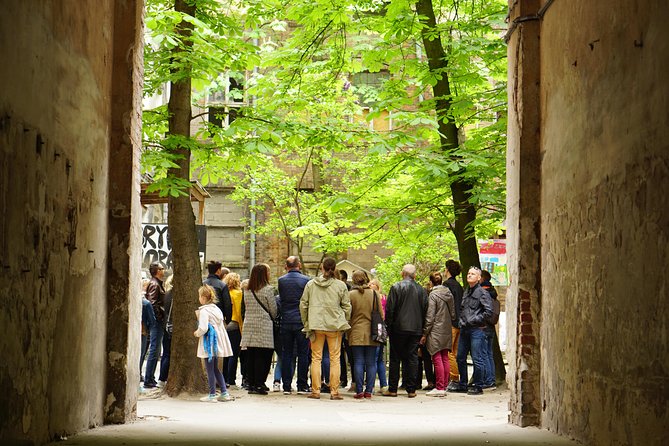
Here you explore scenic inner courtyards and a prewar residential house. These courtyards are easy to miss if you move through Praga by tram or taxi. They reveal the everyday design of older housing: shared entrances, enclosed spaces, worn facades, and a sense of community built around buildings rather than open boulevards.
New Praga adds another layer. You hear about the founder of the Nowa Praga district and see the interior courtyard of a prewar residential building. The scheduled stop is about 15 minutes, so listen closely and stay with the group.
This is where the tour feels most authentic. You are not given a grand monument and a polished explanation. You are shown the spaces where ordinary life took place, along with the marks left by war, Communism, neglect, and renewal.
What the guides add to the ride
The strongest part of this experience is the live storytelling. Names can vary by departure, but guides including Konrad, Marcin, and Paweł have been praised for humor, clear English, and personal anecdotes about life behind the Iron Curtain.
That matters because the route includes many passing sights that would mean little without explanation. A long apartment block, a railway station, a mural, or a former factory becomes more memorable when the guide explains what it meant to people living nearby.
The guide may also need to manage the practical side of the trip. Groups can be energetic, and loud passengers or late arrivals can affect the pace. A smaller bus and a smaller group can actually improve the experience by making it easier to hear the commentary and ask questions.
The stated maximum is 40 people. One account describes a much larger combined party split across three buses, so the overall operation may sometimes feel bigger than a small-group outing. If you want a quiet, private visit, this is not the right format.
Is $42.34 good value?
At about $42.34 per person, this is not the cheapest way to see Warsaw. It is also more than a basic public transport ride through Praga. The price includes the retro bus, an English-speaking professional guide, live commentary, and hot chocolate.
I think the value is reasonable if you want several things at once: transport across the river, a guided introduction to a district you may not reach on your own, a short food stop, film locations, and background on WWII and Communism. The tour also saves you the work of planning a route through streets that are not connected by one obvious sightseeing path.
The value drops if you mainly want long visits inside churches, factories, or museums. The stops are short, and much of the experience takes place from the bus. You are paying for interpretation and access to a broad slice of Praga, not for extended entry into major attractions.
Who should book this Praga tour?
I would choose this trip if you have already seen central Warsaw or want an alternative to the usual Old Town circuit. It suits anyone interested in WWII, Communist-era life, urban change, film locations, street art, industrial buildings, and local food history.
It is also a good fit if you prefer hearing a city explained as you move through it. The stories from guides such as Konrad, Marcin, and Paweł help turn scattered sights into a connected picture.
You may want another option if you dislike old vehicles, warm buses, group tours, or short walking stops. People looking for a strongly dark or dangerous experience may also be disappointed. The district has a tough past, but the tour is more curious and historical than grim.
Book it if you want to understand why Praga feels so different from central Warsaw, and if a little mechanical noise is a fair trade for character. Skip it if you need polished comfort or long, quiet time at each sight. For most first-time visitors with an extra morning, this is a useful and unusual way to meet the city beyond its rebuilt center.
Free cancellation is available up to 24 hours before the start time for a full refund. The tour requires a minimum number of participants, and it may be rescheduled or refunded if that minimum is not reached.
FAQ
Where does the Praga retro bus tour start?
It starts outside the Palace of Culture and Science, beside the Warsaw Tourist Information Office at pl. Defilad 1 in Warsaw.
What time does the tour start?
The supplied details show both 10:30am and 11:00am. Check the start time on your booking confirmation and arrive early at the meeting point.
How long does the experience last?
The tour lasts approximately two hours and 30 minutes and returns to the original meeting point.
Is hot chocolate included?
Yes. A cup of hot chocolate at the E. Wedel stop is included.
Is the tour conducted in English?
Yes. The experience is offered in English and includes live commentary from a professional guide.
Can I cancel for a full refund?
Yes. You can cancel at least 24 hours before the experience start time for a full refund. Cancellations or changes made less than 24 hours before the start time are not accepted for a refund.
Recently added in Warsaw
- Warsaw Wolf’s Lair with St. Lipka and Mamerki Private Guided★ 4.2 · 3 reviews
- Taste of Poland, food tour and guided walk with 12 tasting★ 5.0 · 3 reviews
- Discover Warsaw’s most Photogenic Spots with a Local★ 5.0 · 3 reviews
- Lodz Small Group Tour from Warsaw with Lunch★ 4.0 · 3 reviews
- Jewish heritage in Warsaw★ 4.5 · 3 reviews
- Warsaw Outdoor Paintball with Transfers (all year round)★ 5.0 · 3 reviews
- Electric Scooter Tour: Full Tour – 3-Hours of Magic!★ 5.0 · 3 reviews
- Skip-the-Line Polin Museum Warsaw Jewish History Tour★ 5.0 · 3 reviews
Warsaw Tours, compared.
Traditional Galar Cruise on The Vistula River
Read our review →
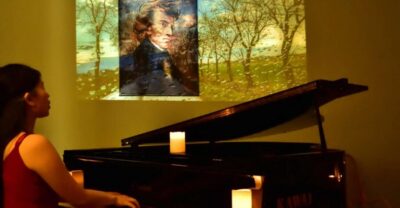
Warsaw Concert: Chopin – Painted by Candlelights with Wine
Read our review →
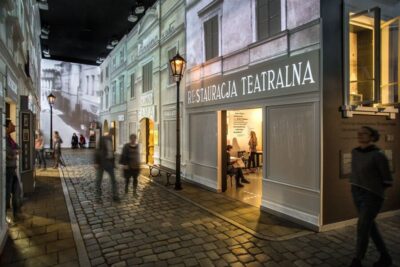
POLIN Museum of the History of Polish Jews Ticket
Read our review →
#1 Pub Crawl Warsaw with Optional Premium 1 Hour Open Bar
Read our review →