
Reviewed · WALKING TOURS
Warsaw: Warsaw Ghetto Private Walking Tour with Hotel Pickup
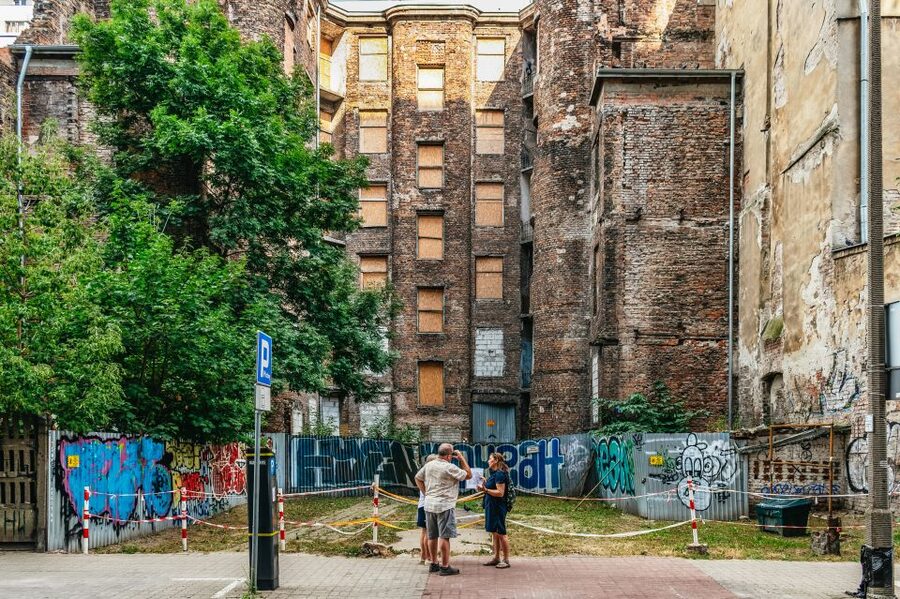
Warsaw’s former Jewish Ghetto is not a preserved historic quarter. Much of it was destroyed, rebuilt, or absorbed into modern streets. That is exactly why this private walking tour can be so useful: your guide brings maps and old photographs that show what no longer exists, then connects those images to the places beneath your feet.
I like the way the tour follows the story in order, from the ghetto’s creation in 1940 to the Warsaw Ghetto Uprising in 1943. I also like the personal scale. You can ask questions, slow down, and shape the discussion around your interests. The main drawback is the price, $84 per person, which is high for a three-hour outing, and the hotel-pickup wording appears unclear, so confirm your meeting arrangements before booking.
Key points to know
- Old photographs make vanished streets visible: Guides such as Marzena and Mary use images and maps to explain sites that no longer look as they did during the war.
- The route covers surviving traces: Expect fragments of the ghetto wall, the last remaining ghetto street, former ghetto neighborhoods, and the Umschlagplatz collection point.
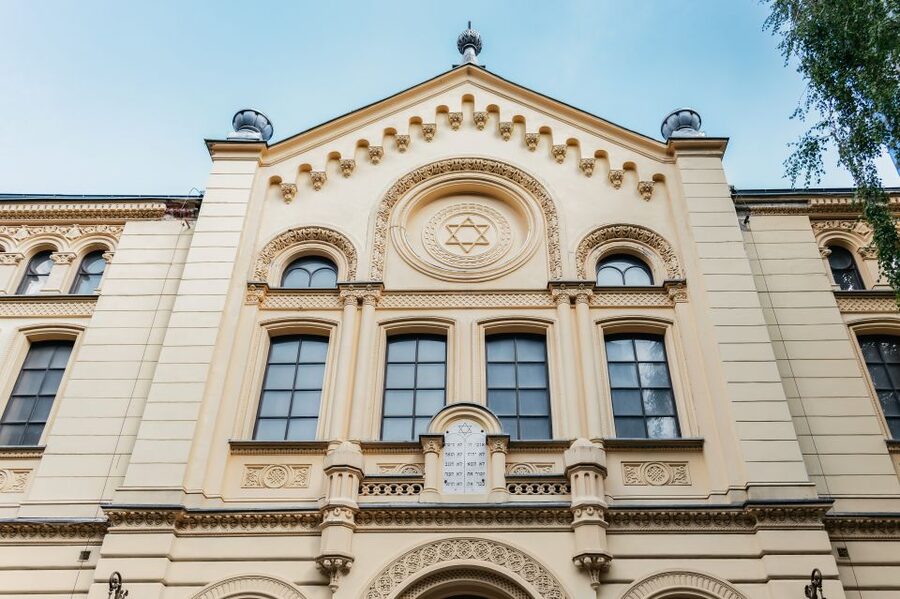
- The Nozyk Synagogue is still active: It is described as the only Warsaw synagogue to survive the Second World War and requires a separate donation of 20 PLN, 5 EUR, or 5 USD.
- The private format helps with difficult questions: The guide can adjust the pace and explain the history at a level that suits your group.
- The tour is made for mature visitors: Children under 14 and people with mobility impairments should not book this experience.
- Check pickup details carefully: Hotel pickup and drop-off are listed, but some bookings have required meeting at Prozna Street 9.
Why the former ghetto requires a guide
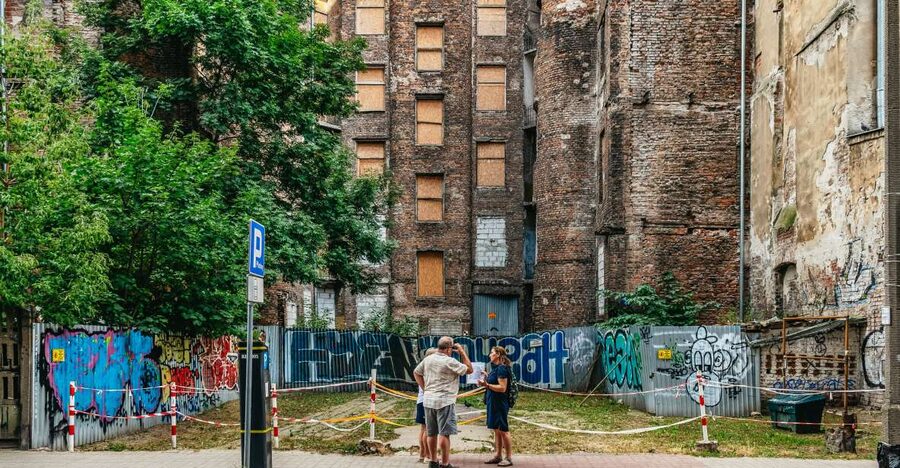
The Warsaw Ghetto once held more than 400,000 Jews from Warsaw and nearby areas in roughly four square kilometers. About 100,000 people died there from hunger, exhaustion, and disease. More than 300,000 were deported to Treblinka and murdered there.
Today, those figures can feel abstract. A street corner, a patch of wall, or a memorial may not immediately tell you what happened there. The guide’s job is to put the facts back into place. Old photographs and maps show the dense prewar streets, the walls that enclosed the ghetto, and the changing shape of the district.
Before the war, Warsaw had the second-largest Jewish community in the world, with Jews making up about 30 percent of the city’s population. In less than three years, that community had been destroyed. A walking tour gives you time to consider that transformation at street level, not just in a museum display.
This is a serious subject, and the tour treats it that way. It covers Nazi policy, daily life under confinement, resistance, deportation, and the destruction of the ghetto. You should come ready for an emotionally difficult morning or afternoon.
More Walking Tours in Warsaw
- Warsaw: Old Town Highlights Walking Tour in English
★ 4.7 · 1,516 reviews - Warsaw: Old Town Guided Walking Tour
★ 4.9 · 599 reviews - Half-Day Polish Food Walking Tour with Guide and Dinner
★ 4.5 · 381 reviews
Starting at Prozna Street 9
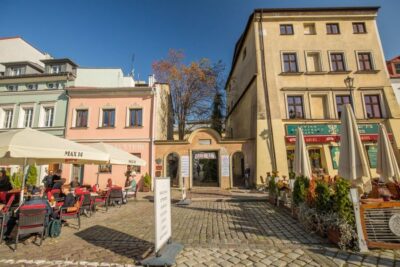
The stated meeting point is Prozna Street 9, between Bistro Charlotte Menora and Strefa Restaurant. Look for a guide holding a PolinTours sign.
Prozna Street is a useful starting place because it connects the modern city with the Jewish history of Warsaw. The area is not a complete preserved ghetto street, so do not expect an open-air museum. Instead, your guide helps you read the surviving buildings and urban gaps alongside historical images.
If you select pickup, confirm the arrangement directly. Hotel pickup and drop-off are included in the tour details, and pickup is also described as optional. Yet some bookings have found the pickup information misleading and have met at the listed street address instead. This is a small practical point, but it matters when you are planning a timed day in Warsaw.
Seeing the wall fragments and vanished boundaries
One of the tour’s most useful parts is the search for fragments of the ghetto wall. These are modest remains, not a grand continuous barrier. You may pass them without understanding their importance if you are walking alone.
The guide explains how the wall divided neighborhoods and controlled movement. That physical boundary also helps you understand the ghetto as a system, not simply a place where people were forced to live. The Nazis packed more than 400,000 people into a very small area, while hunger, disease, and forced labor steadily weakened the population.
The present-day surroundings can make this section tricky. Modern roads and buildings often obscure the old layout. This is where the supplied maps and photographs earn their keep. You can compare the city in front of you with the wartime streets your guide describes.
The route includes the last street of the ghetto. That stop carries particular weight because it is a surviving piece of the old street network in a city where so much was destroyed. It also makes clear that the former ghetto is not one single, neatly preserved site. You will walk between fragments and rely on explanation to connect them.
Understanding daily life inside four square kilometers
The tour is not only about Nazi decisions and military events. It also addresses ordinary life in the ghetto, though ordinary is hardly the right word for conditions shaped by hunger, crowding, disease, and fear.
You learn how the ghetto was established and how its population was controlled. The guide explains why so many people died before the mass deportations, and how the machinery of destruction moved from confinement toward murder.
This chronological approach is one of the strongest features of the experience. It prevents the story from becoming a list of tragic locations. One event leads to the next: the ghetto is created, life becomes more desperate, deportations begin, and the German plan moves toward total liquidation.
The private format makes a difference here. You can stop to ask about Jewish life before the war, Polish and Jewish responses to Nazi rule, or the broader political setting. Guides including Marzena and Mary have been praised for answering detailed questions and adjusting the tour to a group’s existing knowledge.
A different kind of day in Warsaw:
- Warsaw: Chopin Concert in the Old Town
★ 4.8 · 2,287 reviews - Warsaw: Traditional Galar Cruise on The Vistula River
★ 4.6 · 1,640 reviews - Warsaw Concert: Chopin – Painted by Candlelights with Wine
★ 4.8 · 1,442 reviews - Warsaw: City Sightseeing Hop-On Hop-Off Bus Tour
★ 3.6 · 1,415 reviews
The Umschlagplatz and the machinery of deportation
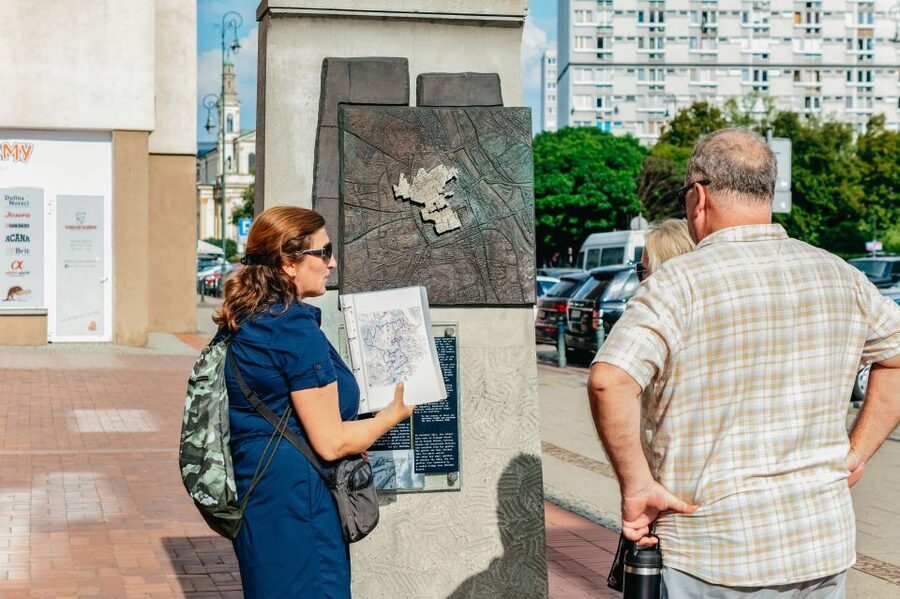
The Umschlagplatz, or collection point, represents the moment when people were gathered for deportation from the ghetto. It is one of the key places on the route because it links the ghetto’s streets to the extermination camp at Treblinka.
The tour explains how the plan for the Final Solution was put into practice. You are not simply told that people were deported. The guide places the collection point within the larger process of ghetto liquidation and explains the purpose of this location.
This part may be especially valuable if you have studied the Holocaust but want to understand how the policies worked on the ground. A book or film can explain the system. Standing at a place connected to that system gives the facts a harder edge.
The tone is respectful rather than theatrical. That matters at a site of mass suffering. You should expect a factual account, time for questions, and a clear explanation of the memorial’s symbolism.
Entering the surviving Nozyk Synagogue
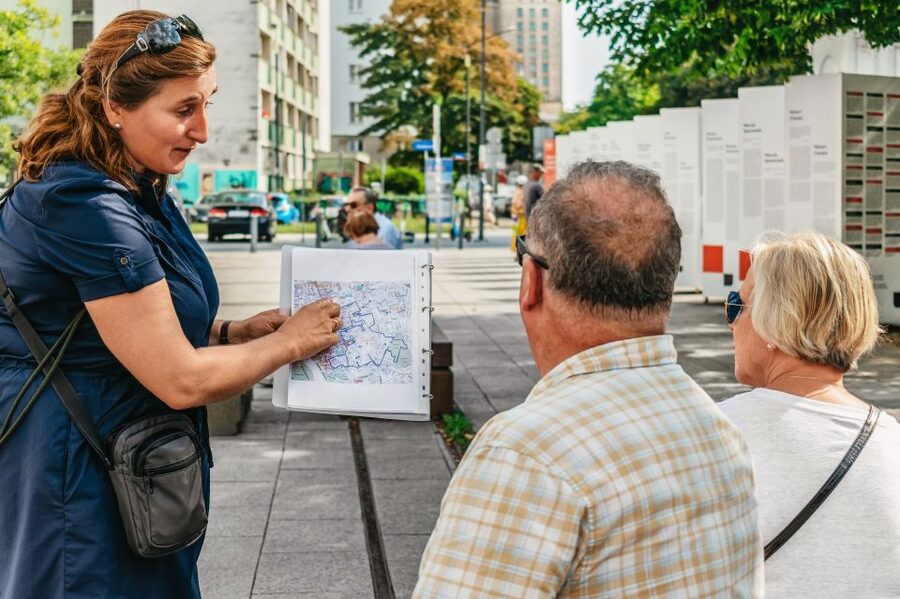
The tour includes a visit to the Nozyk Synagogue, described as the only synagogue in Warsaw to survive the Second World War and remain in operation.
This stop adds an important dimension to the tour. The former ghetto story is about destruction, but the synagogue points to Jewish life that continues in Warsaw. It is not simply another wartime relic. It is an active place of worship, so visitors need to behave respectfully and follow any instructions given at the entrance.
A separate donation is required: 20 PLN, 5 EUR, or 5 USD. Bring cash, and bring a head covering or kippah. The tour information specifically lists a head covering among the things to bring, so do not leave this detail until the last minute.
The synagogue visit also gives the three-hour route some balance. You are not only walking through places associated with death and destruction. You are also seeing a surviving religious institution connected to Warsaw’s Jewish community.
Reaching the Monument to the Ghetto Heroes
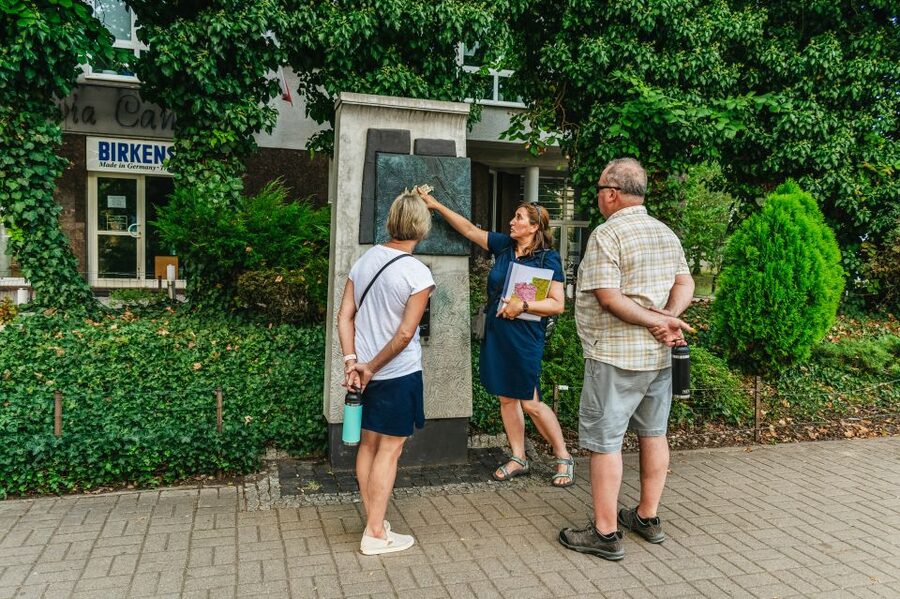
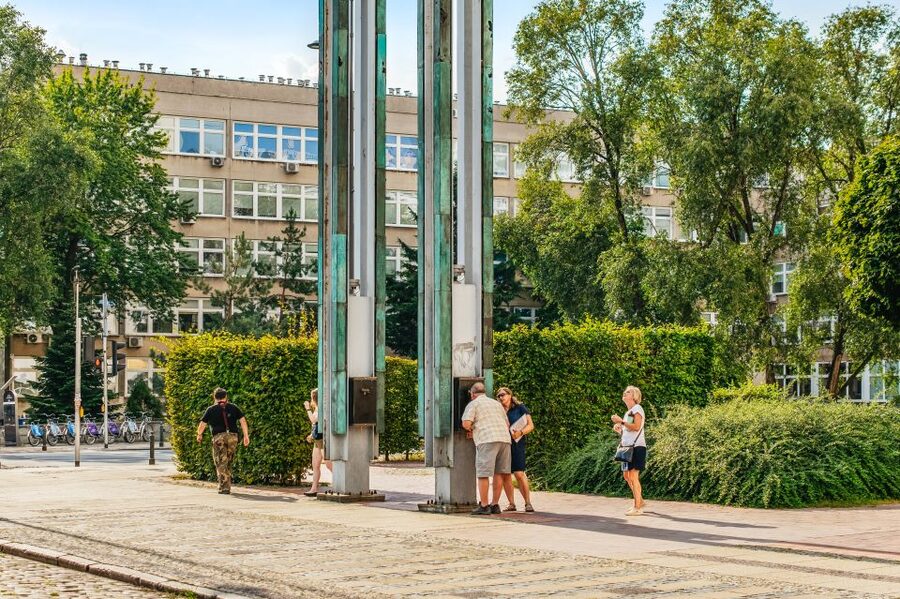
The Monument to the Ghetto Heroes is closely tied to the Warsaw Ghetto Uprising, which began in 1943 when the Germans attempted to liquidate the remaining ghetto population.
The uprising lasted nearly one month. The Jewish fighters were badly outmatched by German troops, and the Nazi response was the complete destruction of the ghetto.
At the monument, the guide explains why the uprising happened, who helped the fighters, and what the resistance meant in such desperate conditions. The tour does not present the uprising as a conventional military victory. Its importance lies in the decision to resist deportation and murder, even when the odds were grim.
This is also where the old photographs help most. The monument and its surrounding city are real, but the wartime setting is gone. Seeing photographs of the area during the occupation helps you picture the scale of the destruction and the difference between the prewar, wartime, and postwar city.
The route may finish near the POLIN Museum. That makes good practical sense. If you want more time with the subject, plan to visit the museum after the tour and leave at least two additional hours before closing. The museum is not included, so you will need a separate admission and enough time in your schedule.
How the guides shape the experience
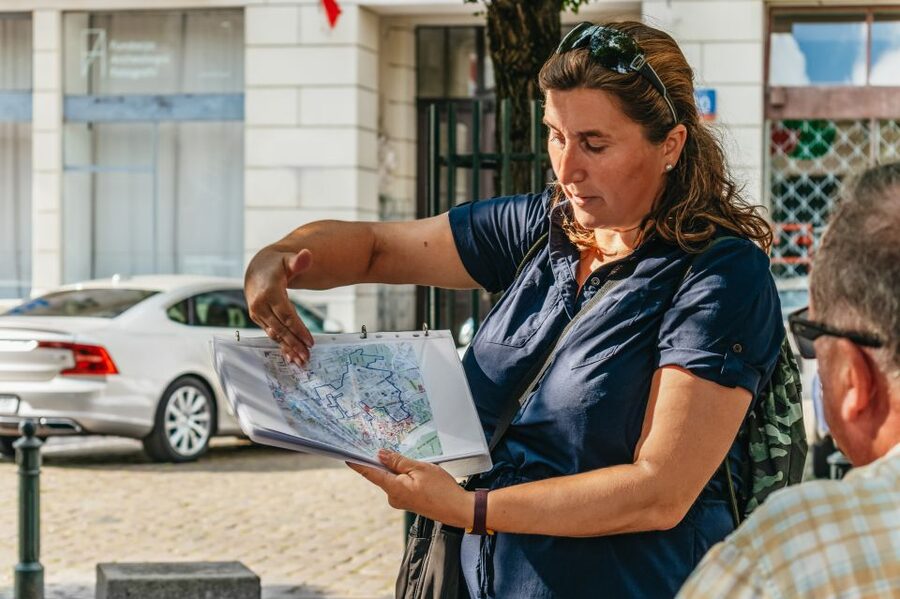
The guide is the heart of this tour. Names frequently associated with the experience include Marzena and Mary, with Eva and Wojtek also having led earlier tours. Guide assignments can change, so you should not assume a particular person unless the provider confirms it.
Marzena has been praised for keeping the story moving, answering questions, and using historical photographs to add context. Mary has also been noted for adjusting the route and pace, including helping a group use public transport. Those details suggest the private format is not a rigid script.
The strongest guiding here combines three skills:
- Clear chronology: You understand how the ghetto was established, operated, and destroyed.
- Visual evidence: Maps, photographs, and present-day landmarks work together.
- Conversation: You can ask about details that matter to your family, studies, or personal interests.
Several guides have been described as warm, patient, and fluent in English. Tours are offered in English and German. A private group is a good choice if your party has mixed levels of background knowledge, since the guide can explain basic facts without holding back more detailed discussion.
Walking demands, timing, and comfort
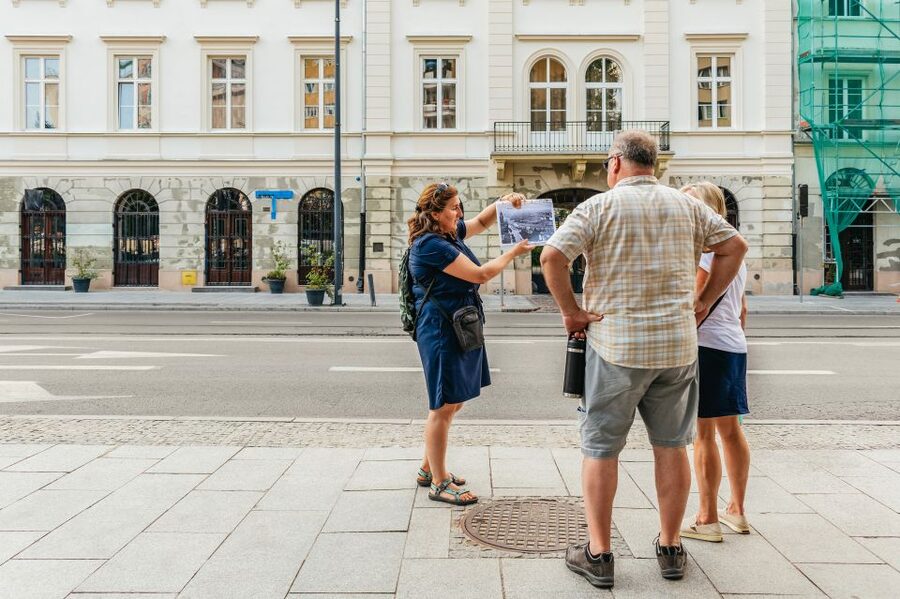
The tour lasts three hours and includes walking between several sites. Comfortable shoes are essential. You should also bring a hat and sunscreen in warm weather, since the route includes outdoor stops.
The experience is not suitable for people with mobility impairments, and children under 14 are not allowed. The supplied information does not give a precise walking distance or promise seating at every stop, so anyone who needs frequent rest should ask about the route before booking.
The private setting can help with pacing. One booking notes that the guide stopped often for an older participant, while another completed the route in about two and a half hours. That flexibility is useful, but it depends on the guide and your group’s needs.
Do not bring oversize luggage or large bags. A small day bag is the sensible choice, along with cash for the synagogue donation.
Is $84 per person good value?
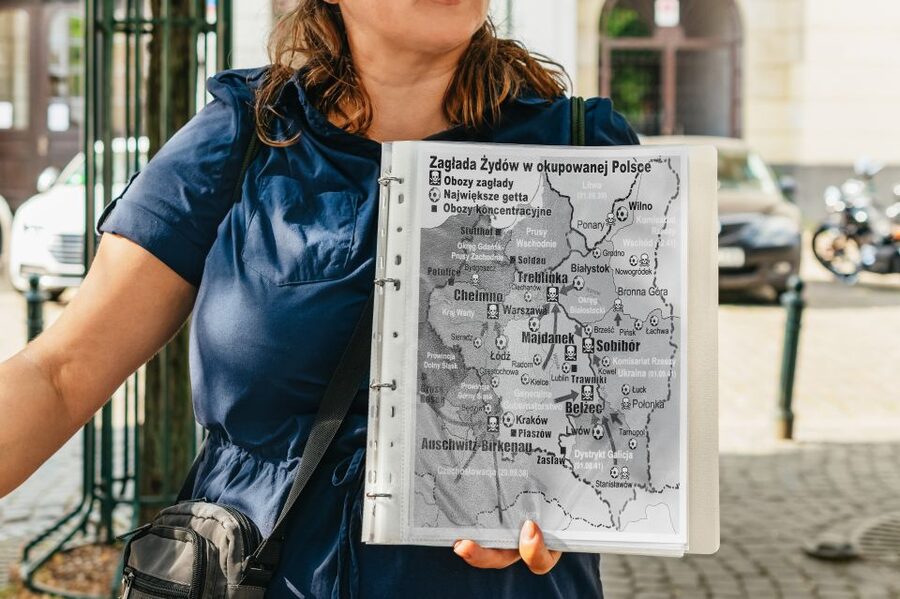
At $84 per person, this is not the cheapest way to learn about Warsaw’s wartime history. The price covers a private group, a licensed guide, transportation by car, hotel pickup and drop-off as listed, a city plan, and information booklets. The synagogue donation is extra, as are food and drinks.
The value depends on how much you want from the visit. If you simply want to see a few memorials, you can visit several sites independently for less. But finding the scattered wall fragments, last ghetto street, former neighborhoods, collection point, synagogue, and uprising memorial in a logical order would take preparation.
I would see the price as reasonable for a small private group that wants a discussion rather than a set speech. It is less attractive for a solo visitor on a tight budget, especially if the pickup arrangement does not work as expected.
The tour can also save time. Instead of spending your first day trying to work out the old ghetto boundaries, you receive a route, historical images, and explanations in one three-hour session. For many people, that is the main reason to pay more.
Who should book this Warsaw Ghetto tour?
I would recommend it to adults and teenagers aged 14 or older who want a focused introduction to the Holocaust in Warsaw. It suits first-time visitors, people with family connections to Jewish history, and anyone who has seen The Pianist and wants to understand the real places behind the story of Władysław Szpilman.
It is also a good fit if you already know a lot about the Second World War. The private guide can move beyond basic dates and answer more specific questions about Jewish life, resistance, Nazi policy, and the postwar fate of the surviving buildings.
You may prefer a museum-only visit if you dislike walking outdoors, have limited mobility, or want a quieter self-guided experience. You may also prefer an independent visit if the $84 price is outside your budget.
Should you book it?
Book this tour if you want the former Warsaw Ghetto explained as a connected story rather than a series of isolated monuments. The old photos, maps, surviving wall pieces, Nozyk Synagogue, Umschlagplatz, and Ghetto Heroes Monument give you a fuller sense of what happened and where.
Before paying, confirm two things: the exact pickup plan and which guide is assigned. Then bring comfortable shoes, a head covering, cash for the synagogue donation, and enough time afterward for the POLIN Museum if you want to continue.
For a private, serious, question-friendly introduction to Warsaw’s Jewish wartime history, I think the tour earns its higher price. It is not light sightseeing, but it can become one of the most meaningful parts of your time in Warsaw.
FAQ
How long does the Warsaw Ghetto tour last?
The tour lasts three hours. Some groups may complete it in slightly less time depending on pace and discussion.
What languages are available?
The live tour guide is available in English or German.
Is this a private tour?
Yes. The activity is organized for a private group.
Is hotel pickup included?
Hotel pickup and drop-off are listed as included, but pickup is also described as optional. Some bookings have reported that the hotel-pickup information was unclear, so confirm the arrangement before the tour. The stated meeting point is Prozna Street 9, where you should look for a PolinTours sign.
Is the synagogue entrance included?
No. You need to bring a separate donation of 20 PLN, 5 EUR, or 5 USD. Cash is recommended, and a head covering or kippah is required.
Who should not book this experience?
The tour is not suitable for children under 14 or people with mobility impairments. Oversize luggage and large bags are also not allowed.
Recently added in Warsaw
- Warsaw Wolf’s Lair with St. Lipka and Mamerki Private Guided★ 4.2 · 3 reviews
- Taste of Poland, food tour and guided walk with 12 tasting★ 5.0 · 3 reviews
- Discover Warsaw’s most Photogenic Spots with a Local★ 5.0 · 3 reviews
- Lodz Small Group Tour from Warsaw with Lunch★ 4.0 · 3 reviews
- Jewish heritage in Warsaw★ 4.5 · 3 reviews
- Warsaw Outdoor Paintball with Transfers (all year round)★ 5.0 · 3 reviews
- Electric Scooter Tour: Full Tour – 3-Hours of Magic!★ 5.0 · 3 reviews
- Skip-the-Line Polin Museum Warsaw Jewish History Tour★ 5.0 · 3 reviews
Walking Tours, compared.
Gdańsk City Sights & History Guided Walking Tour in English
Read our review →
Where else this one turns up