
Reviewed · WARSAW TOURS
Offbeat Warsaw: Explore the Edgy & Artsy Praga District
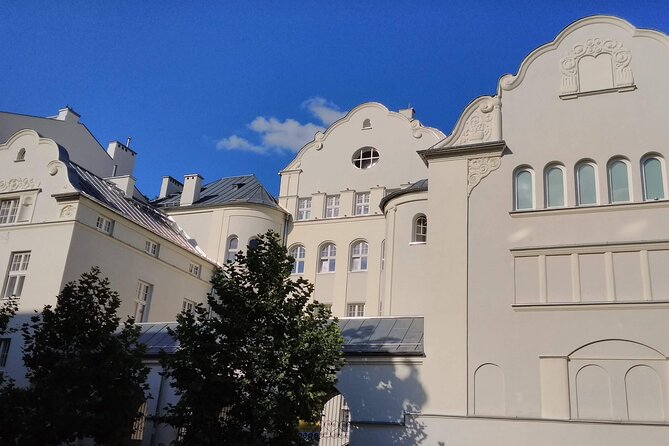
Praga gives you a different Warsaw: less polished, more layered, and full of clues to the city’s past. With guide Łukasz, you walk from St. Florian’s Cathedral through old streets, Jewish history sites, film locations, murals, cafes, and former factories before finishing at Bohema.
I like the small group limit of 10, which keeps this from becoming a follow-the-umbrella walk. I also like the mix of subjects: local music, Jewish heritage, avant-garde housing, The Pianist, street art, and neighborhood founders all appear in one compact route.
The main consideration is that this is a brisk two-hour walking tour, not a full-day exploration. Some stops are viewed from outside, and Praga’s rougher character can feel less comfortable after dark, so I would take the 1 p.m. start seriously.
Key points at a glance
- Start at St. Florian’s Cathedral: Meet at plac Weteranów 1863 Roku and begin on the edge of Praga’s historic streets.
- A local rather than postcard Warsaw: The route focuses on courtyards, murals, old streets, former Jewish sites, and everyday neighborhood details.
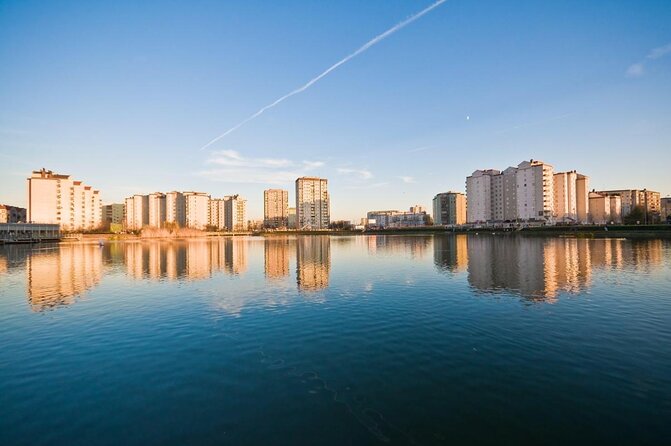
- Film and architecture together: See a location from The Pianist and one of Warsaw’s early communist-era housing estates.
- A guide who adds practical value: Łukasz is praised for clear English, short stories, local expertise, and useful tips for the rest of your stay.
- A strong final stop: The walk ends at Bohema, a former cosmetics factory complex near metro and tram links.
- Good value for a compact tour: At $42.14, the price makes most sense if you want a focused introduction to Praga with plenty of time for questions.
Why Praga makes a good half-day choice
Most first visits to Warsaw focus on the reconstructed Old Town, the Royal Route, museums, and grand public squares. Those places matter, but Praga offers a different kind of city experience. It feels more uneven and more revealing, with traces of older Warsaw beside communist housing, new cafes, galleries, murals, and converted industrial buildings.
This route is useful because Praga is not always easy to read on your own. Its interest is often in small details rather than one major monument. A guide can point out a former institution, explain a local custom, or show you the connection between an ordinary street and a major event.
Łukasz’s style, based on the information available about the tour, centers on short stories and local observations rather than long blocks of dates. That matters here. You are not simply collecting buildings. You are learning how the district changed, what survived, and why parts of Praga now attract artists, filmmakers, cafes, and new businesses.
The tour lasts about two hours and begins at 1 p.m. That timing gives you daylight for street photography and makes the less polished parts of the district easier to appreciate. It also leaves the rest of your afternoon open for lunch, museums, or a return to places that caught your eye.
A few more Warsaw half days to consider
- Warsaw: Chopin Concert in the Old Town
★ 4.8 · 2,287 reviews - Warsaw: Traditional Galar Cruise on The Vistula River
★ 4.6 · 1,640 reviews - Warsaw: Old Town Highlights Walking Tour in English
★ 4.7 · 1,516 reviews
From St. Florian’s to Praga’s musical character
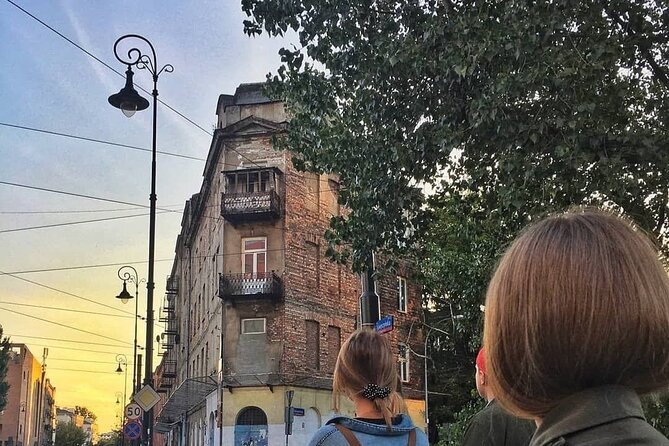
Meet Łukasz in front of St. Florian’s at plac Weteranów 1863 Roku. The cathedral is an easy landmark, and the opening ten minutes give the group time to gather and set the scene for the walk.
The first substantial stop is the Monument to Praga Courtyard Bands, or Pomnik Praskiej Kapeli Podwórkowej. This monument honors a specific local musical tradition. It is a small but telling introduction to the district because it points toward street-level culture rather than official national history.
I like this kind of opening. It helps you think about Praga as a lived-in neighborhood, not just an old quarter with aging facades. Bring your camera, but listen closely too. The value of a stop like this comes from the explanation around it.
Jewish history in a neighborhood of fragments
The route then moves to Teatr Baj, identified here as the former Jewish Orphanage. You stop for about five minutes. The building is not treated as an isolated sight, but as part of the district’s Jewish past and the many layers of life that existed in Warsaw before the Second World War.
Next comes the former site of the Praga Synagogue, dating from the 1830s. The stop at Nożyk Synagogue is also brief, around five minutes. Do not expect a long indoor visit or a museum presentation at this point. The importance is in understanding the site and its place within the old neighborhood.
These stops reward attention more than speed. If Jewish history is a main reason for your visit to Warsaw, you may want to pair this walk with a more extensive museum or synagogue visit elsewhere in the city. Here, the subject is one part of a wider Praga story.
The route also includes a 19th-century park. The supplied details do not name it, so I would treat this as a pause in the walk rather than plan your day around a particular attraction. It gives the group a change of pace between built-up streets and historic sites.
The Loreto Chapel and Praga’s oldest monument
The Chapel of Our Lady of Loreto is described as a 17th-century chapel and the oldest historical monument in Praga. The group spends about ten minutes here.
This is the sort of stop that makes a guided walk worthwhile. On a standard city stroll, a small chapel can be easy to pass without understanding its age or importance. Łukasz can place it within the district’s story and explain why it matters.
The chapel also adds variety to the route. In a short span, you move from local music and Jewish history to religious architecture, then onward to 20th-century housing and film sites. The walk does not depend on one grand sight. It builds a picture from contrasts.
A different kind of day in Warsaw:
- Warsaw Concert: Chopin – Painted by Candlelights with Wine
★ 4.8 · 1,442 reviews - Warsaw: City Sightseeing Hop-On Hop-Off Bus Tour
★ 3.6 · 1,415 reviews - Warsaw: POLIN Museum of the History of Polish Jews Ticket
★ 4.7 · 1,142 reviews - #1 Pub Crawl Warsaw with Optional Premium 1 Hour Open Bar
★ 5.0 · 790 reviews
Jagiellońska 44 and Warsaw’s avant-garde housing
At Jagiellońska 44, you see one of Warsaw’s first communist-era housing estates. It was designed by prominent Polish avant-garde architects, and the tour allows about ten minutes here.
This is a particularly useful stop for anyone interested in architecture. Warsaw is often introduced through medieval-looking Old Town streets and postwar reconstruction, but its 20th-century housing tells another story. The design reflects a period when architects were testing new ideas about how people might live in a modern city.
You will not get a full architecture seminar in ten minutes, but you should come away with a better eye for the district’s less obvious buildings. Look for the relationship between the housing blocks, the street, and the wider neighborhood. The point is not simply that the estate is old. It shows how Warsaw’s planners and architects tried to shape daily life.
Mała Street and a film connection
The stop on Mała Street is connected with The Pianist. The group spends about ten minutes here.
Film locations can be shallow travel stops if they amount to nothing more than a quick photograph. In Praga, the connection has more weight because the district’s older streets and worn surfaces have often been used to suggest earlier Warsaw. The setting helps you think about how cinema uses a real neighborhood to recreate a vanished city.
If you have seen The Pianist, this stop will likely mean more to you. If you have not, it still works as a look at Praga’s streets and the way filmmakers use them. The tour does not claim that one street tells the whole story of wartime Warsaw, and that is a good thing. Treat it as one visual link within a much larger history.
Stalowa Street, murals, cafes, and street-level Praga
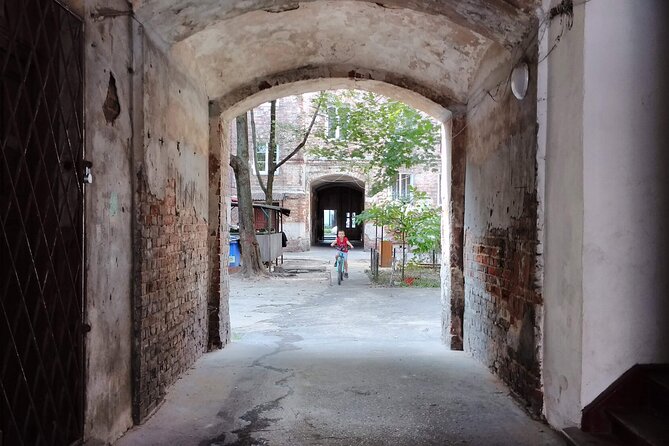
The longest stop is on Stalowa, an important Praga street with cafes, bars, galleries, and street art. You spend about fifteen minutes here, making it one of the liveliest sections of the walk.
This is where the district’s present-day character comes into focus. You may find bold murals, independent businesses, and old buildings that have not been polished into uniformity. The contrast is part of Praga’s appeal. It can feel fashionable and worn at the same time.
Photographers should pay attention here. The tour is designed to help you notice visual details that you could easily miss while hurrying between major sights. Ask Łukasz about places to eat or drink if you plan to stay in the area after the walk. He offers tips about cafes and restaurants around the route.
There is also a practical point. Praga’s rougher look is not a guarantee of danger, but it can feel less comfortable at night in some areas. This tour runs in the afternoon, when you have daylight and a guide. If you return later, use ordinary city awareness and follow the advice you receive locally.
The Konopacki residence and the story of the neighborhood
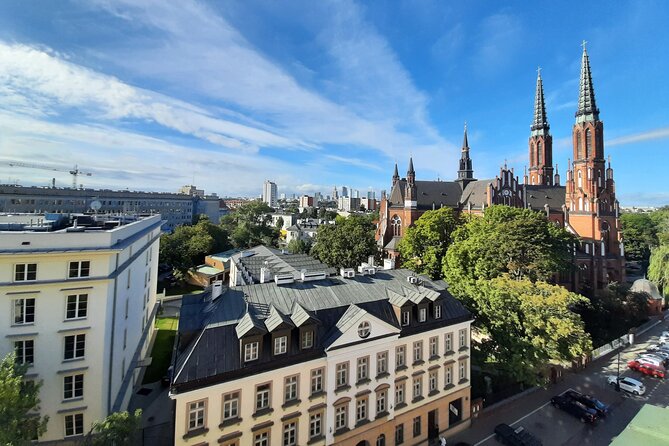
The route continues to the Pałacyk Ksawerego Konopackiego, the former residence of the person who founded the neighborhood. The stop lasts about five minutes.
Short stops at places like this can be easy to underestimate. A former residence gives the district a human face. Instead of viewing Praga as a collection of anonymous streets, you connect its development with the people who shaped it.
The stop is not presented as a long interior visit, so your interest will come from the building’s role and Łukasz’s explanation. That suits the pace of the tour. You are getting a broad orientation, with enough detail to decide what deserves a longer visit later.
Finishing at Bohema’s factory walls
The final stop is Fabryka Schichta Bohema on Szwedzka Street. The walk ends at a former 19th-century cosmetics factory complex now used as a multifunctional hub. Contemporary buildings have been added to the older industrial setting, giving the area a clear example of Praga’s current change.
I like this ending because it brings the route into the present. You begin with old religious and community sites, pass through communist housing and film streets, and finish in a redeveloped factory complex. Praga is not frozen in a retro mood. It continues to change, and Bohema shows what that change looks like.
The transport links are useful. Szwedzka metro station is nearby, and a tram stop about 400 meters away connects toward Castle Square in the Old Town. That makes the end point practical, not just photogenic. You can continue exploring, return to central Warsaw, or ask Łukasz for a cafe or restaurant suggestion nearby.
What the small group changes
The tour accepts no more than 10 people. For a neighborhood walk, that is a meaningful limit. You should be able to hear the guide, ask about details, and stop without creating a large crowd in narrow streets or courtyards.
The small size also supports the tour’s strongest feature: flexibility in conversation. Past comments about Łukasz point to his willingness to answer questions, share Warsaw tips, and adjust attention to what interests the group. One private outing was shaped around the participants’ interests and included food and drink stops, but do not assume this standard two-hour tour includes those extras.
English is offered, and comments about Łukasz specifically praise his excellent English and easy communication before arrival. That is helpful if you want more than a memorized speech. You can ask about architecture, film, local customs, or what to see next.
Is $42.14 a fair price?
At $42.14 per person, this is not the cheapest way to walk through Praga. It is also not priced like a full private tour. The value depends on how much structure and explanation you want.
If you simply want to wander Stalowa Street and take photographs, you can do that without paying for a guide. But Praga’s appeal is scattered. The former orphanage, synagogue site, chapel, housing estate, film location, and factory complex do not form an obvious self-guided route for a first-time visitor.
The fee buys a focused two-hour route, an English-speaking local guide, a group capped at 10, and practical advice for the rest of your stay. At an average booking lead time of 53 days, popular dates may fill ahead of time, especially if you want the small-group format. The free cancellation policy allows a full refund when you cancel at least 24 hours before the start time.
The tour does not include admission charges because the listed stops are viewed without an entry ticket. That keeps the price simple, but it also means you are paying mainly for interpretation and access to local context, not paid museum entry.
Who should choose this Praga walk?
I would choose this tour if you have already seen some of Warsaw’s central sights and want a district with a different mood. It also works well early in a visit if you want a local orientation before exploring Praga on your own.
It suits you especially well if you enjoy:
- Street photography and murals
- Urban architecture and postwar design
- Jewish history presented as part of a neighborhood story
- Film locations with a real sense of place
- Small groups and time for questions
- Local suggestions for cafes, restaurants, and other Warsaw sights
You may want something else if you need a long indoor museum visit, step-free details, or a slow pace. The tour data says most people can participate, but it does not provide specific accessibility information. Ask before booking if stairs, uneven streets, or walking distance are a concern.
The route is also less suited to someone seeking only Warsaw’s grandest monuments. Praga is about contrasts, side streets, modest landmarks, and signs of change. Its rewards are quieter and more scattered.
Practical details before you book
The meeting point is plac Weteranów 1863 Roku, in front of St. Florian’s Cathedral. The tour starts at 1 p.m. and takes about two hours.
The end point is Fabryka Schichta Bohema, Szwedzka 20. From there, you can use the nearby metro or walk about 400 meters to the number 23 tram, which returns toward Castle Square and the Old Town.
Wear comfortable shoes and leave room for photographs. The route includes many short stops, but you are still walking through an active city district rather than visiting a series of indoor attractions.
The tour is offered in English with a mobile ticket. Confirmation arrives when you book. Free cancellation applies up to 24 hours before the local start time. If the minimum group size is not met and the activity is canceled, you are offered another date or experience, or a full refund.
Should you book Offbeat Warsaw?
Book it if you want to understand why Praga feels so different from Warsaw’s postcard center. The combination of Jewish history, the Loreto Chapel, avant-garde housing, The Pianist locations, Stalowa’s street art, and Bohema gives you a useful two-hour cross-section of the district.
The strongest reason to go is Łukasz’s local approach. His English, clear explanations, practical Warsaw tips, and habit of showing less obvious places add value that a map cannot provide.
Skip it if you want a major museum, a long historical lecture, or a guaranteed indoor program. For everyone else, especially repeat visitors and curious first-timers, this is a smart way to spend an afternoon. You leave near convenient transport, with a better sense of Praga and a list of places worth returning to.
FAQ
Where does the Offbeat Warsaw tour begin?
It begins at plac Weteranów 1863 Roku in front of St. Florian’s Cathedral in Warsaw.
What time does the tour start?
The tour starts at 1 p.m.
How long does the walk last?
It lasts approximately two hours.
Where does the tour finish?
It finishes at Fabryka Schichta Bohema, Szwedzka 20, in Warsaw.
Is the tour offered in English?
Yes. The experience is offered in English.
How many people can join the tour?
The group has a maximum of 10 participants.
Does the tour include entry tickets?
The listed stops have free admission. The tour information does not include paid entry to other attractions.
Can I return to Warsaw’s city center after the walk?
Yes. Szwedzka metro station is near the end point. A tram stop about 400 meters away also offers a route toward Castle Square in the Old Town.
What is the cancellation policy?
You can cancel at least 24 hours before the start time for a full refund. Cancellations or changes made less than 24 hours before the start time are not refunded or accepted.
Recently added in Warsaw
- Warsaw Wolf’s Lair with St. Lipka and Mamerki Private Guided★ 4.2 · 3 reviews
- Taste of Poland, food tour and guided walk with 12 tasting★ 5.0 · 3 reviews
- Discover Warsaw’s most Photogenic Spots with a Local★ 5.0 · 3 reviews
- Lodz Small Group Tour from Warsaw with Lunch★ 4.0 · 3 reviews
- Jewish heritage in Warsaw★ 4.5 · 3 reviews
- Warsaw Outdoor Paintball with Transfers (all year round)★ 5.0 · 3 reviews
- Electric Scooter Tour: Full Tour – 3-Hours of Magic!★ 5.0 · 3 reviews
- Skip-the-Line Polin Museum Warsaw Jewish History Tour★ 5.0 · 3 reviews
Warsaw Tours, compared.

Traditional Galar Cruise on The Vistula River
Read our review →
Warsaw Concert: Chopin – Painted by Candlelights with Wine
Read our review →

POLIN Museum of the History of Polish Jews Ticket
Read our review →
#1 Pub Crawl Warsaw with Optional Premium 1 Hour Open Bar
Read our review →