
Reviewed · WARSAW TOURS
Private Tour: Warsaw Ghetto with a local Historian
The most powerful part of this private Warsaw tour is the guide’s personal connection to the area. The experience is led by a local historian who was born and raised in the former ghetto, so the stops come with human detail, not just dates and names. You visit Umschlagplatz, the Mila 18 bunker memorial, the POLIN museum area, and a surviving wall fragment in about three hours.
I like the private format, which lets you ask questions and set the pace, and I like the option of a driver, since the sites are spread across Warsaw. Guides such as Paulina and Artur have been praised for clear explanations, flexibility, punctuality, and warm personalities. The main consideration is that the advertised route is compact, and visiting the POLIN museum interior is not part of the three-hour plan.
Key points to know before booking

- A guide with a local connection: The experience is presented by a historian born and raised in the former Warsaw Ghetto area.
- Important memorial stops: You visit Umschlagplatz, Mila 18, the POLIN museum surroundings, and a surviving ghetto-wall fragment.
- Private attention: Your group tours alone, with the listing describing a price for up to four people and the tour highlights referring to groups of up to six. Confirm the exact group limit when booking.
- Driving can save your energy: Pickup and drop-off are available anywhere in Warsaw, and a driver upgrade can reduce the amount of walking.
- POLIN is viewed from outside: The route includes the museum and nearby monuments, not a full visit to the museum exhibition.
- Praga adds a film connection: The drive through Praga Północ includes places associated with scenes from Roman Polanski’s The Pianist.
Why this Warsaw Ghetto tour feels different
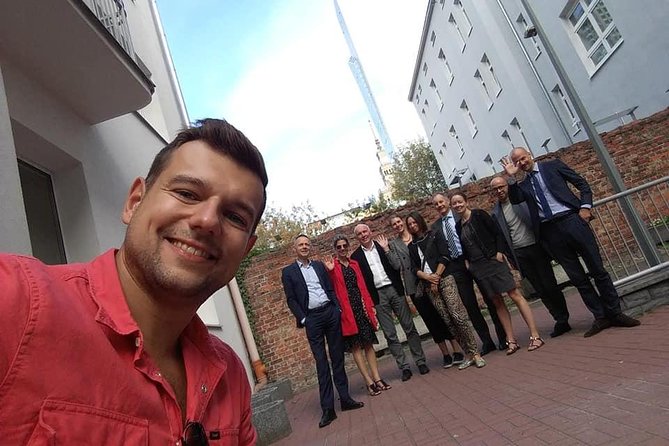
A visit to the former Warsaw Ghetto can be hard to understand from a map alone. Modern streets now cross an area where walls, apartment blocks, deportation routes, bunkers, and acts of resistance once shaped daily life. A guide helps you connect those scattered places.
This is not simply a list of memorials. The guide explains how each place fits into the events of World War II and the Holocaust, then connects the physical remains to the people who lived, suffered, resisted, and were deported there.
The private setup matters here. You can pause at a memorial, ask about a name or event, or request more detail about the Jewish community before the war. With a larger group, the pace may feel fixed. With your own group, the conversation can be quieter and more personal.
Paulina has been praised for adding depth through her commentary and for showing important monuments, original buildings, and nearby sites. Artur has been described as communicative, flexible, punctual, and able to shape a good plan around the group. Guide availability can vary, but these names give you a sense of the warm, personal approach available through Artur Warsaw Guide.
A few more Warsaw half days to consider
- Warsaw: Chopin Concert in the Old Town
★ 4.8 · 2,287 reviews - Warsaw: Traditional Galar Cruise on The Vistula River
★ 4.6 · 1,640 reviews - Warsaw: Old Town Highlights Walking Tour in English
★ 4.7 · 1,516 reviews
Umschlagplatz, the departure point for Treblinka
The tour begins at Umschlagplatz, the railway station from which Jewish residents were transported to Treblinka. The site is free to enter, but its importance is enormous. This is where the machinery of deportation became a physical departure point.
I find this kind of stop valuable because it turns a broad historical fact into a specific place. You are not only hearing that Warsaw Jews were sent to Treblinka. You are standing where those transports began.
Expect the guide to provide the main context rather than a long museum-style presentation. The listed stop lasts about five minutes, so it is a brief visit. If you want more time for quiet reflection or questions, tell your guide early in the tour.
This is also a place where the private format helps. You do not have to rush through a set speech if your group needs a moment. At the same time, the short timing means the tour is designed to cover several sites rather than linger at every memorial.
Mila 18 and the bunker of Mordechai Anielewicz
The next major stop is the memorial at Mila 18, connected with Mordechai Anielewicz and the bunker used during the Warsaw Ghetto Uprising. The site is free, and the planned visit lasts about ten minutes.
Mila 18 is especially important for understanding Jewish resistance. The ghetto story is often reduced to deportation and destruction, but the uprising shows another part of it: people organized armed resistance in an almost impossible situation.
Your guide’s explanation is essential because the bunker itself is not presented as a large, intact underground attraction. The meaning comes from the location, the memorial, and the story tied to the ground beneath and around it.
I would not treat this as a quick photo stop. Listen closely to the explanation, then ask about the uprising, the bunker, and the people associated with it. Ten minutes is enough for an introduction, but not enough for every detail.
The POLIN museum area and the limits of the visit
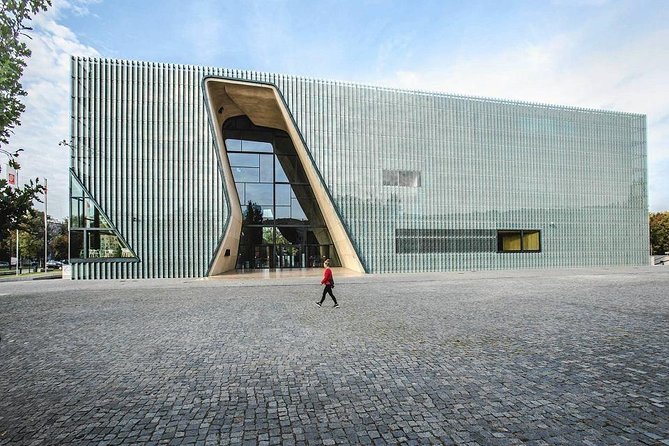
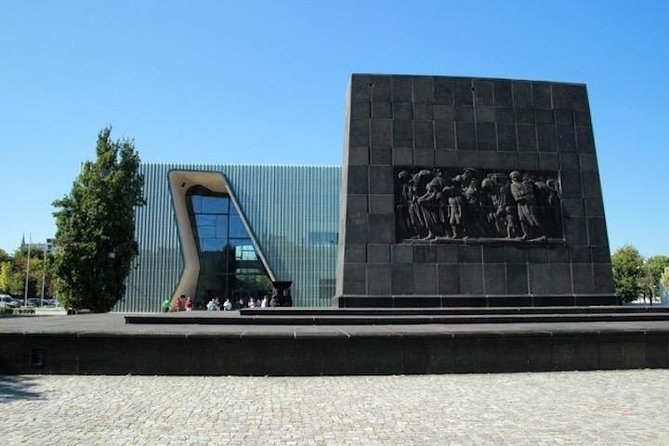
The tour spends about 30 minutes around the POLIN Museum of the History of Polish Jews. You see the museum from outside and visit important monuments in the surrounding area. Admission to this portion is free.
This part of the route helps place the former ghetto within the longer story of Jewish life in Poland. The museum building and nearby memorials create a strong setting for discussing the community that existed before the Holocaust, not only the destruction that followed.
Pay close attention to the wording of the experience. This is a walk around the museum and its monuments, not a full visit to the indoor exhibition. A complete museum visit can take several hours with an audio guide, so it does not fit neatly into a three-hour route that also includes several other parts of Warsaw.
If POLIN’s interior exhibition is your main reason for booking, plan a separate visit. If you want an outdoor introduction to the museum and its setting, this tour gives you that while keeping the focus on the former ghetto.
One past booking became confused about this point, so I would confirm the plan before starting. Ask directly if you will enter the museum or view it from outside. The written details support an exterior visit.
A different kind of day in Warsaw:
- Warsaw Concert: Chopin – Painted by Candlelights with Wine
★ 4.8 · 1,442 reviews - Warsaw: City Sightseeing Hop-On Hop-Off Bus Tour
★ 3.6 · 1,415 reviews - Warsaw: POLIN Museum of the History of Polish Jews Ticket
★ 4.7 · 1,142 reviews - #1 Pub Crawl Warsaw with Optional Premium 1 Hour Open Bar
★ 5.0 · 790 reviews
The surviving fragment of the ghetto wall
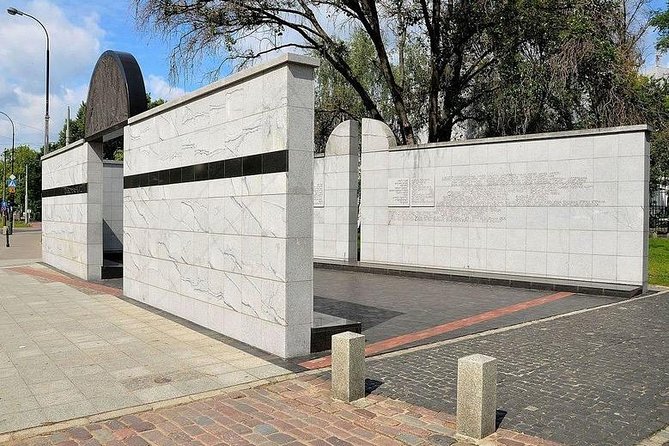
The 20-minute stop at a fragment of the ghetto wall is one of the clearest physical reminders of the former boundary. Much of Warsaw was destroyed or rebuilt, and the remaining fragment helps you picture how confinement was imposed on the city.
The wall is valuable because it is concrete and immediate. Maps and photographs explain the scale, but a surviving section makes the system of separation easier to grasp. Your guide can also help you understand why a small fragment matters when so much of the original structure has disappeared.
Do not expect a large preserved district surrounding the wall. The tour takes you to an important remnant within modern Warsaw, then gives it context. That contrast between ordinary city life and the traces of the ghetto is part of what makes the visit so affecting.
The scheduled 20 minutes should give you time to hear the explanation and look carefully. It is another place where the private group helps you set a thoughtful pace rather than moving on simply because a large tour must leave.
Praga Północ and scenes connected with The Pianist
The final listed stop takes you through Praga Północ, a district on the other side of the Vistula. The drive lasts about 30 minutes and includes locations associated with moments from Roman Polanski’s The Pianist.
This changes the rhythm of the tour. After several memorials and former ghetto sites, you see a different part of Warsaw connected with a well-known film about the wartime experience. The drive also gives you a broader view of the city rather than keeping you within one compact memorial zone.
The film connection will appeal to anyone interested in The Pianist, but the tour remains primarily a history experience. Do not book it as a movie-location tour. Praga is included as an added part of the route, with the guide explaining its connection to the film.
The drive is also a practical reason to consider the vehicle option. The stops are not all next door to one another, and adding Praga makes the route less suitable for anyone hoping to walk the entire experience. A car keeps the tour moving and can make the three hours less tiring.
Why the driver option is worth considering
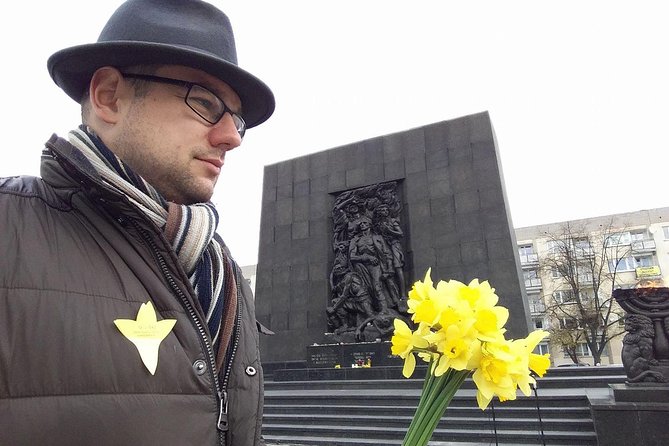
Pickup and drop-off are available anywhere in Warsaw. The basic experience can be arranged as a walking and driving tour, while a driver upgrade has been useful for groups that want to reduce the amount of walking.
I would choose the driver option if your group includes anyone with limited stamina, if you are visiting in poor weather, or if you want to cover the full route without spending much of the tour crossing streets between locations. One group specifically found the upgrade helpful after seeing how much walking the route could involve.
The vehicle also makes Praga easier to include. Without transport, you would need to spend more time getting between the former ghetto sites and the district across the river. The tradeoff is simple: walking gives you more direct contact with the streets, while driving lets you see more in the allotted time.
Because pickup and drop-off can be arranged anywhere in Warsaw, the tour fits well near the beginning or end of a sightseeing day. Confirm the pickup details when booking, especially if you are staying outside the usual hotel areas.
Price, group size, and overall value
The listed price is $321.68 per group of up to four people. That works out to about $80.42 per person for a full group of four, before any optional upgrade or extra costs. For two people, the per-person price is higher, but you are paying for a private guide rather than a seat on a fixed group excursion.
That private price can make sense for families or friends who want to discuss difficult subjects at their own pace. It also gives you door-to-door convenience and the chance to request more explanation at a particular stop.
There is one detail to clarify: the pricing says up to four people, while the highlights describe a private group of up to six. Ask the operator to confirm the maximum group size and the price for your exact party before paying.
Bottled water is provided. That is a small benefit, but useful on a tour that includes outdoor memorials, changing weather, and some walking. The ticket is mobile, and the tour is offered in English.
The experience is booked, on average, 18 days ahead. That is not a guarantee of availability, but it suggests you should reserve early if your Warsaw dates are fixed, especially if you want a particular guide or a driver.
What the guides add to the experience
The tour depends heavily on the person leading it. A local historian can explain not only what happened, but why a certain street, wall, or monument matters.
Paulina has been singled out for her commentary, personal warmth, and ability to show a wide range of sites. Her route has included monuments to victims and heroes, original buildings from the former ghetto, and the Warsaw Zoo. Those additions may depend on timing and the exact plan, so ask what can be included on your date.
Artur has been praised for communication and flexibility. If you have a particular interest, such as resistance, Jewish life before the war, deportations, or film locations, tell the guide before the tour begins. A private outing is at its best when the guide knows what you want to understand.
The experience is serious, but it does not have to feel stiff. Artur has been described as funny as well as smart, which can help a long and painful subject feel human without making light of it. Expect empathy and conversation, not a theatrical performance.
Who should book this experience
I would recommend this tour to first-time visitors who want a clear introduction to the former Warsaw Ghetto without trying to piece the story together alone. It also suits families and small groups who need a flexible pace.
It is a good choice if you want:
- A private English-speaking guide
- Pickup and drop-off across Warsaw
- A route that combines memorials with a drive through Praga
- Historical explanation at several important locations
- Less walking through the use of a driver
- A personal conversation rather than a large-group lecture
You may want a different plan if your main goal is to spend several hours inside the POLIN museum. This experience does not include the full indoor exhibition, and the outdoor museum stop is only one part of a wider route.
You should also consider a separate museum visit if you want an extended presentation about Jewish life in Poland across many centuries. This three-hour tour keeps its attention on the former ghetto, Holocaust history, resistance, and selected places connected with The Pianist.
Practical planning for a difficult subject
Wear shoes suitable for walking, even if you book a driver. The route includes outdoor stops and time on city streets, and the tour may involve more walking than the short stop durations suggest.
Allow yourself quiet time afterward. The route covers deportation, mass murder, resistance, and memorial sites in a concentrated period. The private structure lets you pause, but the schedule still moves through several locations.
Take photographs only when it feels appropriate. The guide can help you understand which places are suited to quiet observation rather than quick sightseeing. You can also ask for a slower explanation at Umschlagplatz or Mila 18 if those stops affect you strongly.
Cancellation is free with at least 24 hours’ notice. Inside 24 hours, you will not receive a refund, and late changes are not accepted. Confirmation normally arrives at booking, though reservations made within one hour of departure are confirmed as soon as possible if space remains.
Should you book the Warsaw Ghetto private tour?
Book it if you want a personal, guide-led introduction to the former ghetto, with the convenience of private pickup and the option of a driver. The route covers the essential outdoor sites in a manageable three hours, and a strong guide can make the difference between seeing memorials and understanding them.
Book with two expectations clearly in mind: the price is for a private group, and POLIN is an exterior stop rather than a full museum visit. Confirm the group-size limit, ask who will guide your date, and clarify whether any extra stops such as the zoo or original buildings can be included.
For a small group willing to give this subject focused attention, the tour offers a useful balance of context, movement, and personal conversation. It is not a substitute for a full day at POLIN or a longer study of Warsaw’s wartime past, but it is a thoughtful way to begin.
FAQ
How long does the private Warsaw Ghetto tour last?
The tour lasts approximately three hours.
What places are included?
The route includes Umschlagplatz, the memorial at Mila 18, the area around the POLIN Museum of the History of Polish Jews, a fragment of the former ghetto wall, and a drive through Praga Północ.
Is entry to the POLIN museum included?
The experience includes walking around the museum and viewing important nearby monuments. It does not list admission to the indoor POLIN exhibition.
Is pickup available?
Yes. Pickup and drop-off are offered anywhere in Warsaw.
Is the tour private?
Yes. Only your group participates. The price is listed for a group of up to four, while the highlights refer to groups of up to six, so confirm the exact limit when booking.
What is the cancellation policy?
You receive a full refund if you cancel at least 24 hours before the start time. Cancellations or changes made within 24 hours are not accepted and are not refunded.
Recently added in Warsaw
- Warsaw Wolf’s Lair with St. Lipka and Mamerki Private Guided★ 4.2 · 3 reviews
- Taste of Poland, food tour and guided walk with 12 tasting★ 5.0 · 3 reviews
- Discover Warsaw’s most Photogenic Spots with a Local★ 5.0 · 3 reviews
- Lodz Small Group Tour from Warsaw with Lunch★ 4.0 · 3 reviews
- Jewish heritage in Warsaw★ 4.5 · 3 reviews
- Warsaw Outdoor Paintball with Transfers (all year round)★ 5.0 · 3 reviews
- Electric Scooter Tour: Full Tour – 3-Hours of Magic!★ 5.0 · 3 reviews
- Skip-the-Line Polin Museum Warsaw Jewish History Tour★ 5.0 · 3 reviews
Warsaw Tours, compared.

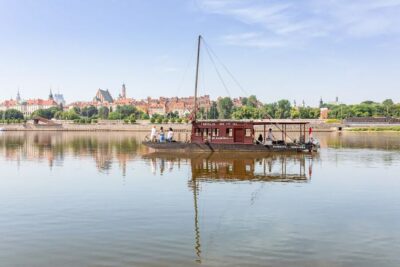
Traditional Galar Cruise on The Vistula River
Read our review →
Warsaw Concert: Chopin – Painted by Candlelights with Wine
Read our review →

POLIN Museum of the History of Polish Jews Ticket
Read our review →
#1 Pub Crawl Warsaw with Optional Premium 1 Hour Open Bar
Read our review →