Reviewed · WARSAW TOURS
Tour of the Warsaw Ghetto
The most striking part of this Warsaw Ghetto tour is how it links ordinary city streets to the places where the ghetto once existed. You walk past fragments of wall, the former bridge site on Chłodna Street, Umschlagplatz, and the Miła 18 bunker memorial while your guide uses old photographs and maps to show what has vanished.
I like the clear historical sequence, from the ghetto’s creation to daily life, deportations, and the 1943 uprising. I also like the personal guiding style, especially with guides such as Marzena, who answers questions patiently and brings the past into focus with photographs.
The main drawback is the amount of walking and the weight of the subject. You spend about 2.5 hours on foot, with another 30 minutes using public transport, and the tour does not include the main POLIN Museum exhibition. Synagogue access also depends on the day.
Key points to know before booking
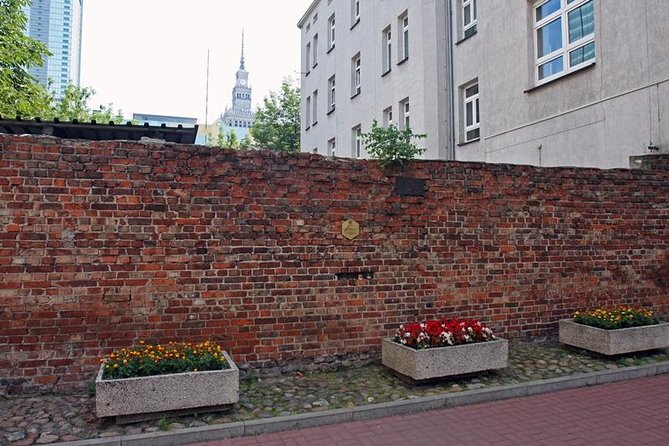
- See the few surviving physical traces: Waliców includes fragments of the ghetto wall, while Próżna preserves some of the last streets linked to the ghetto.
- Expect a private tour: Only your group participates, with pickup available from a city-center hotel.
- Use photos and maps to picture the vanished city: Guides such as Marzena and Olivia help connect present-day Warsaw with prewar and wartime views.
- Walk and ride public transport: The outing is about 2.5 hours on foot and 30 minutes by bus, tram, or metro.
- The POLIN Museum is an outside stop: The main exhibition is not part of the tour, so plan a separate visit if you want the full museum experience.
- Check the synagogue schedule: Nożyk Synagogue is skipped on Friday afternoons from 1 p.m., Saturdays, and Jewish holidays.
Why this tour gives Warsaw’s ghetto sites meaning
Warsaw’s former ghetto is not preserved as one enclosed historic district. Modern streets, apartment blocks, memorials, roads, and open spaces cover much of the area. Without help, you can easily walk through it and miss the scale of what once stood there.
That is the real value of this tour. Your guide gives you a map in your head. A street corner becomes the boundary between the Small and Big Ghettos. A modest wall fragment becomes evidence of a system that once trapped hundreds of thousands of people. A large memorial marks the place where deportations began.
The guide-led format matters here because the sites are scattered. You are not simply shown monuments in isolation. The route builds a timeline, explaining the German invasion, the creation of the ghetto, the conditions inside it, the deportations, and the armed uprising in 1943.
Guides including Marzena have been praised for bringing large photo books and maps. This is especially useful because so little of the wartime city remains intact. Old images can show you streets packed with people, vanished buildings, and the shape of the ghetto before wartime destruction changed Warsaw.
The tone is serious, but the best guiding is not dry. Marzena is described as warm, engaging, and willing to answer many questions. That combination is useful on a difficult subject. You need facts, but you also need a guide who can explain them clearly without turning the tour into a grim recital of dates.
A few more Warsaw half days to consider
- Warsaw: Chopin Concert in the Old Town
★ 4.8 · 2,287 reviews - Warsaw: Traditional Galar Cruise on The Vistula River
★ 4.6 · 1,640 reviews - Warsaw: Old Town Highlights Walking Tour in English
★ 4.7 · 1,516 reviews
Nożyk Synagogue and the surviving Jewish presence
The tour begins or includes Nożyk Synagogue, the only synagogue in Warsaw that survived the Second World War and remains in operation. That makes it more than a quick architectural stop. It offers a direct link to the Jewish community that existed in Warsaw before the war and to Jewish life in the city today.
The visit lasts about 15 minutes. Admission is not included, and the fee is €5 per person. Bring this extra amount if the synagogue visit is operating on your date.
You should also check the schedule carefully. From 1 p.m. on Fridays, on Saturdays, and during Jewish holidays, the synagogue is not visited. This is not a minor detail if seeing the building is one of your main reasons for booking.
The order of stops may change to suit the location of your hotel. That means the synagogue may not be the first stop, even though it appears first in the usual route. The guide picks up participants with a PolinTours sign, either at the reception of a city-center hotel or outside an apartment.
Próżna Street and the last visible pieces of the ghetto
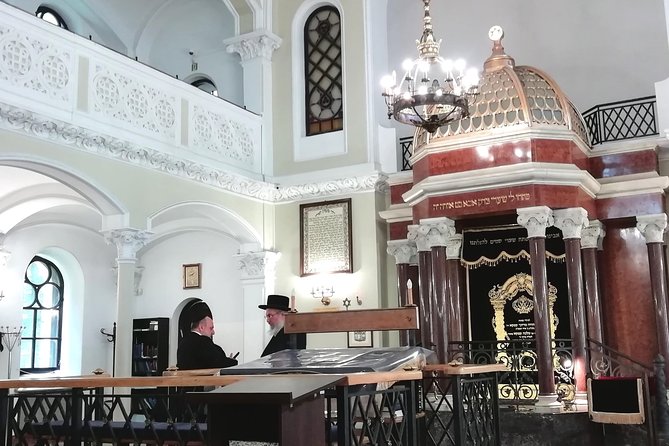
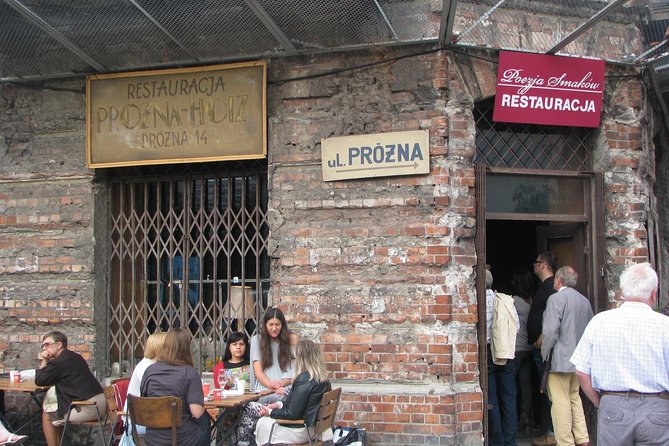
Próżna is one of the most useful early stops because it helps you picture the neighborhood as a lived-in place. The tour spends about 20 minutes exploring the last surviving streets and buildings within the former ghetto area.
This stop is not about a grand monument. Its value comes from scale and texture. You are looking at an actual street rather than only a memorial plaque. Your guide can use old photographs to show how the street and surrounding area looked before the war and during the ghetto years.
I would pay close attention here to the contrast between the surviving façades and the modern city around them. Warsaw was largely destroyed during the war, and later rebuilding means the old street pattern can be hard to read. A guide helps you understand where you are standing and what has disappeared.
Admission to Próżna is free. The short visit also helps keep the overall route moving, which is important because several stops follow in different parts of the former ghetto.
Waliców wall fragments and the shape of daily life
At Waliców, you see fragments of the ghetto wall. These remains are among the most tangible parts of the tour. They help turn the idea of a sealed district into something physical: a boundary that controlled movement, separated families and communities, and formed part of the machinery of persecution.
The stop lasts around 15 minutes, but the subject is much larger than the clock suggests. Your guide explains how the ghetto began, what daily life was like, and how the story led to the uprising in 1943.
This is also where the photographs and maps earn their keep. The present-day fragments alone cannot show the size of the area or the density of life inside it. With visual material, you can compare the remaining wall to the larger system it once formed part of.
You might find this stop especially moving if you prefer physical evidence to museum displays. At the same time, do not expect a preserved neighborhood. The remains are fragments, not a complete wartime street.
A different kind of day in Warsaw:
- Warsaw Concert: Chopin – Painted by Candlelights with Wine
★ 4.8 · 1,442 reviews - Warsaw: City Sightseeing Hop-On Hop-Off Bus Tour
★ 3.6 · 1,415 reviews - Warsaw: POLIN Museum of the History of Polish Jews Ticket
★ 4.7 · 1,142 reviews - #1 Pub Crawl Warsaw with Optional Premium 1 Hour Open Bar
★ 5.0 · 790 reviews
Chłodna Street and the lost bridge
Chłodna Street marks the site of the bridge that once connected the Small and Big Ghettos. The bridge became one of the best-known symbols of the Warsaw Ghetto because it separated people even within the enclosed district.
You do not see the original bridge today. Instead, you stand at the place where it was located and listen to the story tied to it. The guide also connects the site with Władysław Szpilman, the central figure of Roman Polański’s film The Pianist.
That connection can help you place the story in a wider cultural frame, but the stop works even without prior knowledge of the film. The important point is the physical separation of the ghetto sections and what that meant for movement and daily life.
The visit lasts about 20 minutes. It is one of the places where a good guide makes a major difference because the key feature is no longer visible. You need someone to explain exactly where the bridge stood and why it mattered.
Umschlagplatz and the machinery of deportation
Umschlagplatz is one of the most difficult stops. This was the place where deportations were carried out as part of the Nazi Final Solution. The tour explains both the location and its symbolic meaning.
You spend about 15 minutes here, but expect the emotional impact to last longer. This is not a story about a single dramatic battle. It is about a planned process that used deception, control, transport, and mass removal.
The guide places the deportations within the wider history of the ghetto. That context is important. It helps you understand how daily restrictions and shortages were tied to a much larger plan, rather than treating the deportations as an isolated event.
You should give yourself a little quiet time after this stop if possible. The route continues, but the subject matter is heavy. This is one reason the tour is not recommended for children.
POLIN Museum area and Willy Brandt’s famous gesture
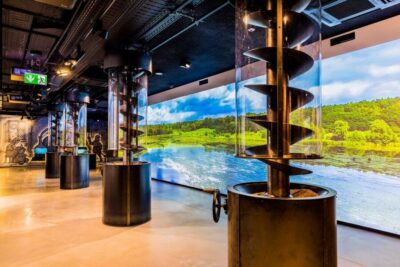
The route continues to the POLIN Museum of the History of Polish Jews and the nearby Willy Brandt Memorial. The tour does not include admission to the museum’s main exhibition, but it explains the museum’s symbolism and its place near the Ghetto Heroes Memorial.
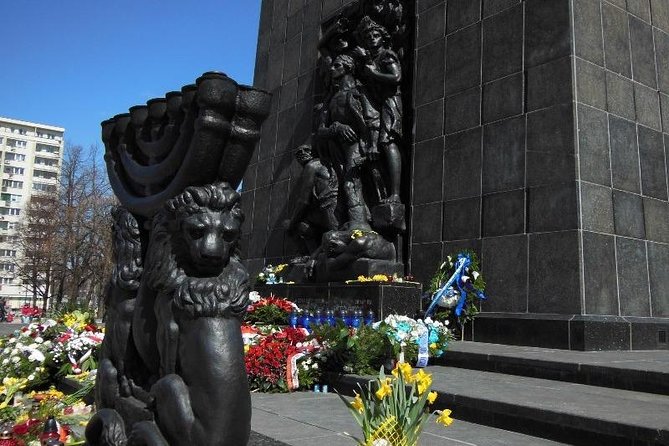
At the memorial, Willy Brandt made his famous kneeling gesture in 1970. The stop lasts about 10 minutes and gives your guide a chance to explain why that act carried such weight in postwar German and Polish memory.
The museum itself deserves separate planning. The main exhibition is recommended with audio guides available in German, and you should allow about 2.5 hours for it. Opening hours supplied for the museum are Monday and Thursday through Friday from 10 a.m. to 6 p.m., Wednesday and Saturday through Sunday from 10 a.m. to 8 p.m., with Tuesday closed.
Check those hours before building the museum into your day. The tour may finish nearby, but the guided walk and museum visit are separate activities. The tour’s short POLIN stop gives you an introduction, not the full exhibition.
Miła 18 and the Warsaw Ghetto uprising
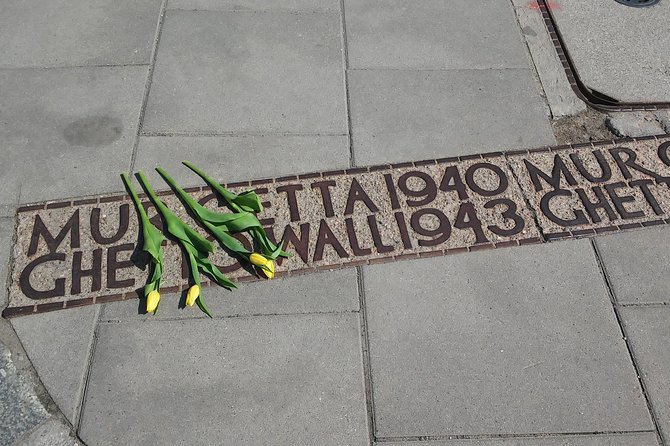
Miła 18 marks the former location of the bunker used by Jewish resistance fighters during the 1943 Warsaw Ghetto Uprising. The tour spends about 10 minutes at the memorial and explains its eventful history.
This stop shifts the focus from persecution and deportation to resistance. Your guide explains why people took up arms, what the uprising represented, and who helped. The setting is now a memorial space, so the task is to imagine the bunker and the people who gathered there beneath a city that has changed.
If the uprising is your main interest, listen closely and ask questions. The route covers many subjects in three hours, and some people may want more time on the armed resistance than the schedule allows. The tour is designed as a broad account of the ghetto, not a single-topic military history walk.
Still, Miła 18 gives the route a needed change in focus. It recognizes that the story includes not only suffering and loss, but also courage and organized resistance.
Pawiak Prison and the wider occupation story
The final listed stop is the Pawiak Prison Museum, with about 10 minutes devoted to the prison’s history. Pawiak helps widen the frame beyond the ghetto itself and shows another part of the occupation system.
The stop is brief, so you should not expect a full museum visit or a detailed examination of every part of the prison’s past. Instead, it adds another layer to the story of imprisonment and repression in occupied Warsaw.
The end point is listed at Mordechaja Anielewicza 6, near the POLIN Museum area. The route can be adjusted according to pickup location, so the sequence may vary. The key sites remain the focus, but the order may not match the list exactly.
Walking, public transport, and the practical pace
This is a walking tour with a public transport element, not a coach excursion. You spend roughly 2.5 hours walking and about 30 minutes on a bus, tram, or metro.
Wear comfortable shoes. The route covers multiple locations, and the subject matter rewards attention rather than rushing. You will also need to stay aware of the guide when moving between sites and using public transport.
The transport section is useful because the former ghetto area is spread out. It saves time and shows you how the historic sites fit into modern Warsaw. It also means this tour is not ideal if you want to remain in one compact district or avoid public transport entirely.
Most participants can take part, but the operator specifically says the tour is not suitable for children. That is sensible given the graphic and painful subject matter, along with the long walking time.
The tour is offered in English. It is a private activity, so only your group participates. That gives you more room to ask questions than a large group tour would, and it makes it easier for the guide to adjust explanations to your interests.
Is $102.78 a fair price?
At $102.78 per person, this is not the cheapest way to see Warsaw. The price becomes easier to justify if you value a private guide, hotel pickup, and a carefully connected route through scattered sites.
You are paying for interpretation as much as transport or sightseeing. Many of the most important locations are free to see, but they are not easy to understand on your own. The guide’s photographs, maps, local perspective, and explanations supply the missing context.
Nożyk Synagogue costs an additional €5 per person. Group discounts are offered, which may improve the price for larger parties. Since the tour is private, the value depends heavily on how many people are in your group and how much you want personal attention.
I would consider it good value for a visitor with only a day or two in Warsaw who wants the ghetto story presented in a logical order. If you already plan to spend several hours reading independently and visiting every site on your own, the premium may be less appealing.
Who should book this Warsaw Ghetto tour?
I recommend it most strongly to adults with a serious interest in Jewish history, the Second World War, and the occupation of Poland. It also suits anyone who wants a guided introduction before spending time in the POLIN Museum.
The tour works well for people who learn through places. Seeing a wall fragment, standing at the former bridge site, and walking to Umschlagplatz can make the history easier to grasp than a book alone.
It is less suitable if you want a light sightseeing outing, dislike long walks, or are looking mainly for the POLIN Museum interior. The main exhibition is not included, and the tour deals directly with mass persecution, deportation, and death.
Book at least a little ahead if possible. The experience is booked an average of 64 days in advance, which suggests that popular dates can fill early. Free cancellation is available until 24 hours before the start time. After that point, the amount paid is not refunded.
Should you book it?
If you want to understand Warsaw’s former ghetto rather than simply photograph a few memorials, I would book this tour. The route covers the essential places, and a guide such as Marzena can explain what the modern streets cannot show.
Plan it as a serious half-day, even though the guided portion is about three hours. Wear good shoes, check the synagogue schedule, and reserve another 2.5 hours if you want to visit the POLIN Museum exhibition properly. Skip it only if the walking and emotional weight do not suit your plans.
FAQ
How long does the Warsaw Ghetto tour last?
The tour lasts approximately three hours. About 2.5 hours are spent walking, with roughly 30 minutes using public transport.
Is hotel pickup available?
Yes. Pickup is offered from the reception of a hotel in Warsaw’s city center. If you stay in an apartment, you should wait outside, and the guide will look for the PolinTours sign.
What language is the tour offered in?
The tour is offered in English.
Is the tour private?
Yes. Only your group participates in this private tour or activity.
Is admission to Nożyk Synagogue included?
No. Admission to Nożyk Synagogue costs €5 per person and is paid separately.
Does the tour include the main POLIN Museum exhibition?
No. The tour visits the POLIN Museum area and explains its symbolism, but it does not include the main exhibition. You should allow about 2.5 hours for a separate museum visit.
Does the synagogue visit happen every day?
No. The synagogue is not visited on Friday afternoons from 1 p.m., on Saturdays, or during Jewish holidays.
Recently added in Warsaw
- Warsaw Wolf’s Lair with St. Lipka and Mamerki Private Guided★ 4.2 · 3 reviews
- Taste of Poland, food tour and guided walk with 12 tasting★ 5.0 · 3 reviews
- Discover Warsaw’s most Photogenic Spots with a Local★ 5.0 · 3 reviews
- Lodz Small Group Tour from Warsaw with Lunch★ 4.0 · 3 reviews
- Jewish heritage in Warsaw★ 4.5 · 3 reviews
- Warsaw Outdoor Paintball with Transfers (all year round)★ 5.0 · 3 reviews
- Electric Scooter Tour: Full Tour – 3-Hours of Magic!★ 5.0 · 3 reviews
- Skip-the-Line Polin Museum Warsaw Jewish History Tour★ 5.0 · 3 reviews
Warsaw Tours, compared.
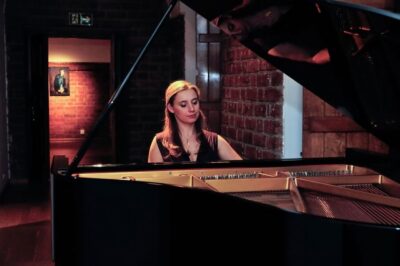
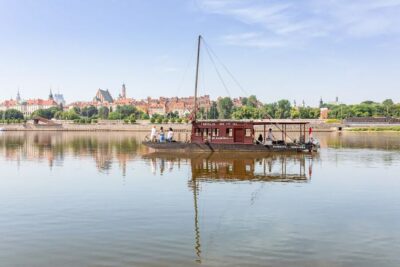
Traditional Galar Cruise on The Vistula River
Read our review →
Warsaw Concert: Chopin – Painted by Candlelights with Wine
Read our review →
POLIN Museum of the History of Polish Jews Ticket
Read our review →
#1 Pub Crawl Warsaw with Optional Premium 1 Hour Open Bar
Read our review →