
Reviewed · WARSAW TOURS
Must-do sites in Warsaw: retro car private tour with hotel pickup
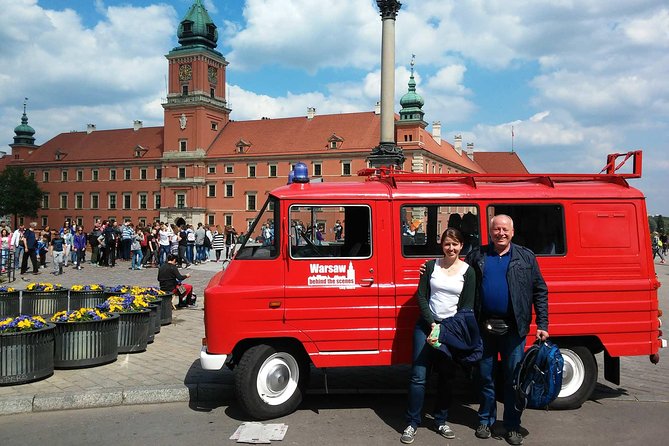
Warsaw’s past comes into sharper focus from the back of a classic Żuk minibus. This private three-hour tour combines short rides with walks through the Old Town, so you get a broad look at the capital without spending the whole morning on foot.
I like the hotel pickup and drop-off, especially if you are still finding your way around Warsaw. I also like the personal storytelling: guides such as Art, Adam, and Mariusz are praised for making Poland’s difficult 20th-century history clear, human, and engaging. The main drawback is time. Your transfer counts toward the three hours, and the vintage vehicles may have no air conditioning or seat belts.
Key points to know before booking
- The Żuk minibus is part of the fun: It gives the tour a distinctly Polish, old-fashioned feel, though comfort is simpler than in a modern van.
- You see ten major sights: The route covers Castle Square, the Royal Castle exterior, St. John’s Archcathedral, the Old Town Market Square, the Barbican, the Warsaw Uprising Monument, and more.
- Walking remains important: Cars cannot enter the Old Town, so expect several short walks on cobblestones and along historic streets.
- The private format helps: Only your group participates, giving you a more direct conversation with the guide.
- The history is the main prize: This is especially useful if you know little about Poland’s partitions, World War II, and the Warsaw Uprising.
- Check your pickup location: A distant hotel can use up valuable tour time, so meeting in the city center may sometimes be wiser.
Why the vintage minibus changes the Warsaw sightseeing experience
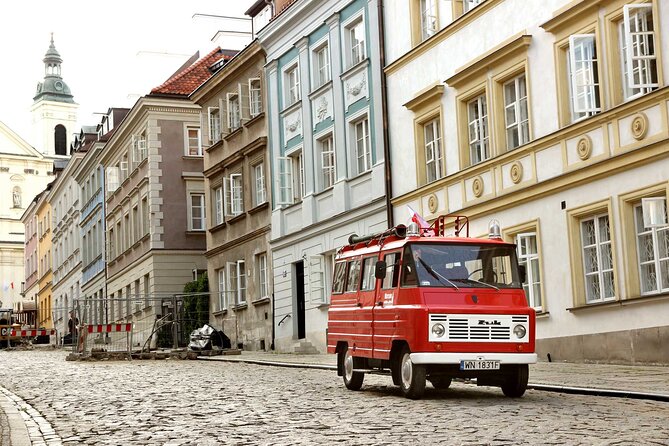
Most city tours put you in a standard coach or a modern passenger van. Here, the ride itself has character. The classic minibus is used mainly to move you between sightseeing areas, while the Old Town is explored on foot.
That division works well. Warsaw’s center is spread across several districts, but its historic core is not a place for a large vehicle. The minibus gets you close to the main areas, then you walk where the streets, squares, churches, and fortifications are best seen.
Each vehicle holds up to eight people, and the operator has five minibuses. Since this is a private activity, your own group rides and walks together. A couple, family, or small group of friends can ask questions without competing with a large crowd.
The trade-off is comfort. These are historic vehicles, not polished tourist coaches. Some have no seat belts, which is allowed for vintage vehicles in Poland, and none has air conditioning. Heating is available in winter. If you visit during warm weather, bring water and dress for the conditions.
The tour is sold at about $168.58 per person. That is a serious price for three hours, but the value improves when you are traveling with a group and would otherwise pay for a private guide, local transportation, and separate transfers. If you are alone or a couple on a tight budget, a regular walking tour and public transport will cost less. You are paying here for privacy, hotel service, a dedicated guide, and the unusual vehicle.
A few more Warsaw half days to consider
- Warsaw: Chopin Concert in the Old Town
★ 4.8 · 2,287 reviews - Warsaw: Traditional Galar Cruise on The Vistula River
★ 4.6 · 1,640 reviews - Warsaw: Old Town Highlights Walking Tour in English
★ 4.7 · 1,516 reviews
Castle Square and Sigismund’s Column: the right place to begin
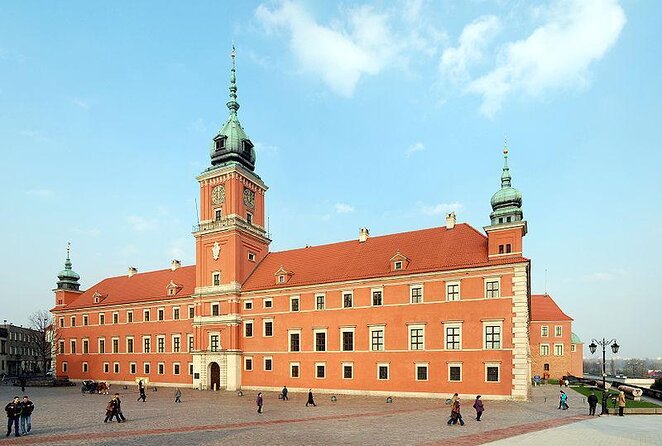
The tour starts at Castle Square, or Plac Zamkowy, after your transfer from the hotel or apartment. This is the gateway to Warsaw’s Old Town and one of the best places to begin understanding the city.
Your guide uses the square to explain Warsaw’s origins, royal role, and long political story. The square is not just a pretty opening scene. It connects the old royal center with the streets of the rebuilt Old Town, and it gives you a useful map in your head before the walking begins.
In the center, King Sigismund’s Column marks the king who moved Poland’s capital from Kraków to Warsaw. The Swedish-born monarch may seem like an odd figure for a Polish monument, and that is exactly why the stop is useful. It introduces the shifting politics and royal connections that shaped the country.
The column also carries a 20th-century story. It survived destruction and was reconstructed, like much of Warsaw. Your guide can connect this single monument to the larger question running through the whole tour: how does a city preserve its identity after being nearly destroyed?
You will spend about 15 minutes at Castle Square and five minutes at the column. That sounds brief, but it is enough for orientation and explanation rather than a long photo stop.
The Royal Castle exterior and St. John’s Archcathedral
The Royal Castle is seen from outside. Once the official home of Polish kings, it represents both royal authority and the political importance of Warsaw.
The building’s modern appearance can hide its painful recent past. It was looted and destroyed during World War II, then rebuilt with great care. Your guide explains that reconstruction as more than an architectural project. For Poland, restoring the castle helped restore a visible link to the country’s earlier statehood.
Do not book this tour expecting an interior visit. Admission inside the castle is not part of the experience. If you want the castle rooms and art collections, plan a separate visit.
From here, you walk along Świętojańska Street to St. John’s Archcathedral. This is one of Warsaw’s oldest churches and a national place of remembrance. It is tied to royal events, state ceremonies, and the former Polish-Lithuanian Commonwealth.
The stop lasts about 20 minutes. That gives you time to see the church and hear why it matters, though it is not a full guided church tour with extended time for every architectural detail. Comfortable footwear is important, since the route includes several walking sections.
Gnojna Góra offers a quieter pause
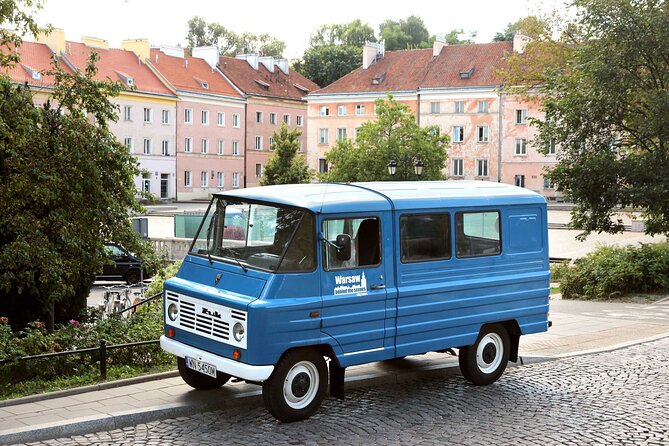
Gnojna Góra takes you slightly away from the best-known Old Town route. This lesser-known viewpoint helps broaden the story beyond royal buildings and postcard squares.
The stop connects historic Warsaw with its defensive systems and river trade routes. It is a small but useful change of pace. Instead of seeing only grand monuments, you get a sense of how the city’s position and daily life were shaped by movement, commerce, and the river.
You spend about ten minutes here. That is enough for the guide’s explanation and a look around, but do not expect a long scenic break. The value is in the context.
A different kind of day in Warsaw:
- Warsaw Concert: Chopin – Painted by Candlelights with Wine
★ 4.8 · 1,442 reviews - Warsaw: City Sightseeing Hop-On Hop-Off Bus Tour
★ 3.6 · 1,415 reviews - Warsaw: POLIN Museum of the History of Polish Jews Ticket
★ 4.7 · 1,142 reviews - #1 Pub Crawl Warsaw with Optional Premium 1 Hour Open Bar
★ 5.0 · 790 reviews
Old Town Market Square and the Warsaw Mermaid
The Old Town Market Square, or Rynek Starego Miasta, is one of the tour’s most visual stops. Colorful townhouses surround the square, but their fresh appearance is not proof that the area escaped the war. The Old Town was rebuilt after World War II, and your guide explains how that restoration brought the historic center back to life.
The square once served as the center of civic activity. Today, it is a natural place to pause and take in the details of the façades, narrow streets, and public spaces.
This is also where you hear the legend of the Warsaw Mermaid, the city’s symbol. The tale gives the tour a lighter moment after the political and wartime material. It also helps explain why the mermaid appears throughout Warsaw on signs, monuments, and souvenirs.
You have about 15 minutes here. That is enough to listen, take photographs, and get your bearings. If you want time for coffee, shopping, or a leisurely meal in the square, plan to return later. The tour keeps moving.
The Barbican reveals how Warsaw was defended
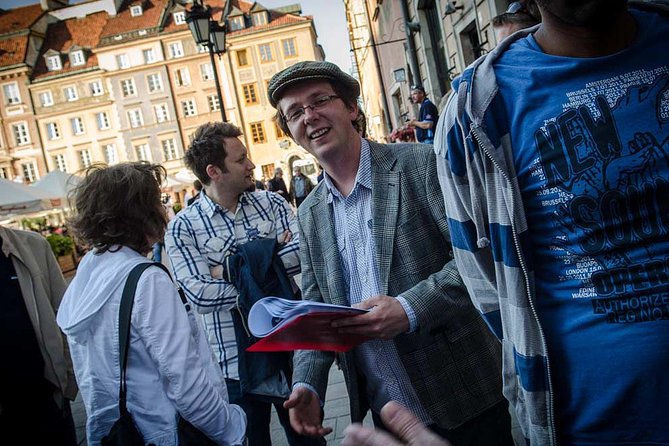
From the market square, the route continues toward the Warsaw Barbican. This fortified gateway once formed part of the city’s defensive walls.
The Barbican is a strong stop for understanding medieval Warsaw. Its walls and rounded form show how the city protected itself before modern armies and weapons changed warfare. Your guide also returns to the theme of reconstruction, since this part of Warsaw was restored after wartime destruction.
You spend roughly 15 minutes here. The walking route along the walls and through the surrounding streets gives you a different view of the Old Town. Rather than seeing it as a single preserved block, you begin to understand it as a place rebuilt from records, fragments, and national determination.
Cobblestones and uneven surfaces are possible in this part of the route. Wear sturdy shoes, even if you normally prefer stylish city footwear.
The Warsaw Uprising Monument brings the past into sharper focus
The minibus takes you beyond the Old Town to Krasiński Square, home of the Warsaw Uprising Monument. This is one of the tour’s most serious stops.
The monument recalls the 1944 uprising against Nazi occupation and the huge sacrifices made by Warsaw’s residents. Your guide places the uprising within Poland’s wider wartime experience, helping you understand why this event remains so important to the city.
This part of the tour is one reason I would recommend the experience to anyone with only a basic idea of Polish history. The guides are praised for explaining the period from the partitions onward, then connecting it to World War II and the destruction of Warsaw. Adam, Art, and Mariusz are specifically praised for making the material engaging rather than dry.
The tone changes here. You are no longer simply moving between attractive squares. The monument asks you to think about occupation, resistance, loss, and the cost paid by ordinary people. A private guide is useful because you can pause and ask about the parts that are hardest to place in context.
Piłsudski Square and the Tomb of the Unknown Soldier
The final stop is Piłsudski Square, where you see the Tomb of the Unknown Soldier. This memorial honors fallen Polish soldiers and gives the tour a quiet ending.
After the color of the Old Town and the novelty of the minibus, the square provides room for reflection. It also brings several threads together: Poland’s changing borders, military struggles, occupation, and the effort to preserve national memory.
The tour does not end with a shopping street or a restaurant suggestion. It ends at a memorial. That choice suits the subject and gives the final part of the experience more weight.
How the three-hour schedule really works
The stated duration is about three hours, but the schedule includes both sightseeing and transportation. Hotel pickup and drop-off count within that time.
This matters most if your accommodation is far from central Warsaw. A long transfer at the beginning and end can reduce the time available at the stops. If your pickup address is not listed when you book, send it to the operator. If you are staying well outside the center, ask about meeting the guide in the city instead.
The individual stops are short. Castle Square receives about 15 minutes, St. John’s Archcathedral about 20 minutes, Gnojna Góra about 10 minutes, the market square about 15 minutes, and the Barbican about 15 minutes. The remaining time covers the other memorial stops, walking, and transfers.
I see this as a city orientation tour, not a slow study of each site. You get the framework, the key stories, and a sense of where to return. If you want to enter the Royal Castle, spend an hour inside the cathedral, or linger over every Old Town detail, you will need extra time on your own.
Who will get the most from this private tour
This experience fits first-time visitors who want the major sights explained in a short period. It is also a good choice if you have limited mobility for long distances but can manage repeated short walks. The vehicle reduces the amount of ground you must cover, though it does not remove walking from the tour.
Families may find the format easier than a long lecture. The minibus adds novelty, and the guides have kept tweens engaged during the history sections. One family specifically found the Żuk ride a highlight for the children.
The tour also suits people who want a history lesson without enrolling in a formal class. The strongest part is the guide’s ability to connect royal Warsaw, wartime destruction, the uprising, and national remembrance.
You may want another option if you require modern vehicle comforts, air conditioning, or a seat belt for every passenger. Parents booking for children under 150 centimeters should contact the operator first. Booster seats are mandatory under Polish law, and availability must be checked in advance. Children over 150 centimeters and adults can book online.
Service animals are allowed, and most people can participate. You should still wear practical clothing and shoes because the minibus is only one part of the experience.
The guide makes or breaks the history
A private vehicle alone would not justify the price. The guide is what gives the route meaning.
Art is praised for meeting visitors at the hotel, giving a clear overview, and making the tour feel personal. Adam is praised for explaining Poland’s story from the partitions onward in an engaging way. Mariusz is singled out for making the Żuk ride memorable while also guiding the history.
Those details matter because Warsaw can be confusing on a first visit. The Old Town looks historic, but much of it was rebuilt. Monuments can seem solemn without context. A good guide helps you notice the difference between old fabric, reconstruction, commemoration, and modern city life.
The guide also keeps the experience from becoming a parade of names and dates. You move from place to place, but the main story remains clear: Warsaw has repeatedly lost buildings, institutions, and people, then worked to restore its public identity.
Is $168.58 per person fair value?
At $168.58 per person, this is not a bargain sightseeing loop. You are paying for a private tour, an English-speaking guide, hotel pickup and drop-off, and an unusual historic vehicle.
The price makes more sense for a small group of family or friends. Only your group participates, so the guide can answer questions and adjust the conversation. You also avoid the trouble of finding the starting point and arranging transport between the Old Town and the memorials outside it.
The value is weaker if you are comfortable using public transportation and walking independently. Warsaw’s main sights can be visited without a private vehicle, and the tour does not include interior admission to the Royal Castle or other paid attractions.
I would book it when your time is short, your group values privacy, or you want Poland’s history explained rather than simply photographed. I would skip it when your priority is low cost, long visits inside buildings, or modern vehicle comfort.
Practical details before you reserve
Pickup is offered from hotels and apartments, but you need to provide the address if it does not appear in the selection box. Ask about a central meeting point if your accommodation is far away.
The tour is offered in English and comes with a mobile ticket. Confirmation is provided at booking. It is available for adults and children over 150 centimeters, while shorter children require an advance check for booster-seat availability.
Free cancellation is available up to 24 hours before the scheduled start time. Changes or cancellations made inside that window are not accepted for a refund. Tips are not included, so plan separately if you want to thank your guide.
Should you book the Warsaw retro car tour?
Book this tour if you want a fast but thoughtful introduction to Warsaw, especially if the city’s wartime story is new to you. The best features are the private setting, the guide-led historical context, and the memorable Żuk minibus that links the Old Town with the city’s major memorials.
Go in knowing what it is: a three-hour overview with short walks, not a museum tour or a leisurely day out. If you can accept the basic vintage vehicle, check the pickup time carefully, and value a strong guide, this is a useful first look at Warsaw and a good way to decide where to spend the rest of your stay.
FAQ
How long does the Warsaw retro car tour last?
The experience lasts approximately three hours. Hotel pickup and drop-off are included within that total time.
Is hotel pickup and drop-off included?
Yes. Pickup and drop-off from your hotel or apartment are included. If your address is not available in the booking options, send it to the tour operator.
Is this a private tour?
Yes. Only your group participates in the activity. Each minibus can carry up to eight passengers.
What language is the tour offered in?
The tour is offered in English and includes an English-speaking guide.
Which Warsaw sights are included?
The route includes Castle Square, King Sigismund’s Column, the exterior of the Royal Castle, St. John’s Archcathedral, Gnojna Góra, the Old Town Market Square, the Warsaw Barbican, the Warsaw Uprising Monument at Krasiński Square, and the Tomb of the Unknown Soldier at Piłsudski Square.
Can children join the tour?
Adults and children over 150 centimeters can book online. Children under 150 centimeters require advance contact with the operator to check booster-seat availability, since booster seats are mandatory under Polish law.
Are the vintage minibuses air-conditioned and fitted with seat belts?
The classic minibuses do not have air conditioning, and some do not have seat belts. This is permitted for historic vehicles. All vehicles have heating for winter use.
Recently added in Warsaw
- Warsaw Wolf’s Lair with St. Lipka and Mamerki Private Guided★ 4.2 · 3 reviews
- Taste of Poland, food tour and guided walk with 12 tasting★ 5.0 · 3 reviews
- Discover Warsaw’s most Photogenic Spots with a Local★ 5.0 · 3 reviews
- Lodz Small Group Tour from Warsaw with Lunch★ 4.0 · 3 reviews
- Jewish heritage in Warsaw★ 4.5 · 3 reviews
- Warsaw Outdoor Paintball with Transfers (all year round)★ 5.0 · 3 reviews
- Electric Scooter Tour: Full Tour – 3-Hours of Magic!★ 5.0 · 3 reviews
- Skip-the-Line Polin Museum Warsaw Jewish History Tour★ 5.0 · 3 reviews
Warsaw Tours, compared.

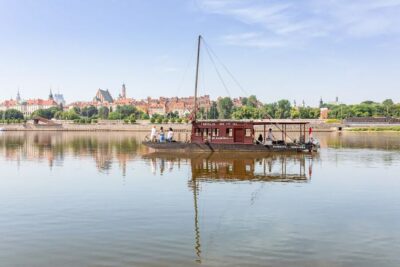
Traditional Galar Cruise on The Vistula River
Read our review →
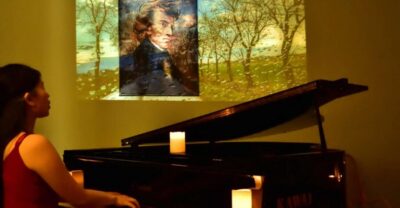
Warsaw Concert: Chopin – Painted by Candlelights with Wine
Read our review →

POLIN Museum of the History of Polish Jews Ticket
Read our review →
#1 Pub Crawl Warsaw with Optional Premium 1 Hour Open Bar
Read our review →