
Reviewed · WALKING TOURS
Life Behind the Iron Curtain Warsaw Walking Tour
Warsaw’s communist past is easiest to grasp when you see it in the streets, not just in a museum. This walk connects parade avenues, party offices, railway stations, and shops to the daily reality of life behind the Iron Curtain, from censorship and surveillance to the struggle to buy basic goods.
I like the small group cap of 10, which should make it easier to ask questions. I also like the personal touch brought by guides such as Olivia, Oliwia, and Agnieszka, whose family stories help turn a political era into something human. The main drawback is the walking: two and a half hours on city streets may not suit anyone with trouble covering long distances.
Key points about the Warsaw communist-era walk
- Starts at Constitution Square: See the planned center of postwar socialist Warsaw and learn why its design mattered.
- Connects buildings to daily life: The route covers censorship, party control, shopping shortages, travel, and public ceremonies.
- Personal stories add meaning: Olivia, Oliwia, and Agnieszka have used family experiences to explain how communism affected ordinary households.
- Visual aids are included: Photos and other materials help you compare Warsaw then and now.
- Ends at the Palace of Culture: The final stop explains Poland’s most famous and controversial communist landmark.
- Good value for a focused history walk: At $28.57, the price includes a guide, visual aids, pre-tour information, and practical Warsaw recommendations.
Why this walk makes communist Warsaw easier to understand
The phrase Iron Curtain can sound like a textbook label. In Warsaw, it was a system that shaped where people worked, what they could buy, how they traveled, what they could read, and how they spoke in public.
This tour gives you a useful way to connect those subjects. Instead of spending two and a half hours looking only at grand architecture, you move through central Warsaw and ask what each place meant under the Polish People’s Republic. A square becomes a stage for state ceremonies. A department store becomes evidence of shortages. A railway station tells you how closely movement was controlled.
That approach suits you if you already know the broad outline of communist Europe but want to understand Poland specifically. It also works if the subject is new to you. The route uses visible buildings and street corners, so you are not expected to arrive with a long list of dates.
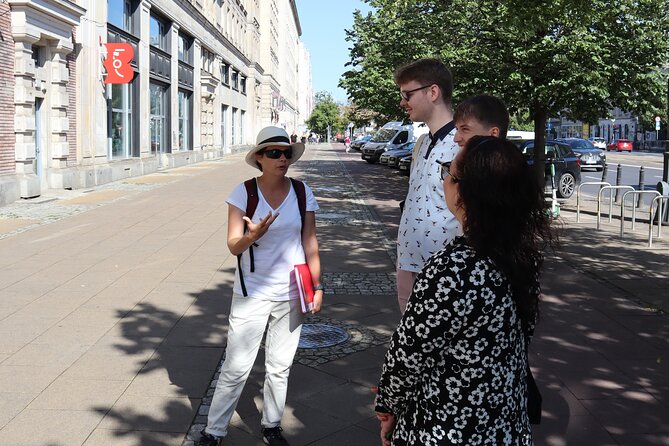
The guides named in the experience include Olivia, Oliwia, and Agnieszka, with some sessions led by one of these guides. Olivia is praised for making the subject lively and for explaining how her family experienced the period. Agnieszka is described as cheerful, story-driven, and well prepared. The key point is not simply that the guides know the dates. They explain how the system affected family life and how its effects remain part of Poland today.
More Walking Tours in Warsaw
- Warsaw: Old Town Highlights Walking Tour in English
★ 4.7 · 1,516 reviews - Warsaw: Old Town Guided Walking Tour
★ 4.9 · 599 reviews - Half-Day Polish Food Walking Tour with Guide and Dinner
★ 4.5 · 381 reviews
Constitution Square: a planned center for a new Poland
The walk begins at Plac Konstytucji, or Constitution Square. Allow about 20 minutes here.
This was designed to be the new center of the Polish People’s Republic. Its broad scale and monumental buildings were meant to project order, power, and confidence. The square was not just a place for residents to cross on their way to work. It was part of the visual language of the new state.
Your guide explains how socialist realism worked and why the authorities favored it. The style was meant to make public buildings look grand, useful, and tied to the ideals of the working class. That sounds abstract until you are standing in a space designed to impress large crowds.
I find this a smart first stop because it gives you a visual key for the rest of the walk. Once you understand why the square was built in this way, other government buildings and public spaces become easier to read. Look up at the scale, the symmetry, and the way the architecture frames the street. You are seeing politics expressed in stone.
The square is also a practical meeting point. It is in central Warsaw and close to public transportation. The experience does not include an entry ticket here.
Marszałkowska Street and the power of the parade
From Constitution Square, the group follows Marszałkowska Street for about 20 minutes.
This wide avenue was used for parades and marches, so its size was part of its purpose. A broad road can move traffic, but it can also create a stage for public displays of loyalty. The route helps you consider how city planning can serve the state as much as it serves residents.
This is one of the places where a guide adds real value. If you walk Marszałkowska alone, you may notice the width and the large buildings but miss the connection between street design and political ceremony. Your guide points out one of the most iconic places associated with the Polish People’s Republic and explains its role.
The pace here should be comfortable, but you will be walking outdoors, often through central city streets. Wear shoes that can handle pavement and check the weather before setting out. The tour is not recommended for people who have difficulty walking long distances, even though one past participant found the total walking manageable.
The Ministry of Agriculture and socialist realism
The Ministry of Agriculture and Rural Development receives about 15 minutes.
The building is used as a clear example of socialist realism, giving you a chance to apply the ideas introduced at Constitution Square. The guide explains what makes the style distinctive and why buildings were constructed in this manner.
This stop is less about entering the ministry and more about reading the exterior. That is useful because much of Warsaw’s communist story remains visible in everyday streets. You do not need a museum label to understand that architecture can send a message about authority, work, and national direction.
The subject also gives the tour balance. The communist period was not only about shortages and repression. It was also about a government trying to show that it had built a modern, organized society. The imposing public buildings were part of that claim.
A different kind of day in Warsaw:
- Warsaw: Chopin Concert in the Old Town
★ 4.8 · 2,287 reviews - Warsaw: Traditional Galar Cruise on The Vistula River
★ 4.6 · 1,640 reviews - Warsaw Concert: Chopin – Painted by Candlelights with Wine
★ 4.8 · 1,442 reviews - Warsaw: City Sightseeing Hop-On Hop-Off Bus Tour
★ 3.6 · 1,415 reviews
Mysia 3: censorship, surveillance, and the limits of speech
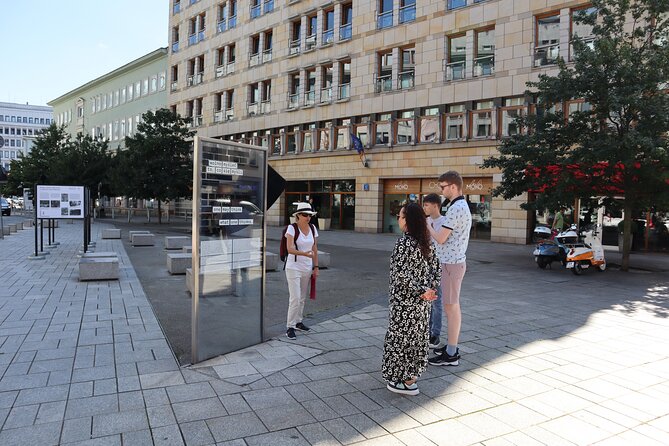
The group then reaches Mysia Street for about 20 minutes.
Here you see the Free Speech Memorial and discuss censorship and espionage. This is one of the more serious sections of the walk because it moves from public architecture to the boundaries placed on private thought and expression.
The value of stopping here is the chance to connect a physical site with an invisible system. Censorship affects newspapers, books, broadcasts, and public debate, but the machinery behind it can be hard to picture. A memorial and a local address give the topic a fixed point.
The guide also discusses espionage, adding another layer to the question of who was watching, who was being watched, and what information could safely be shared. Personal family accounts make this section easier to relate to. The period is not ancient history, and several guides have drawn on stories from parents and grandparents to explain how caution shaped ordinary life.
If you are hoping for a light sightseeing walk, this part may feel heavier. That is also why it matters. The tour does not treat communist Warsaw as a collection of quirky old buildings. It deals with the cost of the system as well as its architecture.
Nowy Świat 6/12 and the former party headquarters
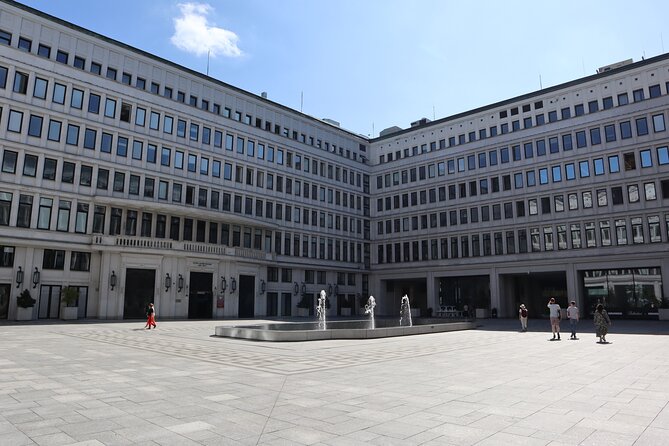
At Nowy Świat 6/12, the group spends about 15 minutes outside the building that now houses the Banking and Finance Center.
During the Polish People’s Republic, this was the headquarters of the Communist Party and the place from which the country was managed. The change in use gives the stop a useful present-day contrast. You are looking at a working building in modern Warsaw while learning how central it once was to political control.
This is a good example of why the route is more than a list of communist-era facades. The guide explains who used the building, what decisions were made there, and how power operated from the capital. You begin to see Warsaw as a city where modern life has been layered over the old system rather than placed on an empty site.
I would pay close attention here if you are interested in the transition after 1989. The experience also addresses how Poland changed after the collapse of communist rule and why the old period still affects people who lived through it.
Cedet: what it meant to shop for ordinary goods
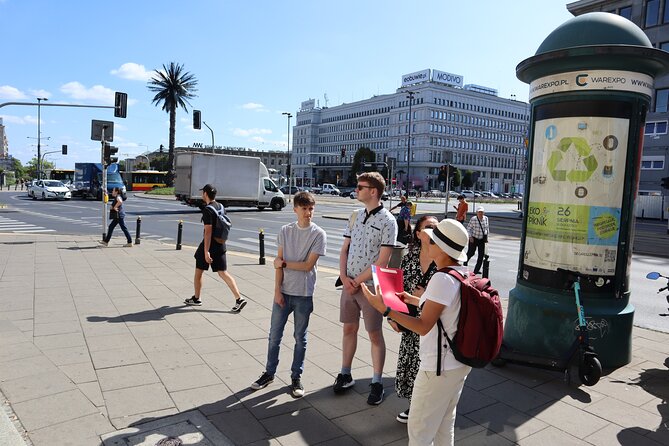
The former Central Department Store, known as Cedet, gets about 15 minutes.
This stop focuses on one of the most practical parts of the story: shopping. Under the Polish People’s Republic, getting everyday goods could be difficult. A department store may sound ordinary, but here it becomes a way to discuss supply, shortages, queues, and the gap between official promises and daily experience.
This is often the kind of subject that makes a history walk memorable. Big political events can feel distant. Everyone understands the basic need to buy food, clothing, household items, and other necessities. The guide explains why shopping was so challenging and how those problems shaped routines.
You will not be shopping during the stop, and there is no entry fee listed. The point is the building’s role and the story attached to it. For me, this is one of the strongest sections for anyone who wants to know what communism felt like at home, not just inside government offices.
Central and Downtown stations: travel under state control
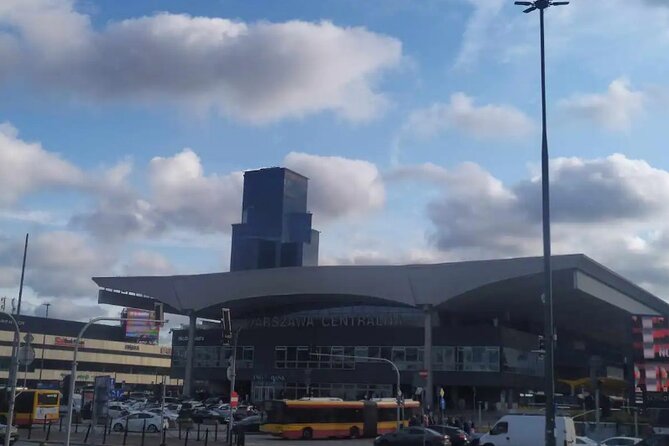
The route continues to Warsaw Central Railway Station and Downtown Railway Station for about 15 minutes.
Here the subject turns to local, regional, and international travel during the communist period. Railway stations are ideal places for this discussion because they connect personal movement with government policy. A station can represent freedom to go somewhere, but it can also reveal limits on where people could go and how easily they could cross borders.
The guide explains how travel worked at different levels. That distinction matters. Moving around Warsaw was not the same as taking a regional trip or attempting international travel. The station setting helps you picture how journeys began, what transport meant to residents, and how different the experience could be from travel in Poland today.
This is also a useful place to think about the changing city. The railway buildings remain part of present-day Warsaw, yet the political meaning of travel has changed. The stop is brief, so ask questions if this topic interests you most.
The Palace of Culture and Science: a final, controversial symbol
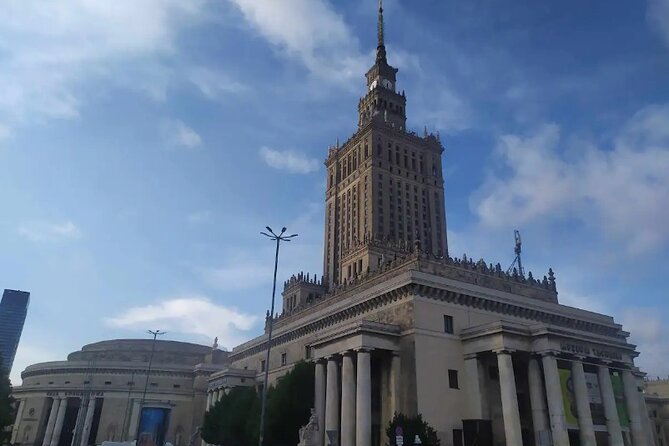
The tour ends near the Palace of Culture and Science after about 30 minutes, making it the longest stop.
The Palace is one of Warsaw’s most recognizable buildings and one of its most debated. Your guide explains why it was built, what it represented during the Polish People’s Republic, and why many people still have mixed feelings about it.
The building is hard to discuss without addressing power. Its scale dominates the center of Warsaw, and its presence has never been neutral. For some, it is an important architectural and cultural landmark. For others, it remains a reminder of Soviet influence and a period when Poland’s political direction was imposed from outside.
The tour finishes in front of the Palace. Admission to the viewing terrace is not included and costs 28 PLN. That optional add-on may appeal to you if you want a city view after the walk, but it is not required to take part in the tour.
Ending here works well. You have spent the afternoon or morning seeing how the communist state presented itself, how it controlled information and political life, and how its policies affected shopping and travel. The Palace brings those themes together in one imposing structure.
What the $28.57 price includes
At $28.57 per person, this is a fair price for a small, focused walking tour. You are paying for about two and a half hours with an English-speaking guide, visual aids, and a route that would be difficult to interpret on your own.
The small group limit of 10 matters. A large group can make it hard to hear explanations beside busy streets, and personal questions often get lost. With fewer people, you have a better chance to ask about family experiences, architecture, or the transition after communism.
You also receive an information pack before the tour with frequently asked questions and useful links. Recommendations for places to visit, eat, and drink are included as well. Those extras add practical value, especially if this is one of your first days in Warsaw.
There are no admission fees at the listed stops. The only stated extra is the 28 PLN Palace viewing terrace. That makes the cost easy to predict.
Timing, meeting point, and walking demands
The meeting point is Constitution Square, Plac Konstytucji, 00-647 Warszawa. The walk ends near the Palace of Culture and Science at Emilii Plater 54, 00-901 Warszawa.
The route lasts approximately two hours and 30 minutes. Since the stops range from 15 to 30 minutes and are linked by city walking, plan to remain outdoors for most of the experience.
The tour is offered in English and uses a mobile ticket. It operates near public transportation, and most people can take part. Service animals are allowed.
The main practical caution is distance. You do not need to be a serious hiker, but this is not a seated lecture. If long walks are hard for you, consider a different format. If you are comfortable walking central Warsaw streets, the length gives the guide enough time to explain both the buildings and the human stories behind them.
Who will get the most from this Warsaw walk?
I would choose this tour if you want modern Polish history explained through places you can see. It suits first-time visitors who want a framework for the city, as well as people who have already taken general Warsaw sightseeing tours and want a more focused subject.
It is especially useful for you if:
- You want to understand how communist rule affected everyday shopping and travel.
- You are interested in architecture used as political messaging.
- You prefer a small group to a large coach or crowded lecture.
- You value family stories and personal accounts alongside political facts.
- You want practical restaurant and sightseeing suggestions for the rest of your stay.
You may want to skip it if your main goal is old-town architecture, royal history, or museum interiors. This route concentrates on the Polish People’s Republic and takes place mainly outside.
The guides have been praised for being lively, clear, and personal. Olivia’s family stories, in particular, have helped explain how the period still affects people who lived through it. Agnieszka brings a cheerful manner and plenty of stories. Since guide assignments can vary, book this for the subject and route rather than expecting one specific person.
Should you book Life Behind the Iron Curtain?
Yes, if you want to understand why modern Warsaw looks and feels the way it does.
The tour earns its price by connecting ordinary city sights to major questions about power, speech, work, shopping, and movement. The Palace of Culture is more meaningful after you have seen the political system that produced it. Cedet means more after you have discussed shortages. The railway stations tell a fuller story after you have considered who could travel and where.
Book it when you can walk comfortably for two and a half hours and when you want history delivered in a direct, human way. Skip it only if communist-era Poland is not of interest or if you need a short, seated activity. For most curious visitors, this is a practical introduction to a period that still shapes Warsaw.
FAQ
Where does the Life Behind the Iron Curtain tour start?
The tour starts at Constitution Square, Plac Konstytucji, 00-647 Warszawa, Poland.
Where does the tour end?
The tour ends near the Palace of Culture and Science at Emilii Plater 54, 00-901 Warszawa, Poland.
How long does the walking tour last?
The tour lasts approximately two hours and 30 minutes.
What language is the tour offered in?
The tour is offered in English.
How many people can join the tour?
The group has a maximum of 10 participants.
Is entry to the Palace of Culture viewing terrace included?
No. Entry to the viewing terrace is not included and costs 28 PLN.
Is the tour suitable for people with walking difficulties?
The tour is not recommended for people who have problems walking long distances. Most participants can take part, and the route is near public transportation.
What happens if I need to cancel?
You can receive a full refund if you cancel at least 24 hours before the experience start time. Cancellations or changes made less than 24 hours before the start time are not accepted for a refund.
Recently added in Warsaw
- Warsaw Wolf’s Lair with St. Lipka and Mamerki Private Guided★ 4.2 · 3 reviews
- Taste of Poland, food tour and guided walk with 12 tasting★ 5.0 · 3 reviews
- Discover Warsaw’s most Photogenic Spots with a Local★ 5.0 · 3 reviews
- Lodz Small Group Tour from Warsaw with Lunch★ 4.0 · 3 reviews
- Jewish heritage in Warsaw★ 4.5 · 3 reviews
- Warsaw Outdoor Paintball with Transfers (all year round)★ 5.0 · 3 reviews
- Electric Scooter Tour: Full Tour – 3-Hours of Magic!★ 5.0 · 3 reviews
- Skip-the-Line Polin Museum Warsaw Jewish History Tour★ 5.0 · 3 reviews
Walking Tours, compared.




Gdańsk City Sights & History Guided Walking Tour in English
Read our review →


Where else this one turns up