
Reviewed · WALKING TOURS
Life Behind the Iron Curtain Warsaw Walking Tour
Warsaw’s communist past is easiest to understand from the pavement, not from a lecture hall. This 3-kilometer walk takes you through the grand spaces built to project state power, then explains how ordinary Poles coped with empty shops, censorship, travel limits, and official nonsense. The absurdity is the point.
I like the strong route through central Warsaw and the way guides such as Oliwia and Agnieszka connect buildings to family stories. I also like the small-group feel, visual aids, and practical city tips included before and after the walk. The main drawback is simple: 150 minutes on foot can feel long if you have mobility problems or visit on a hot day.
Key points to know before you book
- Constitution Square opens the story: See the square planned as Warsaw’s new city center and learn how architecture served communist ideals.
- Marszałkowska Street explains public spectacle: Its width made room for parades, marches, and carefully staged displays of loyalty.
- Personal stories add human scale: Oliwia and Agnieszka use family experiences to explain shopping, censorship, work, and daily survival.
- The Free Speech Memorial changes the focus: Here, the tour turns to underground publishing, surveillance, espionage, and the cost of saying what you thought.
- The Palace of Culture is both landmark and burden: You see why the building is hard to ignore, while learning why many Poles view it with mixed feelings.
- The $32 price buys context, not admissions: You pay for 2.5 hours of guiding, visual material, and useful Warsaw recommendations. The viewing terrace costs extra.
Why this walk makes communist Warsaw easier to understand
A city can preserve political history in plaques and museums, but Warsaw also carries it in its street plan. Wide avenues, monumental facades, oversized public squares, and the Palace of Culture tell you what the government wanted people to see.
The harder part is understanding what daily life felt like. That is where this tour earns its keep. Instead of treating communism only as a Cold War contest between superpowers, it focuses on the small problems that shaped each day: stores with little to sell, rules that made travel difficult, official speeches no one believed, and jokes that helped people keep their balance.
I especially like this human scale. You hear about the way people managed to buy things even when shelves were empty, and why the routine question what can I get you? could sound funny in a shop with almost nothing available. The humor does not make the period seem harmless. It shows how people used wit and invention when the system gave them few good choices.
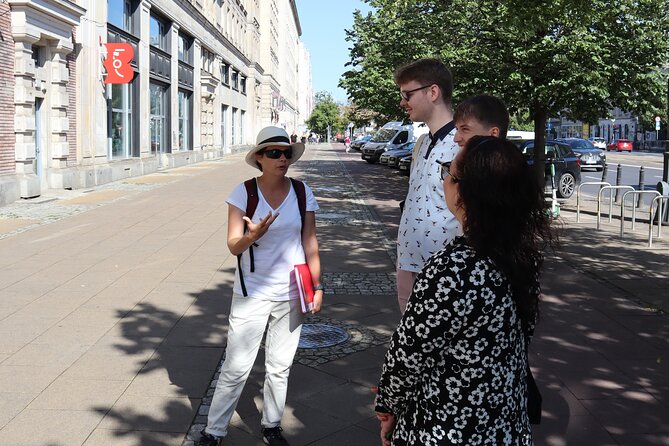
The guides also bring a personal link to Warsaw. Oliwia is praised for her dry humor, warmth, and clear explanations, while Agnieszka is noted for patient answers and vivid storytelling. Personal family accounts help connect national events to homes, workplaces, and ordinary decisions.
More Walking Tours in Warsaw
- Warsaw: Old Town Highlights Walking Tour in English
★ 4.7 · 1,516 reviews - Warsaw: Old Town Guided Walking Tour
★ 4.9 · 599 reviews - Half-Day Polish Food Walking Tour with Guide and Dinner
★ 4.5 · 381 reviews
Constitution Square and the planned new center
The walk begins at Constitution Square, a major piece of postwar socialist urban design. This is not just a convenient meeting place. It introduces the visual language of the period: broad open space, monumental buildings, carefully controlled symmetry, and architecture meant to make the state appear powerful and orderly.
Your guide explains that the square was intended to serve as a new center for Warsaw. That ambition matters because Warsaw had been badly damaged during the Second World War, leaving planners with an opportunity to reshape the city. Under communism, rebuilding was not only about housing and transport. It was also about creating a capital that could display the values of the new political system.
Look closely at the decorative details and the scale of the surrounding buildings. Socialist realism could appear attractive, even elegant, to someone seeing it for the first time. Yet many Poles dislike these buildings because their beauty is tied to an authoritarian system and to the forced rebuilding of the city in the postwar years.
That contrast is one of the tour’s useful lessons. Architecture is never only architecture. A facade can look pleasant while carrying memories of control, propaganda, and political pressure.
Marszałkowska Street and the theater of power
From Constitution Square, the route follows Marszałkowska Street. Its width is one of the clearest physical reminders that the city was designed for public display as well as ordinary movement.
The street was used for parades and marches, giving the authorities a place to show military strength, political unity, and mass support. A wide avenue can look practical today, but your guide helps you see its intended audience. The road was also a stage, and the people lining it were part of the picture.
This is where the walk moves beyond dates and leaders. You consider how a government uses streets, squares, flags, and crowds to shape public behavior. Attendance at official events could be expected, and public enthusiasm could be carefully arranged. The setting helped turn political power into something visible.
The route covers about 3 kilometers in total, so you are not racing from one point to another. Guides have room to stop, answer questions, and adjust the pace. One account specifically notes that Oliwia chose shady places for pauses on a warm day, a small but useful sign of how the walk works in practice.
Still, wear comfortable shoes and plan for standing outdoors. The activity is wheelchair accessible, but it is not recommended for people who have trouble walking long distances. If you prefer a seated museum visit, this is not the right format.
The Free Speech Memorial and the price of speaking openly
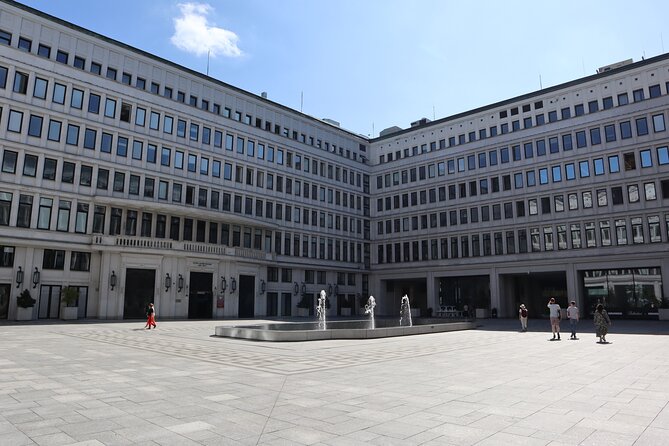
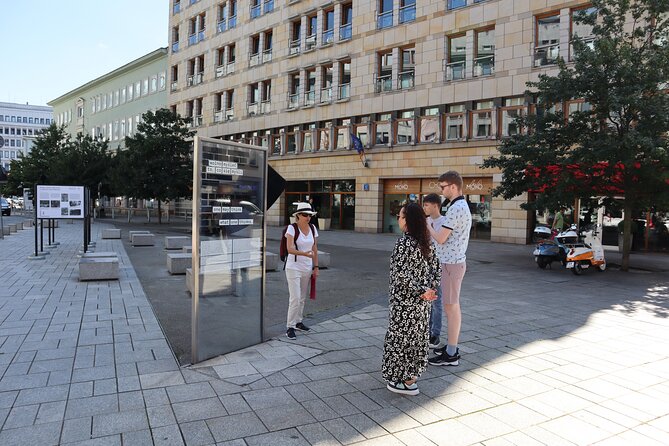
The Free Speech Memorial brings the tour to one of its most serious subjects. Here, the conversation turns to censorship, underground publishing, and espionage.
Communist authorities controlled much of what could appear in print and what could be said in public. That control reached newspapers, books, workplaces, schools, and conversations that might attract unwanted attention. The memorial gives the guide a fixed point from which to explain how information circulated when official sources could not be trusted.
The subject is especially useful for visitors who know the broad outline of censorship but want to understand its effect on daily choices. You consider what people could say openly, what had to be discussed privately, and why printed material outside official channels mattered so much.
The espionage side adds another layer. In a society shaped by surveillance, trust was never simple. The guide explains how censorship and state security affected relationships and public life, not just political activists.
I like that this stop prevents the tour from becoming a collection of amusing stories about shortages and bureaucratic jokes. Humor helped people cope, but the restrictions were real. The memorial gives the walk moral weight and shows that life behind the Iron Curtain involved risk as well as inconvenience.
A different kind of day in Warsaw:
- Warsaw: Chopin Concert in the Old Town
★ 4.8 · 2,287 reviews - Warsaw: Traditional Galar Cruise on The Vistula River
★ 4.6 · 1,640 reviews - Warsaw Concert: Chopin – Painted by Candlelights with Wine
★ 4.8 · 1,442 reviews - Warsaw: City Sightseeing Hop-On Hop-Off Bus Tour
★ 3.6 · 1,415 reviews
Communist Party headquarters and the machinery behind the scenes
The stop at the former Communist Party headquarters focuses on where power was organized. The location helps you connect the impressive public spaces from earlier in the walk with the offices and institutions that directed them.
This is a good point to ask questions. How did the party shape employment, public information, and social life? How did official decisions reach the street? The tour is designed for conversation, and the guides are used to handling questions about both the political system and its effects on families.
The visual aids are useful here. A photograph or historical image can help you compare the present-day setting with the way it looked when the party dominated public life. You are not simply told that Warsaw changed. You can place the older image against the street in front of you.
The route also helps explain why post-communist Warsaw can feel layered. New businesses and modern offices sit beside buildings that once served an entirely different state. The guide’s job is to point out the connections that you could easily miss if you were walking alone.
Cedet, empty shops, and the practical art of buying things
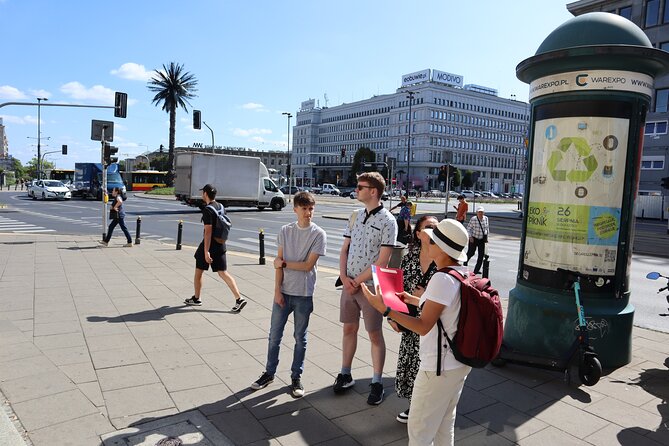
Central Department Store Cedet adds a more domestic side to the tour. Department stores suggest abundance, choice, and modern consumer life. Under communism, that promise often collided with shortage.
Here, you hear how people managed to buy goods even when shops were nearly empty. This is one of the strongest parts of the experience for anyone trying to understand ordinary life rather than only political events.
Rationing and supply problems changed the meaning of shopping. Finding an item could require patience, contacts, luck, or a willingness to wait. The guide also explains why the phrase what can I get you? became a joke in a place where the answer might be almost nothing.
These details are memorable because they show how an economic system is experienced at ground level. An official plan might speak about production targets and distribution. A family experienced it as a queue, a missing product, or a sudden need to improvise.
The tour does not treat Poles as passive victims. It highlights ingenuity, practical intelligence, and humor. That balance matters. People were constrained by the system, but they still found ways to make choices and help one another.
Central Station and limits on travel
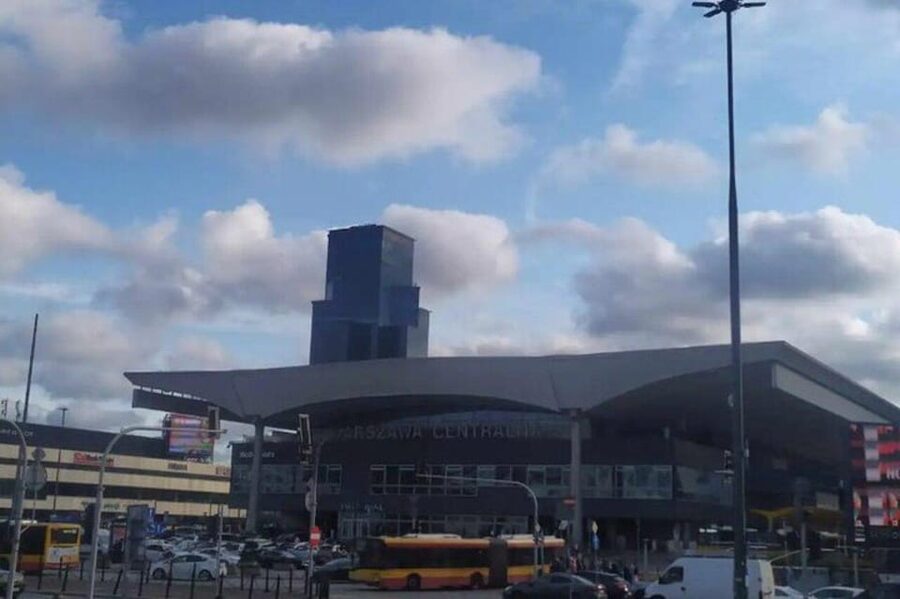
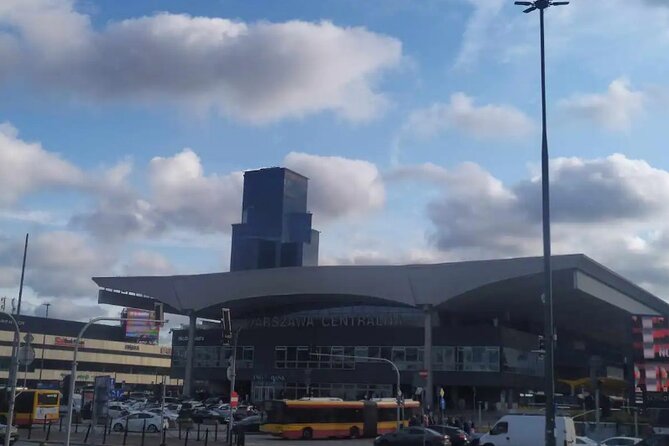
Warsaw Central Station gives the tour another strong setting. A railway station naturally suggests movement, yet the discussion here includes the ways the state limited how far Poles could travel.
Travel restrictions were not only about borders. They affected access to information, contact with other societies, and a person’s sense of possibility. The guide explains how the state could control movement and why going abroad was not a simple holiday decision.
The station also works as a symbol of contradiction. It is built for connection, but the political system placed limits on where people could go and what they could bring back in their minds. That tension is easy to miss if you only admire the building as a transport hub.
This section may be especially helpful if your understanding of communist Poland comes mainly from political maps. You hear how travel rules shaped families, work, friendships, and ideas. Again, the focus is on how a large system reached into ordinary choices.
The Palace of Culture and Science, Warsaw’s most debated landmark
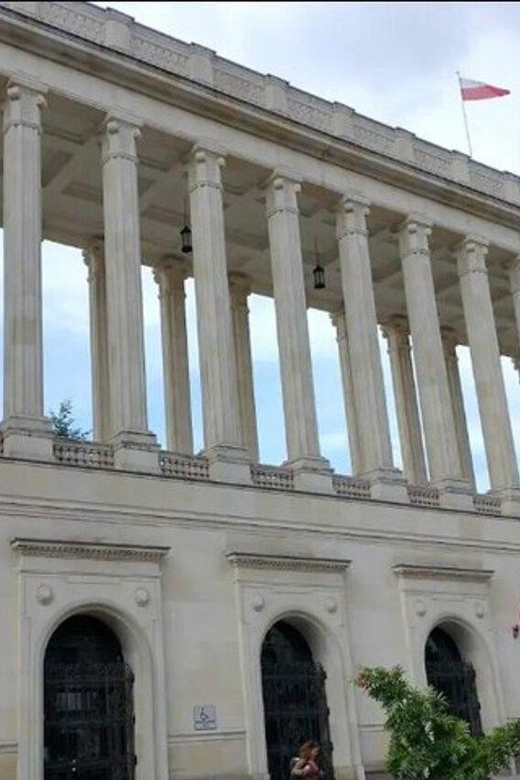
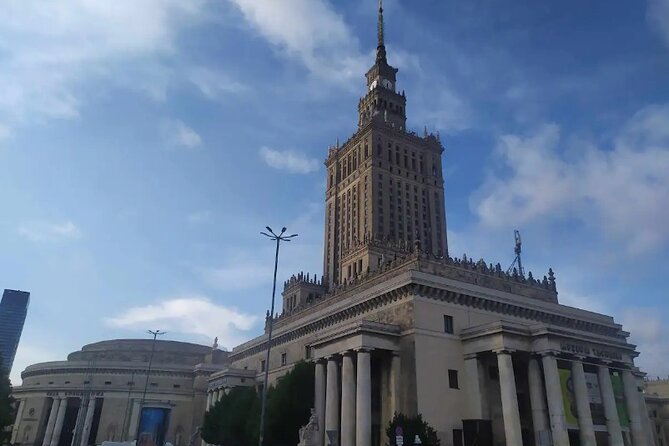
The Palace of Culture and Science is the largest visual punch of the tour. It is impossible to miss, and it remains one of Warsaw’s most controversial buildings.
The guide explains why. The palace was a gift from the Soviet Union, but it was also a powerful reminder of Soviet influence. Its size and position made it a symbol of authority. Some people see an impressive landmark, while many Poles associate it with domination and an unwanted political order.
This is also one of the best places to revisit socialist realism. The building can look grand, even handsome, especially when viewed as architecture rather than politics. The tour asks you to hold both ideas at once: you can appreciate the design and still understand why the building creates difficult feelings.
The listed route finishes at Emilii Plater 54, close to the palace area. The viewing terrace is not included in the tour price, so you will pay separately if you want to go up. That extra visit may appeal if you want a broad view of central Warsaw, but the walking tour itself does not depend on entering the building.
What you get for $32
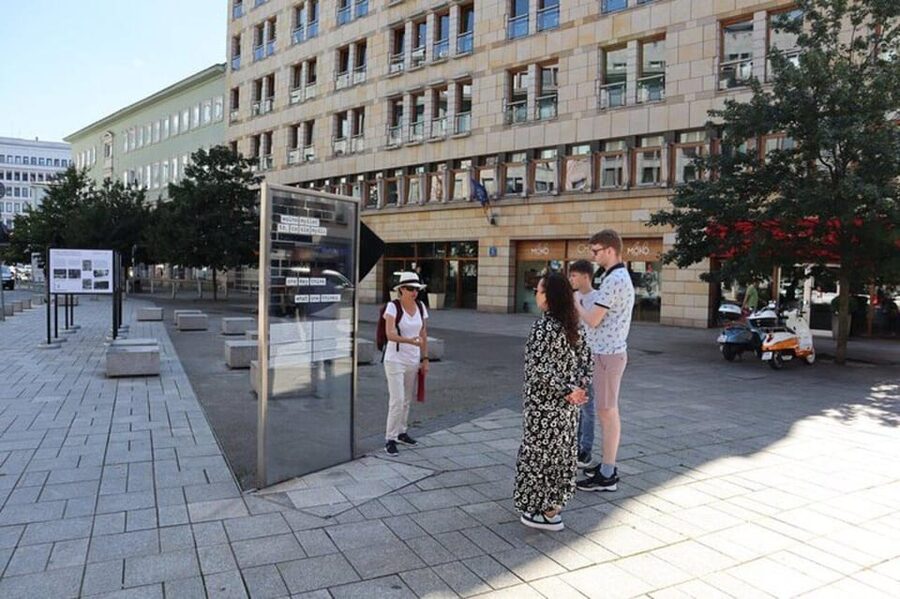
At $32 per person, this is a reasonable price for a 150-minute private or small-group walk in central Warsaw. You are paying for a clear route, an English-speaking live guide, visual aids, and interpretation that would be hard to assemble from the buildings alone.
The value is highest if you are interested in modern Polish history, architecture, politics, or everyday life under communism. It is also useful early in a Warsaw visit because the guide provides recommendations for more places to see, plus suggestions for eating and drinking.
The price does not include the Palace of Culture viewing terrace. No major admission charge is built into the walk, so the cost is fairly easy to understand: you are buying time and explanation rather than a package of tickets.
The included information pack is another practical benefit. It contains Warsaw facts, frequently asked questions, useful links, and additional ideas for your stay. If you like to plan as you go, this can help you shape the rest of your visit.
Pace, group size, and the best kind of participant
The walk takes about 2.5 hours and covers roughly 3 kilometers. That is manageable for many people, but it includes outdoor walking and stops at several city sites. Comfortable shoes are a must, and in warm weather you should be ready for sun unless the guide can find shade.
Private and small-group options are available. A smaller group suits this subject because the best moments often come from questions. You can ask about family life, censorship, architecture, shopping, or the transition after communism without feeling lost in a crowd.
The activity is wheelchair accessible, though the walking distance remains an important consideration. Ask yourself how comfortably you can cover 3 kilometers with regular standing stops before booking.
This tour suits adults, families with older children, students, and anyone who wants more than a quick look at Warsaw’s famous buildings. It is not a light sightseeing stroll, even though the humor keeps it lively. The subject includes oppression, surveillance, censorship, and hardship.
The guides make the difference
A tour about communist history depends heavily on delivery. A dry list of institutions and dates would miss the point. The strongest guides here use wit without brushing aside the damage caused by the system.
Oliwia is especially associated with personal, funny, and sharply observed explanations. She also has a clear passion for Warsaw and can adapt to different questions and group types. Agnieszka brings patient answers, strong command of Polish history, and family perspectives that make the period feel close rather than abstract.
The tone is conversational, with a subtle sarcastic edge. That is a good match for a subject built around official slogans and everyday absurdity. You should expect humor, but also serious discussion of what people endured during nearly four decades of communist rule.
The tour team also sends practical messages before the activity, including a map link to help you find the meeting point. At Constitution Square, look for the guide holding a white and green umbrella.
Should you book Life Behind the Iron Curtain Warsaw?
Book it if you want to understand how communism shaped Warsaw’s streets and Polish daily life. The route is focused, the cost is fair, and the guides add personal stories to subjects that can otherwise feel remote.
I would choose this walk for a first or second day in Warsaw, especially if you plan to see the Palace of Culture, central shopping streets, or the railway station anyway. The guide will give those places meaning and help you notice details on your own later.
Skip it if you dislike walking, want a tour centered only on medieval or wartime Warsaw, or prefer a quiet sightseeing route with little discussion. For everyone else, it offers a useful mix of buildings, politics, humor, and human experience. You leave with a better sense of why modern Warsaw looks the way it does, and why its communist past still provokes strong feelings.
FAQ
How long does the Life Behind the Iron Curtain Warsaw Tour last?
The tour lasts approximately 150 minutes, or 2.5 hours.
How far do you walk?
The route covers approximately 3 kilometers through central Warsaw.
What language is the tour conducted in?
The live tour guide speaks English.
Where does the tour begin?
It begins at Constitution Square in Warsaw. Look for the guide with a white and green umbrella.
Where does the tour finish?
The tour finishes at Emilii Plater 54.
Is the Palace of Culture viewing terrace included?
No. Entry to the viewing terrace at the Palace of Culture and Science is not included in the tour price.
Is the tour wheelchair accessible?
Yes, the activity is listed as wheelchair accessible. It is not recommended for people who have problems walking long distances.
Can I cancel the booking or pay later?
You can cancel up to 24 hours before the tour for a full refund. Reserve now and pay later is also available.
Recently added in Warsaw
- Warsaw Wolf’s Lair with St. Lipka and Mamerki Private Guided★ 4.2 · 3 reviews
- Taste of Poland, food tour and guided walk with 12 tasting★ 5.0 · 3 reviews
- Discover Warsaw’s most Photogenic Spots with a Local★ 5.0 · 3 reviews
- Lodz Small Group Tour from Warsaw with Lunch★ 4.0 · 3 reviews
- Jewish heritage in Warsaw★ 4.5 · 3 reviews
- Warsaw Outdoor Paintball with Transfers (all year round)★ 5.0 · 3 reviews
- Electric Scooter Tour: Full Tour – 3-Hours of Magic!★ 5.0 · 3 reviews
- Skip-the-Line Polin Museum Warsaw Jewish History Tour★ 5.0 · 3 reviews
Walking Tours, compared.




Gdańsk City Sights & History Guided Walking Tour in English
Read our review →


Where else this one turns up