Reviewed · WARSAW TOURS
Warsaw: Communism Tour in an Original Socialist Van
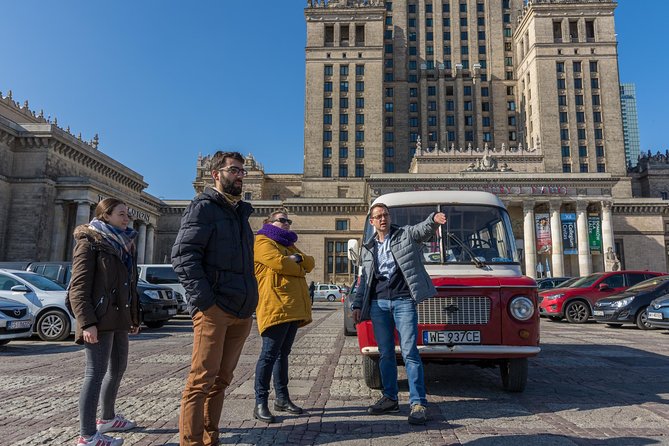
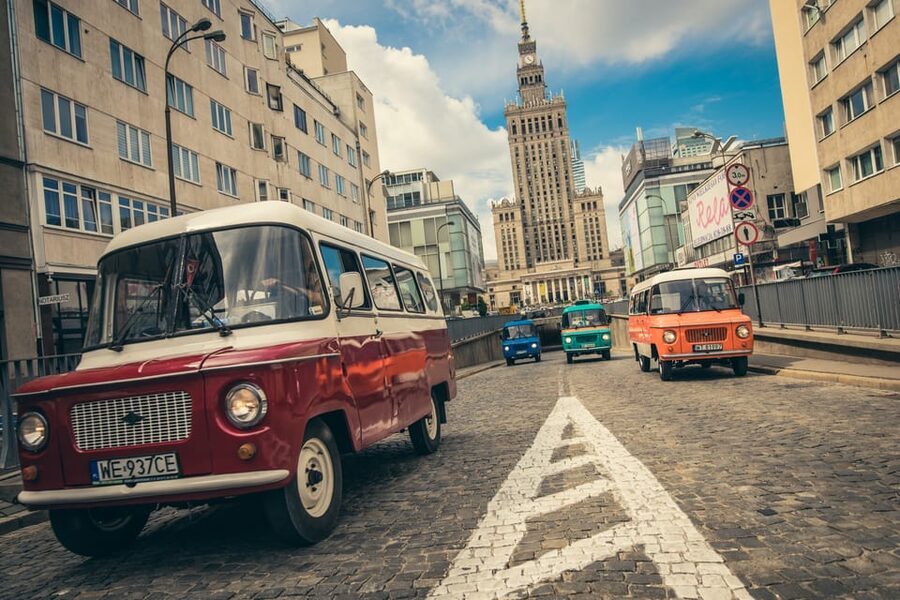
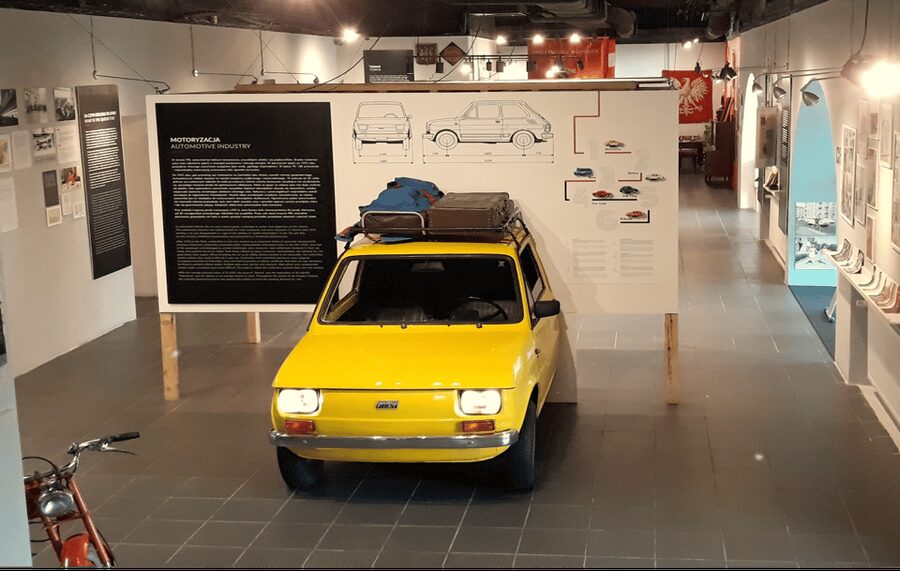
Warsaw’s communist past makes more sense when you see it from the seat of a Nysa 522, the boxy socialist-era minibus used for this three-hour tour. You roll past grand political buildings, planned housing, and the Palace of Culture and Science while your guide explains the ideas, shortages, odd rules, and daily compromises that shaped life after the Second World War.
I like two things in particular: the van turns a history lesson into a city ride, and the final stop gives you a physical look at ordinary life through a recreated flat, cafe, and propaganda cinema. The main consideration is pace. This tour covers a lot of ground and includes plenty of explanation, so anyone wanting a short photo loop may find the full three hours a bit long.
I also like that the experience is led in English by a local guide rather than delivered as a recording. Guides named Łukasz and Mario have earned praise for humor, strong storytelling, and detailed knowledge of Warsaw. The van is part of the fun, but the guide is what turns the buildings into a story.
Key points to know before booking
- Ride a genuine socialist-style Nysa 522 minibus instead of seeing communist Warsaw only from the pavement.
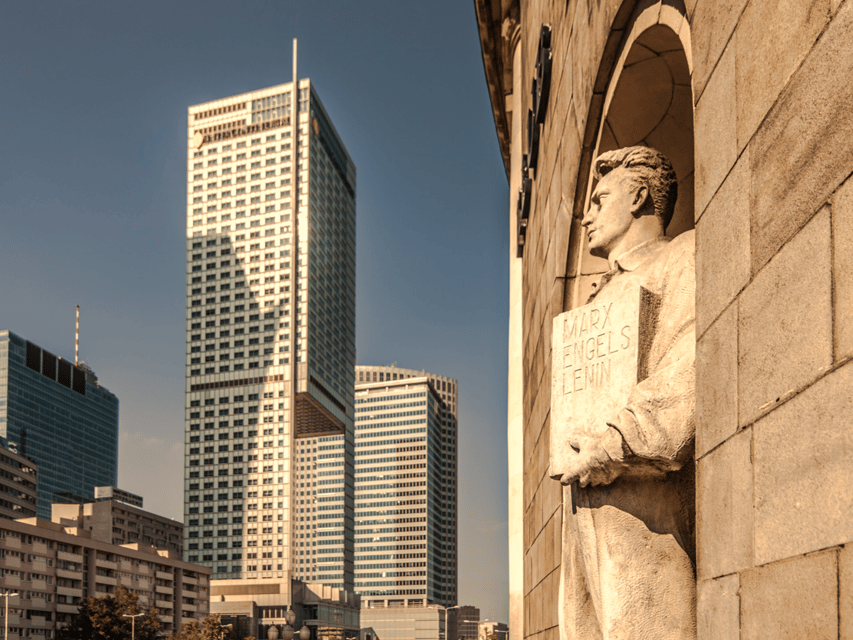
- See the Palace of Culture and Science, Warsaw’s most famous symbol of the postwar period.
- Compare communist urban planning at Constitution Square, home to the MDM residential district.
- Visit the Museum of Life Under Communism, with a reconstructed apartment, cafe, and small cinema.
- Hear local stories about shortages, propaganda, and everyday absurdities, not just dates and political labels.
- Allow the full three hours, since the route combines driving, walking, landmark stops, and the museum.
Why the Nysa 522 makes this history easier to grasp
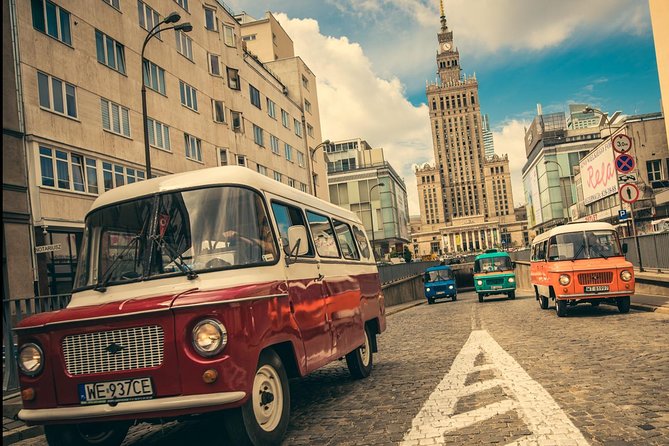
A museum can explain the Polish People’s Republic, but this tour puts you on the streets shaped by it. The Nysa 522 minibus is a historic vehicle from the same broad period being discussed, so the transport is more than a novelty. It sets the mood before the guide has even finished the first story.
You should expect a compact, old-fashioned ride rather than a modern sightseeing coach. That means the vehicle itself is part of the experience, but it also means comfort may be more basic than on a standard city bus. The supplied information does not give a group size or seating layout, so I would treat the van as atmospheric transport first and luxury transport never.
The route is built around buildings and districts that reveal how communist power tried to shape Warsaw. You are not simply looking at old architecture. You are seeing political ideas turned into streets, facades, housing blocks, offices, and monumental symbols.
A few more Warsaw half days to consider
- Warsaw: Chopin Concert in the Old Town
★ 4.8 · 2,287 reviews - Warsaw: Traditional Galar Cruise on The Vistula River
★ 4.6 · 1,640 reviews - Warsaw: Old Town Highlights Walking Tour in English
★ 4.7 · 1,516 reviews
Warsaw rebuilt from wartime ruins
The story begins with the city’s postwar rebuilding. Warsaw had been devastated during the Second World War, and the communist authorities faced the enormous task of reconstructing a capital while also promoting a new political order.
That matters because many of the buildings on this route were not placed into an untouched city. They were part of a deliberate attempt to rebuild, reorganize, and give Warsaw a new public face. Your guide connects the physical city with the political aims behind it, including social realism and the wish to present a strong, orderly state.
This is one of the tour’s best features. You get the practical question of how Warsaw was rebuilt alongside the political question of who controlled that rebuilding. The two subjects are hard to separate, and the drive between sites helps show how they fit together.
The Palace of Culture and Science
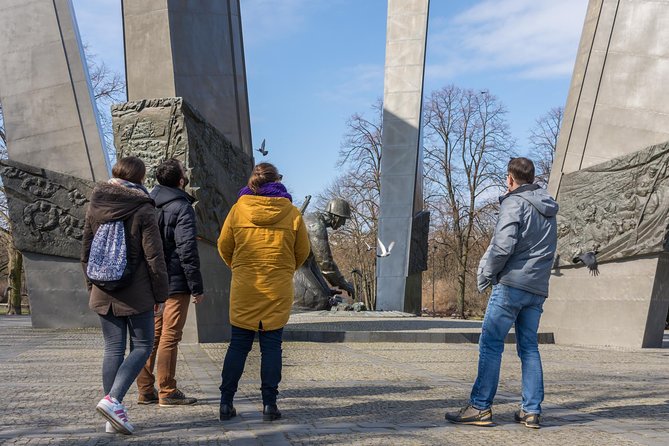
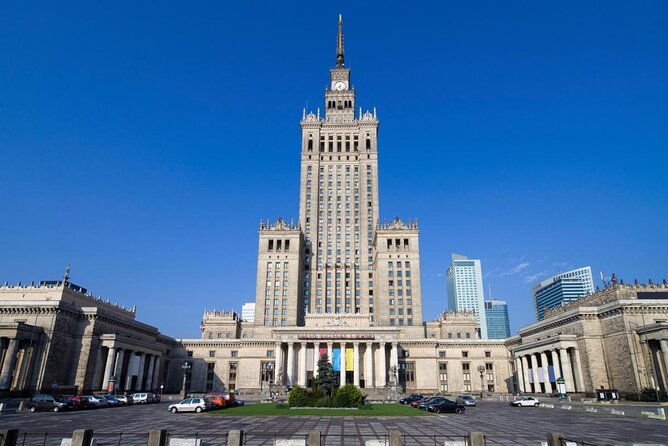
The Palace of Culture and Science is the unavoidable centerpiece of communist Warsaw. Its history begins in the middle of a city still marked by war, which makes its scale and location especially striking.
The tour explains how this symbol came to rise from the postwar ruins and why it remains such a loaded building. To some, it represents Soviet influence and imposed political power. To others, it is simply part of Warsaw’s identity, a landmark that has outlived the system that created it.
You will learn about the building as a symbol rather than just stopping to admire its height. That distinction is useful. A quick photo tells you what it looks like. The guide’s account helps explain why the building can inspire affection, irritation, pride, or all three at once.
The Palace also gives you a visual reference for the rest of the tour. Once you understand the message its designers wanted to send, the more restrained and functional communist buildings become easier to read.
Socialist realism at the Party House and Ministry of Agriculture
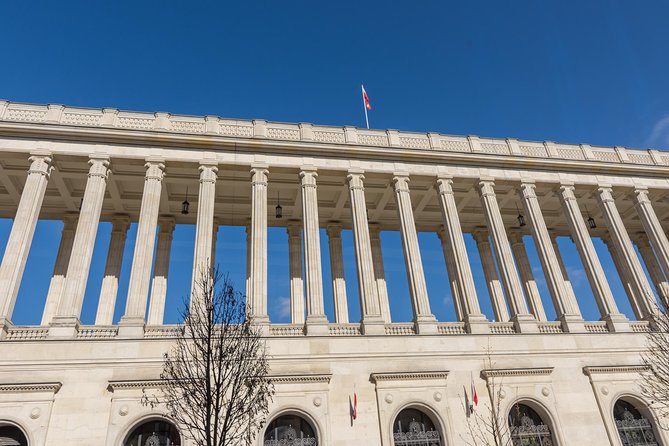
The route continues to buildings connected with the ruling system, including the former Communist Party headquarters, known as the Party House of the People’s Republic of Poland, and the Ministry of Agriculture.
These sites show different sides of official architecture. They were designed to project authority and order, but their meaning is not always obvious from the street. Your guide explains the ideas behind the facades and points out how architecture supported the image the authorities wanted to create.
I find this part valuable because it moves beyond the familiar Palace of Culture. Many visitors recognize the Palace but may not know where the political machinery operated or how government buildings communicated power. Seeing several sites in one route gives you a better sense of the system’s reach.
The guide also adds political anecdotes and smaller stories about life under communism. That keeps the tour from becoming a parade of buildings. You hear about how grand state plans affected people who had to find food, work, housing, and basic goods within a system known for shortages and rules.
A different kind of day in Warsaw:
- Warsaw Concert: Chopin – Painted by Candlelights with Wine
★ 4.8 · 1,442 reviews - Warsaw: City Sightseeing Hop-On Hop-Off Bus Tour
★ 3.6 · 1,415 reviews - Warsaw: POLIN Museum of the History of Polish Jews Ticket
★ 4.7 · 1,142 reviews - #1 Pub Crawl Warsaw with Optional Premium 1 Hour Open Bar
★ 5.0 · 790 reviews
Constitution Square and the MDM district
At Plac Konstytucji, or Constitution Square, you see the Marszałkowska Residential District, usually called MDM. It was designed to fit communist ideology and provides one of the clearest examples of urban planning being used to shape public life.
The square is important because it combines housing, public space, scale, and political messaging. It was not planned as a quiet residential corner. Its broad layout and imposing architecture were meant to express the values of the new order.
Your guide helps you read the district as a planned statement. Look for the relationship between the large public space and the surrounding housing. The point is not only how the buildings look, but how a government imagined people should live and move through the capital.
This stop also adds variety to the route. You are not only seeing ministries and official headquarters. You are looking at the places where ordinary residents lived within the physical framework created by the state.
The Museum of Life Under Communism
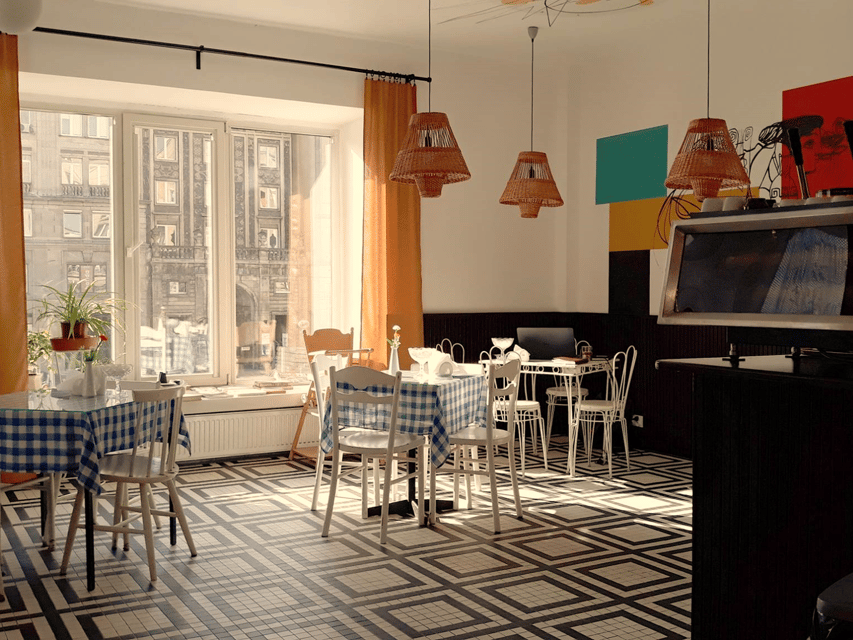
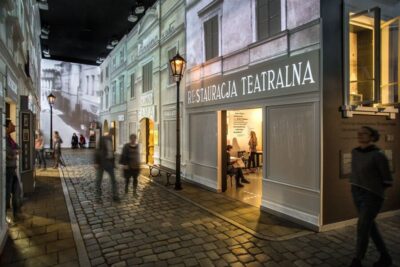
The tour ends at the Museum of Life Under Communism, described as the only museum of its kind in Warsaw. It is smaller in scale than a major national museum, but its subject is close to daily life.
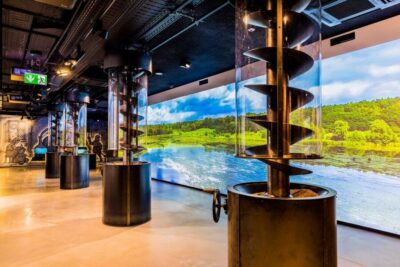
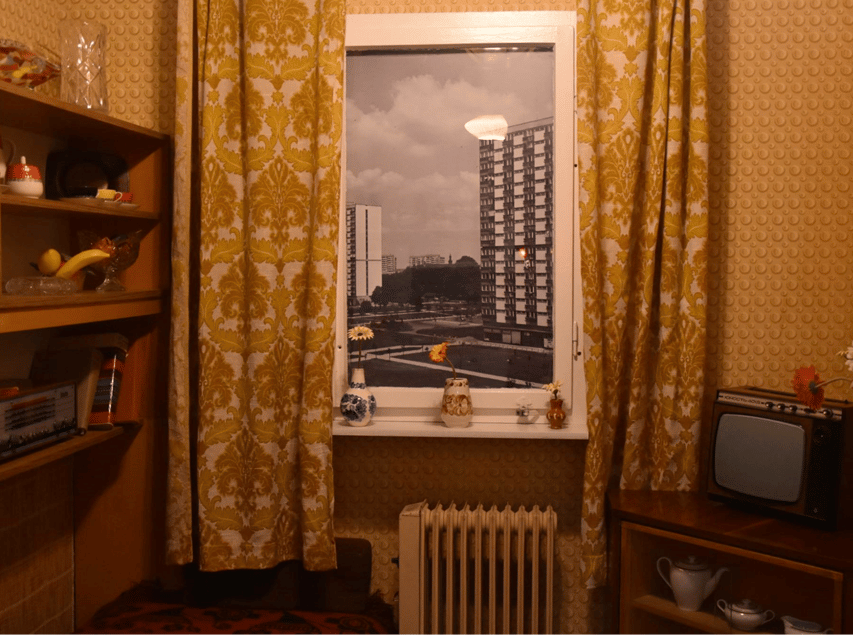
The museum includes a replica of a real flat, a reconstructed communist cafe, and a small cinema hall showing propaganda films. These displays help turn abstract ideas into familiar objects and settings. Instead of hearing only about shortages or government slogans, you can see the sort of home and public spaces associated with the period.
The recreated apartment is especially useful if you have little sense of how people lived. Political history can feel distant when it is reduced to leaders and institutions. A domestic interior brings the period down to the level of rooms, furniture, and routines.
The cafe and cinema add another layer. They show how public life and official messaging could sit side by side. The museum does not replace the city tour, but it gives you a closer look at the everyday world behind the monumental architecture.
One point to consider is that the museum is included at the end, after the driving portion and the main landmarks. If you prefer a compact tour, this final stop may make the experience feel longer. If you want the human side of the story, it is one of the most useful parts.
The guide makes or breaks the three-hour route
The English-speaking guide is central to the experience. The strongest feedback focuses on guides who combine facts with humor and personal delivery, rather than simply reciting a prepared script.
Łukasz is singled out for being upbeat, entertaining, and full of stories. He has been described as a driving encyclopedia of architecture and history, with enough jokes to keep younger people engaged. Another guide named Mario is praised for intelligence and a good sense of humor.
You should not assume that a particular guide will lead your departure, since guide assignments can vary. Still, the pattern is clear: this tour depends heavily on a strong storyteller. The subject includes politics, occupation, architecture, and social history, so a warm guide can make complicated material much easier to follow.
The route also includes smaller anecdotes and local details alongside the major points. That mix matters. You get the official story of communist Warsaw, but also the oddities of daily life that make the period feel less remote.
A useful mix of driving and walking
The tour is not three straight hours in the van. It combines driving around the capital with stops and time on foot. That variation helps keep the experience moving, especially when the guide is explaining large-scale urban design.
You will cover more of central Warsaw than you likely would by walking between every location. This is one reason the Nysa 522 is useful rather than merely decorative. The vehicle lets the group connect several parts of the city within a fixed three-hour window.
At the same time, do not expect a slow architectural study at every stop. The schedule covers the Palace of Culture and Science, the Party House, the Ministry of Agriculture, Constitution Square, the MDM district, and the museum. Some locations are best understood through the guide’s explanation while you view them from outside or during a short stop.
Wear sensible footwear, since the experience includes walking, and keep your expectations practical. This is a broad introduction to communist Warsaw, not a specialist architecture seminar with long periods at each building.
What $78 buys you
At $78 per person, this is not the cheapest way to see central Warsaw. Its value depends on what you want from the afternoon.
If you only want to photograph the Palace of Culture and walk around Constitution Square, you can do that for far less. The price makes more sense if you value the historic vehicle, the English-speaking local guide, the organized route, the political anecdotes, and entry to the Museum of Life Under Communism.
You are paying for interpretation and access to a focused subject. The tour also saves you the work of locating the communist-era buildings and connecting them into a coherent route. That is useful in a city where the postwar story is spread across different districts and landmarks.
The high rating of 4.9 from 75 reviews supports the idea that the experience delivers well for people interested in this topic. Still, value is personal. Those who enjoy architecture, modern European history, or stories about ordinary life under state socialism are likely to get more from it than anyone seeking a general introduction to Warsaw.
Who should book this experience
I would recommend this tour to you if you want to understand how politics shaped the physical capital. It suits first-time visitors who want a different side of Warsaw, as well as anyone already interested in Poland’s twentieth-century history.
It also works well for families with older children and teenagers. The van adds a visual hook, and a guide who uses humor can keep difficult subjects from feeling heavy. The content covers serious events, but the focus on everyday absurdities makes it approachable.
Architecture fans will appreciate the attention to social realism, planned districts, and government buildings. History-minded visitors will value the links between wartime destruction, postwar rebuilding, Soviet influence, and life in the Polish People’s Republic.
I would think twice if you dislike enclosed historic vehicles, prefer a very short sightseeing outing, or want a tour focused mainly on Warsaw’s medieval and royal past. This experience is deliberately narrow. Its strength is its focus on the communist period.
Practical details for your Warsaw day
The meeting point is under the guitar near the Złote Tarasy Shopping Center on Emilii Plater Street in central Warsaw. The tour returns to that same meeting point, which makes it easy to plan before or after other activities in the city center.
The activity lasts three hours, but starting times depend on availability. Check the departure time before booking so you can fit it around museum visits, meals, or train plans.
The tour is conducted in English. It includes the Nysa 522 transport, a local guide, stories about communist Warsaw, and the guided museum visit.
You can cancel up to 24 hours before the start for a full refund, and the reserve-now, pay-later option lets you hold a place without paying immediately. Those policies are useful if your Warsaw schedule is still changing.
Should you book the Nysa 522 tour?
Book it if you want Warsaw explained through its buildings, streets, and everyday life rather than through a general city overview. The historic van gives the outing character, but the real value comes from the guide’s stories and the way the route connects the Palace of Culture, official buildings, MDM, and the museum.
The one caution is length. A past participant felt the tour could be shortened, especially around the museum and lunch, but the published experience is three hours and does not list lunch as an included feature. I would choose the full tour if you want context and skip it if you only want a quick look at communist architecture.
For most curious visitors, this is a strong use of an afternoon in Warsaw. You see more of the city, gain a clearer sense of how communism shaped it, and finish with a tangible look at home life behind the slogans.
FAQ
How long does the Warsaw Communism Tour last?
The tour lasts three hours. Starting times vary, so check availability for the date you want.
What vehicle is used during the tour?
Transportation is provided in a historic socialist-style minibus called the Nysa 522.
What language is the tour conducted in?
The live tour guide speaks English.
Where does the tour begin?
It begins under the guitar near the Złote Tarasy Shopping Center on Emilii Plater Street in central Warsaw.
Where does the tour end?
The activity ends back at the same central Warsaw meeting point.
Which communist landmarks are included?
The route includes the Palace of Culture and Science, the former Communist Party headquarters, the Ministry of Agriculture, Constitution Square, and the MDM residential district.
Is the Museum of Life Under Communism included?
Yes. The tour includes a guided visit to the Museum of Life Under Communism.
What can I see at the museum?
The museum has a replica of a real flat, a reconstructed communist cafe, and a small cinema hall showing propaganda films.
Does the tour include a local guide?
Yes. A real local guide leads the experience and explains Warsaw’s communist history, architecture, political stories, and daily life during the period.
How much does the tour cost?
The listed price is $78 per person.
Can I cancel the tour?
Yes. You can cancel up to 24 hours in advance for a full refund.
Can I reserve now and pay later?
Yes. The reserve-now, pay-later option allows you to book while keeping your payment for later.
Recently added in Warsaw
- Warsaw Wolf’s Lair with St. Lipka and Mamerki Private Guided★ 4.2 · 3 reviews
- Taste of Poland, food tour and guided walk with 12 tasting★ 5.0 · 3 reviews
- Discover Warsaw’s most Photogenic Spots with a Local★ 5.0 · 3 reviews
- Lodz Small Group Tour from Warsaw with Lunch★ 4.0 · 3 reviews
- Jewish heritage in Warsaw★ 4.5 · 3 reviews
- Warsaw Outdoor Paintball with Transfers (all year round)★ 5.0 · 3 reviews
- Electric Scooter Tour: Full Tour – 3-Hours of Magic!★ 5.0 · 3 reviews
- Skip-the-Line Polin Museum Warsaw Jewish History Tour★ 5.0 · 3 reviews
Warsaw Tours, compared.
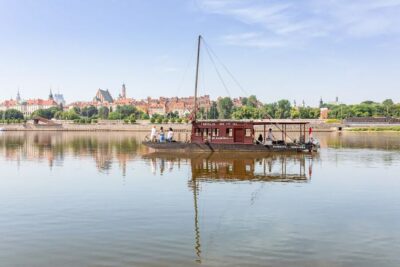
Traditional Galar Cruise on The Vistula River
Read our review →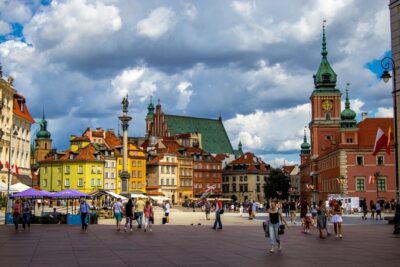
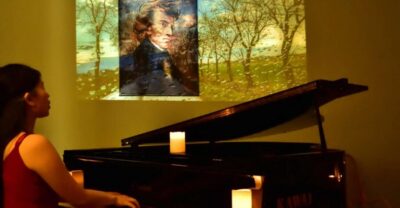
Warsaw Concert: Chopin – Painted by Candlelights with Wine
Read our review →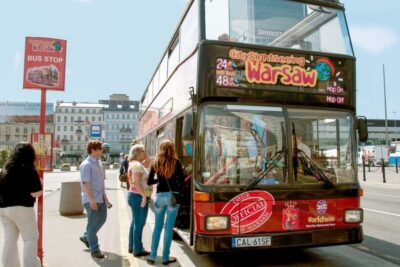
POLIN Museum of the History of Polish Jews Ticket
Read our review →
#1 Pub Crawl Warsaw with Optional Premium 1 Hour Open Bar
Read our review →