
Reviewed · WALKING TOURS
A unique walking tour of Jewish Warsaw — past and present
Warsaw’s Jewish story is not confined to a museum. It runs through ordinary streets, a market hall, a surviving synagogue, scattered wall fragments, and memorials marking the destruction of a once enormous community. This three-hour walking tour follows that story from medieval settlement to the Warsaw Ghetto Uprising and the Jewish community of today.
I like the route for two reasons: it connects places that are easy to miss on your own, and it gives the history a human scale through first-hand accounts of life in the ghetto. The small group, limited to 10 people, should also make it easier to ask questions. The main drawback is the distance: you’ll walk about 4.5 to 5 kilometers, so this is not a good pick if long walks are difficult.
Key points to know before you book
- Nożyk Synagogue is Warsaw’s only surviving prewar synagogue still in use today.
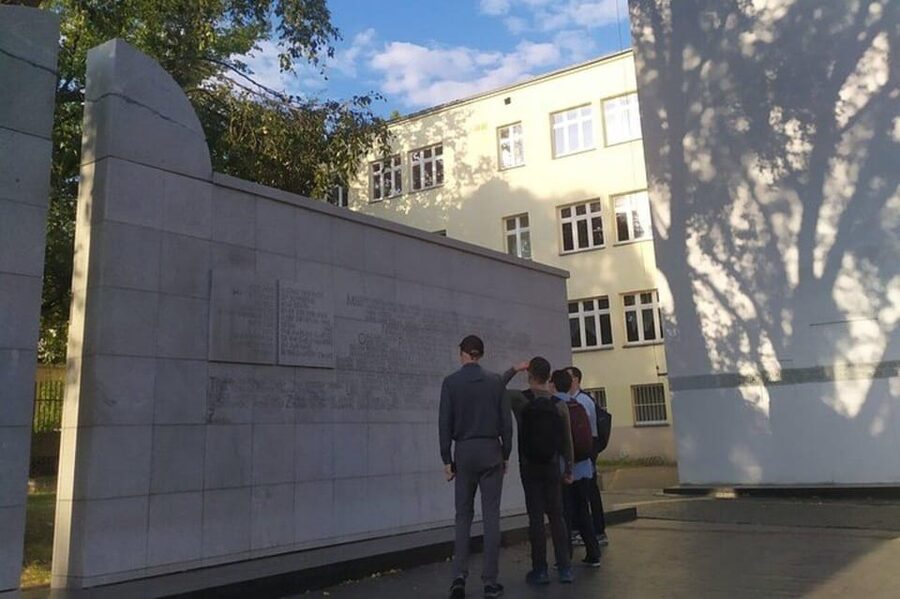
- A remaining fragment of the ghetto wall helps you grasp how tightly the Jewish district was enclosed.
- Umschlagplatz marks the place where about 300,000 Jews were sent to Treblinka.
- Muranów and Miła 18 focus on the 1943 Jewish Ghetto Uprising and its leaders.
- The guide uses visual aids and personal accounts, not just dates and names.
- The $32 price covers the guided walk and information pack, but not synagogue or POLIN Museum entry.
Why this walking tour matters in Warsaw
Before World War II, roughly one third of Warsaw’s inhabitants identified as Jewish. Warsaw was home to the largest Jewish population in Europe, with Jewish life woven into business, religion, publishing, politics, education, and neighborhood life.
The war brought that world to a near-total end. The Warsaw Ghetto became a place of starvation, disease, forced labor, deportation, and resistance. Yet this walk does not treat Jewish Warsaw as something that ended in 1943 or 1945. It also addresses the community’s present-day return and quiet renewal.
That balance is one of the route’s best features. You will see what remains, but you will also hear about what was lost and how Jewish life continues in the city. I find that approach more useful than a tour that treats the ghetto only as a memorial zone.
The route begins at Sienna 53, in front of Baguette Mi restaurant. Look for a guide carrying a white and green umbrella. That simple meeting point matters because the walk covers several parts of central Warsaw, and you want to begin without wasting time trying to find the group.
More Walking Tours in Warsaw
- Warsaw: Old Town Highlights Walking Tour in English
★ 4.7 · 1,516 reviews - Warsaw: Old Town Guided Walking Tour
★ 4.9 · 599 reviews - Half-Day Polish Food Walking Tour with Guide and Dinner
★ 4.5 · 381 reviews
Sienna 53 and the first glimpse of the ghetto wall
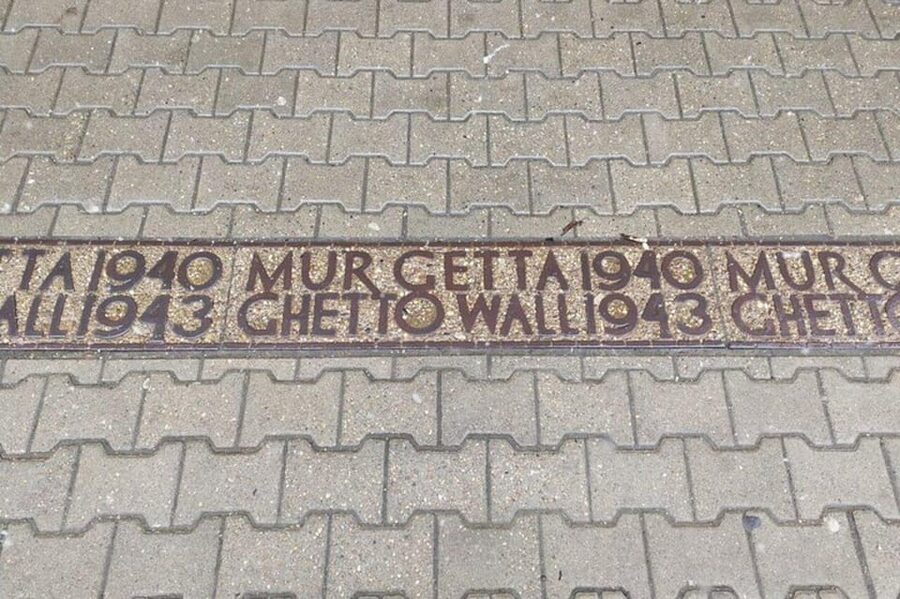
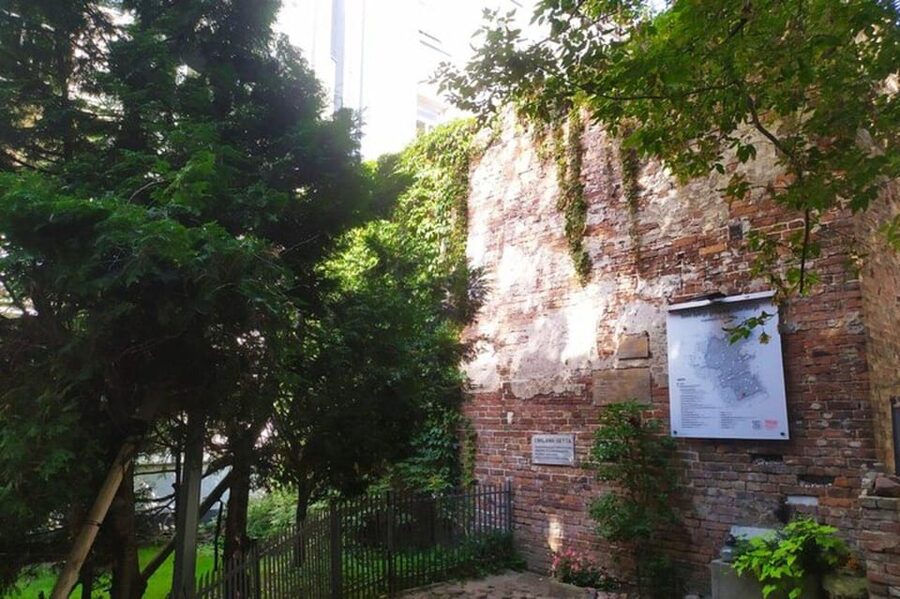
The opening stop places you near one of the few remaining fragments of the Warsaw Ghetto wall. It is not a grand monument. That is exactly why it can be so affecting.
Most of the ghetto boundary disappeared as Warsaw was rebuilt. What remains gives you a physical sense of confinement that maps and photographs cannot fully provide. You can begin to understand how the wall cut through streets and separated families, neighbors, and businesses from the rest of the city.
The guide’s visual aids are useful here. The modern streets can make the old geography hard to read, so historical images and maps help you picture the former Jewish district. You may find this first stop especially helpful if you have little background on the ghetto before arriving in Warsaw.
Nożyk Synagogue, a living survivor
Nożyk Synagogue is the only Warsaw synagogue from before the war that survived and still remains today. The group spends about 15 minutes here, with entry charged separately.
This stop adds something that memorials cannot: a place of worship that is still connected to Jewish life. The building is not simply a reminder of the past. It points to the fact that Jewish Warsaw has not vanished completely.
The guide explains why the synagogue matters within the wider story of the city. You can expect a short guided visit rather than a long architectural tour, so keep your expectations in check. If seeing the interior is important to you, remember that the entry fee is not part of the $32 tour price.
The synagogue also gives the walk a useful change of tone. After the opening focus on walls and confinement, you are brought into a place associated with continuity and religious practice.
Hala Mirowska and everyday Jewish Warsaw
The next stop is Hala Mirowska, a market hall where the tour spends about 10 minutes. At first glance, a market may seem less directly connected to the city’s Jewish story than a synagogue or ghetto memorial.
That is part of its value. Jewish Warsaw was not made up only of famous rabbis, political leaders, and historic buildings. It was also a place of shopping, work, food, family errands, and daily routines. A market setting helps you picture the ordinary life that existed before the war.
This is also a good moment to remember the scale of the prewar community. When one third of a city’s population is Jewish, Jewish life is not confined to a single quarter or a few religious buildings. It is present in the habits of the whole city.
The stop is brief, so the guide will not cover every aspect of the market’s past. Instead, it works as a compact bridge between the city’s living urban fabric and the more concentrated history of Muranów.
A different kind of day in Warsaw:
- Warsaw: Chopin Concert in the Old Town
★ 4.8 · 2,287 reviews - Warsaw: Traditional Galar Cruise on The Vistula River
★ 4.6 · 1,640 reviews - Warsaw Concert: Chopin – Painted by Candlelights with Wine
★ 4.8 · 1,442 reviews - Warsaw: City Sightseeing Hop-On Hop-Off Bus Tour
★ 3.6 · 1,415 reviews
Muranów, where the city’s absences are visible
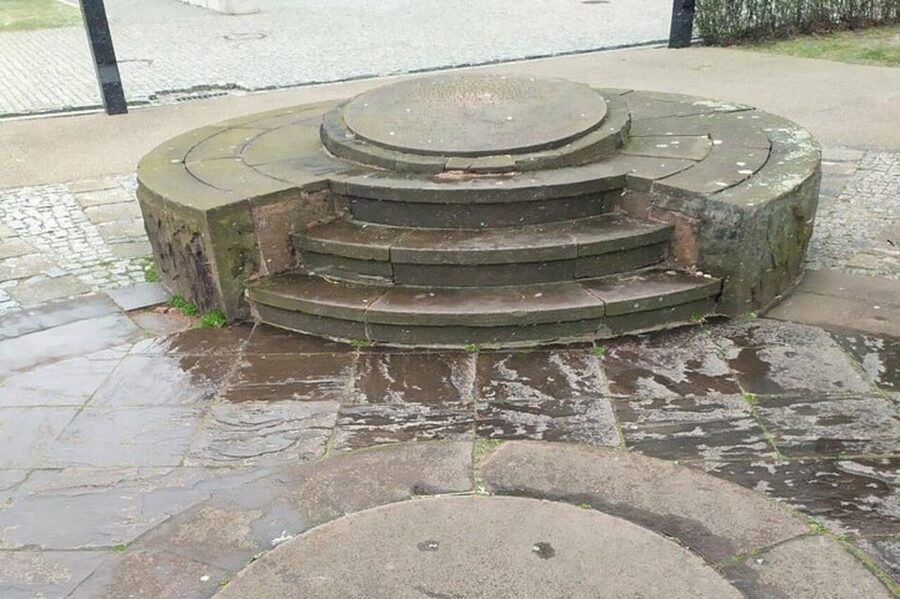
Muranów receives about 30 minutes, making it the longest stop on the route. This is where the walk’s central themes come together: the former ghetto, the destruction of Jewish Warsaw, and the difficulty of reading history in a rebuilt city.
Today’s Muranów does not look like a preserved wartime district. Much of what once stood here is gone or changed. That can be confusing if you arrive expecting a complete historic quarter. Instead, you will need to read the area through memorials, fragments, street plans, and the guide’s explanation.
I like this part of the route because it asks you to look beyond surviving facades. The absence of buildings is part of the story. The guide helps explain why the area looks as it does and how the destruction and postwar rebuilding shaped modern Warsaw.
This is also where the human accounts become especially important. A list of deportations and casualty figures can feel distant. First-hand stories bring the cramped conditions, fear, hunger, and impossible choices of ghetto life closer to you without turning the tour into a history lecture detached from real people.
The Ringelblum Archive memorial
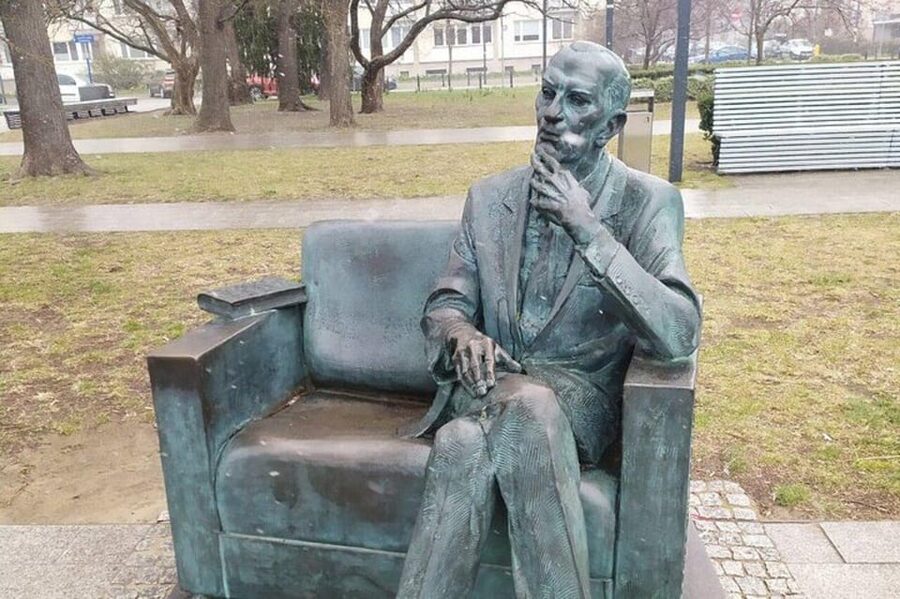
The memorial to the Ringelblum Archive receives about 10 minutes. The archive is tied to the secret effort to record life inside the Warsaw Ghetto, including documents, testimonies, and other evidence meant to preserve the truth of what was happening.
You will hear why documentation mattered so much. The people who gathered these materials understood that the ghetto might be destroyed and that the world might not know what had taken place. Their work gives historians and families a direct record of Jewish life under Nazi occupation.
This stop adds an important idea to the tour: resistance was not only armed. Recording names, experiences, and daily events was also a way to fight erasure. The guide’s visual material should help make that point clear, especially if you are unfamiliar with the archive before the walk.
The stop is short, but its subject is large. I would pay close attention here, since it provides context for why personal testimony is central to the rest of the tour.
POLIN Museum and the long story of Polish Jewry
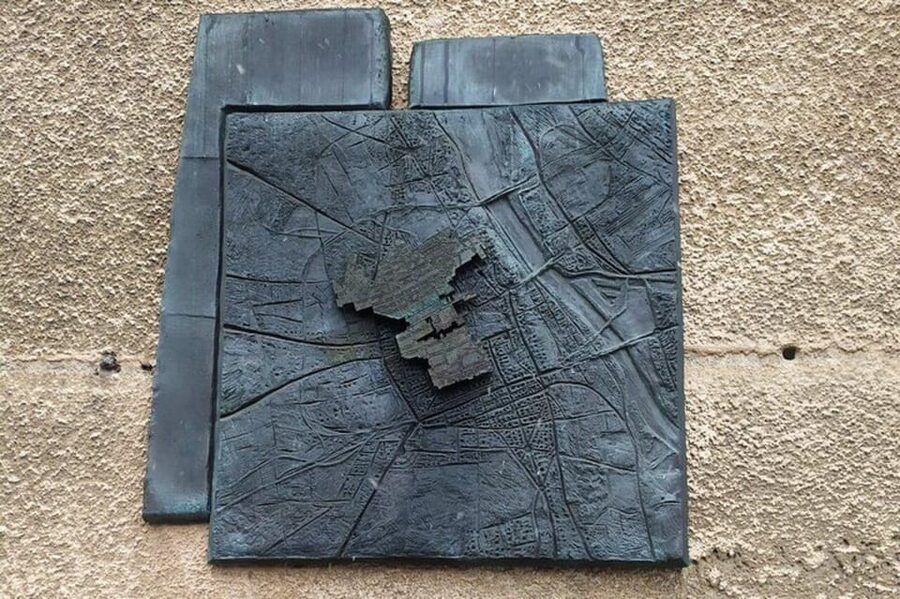
The route passes the POLIN Museum of the History of Polish Jews, with about 10 minutes of guided explanation. Museum admission is not included, so you can decide later if you want to return for a longer visit.
The museum is a natural part of this walk because the tour covers almost 1,000 years of Jewish history in Poland. The Holocaust is essential, but it is not the whole story. Jewish communities lived, worked, worshiped, argued, created, and adapted in Poland for centuries before the war.
That broader frame improves the rest of the experience. You are less likely to see Jewish Warsaw only through destruction. You also gain a better sense of the community’s size, influence, and variety before 1939.
Ten minutes is enough for orientation, not for a full museum visit. If you want detailed galleries and exhibits, plan separate time and budget for POLIN. The walking tour gives you a reason to visit, but it does not replace the museum.
Miła 18 and the choice to resist
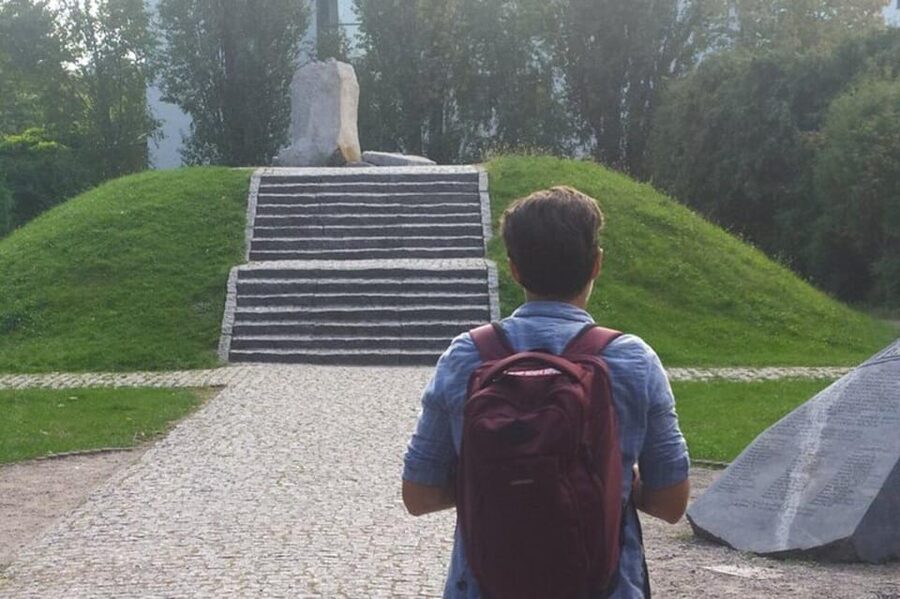
At Miła 18, the guide spends about 10 minutes discussing the Jewish Ghetto Uprising of 1943. This is one of the key places for understanding why people resisted even when they knew the odds were hopeless.
By this stage, many Jews in the ghetto had already seen deportations, starvation, and violence. The uprising was not a conventional military campaign with a realistic chance of victory. It was a decision to resist capture and death on their own terms, while showing that the people inside the ghetto would not surrender quietly.
The tour helps explain the difference between military success and moral or human resistance. That distinction can be hard to understand from a guidebook paragraph, but it becomes clearer when you stand at a site tied to the revolt.
The memorial here is part of a wider group of places honoring the fighters. You will not simply hear a heroic story stripped of tragedy. The point is that courage existed alongside grief, exhaustion, and almost certain defeat.
Ending at Umschlagplatz
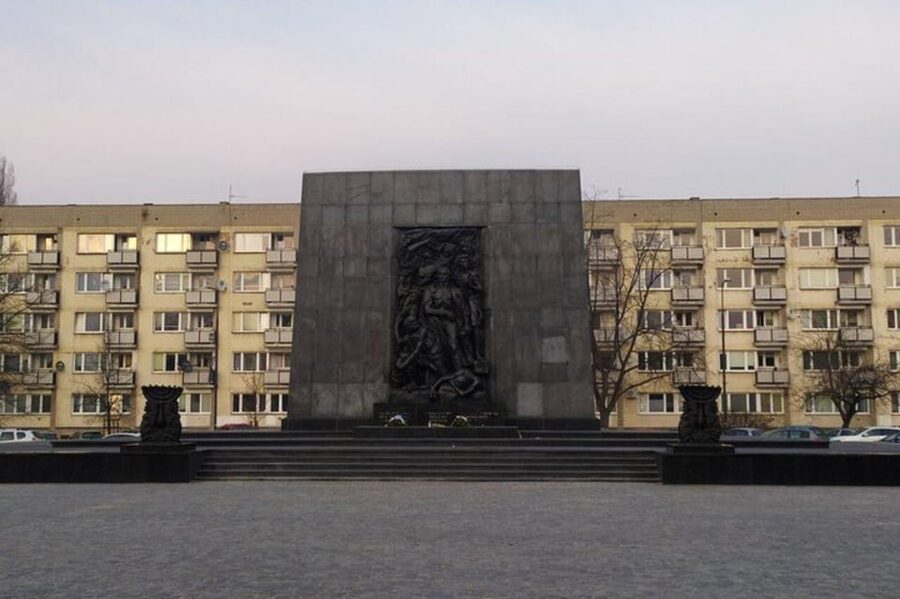
The walk ends at the Umschlagplatz memorial. This was the departure point from which about 300,000 Jews were transported to Treblinka.
Ending here gives the route a stark final movement. You begin with evidence of Jewish life and continuity, move through the ghetto’s confinement and resistance, and finish at the place where mass deportation carried so many people away.
The memorial marks a logistical site of murder, not a battlefield. That matters. It reminds you that the Holocaust was carried out through organized deportations, railway transport, and systems designed to strip people of their homes and identities before killing them.
A guide can explain the history, but this is also a place where you may want a quiet moment. The tour’s three-hour pace gives you time to take in the meaning of the site without spending the entire day on foot.
Guide style and group size
The strongest part of the experience is the guide’s delivery. Oliwia is specifically praised for her clear explanations, strong command of the ghetto’s history, expressive speaking style, and well-judged humor. Humor has to be used carefully on a subject like this, and the available feedback suggests that her tone helps keep the walk engaging without making it feel casual or careless.
Other comments describe the guide as informative and interesting, with details explained clearly as the group moves between sites. That is important on a route where the modern city can hide the old geography.
The group is limited to 10 people. That is a good size for a serious history walk. You are close enough to hear the guide, and there should be a better chance to ask questions than on a large coach tour.
The tour is offered in English and is wheelchair accessible. Still, the total distance is about 4.5 to 5 kilometers, so accessibility on the route does not mean the walk will suit every mobility level. Wear comfortable shoes and consider the distance before booking.
Is $32 a fair price?
At $32 per person, this is a reasonable price for a three-hour guided walk, particularly because it covers several separated sites rather than a single museum area. You are paying for interpretation, route planning, visual aids, and the guide’s ability to connect places that may otherwise feel unrelated.
The value depends on how you like to visit cities. If you prefer to read plaques and move at your own speed, you could see some of these places independently. But the historical meaning is not always obvious from the streets, and the explanations about settlement, deportation, resistance, and modern Jewish life give the route its real worth.
The extra costs are limited but worth noting. Entry to Nożyk Synagogue is not included, and neither is entry to POLIN Museum. The tour does include an information pack with frequently asked questions, useful links, and suggestions for other places to visit, eat, and drink.
That follow-up material adds practical value. Warsaw’s Jewish history cannot be fully covered in three hours, so recommendations can help you continue exploring after the walk.
Who should book this walk?
I would recommend it to anyone who wants more than a quick visit to the Warsaw Ghetto Uprising Monument or POLIN Museum. It suits first-time visitors who need the city’s Jewish history explained in context, as well as returning visitors who want to understand parts of central Warsaw they previously passed without noticing.
It is especially useful if you want:
- A focused introduction to nearly 1,000 years of Jewish life in Poland
- A clear explanation of the Warsaw Ghetto and the 1943 uprising
- Personal accounts alongside major historical events
- A small group rather than a large organized tour
- Advice on other museums, restaurants, and places connected with Jewish Warsaw
I would think twice if you have trouble walking several kilometers or if you want a long interior visit at the synagogue or POLIN Museum. Those places are included as short guided stops, not extended museum sessions.
You can cancel up to 24 hours before the tour for a full refund, and you can reserve now and pay later. That makes it easier to fit the walk into a changeable Warsaw schedule.
Should you book the Jewish Warsaw walking tour?
Book it if you want a serious, well-paced introduction to Jewish Warsaw that balances centuries of community life with the tragedy of the Holocaust. The surviving synagogue, ghetto wall fragment, Ringelblum Archive memorial, Miła 18, and Umschlagplatz each tell a different part of the story.
The tour’s strongest asset is its guide, especially when Oliwia is leading. Her clear explanations and expressive style help keep a difficult subject understandable and personal.
Choose something else if you dislike walking, want extensive time inside POLIN Museum, or prefer to explore without a fixed route. For most visitors able to manage the distance, though, $32 buys a thoughtful three hours and a much clearer understanding of what Warsaw lost, what survived, and what is being rebuilt.
FAQ
How long is the Jewish Warsaw walking tour?
The tour lasts about three hours and covers approximately 4.5 to 5 kilometers on foot.
What language is the tour offered in?
The tour is conducted in English.
Where does the tour meet?
The meeting point is in front of Baguette Mi restaurant at Sienna 53. Look for a guide with a white and green umbrella.
Where does the tour finish?
The walk finishes at the Umschlagplatz memorial.
Is entry to Nożyk Synagogue included?
No. The entry fee to Nożyk Synagogue is not included in the tour price.
Is entry to POLIN Museum included?
No. The tour includes a guided stop and explanation at POLIN Museum, but museum admission is not included.
Is the tour suitable for wheelchair users?
The activity is described as wheelchair accessible, but it includes 4.5 to 5 kilometers of walking and is not recommended if you have difficulty walking long distances.
Recently added in Warsaw
- Warsaw Wolf’s Lair with St. Lipka and Mamerki Private Guided★ 4.2 · 3 reviews
- Taste of Poland, food tour and guided walk with 12 tasting★ 5.0 · 3 reviews
- Discover Warsaw’s most Photogenic Spots with a Local★ 5.0 · 3 reviews
- Lodz Small Group Tour from Warsaw with Lunch★ 4.0 · 3 reviews
- Jewish heritage in Warsaw★ 4.5 · 3 reviews
- Warsaw Outdoor Paintball with Transfers (all year round)★ 5.0 · 3 reviews
- Electric Scooter Tour: Full Tour – 3-Hours of Magic!★ 5.0 · 3 reviews
- Skip-the-Line Polin Museum Warsaw Jewish History Tour★ 5.0 · 3 reviews
Walking Tours, compared.




Gdańsk City Sights & History Guided Walking Tour in English
Read our review →


Where else this one turns up