
Reviewed · WROCLAW TOURS
Wroclaw: Skip the Line Panorama Raclawicka and Ostrow Tumski Guided Tour
The most memorable part of this Wroclaw tour is the chance to connect the city’s grand sights with its complicated past. You’ll see the huge Panorama Raclawicka painting, walk through the old Cathedral Island, and cross Tumski Bridge with its forest of padlocks.
I like the private format, since you can ask questions and request changes rather than follow a fixed group route. I also like the skip-the-line entry at the Panorama Raclawicka and National Museum, two places where saved time matters. The main concern is pace: the tour tries to cover a lot in two to four hours, and one published experience ran out of time.
Key points to know before booking
- Panorama Raclawicka entry: See the large circular painting with its unusual perspective and special presentation.
- Cathedral Island walk: Explore Wroclaw’s oldest quarter, with colorful buildings, churches, river views, and wartime context.
- Private certified guide: Your own guide can adjust the route and explain the city in a personal way.
- Two major museums: Skip-the-line access is included for the Panorama Raclawicka and National Museum.
- Gnome spotting: Keep looking down, up, and around windows for Wroclaw’s small bronze gnome figures.
- A full city sampler: The route includes Tumski Bridge, Słodowa Island, churches, gardens, monuments, and university sights.
Why the Panorama Raclawicka makes a strong opening
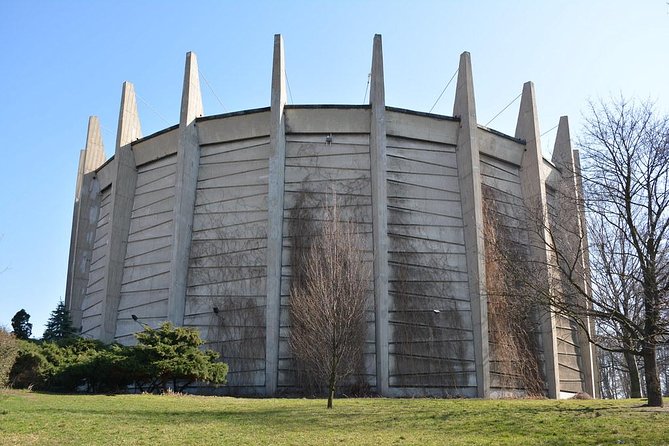
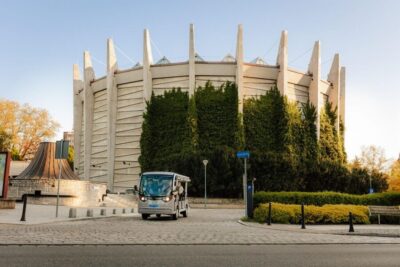
The Panorama Raclawicka is not a normal art museum stop. Inside a rounded building, you’ll see a huge historical painting designed to create a special sense of perspective. The curved setting helps blur the line between the painted scene and the space around you.
The subject is the Battle of Raclawice, an important event in Polish history. You do not need to arrive with a long list of dates, but the guide’s explanation helps you understand why this artwork carries such weight in Poland.
You get about 30 minutes at the Panorama. That is enough for a focused visit, especially with a guide pointing out what matters, but it is not a leisurely art-study session. If the painting catches your eye, ask for a little extra time before moving on.
Skip-the-line admission is particularly useful here. The attraction has a clear start and finish, and a ticket delay can throw off a short walking tour. The ticket is included, so you are not making a second purchase at the door.
More skip the line tickets in Wroclaw:
- From Krakow: Wieliczka Salt Mine Tour & Skip the Line Ticket
★ 4.4 · 3,925 reviews - Auschwitz-Birkenau Skip-the-Line Guided Tour
★ 4.3 · 3,617 reviews - Krakow: Schindler’s Factory Skip-the-Line Ticket
★ 4.4 · 3,105 reviews
Finding Wroclaw’s gnomes along the way
Gnome hunting adds a light, playful touch to a tour otherwise filled with war, religion, art, and politics. These small figures can sit on the pavement, perch on windowsills, or hang from lampposts.
Their poses often connect to the place around them and to different trades. You may need to scan the street at several levels, so this is a good reason not to hurry from one sight to the next.
The gnomes are also useful for families and anyone who wants a break from formal sightseeing. They give you something to notice between churches and museums. Your guide can point out some of them, but the fun is in spotting the next one yourself.
Cathedral Island, Wroclaw’s oldest quarter
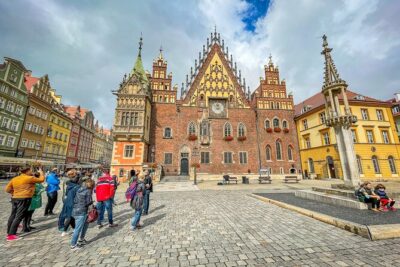
Ostrow Tumski, or Cathedral Island, is the historic heart of the walk. It is known for old streets, colorful buildings, churches, and a quieter feel than the city’s main commercial areas.
The quarter also helps explain how Wroclaw changed over time. You’ll see photographs showing how the area looked near the end of the Second World War, giving the restored streets a more serious context.
I like this part because it is not only about one monument. You move through a small district where the buildings, riverbanks, bridges, and church towers work together. You get a clearer sense of Wroclaw as a place, not just a checklist of attractions.
The route includes several religious buildings. Some interiors may be entered by request, so tell your guide early if church interiors matter to you. The schedule is tight, and an unscheduled stop could reduce time elsewhere.
St. John the Baptist Cathedral and its tower views
The Archcathedral of St. John the Baptist is one of the major sights on Cathedral Island. It has been restored, and its stained-glass windows and interior give you a chance to see the area’s religious importance from inside.
A tower visit may offer broad views over Wroclaw, but tower admission is not included. If you want to go up, ask the guide about it before the tour begins and be ready for an extra cost if entry is available.
The scheduled visit here is about 15 minutes. That is enough for a quick look and explanation, but not enough for a slow inspection of every chapel and window. I would treat the cathedral as an important short stop rather than the main focus of the day.
Other churches may also be entered if requested. This flexibility is useful, but it comes with a tradeoff. The more interior visits you add, the less time you’ll have for the museums, river islands, and walking route.
A few more Wroclaw half days to consider
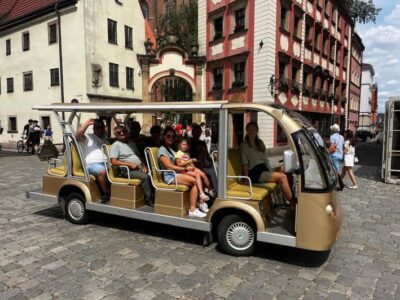
- Wroclaw: E-Car Tour and Audio Guide
★ 4.6 · 1,738 reviews - Wroclaw: 2-Hour Private Guided Tour by Electric Car
★ 4.8 · 805 reviews - Wrocław: Old Town and Ostrów Tumski Walking Tour in English
★ 4.8 · 311 reviews - Wroclaw: Private Old Town Guided Walking Tour (2 hours)
★ 4.8 · 275 reviews
Tumski Bridge and the Oder River
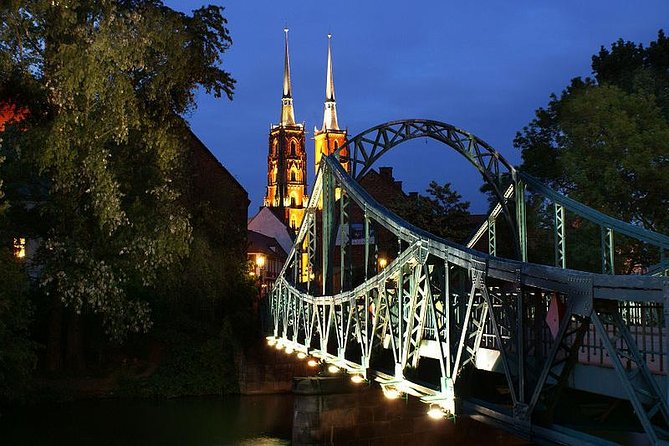
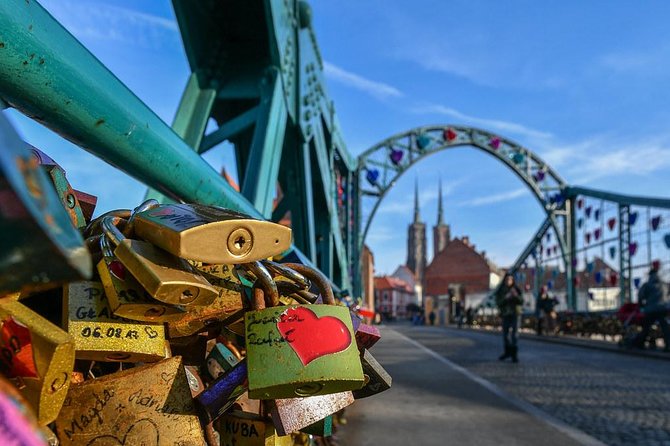
Tumski Bridge is an easy, photogenic stop. It is known for the many padlocks attached to its railings, giving the bridge a romantic look without requiring an admission ticket.
The bridge also gives you a good view toward Cathedral Island. Allow about 10 minutes for photographs and a short look around. If you enjoy city details, this is a place to pause and study the water, church towers, and surrounding streets.
The Oder River is one of Wroclaw’s defining features. Islands, bridges, small boats, floating restaurants, and bars line parts of the river, so the water is not just a backdrop. It helps explain the shape and character of the city.
You’ll also pass pleasant river scenery on Bielarska Island. It offers benches and a quiet place to stroll. Słodowa Island is another relaxed stop, with open views, older buildings, and a good setting for a photograph.
The island stops are short, around 15 minutes at Słodowa Island, so you should not expect a long rest by the water. They work best as breathing spaces between the more formal sights.
The National Museum and its Silesian art
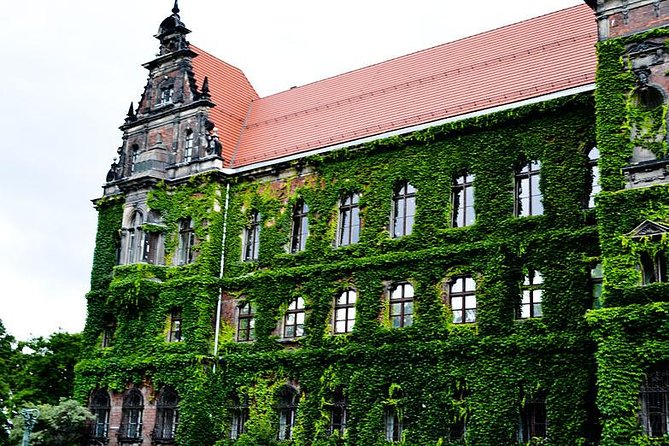
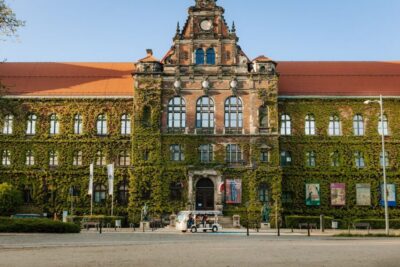
The National Museum gives the tour a second major indoor stop. Its collection includes art and sculpture from Silesia, Poland, and other parts of the world.
This is valuable because it adds visual context to the walking tour. After hearing about Wroclaw’s political and religious past, you can see how artists represented the region and its people.
You have about an hour here, which is far more generous than the time allotted at the cathedral or bridge. Even so, a large museum can easily absorb more time than you expect. Ask your guide which rooms fit the schedule if you want to avoid a rushed final walk.
Skip-the-line access is included at the National Museum, helping protect that one-hour visit. The price of this tour makes more sense if you plan to use both included museum entries and want interpretation rather than simply entering on your own.
Churches, palaces, and university corners
The route includes several additional buildings that may be visited from outside or entered by request. A striking Baroque church is among the possible stops, described as one of the most impressive churches in Europe. The exact amount of interior time will depend on your requests and the tour pace.
The Ossolineum is another worthwhile sight. This palace building has an attractive garden, giving you a change from church interiors and museum halls. You can walk around the grounds and take in the architecture at a slower pace.
You may also pass the church serving Wroclaw’s Greek Catholic community. Its exterior is mainly Gothic and plain, while a Baroque chapel on the south side provides a more decorated interior detail.
The University Museum offers an unusual change of scale. Instead of a large collection spread through many galleries, it has four rooms, including a tower with city views. Entry may be possible by request, so ask about it before committing to other optional stops.
These additions are best understood as choices, not guaranteed long visits. The private guide format lets you show interest in a church, garden, museum room, or view, but the total time remains limited.
Monuments and the city’s difficult twentieth century
Wroclaw’s sights are not all decorative. The route includes a monument or installation connected with Chinese students and Polish solidarity with people who opposed communism. It gives the walk a political note and reminds you that the city’s story reaches well beyond medieval churches.
Another monument sits in front of the Church of the Holy Cross. The church itself has unusual architectural planning, with two levels, slender windows, and tall towers. If open by request, it can be an especially interesting stop for anyone who enjoys church design.
You may also see a monument connected to the history of the nearby area and a viewpoint toward Tumski Island and the cathedral. From above, the river setting becomes easier to understand. You can see how the islands and bridges shape the old quarter.
The guide’s role matters most in places like these. A good explanation can turn a passing monument into something you remember. The experience is particularly suited to you if you want background and connections, not just a series of photographs.
How the private format affects the day
This is a private tour for your group only, led by a certified guide. That matters in Wroclaw, where the route combines museums, churches, bridges, islands, and small street details.
You can ask for more time at the Panorama, request a church interior, or spend longer looking for gnomes. You can also ask the guide to trim stops that interest you less. The stated duration is two to four hours, so the final shape depends on your choices and the pace of your group.
The guide is expected to provide clear background and practical suggestions for further exploration. One especially useful quality is enthusiasm for Wroclaw itself. You want someone who can point out the main attractions while also helping you decide what deserves a return visit.
The warning is simple: do not assume every listed sight will receive a full visit. There are enough possible stops to fill a much longer outing. If you want every church, museum room, tower, island, and monument, you will need to prioritize or book more time.
Is $145.41 per person a fair price?
At $145.41 per person, this is not a budget walking tour. The value depends heavily on your group size and how much you would otherwise spend on separate admissions and a private guide.
The price includes entry to the Panorama Raclawicka and National Museum, plus skip-the-line access at both. It also includes a certified personal guide and a private route. Group discounts may be available, which could improve the cost for a larger party.
For a couple or small group that wants personal attention, the fee can be reasonable if you care about interpretation and efficient museum entry. For a solo visitor, the price is harder to justify unless the private format is a top priority.
You should also remember that the cathedral tower is not included. Some optional church or museum entries may require a request and could involve separate arrangements. Read the final tour information carefully, and check your email the day before for important updates.
Meeting point, timing, and practical planning
The stated meeting point is Plac Katedralny 50, 50-329 Wroclaw, with the tour ending in Ostrow Tumski. The area is near public transportation, so you can reach it without arranging a private transfer.
The route covers a lot of ground. Wear comfortable shoes, and keep your schedule clear after the tour if you want to return to a museum or church. Since the guide may adjust the route, decide before starting which two or three sights matter most to you.
The activity is available with a mobile ticket, and booking confirmation is provided at the time of booking. Most people can participate, according to the supplied tour information, but no detailed accessibility information is given. If you have mobility needs, contact the provider before paying.
The cancellation policy is strict. The experience is non-refundable and cannot be changed after booking, so do not reserve it until your date and party are settled.
Who should book this Wroclaw tour?
I would recommend it to first-time visitors who want a strong introduction to Wroclaw in one compact outing. It suits you especially well if you want the major museums combined with Cathedral Island rather than treated as separate activities.
Families may enjoy the gnome search and the freedom to adjust the route. Art lovers will appreciate the Panorama Raclawicka and National Museum, while architecture fans can focus on the cathedral, Baroque church, Ossolineum, and the University Museum tower.
You may want a different plan if you prefer a slow museum visit, a long riverside walk, or a very focused cathedral tour. The number of possible stops creates variety, but it also makes the schedule ambitious.
Should you book it?
Book this tour if personal guiding, included museum admission, and a flexible route matter more to you than finding the lowest price. The Panorama Raclawicka is unusual, Cathedral Island is essential to understanding Wroclaw, and the river islands add welcome outdoor time.
Before booking, decide what you want to prioritize and tell the guide at the start. If you do that, the private format can give you a lively, useful introduction to the city without wasting time in ticket lines. If you want to see everything listed at a leisurely pace, choose a longer or more focused tour instead.
FAQ
How long does the Wroclaw tour last?
The tour lasts approximately two to four hours. The final length can depend on the route and the changes requested by your private group.
Is the tour private?
Yes. Only your group participates, and the tour is led by a personal certified guide.
What is included in the admission?
Admission is included for the Panorama Raclawicka and the National Museum. Skip-the-line access is provided for both attractions.
Is entry to the cathedral tower included?
No. The cathedral tower admission is not included. Ask the guide about visiting it, since the tower visit may be possible with an additional arrangement.
Where does the tour start and finish?
The stated meeting point is Plac Katedralny 50 in Wroclaw. The tour ends in Ostrow Tumski.
Can the itinerary be changed?
Yes. The tour is customizable, so you can request changes to the route. Optional entries at some churches and museums may be possible by request.
Can I cancel or change the booking?
No. The experience is non-refundable and cannot be changed for any reason after booking.
Recently added in Wroclaw
- CITY QUEST WROCLAW: unlock the mysteries of this city!★ 5.0 · 3 reviews
- Wroclaw: Old City Walk and Cruise with Small Gondola★ 4.7 · 3 reviews
- Private Transfer from Wroclaw (WRO) Airport to Wroclaw city centre★ 5.0 · 3 reviews
- Wroclaw : Walking Custom Tour with a Local Guide★ 4.8 · 3 reviews
- Wrocław: Ostrów Tumski and Old Town Highlights Private Tour★ 5.0 · 3 reviews
- Wroclaw Jewish Quarter Private Guided Tour★ 5.0 · 3 reviews
- Electric Scooter Tour: Full Tour (Old Town + Ostrów Tumski)★ 5.0 · 3 reviews
- Segway Tour Wroclaw: Ostrów Tumski Tour – 1,5-Hours of Magic!★ 5.0 · 3 reviews
Wroclaw Tours, compared.
Old Town and Ostrów Tumski Walking Tour in English
Read our review →
City Tour Sightseeing By Golf Cart Shared Or Privat
Read our review →

Where else this one turns up