Reviewed · KRAKOW TOURS
Nowa Huta Steel Mill Administration Buildings and Shelters with local NGO
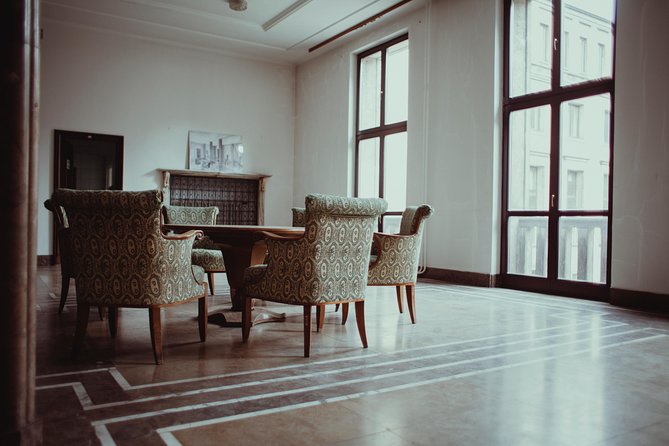
Nowa Huta’s former steelworks administration buildings offer something unusual in Krakow: a largely untouched Socialist Realist interior where offices, meeting rooms, old objects, and Cold War shelters still tell the story of communist Poland. You walk through a place that feels part workplace, part museum, and part time capsule.
I like the underground bomb shelter and the chance to hear historic recordings from the steelworks’ radio station. I also like the small-group format, capped at 15 people, which gives guides such as Mateusz room to explain the site rather than rush you through it. The drawback is that the building is old and partly abandoned, so you should expect a rough-edged visit, not a polished museum.
Key points at a glance
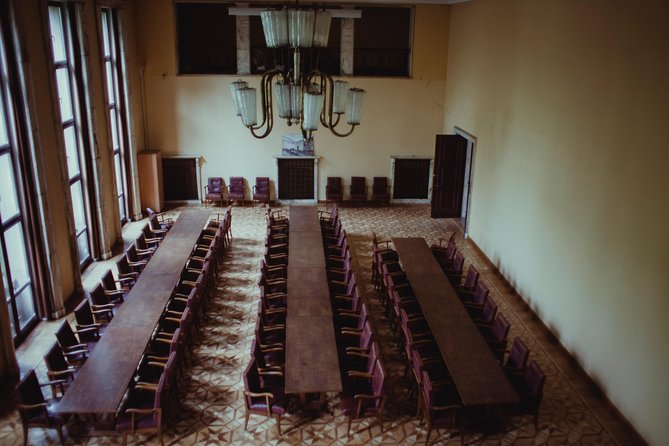
- Preserved steelworks offices: Explore the former S and Z administration buildings, including rooms and meeting spaces left with much of their old character.
- Cold War shelter below ground: Walk through tunnels and a bomb shelter linked to the plant’s civil-defense planning.
- A guide with personal ties: Mateusz has been praised for his detailed explanations and family connection to the steelworks.
- Socialist Realist design: See how architecture expressed rank, authority, and the ideals of postwar communist Poland.
- Historic radio recordings: Listen to old tapes from the steelworks’ radio station during the visit.
- Small, focused group: The maximum group size is 15, useful in narrow corridors and crowded rooms.
Why Nowa Huta tells a different story of Krakow
Most first-time visits to Krakow focus on the Old Town, Wawel, and Kazimierz. Nowa Huta gives you a very different picture of the city. It was planned as an industrial district built around the Lenin Steelworks, later known as the Sendzimir steel mill, and it became one of the clearest physical expressions of postwar communist Poland.
The administration buildings are especially useful for understanding how the system worked behind the factory gates. This was not only a place where managers handled production. It was also a setting where hierarchy, politics, design, and daily work met.
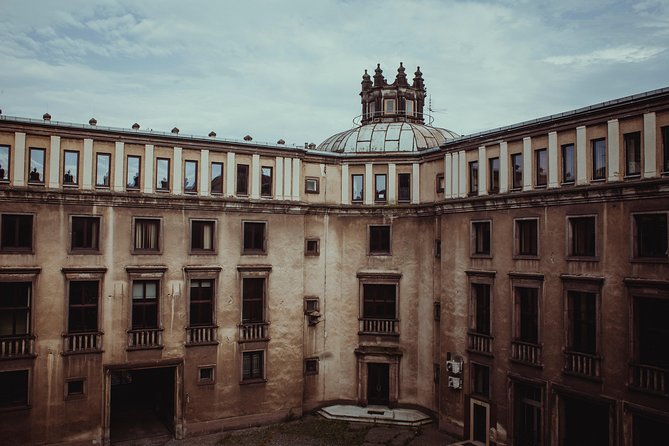
The architecture matters. Socialist Realism favored formal spaces, grand proportions, and visual order. The building was meant to project seriousness and power. You can read that message in the layout and decorative choices, even when the paint is worn and the rooms show their age.
This is why the visit feels more substantial than a standard industrial tour. You are not simply looking at machinery or factory ruins. You are entering the offices where decisions were made and where the steelworks presented itself as a model institution.
A few more Krakow half days to consider
- From Krakow: Auschwitz-Birkenau Guided Tour & Hotel Pickup
★ 4.5 · 33,358 reviews - From Krakow: Auschwitz-Birkenau Guided Tour & Hotel Pickup
★ 4.5 · 29,340 reviews - Krakow: Auschwitz Guided Tour with Optional Hotel Pickup
★ 4.5 · 15,280 reviews
Entering the S and Z administration buildings
The tour begins at Ujastek 1 in Krakow and finishes at the same location. The meeting point is on the opposite side of the street, so check the exact position carefully before you arrive. The experience usually lasts about 90 minutes to two hours, with the longer timing allowing for a thorough walk through the buildings and shelter.
The main visit covers both the S and Z administration buildings. You can expect offices, meeting rooms, corridors, and older furnishings or objects connected with the steelworks. Some rooms have also served as settings for films, which adds a faint sense of theatrical mystery without turning the tour into a movie-location visit.
The striking part is the condition of the place. The building has reportedly been unused for more than ten years and is beginning to show its age. That decay is part of the appeal, but it also sets expectations. You are not walking into a restored palace or a carefully polished historical museum.
I like this honesty in the setting. Worn surfaces and leftover objects can make the past easier to picture. At the same time, the rough condition means you should pay attention to your footing and be ready for a basic, industrial environment.
One useful point is that not every object you see necessarily remained in its original room. The local NGO has gathered and arranged some objects as an exhibition. That does not make them uninteresting, but it means you should treat the rooms as a mix of preserved interiors and organized displays rather than a perfectly frozen workplace.
Reading the building’s Socialist Realist design
The guide explains why the buildings look the way they do and how the architectural choices reflected life in Nowa Huta across several decades. This is where the tour gains much of its value. Without context, grand corridors and formal offices can seem merely old. With explanation, they become evidence of how the state wanted industry and authority to appear.
You may notice differences between administrative spaces and areas intended for workers. One useful way to approach the visit is to ask what the building says about rank. Which rooms appear formal? Which spaces feel practical? How does the design separate management from the wider workforce?
The tour presents communist Poland through the steelworks, but you should also listen critically. One point worth keeping in mind is that not every difference in quality or style can automatically be blamed on communism. Comparisons with factories in Western countries could complicate the picture. That does not weaken the visit. It gives you a better reason to ask questions and avoid treating the building as a one-sided political exhibit.
Guides such as Mateusz have been praised for explaining both the architecture and the wider social setting. His family ties to the plant add a personal connection to a place that might otherwise feel distant. The best moments are likely to come when the guide connects a room or object to how people actually worked and lived in Nowa Huta.
Below ground in the Cold War shelter
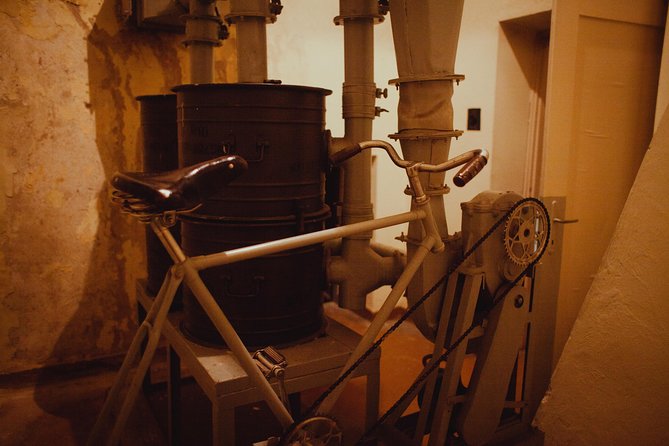
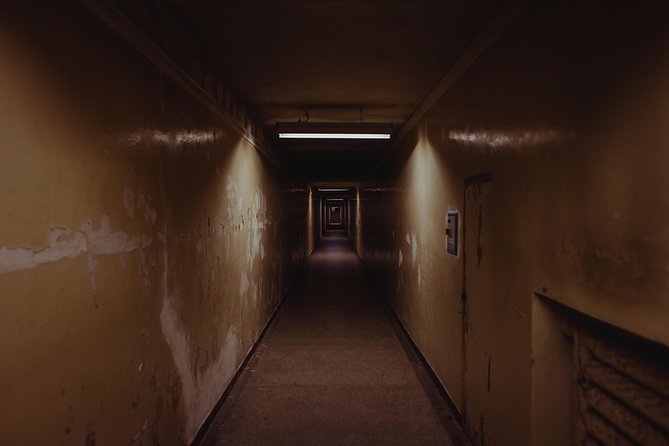
The underground section is one of the strongest reasons to choose this experience. The visit includes a Cold War era shelter, tunnels, and a bomb-shelter area associated with the steelworks.
This part changes the mood. The offices show public authority and workplace structure. Below ground, the shelter reveals fear, preparation, and the possibility of conflict. It reminds you that the steelworks was not just an economic project. It was also considered important enough to protect during a dangerous period in European history.
The shelter is not presented as a modern attraction with special effects. Its power comes from the plain physical setting: enclosed passages, underground rooms, and the sense of a facility designed for an emergency that never arrived in the way planners feared.
You will want shoes suited to walking through an older building. The tour calls for a moderate level of physical fitness, and the underground passages make that guidance worth taking seriously. Children must be accompanied by an adult.
A different kind of day in Krakow:
- Krakow–Zakopane: Cable Car, Chocholow Baths, Cheese & Vodka
★ 5.0 · 10,720 reviews - Krakow: Auschwitz-Birkenau Guided Tour with Pickup & Lunch
★ 4.5 · 9,800 reviews - From Krakow: Wieliczka Salt Mine Tour
★ 4.6 · 9,393 reviews - Krakow: Auschwitz-Birkenau Guided Tour Pickup/Lunch Options
★ 4.5 · 9,057 reviews
Hearing the steelworks through its radio station
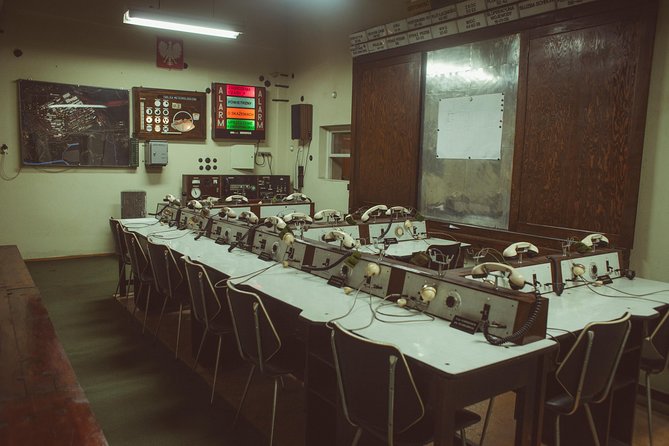
A particularly memorable detail is the use of historic tapes from the steelworks’ radio station. Sound can do what labels often cannot. A recorded voice, announcement, or piece of plant communication can make the workplace feel active again, even when the corridors are quiet.
This also helps you understand that the steelworks functioned as its own social world. A large plant needed ways to communicate with its workforce, shape its public image, and pass along information. The radio station was part of that system.
I would pay close attention during these recordings, even if you are more interested in architecture than politics. They help link the physical rooms to the people who once used them.
The workers’ theater and preserved objects
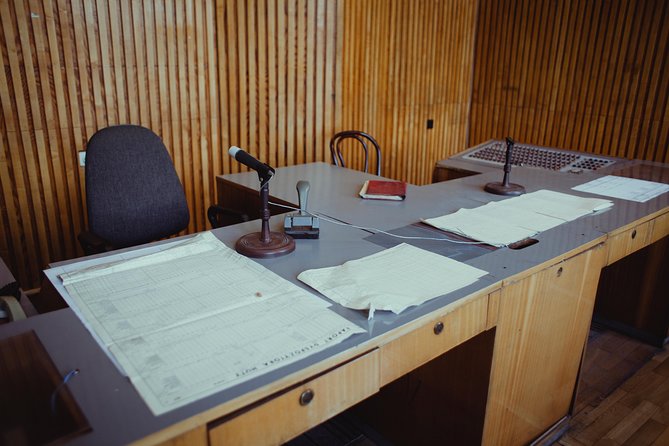
The tour includes a workers’ theater along with offices, meeting rooms, shelters, and other parts of the complex. That combination is important. It shows that the steelworks was not only a production site. It also had a cultural role in the lives of the people connected to it.
The presence of a theater points to the wider idea of the socialist workplace as a complete community. Work, public messaging, leisure, and social identity could all be tied to the factory. The visit gives you a chance to see that connection in physical form.
Old artifacts appear throughout the tour. Some were preserved in the building, while others were gathered and arranged by the NGO. You may see objects from several periods, from the 1950s through the 2000s, because the administration building remained in use into the 2000s.
That time span is worth remembering. Not everything you see belongs to the early communist era. Later objects can help show how the site changed over time, but they can also blur the period if you expect a pure 1950s snapshot. Ask the guide which items are original to a room and which have been placed there for display.
The guide makes the difference
The guide is central to this experience. The tour is not simply a matter of opening doors and letting you wander. You need explanation to connect the architecture, the factory, communist government, Cold War planning, and everyday life in Nowa Huta.
Mateusz is the guide name most often associated with the experience, though the guide assigned to your date may differ. He has been praised for his strong command of the subject, friendly manner, and enthusiasm. His family connection to the steelworks can add detail that a general city guide may not have.
The best approach is to ask questions. You might ask how the buildings changed after communism, which rooms were used by managers, how the shelter operated, or which items are original. A guide who knows the site well can turn a static room into a useful historical clue.
The small-group limit of 15 people helps. In a larger group, narrow corridors and underground rooms could become awkward, and it would be harder to hear the recordings or ask questions. This is still a group tour, not a private visit, but it is compact enough to feel focused.
What the $27.63 price buys you
At $27.63 per person, this is not the cheapest historical stop in Krakow. You are paying for a specialized visit to a site that is not a standard city museum, along with a local and professional guide.
I consider the price reasonable if you have a real interest in communist history, industrial architecture, Cold War sites, or abandoned buildings. The experience combines several elements that would be difficult to access independently: the administration interiors, the shelter, the workers’ theater, artifacts, and radio recordings.
The value is less clear if you want a polished museum with extensive labels, restored rooms, or a short, visually tidy introduction to Krakow. This place is rougher and more selective in its appeal. You pay for access and interpretation, not glossy presentation.
Group discounts may make the cost more attractive for families or parties booking together. The tour is offered in English, and mobile tickets are available. It is often booked about 19 days ahead, so I would not leave it until the last moment if the timing matters to you.
Who should book this experience?
I would choose this tour for you if you enjoy:
- Communist-era European history
- Industrial buildings and working-class history
- Cold War shelters and civil-defense sites
- Socialist Realist architecture
- Film locations and abandoned interiors
- Small tours led by local specialists
It is also a strong choice if you have already seen Krakow’s main historic sights and want a side of the city that feels less familiar. Nowa Huta adds political and social context that the medieval center cannot provide.
I would be more cautious if you dislike worn buildings, underground passages, or tours that rely heavily on spoken explanation. The site is not presented as a restored attraction, and some of the objects span several decades. You need curiosity and a moderate level of fitness to get the most from it.
The local NGO connection is another plus. A community-based organization can give a place more care and attention than a generic sightseeing operator, especially when the site itself is in need of preservation. Still, the building’s future is uncertain, and its aging condition is part of what you will see.
Practical details before you go
The starting and ending point is Ujastek 1, 31-752 Krakow. The meeting point is noted as being opposite the site across the street, so use the map carefully and do not assume the entrance is on the side you first see.
The tour is offered in English and includes a local guide and professional guide. Hotel pickup and drop-off are not included, so you need to make your own way to Nowa Huta. The location is near public transportation.
Plan for up to two hours, even though the shortest stated duration is 90 minutes. That gives you time to see the administration buildings, underground shelter, theater, and displays without treating the visit as a hurried photo stop.
The maximum group size is 15 people. Children need an accompanying adult, and everyone should have moderate physical fitness. Souvenir photos may be available to buy, but they are not included in the price.
Free cancellation is available if you cancel at least 24 hours before the start time. Changes or cancellations inside that period are not accepted for a refund.
Should you book the Nowa Huta steelworks tour?
Book it if you want a serious look at communist Poland through an unusual surviving workplace. The shelter, Socialist Realist offices, and radio recordings give the visit a strong sense of place, while a guide such as Mateusz can supply the political and personal context that the building cannot provide on its own.
Skip it if you want a fully restored museum or a quick stop near Krakow’s Old Town. For everyone else, especially anyone interested in architecture, industry, or the Cold War, this is one of the more distinctive ways to spend two hours in the city. The rough edges are not a flaw to hide. They are part of the story.
FAQ
Where does the Nowa Huta steelworks tour start?
The tour starts at Ujastek 1, 31-752 Krakow, Poland. The meeting point is on the opposite side of the street from the site.
Where does the tour finish?
The tour finishes at Ujastek 1, the same location where it begins.
How long does the experience last?
The stated duration is approximately 1 hour 30 minutes to 2 hours. The main visit is described as lasting about two hours.
Is the tour offered in English?
Yes. The experience is offered in English.
What will I see during the tour?
You will visit the former steelworks administration buildings, including the S and Z buildings, offices, meeting rooms, an underground Cold War shelter, tunnels, a workers’ theater, and preserved or arranged historical objects. You will also hear historic tapes from the steelworks’ radio station.
Is hotel pickup included?
No. Hotel pickup and drop-off are not included. You must make your own way to the meeting point.
How large is the tour group?
The maximum group size is 15 people.
Can I cancel for a refund?
Yes, if you cancel at least 24 hours before the experience begins. Cancellations made less than 24 hours before the start time are not refunded.
Recently added in Krakow
- Auschwitz-Birkenau and Krakow Private Car Trip from Katowice★ 4.3 · 3 reviews
- Wawel Castle, Old Town with St. Mary’s Church Guided Tour★ 5.0 · 3 reviews
- Wawel Castle, Cathedral, Rynek Underground Tour with Lunch★ 5.0 · 3 reviews
- From Krakow: Chocholow Thermal Hot Springs (hotel pick up)★ 5.0 · 3 reviews
- Private tour to Zakopane and Thermal Baths from Krakow★ 5.0 · 3 reviews
- Legends of Cracow ROBOTIC SHOW★ 4.0 · 3 reviews
- From Krakow: Zakopane and Thermal Pools Guided Trip★ 5.0 · 3 reviews
- Guided Beer Tour in Krakow★ 4.5 · 3 reviews
Krakow Tours, compared.
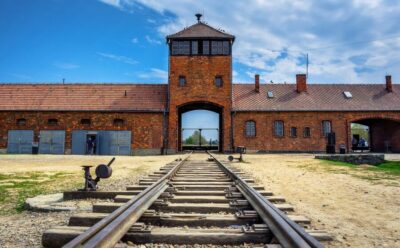
Auschwitz-Birkenau Guided Tour & Hotel Pickup
Read our review →Auschwitz Guided Tour with Optional Hotel Pickup
Read our review →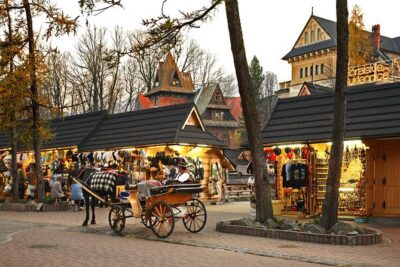
Zakopane: Cable Car, Chocholow Baths, Cheese & Vodka
Read our review →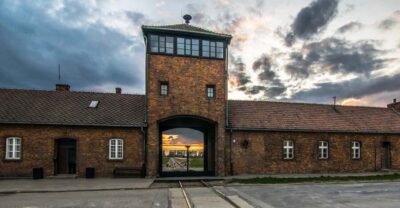
Auschwitz-Birkenau Guided Tour with Pickup & Lunch
Read our review →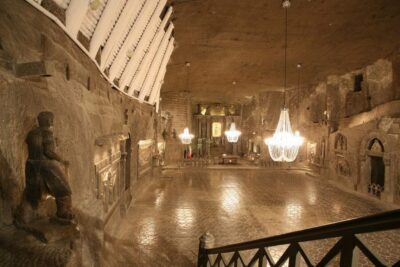
Krakow to Auschwitz Birkenau Guided Tour with Transfer and Ticket
Read our review →
Wieliczka Salt Mine Guided Tour with Transport
Read our review →