
Reviewed · AUSCHWITZ-BIRKENAU MEMORIAL TOURS
Krakow: Auschwitz-Birkenau Guided Tour Pickup/Lunch Options
Auschwitz-Birkenau is not a quick sightseeing stop. It is a serious, often painful visit to the largest Nazi concentration and extermination camp complex, where the scale of the crimes becomes clear through original buildings, prisoner belongings, photographs, barracks, and the remains of the killing facilities. The English-speaking museum guide gives the visit structure and context that signs alone cannot provide.
I like the practical door-to-door arrangement from Krakow, and I like that the tour includes both Auschwitz I and Birkenau rather than treating one as an optional add-on. Guides such as Leah have been praised for explaining the subject with care, while drivers are often described as professional and helpful. The main drawback is the tight pace, especially for anyone who wants time to read every display or pause quietly in the galleries.
Key points to know before booking
- Auschwitz I and Birkenau are different sites: You visit the former administrative camp and museum first, then travel to the much larger extermination camp at Birkenau.
- The indoor museum displays are powerful: Personal belongings, prisoner photographs, and permanent exhibitions make the history painfully direct.
- The full day lasts about eight hours: Around three hours are spent on the guided visits, with the rest used for Krakow transfers, security, waiting, and short breaks.
- Pickup times are flexible but not guaranteed: Your chosen time may change, with departures possible from about 5:30 a.m. to 3 p.m.
- Bring identification and travel light: Your booking name must match your passport or ID, and large bags are not allowed.
- Lunch is not part of the museum schedule: Choose the lunchbox option if useful, but understand that the day does not include a normal sit-down meal break.
Why Auschwitz-Birkenau deserves a full day from Krakow
The Auschwitz-Birkenau complex is in southern Poland, outside Krakow, so this is a substantial day trip rather than a short city excursion. The drive each way takes about 1.5 hours, and the museum visit itself lasts roughly 3.5 hours.
That time is necessary. Auschwitz I and Auschwitz II-Birkenau do not tell exactly the same story. Auschwitz I was the administrative center and the original camp site, while Birkenau became the huge extermination camp with railway access, barracks, gas chambers, and crematories. Auschwitz III, or Monowitz, was a labor camp, but it is not part of this standard visit.
The Polish government preserved and restored the surviving complex as a memorial and museum. The result is not a polished attraction, and it should not be. Uneven paths, plain brick buildings, exposed brick barracks, and bare open ground all form part of what you are there to confront.
I would not schedule a celebratory dinner, a demanding evening activity, or a packed sightseeing plan immediately afterward. The subject is heavy, and the visit can leave you quiet for a while.
Other guided visits to the Auschwitz-Birkenau Memorial:
- From Krakow: Auschwitz-Birkenau Guided Tour & Hotel Pickup
★ 4.5 · 33,358 reviews - From Krakow: Auschwitz-Birkenau Guided Tour & Hotel Pickup
★ 4.5 · 29,340 reviews - Krakow: Auschwitz Guided Tour with Optional Hotel Pickup
★ 4.5 · 15,280 reviews
Krakow pickup and the long road south
Pickup is from a selected Krakow meeting point or another designated location, depending on the option you choose. Possible drop-off points include Kiss&Ride, ibis Krakow Stare Miasto, Art & Garden Residence, Aparthotel Lwowska 1, Hotel Galaxy, Starowiślna 65, Mercure Kraków Fabryczna City, Qubus Hotel Kraków, Premium Hostel, and Wielopole 2.
Do not rely only on the time shown while booking. The preferred departure time is a request, not a promise. The confirmed pickup point and exact time arrive in a separate message, and the time may be adjusted as late as the day before. Check your email carefully and arrive early.
The pickup area can be confusing when several tour companies gather in the same place. Staff may call names aloud, and vehicles or coordinators may not be clearly marked. I would keep the company name, pickup point, and confirmation message open on your phone, then ask directly before boarding.
The road transfer takes about 90 minutes each way. Vehicles have been described as clean and comfortable, though one recurring concern is limited legroom in smaller vans. Some passengers have also found the driving faster than expected. If you get carsick, sit toward the front if possible, bring whatever usually helps you, and do not assume the journey will feel leisurely.
The ride may include a documentary on a vehicle screen, which helps prepare you for the visit. Still, the road time is part of the day’s cost and should be included in your expectations. At $200 per person, you are paying for transport, museum admission, an official guide, and the convenience of a prearranged round trip, not just the hours spent walking through the camps.
Your first break and the museum entrance
After arriving from Krakow, there is normally a 10 to 20-minute break. Use it for the toilet, water, and a quick snack before the security process begins.
You will pass through security similar to an airport checkpoint. Bring your passport or ID card, since every participant must provide full name and contact information during booking. The name on the reservation must match the name on your identification, or entry may be refused.
Large bags and luggage are not allowed. Wear comfortable shoes because the route includes a good deal of walking over uneven ground, along with stairs and repeated movement in and out of buildings. Weather-appropriate clothing matters in every season. Much of the visit is outdoors, and cold, rain, snow, or heat can make the pace more tiring.
Sleeveless shirts are not permitted. Dress with the memorial setting in mind and choose practical layers rather than fashion-first clothing.
Auschwitz I: personal belongings and original buildings
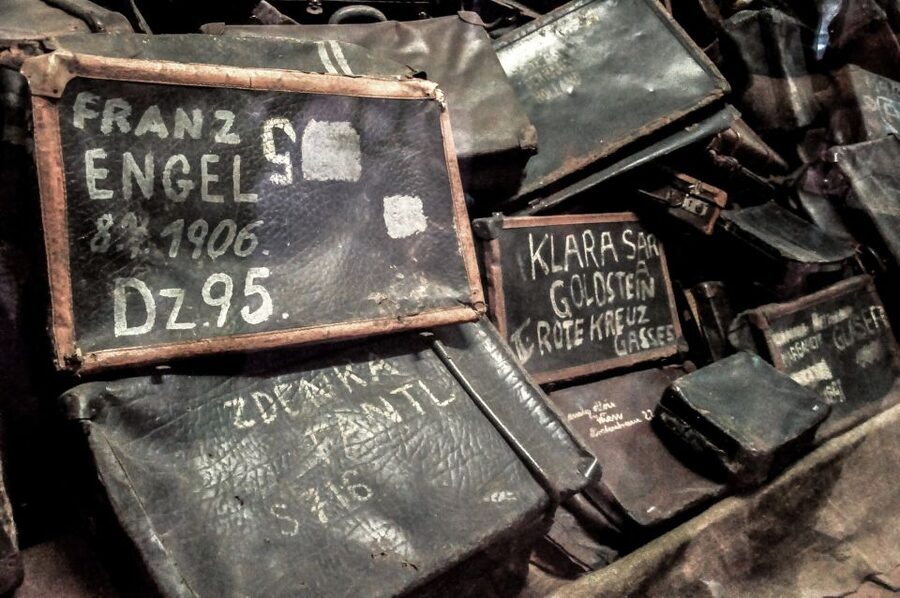
The Auschwitz I tour takes about two to two and a half hours, depending on the museum’s schedule and the group’s movement. This is the more enclosed and exhibit-heavy part of the visit.
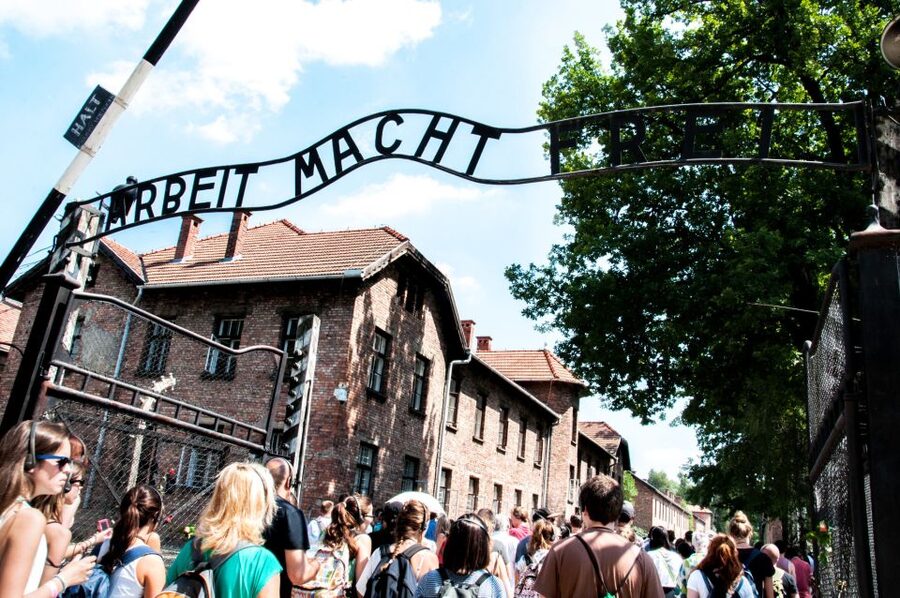
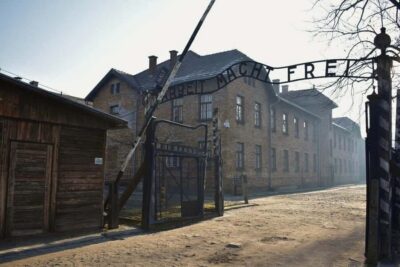
You enter through the main camp area and walk among original buildings. The permanent exhibitions explain how the camp functioned, who was imprisoned there, and how deportation, forced labor, starvation, punishment, and mass murder were organized.
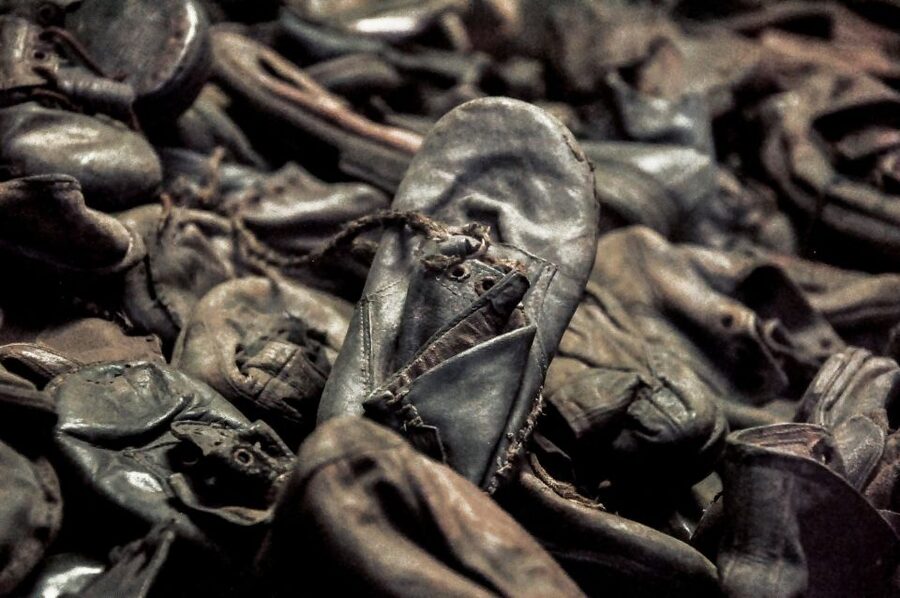
The displays of personal belongings can be among the hardest parts of the visit. Shoes, luggage, photographs, and other objects make the victims visible as individuals rather than as an abstract number. You may also see prisoner photographs and written material that require time and concentration to absorb.
A licensed museum guide is especially useful here. The buildings can look similar at first, and it is easy to miss the difference between an administrative space, a prisoner block, and an exhibition room. A good guide connects the objects with the system that produced them and answers questions without turning the visit into a lecture detached from the place.
Guides vary in style. Leah has been singled out for presenting difficult material with sensitivity, while other guides have been praised for strong subject knowledge and clear explanations. The standard is not guaranteed with a particular guide, but the museum assigns licensed guides, and the strongest part of the experience is usually the human explanation of what you are seeing.
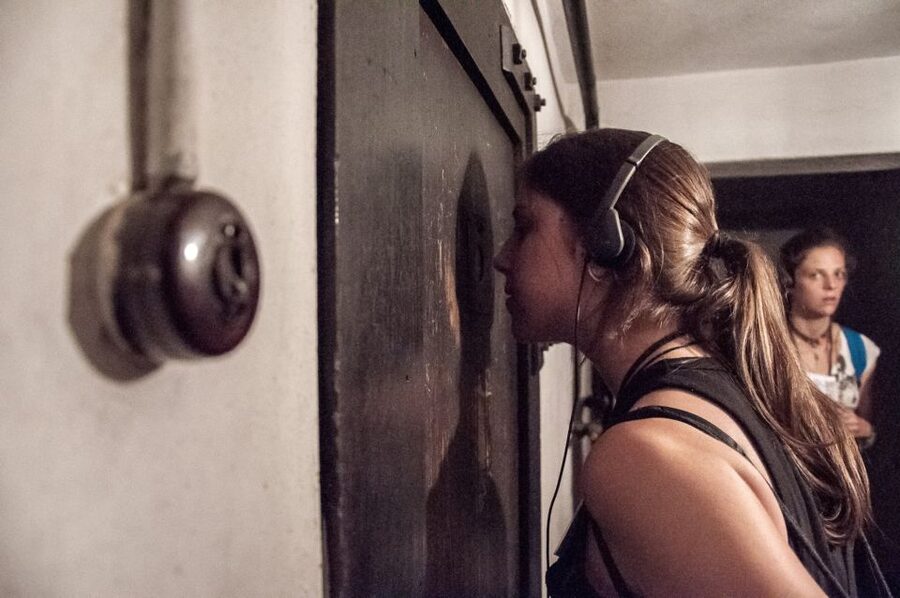
You may enter a gas chamber during the Auschwitz I visit. This is a moment to approach with care and respect. It is not a dramatic set piece, and photography or casual conversation can feel badly out of place.
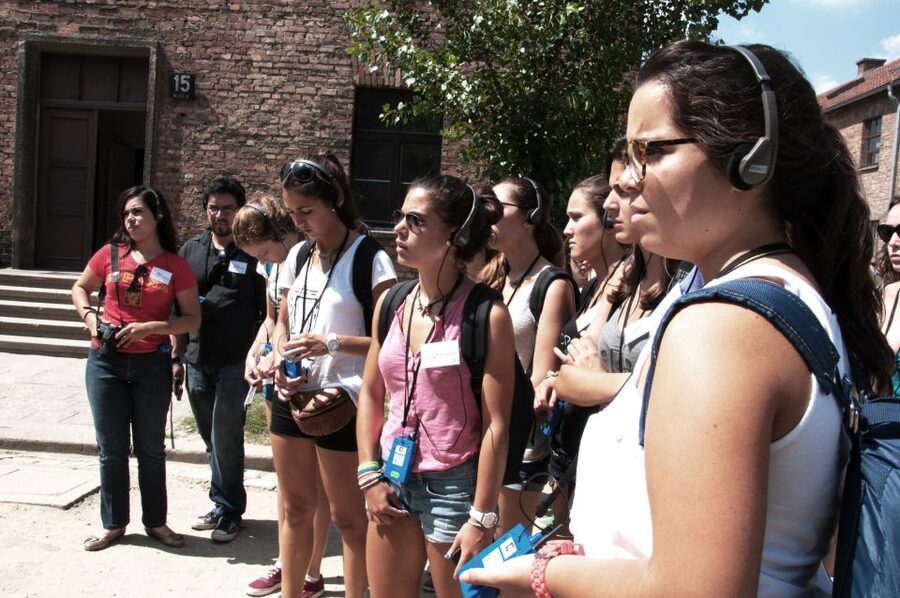
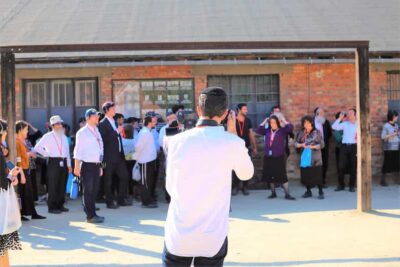
The group may be divided into smaller sections, often with headsets so you can hear the guide. Headsets help when several groups are moving through the same buildings, though reception can occasionally become crackly or drop out. The benefit is clear: you can remain slightly behind the guide without losing every word.
The tradeoff is time. A guide must keep the group moving, and you may not have enough time to read every panel or study each photograph. If a particular display matters to you, note its location and return only if the schedule allows. Do not expect a self-guided museum visit at your own speed.
More lunch stops in Krakow:
- Krakow: Auschwitz-Birkenau Guided Tour with Pickup & Lunch
★ 4.5 · 9,800 reviews - Krakow: Auschwitz Guided Tour with Pickup and Optional Lunch
★ 4.4 · 2,649 reviews - Krakow: Auschwitz-Birkenau & Wieliczka Salt Mine with Lunch
★ 4.1 · 214 reviews - Zakopane Tour from Krakow with Transfers and Lunch Option
★ 5.0 · 174 reviews
The transfer to Birkenau
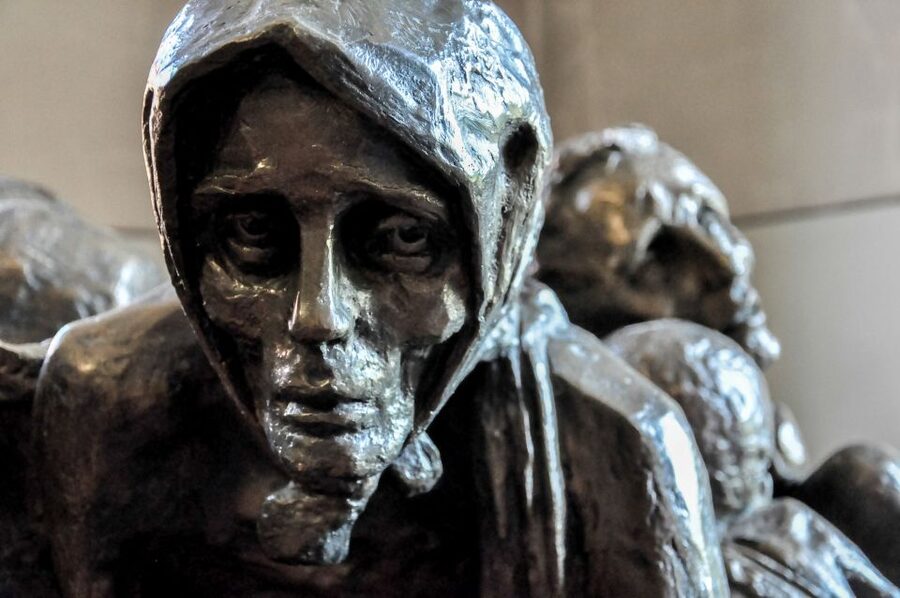
There is usually a 10 to 15-minute break before the group travels to Auschwitz II-Birkenau. This pause is useful after the enclosed exhibitions, but it is not a full lunch period.
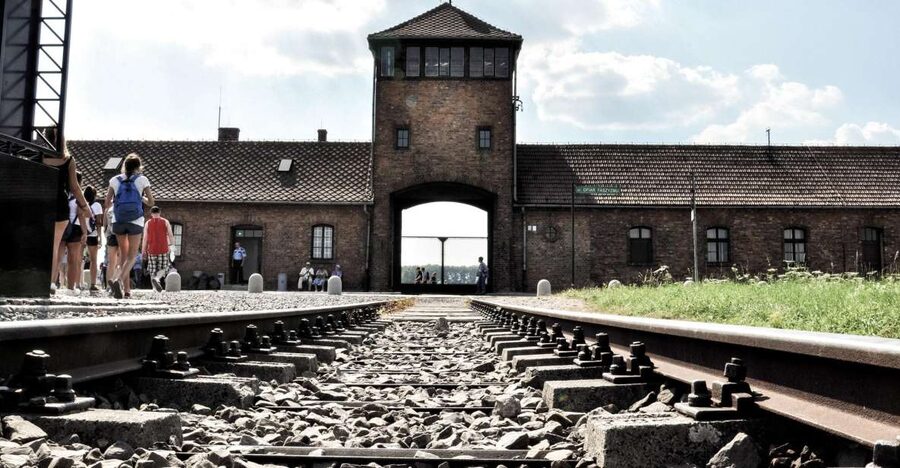
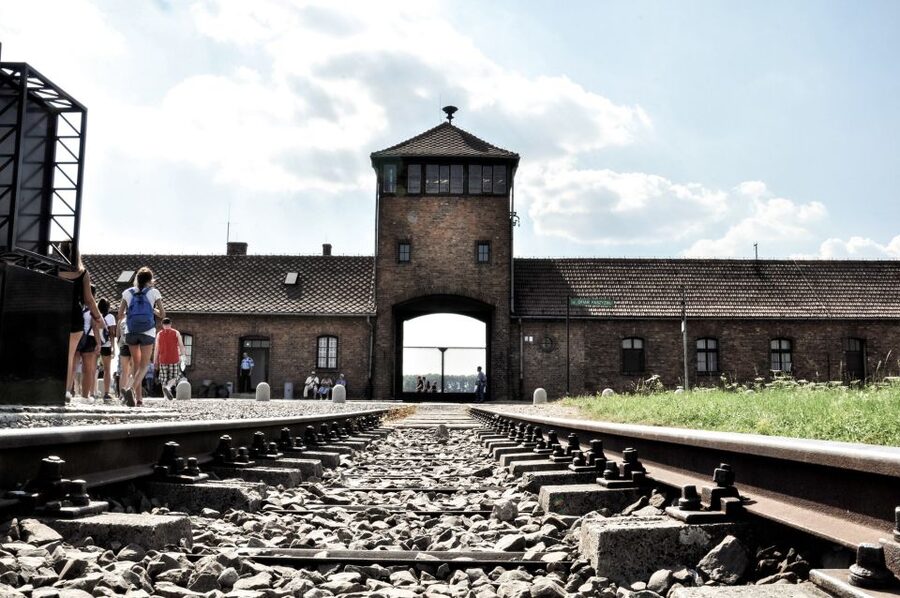
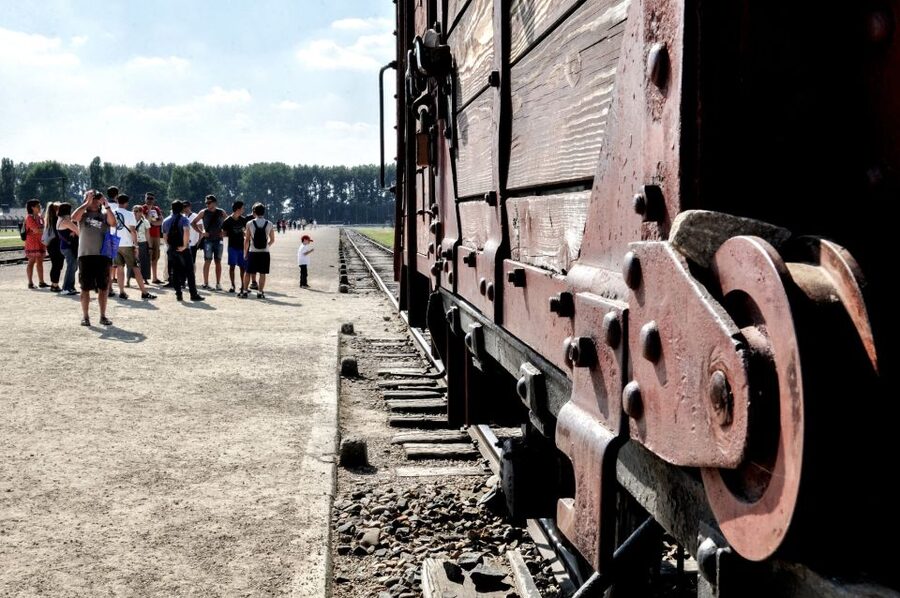
Birkenau is close enough to visit as part of the same complex, yet it feels very different. You move from the compact brick buildings of Auschwitz I to a broad, open site marked by the famous railway entrance and long rows of barracks.
The change in scale matters. At Auschwitz I, the evidence is concentrated in rooms, displays, and buildings. At Birkenau, the sheer size of the grounds shows how many people were imprisoned and killed there. The open distance between the entrance, barracks, selection area, and crematory ruins is part of the historical evidence.
Birkenau: scale, barracks, and the remains of the killing system
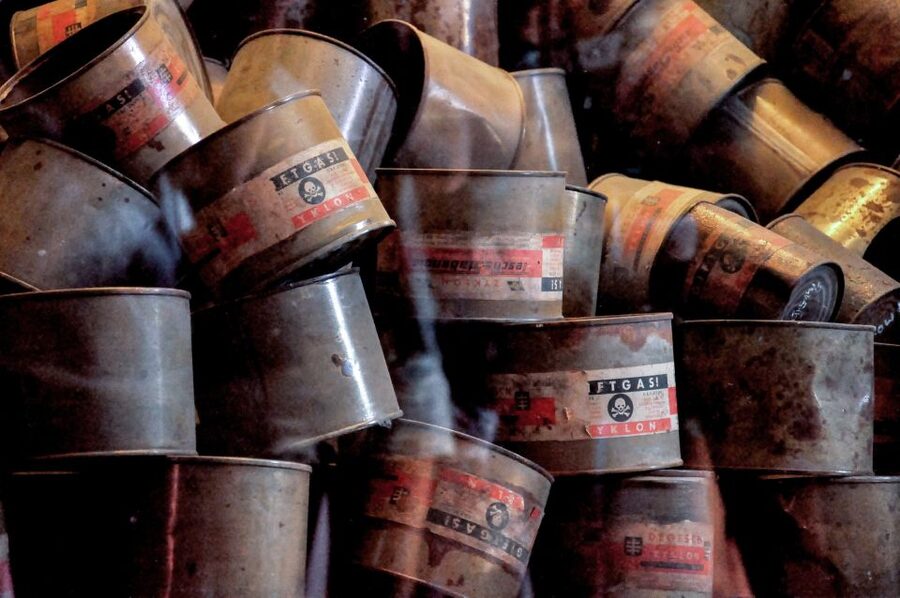
The guided visit at Auschwitz II-Birkenau lasts about one hour. You see the railway area, original camp buildings, surviving barracks, and the remains of gas chambers and crematories.
The barracks show the basic conditions in which prisoners were kept. They are stark rather than theatrical, and the open setting can make weather a major factor. In winter, snow and strong cold can be physically punishing. In wet weather, paths may be muddy or slippery. Good footwear is not a minor detail here.
One hour gives you the main structure of the site, but it does not allow a slow examination of every building. If you want extensive independent time at Birkenau, this organized trip may feel too controlled. If you want the main locations explained in a clear order, the guide keeps the visit focused.
The guide’s role is important because Birkenau can be difficult to read without context. The size of the grounds may initially seem empty, but the explanation of the barracks, railway, selection process, and destroyed facilities gives meaning to what remains.
This is also the point where the visit can feel most emotionally overwhelming. I would not treat that reaction as a sign that you are doing the visit wrong. Give yourself permission to listen quietly, step back from the group for a moment, or simply look across the site without trying to process every fact at once.
Food, breaks, and the lunchbox choice
The museum’s rules mean there is no normal lunch break built into the visit. Food and drinks are not permitted inside either camp, and food choices at the site may be limited to vending machines or designated areas.
A lunchbox is available with some booking options. It can solve the basic problem of going several hours without a meal, but it should not be mistaken for a restaurant lunch or a flexible picnic. The schedule is controlled by museum rules and the guide’s route.
I would choose the lunchbox if you want something arranged in advance, especially with an early departure or a long day. If you prefer to choose your own food, eat before pickup and carry only what the rules allow outside the camp areas. The short breaks are mainly for practical needs, not for a long, relaxed meal.
There is also a 10 to 20-minute break before the return to Krakow. Use it to regroup, but keep your expectations realistic. This is a carefully timed day, not a free-roaming visit.
Is $200 good value?
At $200 per person, this is not the cheapest way to reach Auschwitz-Birkenau. You pay a premium for round-trip transportation from Krakow, reserved museum entry, a licensed museum guide, and a simpler booking process than arranging each part yourself.
The value depends on what you want. If you are unfamiliar with the area, do not want to manage bus connections, and prefer a guide to explain the camps in English, the price can be reasonable. The experience is also more than an admission ticket. The guide helps you understand why the two sites differ and prevents the visit from becoming a walk through buildings without context.
The value is weaker if you already have transport, want to read every exhibition at your own speed, or are comparing prices closely. Some people have found similar arrangements for less, and a guided group can feel restrictive when another group is moving ahead of you.
The high overall rating reflects that the basic operation usually works well: transport arrives, entry is arranged, the driver handles the route, and the guide provides the historical framework. Still, the exact quality depends on the individual guide, vehicle, pickup organization, traffic, and crowd levels on your date.
Who should book this Krakow day trip?
I would recommend it to adults and older teenagers who want a structured first visit to Auschwitz-Birkenau. The activity is not suitable for children under 14, and the subject requires maturity as well as emotional readiness.
It suits you if:
- You want both Auschwitz I and Birkenau in one day.
- You prefer an English-speaking guide to explain the site.
- You value hotel-area pickup and return transportation.
- You are willing to follow a fixed museum schedule.
- You can walk for several hours on uneven ground.
- You want the main evidence and buildings, not an entirely independent visit.
It may not suit you if you need a slow pace, dislike group tours, have limited tolerance for long vehicle rides, or want a guaranteed departure time. The tour is listed as wheelchair accessible in one section of the information, but another section says it is not suitable for wheelchair users. Confirm current accessibility arrangements before paying, especially because the route includes uneven ground, stairs, and historic buildings.
Should you book it?
Book this tour if you want the practical Krakow-to-Auschwitz arrangement and understand that the day will be tightly scheduled and emotionally difficult. The strongest reasons are the inclusion of both camps, the licensed guide, and the reduced stress of having transport and entry handled together.
Before booking, confirm the final pickup time, check that every booking name matches the correct ID, and decide how you will handle food. Bring comfortable shoes, layers, and only a small permitted bag. If you want a quiet, unhurried study visit, choose a different arrangement. If you want a focused introduction to the Auschwitz-Birkenau memorial with transport from Krakow, this is a sound, well-organized choice, provided you accept the group pace.
FAQ
How long does the Auschwitz-Birkenau tour take?
The full activity lasts about eight hours, including approximately 1.5-hour transfers each way. The guided museum visit lasts about 3.5 hours in total.
How much time is spent at Auschwitz I?
The Auschwitz I visit lasts about two to two and a half hours, depending on the museum’s schedule and the pace set by the guide.
How much time is spent at Birkenau?
The guided visit to Auschwitz II-Birkenau lasts about one hour.
Is transportation from Krakow included?
Yes. Round-trip transportation from Krakow is included, with pickup and drop-off locations determined by the option you select.
Is lunch included?
A lunchbox is included only if you select an option that offers it. The museum schedule does not include a regular lunch break, and food and drinks are not permitted inside the camp areas.
What should I bring to enter the museum?
Bring your passport or ID card, comfortable shoes, and clothing suited to the weather. The name on your booking must match the name on your identification, and large bags are not allowed.
Recently added in Krakow
- Auschwitz-Birkenau and Krakow Private Car Trip from Katowice★ 4.3 · 3 reviews
- Wawel Castle, Old Town with St. Mary’s Church Guided Tour★ 5.0 · 3 reviews
- Private tour to Zakopane and Thermal Baths from Krakow★ 5.0 · 3 reviews
- Wawel Castle, Cathedral, Rynek Underground Tour with Lunch★ 5.0 · 3 reviews
- From Krakow: Chocholow Thermal Hot Springs (hotel pick up)★ 5.0 · 3 reviews
- Legends of Cracow ROBOTIC SHOW★ 4.0 · 3 reviews
- From Krakow: Zakopane and Thermal Pools Guided Trip★ 5.0 · 3 reviews
- Guided Beer Tour in Krakow★ 4.5 · 3 reviews
Auschwitz-Birkenau Memorial Tours, compared.
Auschwitz-Birkenau Guided Tour & Hotel Pickup
Read our review →Auschwitz Guided Tour with Optional Hotel Pickup
Read our review →
Auschwitz-Birkenau Guided Tour with Pickup & Lunch
Read our review →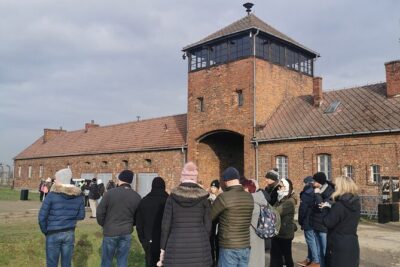
Krakow to Auschwitz Birkenau Guided Tour with Transfer and Ticket
Read our review →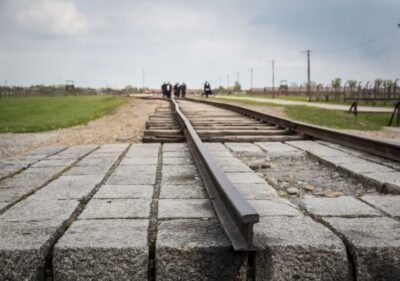
Auschwitz Birkenau Small Group Tour with Pickup
Read our review →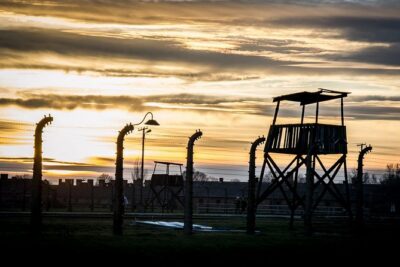
Auschwitz Birkenau Guided Tour with Ticket Hotel Pickup Small Van
Read our review →Where else this one turns up