
Reviewed · JEWISH QUARTER & KAZIMIERZ TOURS
Lodz: Jewish Heritage Private Tour
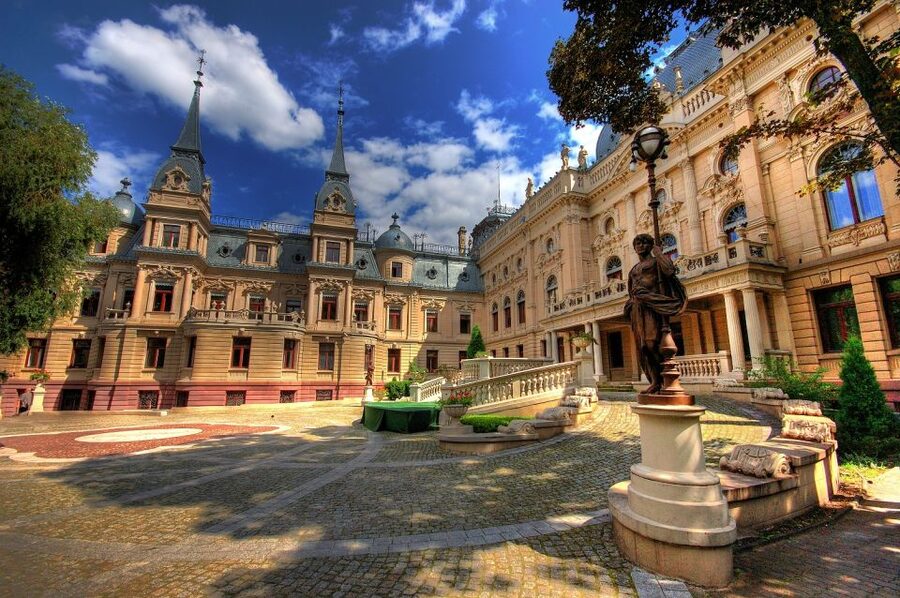
Łódź’s Jewish story is not confined to one museum. It runs through railway tracks, cemetery paths, factory walls, memorial trees, and the long commercial spine of Piotrkowska Street. This private tour connects those places in four hours, giving you a clear first look at a community that once made up about one third of the city’s population.
I like the private format, since guides such as Marek, Krys, and Krzysztof have tailored the route to personal interests. I also like the mix of solemn sites and living Łódź, especially the cemetery, Survivors’ Park, Reicher Synagogue, Manufaktura, and Piotrkowska Street. One thing to check before booking is the transport plan: the experience includes transportation, but one booking found the guide did not drive the group around the city.
Key points
- Radegast Station marks the final departure point for Jews sent from western Europe and the Wartheland area.
- The Jewish cemetery is Poland’s largest Jewish necropolis, and you should ask to enter rather than view it only from outside.
- Survivors’ Park contains more than 600 trees planted by people who survived the Litzmannstadt Ghetto.
- Reicher Synagogue is Łódź’s only remaining pre-war synagogue, preserved after wartime use as a salt warehouse.
- Manufaktura links Jewish industrial history with today’s shops, restaurants, open plaza, and fountains.
- Piotrkowska Street gives you an easy way to continue exploring after the four-hour tour ends.
Why Łódź needs a Jewish heritage tour
Before World War II, more than 200,000 Jews lived in Łódź. They formed one of the largest Jewish communities in Poland and about a third of the city’s population.
That fact changes how you read the city. A Jewish heritage tour here is not only a walk between surviving buildings. It is an attempt to find traces of a community that shaped Łódź’s industry, culture, trade, and daily life, then was almost entirely destroyed during the Holocaust.
I find the private format useful because Łódź’s story can be hard to grasp from isolated monuments. Your guide can connect the former ghetto with the railway station, the cemetery with pre-war Jewish life, and the industrial wealth of Israel Poznański with the city’s later rebirth.
The tour lasts four hours and begins with hotel pickup. You travel with your own group and guide rather than joining a large party. English, German, Russian, and Polish are available, but you should select the language carefully when booking.
Other Jewish Quarter and Kazimierz walks:
- Krakow: Jewish Quarter and Former Ghetto Tour
★ 4.9 · 1,441 reviews - Krakow: Bike Tour of Old Town, Jewish Quarter and the Ghetto
★ 4.9 · 1,155 reviews - Krakow: Kazimierz Jewish Quarter Walking Tour
★ 4.8 · 571 reviews
Radegast Station and the road into the Holocaust
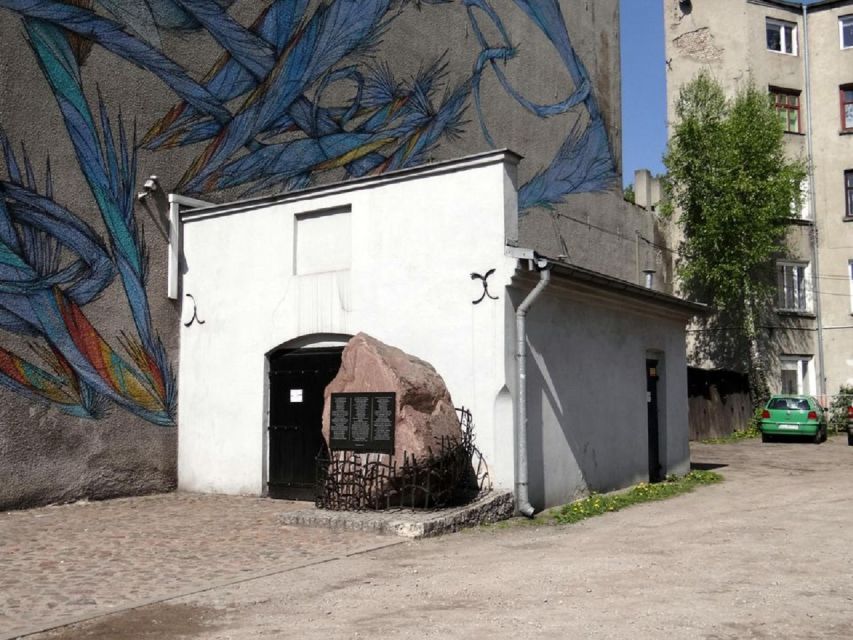
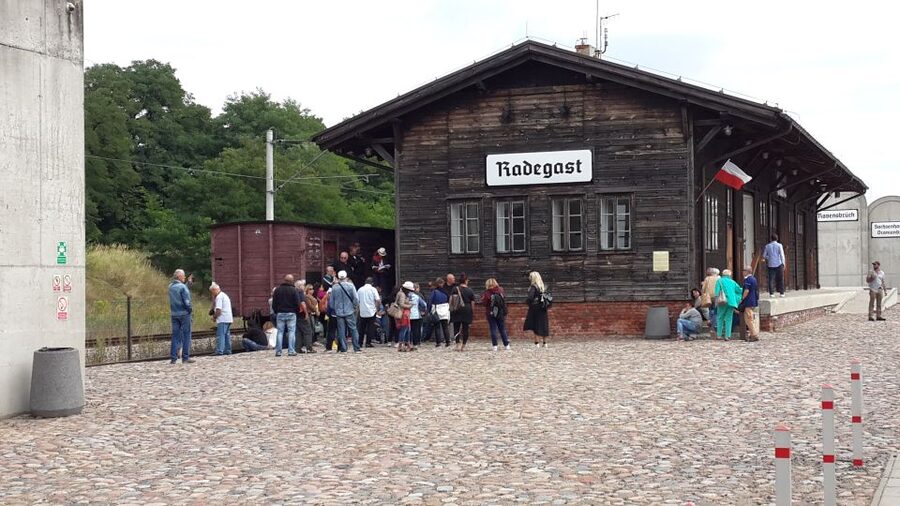
Radegast Station is one of the tour’s most important stops. It was the final point for trains carrying Jews from western European countries and from provincial ghettos in the Wartheland area.
This is not simply a railway site. It helps you understand the machinery of deportation. People arrived from different places, often after already losing homes, work, and family members, and were then sent onward from Łódź under Nazi rule.
Your guide explains the site and its connection to the Litzmannstadt Ghetto, the name used by the occupying German authorities for the Łódź Ghetto. The stop is emotionally difficult, and the memorial setting calls for quiet attention rather than quick sightseeing.
The interpretation here deserves some thought. One booking raised concerns about comments made about the memorial’s approach to Holocaust remembrance. That does not mean every guide handles the subject the same way, but it is a useful reminder to ask for a guide who can discuss Jewish life and Holocaust memory with care, neutrality, and respect.
The Litzmannstadt Ghetto and Survivors’ Park
The route continues through places connected with the former ghetto. You learn how the ghetto functioned and what happened during its liquidation.
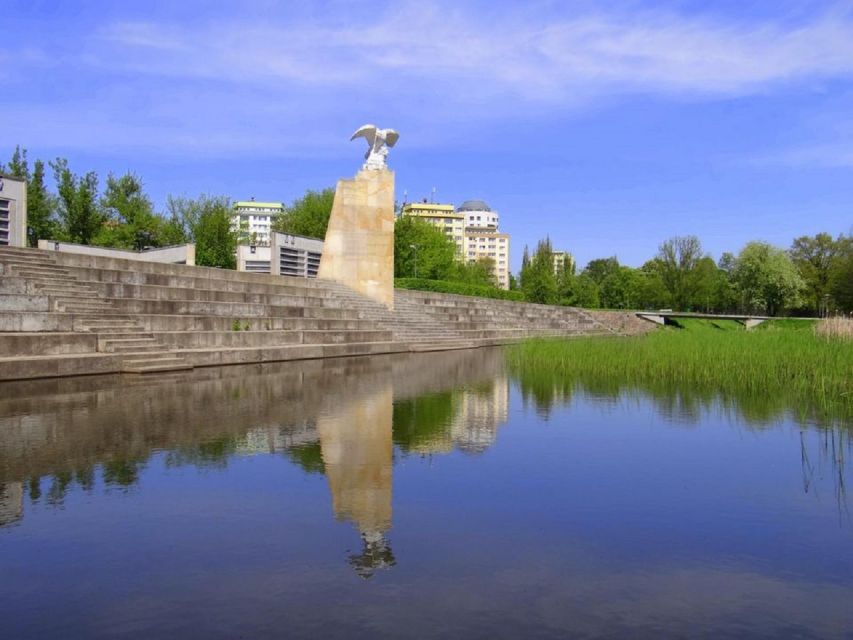
Survivors’ Park offers a pause in the route. More than 600 memory trees were planted by people who survived the Litzmannstadt Ghetto. The trees give the site a personal quality. Instead of presenting the past only through dates and official language, they point to individual lives and the act of remembering after the war.
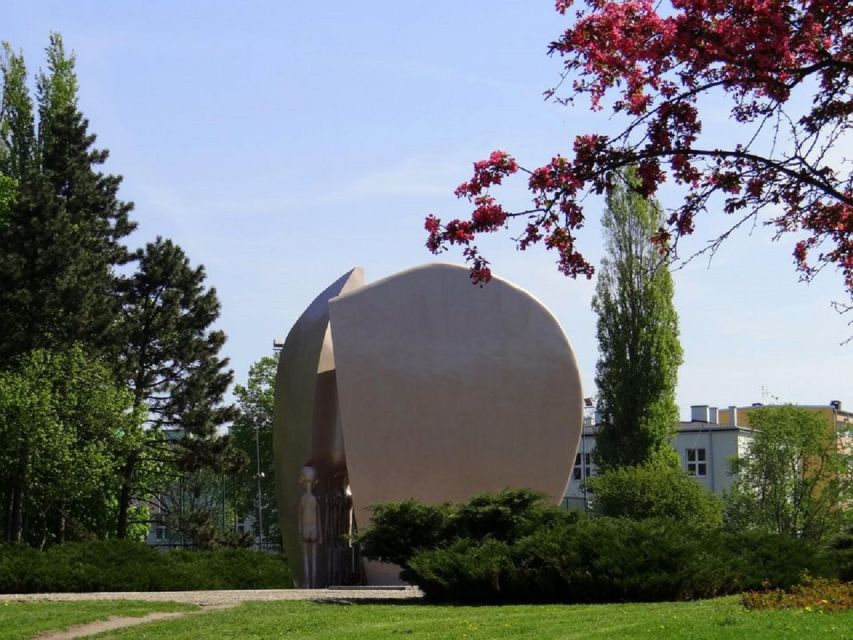
You also pass the Children’s Martyrdom Monument, often called the Monument of the Broken Heart. It is dedicated to Polish children who died or were murdered while imprisoned in the camp on Przemysłowa Street.
This part of the tour broadens the story beyond one community. The Jewish heritage focus remains central, but the city’s wartime experience also included Polish children subjected to imprisonment and violence. I appreciate that the route acknowledges both histories without pretending they were identical.
Be prepared for a serious stretch of sightseeing. The tour covers persecution, deportation, imprisonment, and murder. If you prefer to process difficult places slowly, use the private setting to ask your guide for more time at the sites that affect you most.
Łódź’s Jewish cemetery, a stop worth entering
The Jewish cemetery is described as the largest Jewish necropolis in Poland. Even from outside, it is an essential part of the route, but you should specifically ask whether the visit includes going inside.
That small question matters. One booking found that the cemetery was viewed from outside unless the group requested entry. Since the cemetery is one of the tour’s main reasons to book, do not assume that seeing the gate or perimeter is the same as visiting the site.
Inside, your guide can give meaning to a place that might otherwise feel difficult to read. The cemetery links you to the scale of pre-war Jewish life in Łódź and to the community’s destruction during the occupation. Its importance is not only architectural or historical. It is a surviving record of the people who lived, worked, worshipped, and raised families in the city.
Entrance fees are not included in the $46 per person price, so allow for that extra cost. The tour description does not give the exact admission amount, and availability can depend on the time of your visit.
More History Tours in Poland:
- Gdansk: City Cruise on Historical Polish Boat
★ 4.8 · 2,913 reviews - Warsaw: POLIN Museum of the History of Polish Jews Ticket
★ 4.7 · 1,142 reviews - Gdańsk: Sunset Cruise on a Historic Polish Boat
★ 4.9 · 977 reviews - Gdańsk City Sights & History Guided Walking Tour in English
★ 4.8 · 876 reviews
Reicher Synagogue, a rare survivor
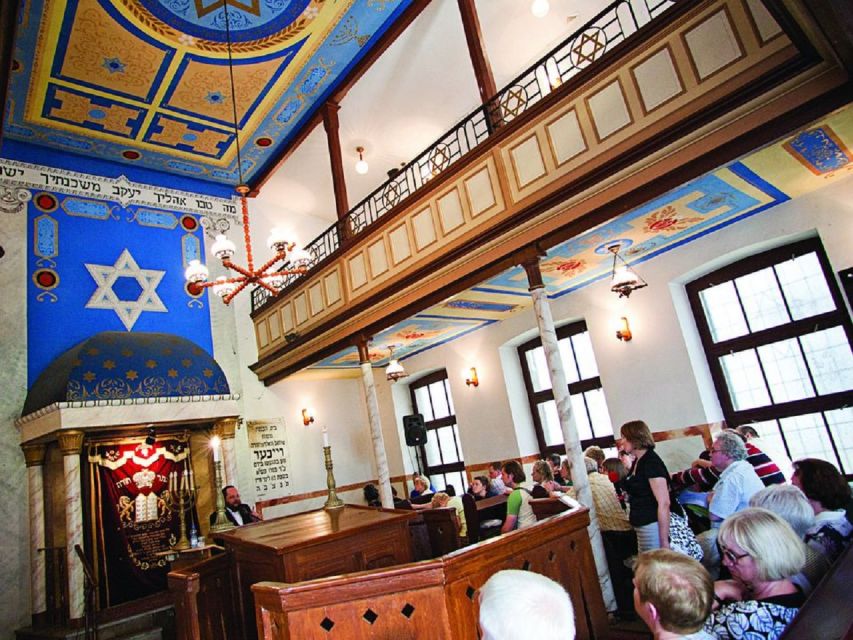
Reicher Synagogue is the only remaining pre-war synagogue in Łódź. Its survival is especially striking because the building was used as a salt warehouse during the occupation.
That detail gives the stop a sharp, physical sense of what happened to Jewish institutions. A synagogue was not simply left empty. Its purpose was erased and replaced with a utilitarian use during a period when Jewish religious and communal life was under attack.
The stop may be brief, depending on opening arrangements and the pace of your group. Still, it adds something the memorial sites cannot provide: a direct link to Jewish religious life before the war.
Ask your guide what access is possible on your date. The supplied details identify Reicher Synagogue as a highlight, but they do not promise a full interior visit. Entrance fees are also not included.
Israel Poznański’s factory and today’s Manufaktura

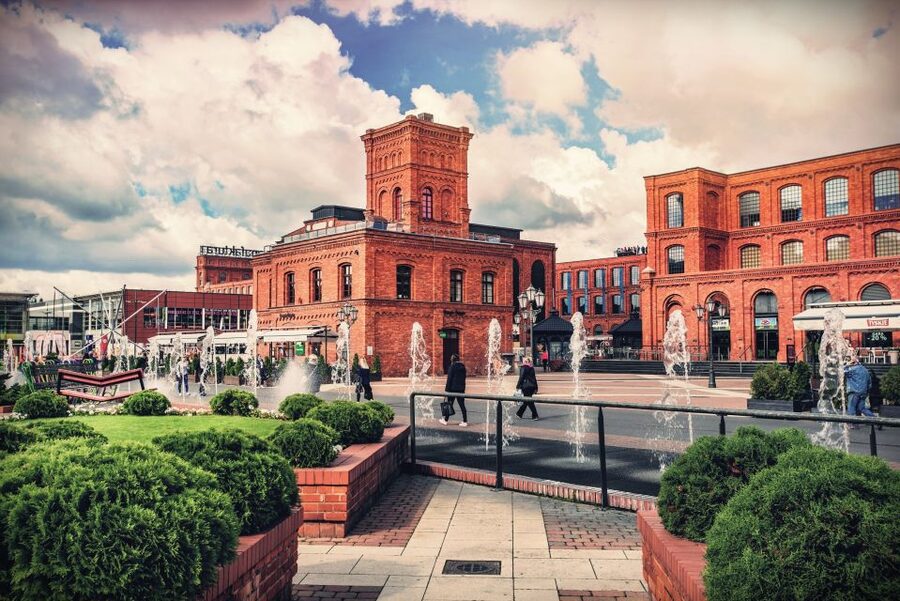
The tour then shifts from wartime memory to the industrial force that made Łódź wealthy. Manufaktura occupies a renovated factory complex that belonged to Jewish businessman Israel Poznański.
The site is useful for understanding how Jewish entrepreneurs helped shape Łódź. The old brick buildings are now arranged around an open-air plaza with shops and public spaces. The complex also features a long run of fountains, described as the longest stretch of fountains in Europe.
I like this change of mood. After several sites tied to death and destruction, Manufaktura shows a city using its industrial past in a new way. You see how factory architecture can survive even when its original economic and social world has disappeared.
At the same time, do not confuse a modern shopping and leisure complex with a preserved Jewish museum. Manufaktura presents the industrial setting, while the Jewish story depends largely on your guide’s explanation. If this is the part of the tour that interests you most, ask about Poznański, his business, and the workers who made the factory system run.
Piotrkowska Street, Łódź’s long public stage
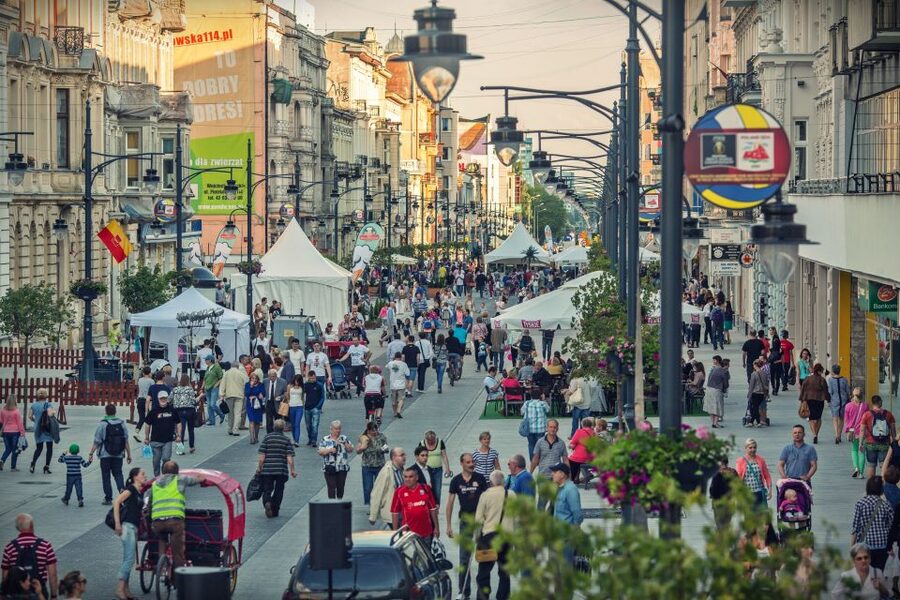
The final stop is Piotrkowska Street, Poland’s longest promenade. It is lined with shops, pubs, restaurants, and sculptures honoring well-known people connected with Łódź.
After the heavy memorial sites, Piotrkowska gives you room to shift back into ordinary city life. You can look at the architecture, stop for food, and note the sculptures your guide points out.
This is also a practical ending. Your guide can suggest what to see next on your own, which is valuable if Łódź is new to you. You may want to return to Piotrkowska later, when you can explore at your own pace rather than fitting it into a set route.
The street is not exclusively a Jewish heritage site, so some people may find the final section less focused than the earlier stops. I see it as a useful conclusion, provided you understand that the tour ends with a wider introduction to Łódź rather than one last Jewish monument.
What the private guide adds
The strongest part of this experience is the guide-led interpretation. A map can show you Radegast Station, the cemetery, and Manufaktura, but it cannot easily connect them into one story.
Krzysztof has been praised for making four hours pass quickly while discussing both Jewish history and the wider city. Krys has handled requests involving film, books, architecture, and history. Marek has adjusted the route to suit specific interests and added locations requested by the group.
Those details point to the main advantage of booking privately: you can ask for more than the standard route. If you are interested in architecture, family history, Jewish religious life, industrial Łódź, or Holocaust memorials, say so at the start.
The experience is not guaranteed to be led by one particular guide. The available guide may be Marek, Krys, Krzysztof, or another member of the team. Some past bookings praised the guides for being friendly, entertaining, flexible, and attentive. Another booking found the guide’s general Łódź history stronger than the Jewish focus.
That difference matters. The title sets an expectation of specialist Jewish history, so ask direct questions before the tour begins. You should feel comfortable requesting a careful account of Jewish life before the war, the ghetto, deportations, and the meaning of the memorial sites.
Price, transport, and what you receive
At $46 per person, this is a reasonable price for a four-hour private tour if you value hotel pickup, a dedicated guide, and transport between sites. A private guide costs more than a group walk, but you gain the chance to ask questions and adjust the emphasis.
The price includes hotel pickup and drop-off, transportation, and a guide. Entrance fees are not included, so the final cost will be higher if you enter the cemetery or other sites requiring admission.
The transport wording deserves a quick check. The activity information includes transportation, but one booking expected the guide to drive the group and found that this did not happen. Contact the provider before the day of the tour if having a private vehicle is important to you.
Your guide waits in the hotel lobby with your name. Be ready on time, since a four-hour route has several stops and delays can reduce time at the cemetery or memorials.
Free cancellation is available up to 24 hours before the start for a full refund. You can also reserve now and pay later, which is useful if your Łódź plans are still changing.
Who should book this four-hour route?
I would choose this tour if you have limited time in Łódź and want a structured introduction to its Jewish past. It is also a good fit if you prefer conversation and questions over a fixed audio guide.
You will get the most from it if you prepare a few interests in advance. Ask for extra attention to the cemetery, Reicher Synagogue, the Poznański factory, or the history of the ghetto. The private group makes those requests realistic.
This is less suitable if you want a fully museum-based experience or a tour led only from a Jewish religious perspective. The route is guided from the wider history of Łódź, and the quality of the Jewish interpretation may depend on the individual guide assigned.
It is also not a light sightseeing outing. Radegast Station, the ghetto sites, the children’s monument, and the cemetery require a respectful mood. Piotrkowska and Manufaktura add variety, but much of the first part deals with painful history.
Should you book the Łódź Jewish Heritage Private Tour?
Book it if you want the main Jewish heritage sites connected in one half-day, hotel pickup, a private guide, and the freedom to ask for a customized route. The cemetery, Radegast Station, Survivors’ Park, Reicher Synagogue, and Poznański’s factory give you a strong framework for understanding Łódź.
Before paying, confirm two things: who will guide you and how transportation will work. Also ask to enter the Jewish cemetery, since that may not happen automatically.
For $46 per person, the tour offers good value when your priority is orientation and personal explanation. If your main concern is specialist Jewish expertise, make that expectation clear in advance. The best version of this tour is thoughtful, flexible, and focused on the human story behind the city’s monuments.
FAQ
How long does the Łódź Jewish Heritage Private Tour last?
The tour lasts four hours. Starting times depend on availability.
Is hotel pickup included?
Yes. The guide waits for you in the hotel lobby with your name, and hotel pickup and drop-off are included.
Which languages are available?
The live guide may speak English, German, Russian, or Polish.
Is the tour private?
Yes. You join a private group rather than a shared public tour.
Are entrance fees included in the price?
No. Entrance fees are not included. Ask about entering the Jewish cemetery and any other site where admission may apply.
Can I cancel for a full refund?
Yes. You can cancel up to 24 hours in advance for a full refund. You can also reserve now and pay later.
Recently added in Poland
- Auschwitz-Birkenau and Krakow Private Car Trip from Katowice★ 4.3 · 3 reviews
- Gdansk: Outdoor Paintball and Private Transfers★ 4.7 · 3 reviews
- Warsaw Wolf’s Lair with St. Lipka and Mamerki Private Guided★ 4.2 · 3 reviews
- Wawel Castle, Old Town with St. Mary’s Church Guided Tour★ 5.0 · 3 reviews
- From Krakow: Chocholow Thermal Hot Springs (hotel pick up)★ 5.0 · 3 reviews
- Private tour to Zakopane and Thermal Baths from Krakow★ 5.0 · 3 reviews
- Wawel Castle, Cathedral, Rynek Underground Tour with Lunch★ 5.0 · 3 reviews
- Taste of Poland, food tour and guided walk with 12 tasting★ 5.0 · 3 reviews
Jewish Quarter & Kazimierz Tours, compared.

Bike Tour of Old Town, Jewish Quarter and the Ghetto
Read our review →
Kazimierz, Schindler’s Factory & Ghetto Guided Tour
Read our review →
Bike Tour of the Old Town, Kazimierz, and the Ghetto
Read our review →

Jewish Quarter and Ghetto Electric Golf Cart Tour
Read our review →
Where else this one turns up