
Reviewed · OLD TOWN TOURS
Krakow: Old Town Highlights Private Walking Tour
Krakow’s story unfolds on foot, from the medieval Barbican and Florianska Street to the royal tombs of Wawel Cathedral and the Jewish heritage of Kazimierz. I like that this tour links the city’s grand monuments with smaller churches, legends, and ordinary streets instead of treating Krakow as a string of photo stops.
I especially like the private guide format, which lets you ask about Polish kings, wartime Krakow, or local life as you go. I also like the choice of lengths: you can keep to the central route or add Wawel Cathedral, St Mary’s Basilica, and Kazimierz. The main consideration is that the most complete six-hour option is a serious walking day, and several church visits depend on opening hours and religious services.
Key points at a glance
- The Royal Route begins at the Krakow Barbican, then follows Florianska Street into the Main Market Square.
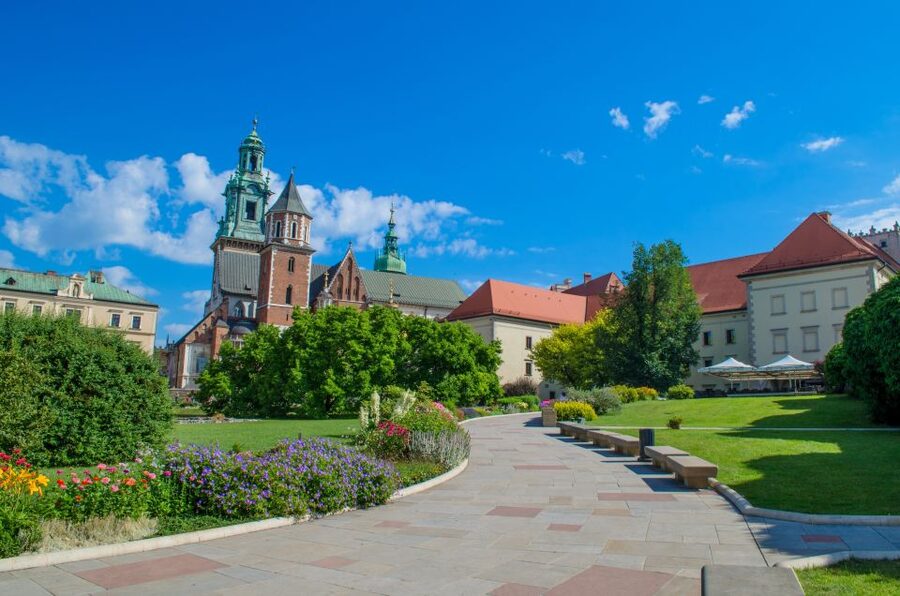
- Wawel Hill adds royal Poland, with the castle courtyard, cathedral, Vistula views, and the Wawel Dragon legend.
- The four-hour option includes Wawel Cathedral, royal tombs, Sigismund’s Chapel, and the Cathedral Museum.
- The six-hour option reaches Kazimierz, with the Old Synagogue, Remuh Synagogue, and Tempel Synagogue.
- Private guiding is the strongest feature, with guides including Kristof and Izabela Mistarz praised for warmth, clear explanations, and personal Polish perspective.
- Check timing carefully, especially for the Veit Stoss altarpiece, church services, the Sigismund Tower stairs, and Tempel Synagogue closures.
Starting at the Krakow Barbican
The walk begins at one of Krakow’s most memorable medieval defenses, the late 15th-century Barbican. This round brick fortification once protected the gateway into the inner city and connected with the old defensive walls.
You do not simply stop for a photograph here. Your guide uses the Barbican to explain how people entered medieval Krakow and how the city was protected. It is a useful opening because the rest of the walk follows the route once used by monarchs returning after military victories.
From the Barbican, you walk along Florianska Street. This is the start of Krakow’s Royal Route, leading toward the Main Market Square and then onward to Wawel Hill. The route is easy to understand on foot, and the sequence gives Krakow’s center a clear shape.
I like this beginning because it gives you a sense of arrival. You see the city not as isolated buildings, but as a ceremonial route shaped by kings, churches, commerce, and defense.
More Old Town Tours in Krakow
- Old Town Krakow & Wawel Castle Walking Tour
★ 5.0 · 1,508 reviews - Krakow: Bike Tour of Old Town, Jewish Quarter and the Ghetto
★ 4.9 · 1,155 reviews - Krakow: The Old Town Walking Tour
★ 4.8 · 794 reviews
Florianska Street and the Main Market Square
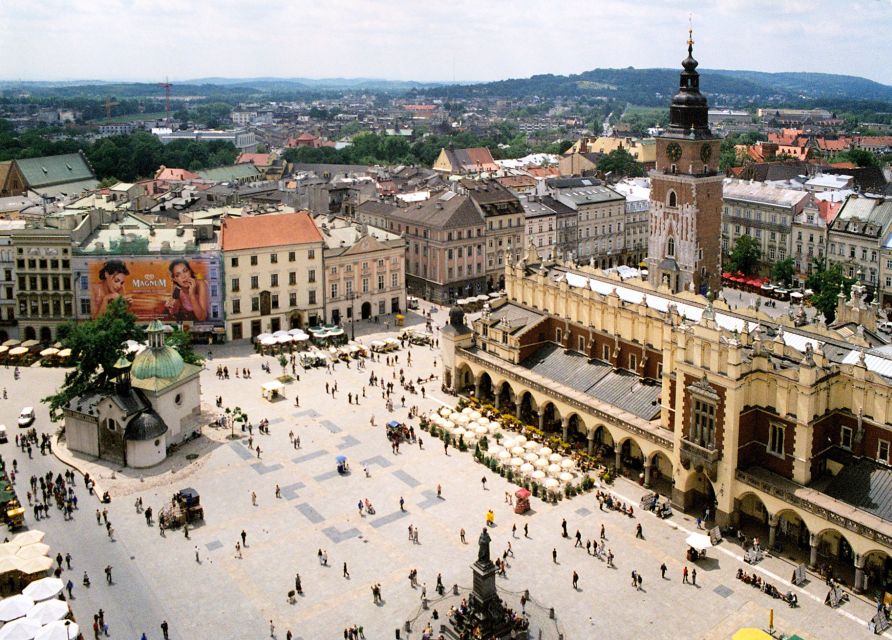
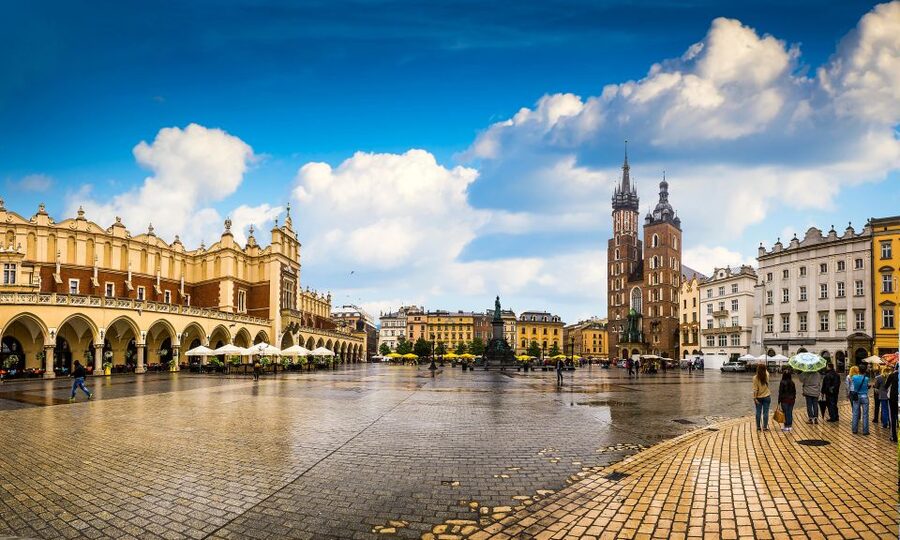
Florianska Street brings you into the heart of the Old Town. The route leads to Krakow’s immense Main Market Square, where several of the city’s most recognizable buildings sit close together.
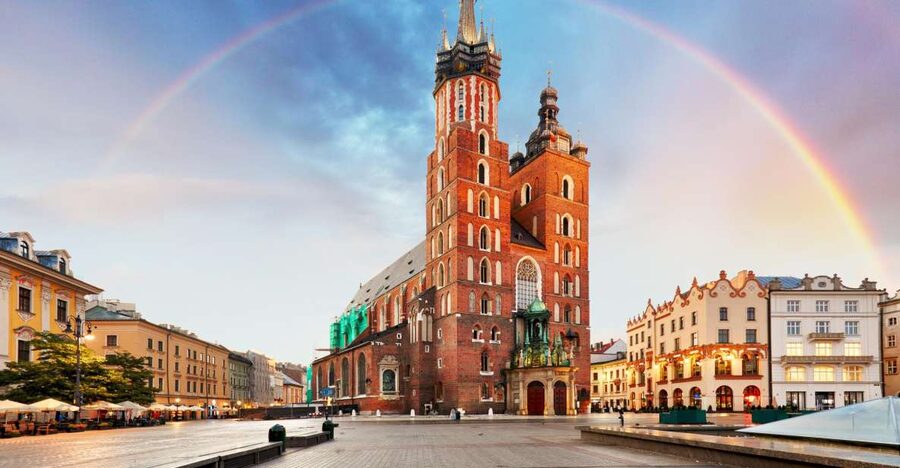
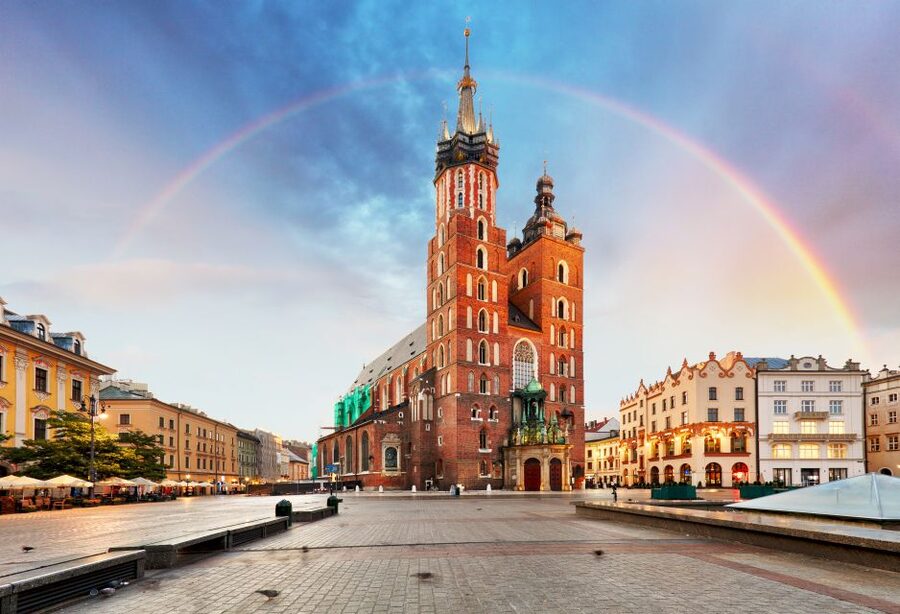
The first major landmark is St Mary’s Basilica, with its tall Gothic towers. The basilica is known for its hourly trumpet call from the watchtower, a short musical signal tied to one of Krakow’s best-known traditions. Inside, the great attraction is the wooden altarpiece carved by Veit Stoss, also called Wit Stwosz.
The timing matters. The altarpiece can be viewed between 11:50 a.m. and 6 p.m., and the basilica has limited opening hours. During Mass and special events, access to churches can be restricted. Your guide will not enter St Mary’s Basilica with you because of church rules, so you should be prepared to explore the interior independently if admission is available.
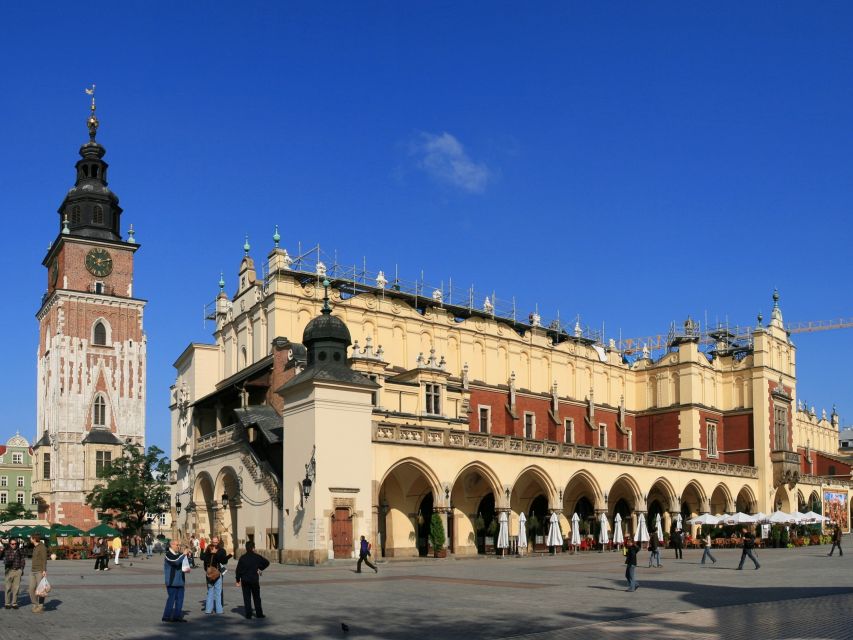
The Main Market Square also contains the old Town Hall Tower and the Renaissance Cloth Hall, or Sukiennice. The Cloth Hall was Krakow’s medieval commerce center and remains one of the square’s defining buildings. Your guide can connect the architecture to the trading role that helped make the square the center of city life.
This part of the walk is particularly good for first-time visitors. You see Krakow’s most important public space early, then understand why the surrounding Old Town became one of the first UNESCO World Heritage sites.
Churches, palaces, and Krakow’s old streets
The route continues through streets lined with churches, palaces, and old tenement houses. These buildings are not presented as a single grand monument. Their value comes from the way they show Krakow’s layers of religious, royal, and civic life.
You see the Baroque Saints Peter and Paul Church, with its ornate exterior, along with Holy Trinity Church and St Andrew’s Church. Each adds a different architectural note to the walk, and the close spacing makes this section efficient for anyone who wants a broad introduction without spending a full day inside museums.
This is also where a private guide can make a real difference. A guide can slow down for a question, explain a statue or facade, and adjust the focus to your interests. The strongest guide feedback has centered on warmth, preparation, and the ability to explain Poland through both public history and personal experience.
Kristof is praised for combining a friendly manner with a clear account of Krakow and Poland. Izabela Mistarz is described as punctual, well prepared, and helpful. Another guide brought in stories from growing up in Poland, giving the city’s modern past a more personal frame. That kind of local voice can make the difference between seeing a handsome church and understanding why it matters.
The basic Old Town route ends at the bottom of Wawel Hill. At that point, your guide can suggest local restaurants, bars, and leisure spots for the rest of your stay. Since this advice comes at the end of a private walk, you can ask for suggestions that fit your own plans rather than receiving a generic list.
Wawel Hill and the royal castle courtyard
Choose the three-hour option if you want to add Wawel Hill and the outer courtyard of Wawel Royal Castle. The guide walks with you up the hill, where the castle complex and cathedral form the center of Poland’s royal story.
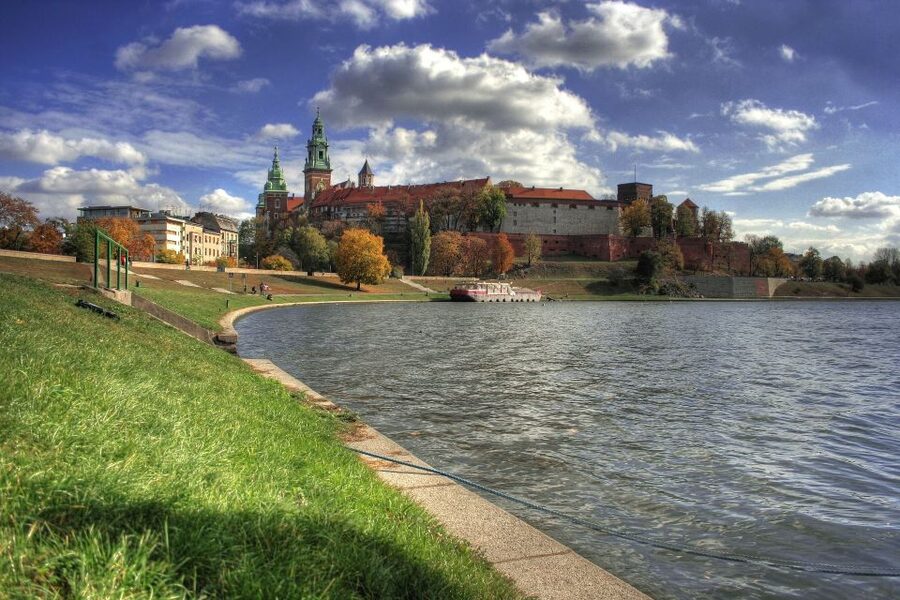
Wawel was a royal residence and carries major political importance in Poland. You will see the Romanesque and Gothic exterior architecture of the complex and hear why the hill matters far beyond its attractive views.
From the terrace, you get views toward the Vistula River. The Wawel Dragon legend adds a lighter note to the royal setting, especially if you are walking with children or simply appreciate a good local tale alongside the formal history.
The three-hour option is a smart middle ground. You get more than the central Old Town, but you avoid the longer church and Kazimierz schedule. The outer courtyard gives you the setting and architecture of Wawel, although it does not include the interior of the cathedral. If royal tombs and church art are important to you, pay for the four-hour option instead.
More Walking Tours in Krakow
- Creepy Krakow: 2-Hour City Walking Tour
★ 4.7 · 1,131 reviews - Krakow: Kazimierz Jewish Quarter Walking Tour
★ 4.8 · 571 reviews - Kraków: Old Town & Wawel Castle Walking Tour in English
★ 4.8 · 532 reviews - Krakow: Evening Walking Tour with Spooky Stories
★ 4.7 · 500 reviews
Wawel Cathedral and 144 narrow steps
The four-hour tour adds admission to Wawel Cathedral. This 13th-century church is closely tied to Poland’s monarchs, especially the Jagiellonian Dynasty, and it functions as one of the country’s key places of memory.
Inside, you see an ornate altar, medieval religious paintings, sculptures, and royal tombs. The golden-domed Sigismund’s Chapel is a major highlight, with a design that reflects the importance of the royal family connected to it.
The ticket also covers the Cathedral Museum and the Sigismund Bell Tower. The tower requires 144 steps, and the staircase is narrow with a low ceiling. It is not an easy climb for everyone, so think honestly about your knees, balance, and comfort in confined spaces before choosing this option.
The climb is not a minor footnote. It can be one of the more memorable parts of the visit, but only if you are comfortable with the conditions. If you skip the tower, the cathedral interior and royal tombs still give the four-hour option real value.
At $126 per person, the cost is easiest to justify for a small private group that wants a guide’s full attention and the included admissions. For one person or a couple on a tight budget, it is a premium way to see Krakow. You are paying less for transportation, since this is a walking tour, and more for a private licensed guide, flexible conversation, and the chance to combine several major sites in one planned route.
St Mary’s Basilica and the Veit Stoss altarpiece
The six-hour option includes regular admission to St Mary’s Basilica, along with Wawel Cathedral and Tempel Synagogue. The basilica is worth seeing inside for the enormous wooden altarpiece by Veit Stoss, one of Krakow’s most important works of late medieval art.
Plan this part carefully. The altarpiece is available to view from 11:50 a.m. to 6 p.m., and religious services may restrict entry. Since the guide does not accompany you inside, listen closely to the meeting instructions and allow enough time for an independent look.
The basilica’s hourly trumpet call is another reason to pay attention to the clock. You may hear it from the Gothic watchtower during your time around the square, although the exact moment of the call may not line up with your walking pace.
The six-hour schedule is best for someone who wants the city’s main landmarks rather than a quick orientation. It is also the option that requires the most care with timing. A change in service schedules or synagogue hours could affect what you see inside.
Kazimierz and Krakow’s Jewish heritage
The final part of the longest tour takes you into Kazimierz, Krakow’s former Jewish Quarter. Here the subject shifts from royal Krakow to Jewish religious life, wartime destruction, and the difficult modern history of Poland.
You see the Old Synagogue and Remuh Synagogue, then visit Tempel Synagogue, a 19th-century place of worship with a Moorish Revival interior. Tempel remains an active synagogue, so the visit is shaped by prayer times and religious use rather than by tourist convenience.
Tempel Synagogue is closed on Saturdays and Jewish holidays, and access can also be restricted during prayer. Check the date before booking the six-hour route. If Tempel cannot be visited, you still see other important Kazimierz sites, but the value of the included admission changes.
I like that Kazimierz is not treated as a decorative add-on. The tour links the buildings to World War II and the turbulent history of Polish Jews. That context gives the synagogues more meaning than their architecture alone.
The six-hour option does ask a lot from you. You will spend much of the day walking, and the subject matter becomes more serious as the route moves into wartime history. For many people, that makes the tour more meaningful. If you prefer a lighter introduction to Krakow, stop at four hours and return to Kazimierz later at your own pace.
How the private format affects the day
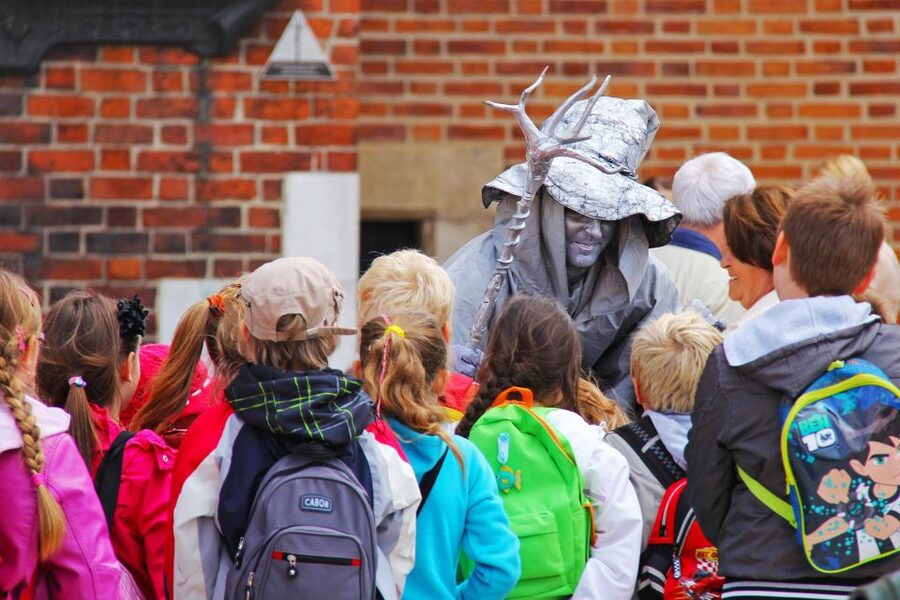
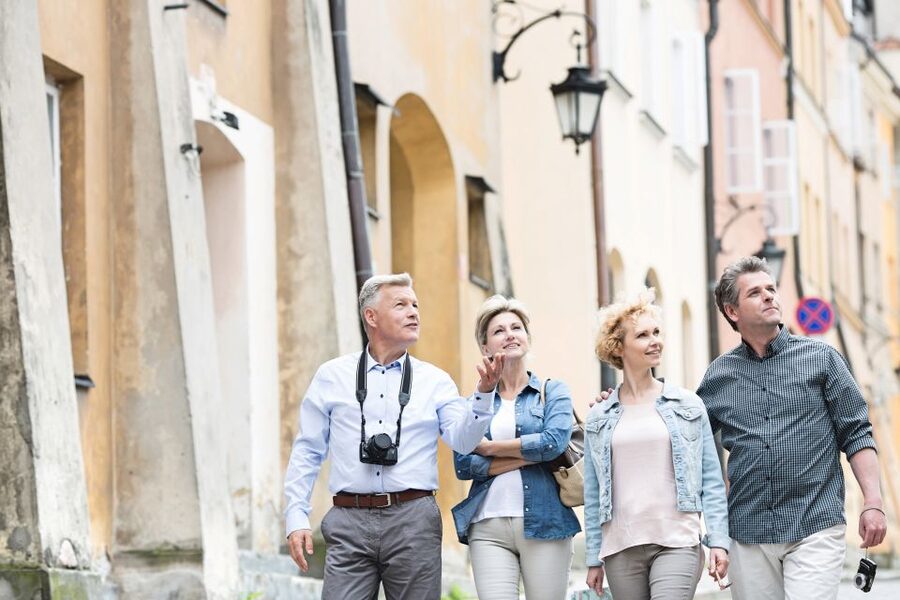
A private group changes the rhythm of the walk. You are not tied to a large crowd’s pace, and you can ask for more detail at the places that interest you. The available guide languages are English, Spanish, French, German, Italian, Polish, and Russian.
Hotel pickup is included only from accommodations in Krakow Old Town, within 1.5 kilometers of the designated meeting point. If you stay outside that area, or do not provide an address when booking, you will meet the guide at the stated meeting point instead.
The meeting point can vary by option, so check the final instructions in your email the day before. That message is important, especially if you have arranged pickup or selected a longer route with several admissions.
The tour can be canceled up to 24 hours before departure for a full refund, and you can reserve now and pay later. Those terms are useful if your Krakow schedule is still shifting, but the bigger planning issue is your selected duration and the opening times of the religious sites.
Who will get the most from this Krakow walk
I would choose the two-hour Old Town route for a first orientation, especially if you have limited time or want to leave room for museums and meals. It covers the Barbican, Royal Route, Main Market Square, major churches, and the approach to Wawel Hill.
The three-hour route suits you if Wawel Castle’s setting and courtyard matter more than interiors. The four-hour route is better for anyone interested in royal burial places, church art, and Polish dynastic history.
Choose six hours if you want Krakow’s major landmarks and Kazimierz in one guided day. It suits history-focused visitors who appreciate a serious discussion of World War II and Jewish heritage, as well as people who prefer to organize the city’s essential sights in one appointment.
The tour is less suitable if you dislike long walks, narrow staircases, fixed church schedules, or a full day of historic sites. It is also not the best choice if you mainly want free time to wander. The private format helps, but it does not remove the distances or the rules of active places of worship.
Should you book this Krakow private tour?
Book it if you want a clear introduction to Krakow from a private licensed guide, with the option to add Wawel Cathedral and Kazimierz. The strongest reasons are the logical Royal Route, the range of guide languages, and the personal style associated with guides such as Kristof and Izabela Mistarz.
For the best value, I would choose the four-hour option if royal Poland is your priority. Choose six hours only after checking the date against Tempel Synagogue closures and planning around St Mary’s Basilica opening times. If you want a shorter and easier first look at Krakow, the Old Town route alone gives you the city’s essential frame without committing to a full day.
FAQ
How long does the Krakow Old Town tour last?
The available options range from a shorter Old Town walk to three, four, and six-hour versions. Check the selected option carefully because the number of included attractions changes with the duration.
What sights are included in the basic Old Town route?
The walk begins at the Krakow Barbican and continues along Florianska Street to the Main Market Square. You see St Mary’s Basilica from the outside, the Town Hall Tower, the Cloth Hall, Saints Peter and Paul Church, Holy Trinity Church, St Andrew’s Church, and the approach to Wawel Hill.
Is Wawel Cathedral included?
Admission to all parts of Wawel Cathedral is included in the four and six-hour options. The three-hour option includes sightseeing of the Wawel Castle outer courtyard but not the cathedral admission.
Can I climb the Sigismund Bell Tower?
The four and six-hour options include access to the Sigismund Bell Tower. You must climb 144 stairs through a narrow staircase with a low ceiling, so the climb is not easily accessible.
Is Tempel Synagogue always open?
No. Tempel Synagogue is closed on Saturdays, Jewish holidays, and during prayer times. Check the date and the final tour information before relying on this visit.
Is hotel pickup included?
Pickup is available only from accommodations in Krakow Old Town, within 1.5 kilometers of the designated meeting point. If your accommodation is outside that area, you will meet the guide at the designated meeting point.
Recently added in Krakow
- Auschwitz-Birkenau and Krakow Private Car Trip from Katowice★ 4.3 · 3 reviews
- Wawel Castle, Old Town with St. Mary’s Church Guided Tour★ 5.0 · 3 reviews
- From Krakow: Chocholow Thermal Hot Springs (hotel pick up)★ 5.0 · 3 reviews
- Private tour to Zakopane and Thermal Baths from Krakow★ 5.0 · 3 reviews
- Wawel Castle, Cathedral, Rynek Underground Tour with Lunch★ 5.0 · 3 reviews
- Legends of Cracow ROBOTIC SHOW★ 4.0 · 3 reviews
- From Krakow: Zakopane and Thermal Pools Guided Trip★ 5.0 · 3 reviews
- Guided Beer Tour in Krakow★ 4.5 · 3 reviews
Old Town Tours, compared.




Bike Tour of Old Town, Jewish Quarter and the Ghetto
Read our review →

Sightseeing EcoCruise around the Old Town of Gdansk
Read our review →
Where else this one turns up