
Reviewed · WAWEL CASTLE TOURS
Kraków: Old Town & Wawel Castle Walking Tour in English
Kraków’s best history lesson begins at the medieval gate and ends beneath Wawel Hill, where royal power, university life, church history, and a fire-breathing dragon all meet. This 150-minute walking tour gives you a clear route through the city’s preserved core instead of leaving you to connect the pieces on your own.
I like the way the tour joins major sights with the stories behind them, especially the Royal Route from St. Florian’s Gate toward Wawel. I also like the guides’ mix of facts and humor. Maciek, Max, Victoria, Chris, and Big Tom are among the guides praised for making difficult Polish and Central European history easy to follow.
The main consideration is pace and access. You cover a lot of ground on foot, and the group may move on before everyone has caught up. You visit the courtyards of Wawel Royal Palace and Collegium Maius, but this is not a tour of Wawel’s interior rooms.
Key points at a glance
- Start between the Barbican and St. Florian’s Gate: The meeting point places you beside two of Kraków’s clearest medieval landmarks.
- Follow the Royal Route: The walk connects the old city entrance, Main Market Square, university quarter, Archbishop’s Palace, and Wawel Hill.
- See the Cloth Hall and St. Mary’s Basilica: Kraków’s central square comes with stories about trade, religion, music, and city life.
- Visit two important courtyards: Collegium Maius and Wawel Royal Palace offer architectural detail without the time commitment of full museum visits.
- Expect history with personality: Guides such as Maciek, Max, Lucy, Jacek, Victoria, and Big Tom are praised for clear explanations, lively delivery, and jokes.
- Plan for a real walk: The tour lasts two and a half hours, with some guides offering a short coffee or bathroom pause.
Why this is a smart first look at Kraków
Kraków can feel easy at first. The Old Town is compact, most major sights sit close together, and the streets are pleasant to wander. But the city’s story is not simple. It was a royal capital, a university center, a religious stronghold, and part of several changing political worlds in Central and Eastern Europe.
That is where a guide helps. Instead of seeing a church, a square, and a castle as separate photo stops, you get a chain of cause and effect. The route shows how Kraków grew around trade, royal power, scholarship, and faith.
The Old Town and Wawel Castle area survived the Second World War with much of its historic core intact. The result is a rare chance to walk through a city center that still gives a strong sense of its medieval and Renaissance form. It was included on the first UNESCO World Heritage List, and the reason becomes clear as the route unfolds.
I would take this tour early in a Kraków stay. One visitor specifically wished they had done it sooner, since local suggestions about food and places to visit would have helped during the rest of the trip. The walk gives you a useful mental map, too.
More Old Town Tours in Krakow
- Old Town Krakow & Wawel Castle Walking Tour
★ 5.0 · 1,508 reviews - Krakow: Bike Tour of Old Town, Jewish Quarter and the Ghetto
★ 4.9 · 1,155 reviews - Krakow: The Old Town Walking Tour
★ 4.8 · 794 reviews
Meeting the tour beside Kraków’s medieval walls
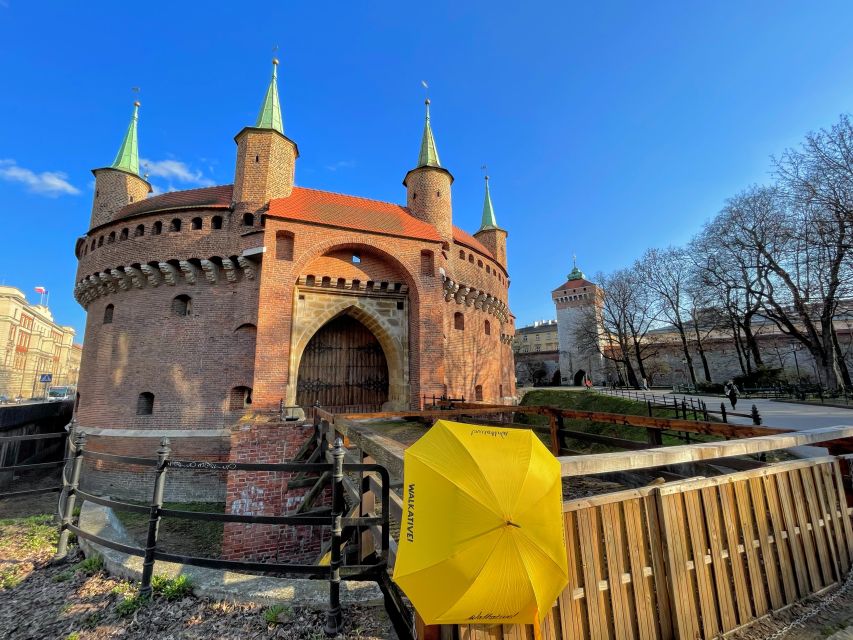
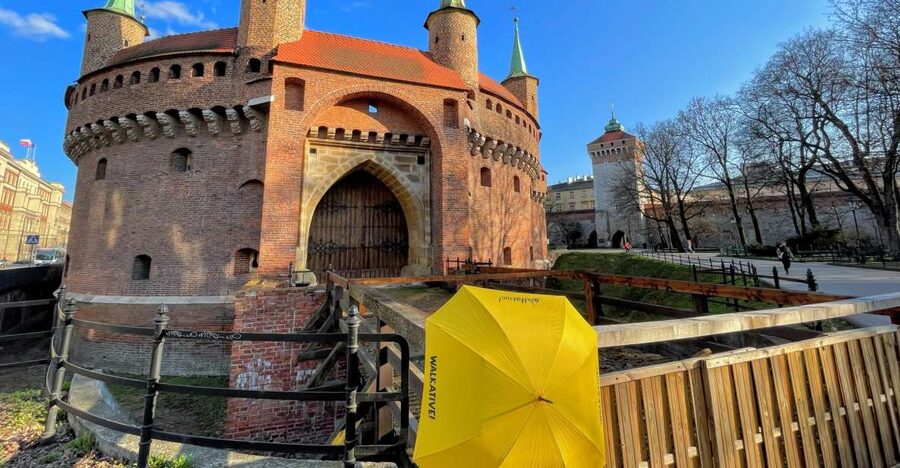
The group meets in the small space between the Barbican and St. Florian’s Gate. This is a practical starting point because both structures immediately show you the defensive shape of old Kraków.
The Barbican is a broad, fortified outpost that once guarded the city entrance. St. Florian’s Gate, with its tower and surviving stretch of wall, was part of the route into the medieval city. Your guide can explain how gates controlled movement and how Kraków’s defenses related to the wider city plan.
This first stop also helps you identify your guide before the group moves into the Old Town. Walkative guides have included Big Tom, Mitchell, Maciek, Max, Victoria, Lucy, Jacek, Damian, Chris, and others. The exact guide depends on the departure, but the recurring strength is a lively presentation rather than a dry recital of dates.
Keep your phone ready for the meeting point, but do not spend too long looking for a large office or visitor center. The instructions place the group outdoors, between the two landmarks.
Main Market Square and the Cloth Hall
From the city gate, the route leads into Kraków’s Main Market Square. This is the visual center of the Old Town and one of the places where the city’s past and present sit side by side.
The Cloth Hall occupies the middle of the square. Its name points to Kraków’s trading past, when merchants dealt in cloth and other goods here. Today, the building is one of the city’s most recognizable sights, but a good explanation helps you see it as part of a working commercial system rather than just an attractive Renaissance facade.
The scale of the square matters. It was designed for trade, public gatherings, ceremony, and movement through the city. Your guide will likely use the surrounding buildings to explain how Kraków’s leading families, merchants, church officials, and rulers shaped the center.
This is also a good place to notice the difference between looking and seeing. On your own, you may admire the towers and colorful facades. With context, you can start reading the square as a record of status, wealth, religion, and changing architectural taste.
The square can be crowded, especially at popular times. Stay close enough to hear your guide and expect some pauses in busy areas. The tour is not built around long quiet stretches. It is a city walk in the middle of Kraków’s main public space.
St. Mary’s Basilica and the trumpeter’s call
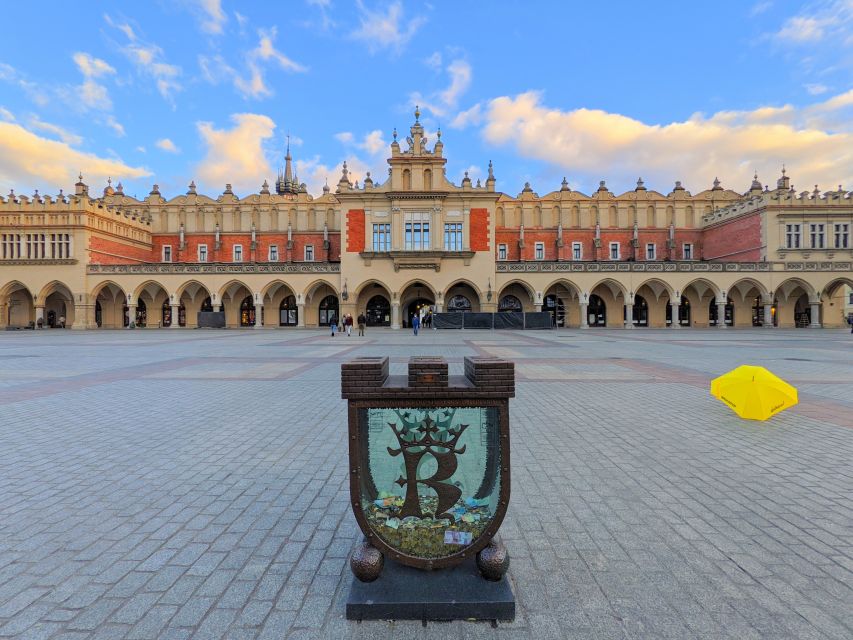
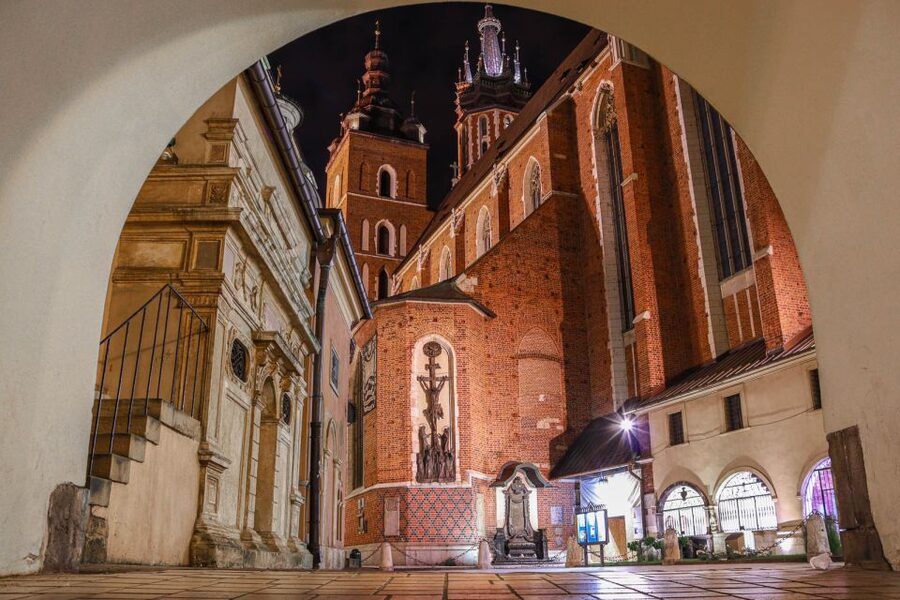
St. Mary’s Basilica is one of the route’s most memorable stops. Its twin towers dominate the square, and the church is tied to Kraków’s best-known public sound, the hourly trumpet call from the taller tower.
The trumpeter’s interrupted melody is connected to a medieval warning story. The exact legend is part of Kraków’s folklore, but the important point is how the tradition still links modern city life to the old defensive role of the church tower.
Your guide can also place the basilica in the religious and artistic life of Kraków. The building is not simply a backdrop for the square. It reflects the importance of the church in a city that served as Poland’s royal and cultural center.
You should not expect a long interior visit to every church on the route. The activity description focuses on seeing the major sites and explaining their meaning. If entering St. Mary’s Basilica is a priority, treat the tour as your orientation and return later with time to look around on your own.
More Walking Tours in Krakow
- Creepy Krakow: 2-Hour City Walking Tour
★ 4.7 · 1,131 reviews - Krakow: Kazimierz Jewish Quarter Walking Tour
★ 4.8 · 571 reviews - Krakow: Evening Walking Tour with Spooky Stories
★ 4.7 · 500 reviews - Krakow Old Town Guided Walking Tour
★ 4.5 · 438 reviews
Collegium Maius and the world of Copernicus
The walk continues toward Collegium Maius, the oldest building of the oldest university in Central and Eastern Europe. The courtyard visit is included, and it adds a different layer to the tour.
Kraków was not only a royal city. It was also a place of study, debate, and scientific work. Copernicus walked these streets as a student, and that detail gives the university quarter a human scale. You can picture scholars moving through the same part of town while royal politics and religious life played out nearby.
Collegium Maius is especially useful for understanding how education worked in medieval and Renaissance Europe. The architecture, courtyard, and academic setting help explain the university’s place in Kraków’s public life.
This stop should appeal to you if you enjoy architecture and ideas as much as royal legends. It also breaks up the sequence of large public sights. Instead of only hearing about kings and churches, you get a look at the institutions that helped make Kraków a European center of learning.
The included visit is to the courtyard, not a full museum tour. If you want detailed displays or extended time inside, you will need to return separately.
The Archbishop’s Palace and the papal window
The route then brings you to the Archbishop’s Palace, associated with Pope John Paul II and the famous window where he appeared during visits to Kraków.
This stop opens a modern chapter in the city’s religious and political story. John Paul II was Polish, had strong ties to Kraków, and later became a major figure in the twentieth century. The papal window is a simple feature, but its meaning comes from the crowds and conversations connected with it.
I find this kind of stop valuable because it prevents the tour from becoming a march through medieval history alone. Kraków’s identity reaches into living memory, and the guide can connect the city’s Catholic traditions with Poland’s more recent past.
The palace is viewed from outside. It works best as a short storytelling stop rather than a long architectural visit, so expect the group to continue after the explanation.
Walking up Wawel Hill
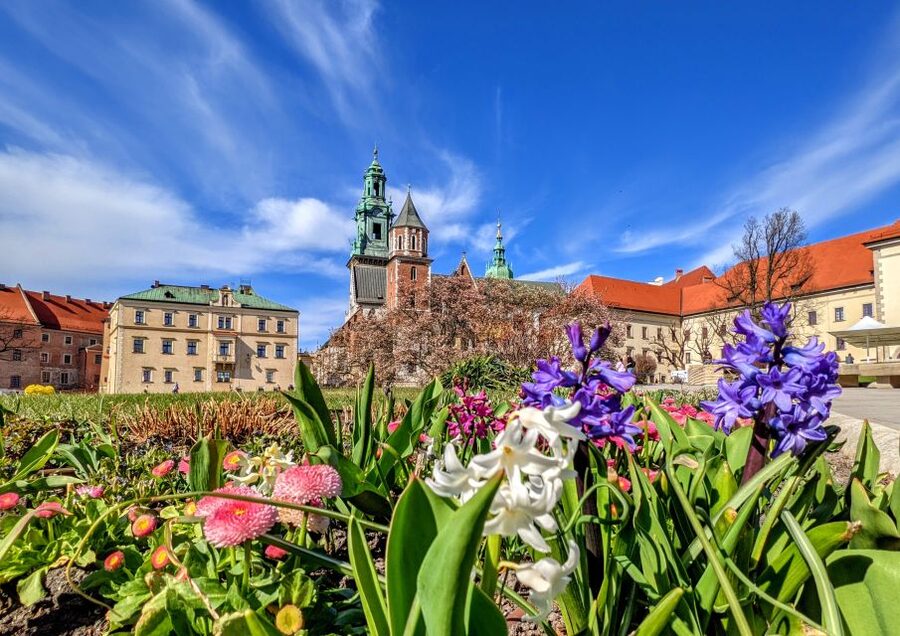
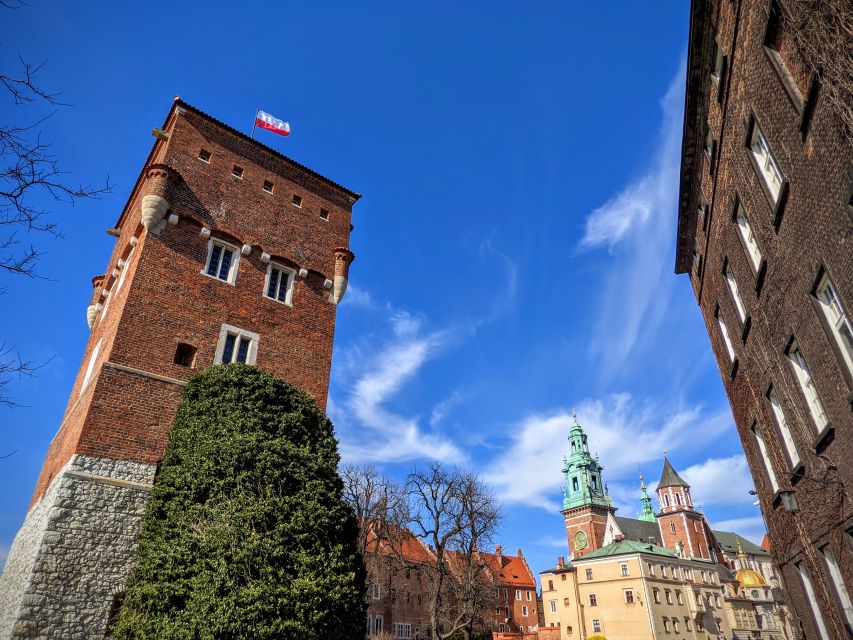
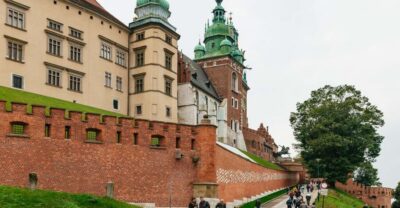
The final major section takes you uphill toward Wawel. This shift in scenery is one of the tour’s strongest features. The Old Town shows Kraków as a planned medieval city, while Wawel Hill shows the seat of royal and religious power above it.
The guide will explain the connection between Wawel Cathedral and the Royal Castle. Polish kings were crowned and buried here, and the hill became a national symbol as well as a royal residence. The buildings reflect many periods, so you can expect an architectural mixture rather than one single style.
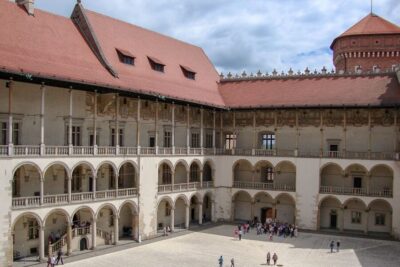
The tour includes the courtyard of Wawel Royal Palace. That is enough to appreciate the layout, entrances, arcades, and relationship between the palace buildings, but it is not the same as touring the castle chambers or museum collections.
This distinction matters when you compare tours. At $26 per person, the experience is priced as a guided city orientation with selected courtyard access. It is not a substitute for a dedicated Wawel Castle interior visit. I think that is fair value if you want the city’s main story in one sitting, but less suitable if your main goal is royal art, private rooms, or museum exhibits.
Wawel Hill also involves walking on historic surfaces and a change in elevation. The activity is described as wheelchair accessible, but you should still confirm practical route details if a member of your group has limited mobility. The walk is generally manageable for many people, yet one family noted that older parents struggled to keep up when the guide began speaking before the whole group arrived.
The Wawel Dragon and Kraków’s legends
Near the hill, the Wawel Dragon provides a lighter ending. The creature belongs to Kraków’s most famous foundation legend, the story of a dragon defeated beneath the royal hill.
This is not just a children’s tale. Legends help explain how cities create a shared identity. Kraków’s dragon appears in souvenirs, stories, and city symbols, and the tale gives the stone hill an extra layer of character.
A good guide uses the dragon for humor without losing the historical thread. That balance comes through in the guide styles praised across the tour. Maciek is known for turning history into comedy while keeping the facts in place. Max is praised for mixing Polish, city, art, and architecture with dry humor. Chris and Big Tom are described as engaging with large groups, while Victoria, Lucy, Jacek, Damian, and Mati are noted for clear, friendly delivery.
Guide quality can vary by individual style, of course. Still, the number of named guides praised for humor and explanation suggests that Walkative puts real weight on presentation.
How the guiding style shapes the experience
This tour is strongest when you want history delivered by a person, not read from a plaque. Guides encourage questions, explain legends, and connect architecture to politics and culture.
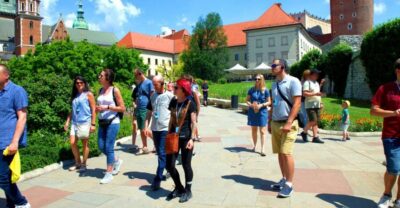
I would expect a fairly social group experience. You are walking with other people, stopping in public spaces, and listening while the guide positions the group near each site. That format can make the city feel more approachable, but it also means you will not have the silence or flexibility of a private tour.
The pace appears moderate but purposeful. You cover the Barbican, Main Market Square, St. Mary’s, Collegium Maius, the Archbishop’s Palace, Wawel Hill, the Cathedral and castle courtyard, and the Dragon in 150 minutes. That is a generous list for one walk.
Some guides include a short rest, coffee, or bathroom pause around the middle. One participant welcomed a 15-minute break, and another noted that the pace allowed time to rest. Still, you should wear comfortable shoes and begin with water. The route is long enough that casual footwear can become an issue.
Is $26 good value?
At $26, this is a reasonable price for an English-language walk covering Kraków’s central sights. You are paying for a local guide, a prepared narrative, and access to the courtyards of Collegium Maius and Wawel Royal Palace.
The value comes from the range. A self-guided walk can show you the same streets, but it may not explain why Kraków mattered as a capital, how the university fits into the city, or why Wawel has such weight in Polish identity. The guide supplies that connective tissue.
The price does not cover hotel pickup, drop-off, or snacks. You meet in the center and make your own way there. You also should budget time and money for separate interior visits if you want to explore Wawel Castle or Collegium Maius beyond the included courtyards.
There is one unusual payment detail. The tour is presented as a general pay-as-you-wish walk, but the amount paid at booking covers the reservation fee and the guide’s payment. In practical terms, you should not treat the $26 as a token booking charge followed by an expected full tip. Read the current payment terms carefully when booking.
Free cancellation is available up to 24 hours before the start, and the reserve-now, pay-later option can help if your Kraków schedule is still shifting.
Who should book this Kraków walk?
I would recommend it most strongly to first-time visitors, short-stay visitors, and anyone who wants a useful city introduction before exploring alone.
It suits you if:
- You want the major Old Town sights in one organized route.
- You enjoy history, architecture, legends, and church or royal stories.
- You prefer a guide who uses humor and welcomes questions.
- You have only a day or two in Kraków.
- You want to decide later which interiors deserve your time.
It may be less suitable if you dislike group walks, need a very slow pace, or mainly want extended time inside Wawel Castle. In that case, use this tour for orientation and arrange a separate castle visit.
Families can also benefit, especially when the guide uses the Dragon and royal legends to keep younger listeners interested. Just keep the group together and tell the guide if someone needs extra time between stops.
Practical tips for getting more from the route
Book it near the start of your stay if you can. You will learn how the Old Town fits together and may pick up useful ideas for later sightseeing, meals, and drinks.
Arrive at the Barbican and St. Florian’s Gate with a few minutes to spare. The meeting point is outdoors and relatively small, so identifying the guide quickly matters.
Wear shoes suited to a substantial city walk. The route includes Wawel Hill, and the group will spend much of the time standing on streets or in squares.
Keep expectations clear about entry. The tour takes you into the Collegium Maius courtyard and Wawel Royal Palace courtyard, but the supplied details do not promise full indoor visits. Plan a second visit if the interiors are central to your plans.
If you have older family members or anyone who walks slowly, stay near the guide and ask the group to pause before explanations begin. One useful criticism of the tour was that a few people missed information while catching up.
Should you book the Old Town and Wawel Castle walk?
Yes, if you want a lively, fact-filled introduction to Kraków at a sensible price. The route covers the city’s essential sights, and the best guides add the humor and personal energy that make names, dates, legends, and buildings stick.
I would not book it as your only Wawel experience if you want the castle’s interior rooms or museum collections. But as a first pass through Kraków, it gives you the city’s basic framework, from medieval defenses and merchant trade to Copernicus, John Paul II, Polish kings, and the Wawel Dragon. Book it early, walk at a steady pace, and save time afterward for the places you want to explore more closely.
FAQ
How long does the Kraków Old Town and Wawel Castle tour last?
The tour lasts 150 minutes, or two hours and 30 minutes.
What language is the tour in?
The tour is conducted in English with a live English-speaking guide.
Where does the tour meet?
The meeting point is in the small space between Kraków’s Barbican and St. Florian’s Gate.
Does the tour enter Wawel Castle?
The tour includes a visit to the courtyard of Wawel Royal Palace. It does not specify entry into the castle’s interior rooms or museum areas.
Does the tour include Collegium Maius?
Yes. The included visit is to the courtyard of Collegium Maius, the oldest building of the oldest university in Central and Eastern Europe.
Is the tour wheelchair accessible?
The activity is listed as wheelchair accessible. Because it is a long walking route that includes Wawel Hill, you should confirm the practical route details for your specific needs.
Can I cancel the tour?
Yes. You can cancel up to 24 hours in advance for a full refund. A reserve-now, pay-later option is also available.
More Wawel Castle visits
- Krakow: Wawel Castle & Cathedral Guided Tour
★ 4.7 · 2,111 reviews - Krakow: Wawel Royal Hill with Optional Castle and Cathedral
★ 4.2 · 1,220 reviews - Krakow: Wawel Castle and Cathedral Guided Tour
★ 4.6 · 595 reviews - Krakow: Wawel Hill Audioguide Tour
★ 4.2 · 512 reviews
Recently added in Krakow
- Auschwitz-Birkenau and Krakow Private Car Trip from Katowice★ 4.3 · 3 reviews
- Wawel Castle, Old Town with St. Mary’s Church Guided Tour★ 5.0 · 3 reviews
- Wawel Castle, Cathedral, Rynek Underground Tour with Lunch★ 5.0 · 3 reviews
- From Krakow: Chocholow Thermal Hot Springs (hotel pick up)★ 5.0 · 3 reviews
- Private tour to Zakopane and Thermal Baths from Krakow★ 5.0 · 3 reviews
- Legends of Cracow ROBOTIC SHOW★ 4.0 · 3 reviews
- Guided Beer Tour in Krakow★ 4.5 · 3 reviews
- From Krakow: Zakopane and Thermal Pools Guided Trip★ 5.0 · 3 reviews
Wawel Castle Tours, compared.
Wawel Royal Hill with Optional Castle and Cathedral
Read our review →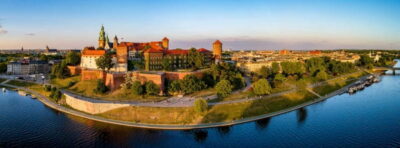
Skip-the-Line Wawel Castle Chambers Private Tour
Read our review →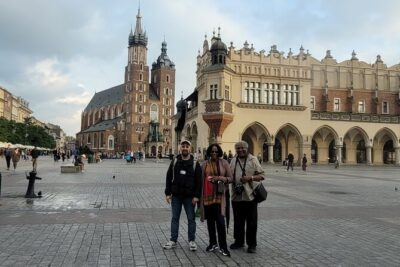
Private Krakow City Tour, Krakow Old Town and Wawel Castle Tour
Read our review →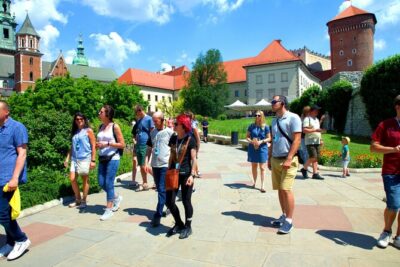
Krakow Guided Tour to Iconic Polish Royal Residence Wawel Castle
Read our review →Where else this one turns up